
mailez
Mail for your own domain stays on your own server with mailez, a self-hosted stack that delivers over SMTP, IMAP, and POP3 and adds a webmail, calendar, contacts, file storage, and an admin console, all started with a single command. Readers get a draggable three-pane webmail that updates itself over a push channel, merges replies into conversations, folds quoted history, and searches with from:, to:, has:attachment, and date terms. Keyboard shortcuts, a command palette, snooze, scheduled send, undo for bulk moves, and quick reply keep daily mail fast, and the interface installs as an offline-capable app with light and dark themes. Privacy-minded users add PGP signing and encryption, two-factor login, and remote-image blocking, and write server-side rules in a Sieve editor. Calendar, contacts, and Drive sit beside mail, with ICS subscriptions, vCard import, CardDAV and CalDAV sync, and share links. Phones and desktop clients configure themselves through autoconfig. Administrators manage domains, mailboxes, aliases, relays, and external mailbox fetching in one console, generate DKIM keys with a click, and follow a DNS wizard and a health page that verify MX, SPF, DMARC, DKIM, blocklists, and MTA-STS. Audit logs and role-based access keep shared servers accountable. The free community edition runs on a single node, while archiving, DLP, LDAP, ActiveSync, and AI features belong to the paid enterprise edition. Running on a dedicated VPS on RepoCloud with guaranteed CPU, RAM, and SSD, full root SSH access, and a browser serial console. AGPL-3.0 licensed.
Nora
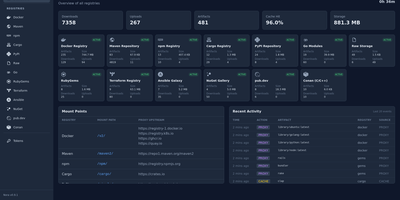
Public registries rate-limit your CI, log every pull, and pick the worst moment to go down; Nora replaces that dependency with a self-hosted artifact registry that hosts and caches seventeen package formats behind a single address. Point Docker, Maven, npm, pip, Cargo, and eleven other clients at one endpoint, and Nora serves your private artifacts while transparently caching upstream packages fetched from Docker Hub, Maven Central, npmjs, and crates.io. Each base image or library downloads once and is then served locally, so builds get faster, stop tripping rate limits, and survive upstream outages. Curation rules decide what is allowed to reach your builds: allowlists and blocklists filter packages by name, minimum release-age rules hold back freshly published versions, and new digests can wait in quarantine until approved. Anything you publish keeps its name: a hosted package is never silently replaced by an upstream package sharing it. Pipelines publish without stored secrets through OIDC identity from GitHub Actions and GitLab CI, and API tokens with read, write, and admin roles cover the rest. A web dashboard shows downloads, cache hit rates, storage usage, and recent activity for every registry, and audit logs plus Prometheus metrics feed your monitoring. For disconnected networks, a mirror command prefetches whatever your lockfiles name, an import tool migrates Artifactory or Nexus repositories, and backup and restore keep a spare copy. Running on a dedicated VPS on RepoCloud with guaranteed CPU, RAM, and SSD, full root SSH access, and a browser serial console. MIT licensed.
FlyReq Image Studio
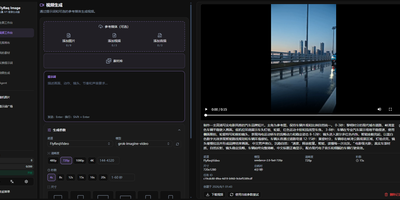
FlyReq Image Studio replaces a pile of model-specific tabs with one workbench for generating images, videos, and animated GIFs from whichever API you plug in. Type a prompt or drop in up to sixteen reference pictures, then pick resolution, aspect ratio, and model; the form adapts to what the chosen model supports. Video mode takes reference images, clips, and audio with duration and size controls. Agent mode is a conversation: describe the goal, read the analysis and optimized prompt, and watch it pick a model and render the picture, with optional web search. Reverse Prompt turns any uploaded image into a written prompt. The GIF workspace renders a frame grid and stitches it into a looping animation in the browser. An infinite canvas wires image, text, and prompt nodes into generation chains. A prompt plaza offers searchable community prompts, and My Materials keeps every result, reference, and prompt in one library with backup and restore. Tasks queue persistently, update live over WebSocket, and survive reconnects. Running on a dedicated VPS on RepoCloud with guaranteed CPU, RAM, and SSD, full root SSH access, and a browser serial console. AGPL-3.0 licensed.
Noisedash
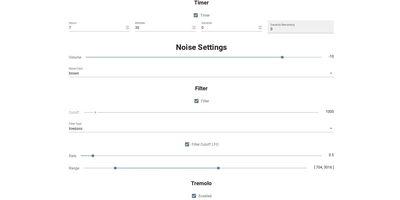
Noisedash is a self-hosted soundscape studio that generates the ambient noise you wish your surroundings made, from steady fan hums to layered rainstorms, and plays it in any browser. Start from white, pink, or brown noise and shape it with filters, LFOs, and effects until the hum in your head goes quiet. Upload your own recordings of rain, wind, thunder, or a café at noon, set loop points and fade-ins, and drop them into the mix as a continuous bed or an occasional sprinkle. Add reverb to a sample, let a thunderclap wander in every few minutes instead of looping, and balance every layer until the room feels right. Save the result as a noise profile, keep one for sleeping and another for deep work, and switch between them with a tap. Profiles travel: export one to share with a friend, import theirs, or record the generated audio to take the soundscape somewhere else entirely. An instance can host the whole household, with admin tools managing users, and the interface works as happily on a phone beside the bed as on a desktop. Running on a dedicated VPS on RepoCloud with guaranteed CPU, RAM, and SSD, full root SSH access, and a browser serial console. AGPL-3.0 licensed.
PicPeak
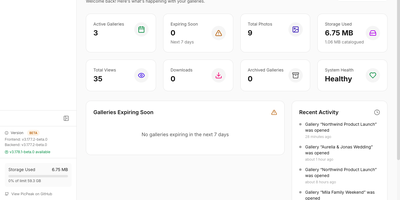
PicPeak is a self-hosted gallery platform where photographers deliver event photos to clients through private, branded links that expire on their own schedule. Every gallery gets a share link, an optional password, and a QR code that exports as PNG, SVG, an A6 table card, or an A4 poster, so a reception can put the gallery on every table. Guests browse in one of seven layouts, from grid and masonry to carousel and timeline, and react with likes, favorites, star ratings, comments, emoji reactions, or color labels. For a party, open the gallery to guest uploads, hold the finished edit back with Reveal Mode until a scheduled moment, and put the optional Live Slideshow link on a projector so new photos appear as they arrive. Theme presets, custom colors, logos, fonts, CSS, and CMS pages keep the studio's brand in front, while bulk ZIP downloads, capped download sizes, watermarking, and right-click blocking control what guests take home. An analytics dashboard tracks views, unique visitors, and downloads. Beta modules add face grouping that runs in a separate container on your own server, plus quotes, contracts, invoices, and customer accounts for studios. Media sits on local disk or any S3-compatible bucket, OIDC single sign-on lets a team log in through an identity provider, and API tokens and webhooks connect PicPeak to automations. Running on a dedicated VPS on RepoCloud with guaranteed CPU, RAM, and SSD, full root SSH access, and a browser serial console. MIT licensed.
Sealskin
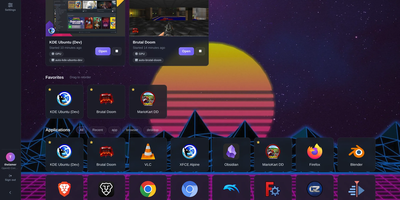
SealSkin is a self-hosted browser isolation platform that runs desktop applications in isolated containers on your server and streams them to any browser or phone, so links, files and downloads open remotely and nothing from the web ever executes on the device in front of you. Right-click a link, send a download, or drop a file from your local browser through the extension, and it opens in a fresh container on the server; close it and nothing is left behind, or keep a persistent home directory for work you return to. The catalog holds more than a hundred applications: browsers, office suites, IDEs, media editors, emulators and 3D tools from LinuxServer.io images, plus any Selkies-compatible image you add, with NVIDIA and DRI3 GPU acceleration for demanding workloads. Files stay on the server behind a file manager with chunked uploads, intercepted downloads, and password-protected public share links. Launch any app into a collaboration room with chat, voice and video, gamepad slots, and hand-over of mouse and keyboard control. Administrators brand the web app, manage users, groups, application keys, VPN profiles, and audit logs, and can route a session out through a WireGuard or OpenVPN exit at launch. Servers cluster with shared users and applications and no master node, and one manifest runs the whole thing on Kubernetes. Running on a dedicated VPS on RepoCloud with guaranteed CPU, RAM, and SSD, full root SSH access, and a browser serial console. MPL-2.0 licensed.

Digarr
Your next favorite record is hiding in your listening history, and Digarr is the self-hosted discovery engine that finds it, scores it, and queues it for your library. Connect ListenBrainz, Last.fm, Spotify, Deezer, Discogs, or your Plex, Jellyfin, Emby, or Subsonic server, and Digarr builds a taste profile from what you actually play. An AI provider you choose, from Anthropic, OpenAI, and Gemini to a local Ollama model, proposes candidates, and a weighted scoring system ranks them by consensus, similarity, genre overlap, and your past feedback. Every suggestion lands in a review queue where you can preview tracks, approve, reject, or permanently block artists before anything touches your collection. Approve an artist and Digarr adds them to Lidarr with your quality profile, queues the release in slskd, or exports a playlist to Spotify, Navidrome, Jellyfin, Emby, or Plex. Album-level discovery runs on its own: Release Radar catches new releases from artists you follow, Library Gap-Fill surfaces the studio albums you are missing, and scheduled subscriptions keep fresh candidates flowing in without you lifting a finger. Share the instance with family or friends, each with their own queue and connections, protected by local accounts or OIDC single sign-on, and get notified through webhooks, ntfy, Telegram, or Apprise when new picks arrive. Running on a dedicated VPS on RepoCloud with guaranteed CPU, RAM, and SSD, full root SSH access, and a browser serial console. MIT licensed.
Traffic Source
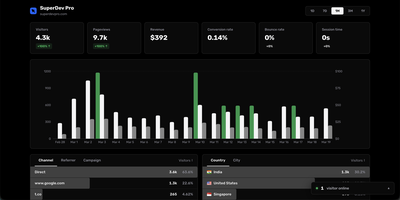
Traffic Source answers the three questions every site owner actually asks: who showed up, where did they come from, and did they pay. The live dashboard counts visitors in real time alongside pageviews, sessions, bounce rate, and session duration, with no cookie banner required because tracking uses no cookies at all. Referrer and UTM breakdowns show exactly which campaigns, newsletters, and posts earn their traffic, while country and city data arrives through proxy headers. Visitor journeys replay every page a person viewed before converting, so you can see the path from first click to checkout instead of guessing. Connect Stripe once and payments are matched to the sessions that produced them automatically, with no webhook plumbing to maintain. The affiliate system lets you create partners with custom commission rates and shareable referral links, and each affiliate gets a public dashboard showing their own clicks and earnings. Search Console data is pulled into the same screen, where a keyword explorer shows the pages, countries, and devices behind any query. One tiny tracking script covers all your sites, including single-page apps. Running on a dedicated VPS on RepoCloud with guaranteed CPU, RAM, and SSD, full root SSH access, and a browser serial console. MIT licensed.
opendesk
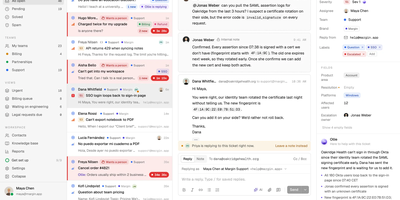
When a customer emails your support address, starts a live chat, or asks a question from your help center, opendesk lands it in one shared ticket inbox where every change appears live for the whole team. Agents work a single queue where tickets carry status, priority, assignee, team, tags, and an SLA clock, with internal notes, merging, snoozing, and bulk edits for busy days. Customers chat through a widget that offers identity verification, typing indicators, and 14 languages, and each widget can route to its own team and topics. Support leads publish collections and articles to a public help center, set SLA targets per priority, run automation rules on ticket events, and read reports on volume, response and resolution times, breaches, and CSAT. Ollie, the built-in AI, uses that help center to answer chats, draft replies, summarize threads, triage tickets, and translate both ways, through any Anthropic or OpenAI-compatible provider including local models. Admins can switch it off. Replies leave from your own address through Google, Microsoft, or any SMTP server. Developers connect Linear, GitHub, Jira, Sentry, Slack, Stripe, and any MCP server, or build on the REST API, signed webhooks, and a realtime socket. Desktop apps for macOS, Windows, and Linux and a native iPhone app keep agents reachable. Running on a dedicated VPS on RepoCloud with guaranteed CPU, RAM, and SSD, full root SSH access, and a browser serial console. Apache-2.0 licensed.
Antirion
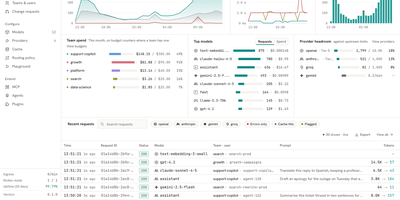
Your apps keep using the OpenAI SDK while Antirion, a self-hosted AI gateway, decides which provider answers, what each team may spend, and what gets logged. Clients speak the OpenAI, Anthropic, Gemini, or Bedrock APIs, and Antirion translates between them, so a Claude deployment can answer an OpenAI-style call, streams included. Add providers such as Amazon Bedrock, Vertex AI, Mistral, Groq, DeepSeek, or a vLLM server, then publish them as named Models. Routing rules send traffic by team or project with fallback chains, weighted splits, least-cost or least-latency targets, retries, hedging, and circuit breakers. Budgets and rate limits in dollars or tokens apply per organization, team, project, and key, with projections and alerts before money runs out. Guardrails check for personal data, secrets, keywords, and regex matches, then block, redact, flag, or divert. Exact and semantic caching answers repeated prompts without calling a provider. The request log records every attempt, route, token count, cost, and guardrail verdict, with Prometheus metrics and OTLP traces. An MCP gateway and A2A proxy put tools and agents behind the same keys. Sign in with OIDC, SAML, or GitHub, provision users with SCIM, and review every change in the audit log. Changes you choose can require a change request or a second person's approval, and the Playground sends requests from the console. Running on a dedicated VPS on RepoCloud with guaranteed CPU, RAM, and SSD, full root SSH access, and a browser serial console. Apache-2.0 licensed.
Chattermate
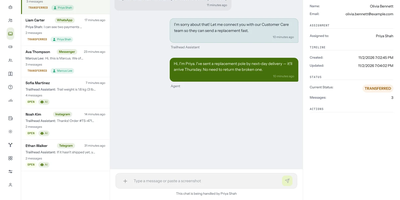
ChatterMate gives your website an AI support agent that answers customer questions from your own documentation around the clock, and hands the conversation to a human the moment it gets complicated. Feed it PDFs, help pages and URLs, and it chunks and indexes them into a knowledge base that answers with citations instead of guesses. Pick your model from OpenAI, Anthropic Claude, Google Gemini, Mistral, xAI Grok, DeepSeek or Groq with your own key, or point it at a self-hosted Ollama or vLLM endpoint. Every conversation lands in one shared inbox across nine channels, including the website widget, WhatsApp, Instagram, Messenger, Slack and email, where your team can search, filter and reassign. A drag-and-drop workflow builder designs branching flows from AI response, condition and human transfer nodes, so routine questions resolve themselves and hard ones arrive with context. Chats can raise tickets that the AI triages and investigates, writing an auditable root-cause analysis, or open a Jira ticket without leaving the conversation. The native Shopify integration answers order, shipping and product questions from live store data, and customers can attach images, PDFs and documents directly in chat. Theme the widget to your brand, require token authentication for private chats, and connect MCP tools so the agent can look up orders, issue refunds and call your APIs mid-conversation. Running on a dedicated VPS on RepoCloud with guaranteed CPU, RAM, and SSD, full root SSH access, and a browser serial console. Apache-2.0 licensed.
TidyQuest
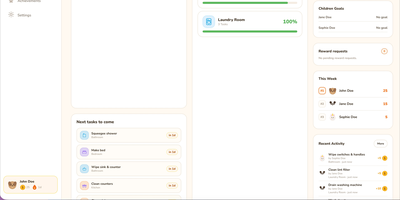
Whoever vacuums the living room this week should not be decided by whoever loses the argument, so TidyQuest turns household chores into quests with health bars, coins, and a family leaderboard. Every chore gets a health indicator that drains as its due date approaches, which makes overdue cleaning visible at a glance instead of festering in a group chat. Completing tasks pays coins into a personal wallet, builds daily and weekly streaks, and unlocks twelve milestone achievements from first chore to a thirty day run. Coins buy entries from a reward catalog your household defines, whether that is picking the Friday movie, extra game time, or sleeping in, and parents approve each redemption before it counts. Rooms organize work around the eight built-in spaces, from kitchen and bathroom to garage and garden, seeded with more than sixty predefined chores at realistic intervals. Assignment modes decide how credit lands: the first finisher takes everything, assignees split coins equally, or custom percentages reward whoever does the heavier share, while a strict mode requires admin approval before completions count. Reminders reach phones through web push, Telegram, ntfy, or Home Assistant, and vacation mode pauses decay for anyone away. A calmer couple mode strips the game layer away entirely, leaving plain shared tracking for households that just want the list. Running on a dedicated VPS on RepoCloud with guaranteed CPU, RAM, and SSD, full root SSH access, and a browser serial console. AGPL-3.0 licensed.
Whirl
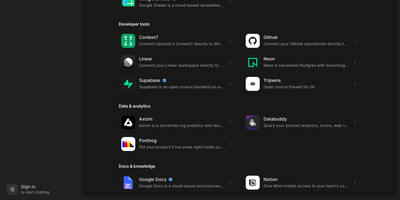
Whirl puts every top AI model in a single conversation and remembers what you were working on last week, so you can switch models mid-thought without losing the thread. Ask for a report, a chart, or a small interactive page and it appears as a living artifact in a side panel, still editable while you keep chatting, and shareable by link when it is ready to leave the conversation. Connect your own tools over MCP, with OAuth sign-in handled for you, or install skills that teach the app new tricks your team relies on. Long-term memory carries your preferences and project context from chat to chat, and live web search with page reading grounds answers in today's pages instead of the model's training data. Sensitive threads can be locked with a password that encrypts them on your device, where the server never sees the key and only zero-retention models may answer. Around those headline pieces sits the everyday kit: incognito mode, a message queue for when you think faster than the model replies, voice input, image generation, file attachments, folders, and sharing controls. An admin console manages the model catalog, integrations, and skills, and the interface itself switches between light and dark with your choice of accent color, installable as a mobile web app. Running on a dedicated VPS on RepoCloud with guaranteed CPU, RAM, and SSD, full root SSH access, and a browser serial console. MIT licensed.
Cliparr
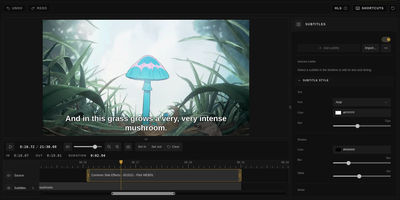
You are halfway through a film when a scene begs to be shared, and Cliparr is the self-hosted clip maker that turns moments from your Plex, Jellyfin, or local video library into shareable clips without opening a full video editor. Connect a media server and Cliparr follows live playback sessions automatically, so the scene you are watching is already loaded when you decide to keep it. Local video files open directly in the browser without being uploaded anywhere first. Mark the range, fine tune the start and end, then crop the frame freely or to a fixed aspect ratio with mouse or touch controls, which makes vertical clips for phones as easy as widescreen ones. Exports run entirely in your browser as video, audio only files, or GIFs, so the server never turns into a render box and the clip lands on the device you are using. Source details, artwork, and clip timing travel inside supported containers, keeping the exported file labelled with where it came from. Captions are a first class step: write your own subtitles, import an existing file, style the text, and burn it into the picture before export. Editor keyboard shortcuts, access control, and reverse proxy support round out a tool that fits into an existing media setup instead of replacing it. Running on a dedicated VPS on RepoCloud with guaranteed CPU, RAM, and SSD, full root SSH access, and a browser serial console. MIT licensed.

AgentDesk
Most AI chat integrations bolt an LLM onto a text box and call it customer support; AgentDesk builds the entire helpdesk around AI agents that handle first responses, escalate to humans when they cannot answer, and track follow-up work through integrated ticket workflows. Each AI agent binds to a specific LLM configuration, one or more knowledge bases, a set of callable Skills, and MCP tool integrations, creating specialized support personas for different product lines or departments. When a customer message arrives, the agent retrieves relevant FAQ entries and document chunks through RAG-powered vector search (Qdrant), then passes retrieved context through an Answerability Gate that determines whether the knowledge base can support a reliable answer; if not, it triggers a fallback response and recommends human handoff instead of hallucinating. Human agents pick up escalated conversations in a dedicated workspace that preserves the full AI conversation history, customer profile, conversation tags, and linked tickets, so they never start from scratch. The ticket system converts conversations into tracked work items with category assignment, status flows, progress notes, and team routing. An admin dashboard provides user management, role-based access control, team scheduling, and automatic conversation assignment rules. Model configuration supports any OpenAI-compatible provider, letting you wire in LLMs, embedding models, and reranking models with per-model context limits, timeout settings, and rate controls. Running on a dedicated VPS on RepoCloud with guaranteed CPU, RAM, and SSD, full root SSH access, and a browser serial console. Apache 2.0 licensed.
Marketing Dashboard
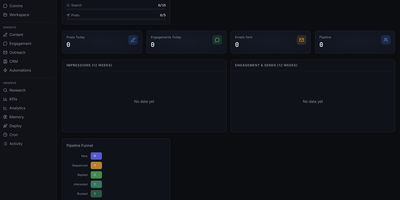
This is a marketing operations control center that replaces fragmented CRM, outreach, content, and analytics tools with a unified self-hosted interface designed for AI agent-assisted go-to-market teams. The CRM module manages leads through a configurable pipeline funnel with stages from New through Sequenced, Replied, Interested, and Booked, tracking source attribution, industry segments, company size, lead quality scores, and LinkedIn URLs per contact. Outreach sequencing supports email campaigns with pause controls, audit endpoints, suppression workflows, and engagement tracking. The content operations surface provides calendar views, content item management, performance metrics, and approval queues for editorial control. Analytics and KPI dashboards show impressions, engagement, and send volumes over configurable time periods, with optional connectors to Plausible, Google Analytics 4, X, and LinkedIn for cross-platform reporting. The OpenClaw-native agent runtime enables dynamic agent and squad discovery, workspace management, session monitoring, and communications surfaces. Automation scheduling uses cron job templates with OpenClaw-compatible schedule variants including cron expressions, every intervals, and at timestamps. The tech stack combines Next.js 16 App Router with React 19, Tailwind CSS 4, Recharts, and Zustand for state management. Authentication supports session cookies, API keys, and optional Google OAuth with role-based access controls. All state persists locally in SQLite via better-sqlite3 with no required external infrastructure. On RepoCloud, deploy Marketing Dashboard on a dedicated VPS with persistent SQLite storage, root SSH access, and complete control over your marketing operations data, all under the MIT license.
EverShelf
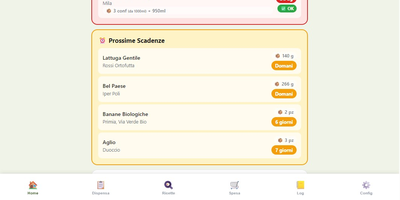
That yogurt hiding behind the ketchup expired three weeks ago, and the flour you bought "just in case" has been sitting in the pantry since last winter. EverShelf replaces mental guesswork with a structured inventory system that tracks every item across pantry, fridge, freezer, and custom locations with precise quantities, expiry dates, and consumption patterns. Scan barcodes with your phone camera to add products instantly, or let the Gemini AI identify items from a photo and estimate shelf life based on storage location. The dashboard surfaces expired items and upcoming expirations with color-coded urgency badges, while anomaly detection flags suspicious quantities and consumption predictions that deviate from your history. Opened products get reduced shelf-life calculations; vacuum-sealed items get extended dates automatically. The recipe engine generates context-aware meal suggestions from your current inventory, prioritizing ingredients approaching expiry so nothing goes to waste; each recipe includes step-by-step cooking mode with text-to-speech narration and timer integration. A smart shopping list auto-populates when stock hits zero and syncs bidirectionally with the Bring! app, with AI-estimated prices per item and consumption forecasts showing when you will need to restock. For Home Assistant users, a native HACS integration provides 22 sensors, expiry calendars, bidirectional todo-list sync, and voice assistant support for adding items hands-free. A dedicated Kiosk mode optimizes the interface for wall-mounted tablets with BLE scale integration. Running on a dedicated VPS on RepoCloud with guaranteed CPU, RAM, and SSD, full root SSH access, and a browser serial console. MIT licensed.
Pricore
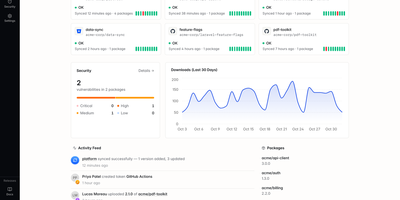
Private PHP packages get a proper Composer v2 registry on your own server, with a dashboard in place of the rebuild script. Point Pricore at GitHub, GitLab, Bitbucket, Gitea, Forgejo, Gogs, or any Git server over SSH or HTTPS, and it reads each composer.json, indexes every tag and branch, and serves the versions to Composer. Webhooks pick up a new tag within seconds, and monorepo support turns a packages/* directory into several packages whose versions follow the repository's tags. Registry mirrors import packages from Satis and other Composer registries, including commercial ones behind HTTP Basic or Bearer authentication, with optional dist archives. Packagist advisories feed automatic security audits, so vulnerable versions appear in the dashboard and composer audit works against the registry. Scoped tokens separate install-only access for CI from publish and API permissions for administrators, and every request is also checked against the member's role. The dashboard shows repository sync health, vulnerabilities by severity, download trends, an activity feed, and a package page with versions, advisories, and install commands. A versioned REST API with OpenAPI 3.1 documentation scripts the same actions, and a built-in MCP server lets Claude, Cursor, or VS Code search packages and check advisories after a one-time browser sign-in. Running on a dedicated VPS on RepoCloud with guaranteed CPU, RAM, and SSD, full root SSH access, and a browser serial console. Apache-2.0 licensed.