Enroute
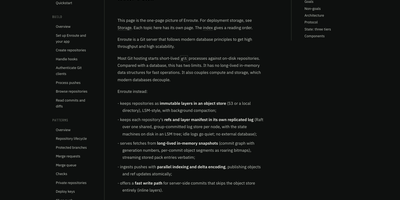
Git servers still think in folders on one machine's disk, and Enroute is the Git server rebuilt like a modern database: your repositories live as immutable layers in object storage, served by compute nodes you can add or replace at will. Point any Git client at it and push; the push creates the repository, gets indexed and validated without locks, and commits once its entry is replicated across the ledger nodes' disks, which is how a single repository absorbs thousands of pushes per second. Clones and fetches always read one consistent snapshot, so readers never block writers, and background layer merging replaces the git repack jobs you used to schedule. The programmable part is hooks: your own code decides who can read or write, which branches a client may see, whether a ref update is allowed, and what happens after a push, from running CI to mirroring elsewhere. A rich gRPC API lets applications create, inspect, and manage repositories programmatically, so you can build your own code-hosting product on top instead of forking a monolith. Start as one node with a local directory, then separate compute from ledger nodes and replicate across three machines without pushing a repository again. Running on a dedicated VPS on RepoCloud with guaranteed CPU, RAM, and SSD, full root SSH access, and a browser serial console. Apache-2.0 licensed.
BugTraceAI
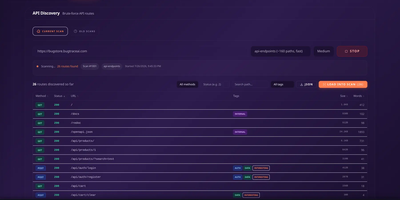
Point an AI pentesting crew at a web app you own and watch it hunt: BugTraceAI plans the checks, sends specialist agents after each weakness class, and brings back evidence you can inspect. A scan moves through six visible phases, from crawling and endpoint discovery through strategy, exploitation and validation, and ends in a findings table where every result carries a severity, a CVSS score and a confirmed status. The web dashboard follows the hunt live as a graph of specialists branching from a coordinating agent, and its API discovery workspace brute-forces routes and loads the interesting ones straight into a scan. Analysts get their own toolbox of more than twenty utilities for poking HTTP traffic by hand, an AI repeater for replaying requests, and ModelLab for comparing models on cost and results. Findings download as a ZIP with the full report, and a terminal workspace with pipeline, findings, agents, timeline and logs views suits keyboard-driven work. Bring your own model through OpenRouter, Anthropic, Z.ai or a local endpoint, and aim the whole suite at the bundled BugStore practice shop when you want to rehearse safely. Running on a dedicated VPS on RepoCloud with guaranteed CPU, RAM, and SSD, full root SSH access, and a browser serial console. Apache-2.0 licensed.
Veritas Kanban
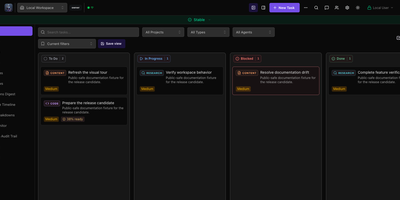
A drag-and-drop task board that works fine on its own and can also hand cards to AI coding agents, Veritas Kanban shows what each agent is doing, what it changed, and what is waiting for your approval. Start with no agents at all. Cards move through To Do, In Progress, Blocked, and Done, and each one carries subtasks, dependencies, time tracking, comments, and an activity log. When you are ready, connect Codex, Claude Code, Copilot CLI, Hermes, or OpenClaw, give every agent an Intern, Specialist, or Lead permission level, and follow each agent's status and model on a live dashboard. Let a task run in its own Git worktree, read the diff, leave inline comments, approve or request changes, and open a GitHub pull request from the task panel. Squad Chat gives agents one shared channel that posts spawned, completed, and failed events. Workflows chain steps with parallel branches, loops, and human approval gates. Policy rules allow, deny, or hold agent actions for review. Assistants reach the board through an MCP server, a command-line client, or a REST API. Running on a dedicated VPS on RepoCloud with guaranteed CPU, RAM, and SSD, full root SSH access, and a browser serial console. MIT licensed.
ExtendDB
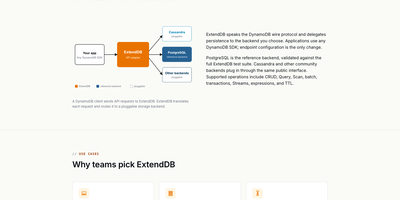
ExtendDB is a DynamoDB-compatible database server that answers the DynamoDB wire protocol from your own infrastructure, so applications written for DynamoDB run unchanged against a database you operate. Any AWS SDK, the AWS CLI, or DynamoDB tooling points at the ExtendDB endpoint and keeps working: tables, items, Query and Scan with key conditions and filters, batch reads and writes, and transactions all behave as the SDK expects. Streams feed change data to your own consumers, TTL expires items on schedule, vector indexes add cosine, Euclidean, and dot product search to on-demand tables, and point-in-time export and import move data in and out. Storage is pluggable, with PostgreSQL as the reference backend, SQLite embedded for small installs, and MongoDB and Cassandra for teams already running them. Every request is SigV4-signed and evaluated by a built-in IAM-style engine with users, groups, roles, policies, permission boundaries, and access keys, and TLS is mandatory on every connection. A web management console administers accounts and credentials, and a JSON metrics endpoint reports DynamoDB-style CloudWatch metric names and dimensions. The server runs as a daemon or in the foreground under Docker, Kubernetes, or systemd, healthchecks without extra tooling, and keeps serving in air-gapped environments with no internet connection at all. Running on a dedicated VPS on RepoCloud with guaranteed CPU, RAM, and SSD, full root SSH access, and a browser serial console. Apache-2.0 licensed.

MinusPod
Eliminating repetitive sponsor reads and dynamic mid-roll commercials before an episode even reaches your headphones, MinusPod operates as a self-hosted podcast ad-removal server and RSS feed manager. You subscribe to shows inside the web dashboard using PodcastIndex search or OPML import, and the server generates clean replacement RSS feeds compatible with Pocket Casts, Overcast, Apple Podcasts, and Audiobookshelf. When a new episode drops via scheduled polling or instant Podping notifications, the pipeline transcribes the audio locally with faster-whisper or Parakeet, or routes it through a remote transcription API. Your choice of LLM provider, including Ollama, Anthropic Claude, OpenRouter, or any OpenAI-compatible endpoint, scans overlapping transcript windows to pinpoint sponsor reads, cross-promotions, and intros. Programmatic audio analysis reinforces AI detection by measuring EBU R128 loudness jumps, Chromaprint acoustic fingerprints, show jingles, and dynamically inserted ad transitions before FFmpeg splices the audio or marks segments as skippable Podcasting 2.0 chapters. A browser-based Ad Editor lets you audition pre-cut and post-cut audio, nudge start and end timestamps, and confirm detections that train global, network, and show-specific sponsor patterns. Running on a dedicated VPS on RepoCloud with guaranteed CPU, RAM, and SSD, full root SSH access, and a browser serial console. MIT licensed.
Flight Finder
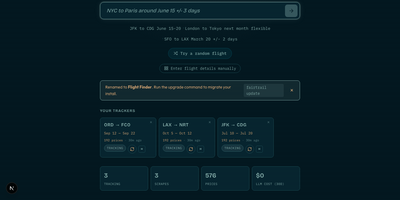
Flight Finder is a self-hosted tracker that watches flight, hotel, and car rental prices for you and alerts you when a fare you care about drops. Search in plain language, such as NYC to Tokyo next month under a set budget, and the app turns that request into tracked routes with flexible date ranges. Price evolution charts show how fares move over days and weeks, so you can see whether a price is genuinely cheap or just pretending. Click any point on a chart to jump straight to the airline booking page, or share the chart through a public link that needs no login. Compare carriers side by side to spot which airlines are softening prices and which are climbing. Test whether browsing from another country changes the quote with the optional VPN comparison. Track hotels by dates, rooms, and guests, follow a specific room rate or the cheapest qualifying offer, and set a target price that triggers a notification. Do the same for car rentals, comparing verified totals before you commit. Alerts arrive through Telegram, email, ntfy, webhooks, Pushover, or WhatsApp, with rules for target prices and percentage drops. Households can share one instance while each person keeps separate trackers and administrators manage assignments. Running on a dedicated VPS on RepoCloud with guaranteed CPU, RAM, and SSD, full root SSH access, and a browser serial console. MIT licensed.
Folio
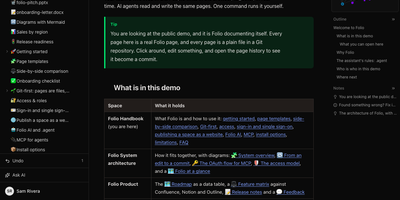
Folio is a self-hosted team wiki that stores every page as a plain Markdown file in a Git repository you own, while your team writes together in the browser in real time. People work in Reading, Live edit, or Source mode, keep editing offline until the connection returns, and watch changes land in the page history as commits they can restore. Data tables with nine column types, filters, and views sit beside the documents, and forms write submissions straight into those tables without requiring an account. Whiteboards, Mermaid diagrams, and a visual diagram editor cover the pictures, while uploads like PDF, Word, Excel, and PowerPoint files open as previewable pages inside the tree. Confluence spaces import with their trees, images, and whiteboards converted, so a migration keeps its structure instead of flattening into a pile of attachments. AI agents read and write the same pages through an MCP server with 41 tools, authenticated by personal tokens or OAuth 2.1, and the built-in assistant answers questions read-only or makes supervised edits. Administrators control access down to a single page, sign people in with SAML, SCIM, or OpenID Connect, hand out expiring share links, and publish a space as a public read-only website. Running on a dedicated VPS on RepoCloud with guaranteed CPU, RAM, and SSD, full root SSH access, and a browser serial console. MIT licensed.
Ollaya
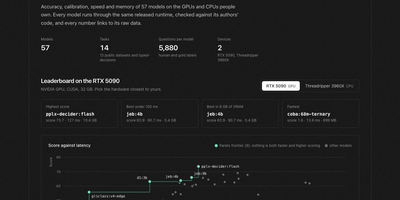
Ollaya serves decision models that answer typed questions about a message, ticket, or document with calibrated probabilities, through a self-hosted API shaped like the hosted service it can replace. Send a state, which can be an email, a support ticket, or any JSON, plus typed choice, score, and yes or no questions, and the model answers in one forward pass in milliseconds without generating text. Pull models by name the way Ollama users already know, with run, list, ps, show, copy, and remove commands managing the local store. Downloads verify every layer against its sha256 digest, resume when interrupted, and share blobs between models so storage stays lean. Existing TypeSafe code keeps working by changing one environment variable, because the /v1/systemone and /v1/decisions endpoints are wire-identical and the official SDK sends its key the same way. The native /api adds routing information and timings, model loading and unloading, and streamed pull progress for your own tooling. Put it to work triaging inboxes, routing requests to the right model or team, screening prompts for injection and jailbreak attempts, or replacing per-token LLM classification calls with a local answer. Agents reach the same engine through the bundled MCP server, and LiteLLM, LangChain, DSPy, LlamaIndex, n8n, and Dify connect through their existing integrations. Running on a dedicated VPS on RepoCloud with guaranteed CPU, RAM, and SSD, full root SSH access, and a browser serial console. Apache-2.0 licensed.

Pinakes
A small library deserves real library software, not a spreadsheet with aspirations: Pinakes runs the whole operation, from the barcode on the spine to the reminder in a reader's inbox. Catalogers add a book by ISBN and watch metadata and covers arrive from Open Library and Google Books, then file it under Dewey categories with barcodes for every physical copy. Circulation handles requests, approvals, pickups, renewals, and returns, with FIFO reservation queues that notify the next reader the moment a copy frees up, and due dates that respect the library's own closure calendar. Patrons browse a public catalog with instant search and filters, reserve from home, renew loans, read ebooks and listen to audiobooks in the browser, and get due-date reminders automatically. The same installation can describe archives to ISAD(G) standards, exchange records through MARC, SRU, Z39.50, and OAI-PMH, and present digitized pages through IIIF viewers. Sixteen bundled plugins, custom staff roles, a homepage editor, and ten themes make it feel like your library, and it installs on ordinary shared hosting with a guided setup. Running on a dedicated VPS on RepoCloud with guaranteed CPU, RAM, and SSD, full root SSH access, and a browser serial console. GPL-3.0 licensed.
Address
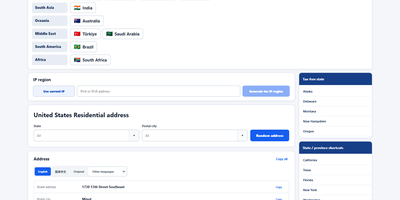
Address is a self-hosted generator that returns real, verifiable postal addresses for 27 countries and regions, each labelled with its source, precision, and coordinates, for form testing, validation checks, and logistics demos. Records come from official registers, open map data, or validated geocoding, and any field it cannot confirm stays empty instead of being invented. Pick a country, region, city, district, or postcode filter that follows the real administrative hierarchy, choose one of ten display languages, and generate. Results can be copied, exported, saved to favorites, or opened in Google Maps or AMap. QA teams fill checkout and signup forms with them, developers test address-format validation, and logistics demos finally show streets that are on the map. The OpenAPI-documented JSON API covers single and batch generation, location search, coverage queries, and address translation. A public coverage monitor shows how complete each country is. Behind the login, the admin console tracks sync history, quick locations, provider credentials, translation routing, access control, and API tokens. Incremental imports back off and stop when a source has nothing new. Running on a dedicated VPS on RepoCloud with guaranteed CPU, RAM, and SSD, full root SSH access, and a browser serial console. MIT licensed.
OpeniLink Hub
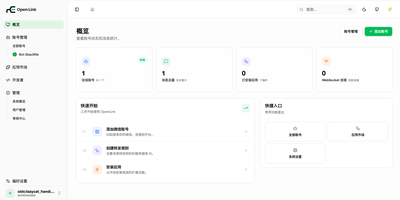
OpeniLink Hub turns a personal WeChat account into a programmable bot platform, with a web console, multi-bot management, and a one-click app marketplace that wires WeChat to Lark, Slack, GitHub, Notion, and twenty other services. Bind accounts by scanning a QR code, then watch every bot's status, expiry window, and message flow from one dashboard. Install marketplace apps without writing code: Lark gains 34 AI-callable tools across calendars, docs, tasks, and meetings, while GitHub brings 36 tools for issues, pull requests, and Actions. Every incoming message fans out in parallel over WebSocket for millisecond pushes, Webhook callbacks to your own servers, and an AI channel that answers through any OpenAI-compatible API. Message tracing follows each message from receipt to delivery, showing exactly which hop stalled when something breaks. Passkey sign-in with fingerprint or hardware keys keeps the console protected, with GitHub and LinuxDo OAuth as alternatives. Reminders, expense tracking, currency conversion, RSS digests, and cron-scheduled pushes run as installable apps, and expiry reminders warn you before the 24-hour reply window closes. Build your own integrations with official SDKs for Go, Node.js, Python, PHP, Java, C#, and Lua, or expose local CLI commands as chat-callable tools with the Runner app. Running on a dedicated VPS on RepoCloud with guaranteed CPU, RAM, and SSD, full root SSH access, and a browser serial console. MIT licensed.
Faucet
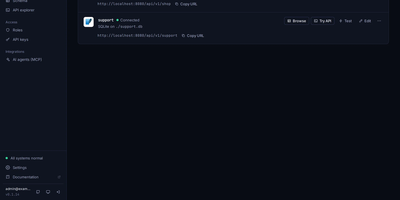
One binary and one command is all it takes: the SQL database you already run gains a secure REST API and MCP server, with no code generation and no ORM boilerplate. Point it at PostgreSQL, MySQL, MariaDB, SQL Server, Oracle, Snowflake, or SQLite and it introspects the schema at runtime, generating full CRUD endpoints with filtering, ordering, and pagination plus a live OpenAPI 3.1 specification. The embedded admin UI connects databases with plain host, port, user, and password fields, tests the connection before saving, and tells you exactly what to fix when it fails. You browse tables, columns, keys, and data, build roles with per-table verb permissions, and issue API keys that are SHA-256 hashed with a role assigned to each. Schema contract locking watches for drift that would silently break your API, with none, auto, and strict modes managed from the UI or CLI. The API explorer builds filtered, paginated requests and copies them out as curl, JavaScript, or Python. An MCP server on the same port gives Claude Code, Cursor, VS Code, Windsurf, and other AI tools governed access to your data under exactly the same roles and keys as any API client. Legacy databases such as SQL Server 2012 or PostgreSQL 9.6 gain a modern API without code changes or migration. Running on a dedicated VPS on RepoCloud with guaranteed CPU, RAM, and SSD, full root SSH access, and a browser serial console. MIT licensed.
Vintrack
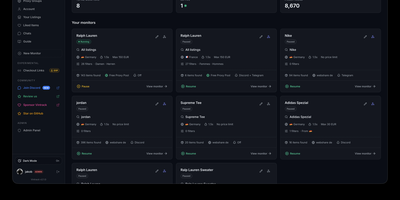
The jacket you want at the price you want sells in minutes, so Vintrack watches Vinted around the clock and pings you the moment a matching listing appears. You build monitors around the searches you actually run, choosing the regional market and narrowing by price range, category, brand, color, clothing or shoe size, condition, and seller country. Matching items stream into a live dashboard feed as they surface, and the same matches can land in Discord through per-monitor webhooks or in Telegram through a connected bot, with rich or compact alert layouts per channel. Regional proxy pools keep catalog checks running, with personal groups for dedicated capacity and health-scored shared pools showing which regions are ready before you rely on them. If you link a Vinted account you control through the browser extension, you can go further without leaving the flow: like items, send offers, message sellers, browse wardrobes, and open checkout for the finds worth acting on. Roles separate free, premium, and admin users on shared instances, sign-in runs through Discord OAuth or any standard OIDC provider, and bounded logs keep a busy instance from eating its own disk. Running on a dedicated VPS on RepoCloud with guaranteed CPU, RAM, and SSD, full root SSH access, and a browser serial console. MIT licensed.
Chunky
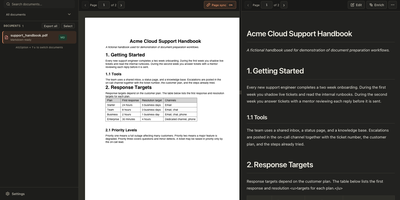
See exactly what your documents look like before a retrieval pipeline swallows them. Chunky puts the original PDF next to the converted Markdown with page-aware scrolling, so broken tables, scrambled columns, and stray artifacts are visible at a glance. Pick a converter, edit the Markdown by hand, then split it into color-coded chunks you can edit, delete, or enrich one at a time. Compare two converters on the same pages in a side-by-side dialog to find which one handles your layouts best. Try token, recursive, sentence, semantic, table, code, and heading-based splitters with adjustable size and overlap, and save the chunk sets that work. Optional model-powered enrichment adds titles, one-sentence context, summaries, keywords, and retrieval questions to each chunk. Process many documents in one batch and export everything as a ZIP. Judge chunk quality by eye, not by guesswork, before any of it reaches an embedding model. Running on a dedicated VPS on RepoCloud with guaranteed CPU, RAM, and SSD, full root SSH access, and a browser serial console. MIT licensed.
Monetr
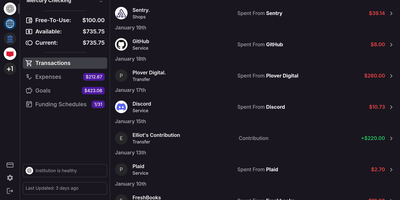
After the bills are covered, how much is actually safe to spend? monetr organizes an entire budgeting application around that one question. Inspired by the defunct Simple bank, it budgets paycheck by paycheck rather than month by month. Funding schedules encode when you get paid - including multiple schedules per account and a weekend-exclusion option for deposits that land early - and every expense or savings goal is tied to one. monetr then calculates how much of each recurring obligation (rent, car payment, subscriptions, on any repeat interval) to set aside from each paycheck, so a large bill never has to come out of a single check. What remains after allocations is surfaced as Free-To-Use, and a forecasting timeline projects contributions, due dates, and leftover funds forward so low-balance periods are visible before they happen. Transactions arrive either as OFX uploads from your bank or automatically through a Plaid connection using your own API credentials, keeping balances and transactions synced without manual entry. The app is mobile-friendly and installable as a PWA on desktop or phone. Self-hosting via Docker Compose is completely free, with all source code public and your financial data on your own hardware.
Arkeep
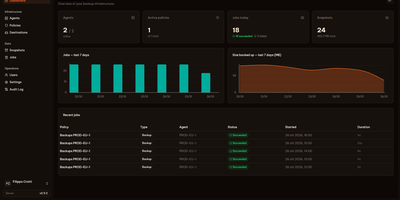
Five servers, five cron jobs, five restic scripts nobody quite remembers writing: Arkeep replaces that archaeology with one dashboard where every backup in your infrastructure reports for duty. A small agent on each machine dials out to the central server and waits for work, so nothing listens on an agent port and machines behind NAT or a home firewall enroll just as easily as cloud VPSes. From the web interface you define destinations, which can be local disk, any S3-compatible storage, SFTP, a restic REST server, or more than forty Rclone backends, then build policies that send one backup job to several destinations at once for a genuine 3-2-1 layout. Docker volumes are discovered automatically, and databases stream straight into the backup with pg_dump and mysqldump instead of fragile file copies. Retention and repository integrity checks run per destination on their own schedules. When recovery day comes, you open any snapshot in the browser, browse its files, and restore a single folder in place or somewhere new. Failures announce themselves by email, Slack, Discord, or webhook, or stay silent in Healthchecks.io. Sign-in is yours to choose: local accounts with TOTP two-factor, or single sign-on through any OIDC provider. Running on a dedicated VPS on RepoCloud with guaranteed CPU, RAM, and SSD, full root SSH access, and a browser serial console. Apache-2.0 licensed.

ChronoFrame
Publish high-resolution photography without social media compression using ChronoFrame, a self-hosted portfolio and gallery platform built around EXIF camera telemetry, live motion media, and interactive map exploration. Drop JPEG, PNG, WebP, TIFF, or HEIC images alongside paired MOV clips into the browser uploader, and the background task queue automatically extracts camera bodies, lenses, focal lengths, shutter speeds, and RGB histograms while pairing Apple Live Photos and Motion Photos for hover playback. Visitors browse your work through a responsive masonry grid with instant ThumbHash placeholders, inspect fine details inside a hardware-accelerated WebGL tiled viewer, or explore shooting locations on an interactive MapLibre or Mapbox globe powered by reverse geocoding. Curators can group shots into reordered albums, protect private collections with passwords, edit ratings and metadata in bulk, and generate custom share preview cards. Storage scales across local disks, S3-compatible buckets, and OpenList backends with configurable CDN delivery. Running on a dedicated VPS on RepoCloud with guaranteed CPU, RAM, and SSD, full root SSH access, and a browser serial console. MIT licensed.
BankMCP
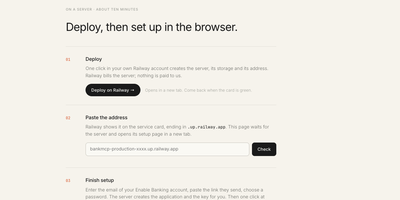
Ask your assistant what you spent on groceries last month, and let it answer from your actual bank accounts instead of a spreadsheet you never update. BankMCP is a small server you run yourself that connects your European banks to Claude, ChatGPT, Cursor, or any MCP client, so questions about balances and spending get real answers. Ask for a balance and it fetches the booked and available figures live; ask where the money went and it searches transactions across every connected account by merchant or invoice number; ask for the month and it totals money in and out while leaving transfers between your own accounts out of the picture. Background watches keep an eye out between conversations: get a webhook when a balance crosses a line, a large debit lands, a named payment arrives, or an expected payment has not shown up by its date. Ready-made prompts cover connecting a bank, building a budget, scanning savings, auditing subscriptions, and spotting unusual transactions. The server is deliberately boring about your data: it keeps consents, account labels, watches, and your login, fetches balances and transactions only when asked, and stores none of them. It is read-only by design, with no payment tools to abuse. Running on a dedicated VPS on RepoCloud with guaranteed CPU, RAM, and SSD, full root SSH access, and a browser serial console. MIT licensed.