WAJ AI Engine
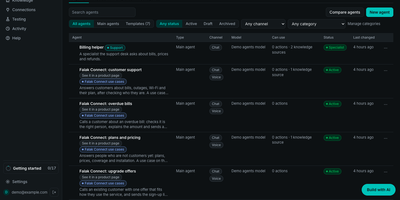
Building an agent in WAJ AI Engine takes configuration, not code: write its instructions, pick a model, attach MCP tools and knowledge, and let it hand off to specialists. The admin portal handles daily work, while an admin MCP server lets Claude, Cursor, or any MCP client build and test agents with the same steps. Uploaded PDF, Word, Markdown, text, and HTML files become a knowledge base the agent searches before it answers. Test suites check answers for required words or tool calls, or score them against a rubric with a judge model, and run against a draft or the live version. A GitHub Action runs a suite on pull requests and fails the job when the pass rate drops. Overview and Conversations show chats, hand-offs to a person, and failed actions per agent, and conversations open with the tool calls they used. Versions, a staging-to-production switch, and an activity log record who changed what and when. Changes reach callers on their next message. Published agents answer over a streamed chat API, an OpenAI-compatible endpoint that lets OpenAI SDKs treat them as models, and voice calls. Models can come from Google Gemini, OpenAI, Azure OpenAI, Anthropic, Ollama, or any OpenAI-compatible server, and a local model needs no API key. Running on a dedicated VPS on RepoCloud with guaranteed CPU, RAM, and SSD, full root SSH access, and a browser serial console. Apache-2.0 licensed.
TalentFlow AI
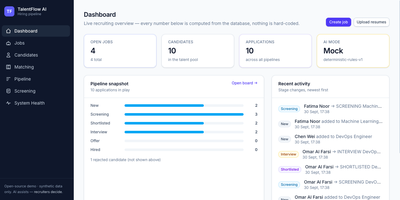
Where most AI hiring tools return one mystery score, this hiring pipeline ranks candidates requirement by requirement and quotes the resume line behind the verdict. Paste a job description or upload a PDF, DOCX, or TXT file, and the requirements split into must-haves and preferences with skills, years, education, and location pulled out. Upload several resumes at once and each becomes a structured profile with an experience timeline, certifications, and canonical skills that keep their evidence line. Match scores print their own formula and weights, and semantic similarity stays a supporting signal that can never override a miss. A pipeline board carries candidates from New through Screening, Shortlisted, Interview, and Offer to Hired, with a Reject off-ramp and an append-only audit trail of every move. The AI assists; the recruiter decides. Screening question sets are generated per application from the match results, probing strengths and honest gaps. Without an OpenAI key the app runs a deterministic mock mode that labels extracted records as mock, and with a key it switches to live extraction and embeddings. A health page reports database and AI configuration without exposing secrets. No protected characteristics are stored or inferred, and the platform never issues a hire or no-hire verdict. Running on a dedicated VPS on RepoCloud with guaranteed CPU, RAM, and SSD, full root SSH access, and a browser serial console. MIT licensed.
Bugaboo
From a workshop's repair queue to a software team's bug list, Bugaboo tracks each piece of work as an issue that people and AI agents can pick up. Every project keeps its own roles and fields. Workflows are maps of statuses and steps that you edit as a draft, try out, and publish when they are right. Ctrl+K opens quick search over issues, projects, and pages, and a visual query builder answers questions like everything about brakes that is not done. Any list can switch to a timeline with dependency arrows between bars, and Plan by effort works the bars out from estimates, working hours, and days away. A timer or a manual entry feeds a weekly timesheet that warns about working-time rules. Agents get only the issues a person hands over. They work in attempts with a plan, steps, and results, and ask a question on the issue when stuck. Accept the result, send it back with a note, or throw it away and undo every change in one step. Claude Code and other AI apps sign in through MCP and act as you, never with more rights. AI is off at the start, and an administrator enables each kind separately. Screens use plain words and fit phones, tablets, and computers, and everyone can download their own data. Running on a dedicated VPS on RepoCloud with guaranteed CPU, RAM, and SSD, full root SSH access, and a browser serial console. AGPL-3.0 licensed.
Nerla
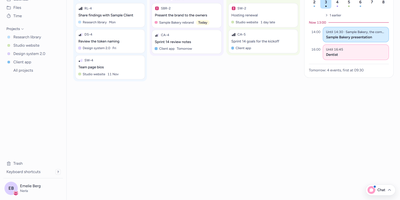
Your team's tasks, calendar, chat, video calls, documents, whiteboards, files, and time sheets all live in Nerla, a workspace with an AI teammate and a pink cat mascot. Home shows tasks from all projects as a board or list beside today's events. Ctrl K jumps to any task, project, file, or teammate. Projects bring their own members, board, chat, and files; tasks carry a status, priority, assignee, due date, and a short number like WEB-12. The calendar handles repeating events, guests, out-of-office days, and working hours, and a team view lines up everyone's week. Chats cover direct messages, groups, and one per project, and any can start a video call with screen sharing and a lobby for outside guests. Papers and whiteboards are edited live by several people and sit in the same folders as files, which can be shared by outside link. The AI teammate acts only as you, answers wherever you mention it, and asks before changing what others see, at a caution level the admin sets. Ollama, OpenRouter, or any model that speaks the OpenAI chat API with tool calling can power it, and outside agents like Claude Desktop connect over MCP. Nothing phones home. A setup script installs the stack and HTTPS, then prints the code that makes your first account the admin. Others join by invite link. Running on a dedicated VPS on RepoCloud with guaranteed CPU, RAM, and SSD, full root SSH access, and a browser serial console. MIT licensed.
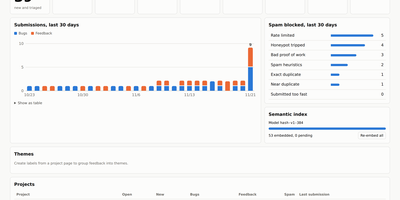
Earful
Shipping a game, web app, or CLI means hearing from people who never make an account, and Earful collects their bug reports, crash logs, and feedback in one self-hosted inbox. Reporters need no login: they use a hosted page linked from a menu or store page, a one-line website widget, or an HTTP API for Unity, Godot, C++, or Python. Crash and exception reports can include version, platform, and GPU details, along with up to 64 KB of backtraces and log tails. Proof of work, signed single-use challenges, rate limits, a honeypot, and duplicate detection stop spam without a CAPTCHA, and doubtful items wait in a Spam tab, one click from restored. Search tolerates typos, ranks exact error strings, and understands meaning offline, allowing a query about a game that freezes to find a report about a stuck loading screen. A report lists similar ones, exposing duplicates at a glance. Status tabs, label filters, bulk actions, keyboard shortcuts, and notes speed up triage, and everything exports as CSV or JSON. A dashboard charts bugs against feedback over 30 days next to the spam it blocked. An MCP server with 23 tools and four prompts lets Claude Code, Cursor, or VS Code list, search, label, and de-duplicate reports through revocable tokens, and draft release notes. Reporter IPs are never stored, only keyed pseudonyms. Running on a dedicated VPS on RepoCloud with guaranteed CPU, RAM, and SSD, full root SSH access, and a browser serial console. MIT licensed.
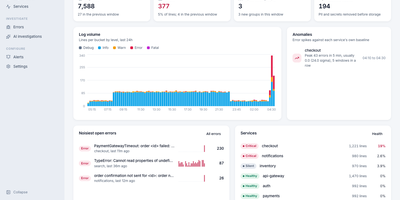
Euron Open LogMind
When production breaks, Euron Open LogMind searches and groups your logs, then returns a root cause where every claim cites a real stored log line you can open and re-check. Services send lines over HTTP, the Python or Node.js SDK, or any OpenTelemetry exporter. Credentials, emails, card numbers, and personal data are masked or hashed before storage, so secrets never reach a disk, a model, or a browser. The explorer filters by keyword, service, environment, level, trace, and request. It also draws a level histogram, shows the lines around any entry, and streams new lines live. Errors collapse by fingerprint: a timeout thrown 230 times for 230 different orders becomes one group. Service health, volume, and error rate come from the logs alone. An investigation collects the first failure, earlier warnings, other services' errors, deploys, and the failing request's trace. Statements that cite nothing real are removed and shown as removed. A single click re-reads every cited line from storage, and follow-up questions reuse the same evidence. Reports show their token cost, and OpenAI, Anthropic, Gemini, Ollama, or an OpenAI-compatible endpoint can write them. Search, grouping, live logs, and alerts work without any model, and threshold or anomaly rules notify by email, signed webhook, or Slack. Organizations, projects, and viewer, admin, and owner roles keep each team's data separate. Running on a dedicated VPS on RepoCloud with guaranteed CPU, RAM, and SSD, full root SSH access, and a browser serial console. MIT licensed.
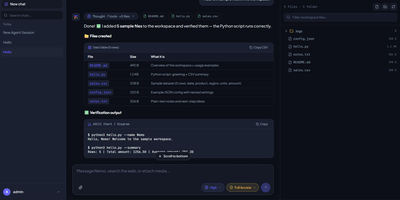
Nemofy Agent
A private AI assistant with its own workspace: Nemofy Agent gives Nemo a file drawer, a code sandbox, and live web research, and by default pauses for your approval before anything sensitive runs. Ask Nemo to create files, crunch numbers, or test a script, and it builds them in a confined /workspace folder and runs verification commands. Files appear in a drawer beside the chat, where each opens to view, edit, save, or delete. For research, Nemo searches, fetches, and crawls the web through Firecrawl Local. PDF, Word, spreadsheet, and slide files are parsed natively. Pick a provider and model per conversation, from OpenRouter, River AI, OpenAI, Anthropic, Gemini, DeepSeek, Groq, NVIDIA, local Ollama, or a custom endpoint. A faster worker model takes parallel research and coding sub-tasks, with timeouts, retries, and a fallback model when a provider stalls. A context gauge shows what fills the window, and at 80% capacity older turns are summarized automatically. Reusable Markdown skills like code_and_data and deep_research load on demand, and external MCP tools connect from the same settings tab. In default mode, read-only actions run freely while sensitive ones pause to approve, edit, or reject, and paused runs resume after a restart. Access sits behind an admin login, and API keys are encrypted at rest per user profile with AES-256-GCM. Running on a dedicated VPS on RepoCloud with guaranteed CPU, RAM, and SSD, full root SSH access, and a browser serial console. Apache-2.0 licensed.
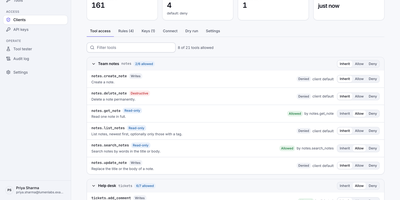
Euron MCPHub
MCP servers multiply fast, and every agent ends up with its own URLs and copied tokens, so Euron MCPHub gives every client one endpoint and one key. Register a server by URL or launch command. Discovery lists its tools, resources, and prompts. The /mcp endpoint merges every server's tools as server.tool, or server__tool for APIs that reject dots. New clients start with no access. Rules allow tools by pattern, and the most specific rule wins. A denied tool never appears in the client's list. Rules can limit argument values and cap calls per minute. A dry run names the rule that would decide a call without making it. Upstream tokens are encrypted, write-only, and attached only when the gateway connects. Cloud metadata addresses are always refused, and private networks need an allow-list entry. Every call, allowed or refused, lands in a searchable call log with redacted arguments, CSV export, and usage charts. Tool definitions are fingerprinted, so a quietly rewritten description or schema gets a dated version with the diff. Scheduled health checks mark a server down after three failures and rediscover its tools on recovery. A tool tester calls any tool as one of your clients, and Connect tabs hold Cursor, curl, and MCP Inspector snippets. Admins, operators, and viewers get their own permissions, in a dashboard with light and dark themes. Running on a dedicated VPS on RepoCloud with guaranteed CPU, RAM, and SSD, full root SSH access, and a browser serial console. MIT licensed.
Euron CodeAgent
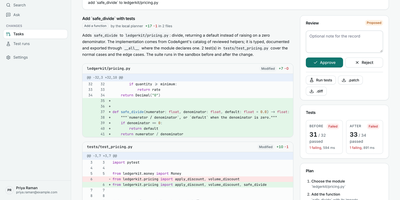
Euron CodeAgent answers questions about your repository with citations to exact lines, and its patches arrive with sandboxed test results for a person to approve. Upload a zip or tar.gz, or give an HTTPS git URL, and the code is indexed with a graph of calls, imports, and inheritance. Search matches symbols by exact name, prefix, or fuzzy spelling, text by literal or regular expression, and code by meaning. Each answer streams in with numbered chips that open the cited lines. When the code holds no answer, CodeAgent says so. Describe a change and the agent runs your tests, edits a scratch copy, reruns them, and files a patch with the diff, reasoning, and both results. Built-in offline skills rename a symbol across the codebase, add a tested helper, and repair a failing test with small verified changes. Reviewers comment on lines or the whole patch and approve or reject with a note, and a setting bars requesters from deciding their own tasks. Approved patches apply to a branch in CodeAgent's own copy and export as .diff or git am files, so nothing is pushed to your git host. Tests run in a throwaway container with no network and limits on CPU, memory, processes, and time. It runs offline with no key, and an OpenAI-compatible API or Ollama can be added for open-ended changes. Running on a dedicated VPS on RepoCloud with guaranteed CPU, RAM, and SSD, full root SSH access, and a browser serial console. MIT licensed.
LapisLLM
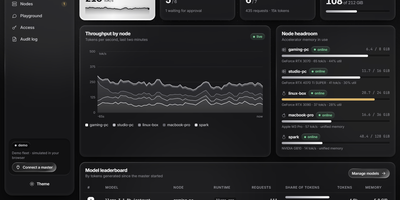
Behind one OpenAI-compatible endpoint, LapisLLM turns the old gaming PC, the work laptop, and the Apple Silicon Mac you already own into a single self-hosted model fleet. A master keeps the registry and routes every request to the right machine, and a small agent on each box runs llama.cpp, vLLM, or MLX and reports its GPU or unified memory. Clients need one base URL and one API key, pick models by name, and see which machine answered in an X-Lapis-Node header. Admission checks free memory minus a reserve before any model starts, first on the master and again on the agent, and a refusal states the numbers. Best-fit placement packs small models onto small machines so the big box stays free, and previews each decision before you commit. New machines stay pending until an admin types the fingerprint printed on that machine, and scoped API keys are shown exactly once. Self-healing brings back the models that should be running after a restart, one at a time per node, while models you stopped stay stopped. Drain a machine out of rotation without clients noticing, export the fleet to JSON without secrets, and scrape Prometheus metrics. The lapis demo command runs a real master with five simulated nodes, so the console can be explored without a GPU. Running on a dedicated VPS on RepoCloud with guaranteed CPU, RAM, and SSD, full root SSH access, and a browser serial console. MIT licensed.
Jane Avenue
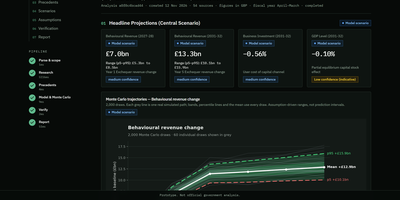
Eighteen independent checks decide whether Jane Avenue shows you a forecast of a UK tax change at all. Type a reform in plain English, such as corporation tax from 25% to 28%, and every parsed assumption appears as an editable field. A scope gate turns away negative rates, non-UK taxes, devolved rates, and steps beyond historical bounds. Research reads only official sources such as gov.uk, the OBR, and ONS, and matches each quoted number word for word against a saved copy of its page. Precedents from 16 corporation tax reforms since 1983 and 1,736 wider fiscal ones are ranked by similarity, with official costings kept apart from outcomes. The simulation reports revenue, investment, GDP, and the cost of capital across three scenarios, plus a 2,000-draw Monte Carlo whose ranges widen over time. Nineteen assumption sliders re-run it in milliseconds, and a ready reckoner covers 17 HMRC measures, including income tax, VAT, and fuel duty. The verifier recomputes the engine and audits every citation and every digit in the report. Reports carry numbered sections, traceable figures, and a source directory, and export to Markdown or PDF. An evaluation page shows the backtest and interval coverage, so you can judge the results. Cached mode replays recorded research with no API key, mock mode runs offline fixtures, and live mode uses your own Gemini key. Running on a dedicated VPS on RepoCloud with guaranteed CPU, RAM, and SSD, full root SSH access, and a browser serial console. MIT licensed.
FraudGuard AI
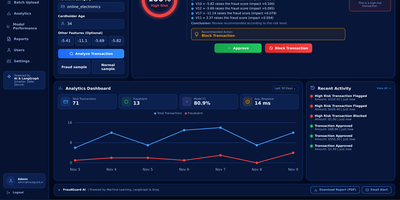
For every card transaction it scores, FraudGuard AI writes an investigation report that explains why the payment looks risky and sends the worst cases to a human analyst. Type an amount, time, merchant category, and cardholder age, or load a sample, and the model returns a fraud probability, a Low, Medium, or High risk level, and an action: approve, hold, or block. Tabs reveal the factors that pushed the score up or down, recommended steps, the agent's trace, and a chat box for asking why a case was flagged. High-risk cases wait for an analyst to approve or block them, and every note, decision, and alert is time-stamped and attributed to a user. A live-stream demo scores a generated transaction every second or so, a what-if simulator redraws the risk as you drag sliders, and batch upload scores up to 1,000 CSV rows. Analytics show daily transaction and fraud counts and a risk heatmap by hour and merchant category, while a model page lists precision, recall, a confusion matrix, and ROC and precision-recall curves. Every case exports as a PDF report, high-risk cases can trigger an email alert, and light or dark themes are remembered by the browser. Optional Firebase sign-in adds Admin and Analyst roles and a Users page where admins approve who may enter. Running on a dedicated VPS on RepoCloud with guaranteed CPU, RAM, and SSD, full root SSH access, and a browser serial console. MIT licensed.
CRM for WhatsApp
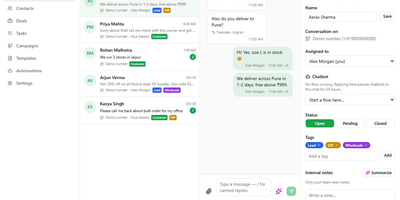
When several people answer customers on one WhatsApp number, chats get missed and replies collide, and CRM for WhatsApp fixes that with a shared real-time inbox tied to contacts, deals, campaigns, chatbot flows, and an AI assistant. Numbers connect through Meta's official Cloud API or by scanning a QR code, which is unofficial and carries a ban risk that warm-up and pacing only reduce. The inbox updates in real time with assignment, internal notes, tags, quick replies, media, and read receipts, and offers approved templates once the 24-hour window closes. Contacts carry custom fields, consent status, and segments with CSV import and export, a drag-and-drop pipeline tracks deals, and tasks send reminders. Campaigns send Meta-approved templates that can be synced or submitted from inside the app, with scheduling, throttled sending, and live delivery reports. A visual flow builder chains menus, validated questions, conditions, delays, tags, deals, webhooks, and AI replies, started by a keyword, a first message, or a campaign reply. The assistant suggests replies, rewrites and translates messages, summarizes chats, and answers from a knowledge base using the workspace's own OpenAI, Gemini, or Claude key. A REST API and signed webhooks come with every workspace. Resellers get plans, trials, coupons, invoices, four payment options, white-label branding, and a super-admin panel. Running on a dedicated VPS on RepoCloud with guaranteed CPU, RAM, and SSD, full root SSH access, and a browser serial console. MIT licensed.
Palimpsest Gateway
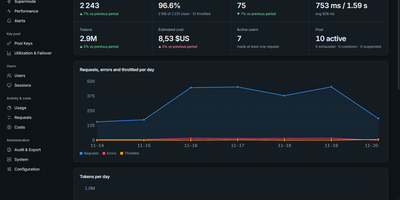
Swap one base URL and Palimpsest Gateway turns the LLM keys you own into a single OpenAI-compatible endpoint that fails over by itself. Apps keep their OpenAI client and use a gateway key of their own; provider keys stay encrypted and are never shown again. Teams that mix free and paid keys cap the free ones, leave the paid ones uncapped, and the gateway spends the free allowance first. When a key hits a rate limit, empty quota, outage or refusal, the same call moves to the next suitable key. Clients send only the new message, because the gateway keeps per-user session history and carries it through a failover. Asking for palimpsest/supermode picks the strongest model the pool can serve right now and skips any that cannot take the prompt, images or tools. A circuit breaker skips a provider in a real outage, and a concurrency gate caps in-flight requests per provider. Per-user daily caps and a pool low-water mark throttle demand before the keys run dry. Live Flow traces each request through the gateway, retries included, and key tests find the models an account can use. Spend appears against the per-model prices and monthly budget you enter, by day, model and user, with a projection. An audit trail, CSV exports and Prometheus metrics cover operations. The dashboard never shows message content. Running on a dedicated VPS on RepoCloud with guaranteed CPU, RAM, and SSD, full root SSH access, and a browser serial console. MIT licensed.
TaskBrigade
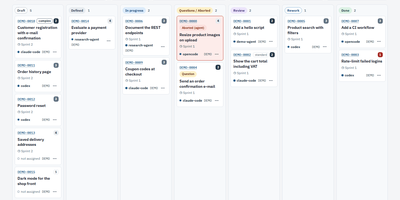
TaskBrigade is agile project management for teams of AI agents: a backlog, kanban board, sprints and pull request review where Claude Code, Codex, OpenCode and human teammates all pick up assigned work. Tasks carry acceptance criteria and their own branch, and finished work arrives as a pull request that a human or a reviewer agent approves, rejects or returns with change requests. An inbox gathers open questions, results waiting for review and aborted runs in one place. Workflows turn a chain of tasks into a reusable template that starts by hand, on a cron or workday schedule, or on an event, with approval steps, parallel groups and token budgets that pause a run at 100 percent. Projects marked local-only hand work exclusively to agents whose model runs on your own hardware, which keeps confidential material away from cloud models. Telegram and email notifications follow a per-event matrix with quiet hours, and from Telegram you can approve a review or answer an agent's question. Orchestrator agents, or OpenClaw messages in Telegram, create, split and assign tasks across several machines, each with its own work directory and parallel-task limit. Claude Desktop and Codex Desktop connect through MCP to draft and assign tasks straight from a chat. The interface speaks English or German and folds into a bottom tab bar and single-column board on phones. Running on a dedicated VPS on RepoCloud with guaranteed CPU, RAM, and SSD, full root SSH access, and a browser serial console. Apache-2.0 licensed.
Task Panel
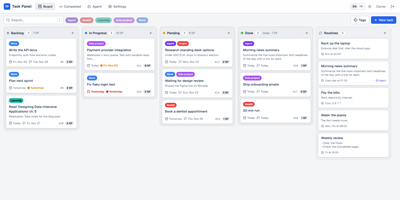
A self-hosted kanban board for personal tasks, Task Panel can pass any card to an optional AI agent that works on it and reports back in a comment. Planning a day means dragging cards between Backlog, In Progress, Pending and Done with a mouse, a finger or the keyboard. Cards carry tags, story points and a due date that glows amber two days out and red once it passes. Anyone with a standing chore, like a morning news summary, sets a routine on a daily, weekday or cron schedule and lets the agent handle each task. Someone who wants a task researched clicks Hand to agent, sets a model, thinking level, time limit and token budget, and reads the answer in a comment. Finished work leaves the board at midnight and appears on a Completed page grouped by day, covering 7 days, 30 days or a month. The agent runs on a Claude subscription or a provider API key, and OpenClaw's own interface lets you chat with it and pick its tools. Web Push alerts, with no third-party account, announce when a run finishes or needs you. One JSON file backs up the whole panel and restores it in one step. The interface comes in English and Turkish, with light and dark themes. Running on a dedicated VPS on RepoCloud with guaranteed CPU, RAM, and SSD, full root SSH access, and a browser serial console. MIT licensed.
Memoturn
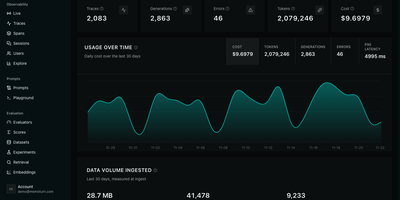
Tracing each model call, pricing it, scoring the answer, and versioning the prompt behind it, Memoturn gives AI teams proof of what works before it ships. Traces unfold on a waterfall timeline where agent plans, tool calls, retrievals, and generations each get a bar, with tokens and cost on every step. Quality is measured three ways: offline experiments over datasets, online judges sampling production traces, and human review queues with one-click scoring. Scores appear on the trace they came from. A versioned prompt registry promotes versions through deploy channels, A/B tests split live traffic between them, and a streaming playground compares models side by side. Cost, token, and latency charts break down by day, model, user, and tool, while budget alerts run every minute and automations post to Slack or a webhook when a score drops. A retrieval page flags weak document matches, and an embeddings map with similarity search turns one bad generation into every trace like it. An MCP server hands prompts, datasets, and review queues to agent IDEs like Claude Code and Cursor, with roles checked per tool. Teams get organizations and projects, SSO through OIDC or SAML, read-only viewer roles, PII masking at ingest, and retention rules. Data arrives from any OpenTelemetry exporter, with integrations for OpenAI, Anthropic, LangChain, and LiteLLM. Running on a dedicated VPS on RepoCloud with guaranteed CPU, RAM, and SSD, full root SSH access, and a browser serial console. Apache-2.0 licensed.
Mandate
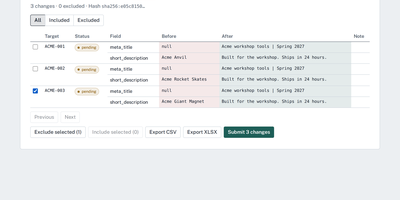
Let Claude or ChatGPT propose changes to your online shop, issue tracker, or internal APIs, and Mandate makes sure a person approves the exact before-and-after list before a single record is written. Requesters can exclude records or export the list as CSV or XLSX, while the approver's page is rendered by the server from stored data, never from text the model wrote. Approval rules depend on record count and role, chains can have several steps, and nobody approves their own request. Roles default to deny: an operation no role grants is never listed to the client, grants can pin an argument such as one brand, and fields like cost stay hidden. Approved changes are applied in batches by a durable workflow that survives restarts, and rollback restores the values recorded before the write. Any REST API with an OpenAPI document or any MCP server attaches without code, and presets for Magento 2 catalogs and Gitea issues ship ready to use. Typical uses include bulk shop edits, issue triage, read-only lookups for support staff with sensitive fields removed, and nightly automation that proposes while a person approves. One endpoint, one login, and one audit log with JSON Lines export serve every connected client, and credentials stay in an encrypted vault the model never sees. Running on a dedicated VPS on RepoCloud with guaranteed CPU, RAM, and SSD, full root SSH access, and a browser serial console. Apache-2.0 licensed.