Wallabag
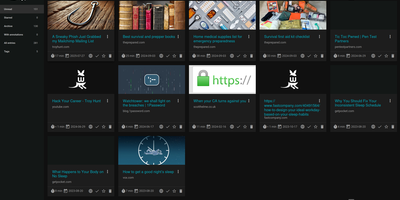
With 12,800+ GitHub stars and over a decade of active development since 2013, wallabag is the most established open-source read-it-later application — built for readers who want complete ownership of their article archive without depending on services that shut down (RIP Pocket). The Symfony-based PHP application extracts clean article content using Graby and php-readability, stripping advertisements, pop-ups, and tracking scripts to deliver a distraction-free reading experience optimized for both desktop and mobile screens. Save articles via Chrome, Firefox, or Safari browser extensions, Android and iOS native apps, REST API, or the built-in bookmarklet — all syncing to your self-hosted instance. Organize your library with tags, automated tagging rules that classify articles by content patterns, starred favorites, and archived collections. The annotation system enables highlighting extracts and attaching notes directly within articles for research and reference workflows. Import your existing reading lists from Pocket, Omnivore, Instapaper, Pinboard, Readability, and browser bookmarks. Export articles in PDF, ePUB, MOBI, JSON, CSV, TXT, or HTML for offline reading on Kindle, Kobo, and other e-readers. Full-text search with filters by reading time, domain, language, and creation date makes retrieval instant across thousands of saved articles. RSS feed output integrates with feed readers and automation services. Docker deployment with SQLite, MySQL, or PostgreSQL persistence backends takes under five minutes. Running on a dedicated VPS on RepoCloud with guaranteed CPU, RAM, and SSD, full root SSH access, and a browser serial console. MIT licensed.
Astron Agent
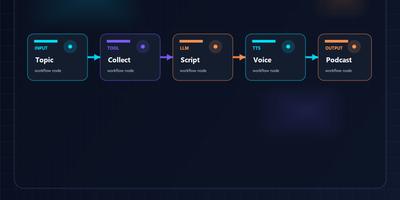
Recognized by the CNCF Landscape in the AI Agent – Workflow Orchestration category alongside Dify and Temporal, Astron Agent is iFLYTEK's fully open-source platform for building, deploying, and managing enterprise multi-agent systems — backed by 8,900+ GitHub stars and the production infrastructure behind one of China's largest AI companies. Unlike pip-install frameworks such as LangGraph, CrewAI, or AutoGen, Astron Agent ships as a complete microservices platform spanning 10+ services across Java, Python, Go, and TypeScript: a ReactFlow-based visual workflow builder for low-code agent orchestration, native integration with the Model Context Protocol (MCP) for tool calling, a built-in model management layer supporting iFLYTEK Spark, OpenAI, Anthropic, and on-premises MaaS deployments, and a multi-tenant Go authentication service powered by Casdoor. The standout differentiator is native RPA integration via the companion astron-rpa project (7,200+ stars), providing 300+ pre-built automation capabilities spanning browser, Office document, and enterprise system interaction — enabling agents to execute physical UI actions rather than only API calls. Infrastructure includes PostgreSQL for multi-tenant data isolation, MySQL for application metadata, Kafka for event streaming, Redis for caching, and MinIO for object storage, all orchestrated through Docker Compose with explicit health checks and dependency chains or production Kubernetes Helm charts. Running on a dedicated VPS on RepoCloud with guaranteed CPU, RAM, and SSD, full root SSH access, and a browser serial console. Apache 2.0 licensed.
OpenPencil
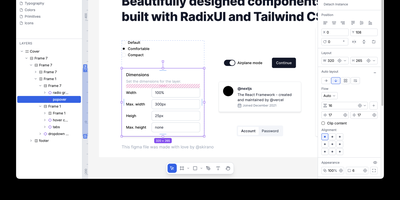
OpenPencil is the open-source design editor that reads and writes native Figma .fig files using the same Kiwi binary format — enabling bidirectional copy-paste between Figma and OpenPencil without data loss. The built-in AI assistant provides 90+ design tools through a chat interface, creating and modifying shapes, fills, strokes, auto-layout, components, variables, and boolean operations from natural language prompts, with BYOK support for Anthropic, OpenAI, Google AI, OpenRouter, Z.ai, MiniMax, and compatible endpoints. A Skia CanvasKit WASM renderer paired with Yoga WASM layout engine delivers Figma-parity rendering with flex and CSS Grid support including gap, padding, and alignment. The headless CLI inspects node trees via XPath queries, lints naming and accessibility, converts between document formats, analyzes color and typography patterns, extracts design tokens, and exports to PNG, SVG, JSX/Tailwind, and HTML. An MCP server exposes all design operations over stdio and HTTP, connecting Claude Code, Cursor, Windsurf, and Gemini CLI for AI-assisted design automation. Real-time P2P collaboration via WebRTC with Yjs CRDT synchronization requires no server and no account. The Vue SDK provides headless components for embedding the editor into custom applications. Ships as a 7 MB Tauri v2 desktop app for macOS, Windows, and Linux, or runs in any browser as a PWA. Running on a dedicated VPS on RepoCloud with guaranteed CPU, RAM, and SSD, full root SSH access, and a browser serial console. MIT licensed.
Gotify
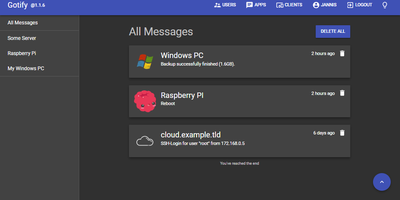
Real-time alerts from your own infrastructure to your phone, with no Firebase, Pushover, or third-party push service in the path: Gotify is a simple, self-hosted notification server written in Go. The model is deliberately minimal: senders push messages with a single HTTP POST to the REST API, receivers subscribe over a WebSocket stream, and a clean React web UI manages the pieces. Senders are namespaced as "applications," each with its own token, so your backup script, Uptime Kuma, CI pipeline, and cron jobs each get an identity, an icon, and independently revocable credentials - centralized alerting from many services with per-source management. Messages carry a title, body, and priority level that maps to notification importance on the client. The official Android app (on both F-Droid and Google Play, notable for working entirely without Google Play Services) shows push notifications for new messages; the web UI itself supports Web Push in the browser; and gotify/cli pushes messages from shell scripts with one command. A server-side plugin system adds custom behavior, and the whole thing runs as a single small binary with SQLite by default - near-zero resource footprint. Because dozens of tools (and Apprise) speak Gotify natively, it slots in as the notification hub for an entire homelab or ops stack.
Pixelfed
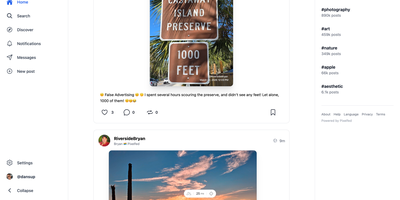
With nearly 7,000 GitHub stars and instances spanning hundreds of federated servers, Pixelfed has become the leading open-source alternative to Instagram — delivering ad-free, algorithm-free photo sharing across the Fediverse. Built on Laravel with a Vue.js frontend, Pixelfed provides a polished, mobile-responsive interface where users upload photos and videos, apply built-in filters, create multi-image posts with alt text, share ephemeral stories, organize content into curated collections, and exchange direct messages — all without tracking, algorithmic manipulation, or targeted advertising. Federation through the ActivityPub protocol means Mastodon, Pleroma, and other Fediverse users can follow Pixelfed accounts, view photo posts in their timelines, and interact through likes, boosts, and replies, while Pixelfed users can discover content through both local and federated timelines. Instance administrators control registration policies, content moderation rules, federation blocklists and allowlists, storage backends including local or S3-compatible options, and server-wide settings. The Mastodon-compatible API enables third-party mobile app support alongside the built-in Progressive Web App experience. Advanced features include blurhash image placeholders for smooth loading, federated groups for community building through FEP-400e and FEP-1b12 extensions, HTTP Signatures with Authorized Fetch for secure federation, and comprehensive data export for full portability. Deployment requires PHP 8.1+, MySQL or PostgreSQL, Redis, and a reverse proxy, with Docker Compose configurations available for streamlined setup. Running on a dedicated VPS on RepoCloud with guaranteed CPU, RAM, and SSD, full root SSH access, and a browser serial console. AGPL-3.0 licensed.

Tandoor
The deep end of self-hosted recipe management: Tandoor Recipes is a Django/Vue application that replaces Paprika, AnyList, and ad-choked recipe sites with a database you control. Import is where most people start: paste any URL and Tandoor scrapes schema.org markup for ingredients, instructions, images, times, and nutrition; bulk-paste URLs for batch import; or migrate wholesale from Mealie, Paprika, Nextcloud Cookbook, Pepperplate, and other managers with built-in importers. The structured recipe editor tracks ingredients individually, which is what powers everything downstream: full-text search with trigram similarity, a "what can I make with what's in the fridge" ingredient search, automatic nutrition via OpenFoodFacts, and shopping lists that merge duplicate ingredients across recipes, convert units, scale by servings, and sort by your supermarket's actual aisle layout. The weekly meal planner is drag-and-drop, feeds shopping lists automatically, exports to your calendar, and shows a nutritional summary for the week. Multi-user support comes with a granular permission system - shared household cookbooks, private recipes, even secret ones - and shopping lists sync in real time so two people can shop simultaneously. A full REST API integrates with Home Assistant and Grocy. For households serious about cooking, Tandoor's depth is unmatched.
Open Canvas
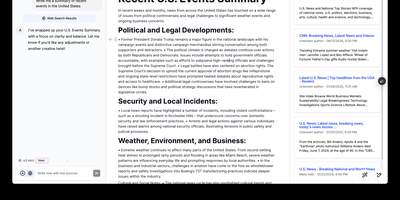
Open-source alternative to OpenAI's Canvas — a collaborative writing and coding environment where AI agents help you draft, edit, and refine documents through an agentic architecture built on LangGraph. The dual-mode editor combines a BlockNote rich text editor for live-rendered markdown with a CodeMirror-based code editor supporting syntax highlighting across multiple programming languages, letting you switch between prose and code artifacts within the same session. The built-in reflection agent automatically generates style rules and user insights from your chat history, storing them in a shared LangGraph memory store that persists across sessions for increasingly personalized assistance. Pre-built quick actions provide one-click access to common writing transformations including summarize, expand, simplify, and translate, while coding actions offer explain, refactor, add comments, and convert between languages. The monorepo architecture separates the Next.js 14 frontend from the LangGraph agent backend, connecting via HTTP and WebSocket protocols through the @langchain/langgraph-sdk client. Seven LLM providers are supported out of the box — OpenAI, Anthropic Claude, Google Gemini, Fireworks AI, Groq, Azure OpenAI, and local Ollama models — with Supabase handling authentication and data persistence. Deploy via Docker or build from source. Running on a dedicated VPS on RepoCloud with guaranteed CPU, RAM, and SSD, full root SSH access, and a browser serial console. MIT licensed.
GrowthBook
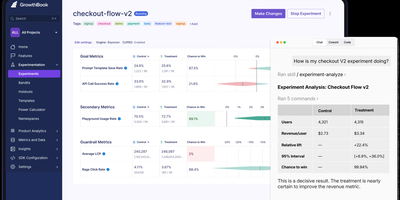
Used by over 3,000 organizations including Dropbox, Khan Academy, Sony, Pepsi, Wikipedia, and Mistral, GrowthBook is the open-source experimentation platform that handles over 100 billion feature flag evaluations daily across its cloud and self-hosted deployments. Feature flags support advanced targeting with user attributes, gradual percentage rollouts, prerequisite dependencies, and scheduled launches, with both client and server SDKs evaluating flags locally from a cached payload for sub-millisecond performance with zero network calls per check. The warehouse-native architecture queries experiment results directly from 11 data sources including BigQuery, Snowflake, Databricks, Redshift, ClickHouse, Mixpanel, and PostgreSQL, eliminating duplicate data pipelines. The statistics engine implements CUPED variance reduction, sequential testing, Bayesian analysis, post-stratification, multi-armed bandits, and sample ratio mismatch checks with fully open-source methodology. Product analytics provides dashboards with funnels, retention cohorts, and event-based tracking shareable across teams. Twenty-four SDKs cover React, Next.js, Node.js, Python, Go, Ruby, PHP, Java/Kotlin, Swift, C#/.NET, Rust, Elixir, Angular, and edge runtimes including Cloudflare Workers, Fastly Compute, and Lambda@Edge. The MCP server and REST API enable AI coding agents to create features, start experiments, and manage stale flags programmatically. Self-hosting deploys via Docker Compose with MongoDB, or via Helm charts on Kubernetes, with the same codebase powering both open-source and managed cloud offerings. Running on a dedicated VPS on RepoCloud with guaranteed CPU, RAM, and SSD, full root SSH access, and a browser serial console. MIT licensed.
InvoicePlane
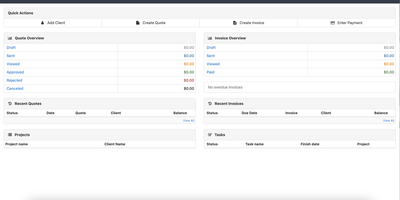
InvoicePlane manages the complete freelance and small-business billing cycle — draft quotes, convert them to invoices, automate recurring charges, collect payments through Stripe and PayPal, and generate EU-compliant eInvoice XML for automated processing by accounting systems. Deployed over 100,000 times across 193 countries, the PHP 8.2+ application on CodeIgniter 3 with MySQL or MariaDB handles everything from first estimate to final receipt. EU-compliant eInvoice generation creates machine-readable XML invoices meeting European Union standards since version 1.6.2. Recurring invoices automate periodic billing with configurable controls that pause generation when previous invoices remain unpaid. Online payment integration lets clients pay directly through Stripe, PayPal with Advanced Credit Cards, and Venmo support. The CRM-like client management module stores contact details, notes, custom fields, and complete transaction history per client. Product and task management modules let you build line-item invoices from reusable product catalogs and project tasks. Customizable PDF templates powered by mPDF support branded invoice layouts with QR codes, while email delivery via PHPMailer handles automated sending with configurable SMTP. A guest portal gives clients read-only access to view and pay their outstanding invoices and quotes. Financial reporting tracks revenue, outstanding balances, and payment history. The multi-language interface supports community translations, and multi-currency handles international invoicing. Deploy via Docker Compose with automatic database migrations. Running on a dedicated VPS on RepoCloud with guaranteed CPU, RAM, and SSD, full root SSH access, and a browser serial console. MIT licensed.
Gotenberg
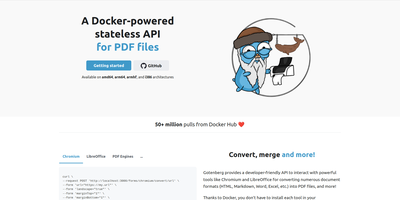
Send a document, receive a PDF: Gotenberg is a Docker-based, stateless HTTP conversion API trusted in production by thousands of companies and adopted by notable open-source projects. Send files as multipart/form-data, get a PDF back; Chromium, LibreOffice, and fonts are the container's problem, not yours. Headless Chromium handles URLs, HTML templates, and Markdown with pixel-perfect browser rendering: it executes JavaScript, loads web fonts, waits for network idle, a JS expression, or a DOM selector before rendering SPAs, and accepts injected cookies and HTTP headers for authenticated pages. LibreOffice converts 100+ office formats - .docx, .xlsx, .pptx, and legacy formats - with page-range extraction and PDF/A archival conformance. Built-in PDF engines round out the pipeline in every image variant: merge, split, rotate, flatten, encrypt, watermark, stamp, read/write metadata and bookmarks, plus Factur-X/ZUGFeRD e-invoicing and PDF/UA accessibility compliance. Screenshots of URLs and HTML come from the same endpoints. Zero-transfer pipelines stream files directly between S3, MinIO, or GCS presigned URLs and Gotenberg, bypassing your application entirely, and webhooks enable async processing. Statelessness means horizontal scaling is trivial - run as many replicas as your conversion volume demands. Three image variants (full, Chromium-only, LibreOffice-only) trim the footprint to what you actually use.

pgweb
Inspect a PostgreSQL database right now, without installing pgAdmin or exposing Postgres to the internet - pgweb answers that recurring need. It's a Go application from Dan Sosedoff, a decade in development, shipped as a single statically-linked binary with zero dependencies - the Docker image is essentially just the executable - that puts a clean browser UI in front of any PostgreSQL 9.1+ server. Connect via URL string or host/port credentials, and browse tables, views, and sequences from the sidebar; selecting a table shows its rows immediately alongside tabs for structure, indexes, and constraints. The Query tab executes arbitrary SQL with query history, and the Explain Query button renders the query plan - estimated cost, row counts, execution strategy - which makes pgweb a quick performance-triage tool, not just a browser. Results and entire tables export to CSV, JSON, or XML in a click. Connectivity is more flexible than its size suggests: native SSH tunneling (password or key) reaches databases behind firewalls, server bookmarks make switching instances instant, and an optional multi-session mode handles several databases concurrently. For a RepoCloud stack full of Postgres-backed apps, one pgweb instance is the universal inspection hatch. MIT-licensed, actively maintained.
OpenBot
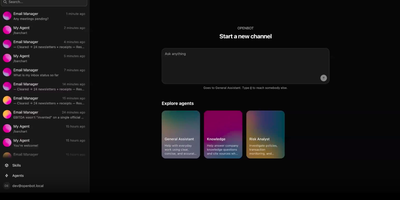
Open source GrokBot, built by the team behind the AG-UI protocol. OpenBot is the open-source enterprise agent platform that gives every AI coworker its own sandboxed computer — a real Chromium browser with its own login sessions, a private filesystem, and only the MCP tools you explicitly grant. The centralized gateway evaluates CEL policy rules against tool name, intent, bot identity, page URL, element attributes, and file paths before any action executes, writing an immutable audit row for every call and outcome. Any agent that speaks AG-UI — LangGraph, Mastra, CrewAI, Pydantic AI, Google ADK, or hand-written endpoints — registers as a Bot and receives its own channel with persistent conversation history. The take-the-wheel system lets humans assume control when an agent encounters login walls or two-factor prompts, recording control transfers as structured audit events. Knowledge documents from Google Drive and OneDrive carry source-based permissions where deny principals always win and ambiguous mappings refuse retrieval entirely. The React and Vite frontend provides live screen viewing of each agent's browser, channel-based chat, admin settings, and component galleries. The Hono API server on port 3001 handles authentication, role-based access, tenant packaging, and credential management backed by PostgreSQL with pgvector. Deploy via Docker Compose with the included supervisor that manages per-bot computer containers. Running on a dedicated VPS on RepoCloud with guaranteed CPU, RAM, and SSD, full root SSH access, and a browser serial console. MIT licensed.
OpenReplay
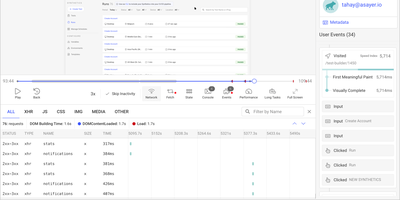
Backed by 12,400+ GitHub stars and positioned as the self-hosted alternative to FullStory and Hotjar, OpenReplay delivers the open-source session replay platform that keeps every byte of user behavior data on your own infrastructure. The JavaScript tracker captures pixel-perfect recordings of clicks, scrolls, form inputs, and navigation with automatic sensitive data masking, while simultaneously logging network requests, console errors, JavaScript exceptions, and Redux, VueX, MobX, NgRx, Pinia, and Zustand store state changes for complete technical context. DevTools mode reconstructs each session with full stack traces, GraphQL queries from Apollo and Relay, Fetch and Axios request payloads, CPU and memory metrics, and page speed waterfall charts — effectively giving developers a browser inspector tied to any user session. Product analytics surfaces conversion funnels, user journeys, click heatmaps, web vitals trends, and retention cohorts without requiring custom instrumentation. Co-browsing connects support agents to live user sessions with cursor control and WebRTC audio, enabling real-time assistance without third-party screen-sharing software. Integrations push session context into Sentry, Datadog, CloudWatch, Stackdriver, and Elastic for front-to-back debugging. Feature flags enable gradual rollouts with session-level targeting. The platform deploys to any cloud via Docker and Kubernetes with auto-scaling ingestion handling up to 50,000 sessions per month on the open-source edition. Running on a dedicated VPS on RepoCloud with guaranteed CPU, RAM, and SSD, full root SSH access, and a browser serial console. AGPLv3 licensed.
LinkWarden
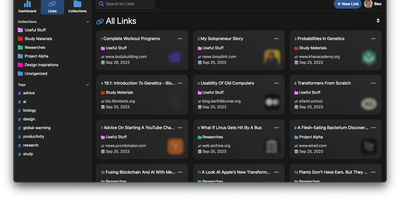
Links rot - the hard truth Linkwarden is built around, as a collaborative bookmark manager that preserves what it saves. Every page you save is fully preserved - a screenshot, a PDF, a self-contained single-file HTML archive (generated by the Monolith Rust binary), and a clean reader view - so the content survives even after the original site disappears. Think of it as a private Wayback Machine you own, with an optional one-click snapshot to archive.org on top. The reading experience matches the archival rigor: a distraction- free reader view supports text highlighting and annotation, and full-text search across everything you have saved is powered by Meilisearch. Optional AI tagging analyzes page content and auto-assigns tags - generate new ones, pick from your existing set, or constrain to predefined tags - with providers ranging from local Ollama models (fully private) to OpenAI, Anthropic, and OpenRouter. Organization is collections, sub-collections, and multiple tags per link; teams collaborate on shared collections with per-member permissions, and public collections share curated link sets (with preserved copies) to anyone. The stack is Next.js/React on TypeScript with PostgreSQL via Prisma, NextAuth supporting credentials, OAuth2, and SAML SSO, and a Playwright-driven headless Chromium worker doing the capture. Native iOS and Android apps and browser extensions feed it from anywhere.
Kimai
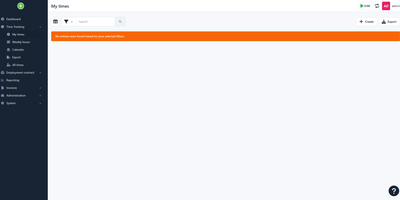
From a freelancer logging billable hours to companies with hundreds of users, Kimai scales professional-grade open-source time tracking - a Symfony/PHP application without the per-seat pricing of Harvest or Toggl. Tracking is flexible by design: run multiple concurrent timers, use punch-in/punch-out mode, or enter times manually, organized by customer, project, and activity with tags, and priced by user-, customer-, or project-specific rates. The billing pipeline is where Kimai earns "professional grade": generate invoices directly from timesheet data with configurable templates (DOCX, ODS, XLSX, PDF), entry grouping, and invoice-number generators, while an export flag locks billed records against editing and excludes them from future invoices - the audit-safety detail spreadsheet workflows never get right. E-invoicing supports EN 16931, XRechnung 3.0, and Zugferd/Factur-X. Enterprise controls come standard: SAML and LDAP login against Google Workspace, Azure AD, or Authentik, TOTP two-factor auth, customizable role permissions, and teams that scope customers and projects to departments. Money and time budgets alert before overruns, advanced reporting slices recorded time by any dimension, and an extensive JSON API plus a plugin marketplace (expenses, approvals, and more) integrate it with existing infrastructure. Over 30 translations, multi-timezone, AGPL-licensed.

Thumbor
Born at Brazilian media giant Globo.com, Thumbor answers imaging CDNs like Imgix and Cloudinary with an HTTP service where every image variant is just a URL. Ask for /300x200/smart/your-image.jpg and Thumbor fetches the original, crops and resizes on demand, and caches the result - one source file, unlimited renditions, no batch pre-generation pipeline. The "smart" in the URL is the signature feature: OpenCV-based face detection finds people in the frame and crops around them (no more thumbnails with severed heads), and when no faces exist, feature detection finds visually important corners and computes a weighted center of mass as the focal point. Beyond cropping, a chainable filter pipeline handles brightness, contrast, grayscale, blur, red-eye removal, rounded corners, rotation, watermarks, and format conversion with quality control - applied in order via URL segments. All common image formats work out of the box, and every layer is pluggable: loaders (HTTP, local, S3), storages and result storages (local, S3, Ceph, and community backends), engines, optimizers, filters, and even custom detectors, with the awesome-thumbor list cataloging the ecosystem. URL signing prevents abuse of your processing capacity. Integrations exist for Django, Rails, Node, WordPress, and most frameworks. MIT-licensed, battle- tested for over a decade.

Kaneo
With nearly 8,000 GitHub stars since its December 2024 launch, Kaneo has rapidly gained traction as the minimalist alternative to bloated project management platforms like Jira and Linear. Built on TypeScript with React and Hono, the interface strips away complexity to focus on execution — plan in list view, track in kanban board, and schedule on interactive Gantt chart timelines where dragging bar handles adjusts start and due dates with optimistic UI updates. Native GitHub integration synchronizes issues bidirectionally, links pull requests to tasks, and keeps product planning aligned with development execution without context switching. The built-in Model Context Protocol server at /api/mcp enables AI tools like Claude and Cursor to manage tasks, projects, and labels directly, while the official @kaneo/mcp npm package provides stdio access for local MCP clients. Authentication supports password, magic link, GitHub OAuth, and Google sign-in with organization-level access management. Rich text editing for task descriptions and comments, label-based initiative grouping, priority levels, assignee management, and due date tracking provide focused planning without ceremony. Deploy with the drim CLI for automatic HTTPS and database setup, Docker Compose for custom configurations, or Helm charts for Kubernetes clusters — all requiring just 2GB RAM and PostgreSQL. Running on a dedicated VPS on RepoCloud with guaranteed CPU, RAM, and SSD, full root SSH access, and a browser serial console. MIT licensed.
Gatus
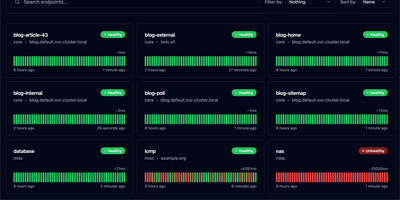
With 11,400+ GitHub stars and active development since 2019, Gatus is the developer-oriented status page and health monitoring tool that ships as a single statically-linked Go binary in a scratch Docker image under 20 MB — deploying in seconds while monitoring your entire infrastructure across 12 protocols from a single YAML configuration file. Define health checks for HTTP, ICMP, TCP, DNS, gRPC, WebSocket, SSH, UDP, SCTP, STARTTLS, and TLS endpoints with conditions that go far beyond simple ping: evaluate response status codes, body content with JSONPath expressions, response time thresholds, certificate expiration days, DNS record values, and IP address ranges. Each endpoint supports independent alerting through Slack, Microsoft Teams, PagerDuty, Discord, Telegram, Twilio, Mattermost, Google Chat, email, Gotify, Pushover, and custom webhook providers with configurable failure thresholds and descriptions. The built-in status page displays uptime badges, response time graphs, and incident timelines with maintenance window support for planned downtime communication. External endpoints accept push-based health reports from services behind firewalls. Prometheus metrics export via the /metrics endpoint enables integration with existing observability stacks. OIDC and Basic Authentication protect the dashboard. PostgreSQL persistence stores historical uptime data. The official Helm chart supports Kubernetes deployment with liveness probes and PVC storage, while a community sidecar auto-generates endpoint configurations from Kubernetes Ingress and HTTPRoute resources. Running on a dedicated VPS on RepoCloud with guaranteed CPU, RAM, and SSD, full root SSH access, and a browser serial console. Apache 2.0 licensed.