PaperPull
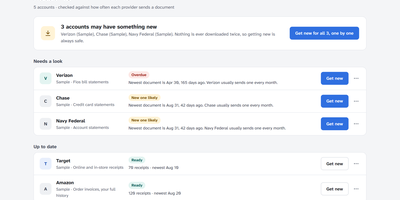
Years of bank statements, pay stubs and receipts sit scattered across dozens of websites, each demanding a login and offering one PDF at a time. PaperPull fetches that whole history for you: sign in yourself in a real browser window, answer the two-factor prompt, and it downloads statements, receipts, pay statements, W-2s and tax forms from 73 supported providers including Chase, Amex, ADP, Amazon, Walmart, Vanguard and Verizon. The tool only ever downloads; it never pays a bill, moves money or changes a setting, and that read-only promise is enforced by construction rather than by policy. Every archive is checked for freshness and for holes in the middle, so a series that looks current but quietly skipped three months is flagged by name, with per-account cadence learned from your own documents. Receipts become one long spreadsheet of every item you have ever bought across every store, with prices and dates, while transactions are read out of statement PDFs into workbook rows that are verified against each statement's printed beginning and ending balances. New documents can flow straight into a Paperless-ngx consume folder, everything runs under a password you choose on your own network, and no cloud account is involved anywhere. Running on a dedicated VPS on RepoCloud with guaranteed CPU, RAM, and SSD, full root SSH access, and a browser serial console. AGPL-3.0 licensed.
Skiff
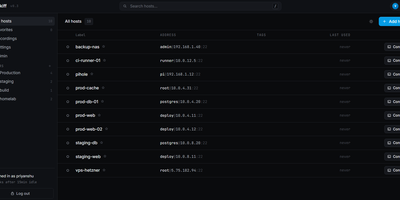
Skiff is a self-hosted SSH manager that remembers every command you ran on your servers and exactly what it printed, so the fix you found at 2 a.m. last March takes seconds to find again. Open a host's history beside its terminal, or search commands and captured output across every host, filter to just the failed attempts, and expand an entry to see its full output. When you edit a small text file, Skiff reads it over SFTP and keeps the before-and-after diff and both versions, so you can see what changed instead of guessing. Useful entries pin to a host's notes, save as reusable snippets, or go back into the terminal with Run again, where you review and press Enter yourself. The browser is only a viewer: sessions live in the Skiff server process, so closing a tab or losing Wi-Fi does not kill your work, and you reattach with recent scrollback intact. Hosts organize into nested folders with favorites and full-text search, existing SSH configs import in one paste, and host keys pin on first connect with a loud warning if one ever changes. Credentials sit in an encrypted vault that locks itself after an idle timeout, team mode shares one vault with per-user logins, and there is no cloud account, telemetry, or agent to install on any target server. Running on a dedicated VPS on RepoCloud with guaranteed CPU, RAM, and SSD, full root SSH access, and a browser serial console. AGPL-3.0 licensed.

Meetable
From the first announcement to the photos shared afterwards, every meetup, conference, and online session gets its own page on a Meetable events site that you host yourself. The home page lists upcoming events, an archive holds past ones, and a year page draws each month as a calendar with event days highlighted. Each event page carries a cover photo, location, website and ticket links, a Markdown description, and a timezone converter, and events can be marked tentative, postponed, or cancelled. Recurring events are templates that create future dates weekly, biweekly, or monthly, including second-Tuesday patterns. Tags give every topic its own page, iCal feeds cover the whole site, each tag, and each event, and Add to Calendar exports an .ics file or opens Google Calendar. Signed-in visitors RSVP yes, no, maybe, or remote, and proposed events let them vote on candidate dates. Attendees add photos with alt text. Webmention lets them post photos, blog posts, and notes from their own sites into a moderation queue. Zoom meetings can be scheduled automatically, online events get reminders, and a Discord bot posts notifications and syncs the server's event list. AI assistants find events through the built-in MCP server, and other tools add events through the API. Passkeys, GitHub, OpenID Connect, Vouch Proxy, or Discord handle sign-in for one organizer or many. Running on a dedicated VPS on RepoCloud with guaranteed CPU, RAM, and SSD, full root SSH access, and a browser serial console. MIT licensed.
AutoMorph
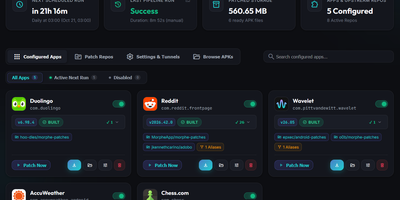
Patching the same Android apps by hand every time a patch repository updates is a chore with your name on it, and AutoMorph is the self-hosted patcher that takes the chore over and rebuilds your apps on schedule. It monitors patch repositories such as ReVanced, Morphe, and community repos for updates, downloads base APKs automatically with Google Play first and APKCombo, Uptodown, and APKPure as fallbacks, and applies your chosen patches without you touching a command line. The Add Package wizard walks you from a package name through suggested repositories, patch selection with per-patch options, and aliases that map same-role patches across repositories so two repos stop fighting over the same job. Builds run once a day at a time you choose, or start manually from the web portal while live build logs stream to your browser. The Patcher Control Center shows every tracked app's version, patch status, and download links, and email alerts carry direct download links whenever a patch succeeds. Distribution goes further: one-tap Obtainium import by QR code or deep link, plus an F-Droid compatible feed for Obtainium and Neo Store, deliver updates straight to your phone, and a custom keystore keeps them seamless. A low-spec mode trims heap and thread limits for small servers, retention settings clean up old builds, and Pangolin, Tailscale Funnel, or Cloudflare Tunnels expose the portal over HTTPS. Running on a dedicated VPS on RepoCloud with guaranteed CPU, RAM, and SSD, full root SSH access, and a browser serial console. MIT licensed.
LoopTroop
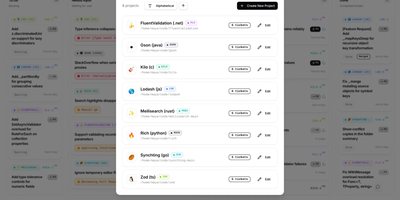
Big coding tickets fall apart inside one endless AI chat, so LoopTroop splits each into stages with fresh, minimal context and ends in a pull request. A council of two to ten models drafts, scores, and votes on each plan, beginning with interview questions that reach you in adaptive batches. The winner refines its draft into a PRD of epics and user stories. That PRD is cut into beads, small tasks with acceptance criteria, target files, and validation steps. Each bead runs in OpenCode inside an isolated Git worktree, so your checked-out branch stays clean. During a bead the agent sees only that task, its target file, and the test file. When a bead fails, the Ralph Loop keeps a compact error trace, resets the worktree, and retries in a fresh session, so tickets can run unattended overnight. You approve specs, blueprints, and the final changes at human gates. Optional Manual QA hands you a checklist for the running app and turns failures into fix beads. A dashboard shows council progress, generated artifacts, live logs, and bead changes. Free-tier models from OpenRouter, NVIDIA NIM, or OpenCode let you start without paid API keys. LoopTroop collects no telemetry, and the project recommends a disposable VM because the agent runs with your permissions. Running on a dedicated VPS on RepoCloud with guaranteed CPU, RAM, and SSD, full root SSH access, and a browser serial console. MIT licensed.
Magec
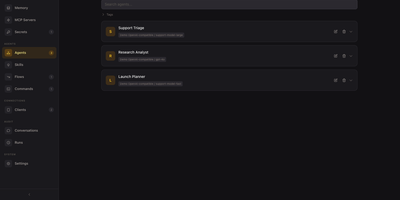
One self-hosted admin console runs a team of AI agents you can reach by voice, chat, webhook, or schedule. Each agent gets its own model backend, system prompt, memory, tools, and voice, with OpenAI, Anthropic, Gemini, Ollama, or any OpenAI-compatible API behind it. A visual flow editor chains agents with routers, joins, loops, parallel fan-out, templates, and small code blocks, so a question can be sorted and answered by the right specialist. Every run is recorded as a step-by-step timeline you can open and read, and conversations are browsable per client. Connect tools through the Model Context Protocol, keep long-term memory in PostgreSQL, and store API keys as secrets that models only ever see as placeholders. Voice runs on the server with wake word detection and speech models, and clients cover a voice web app, Telegram, Discord, Slack, webhooks, and cron jobs. One password-protected console manages every agent, flow, and client. Running on a dedicated VPS on RepoCloud with guaranteed CPU, RAM, and SSD, full root SSH access, and a browser serial console. Apache-2.0 licensed.
plumio
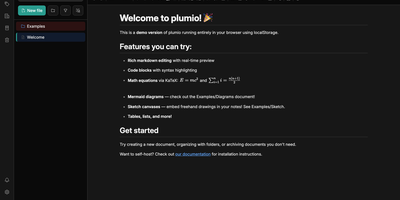
Notes belong on a server you control, and plumio gives them a quiet, fast home there with a polished markdown editor and a live preview. Write headings, task lists, tables, code blocks, math equations, and Mermaid diagrams in one document, then add a freehand sketch canvas for quick drawings. Each change saves as you type. Folders, tags, and custom colors keep a growing library tidy, favorites keep the important pages close, and full-text search finds a half-remembered phrase in seconds. Turn on AES-256 encryption and every document is protected at rest on disk. One instance can host several users and several organizations, so a family, a study group, or a small company each gets a separate workspace with roles for admins and members. Deleted notes land in a trash and archived ones stay out of the way until needed. Export everything as a zip of plain markdown files, or import a folder from another editor, Obsidian included. Webhooks announce document events to other services, API keys let scripts create and search notes, and optional SMTP email handles password resets. A daily backup job keeps compressed copies with automatic retention, and a desktop app can connect to your server. Running on a dedicated VPS on RepoCloud with guaranteed CPU, RAM, and SSD, full root SSH access, and a browser serial console. AGPL-3.0 licensed.

Will Be Done
Seven columns, one per day, hold your whole week of tasks in Will Be Done, and rebalancing a crowded Wednesday means dragging a card to Friday. Unfinished tasks keep their day and get a quiet yellow marker instead of piling into tomorrow as red overdue badges. The Today view narrows the screen to one day, and Stash holds the few tasks you want close at hand without picking a date. Projects get kanban boards with columns you define, such as Week, Month, Ideas, and Someday, and separate spaces keep work and personal planning apart. Tasks carry descriptions and checklists, and recurring tasks repeat daily, weekly, monthly, or yearly with custom intervals and end dates. Every device holds a full local database, so planning, completing, and rescheduling happen with no network at all, and changes sync across tabs and devices once the server is reachable. Vim keys such as h, j, k, and l move through everything, and a global quick-add shortcut in the Linux, macOS, and Windows desktop apps captures a task without leaving the window you are in. Todoist and TickTick imports bring existing projects along, and a token-protected HTTP API with OpenAPI docs lets scripts, cron jobs, and bots drop tasks straight into your stash. Running on a dedicated VPS on RepoCloud with guaranteed CPU, RAM, and SSD, full root SSH access, and a browser serial console. AGPL-3.0 licensed.
GameAP
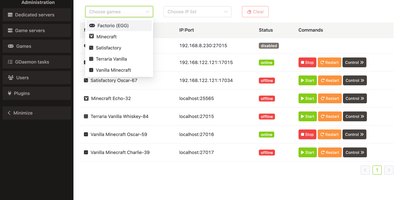
Start, stop, and restart Minecraft, Counter-Strike, Rust, FiveM, and other game servers from one browser panel instead of juggling SSH sessions. A live console streams server output and accepts RCON commands, so admins can kick players, change maps, and watch logs as they happen. The file manager edits configs, uploads and downloads files, searches inside a folder, shows checksums, and creates or extracts archives on the server itself. Scheduled tasks handle automatic restarts, updates, and backups at daily, hourly, or custom intervals. Roles and per-server permissions let a community hand out console, file, and player-management rights without sharing shell access, and single sign-on tickets let a billing system log customers straight in. Typed settings with validation and dropdown choices keep game parameters safe to edit, CPU and RAM limits cap each server, and Pterodactyl or Pelican eggs can be imported to reuse existing game definitions. One panel manages servers across many dedicated machines, plugins extend it, a documented REST API automates provisioning, and the interface speaks English, Russian, Spanish, and German. Running on a dedicated VPS on RepoCloud with guaranteed CPU, RAM, and SSD, full root SSH access, and a browser serial console. MIT licensed.
Zublo
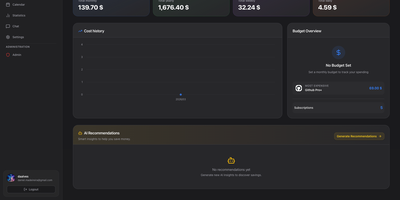
Zublo rounds up every recurring payment quietly draining your accounts and puts them all in one place where they cannot surprise you anymore. Add each subscription once with its amount, billing cycle, next due date, and the card it charges, and the dashboard keeps the running total visible instead of letting fifteen small charges pretend to be no money at all. A calendar shows the month ahead as actual payment dates, so the week when the annual domain, the streaming bundle, and the cloud bill all land together stops being an ambush. Reminders arrive before renewals while cancelling is still an option, and statistics break spending down by category and trend so you can see which corner of your digital life keeps growing. Subscriptions in other currencies convert at synced rates, keeping foreign services honest in the totals. When you want a second opinion, an optional assistant can chat about your spending, flag subscriptions worth reviewing, and point at patterns, using a provider you choose, including a local model that never phones home. Scoped keys open the data to your own scripts, and two-factor sign-in guards the vault. Running on a dedicated VPS on RepoCloud with guaranteed CPU, RAM, and SSD, full root SSH access, and a browser serial console. Apache-2.0 licensed.
Tunnel Panel
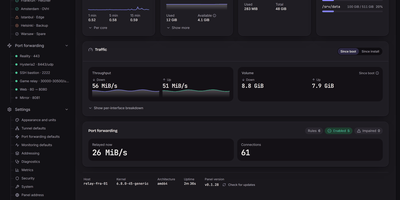
Tunnel Panel manages GRE tunnels and port forwarding on Linux servers from a web panel that previews every change before it runs and verifies the result against the kernel. Create GRE, GRETAP, IP6GRE, and IP6GRETAP tunnels and see the exact commands, unit file, and rollback before anything is applied. The far end configures itself from a pairing code, as text or QR, with the sides flipped automatically so the two ends cannot disagree by a typo. Native ICMP probing with hysteresis keeps a single dropped packet from flapping a tunnel between down and back, and when ICMP is filtered the panel knocks over TCP and says so instead of crying wolf. Forward any TCP or UDP port, or a whole range, with round-robin, source-hash, or weighted balancing across destinations, and a backend that stops answering its health knock leaves the ruleset until it recovers. Watch every connection crossing the relay, who connected, which destination took them, and how much has moved, and set traffic limits per tunnel, rule, or destination. When something breaks, diagnostics reach a verdict with evidence and a suggested fix, backed by a streaming manual probe and a path-MTU search that offers to apply its findings. The panel reads your kernel's relay limits, recommends values from the host's memory and cores, and refuses changes that would lock you out of your own server. Running on a dedicated VPS on RepoCloud with guaranteed CPU, RAM, and SSD, full root SSH access, and a browser serial console. AGPL-3.0 licensed.
Atlantis Diagrams
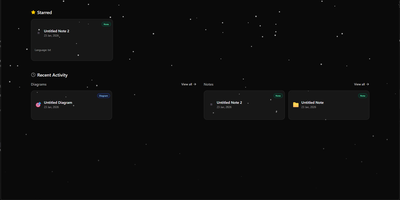
Technical teams frequently struggle to keep software architecture diagrams synchronized with evolving codebases and documentation repositories. Atlantis Diagrams delivers a unified self-hosted workspace that couples code-driven Mermaid.js diagramming with structured Markdown knowledge bases in a responsive web interface. Engineers can compose flowcharts, sequence diagrams, state machines, entity-relationship models, and Gantt schedules using split-view CodeMirror editors with real-time SVG rendering. An integrated version history tracker automatically captures revision checkpoints across the last 15 document states, letting authors compare modifications and restore previous iterations without data loss. The linked notes environment supports rich Markdown editing, LaTeX mathematical formulas, interactive task checklists, tag indexing, and full-text keyword searches across personal documentation libraries. Canvas controls allow users to pan, zoom, inspect individual nodes, and export finalized graphics directly into vector SVG, high-resolution PNG, or printable PDF documents. Storage engines adapt to deployment scale, running on zero-configuration SQLite databases out of the box with optional PostgreSQL, MySQL, and Redis caching layers for high-concurrency environments. Running on a dedicated VPS on RepoCloud with guaranteed CPU, RAM, and SSD, full root SSH access, and a browser serial console. MIT licensed.
Minimax Music UI
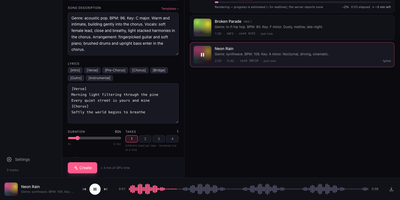
Minimax Music UI turns a self-hosted MiniMax-Music3 model into a private song factory, giving you a Suno-style studio where you describe a track, add lyrics, and watch finished songs appear in your own library. The Create panel works in Simple or Custom mode: write a style description covering genre, BPM, key, vocals, and arrangement, then shape words in a lyrics editor with one-tap [Verse], [Chorus], [Bridge], and [Instrumental] section chips. One submit can queue up to four takes at 5 to 360 seconds each, and the render queue shows queued, rendering, and done states with elapsed time, cancel, and retry, surviving a server restart without losing your place. When you run the bundled inference server, you can even press play on a track that is still rendering and hear the waveform grow in real time. A magic wand rewrites rough ideas into structured music captions, and a second wand drafts original lyrics sized to your chosen duration, both through any OpenAI-compatible model you point it at. Finished renders land in a searchable library with cover art, seeds, and render times, ready to download as WAV, reuse as a template, or open in a detail panel with the prompt and lyrics. A sticky waveform player with seek and keyboard shortcuts keeps music going while you work, and an optional access token locks the whole studio down. Running on a dedicated VPS on RepoCloud with guaranteed CPU, RAM, and SSD, full root SSH access, and a browser serial console. MIT licensed.
Ovumcy
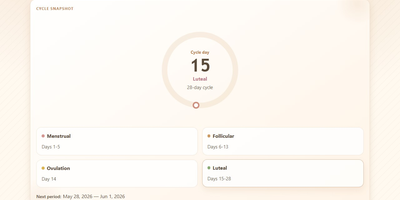
Your cycle history is among the most personal data you will ever record, and Ovumcy keeps it on a server you control instead of a tracker's cloud. Log period days, flow intensity, symptoms, and free-form notes in seconds from any browser, and define your own custom symptoms when the preset list misses something you feel. The calendar view lays out your month with predicted period, ovulation, and fertile-window days marked, while statistics views surface cycle length trends and patterns across months. Predictions come from your own logged history, refined when temperature or cervical-mucus entries sharpen the estimate. Reminders reach you three ways: a dashboard banner before an expected period, a webhook ping to your own ntfy or Gotify server, or a private read-only calendar subscription that drops estimates into the calendar app you already use. Install it to your phone home screen and it opens like a native app, in English, Russian, Spanish, French, German, or Italian. Export the full history as CSV or JSON whenever you want a backup or a change of tools. Optional OIDC sign-in and TOTP two-factor authentication protect access, and the app makes no analytics or telemetry calls at all. Running on a dedicated VPS on RepoCloud with guaranteed CPU, RAM, and SSD, full root SSH access, and a browser serial console. AGPL-3.0 licensed.
Neohabit
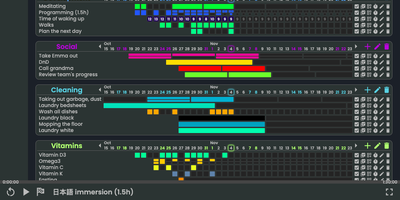
Most habit trackers punish a single missed day, so Neohabit lets you build routines that happen X times in Y days, like three workouts in five days or one deep-work session every three days, and adjust the target mid-streak as the habit gets easier. Your progress renders as GitHub-style contribution heatmaps in three styles: monochromatic grids for simple check-ins, numeric grids that record values such as calories, spending, reps, or hours up to two billion, and fractured grids that split each period into up to sixteen segments for habits done many times a day. Related habits group into projects with a one-dimensional daily view, and skill trees let you plan progressions, for example raising a reading target from twenty minutes to an hour in planned steps. You can ease into a new routine by starting at once in four days instead of daily, track things you want to reduce as well as build, hover any cell for period details, and rearrange projects and habits by dragging them. Multiple accounts, light and dark themes, keyboard shortcuts, and a polished mobile browser interface round out daily use, and a single command brings the whole thing up with prebuilt images ready to go. Running on a dedicated VPS on RepoCloud with guaranteed CPU, RAM, and SSD, full root SSH access, and a browser serial console. AGPL-3.0 licensed.
Arkeep
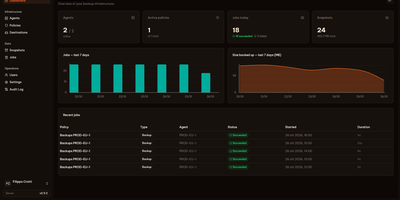
Five servers, five cron jobs, five restic scripts nobody quite remembers writing: Arkeep replaces that archaeology with one dashboard where every backup in your infrastructure reports for duty. A small agent on each machine dials out to the central server and waits for work, so nothing listens on an agent port and machines behind NAT or a home firewall enroll just as easily as cloud VPSes. From the web interface you define destinations, which can be local disk, any S3-compatible storage, SFTP, a restic REST server, or more than forty Rclone backends, then build policies that send one backup job to several destinations at once for a genuine 3-2-1 layout. Docker volumes are discovered automatically, and databases stream straight into the backup with pg_dump and mysqldump instead of fragile file copies. Retention and repository integrity checks run per destination on their own schedules. When recovery day comes, you open any snapshot in the browser, browse its files, and restore a single folder in place or somewhere new. Failures announce themselves by email, Slack, Discord, or webhook, or stay silent in Healthchecks.io. Sign-in is yours to choose: local accounts with TOTP two-factor, or single sign-on through any OIDC provider. Running on a dedicated VPS on RepoCloud with guaranteed CPU, RAM, and SSD, full root SSH access, and a browser serial console. Apache-2.0 licensed.
GNO
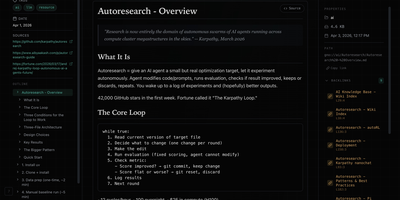
Search your local notes, PDFs, Office files, and code with GNO, and "how we handle retries" finds the paragraph about exponential backoff that never uses the word. Keyword and semantic retrieval run together, with reranking at higher depths, and --explain shows score traces for each result. Questions on the Ask page come back with citations that resolve to the source passage. Verified mode withholds the draft unless one closed bundle of evidence supports every claim. The browser workspace adds a cross-collection folder tree and split-view Markdown editing with live preview. PDFs open as native pages, and an interactive graph maps how your documents relate. Quick capture sits on the N key. Context Capsules bundle exact line spans for one goal and list what could not be found. Agents reach the same index through an MCP server that installs into ten clients, including Claude Code, Cursor, and Zed. Write tools stay off until you switch them on. A headless daemon watches folders, syncs, and embeds changes to keep the index current. It can serve MCP to remote agents behind a bearer token and Host and Origin allowlists. Models run locally, with no GPU or account required and no telemetry. Per-collection egress policy, local only, LAN, or remote, keeps client files local while personal notes use a GPU box on your network. Running on a dedicated VPS on RepoCloud with guaranteed CPU, RAM, and SSD, full root SSH access, and a browser serial console. MIT licensed.
Mikka
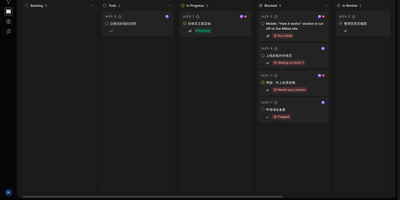
Instead of babysitting three coding agents in three terminal windows, you describe the work once and let Mikka run the team: its Coordinator bot plans the job, dispatches runs to Claude Code, Codex, or Cursor on your connected machines, and only interrupts you when a decision is actually yours. Every piece of work lives in a thread with its own conversation, so dispatched runs appear as cards that report progress, ask questions, and flag blocks while you watch, reply, or stop them from the web, desktop, or phone. Unclear requests come back as choice cards before anything runs, and finished work moves through review and verification runs, back to a fix run when a check fails, then to acceptance where the pull request merges as you. Runs use leases and checkpoints, so a machine that drops mid-task hands the work to another connected computer with the same repository. You can create your own bots beside the Coordinator, each with its own chat, memory, and threads, and answers can arrive as charts, tables, stat cards, and task chips with sources cited. Daemons connect over SSH or from the desktop app, other agents drive Mikka through MCP, and Telegram or Slack messages reach the Coordinator too. Running on a dedicated VPS on RepoCloud with guaranteed CPU, RAM, and SSD, full root SSH access, and a browser serial console. AGPL-3.0 licensed.