CodeRail
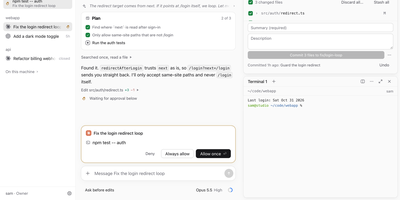
Close the laptop, walk away, and your coding agents keep working; CodeRail is the remote control that lets you supervise them from a browser or your phone without handing your machines to anyone's cloud. A small bridge on each computer connects outbound to your server, so there are no open ports and no VPN to babysit, and each machine keeps its own Claude Code and Codex logins because CodeRail never holds your AI keys. Chats show plans, tool calls, models, modes, and background tasks, and when an agent wants to run something sensitive, the approval lands with you wherever you are, including as a phone push notification. Real terminals outlive the browser tab, files can be viewed, edited, uploaded, and downloaded in place, and git work, pull requests included, sits beside the conversation that produced it. Each chat even gets a browser on the computer itself, shared live with everyone in the chat and drivable by the agent. Roles run Owner, Operator, or Viewer per computer, narrowed down to folders and agents, with every change audited, and sessions keep running with every browser closed while history stays readable offline. Running on a dedicated VPS on RepoCloud with guaranteed CPU, RAM, and SSD, full root SSH access, and a browser serial console. Apache-2.0 licensed.

LiftCut
Training, meals, and body changes usually live in three different apps, and LiftCut puts them in one bilingual tracker where an AI agent helps keep the log instead of just drawing charts. Tell it what you ate, what you lifted, or what the scale said in plain language, in Chinese or English, and it prepares the entry from the exact numbers you gave, never inventing nutrients or weights, and saves nothing until you confirm it. Workout plans are editable rather than rigid programs, text import brings existing routines in, logging tracks completion and exercise performance, and personal records and PDF exports mark how far you have come. Food logs roll into nutrition summaries, and dated body measurements draw trend charts beside your training, so cause and effect sit on the same screen. AI training and nutrition proposals read your saved goals, restrictions, measurements, and recent actual loads first, then pass through extraction, strict validation, and an editable preview, and a proposal is rejected if the records it relied on changed in the meantime. Begin in the public no-sign-in demo or local-first guest mode, then create an account and migrate your history when ready, with offline queues holding entries until a connection returns. Providers span DeepSeek, any OpenAI-compatible endpoint, or a local vLLM server, so the intelligence can stay on hardware you control. Running on a dedicated VPS on RepoCloud with guaranteed CPU, RAM, and SSD, full root SSH access, and a browser serial console. MIT licensed.
Zasper
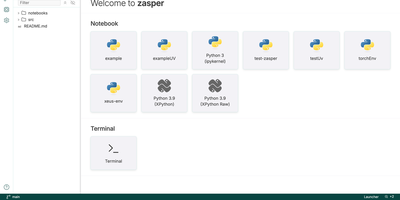
Notebook work gets a lighter home in Zasper, a browser IDE that runs any Jupyter kernel on a fraction of the memory JupyterLab needs. Plotly, ipywidgets, HTML, and Markdown with LaTeX render inline, and saved files match what Jupyter would write byte for byte. A variables panel inspects the running kernel, DataFrames open as a grid that turns into a chart, and SQL cells query the databases you connect. Edits made to the file on disk flow into the open notebook cell by cell, and a run started from another tab or an agent still reaches its cell. A code editor, terminal, and Git panel share the window, and notebook diffs compare cell by cell. Claude Code, Gemini CLI, Codex, or any agent that speaks the Agent Client Protocol can work in a side panel, with each change it makes reviewed and undone from there. A command palette searches files and commands together, trusted folders keep untrusted code from running, and light and dark themes are included. Running on a dedicated VPS on RepoCloud with guaranteed CPU, RAM, and SSD, full root SSH access, and a browser serial console. AGPL-3.0 licensed.
Event Schedule
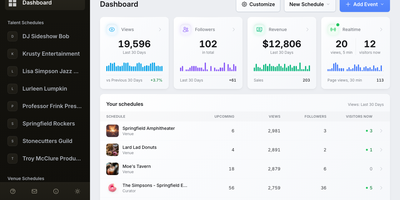
One self-hosted site can publish your event calendar, sell tickets, take bookings, and send the newsletter. Event Schedule gives venues, performers, and curators their own schedule types, and a curator page gathers events from the venues and performers it follows. Recurring patterns cover daily, weekly, monthly-by-weekday, and yearly dates with per-date exceptions, and calendars import from ICS feeds, Google Calendar, or Eventbrite. Tickets come in several types with promo codes, waitlists, gift cards, and a drag-and-drop seating plan, and payments go through Stripe, PayPal, Payfast, Razorpay, or cash straight to your own accounts. Door staff scan QR tickets in a browser and a live dashboard counts arrivals. Appointment pages sync both ways with Google Calendar, Outlook, and CalDAV. The newsletter editor sends segmented, A/B tested campaigns through your own SMTP server, and optional AI features turn pasted text or flyer images into draft events. Analytics, an audit log, TOTP two-factor login, signed webhooks, a REST API, and twelve interface languages cover the admin side. Running on a dedicated VPS on RepoCloud with guaranteed CPU, RAM, and SSD, full root SSH access, and a browser serial console. AAL licensed.

nodecast-tv
Bring your own IPTV provider and nodecast-tv gives it a fast browser interface for live channels, a program guide, movies, and series. Add an Xtream Codes or M3U provider in Settings, then zap through channels with category grouping and search; playlists of thousands of channels scroll smoothly. The 24-hour TV guide is interactive, and movie and series pages show posters, ratings, metadata, and seasonal episode lists. Favorites sync across channels, movies, and series, and the home page keeps a Continue Watching shelf and recently added titles within reach. Transcoding steps in only when a stream needs it, using hardware encoders and surround-to-stereo downmix presets like Night Mode and Cinematic. Admin and viewer roles control who can change settings, and OIDC single sign-on works with Authentik, Keycloak, and similar providers. Hidden categories, volume memory, and auto-play fine-tune playback. Running on a dedicated VPS on RepoCloud with guaranteed CPU, RAM, and SSD, full root SSH access, and a browser serial console. GPL-3.0 licensed.
Dikasir
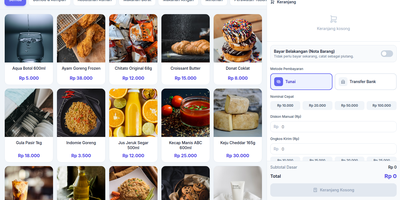
Checkout counter, stockroom, and bookkeeping share one screen in Dikasir, a self-hosted cashier system. Search products by keyword or barcode. Hold and resume carts. Apply promo rules and take cash, bank transfer, Midtrans, Xendit, or pay-later notes. Offline mode queues sales until the connection returns, and thermal receipts print over WebUSB. Stock is tracked per warehouse with stock opname, branch transfers, batch and expiry dates, composite kits, and reorder suggestions. Purchase orders flow into goods receiving and supplier returns. Payables and receivables show aging and partial payments. Customer tiers, loyalty points, vouchers, segments, and campaigns drive repeat sales, and a WhatsApp gateway sends reminders and promotions automatically. Dashboards break sales and profit down by hour, day, and cashier. Invoices export as PDF or Excel. Role-based permissions, cashier shifts with cash closing, discount approvals, and an audit log with before and after snapshots keep staff accountable. Running on a dedicated VPS on RepoCloud with guaranteed CPU, RAM, and SSD, full root SSH access, and a browser serial console. AGPL-3.0 licensed.

Work-Calendar
Small teams do not need another cloud subscription to know who is doing what this week: Work-Calendar runs your whole plan, do, finish, archive loop on one little server you own. The week view lays out every member's tasks across seven day columns with today highlighted, so standups start from the same picture instead of five private lists. Three kinds of tasks cover real work: project tasks, one-off tasks you can assign to yourself or teammates, and fixed recurring tasks on daily, weekday, monthly, or specific-date schedules. Anything unfinished carries over to the next day automatically, and completion records can be corrected by the assignee or sent back with a reason by the owner. Projects get spaces with folders, files up to 20MB, meetings with AI-generated minutes from pasted or dictated transcripts, timelines, and closing reports that an admin approves. Roles for superadmin, admin, and member, plus per-group rules, decide who may create projects directly, who needs approval, and who can use the built-in AI assistant, which drafts task and project changes as reviewable cards rather than acting silently. Inbox notifications, personal diaries, and daily statistics round out the routine, and keyboard shortcuts drive the whole interface. Running on a dedicated VPS on RepoCloud with guaranteed CPU, RAM, and SSD, full root SSH access, and a browser serial console. MIT licensed.
TradeTally
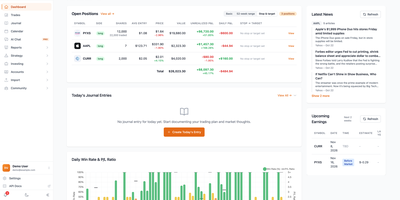
Broker exports pile up as spreadsheets nobody reads; TradeTally turns them into a trading journal that shows how you actually trade. Import trades from Lightspeed, Charles Schwab, ThinkorSwim, IBKR, E*TRADE, and ProjectX across stocks, options, and futures. Candlestick charts mark each entry and exit, and the trade list adds net and gross P&L, confidence, quality grades, and sectors. Break performance down by hold time, weekday, symbol, strategy, or trade size, and use R-multiple views to judge stop-loss discipline. A color-coded calendar shows daily and weekly results. Every session gets pinned notes, market bias, key levels, watchlists, tags, and templates. Behavioral reports flag revenge trading, loss aversion, and missed exits. Watchlists follow live prices and news, price alerts arrive by email or browser, and earnings dates are listed for the symbols you follow. AI assistants suggest improvements from your own data, achievements and leaderboards reward good habits, and a companion iOS app mirrors the web features. Running on a dedicated VPS on RepoCloud with guaranteed CPU, RAM, and SSD, full root SSH access, and a browser serial console. Apache-2.0 licensed.
LabTether
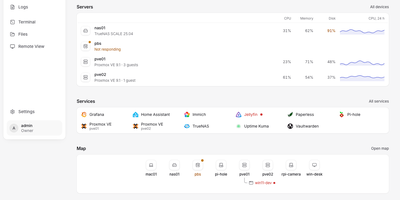
LabTether is a self-hosted control hub that puts every machine, VM, and container in your homelab on one screen. The dashboard surfaces what needs attention first, then lists servers with CPU, memory, disk, and 24-hour charts beside the services you run. Connect Proxmox VE, Proxmox Backup Server, TrueNAS, Portainer, and Home Assistant with an API key, and add agents on Linux, macOS, or Windows machines for live metrics. Open a terminal, a file browser, or a VNC, RDP, SPICE, or WebRTC remote desktop on any node from the browser. Alert rules, notification routes, and maintenance silences group related problems into incidents you can track to the fix, and a dependency map shows what else goes down before you reboot something. Saved actions run on a group or a schedule, webhooks forward hub events, and package updates start with a dry run. A built-in MCP server hands Claude, Cursor, or any MCP client 32 tools, each API key limited to the scopes you allow. Two-factor login, OIDC single sign-on, owner, admin, operator, and viewer roles, and an audit log keep access tidy. Running on a dedicated VPS on RepoCloud with guaranteed CPU, RAM, and SSD, full root SSH access, and a browser serial console. Apache-2.0 licensed.
RetroAssembly
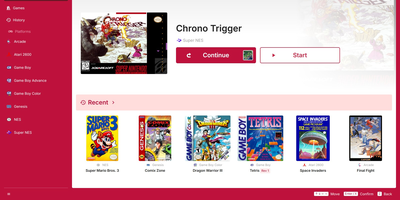
Want your ROM collection playable from any browser? RetroAssembly turns it into a retro arcade cabinet with box art, save states, and touch controls. Upload your own game files and the library detects box art and covers automatically, grouped by platform, with a Continue shelf that resumes your last session and a history view of recent games. More than two dozen systems run here, including NES, Super NES, Genesis, Game Boy, Game Boy Advance, arcade, Atari, PC Engine, and PlayStation 1. Save states can be created at any moment, synchronized, and resumed later, and some emulators can rewind gameplay after a mistake. Spatial navigation moves through games with a keyboard or gamepad, and an on-screen virtual controller makes touch devices playable without hardware. Retro-style shaders add visual effects. Each game page lists platform, release date, genres, developer, and publisher with screenshots and videos, and platform pages describe the console itself with its history and manufacturer. Running on a dedicated VPS on RepoCloud with guaranteed CPU, RAM, and SSD, full root SSH access, and a browser serial console. MIT licensed.
RabiRoute
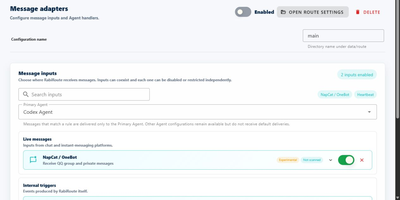
Which agent should answer a question that just arrived in your QQ group, and how much of the conversation should it see? RabiRoute is the self-hosted message gateway that answers those routing questions before your agent ever wakes up. Chat messages from QQ groups and direct chats (through NapCat and OneBot), webhooks, schedules, voice, desktop selections, and device events all arrive at one gateway, and message Routes decide which agent or local program receives each one. Every role keeps its own message history plus references to plans, memories, and skills, while each Route limits how many recent messages travel with a delivery. Roles can also fire agents on interval, time-window, daily, or one-time schedules, or run a configured local script, so recurring checks and reports happen without anyone typing a prompt. Replies to QQ, RabiLink, and other channels leave through a single sending API that validates targets, quoted messages, and sender identity, then records receipts for everything delivered. The Windows desktop side adds selected-text actions, screenshots, and annotations; speech, phone, glasses, wearable, and remote-computer clients connect as experimental integrations, and the Linux Host serves the Manager and browser WebGUI from a Node.js process. Running on a dedicated VPS on RepoCloud with guaranteed CPU, RAM, and SSD, full root SSH access, and a browser serial console. MIT licensed.

Plain Week
Seven days and a Someday list fit on one screen in Plain Week, a minimal weekly planner and to-do list. Click an empty row, type, press Enter, and keep typing. Writing "17:30 Gym" sets the time for you. Each task opens into a dialog with eight colors, plain-text notes, and a checklist of subtasks. Repeats run every few days, weekly on chosen weekdays, or monthly on a set date, with optional end dates and edits for one occurrence or the whole series. Drag tasks between days, into Someday, or past the screen edge to another week, by mouse, touch, or keyboard. Right-click to color, duplicate, delete, or push a task to tomorrow or next week, with undo. Arrow keys change weeks and T returns to today. The planner works offline, installs as an app, and keeps data in the browser until you add an account to sync. Export every task to JSON, import it into another instance, and pick light or dark themes or right-to-left layouts. Running on a dedicated VPS on RepoCloud with guaranteed CPU, RAM, and SSD, full root SSH access, and a browser serial console. MIT licensed.
Inventoros
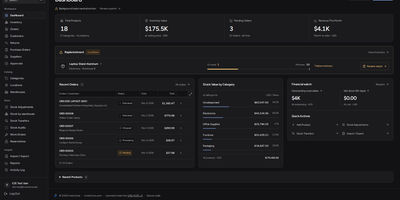
Between the spreadsheet and enterprise software sits Inventoros, a self-hosted system for tracking stock, orders, and suppliers across warehouses. A replenishment panel on the dashboard flags products below their minimum, and purchase orders go to suppliers by email and are received into stock. Products carry SKUs, variants, kits, batches with expiry dates, and serial numbers, with barcodes and QR labels for products and locations. Warehouses nest aisles, shelves, and bins, stock moves between them, and staff can be limited to the sites they work in. Orders handle approvals, payments, refunds, PDF invoices, partial shipments, and returns, and a customer portal shows invited contacts their orders, shipments, and balances. Twelve built-in reports cover valuation, turnover, dead stock, profit margin, and ABC analysis, and a custom report builder exports to CSV, Excel, or PDF on a schedule. Webhooks, a REST API, GraphQL, signed plugins, and an MCP server connect it to the rest of your stack and to AI clients acting with a user's token. Running on a dedicated VPS on RepoCloud with guaranteed CPU, RAM, and SSD, full root SSH access, and a browser serial console. AGPL-3.0 licensed.