Supabase
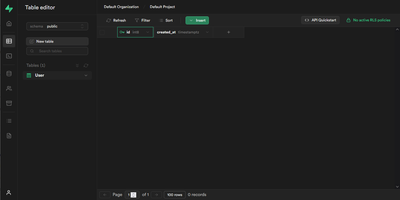
With over 107,000 GitHub stars and adoption by teams at Mozilla, 1Password, Peerlist, and thousands of startups, Supabase has become the most widely deployed open-source Firebase alternative — built entirely on PostgreSQL rather than a proprietary NoSQL store. Every project provisions a dedicated Postgres database with 40+ preinstalled extensions, auto-generating REST APIs via PostgREST, GraphQL via pg_graphql, and real-time change streams via an Elixir-based WebSocket engine that supports database change listeners, user presence tracking, and arbitrary broadcast messaging. Authentication covers email and password, phone OTP, magic links, and 20+ social providers including Google, GitHub, Apple, Azure, and SAML SSO, all enforced through Postgres Row Level Security policies that run inside the database itself. S3-compatible object storage delivers files through a CDN spanning 285+ cities with on-the-fly image transformations powered by imgproxy. Edge Functions run globally distributed TypeScript on the Deno runtime with Node.js compatibility and access to over two million NPM packages. The pgvector extension stores, indexes, and queries vector embeddings for AI-powered semantic search and retrieval-augmented generation workflows. Supabase Studio provides a browser-based dashboard with a table editor, SQL editor, schema visualizer, and log explorer. Official client SDKs ship for JavaScript, Python, Flutter, Swift, Kotlin, C#, Go, and Ruby. The self-hosted Docker Compose stack runs fourteen coordinated services including Kong API gateway, Supavisor connection pooler, and Logflare analytics. Running on a dedicated VPS on RepoCloud with guaranteed CPU, RAM, and SSD, full root SSH access, and a browser serial console. Apache 2.0 licensed.
Percona PMM
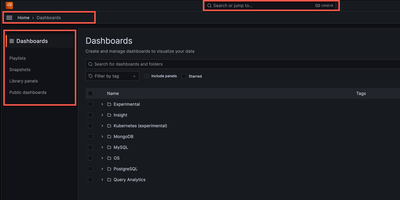
Backed by 1,080+ GitHub stars and maintained by Percona with the latest release v3.8.1 in June 2026, Percona Monitoring and Management delivers the open-source database observability platform that provides a single pane of glass across MySQL, PostgreSQL, MongoDB, Valkey, and Redis databases deployed on-premises, cloud, or hybrid environments. The Go-powered PMM Server collects metrics from lightweight PMM Client agents with minimal performance impact, storing time-series data in ClickHouse for fast querying across configurable retention periods. Query Analytics ranks every query by load across all database engines from one unified dashboard, drilling from fleet-level performance down to individual problematic queries with explain plans, per-query metrics, and anomaly detection. Real-time Query Analytics streams live MongoDB operations updated every 1-5 seconds for immediate troubleshooting of lock contention and long-running queries. Built-in Percona Advisors continuously scan connected databases for security gaps, misconfigurations, and performance problems, distilling decades of DBA expertise into automated actionable recommendations. Percona Alerting integrates with 15+ notification channels including Slack, PagerDuty, email, and webhooks to trigger on custom metric thresholds. Database-specific dashboards visualize InnoDB storage engine details, WiredTiger cache metrics, PostgreSQL tuple activity, replication lag, and cluster health with annotations for root-cause correlation. Deployment options include Docker single-container setup, Podman rootless execution, and Helm charts for Kubernetes with Ingress controller support and ConfigMap management. Running on a dedicated VPS on RepoCloud with guaranteed CPU, RAM, and SSD, full root SSH access, and a browser serial console. AGPL-3.0 licensed.
MongoDB
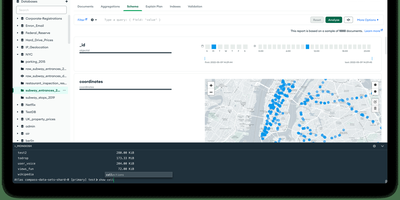
Used by over 46,800 companies including Forbes, Toyota, and Cisco, MongoDB stores data as flexible JSON-like BSON documents that eliminate rigid table schemas and support rapid application iteration. Its aggregation pipeline processes complex data transformations through composable stages including $match, $group, $lookup for joins, $unwind, and $project, operating directly within the database engine. Horizontal scaling is built in through automatic sharding, which distributes data across nodes using range-based, hashed, or zone-based shard keys, while replica sets provide automatic failover with configurable read preferences and write concerns. Multi-document ACID transactions span multiple collections and shards since version 4.0, enabling relational-style consistency guarantees within a document model. Starting with Community Edition 8.2, native full-text search and vector search are available directly in the database through $search and $vectorSearch aggregation stages, supporting RAG patterns, semantic retrieval, and hybrid search without external dependencies. Change streams provide real-time event-driven data access by tailing the oplog through the aggregation framework, enabling reactive architectures without polling. Time series collections offer optimized columnar storage for IoT sensor data and metrics with automatic bucketing and compression. Official drivers exist for Python, Node.js, Java, Go, C#, C++, Rust, Swift, and PHP, with MongoDB Compass providing a GUI for visual schema exploration and query building. Running on a dedicated VPS on RepoCloud with guaranteed CPU, RAM, and SSD, full root SSH access, and a browser serial console. SSPL v1 licensed.
SurrealDB
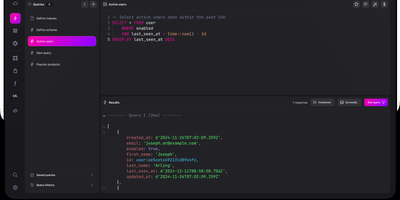
With 32,800 GitHub stars, 180 contributors, and version 3.2 shipping in July 2026, SurrealDB eliminates the database zoo by unifying document, graph, relational, time-series, geospatial, and key-value data models into a single Rust binary queried through SurrealQL — an intuitive SQL-like language that handles graph traversals, record links, subqueries, and computed fields without switching between multiple database engines. Purpose-built for AI applications, it integrates vector indexing, full-text search, and hybrid retrieval that blends semantic similarity with graph and relational intelligence for context-aware RAG pipelines and recommendation engines. Real-time subscriptions and event-driven triggers push live data changes to connected clients without requiring external message brokers like Kafka. Multi-row, multi-table ACID transactions guarantee consistency while incrementally computed views deliver pre-calculated analytics without batch processing. Role-based access control with record-level permissions, JWT authentication, and multi-tenant isolation enables backend-as-a-service usage where client applications connect directly with fine-grained security. SDKs for JavaScript, Python, Go, Rust, .NET, and Java connect via WebSocket or HTTP APIs. Storage and compute separation allows deployment as an embedded library, a single-node server, or a highly-scalable distributed cluster with TiKV or FoundationDB backends. Deploy via Docker with persistent volumes on any Linux host. Running on a dedicated VPS on RepoCloud with guaranteed CPU, RAM, and SSD, full root SSH access, and a browser serial console. Source-available licensed.