Immich
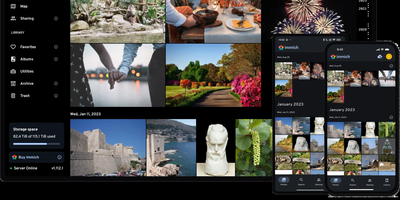
With over 110,000 GitHub stars and one of the fastest-growing open-source communities in the self-hosted space, Immich delivers a Google Photos-grade experience entirely on your own hardware. The platform handles automatic background backup from Android and iOS devices, deduplication, and support for RAW formats, LivePhotos, and MotionPhotos. Its machine learning pipeline runs facial recognition and clustering locally on your server, enabling you to group photos by person without sending a single image to the cloud. CLIP-based semantic search lets you find images by describing their content in natural language, while metadata-driven search covers EXIF data, dates, and locations. The web interface built with SvelteKit provides a responsive timeline view, albums, shared albums with configurable permissions, public sharing links with optional passwords and expiry dates, partner sharing for family libraries, and a global map plotting photos by GPS coordinates. Administrative features include multi-user support with per-user storage quotas, OAuth integration, API key management, and a user-defined storage structure for organizing files on disk. The architecture uses PostgreSQL for metadata, Redis with BullMQ for background job queues handling thumbnail generation, video transcoding, and smart search indexing, and exposes over 400 REST API endpoints documented via OpenAPI with auto-generated SDKs for web, mobile, and CLI clients. Running on a dedicated VPS on RepoCloud with guaranteed CPU, RAM, and SSD, full root SSH access, and a browser serial console. AGPL-3.0 licensed.
Pixtale
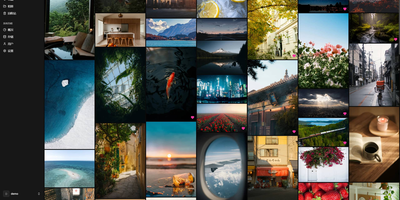
Scroll, do not file: Pixtale turns a folder of photos into a flowing masonry river you can browse for hours, pulling images from local disk, S3, and even Telegram into one gallery. Uploads get automatic thumbnails and high-resolution previews tuned for slow connections, so grandparents on hotel Wi-Fi see pictures fast instead of watching loading spinners. Every photo keeps its EXIF story, camera, lens, exposure, and capture time, and the timeline arranges the library chronologically without you renaming a single file. The Pixtale Sync companion ships photos from phones and PCs to the gallery automatically, ending the cable-and-import ritual after every trip. Favorites, albums, and a trash bin keep curation tidy, while multiple user accounts let each family member sign in to the same library with their own credentials. An admin overview watches photo counts, storage consumption, CPU, and memory, and storage settings let you add or repoint backends as the collection outgrows its first disk. Because the whole gallery runs from one Docker container with a small SQLite database, backups are a folder copy and the library stays portable between machines. Your photos live on your hardware, under your accounts, with no per-seat pricing as the archive grows. Running on a dedicated VPS on RepoCloud with guaranteed CPU, RAM, and SSD, full root SSH access, and a browser serial console. AGPL-3.0 licensed.
LibrePhotos
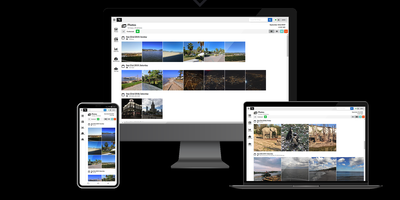
With over 8,000 GitHub stars and continuous development since 2020, LibrePhotos delivers the core intelligence of Google Photos — face recognition, object detection, semantic search, and automatic album generation — entirely on your own hardware without sending a single photo to a third-party server. The Django 5 backend processes uploaded media through a machine learning pipeline that runs face detection via the face_recognition library, clusters identified faces using scikit-learn and HDBSCAN, generates image captions through BLIP and Moondream 2, and classifies scenes using Places365 or Google's SigLIP 2 vision-language model with zero-shot classification against 900+ real-world tags. Semantic search lets you find photos by natural language queries like "sunset at the beach" without manual tagging, while metadata search filters by person, camera, lens, file type, and filesystem path. The React 18 frontend built with Vite presents a timeline view, fullscreen lightbox with slideshow mode, photo detail sidebar showing location and people, and a folder navigation view with breadcrumb paths. RAW files from any camera are converted via ImageMagick, videos processed through FFmpeg, and Live Photos paired with their RAW+JPEG counterparts as unified entries. Public album sharing via link provides fine-grained privacy controls, and duplicate detection uses perceptual hashing to identify near-identical images. Deployment runs as a single unified Docker container or via Docker Compose with Kubernetes manifests also available. Running on a dedicated VPS on RepoCloud with guaranteed CPU, RAM, and SSD, full root SSH access, and a browser serial console. MIT licensed.

Photofield
Instead of paging through albums, Photofield lays a whole photo library out on one zoomable canvas, where thousands of thumbnails sharpen into full-resolution pictures as you zoom. Collections come straight from directories named in a configuration file. One setting turns every subfolder into its own collection. Pick a layout per collection: album grouped by date, timeline with month markers, wall, map, highlights with dates and place names, or flex. Sort oldest first, newest first, or shuffled hourly, daily, weekly, or monthly. Tiles load progressively, and an info drawer shows the date, file name, and dimensions. A right-click menu opens or copies an image, copies its link, or finds similar images. Originals are never modified, so a read-only mount is safe. Indexing runs at up to 10,000 files per second on a fast SSD with a warm cache. JPEG, PNG, AVIF, HEIC, DNG, GIF, MP4, and MOV files are recognized. Place names resolve from an embedded database, with no external lookups. The optional photofield-ai companion adds search by words like beach sunset or cat eyes, plus a Faces layout of detected faces. Alpha tagging lets you label photos. Running on a dedicated VPS on RepoCloud with guaranteed CPU, RAM, and SSD, full root SSH access, and a browser serial console. MIT licensed.
HomeGallery
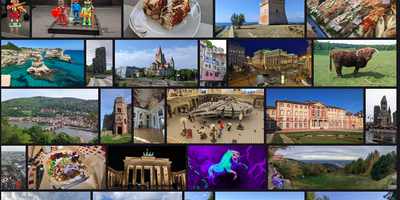
HomeGallery turns the photo and video folders on your server into a mobile-friendly web gallery. Your files and folder structure stay exactly as they are. Point it at camera files, phone files, or offline drives, and previews and metadata are extracted once. Scroll one endless stream, newest first. Open any image for its file name, dimensions, capture date, source paths, camera settings, street address, tags, and detected objects. Swipe between photos, then pinch or double-tap to zoom. The Map view clusters photos by place, with counts. The plant button lists similar images, so one sunset finds every other sunset. Face search finds the same person in other photos. A search box accepts expressions like tags in (vacation, family), type:video year in [2015:2020] order by duration, or not exists(geo). In Edit mode, select many photos at once and type comma-separated tags; a minus prefix removes one. Videos are transcoded for playback. Renamed or moved files keep their previews. An archive disk can stay unplugged once indexing is done. Optional logins limit each user to a query filter. Install it as a PWA for a lightweight mobile app. Running on a dedicated VPS on RepoCloud with guaranteed CPU, RAM, and SSD, full root SSH access, and a browser serial console. MIT licensed.