Tinyauth
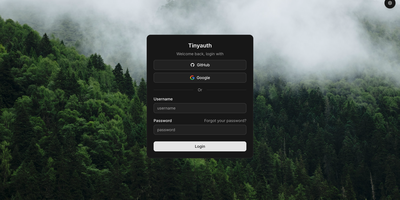
To protect self-hosted web services behind a unified single sign-on portal without deploying complex enterprise identity suites, Tinyauth acts as an OpenID Certified authentication server and reverse proxy middleware. Homelab operators and infrastructure teams place it in front of internal dashboards, media servers, and administrative tools routed through Traefik, Caddy, Nginx, Nginx Proxy Manager, or LinuxServer SWAG. Users can sign in with local bcrypt-hashed credentials, scan QR codes to enroll time-based one-time password authenticators for two-factor verification, or authenticate through external OAuth providers like GitHub, Google, and Pocket ID. Organizations running centralized directories can bind Tinyauth directly to an LDAP server such as LLDAP or OpenLDAP and automatically synchronize group memberships for role-based authorization. Fine-grained access control rules configured via dynamic Docker container labels or environment variables let administrators whitelist or block specific usernames, OAuth email regex patterns, OIDC groups, client IP CIDR ranges, and URL path prefixes per subdomain. For applications that support native federated login, the built-in OpenID Connect 1.0 discovery endpoint, authorization code flow, and userinfo API allow seamless single sign-on with optional consent skipping for trusted clients. Running on a dedicated VPS on RepoCloud with guaranteed CPU, RAM, and SSD, full root SSH access, and a browser serial console. AGPL-3.0 licensed.
DockFlare
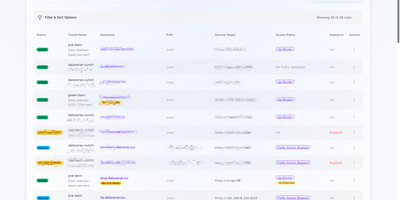
Combining Docker container labels with a live web control plane, DockFlare automates Cloudflare Tunnel ingress routing, multi-zone DNS records, and Zero Trust Access policies across self-hosted infrastructure. DevOps engineers and homelab operators can attach simple container labels to expose HTTP, HTTPS, TCP, SSH, and RDP services publicly in seconds without clicking through external cloud dashboards. For non-containerized workloads such as bare-metal hypervisors or network appliances, administrators can define manual ingress rules, path-based routes, custom TLS SNI headers, and origin certificate bypass flags directly in the web interface. Security teams use reusable Access Groups and wildcard zone policies to enforce Google, GitHub, Azure AD, or custom OIDC authentication across every subdomain from a single policy definition. Distributed deployments connect lightweight remote agents back to the primary controller using Zero Trust service tokens so multi-host clusters share one unified routing view. When containers stop or restart, configurable grace-period timers prevent accidental route churn before cleaning up stale DNS entries, while encrypted state backups protect your entire ingress configuration. Running on a dedicated VPS on RepoCloud with guaranteed CPU, RAM, and SSD, full root SSH access, and a browser serial console. GPL-3.0 licensed.