Prefect
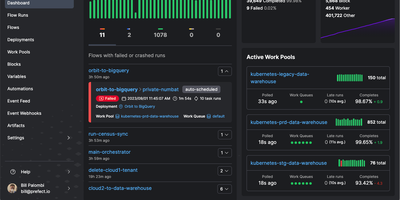
With 23,600 GitHub stars, 13 million monthly PyPI downloads, and 425+ contributors automating over 200 million data tasks monthly for Fortune 50 companies like Progressive Insurance and disruptors like Cash App, Prefect is the most widely deployed open-source workflow orchestration framework for Python — turning any script into a resilient production pipeline with a single @flow decorator while eliminating rigid DAG structures entirely. The durable execution engine persists task results and automatically resumes from failures without replaying expensive upstream work, guaranteeing exactly-once execution for any Python function. Event-driven automation triggers workflows from webhooks, cloud events, or state changes through a real-time event bus that detects what happens or fails to happen across your entire data platform. Work pools decouple workflow code from infrastructure, enabling seamless switching between Docker, Kubernetes, AWS ECS, Azure Container Instances, GCP Cloud Run, and serverless environments without modifying pipeline logic. Native Ray and Dask task runners extend execution across clusters for compute-intensive workloads. The self-hosted server provides a monitoring dashboard with flow run timelines, task state visualization, scheduling, and automation configuration. The third-generation engine reduces overhead by over 90 percent compared to Prefect 2, supporting batch, event-driven, interactive, and background task workflows. Deploy via Docker Compose with PostgreSQL, Redis, server, background services, and worker containers, or use official Helm charts for production Kubernetes. Running on a dedicated VPS on RepoCloud with guaranteed CPU, RAM, and SSD, full root SSH access, and a browser serial console. Apache-2.0 licensed.
Kestra
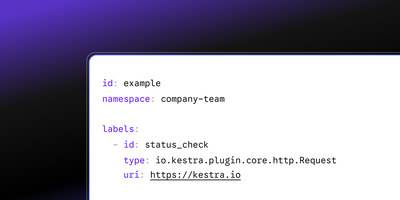
With over 27,000 GitHub stars and an ecosystem of 1,900+ plugins covering every major cloud provider, database, and SaaS platform, Kestra is the orchestration engine that brings Infrastructure as Code principles to workflow automation — defining complex multi-step pipelines in readable YAML that execute across any language, runtime, or infrastructure boundary. The built-in VS Code-style editor provides syntax highlighting, auto-completion, real-time validation, and an AI Copilot that generates workflow YAML from natural language descriptions. Tasks execute in Python, Node.js, Go, R, Shell, SQL, or any Docker container, with event-driven triggers listening for file arrivals on SFTP and cloud storage, messages from Kafka, Redis, Pulsar, AMQP, MQTT, NATS, AWS SQS, Google Pub/Sub, and Azure Event Hubs in real time. The topology view visualizes workflow DAGs with execution state, duration, and output artifacts for each task node. Namespaces organize workflows into isolated environments with configurable secrets, while subflows enable modular composition with inputs, outputs, and conditional branching. Retry policies, timeouts, error handlers, and automatic backfills for missed schedules ensure reliability across production workloads. Git integration pushes workflows directly to branches from the UI with CI/CD pipeline support for automated deployment. The REST API enables programmatic workflow management, execution triggering, and resource provisioning. Running on a dedicated VPS on RepoCloud with guaranteed CPU, RAM, and SSD, full root SSH access, and a browser serial console. Apache 2.0 licensed.
Astron Agent
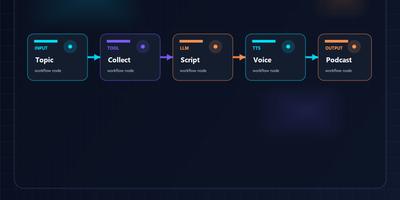
Recognized by the CNCF Landscape in the AI Agent – Workflow Orchestration category alongside Dify and Temporal, Astron Agent is iFLYTEK's fully open-source platform for building, deploying, and managing enterprise multi-agent systems — backed by 8,900+ GitHub stars and the production infrastructure behind one of China's largest AI companies. Unlike pip-install frameworks such as LangGraph, CrewAI, or AutoGen, Astron Agent ships as a complete microservices platform spanning 10+ services across Java, Python, Go, and TypeScript: a ReactFlow-based visual workflow builder for low-code agent orchestration, native integration with the Model Context Protocol (MCP) for tool calling, a built-in model management layer supporting iFLYTEK Spark, OpenAI, Anthropic, and on-premises MaaS deployments, and a multi-tenant Go authentication service powered by Casdoor. The standout differentiator is native RPA integration via the companion astron-rpa project (7,200+ stars), providing 300+ pre-built automation capabilities spanning browser, Office document, and enterprise system interaction — enabling agents to execute physical UI actions rather than only API calls. Infrastructure includes PostgreSQL for multi-tenant data isolation, MySQL for application metadata, Kafka for event streaming, Redis for caching, and MinIO for object storage, all orchestrated through Docker Compose with explicit health checks and dependency chains or production Kubernetes Helm charts. Running on a dedicated VPS on RepoCloud with guaranteed CPU, RAM, and SSD, full root SSH access, and a browser serial console. Apache 2.0 licensed.
Dify
Dify turns the notoriously complex process of building production-grade AI applications into a visual drag-and-drop experience that teams can actually ship and maintain. With over 87,000 GitHub stars and backing from prominent investors, the platform has become the go-to open-source LLMOps solution for organizations that refuse to be locked into proprietary AI stacks. The visual workflow canvas lets developers wire together LLM calls, conditional logic, iteration loops, tool invocations, and human-in-the-loop checkpoints without writing boilerplate integration code. Its RAG pipeline engine handles the full document lifecycle from ingestion of PDFs, Word documents, and HTML through configurable chunking strategies, embedding with models from OpenAI or open-source alternatives, vector storage in Weaviate, Qdrant, Pinecone, or pgvector, and hybrid semantic-plus-keyword retrieval with citation tracking. Dify integrates with hundreds of model providers including OpenAI GPT-4o, Anthropic Claude, Google Gemini, Mistral, Llama, and any OpenAI-compatible endpoint like Ollama for fully local inference. The agent framework supports both ReAct and function-calling strategies with 50-plus built-in tools spanning Google Search, DALL-E, Stable Diffusion, WolframAlpha, and custom API definitions. Published apps can be deployed as hosted web interfaces, embedded chat widgets, REST API endpoints, or MCP-compatible tools. Enterprise features include role-based access control, SSO integration, and audit logging. A built-in marketplace enables teams to share and reuse model providers, tools, and workflow templates across projects. Running on a dedicated VPS on RepoCloud with guaranteed CPU, RAM, and SSD, full root SSH access, and a browser serial console. Apache 2.0 licensed with an open-source community edition.
Conductor
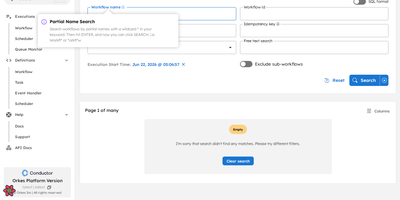
Originally built at Netflix to orchestrate microservices powering 230 million subscribers and now trusted in production at Tesla, LinkedIn, and J.P. Morgan, Conductor is the most battle-tested open-source workflow engine available — with 32,000 GitHub stars and horizontal scalability to billions of executions. The architecture cleanly separates orchestration from business logic: workflows are defined in declarative JSON while workers execute tasks in any of seven supported languages (Java, Python, Go, JavaScript, C#, Ruby, Rust) with zero framework constraints. Durable execution persists every state transition, enabling automatic retries, configurable timeouts, crash recovery, and instant replay from any failure point without re-executing completed tasks. Native AI agent orchestration supports 14+ LLM providers (Anthropic, OpenAI, Google Gemini, AWS Bedrock, Mistral, Cohere, HuggingFace, Ollama), MCP tool calling, function calling, human-in-the-loop approval gates, and vector database integration (Pinecone, pgvector, MongoDB Atlas) for RAG pipelines. Deploy with your choice of five persistence backends (PostgreSQL, Redis, MySQL, Cassandra, SQLite), six message brokers, and Elasticsearch or OpenSearch for workflow indexing — all configurable via Docker Compose files included in the repository. The built-in web UI provides workflow visualization, execution monitoring, task queue inspection, and manual intervention controls. Running on a dedicated VPS on RepoCloud with guaranteed CPU, RAM, and SSD, full root SSH access, and a browser serial console. Apache-2.0 licensed.
Apache Airflow
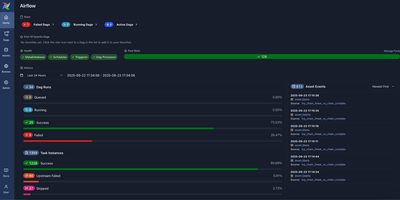
With over 46,000 GitHub stars and one of the largest communities in data engineering, Apache Airflow is the workflow orchestration platform that lets teams define, schedule, and monitor complex data pipelines as Python code through directed acyclic graphs. Airflow 3.x introduced a modernized architecture with a task execution API, the Language Task SDK for writing task implementations in Java and Go alongside Python, asset-based partitioning with FanOutMapper and FixedKeyMapper for data-driven scheduling, a first-class state store for tasks and assets, pluggable retry policies, and a redesigned React-based web UI built on FastAPI. The provider ecosystem ships 80+ packages covering AWS, Google Cloud, Azure, Snowflake, Databricks, Apache Spark, Apache Kafka, PostgreSQL, MySQL, MongoDB, Slack, HTTP, SSH, Docker, Kubernetes, and dozens more, enabling a single deployment to orchestrate jobs across multi-cloud and on-premises infrastructure. The scheduler supports cron expressions, timetable plugins, data-aware scheduling triggered by asset events, and dynamic task generation through Python loops and conditionals. Built-in operators include BashOperator, PythonOperator, DockerOperator, KubernetesPodOperator, and sensor operators that poll external systems. The web UI provides DAG visualization with Gantt charts, grid views, and graph views, task instance logs, SLA monitoring, connection and variable management, and role-based access control. Deployment options include standalone mode, Docker Compose with CeleryExecutor or KubernetesExecutor, Helm charts for Kubernetes, and managed cloud services. Running on a dedicated VPS on RepoCloud with guaranteed CPU, RAM, and SSD, full root SSH access, and a browser serial console. Apache License 2.0 licensed.
MateClaw
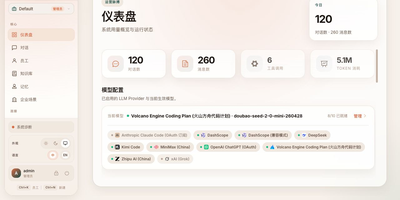
MateClaw delivers a multi-agent AI platform where digital employees run as persistent team members with roles, goals, and accumulated skills rather than stateless chat completions. The Spring Boot backend on Spring AI Alibaba provides ReAct iterative reasoning and Plan-and-Execute decomposition on a StateGraph runtime, with parallel delegation between employees and dynamic context pruning for multi-step tasks. Five career templates ship ready (Product Researcher, Customer Support, Knowledge Curator, Data Analyst, Executive Assistant) while custom employees inherit configurable backstories, pixel-art avatars, and dedicated tool bindings. The MCP integration supports stdio, SSE, and Streamable HTTP transports with per-employee tool isolation preventing capability bleed between agents. ACP bridges bring Claude Code, Codex, and other coding agents in as first-class employees. Workflow orchestration composes multiple employees and system actions into publishable linear DSL processes with seven step modes: sequential, fan_out, collect, conditional, await_approval, dispatch_channel, and write_memory. The trigger system wires cron schedules, webhooks, channel messages, employee lifecycle events, content matches, and workflow completions to automated flows. The Admin Runtime Console provides real-time visibility into running employees with token usage tracking and one-click force-recycle. Spring Boot Actuator monitoring, full audit trail, and per-channel error isolation deliver production-grade reliability. Running on a dedicated VPS on RepoCloud with guaranteed CPU, RAM, and SSD, full root SSH access, and a browser serial console. Apache-2.0 licensed.
Hatchet
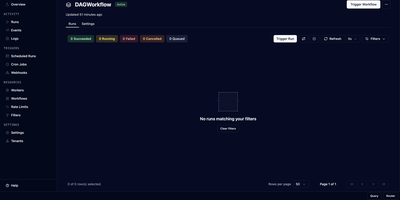
Processing over one billion tasks per month on Hatchet Cloud and holding 7,600+ GitHub stars, Hatchet is the open-source orchestration engine that replaces fragile legacy queues with durable, fault-tolerant task execution built entirely on PostgreSQL — no Redis, RabbitMQ, or Kafka required. Born from the creators' experience scaling Uber's Cadence-inspired patterns, the v1 engine achieves 10,000 tasks per second sustained throughput with 20ms average queue latency through dynamic buffer flushing and batch insert optimization. Define tasks, durable workflows, and DAG pipelines as code using native SDKs for Python, TypeScript, Go, and Ruby — every function gets automatic retries with configurable backoff, concurrency control with group round robin or cancellation policies, priority queuing, and dynamic rate limiting for third-party API protection. Durable execution persists the complete history of every task and state transition, enabling replay from failure, debugging via full event timelines, and complex pause/resume conditions using durable sleep and event waits. The real-time web dashboard provides workflow run visualization with DAG timeline rendering, worker health monitoring with slot utilization, queue depth metrics, task throughput charts, and error rate tracking — all filterable by status, workflow, or time window. OpenTelemetry integration and Prometheus metrics export enable advanced observability. Multi-tenant by default with users, roles, and namespace isolation. Self-host via Docker Compose with PostgreSQL and optional RabbitMQ, or use the single-container Hatchet Lite image for development. Running on a dedicated VPS on RepoCloud with guaranteed CPU, RAM, and SSD, full root SSH access, and a browser serial console. MIT licensed.

FastGPT
FastGPT lets you build production AI agents and knowledge base chatbots through a visual drag-and-drop workflow editor, connecting any LLM provider to your documents with retrieval-augmented generation that cites sources and reduces hallucination. The workflow canvas chains LLM calls, conditional branching, HTTP requests, code sandbox execution, and plugin nodes into complex conversation flows and agent skill pipelines without writing backend code. The knowledge base engine ingests documents in ten formats (TXT, Markdown, HTML, PDF, DOCX, PPTX, CSV, XLSX, URL scraping, and CSV batch import) then applies automatic chunking, hybrid vector retrieval with semantic reranking, and QA-pair splitting to deliver accurate, citation-backed answers. FastGPT connects to virtually any LLM provider through its AI Proxy aggregation layer: OpenAI GPT-4o, Anthropic Claude, Google Gemini, DeepSeek, Qwen, ERNIE Bot, and models hosted via Ollama all work through a unified OpenAI-compatible API. Bidirectional MCP support enables agents to call external tools and expose their own capabilities to other systems. Completed applications can be shared via login-free links, embedded as iframe widgets, or integrated with WeCom, Lark, DingTalk, and WeChat Official Accounts through the published REST API. Application operation logs, conversation annotation, and per-model usage analytics provide full lifecycle governance for compliance-sensitive deployments. Running on a dedicated VPS on RepoCloud with guaranteed CPU, RAM, and SSD, full root SSH access, and a browser serial console. FastGPT Open Source License (Apache 2.0 based) licensed.
Skyvern
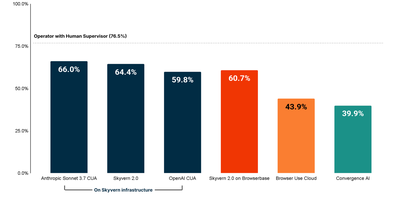
Scoring 64.4 on the WebBench benchmark — state-of-the-art among browser automation platforms — Skyvern replaces brittle XPath-based scripts with Vision LLM reasoning that adapts when websites change their layouts. The platform extends Playwright with AI-powered page methods including page.act(), page.extract(), and page.validate() that accept natural language prompts while still supporting traditional CSS selectors as fallback. The drag-and-drop Workflow Studio offers 17+ block types including navigation, extraction, login, loops, conditionals, code blocks, file download, and file upload — enabling non-technical users to build complex multi-step automations without writing code. Self-hosted deployments support bring-your-own-LLM with OpenAI, Anthropic, Gemini, and Ollama, while the multi-engine architecture allows swapping between Skyvern 2.0, OpenAI CUA, Anthropic CUA, or UI-TARS per task with a single parameter. Built-in infrastructure handles persistent browser sessions preserving cookies and localStorage across runs, automatic CAPTCHA solving for reCAPTCHA and hCaptcha, anti-bot bypass for Cloudflare and DataDome, residential proxy rotation across 20+ countries, and a credential vault integrating with Bitwarden and 1Password for secure 2FA management. Real-time session livestreaming via WebRTC enables visual debugging, while step-by-step action logs with screenshots and full LLM diagnostic traces provide production observability. The MCP server integration exposes Skyvern as a tool for Claude, Cursor, Windsurf, and any MCP-compatible AI agent. Connect to 6,000+ apps through Zapier, Make.com, or self-hosted N8N workflows. Deploy via Docker Compose or pip install with a two-command setup. Running on a dedicated VPS on RepoCloud with guaranteed CPU, RAM, and SSD, full root SSH access, and a browser serial console. AGPL-3.0 licensed.
Temporal
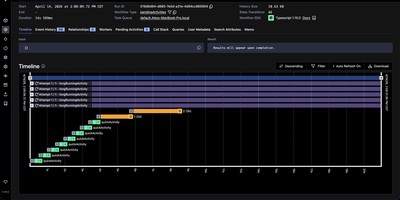
Powering mission-critical infrastructure at OpenAI, Cursor, Replit, Lovable, Retool, and Snap with over 22,000 GitHub stars, Temporal is the durable execution platform that originated from Uber's Cadence project — built by the creators of AWS SQS, AWS SWF, and Azure Durable Functions with nine years of production-proven reliability. The workflow-as-code model lets developers write business logic in Go, Java, Python, TypeScript, .NET, PHP, or Ruby using native SDKs, while the Temporal Server automatically persists state at every step, replays from failures, retries activities with configurable backoff policies, and manages task queues without developers writing reconciliation logic. Workflows support signals for external event injection, timers for scheduled delays, child workflows for decomposition, and queries for real-time state inspection — all backed by deterministic replay over an event-sourced history that guarantees exactly-once semantics. The Web UI provides visual workflow execution inspection with event timelines, pending activity monitoring, namespace management, and worker health dashboards. Persistence supports PostgreSQL, MySQL, or Apache Cassandra for horizontal scalability, with Elasticsearch or OpenSearch for advanced workflow visibility queries. Multi-cluster replication enables global failover across data centers. The self-hosted stack deploys via Docker Compose with the auto-setup image, PostgreSQL, Web UI, and admin tools — operational within 30 minutes. Running on a dedicated VPS on RepoCloud with guaranteed CPU, RAM, and SSD, full root SSH access, and a browser serial console. MIT licensed.
Open Agent Builder
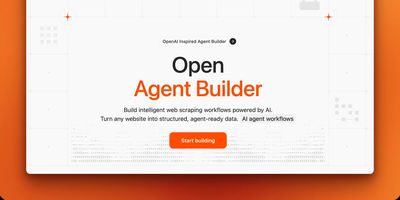
Open Agent Builder delivers a visual canvas for orchestrating AI agent workflows without writing Python scripts or managing complex codebases. The React Flow-powered drag-and-drop interface supports seven node types — Agent, Scraper, Transform, If/Else, Loop, User Approval, and MCP Tool — each configurable with provider-specific settings for Anthropic Claude (Haiku 4.5 and Sonnet 4.5), OpenAI GPT-5, Groq, or any OpenAI-compatible endpoint. The LangGraph orchestration engine handles state management, conditional routing, and human-in-the-loop approval gates while Firecrawl integration converts any website into structured, LLM-ready data through scrape, crawl, and map operations. E2B sandboxed code execution powers Transform nodes for secure data manipulation without risking host system integrity. Real-time streaming updates show execution progress node-by-node as workflows run, with Convex providing reactive database synchronization for workflow state and execution history. The TypeScript-first architecture (96.8% TypeScript) built on Next.js 16 App Router with Tailwind CSS delivers a responsive interface across devices. Clerk handles multi-user authentication with JWT integration for secure workspace isolation. Deploy via npm install and environment configuration with Firecrawl, Convex, and Clerk API keys. Running on a dedicated VPS on RepoCloud with guaranteed CPU, RAM, and SSD, full root SSH access, and a browser serial console. MIT licensed.
Huginn
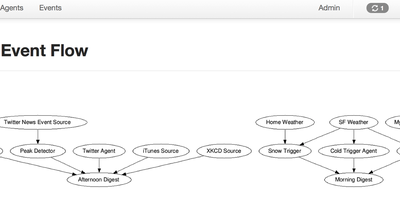
Huginn has established itself as the definitive open-source automation engine for developers who refuse to hand their workflow data to third-party cloud services. The platform lets you build agents that scrape websites, monitor RSS feeds, track weather via APIs, watch Twitter streams, aggregate news, detect price changes, and trigger notifications through email, SMS via Twilio, Slack webhooks, or social media posts to Twitter and Tumblr. Each agent creates and consumes JSON events, propagating them along a directed graph where complex multi-step workflows emerge from simple single-purpose components. The web interface provides visual agent management with drag-and-drop scenario building, real-time event logs, scheduling controls, and a built-in agent library covering dozens of use cases out of the box. Huginn supports Liquid templating for dynamic event transformation, regex-based content extraction, JavaScript-based data manipulation, and HumanTaskAgent for crowd-sourced workflow steps. Custom agents can be packaged as Ruby gems and loaded via the ADDITIONAL_GEMS environment variable without modifying core code. Deployment options include Docker with the official huginn/huginn all-in-one image or huginn/huginn-single-process for production multi-container setups with PostgreSQL or MySQL backends, plus native support for Heroku and OpenShift PaaS platforms. Running on a dedicated VPS on RepoCloud with guaranteed CPU, RAM, and SSD, full root SSH access, and a browser serial console. MIT licensed.
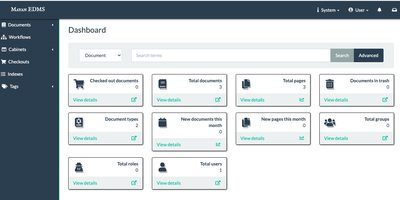
Mayan EDMS
Mayan EDMS stores, classifies, and retrieves millions of documents with automatic OCR, workflow automation, and audit-ready access controls that organizations have relied on for over a decade. Tesseract integration extracts searchable text from scanned PDFs and images in over 100 languages, transforming paper archives into instantly queryable digital collections without manual data entry. The workflow engine routes documents through approval chains using configurable state machines that trigger notifications, enforce retention policies, and maintain complete audit trails for regulatory compliance. Version tracking preserves every revision with full diff capabilities, while GnuPG digital signatures provide cryptographic proof of authenticity and tamper detection for sensitive records. Role-based permissions combined with object-level ACLs and LDAP integration ensure documents remain visible only to authorized users, down to individual file granularity. Full-text search powered by Whoosh or ElasticSearch handles advanced queries across massive document stores with faceted filtering and relevance ranking. The Django REST Framework API enables programmatic upload, metadata extraction, and workflow triggering from external systems. Beyond simple folder hierarchies, metadata schemas, document types, tags, and cabinet structures provide multi-dimensional classification tailored to how your organization actually works. Background processing through Celery handles OCR, conversion, and preview generation asynchronously, keeping the web interface responsive under heavy ingest loads.
Automatisch
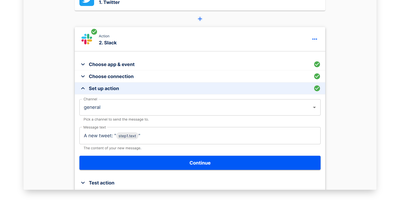
Automatisch runs your Zapier workflows on your own hardware - an open-source, self-hosted automation platform built as a direct alternative. Flows are chains of steps: one trigger (a polling or webhook event such as a new GitHub issue, a Stripe payment, or a form submission) followed by action steps that pass data downstream (post to Slack, append a Google Sheets row, update Notion). The visual builder deliberately mirrors Zapier's trigger-action model, so migrating existing Zaps requires no retraining and no programming knowledge. Roughly 60 integrations cover common business services - Slack, GitHub, Google Sheets, Notion, Stripe, Discord - and connections store credentials per service, with multiple accounts per app supported. Every execution runs on your own server: execution history, logs, and payload data never touch a third-party processor, which matters for GDPR, healthcare, and finance workloads. Error handling with retry logic, a REST API for programmatic flow management, and Docker Compose deployment round out the platform. The AGPL-3.0 Community Edition has no feature limits or per-task billing; an Enterprise Edition adds SSO, roles, and audit logs.
Corteza
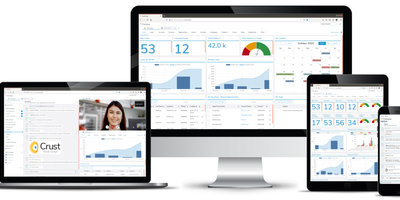
Salesforce's platform model, 100% open-source (Apache 2.0): Corteza is a Go/Vue.js low-code platform developed under a foundation, so there is no open-core bait to grow out of. The heart is Corteza Compose: namespaces contain applications, modules define record structures the way Salesforce objects do, and a drag-and-drop page builder assembles record pages, list pages, dashboards, and charts from configurable blocks. Automation comes from a visual, BPMN-style workflow engine plus JavaScript automation scripts, so cross-application business logic - approval chains, field updates, notifications - is configured rather than programmed. Granular role-based permissions reach down to individual modules, fields, and records, mirroring real organizational hierarchies. Corteza CRM ships as the flagship application built entirely on Compose: leads, accounts, opportunities, campaigns, and cases with a 360-degree customer view, covering most Salesforce standard objects - and because it is just a Compose app, adding or reshaping modules is configuration, not a fork. Everything is reachable over REST APIs, deliberately familiar tooling eases Salesforce admin migration, and a CLI can even generate synthetic records for load-testing what you build.
Octobox
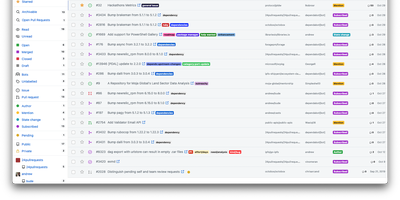
What Gmail did for email, Octobox does for GitHub notifications: an ephemeral, unmanageable stream becomes an inbox you can actually triage. GitHub marks notifications read the moment you glance at them and lets old ones vanish days later; heavy maintainers end up building elaborate Gmail filter systems just to cope. Octobox - a Ruby on Rails app over PostgreSQL - syncs your notifications into a persistent inbox with an explicit archived state: mark a thread done, and if the issue or PR sees new activity, it pops back automatically, so nothing silently falls through. Triage is keyboard-driven with Gmail-style shortcuts (j/k to navigate, e to archive, m to mute, s to star), and multi-select clears noisy repositories in bulk. Filtering is where it earns its keep: slice by repository, organization, type, action, state, reason, CI status, labels, author, assignee, or bot origin, combine prefix search filters, and pin favorite searches to the sidebar. The optional GitHub App enriches entries with live PR/CI status and labels so you can decide without clicking through. Auto-archive rules clear merged PRs and closed issues; muting and snoozing silence the rest. A REST API supports integrations. Self-hosting keeps your notification metadata - a map of everything you work on - on your own server.