Xiu
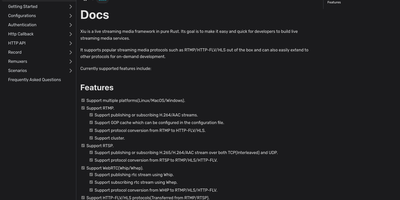
Point OBS at it, and the same live stream comes out in whatever protocol each viewer needs. Xiu is an open-source live media server that accepts publishing over RTMP, RTSP, and WebRTC WHIP, then redistributes every stream as RTMP, RTSP, HTTP-FLV, HLS, or low-latency WebRTC WHEP playback. Cameras and encoders pushing H.264, H.265, or AAC over TCP or UDP become browser-friendly HLS and HTTP-FLV without a separate transcoding tier, and GOP caching gets late joiners to a keyframe fast. Static push and pull relaying chains servers together: one origin ingests, regional nodes pull, and audiences play from the node nearest them; RTMP clustering covers larger fan-outs. Every live stream can also be recorded straight to HLS files, giving you an instant archive of broadcasts, lessons, and town halls. Token authentication guards publishing and playback, HTTP callbacks report stream start and stop events to your backend, and an HTTP API answers stream information queries for your own dashboards and automation. Operators shape ports, protocols, relays, and recording in one configuration file or with command-line flags, running a single binary that stays out of the way until the audience arrives. Running on a dedicated VPS on RepoCloud with guaranteed CPU, RAM, and SSD, full root SSH access, and a browser serial console. MIT licensed.

Design Studio AI
Describe a website, slide deck, document, 3D scene, or animation, then shape it with chat and a full visual editor in your own workspace. Templates give every project a head start, and a short brief about the goal and audience steers the first draft. The editor offers layers, flex and grid layouts, reusable design systems with palettes and fonts, component libraries, and live human and agent editing on one versioned document. The 3D mode handles materials, lighting, camera, rigging, and morph targets, and the motion tools animate bones, skins, and clips. Bring your own keys for OpenAI, Anthropic, Gemini, OpenRouter, or DeepSeek to generate text, images, speech, music, and video. Finished work exports as HTML, SVG, PNG, PDF, PowerPoint, WebM, GLB, or a React prototype, and snapshots can be shared publicly. Agents connect through REST, an authenticated MCP endpoint, or a command line tool, and an activity view records provider calls and usage. Accounts use email and password, with optional GitHub sign-in. Running on a dedicated VPS on RepoCloud with guaranteed CPU, RAM, and SSD, full root SSH access, and a browser serial console. MIT licensed.
Routr
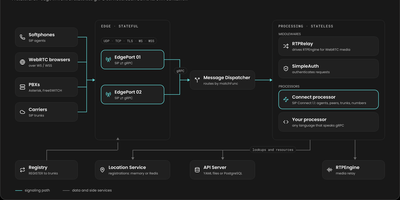
Routr is a programmable SIP server that proxies, registers, and routes calls for carriers and communication platforms, replacing racks of inherited PBX plumbing with one cloud-ready process. Phones and trunks connect over UDP, TCP, TLS, WebSocket, or secure WebSocket, register against the built-in registrar, and find each other through the location service backed by memory, Redis, or Postgres. Routing is configurable per domain with intra-domain, ingress, egress, and peer-egress strategies, and multi-tenant domains carry their own access control lists. Load balancing with session affinity spreads calls across Asterisk and FreeSWITCH media servers, and RTPEngine middleware anchors media and adds SDES-SRTP toward TLS trunks. Web phones authenticate with JWT endpoint credentials, and every call message can be recorded and replayed for debugging. Operators manage the whole system through a gRPC API, the Node.js SDK, or the rctl command-line tool, and custom Processors and Middleware written in JavaScript reshape SIP messages as they pass. OpenTelemetry traces, metrics, and logs expose the server's behaviour in production, and the same deployment runs from a single Docker container to a Kubernetes cluster through the published Helm charts. There is no single point of failure in the design, so a registrar outage never takes the dial tone with it. Running on a dedicated VPS on RepoCloud with guaranteed CPU, RAM, and SSD, full root SSH access, and a browser serial console. MIT licensed.
Apostrophe
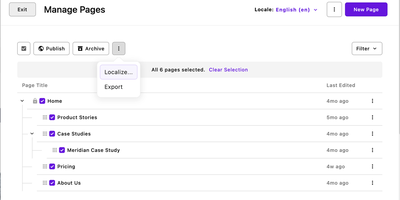
ApostropheCMS lets editors change text, images, and layouts directly on the finished web page, exactly as visitors will see them. Developers keep full control of the codebase underneath. Click a headline on the live page and type; drop content widgets into editable areas to build sections from rich text, images, galleries, and video; then flip between draft and published modes to preview changes before anyone else sees them. The admin menu handles the structured side of the site: pages in a tree, plus pieces for repeatable content like articles, events, and products, each defined by developers with a field schema API so editors only ever see the fields that belong there. Role-based permissions decide who can draft, who can publish, and which sections of the site each team can touch, and localization keeps language and regional variations of every page organized side by side. When a project outgrows server-rendered pages, the built-in REST APIs serve the same content to Astro, React, Vue, or any other frontend, so a visual-editing CMS quietly becomes the headless backend without a migration. Extensions from the module ecosystem bolt on forms, SEO tools, and integrations without forking the core. Running on a dedicated VPS on RepoCloud with guaranteed CPU, RAM, and SSD, full root SSH access, and a browser serial console. MIT licensed.
OvenMediaEngine
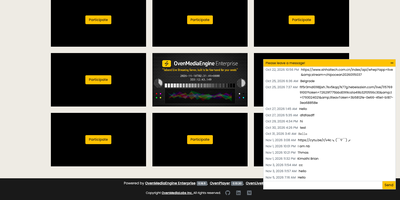
OvenMediaEngine ingests a broadcast feed once and delivers it to every viewer with sub-second delay over WebRTC and Low Latency HLS. Encoders push through WebRTC with WHIP, SRT, RTMP, or MPEG-2 TS, and the server can also pull RTSP sources and schedule pre-recorded files as live channels. The embedded transcoder converts incoming video to adaptive bitrate ladders in VP8, H.264, H.265, or AV1, so phones on weak signals and televisions on fiber each receive a rendition they can play. WebRTC delivery runs through an embedded signalling server and TURN server, with retransmission and forward error correction keeping pictures intact on imperfect networks. LLHLS streams carry DVR rewind, WebVTT subtitles, timed metadata, and DRM through Widevine, FairPlay, and PlayReady. Recordings dump finished streams to files for video on demand, thumbnails capture stills, and push publishing re-streams to other platforms over RTMP and SRT. Origin-edge clustering spreads a popular event across many servers, admission webhooks and signed policies control who may publish and watch, and a REST API plus monitoring endpoints keep the whole service observable. Running on a dedicated VPS on RepoCloud with guaranteed CPU, RAM, and SSD, full root SSH access, and a browser serial console. AGPL-3.0 licensed.
GeneWeb
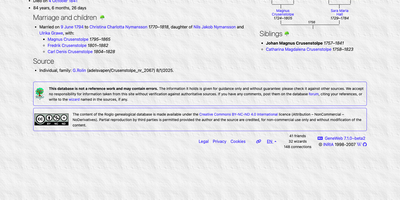
Most family trees sit inside a single desktop file that only one relative can open, but GeneWeb publishes the whole tree on the web as an interactive site the entire family can browse and grow together. One lightweight server hosts as many genealogical databases as you like, and every page is generated on demand from the data itself, so edits appear instantly without rebuilding static files. Each person page gathers births, marriages, deaths, and other events with exact dates, witnesses, notes, and sources, giving every fact in the tree a documented trail back to its evidence. Trees arrive and leave in the standard GEDCOM format or in GeneWeb's own compact format, and details that do not fit the import land safely in notes instead of being discarded. The built-in relationship calculator traces the exact link between any two people in the database, even through billions of possible paths, and its consanguinity rates reveal how closely related spouses really were. Searching follows real research habits: names match across spelling variations, women are found by their maiden names, and nobility titles appear on a chronological timeline. Privacy comes built in through password accounts: friends can view private data, wizards can edit it, and visibility rules can hide everyone born within the last hundred years automatically. Running on a dedicated VPS on RepoCloud with guaranteed CPU, RAM, and SSD, full root SSH access, and a browser serial console. GPL-2.0 licensed.
Mercure
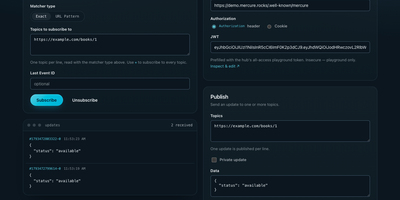
Mercure is a realtime hub that pushes updates from your backend straight to browsers over Server-Sent Events, so live dashboards, chat rooms, and activity feeds refresh the moment data changes. Subscribers connect through the browser's built-in EventSource API and choose topics with exact matchers for single resources or URL Pattern matchers for whole families such as /books/:id. Publishers send one form-encoded POST to the hub endpoint, and Mercure fans each update out to every matching connection instantly. JWT access tokens grant publish and subscribe rights topic by topic, so private updates reach only entitled clients while public topics can stay open to anonymous subscribers. If a connection drops, the client reconnects with its last event ID and Mercure replays the updates it missed from stored history. Subscription events announce every arrival and departure, so your application gets live presence and a current list of who is connected. A built-in debug UI shows messages flowing through the hub alongside active subscriptions, turning realtime bugs into something you can watch happen. Optional end-to-end encryption protects sensitive payloads, and any backend able to send an HTTP POST can publish, whatever language it runs. Running on a dedicated VPS on RepoCloud with guaranteed CPU, RAM, and SSD, full root SSH access, and a browser serial console. AGPL-3.0 licensed.
Rustunnel
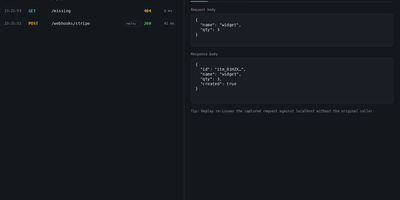
Rustunnel turns a service running on your laptop or private network into a public HTTPS, TCP, or UDP endpoint without opening inbound ports on the machine where it lives. Point the client at a local port and share the public address for webhook testing, a quick demo, an AI agent tool, SSH access, a game server, or an IoT device that cannot accept inbound connections. Give tunnels custom subdomains on your own wildcard domain, terminate HTTPS with automatic Let's Encrypt certificates, and keep client traffic encrypted from edge to local service. Put several backends behind one subdomain or TCP port and let TCP or HTTP health probes remove sick members before visitors hit them. When two peers can reach each other directly, start a P2P tunnel with NAT hole punching and QUIC, with relay fallback when the direct path fails. Watch sessions, tunnel health, traffic, and request logs from the live dashboard, inspect headers and bodies in the local request inspector, and replay a captured call while debugging a webhook. Manage tunnels, tokens, groups, captured requests, and history through the REST API, scrape Prometheus metrics, review audit logs, or let an MCP-compatible coding assistant create and close tunnels in plain language. Running on a dedicated VPS on RepoCloud with guaranteed CPU, RAM, and SSD, full root SSH access, and a browser serial console. AGPL-3.0 licensed.
Tau
Tau delivers a complete self-hosted cloud platform where Git is the control plane and WebAssembly is the runtime. The Go binary deploys as interconnected nodes that form a P2P network using libp2p for automatic service discovery, eliminating Kubernetes entirely. Serverless functions compile to WebAssembly for secure multi-tenant execution with automatic horizontal scaling — write in Go, Rust, AssemblyScript, or C and deploy by pushing to Git. Branch-based environments map Git branches to isolated deployments, so staging and production run identical infrastructure from different refs. Static website hosting serves frontends with global distribution and automatic content-addressed deduplication via IPFS-derived storage. The built-in K/V database provides distributed storage with automatic replication across nodes, while object storage handles file management with content addressing. Pub/Sub messaging enables real-time communication between functions and external services including WebSocket support. Spore Drive automates multi-host deployment and rolling updates from a single command across bare metal or VMs running Ubuntu. The Dream CLI provides a complete local development environment that mirrors production exactly — same services, same routing, same deployment flow. Zero-configuration HTTPS provisions TLS certificates automatically for custom domains. The web console at console.taubyte.com provides visual project management, or use the tau CLI for Git-native workflows. Running on a dedicated VPS on RepoCloud with guaranteed CPU, RAM, and SSD, full root SSH access, and a browser serial console. BSD-3-Clause licensed.

Myriad
Myriad gathers your games, music, anime, and social posts from eleven platforms into one self-hosted homepage that has a resident character of its own. Connect GitHub, Steam, Bilibili, NetEase Cloud Music, and seven more platforms, and every account lands in one database that the report cards and library read. Report cards, a music player, weather, friend links, and recent activity fill a homepage you arrange on a grid or a free sticker canvas. The library shelves the collections as games, anime, films, books, and music, and clicking a report card plays a three-act portrait: your persona there, your taste, and your highlights. Her layered 2.5D portrait blinks, mouths each reply, and shifts expression in the browser, and a long press opens her panel anywhere on the site. In Chat she stays in character; in Help she plans, asks you to confirm, then acts inside the permissions you granted. The studio turns notes into a static Hugo blog, and the built-in reader follows your RSS, Notion, and RSSHub subscriptions. Tapps run sandboxed as pages or homepage widgets, and the Playground previews one from a single typed sentence before you install or export it. Follow other sites over ActivityPub, pair QQ, Telegram, or Discord bots that answer mentions in group chats, and keep registration and module visibility under your own switches. Running on a dedicated VPS on RepoCloud with guaranteed CPU, RAM, and SSD, full root SSH access, and a browser serial console. AGPL-3.0 licensed.
Ever Works
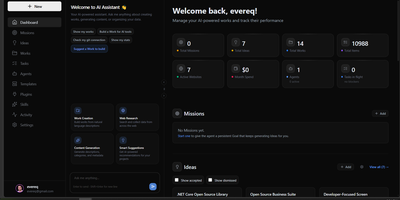
Ever Works transforms a single text prompt into a fully researched, written, coded, and deployed website through autonomous AI agents that operate on a configurable 15-step generation pipeline. Unlike one-shot builders, it continuously improves generated content on a schedule, keeping sites fresh without manual intervention. The platform integrates with six AI providers (OpenAI, Anthropic, Google, Groq, Mistral, Ollama) via gateways like OpenRouter and Vercel AI Gateway, while its plugin system connects ten search providers including Tavily, Brave, Exa, SerpAPI, and Perplexity for deep autonomous research. Every generation is Git-native — code and content live in your own GitHub repositories as commits, providing full version control, portability, and zero vendor lock-in. The monorepo ships a NestJS 11 REST API with JWT authentication, a Next.js 16 web dashboard for managing works, a CLI for terminal operations, an MCP server for AI agent integration, and admin tooling. Content management supports items, categories, tags, and collections, while deployment targets include Vercel and Kubernetes. Background processing runs on Trigger.dev with BullMQ scheduling, and monitoring leverages Sentry plus PostHog for error tracking and product analytics. The platform supports OAuth via GitHub and Google, subscription billing, email notifications, and AI chat conversations for natural-language interaction with your generated works. Running on a dedicated VPS on RepoCloud with guaranteed CPU, RAM, and SSD, full root SSH access, and a browser serial console. AGPL-3.0 licensed.

GeoNode
GeoNode turns a pile of shapefiles, GeoTIFFs, and spreadsheets into a searchable catalog of datasets, interactive maps, stories, and dashboards that your organization, or the whole world, can browse. Vector data in Shapefile, GeoJSON, CSV, KML, and KMZ formats and GeoTIFF rasters arrive through a web form, and a styler previews symbology changes in real time. Every resource carries consistent metadata that follows ISO 19115 and ISO 19139, key fields can be filled by importing ISO, FGDC, or Dublin Core XML, and published datasets are available through WMS, WFS, WCS, WMTS, and a CSW catalogue so any GIS client can connect. Maps combine local datasets with remote WMS layers over base maps such as OpenStreetMap, and saved maps can be embedded in any web page or printed to PDF. GeoStories weave text, maps, images, and video into narratives, while dashboards connect charts, counters, tables, and maps as linked widgets. Vector datasets can be exported as Zipped Shapefile, CSV, Excel, GeoJSON, or KML, and harvesters keep resources synchronized with other GeoNode sites, WMS servers, and ArcGIS REST services. Each resource can stay public or be limited to chosen users and groups, with profiles, comments, and ratings for the community, and a REST API plus an admin panel cover integration and user management. Running on a dedicated VPS on RepoCloud with guaranteed CPU, RAM, and SSD, full root SSH access, and a browser serial console. GPL-3.0-or-later licensed.
LittleLink Server
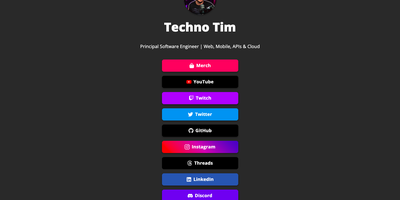
One page, every place you exist online, hosted on a domain you own. LittleLink Server is a self-hosted link-in-bio page that publishes your profile, avatar, bio, and social buttons from a single Docker container, with no account fees and no third-party branding on your links. More than sixty brand buttons cover the major social, streaming, music, and creator platforms, and custom buttons add any destination with your own text, colors, icons, and ordering. Themes restyle the page in a few environment variables, and because configuration is read at request time, edits take effect on a container restart with no rebuild. Page metadata, Open Graph titles and images, favicons, and language are all configurable, so the link you paste into a bio unfurls properly in chats and feeds. The server generates its sitemap and robots rules at request time, with controls for index status and extra crawler rules, including blocking specific AI crawlers by name. Analytics support connects the page to your tracking provider, and a health check endpoint keeps uptime monitors and container orchestrators informed. Creators, streamers, developers, and small businesses use it as the stable home base behind every profile bio: one short URL that always points at the current set of destinations. Running on a dedicated VPS on RepoCloud with guaranteed CPU, RAM, and SSD, full root SSH access, and a browser serial console. MIT licensed.
TDuck
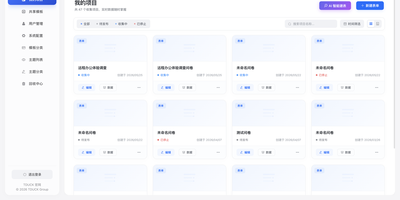
Describe the survey you need in one sentence, and TDuck drafts the questions for you. This open-source form platform replaces hosted tools like Typeform with a version you run on your own server, so responses never leave your hands. The visual designer offers over 27 field types, from text, dates, and ratings to file uploads, signatures, cascading selects, sub-forms, and matrix scales. Logic rules show or hide questions based on earlier answers, and imported question lists save time on long forms. Appearance settings cover header images, backgrounds, colors, and button text. Each form can be limited by device, account, IP, or WeChat identity, with an answer window you set. Finished forms publish as links or QR codes, and a recycle bin recovers deleted ones. Statistics show views, completion rate, weekly trends, submission maps, and per-question pie or bar charts that export as images. Responses can be edited, exported, printed, or zipped with attachments. Webhooks fire on new, changed, or deleted entries, a sync API exposes all data, and email, SMS, and WeChat notices keep owners informed. Running on a dedicated VPS on RepoCloud with guaranteed CPU, RAM, and SSD, full root SSH access, and a browser serial console. MIT licensed.

Primo
Freelancers keep rebuilding the same handoff: developer builds the site, client breaks the layout trying to change a headline. Primo is an open-source CMS built for that handoff, where developers define reusable blocks and page types, and clients edit text, images, and links directly on the rendered page without touching the structure underneath. Multiple client sites live in one dashboard, organized into groups with a domain each, and publishing generates fast static HTML you can serve from Primo itself or export to another host. The whole site also exists as structured local files, so you or an AI coding agent can pull a site down, edit its blocks and fields in your normal tools, push changes back with revision checks that protect client edits, and publish when ready. Editors can add child pages and reorder the blocks a page type allows, while developers keep control of block code, field schemas, layouts, and roles. A marketplace of starters gives new projects a running start across restaurants, portfolios, practices, and shops. One small server binary with embedded storage runs the CMS and serves the published sites, which suits an agency hosting a dozen client sites on one machine. Running on a dedicated VPS on RepoCloud with guaranteed CPU, RAM, and SSD, full root SSH access, and a browser serial console. MIT licensed.
Flowcat
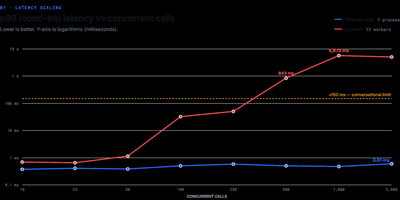
Real-time voice agents get a native Rust runtime in Flowcat: it carries a phone or WebRTC call through a composable media pipeline on your own infrastructure, so latency-sensitive audio never queues behind a managed platform. Audio flows from transport into voice activity detection and turn-taking, then through speech-to-text, an LLM, and text-to-speech, or a single speech-to-speech model, and back out to the caller, with in-process SIP and RTP for telephony. Pair it with local Whisper transcription, Kokoro, Piper, or XTTS for speech, and Ollama for reasoning, and a call's audio and transcript never leave your network; cloud providers plug in by name when you prefer them. Describe one agent in a YAML or JSON node-and-edge graph and the single flowcat-server binary serves it over HTTP, opening a browser page with microphone and live transcript, or bridging a Plivo number into the same agent. The runtime stays flat as call volume grows: benchmarked against a multiprocess Python baseline, one process holds p99 round-trip overhead at or below 0.61 milliseconds from 10 to 2,000 concurrent calls, at roughly 19.6 KB of RAM per idle session. Deploy it inside your VPC or an air-gapped environment where call recordings are sensitive. Running on a dedicated VPS on RepoCloud with guaranteed CPU, RAM, and SSD, full root SSH access, and a browser serial console. Apache-2.0 licensed.
Liaison
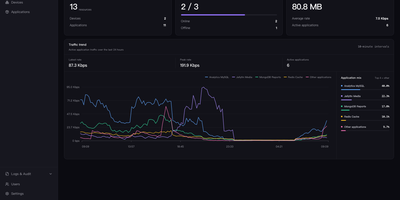
Liaison puts every private service you run behind one browser console, so a laptop, a homelab box, or a customer server becomes reachable without opening a single inbound port. Install a lightweight connector on each device and it dials out to the control plane, where administrators register applications over TCP, HTTP, HTTPS, WebSocket, and SSH and grant access per user. Browser workspaces cover audited Web SSH terminals, RDP and VNC desktops, SFTP file management, read-only S3 browsing, and database clients for MySQL, PostgreSQL, MariaDB, SQL Server, Oracle, MongoDB, and Redis, each with a session Agent that drafts commands and explains query results once you approve them. Local models are shared through authenticated APIs with a browser Playground, scoped keys, token quotas, and usage tracking, while Codex and Claude Code run on your own devices with resumable sessions and permission prompts. A built-in code-server IDE edits projects remotely, and on-demand TCP ports open for 5 to 300 seconds. Casbin-backed identity management, firewall policies by source IP or CIDR, and logs of management actions and supported sessions keep access accountable. Application discovery scans connector devices for existing services and registers them from the console. Running on a dedicated VPS on RepoCloud with guaranteed CPU, RAM, and SSD, full root SSH access, and a browser serial console. AGPL-3.0 licensed.
UWAS
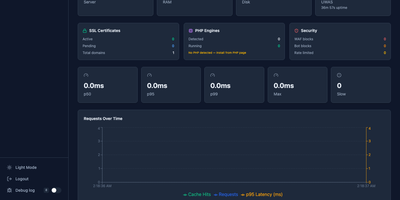
One 18 MB Go binary does the job of Apache, Nginx, Varnish, Caddy, and cPanel combined. Point UWAS at your /var/www directory and it auto-detects sites, provisions Let's Encrypt certificates, enables HTTP/3 via QUIC, and activates a two-tier caching engine with L1 memory shards and L2 disk storage, all before you write a single line of configuration. The React 19 admin dashboard provides 42 management pages for domains, PHP versions, databases, cron jobs, DNS records, file management, backup and restore, SFTP users, and uptime monitoring with real-time SSE updates. PHP sites run through FastCGI with connection pooling and full .htaccess compatibility, so WordPress, Laravel, and legacy applications work without migration effort. The built-in WAF catches SQL injection, XSS, path traversal, and shell exploits, while per-domain rate limiting and bandwidth caps protect against abuse. Reverse proxy mode supports five load balancing algorithms, circuit breakers, canary deployments, and mirroring for blue-green rollouts. Git deploy clones your repository, runs the build, checks health, and restarts the service with rollback on failure. An MCP server lets AI agents manage domains, cache, and deployments through natural language. The Nginx and Apache migration CLI converts existing configurations to UWAS format automatically. Deploy on a dedicated VPS on RepoCloud with guaranteed CPU, RAM, and SSD, full root SSH access, and a browser serial console. AGPL-3.0 licensed.