Stars
Forks
Watchers
Developer links
OvenMediaEngine
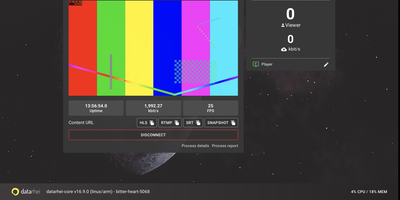
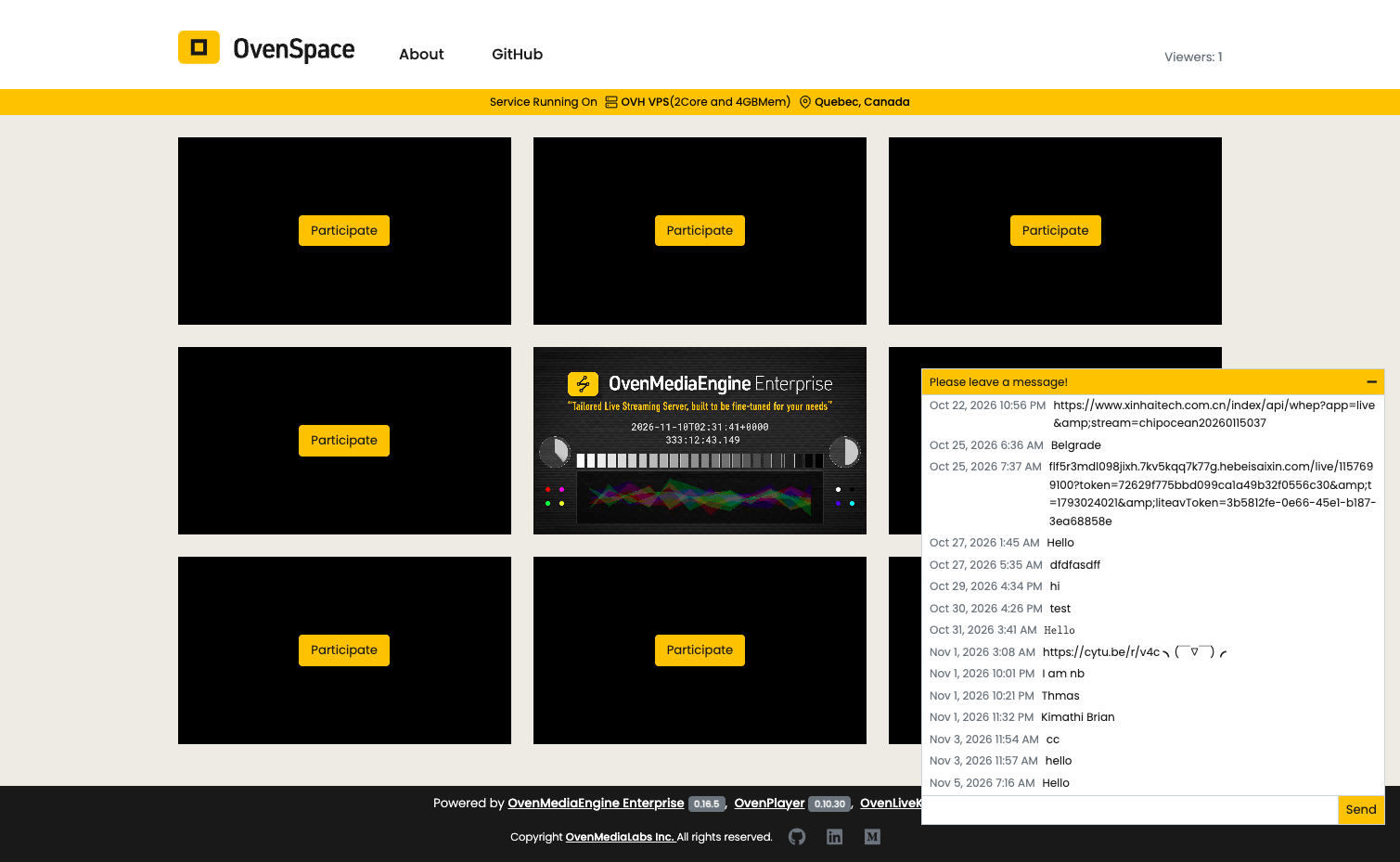
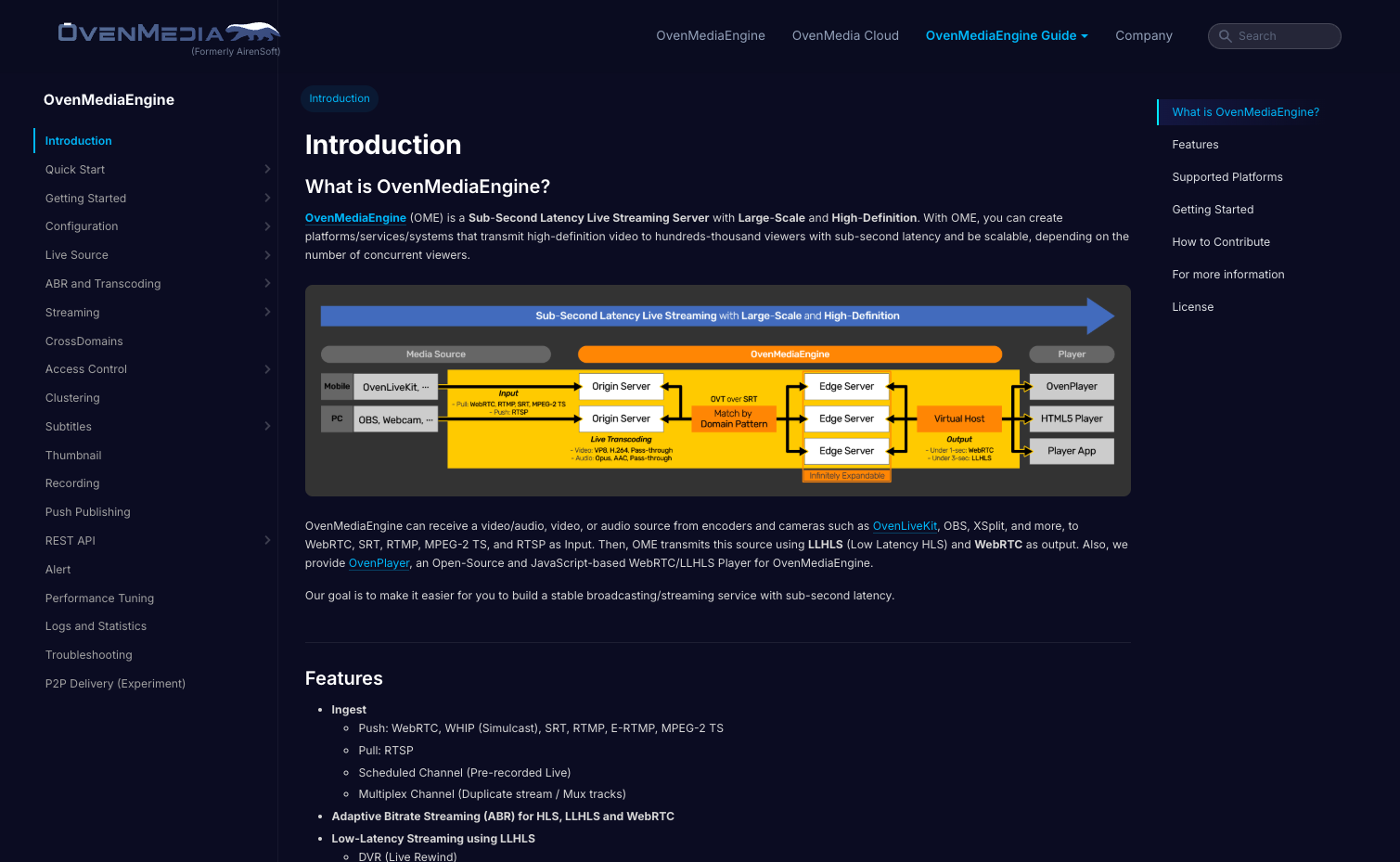
OvenMediaEngine ingests a broadcast feed once and delivers it to every viewer with sub-second delay over WebRTC and Low Latency HLS. Encoders push through WebRTC with WHIP, SRT, RTMP, or MPEG-2 TS, and the server can also pull RTSP sources and schedule pre-recorded files as live channels. The embedded transcoder converts incoming video to adaptive bitrate ladders in VP8, H.264, H.265, or AV1, so phones on weak signals and televisions on fiber each receive a rendition they can play. WebRTC delivery runs through an embedded signalling server and TURN server, with retransmission and forward error correction keeping pictures intact on imperfect networks. LLHLS streams carry DVR rewind, WebVTT subtitles, timed metadata, and DRM through Widevine, FairPlay, and PlayReady. Recordings dump finished streams to files for video on demand, thumbnails capture stills, and push publishing re-streams to other platforms over RTMP and SRT. Origin-edge clustering spreads a popular event across many servers, admission webhooks and signed policies control who may publish and watch, and a REST API plus monitoring endpoints keep the whole service observable. Running on a dedicated VPS on RepoCloud with guaranteed CPU, RAM, and SSD, full root SSH access, and a browser serial console. AGPL-3.0 licensed.
Benefits
- Sub-Second Latency At Scale
- WebRTC and Low Latency HLS delivery keep live delay under a second for audiences that can reach hundreds of thousands of viewers, so auctions, sports, and live commerce stay genuinely interactive.
- Every Ingest Protocol Welcome
- Broadcasters push with WebRTC, WHIP, SRT, RTMP, or MPEG-2 TS, and the server pulls RTSP or schedules recorded files, so existing cameras and encoders connect without replacement.
- Transcoding Without Extra Servers
- The embedded live transcoder builds adaptive bitrate ladders in modern codecs, removing the separate encoding farm most streaming stacks require before anyone can watch.
- Clusters When Audiences Spike
- Origin-edge clustering replicates streams across edge servers near viewers, and admission webhooks, signed policies, and DRM protect premium events as they grow.
Features
- WebRTC And LLHLS Delivery
- Viewers play through WebRTC for sub-second latency or Low Latency HLS for broad device reach, both fed from the same ingested stream.
- Embedded Live Transcoder
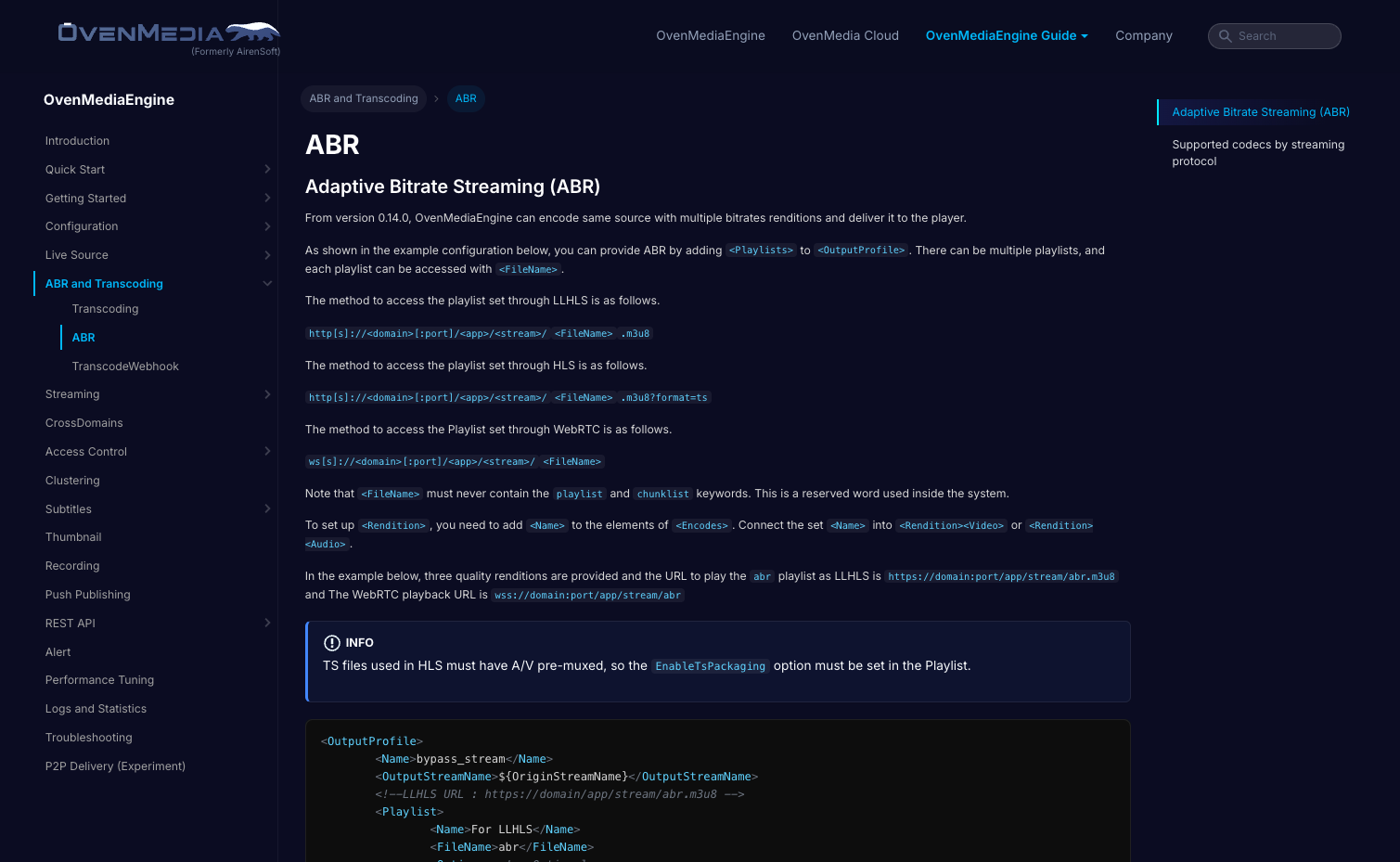
- Video converts on the fly to VP8, H.264, H.265, and AV1 with Opus and AAC audio, generating adaptive bitrate renditions automatically.
- DVR, Subtitles, DRM
- LLHLS output supports live rewind DVR, WebVTT subtitle tracks, ID3 timed metadata, and Widevine, FairPlay, and PlayReady content protection.
- Recording And Thumbnails
- Streams can be recorded to files for later video on demand, dumped from HLS output, and sampled into thumbnail images on a schedule.
- Origin-Edge Clustering
- Origin servers publish once and edge servers redistribute to local audiences, scaling a single event across regions with the OVT protocol.
- REST API And Monitoring
- A REST API manages virtual hosts, applications, and streams, and monitoring endpoints expose stream health for dashboards and alerting.