NeXroll
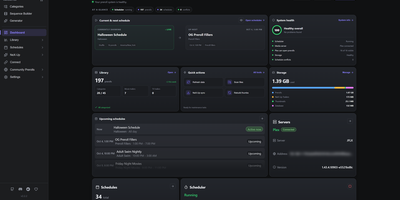
Give movie night a proper cinema preshow: NeXroll plays intros, trailers, and custom welcome screens before the feature on Plex, Jellyfin, and Emby. Build sequences in a list or a visual Flow view, with branches that pick a fallback when no trailer is available and rules for time of day, age rating, genre, or audio format. Schedules rotate the lineup automatically, with holiday themes, special event dates, priorities, and filler between them, all visible in month, week, and day calendars. Import your own videos, preview them, tag them, and sort them into categories, then pull in more from a community collection filtered by creator or platform. NeX-Up fetches upcoming movie and TV trailers through Radarr and Sonarr, and Library Trailers replays trailers for films you already own. Generator Studio makes welcome videos, announcements, QR code screens, and Coming Soon clips from your own text, logo, backdrop, and soundtrack, with a live preview. Connect several media servers to one install, switch among eight themes, back up and restore settings, and automate with the External API. Running on a dedicated VPS on RepoCloud with guaranteed CPU, RAM, and SSD, full root SSH access, and a browser serial console. MIT licensed.
RustXNG
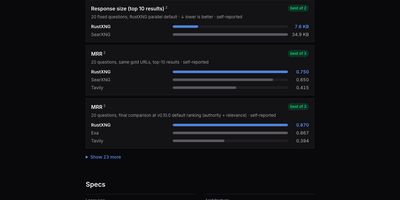
RustXNG gives your AI agents a private web search API that needs no keys, no accounts, and no per-search fees: ask once and get ranked results plus the text of the top pages, ready to ground an answer in real sources. A single request fans out to 180 search engines in parallel, drawn from 226 engine types covering general web, images, video, academic literature, package registries, and news, then merges what comes back with its own ranking that rewards term coverage and canonical-site authority instead of trusting any one engine's order. Engines that time out or keep answering nothing are suspended with backoff and rested automatically, so one dead source never stalls a task, and a repeated query returns from cache in about a hundredth of a second. Call it over HTTP with the familiar SearXNG-shaped JSON, CSV, RSS, or HTML formats, narrow results by domain, engine, or time range, or run the built-in MCP server and hand your agent native search and read_page tools with bounded, truncation-aware responses. Page fetches are hardened against untrusted URLs, an experimental local index can crawl your own corpus and merge it into results, and health, metrics, and per-engine status stay visible through the ops endpoints and the browser UI. Running on a dedicated VPS on RepoCloud with guaranteed CPU, RAM, and SSD, full root SSH access, and a browser serial console. AGPL-3.0 licensed.
ADHDev
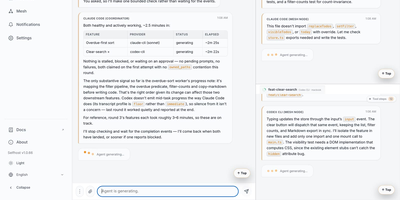
Your laptop, a desktop, and a build box each have a coding agent installed, and until now nothing has coordinated them. ADHDev is a self-hosted control plane that puts Claude Code, Codex, Kimi, Cursor CLI, Antigravity CLI, Grok CLI, and OpenCode behind one shared task queue and one web and mobile dashboard. Machines pair directly with an address and a one-time code on your own network, and a mesh binds to a single repository. Idle nodes claim tasks themselves. Dependencies order the queue, retries absorb failures, and missions group the work that belongs together. Every task gets an isolated git worktree the moment it starts. Agents build in parallel without touching each other's files, and the coordinator's prompt is rendered from live mesh state at launch, with events pushed in as they happen. Difficulty tags route easy work to cheap models and hard work to strong ones. The dashboard also reads how much of each subscription window remains, skips plans that are nearly empty, and shows the routing forecast before anything runs. Finished work enters the Refinery. Your repository's gates decide, the branch is rebased onto main, and the merge happens only when main has not moved, followed by automatic worktree cleanup. Running on a dedicated VPS on RepoCloud with guaranteed CPU, RAM, and SSD, full root SSH access, and a browser serial console. AGPL-3.0 licensed.
Synapse AI
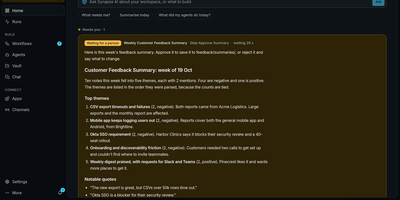
Hand a repeating job to Synapse AI and it drafts readable steps, runs them the same way every time, and stops to ask before anything goes out. Each workflow is a graph of steps that can call agents, tools, scripts, and different language models from over a dozen providers, local or cloud. An AI builder drafts the graph from a description, and a visual editor handles hand adjustments. Human approval steps pause a run until someone says yes, in the web interface or from Slack, Discord, Telegram, Teams, or WhatsApp. Cron and interval schedules start jobs automatically, and a run viewer shows the path, timing, tokens, and cost of every step. Any REST endpoint, Python script, webhook, or MCP server becomes a tool agents can call, and a shared vault stores files between runs. A template gallery offers ready-made workflows for research, reporting, and content, and an embeddable chat widget puts a knowledge-grounded assistant on your own site. A versioned REST API enqueues, streams, and cancels runs from your products. Running on a dedicated VPS on RepoCloud with guaranteed CPU, RAM, and SSD, full root SSH access, and a browser serial console. AGPL-3.0 licensed.
Faucet
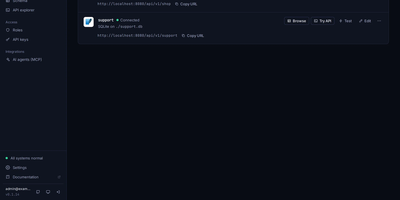
One binary and one command is all it takes: the SQL database you already run gains a secure REST API and MCP server, with no code generation and no ORM boilerplate. Point it at PostgreSQL, MySQL, MariaDB, SQL Server, Oracle, Snowflake, or SQLite and it introspects the schema at runtime, generating full CRUD endpoints with filtering, ordering, and pagination plus a live OpenAPI 3.1 specification. The embedded admin UI connects databases with plain host, port, user, and password fields, tests the connection before saving, and tells you exactly what to fix when it fails. You browse tables, columns, keys, and data, build roles with per-table verb permissions, and issue API keys that are SHA-256 hashed with a role assigned to each. Schema contract locking watches for drift that would silently break your API, with none, auto, and strict modes managed from the UI or CLI. The API explorer builds filtered, paginated requests and copies them out as curl, JavaScript, or Python. An MCP server on the same port gives Claude Code, Cursor, VS Code, Windsurf, and other AI tools governed access to your data under exactly the same roles and keys as any API client. Legacy databases such as SQL Server 2012 or PostgreSQL 9.6 gain a modern API without code changes or migration. Running on a dedicated VPS on RepoCloud with guaranteed CPU, RAM, and SSD, full root SSH access, and a browser serial console. MIT licensed.
Taiga
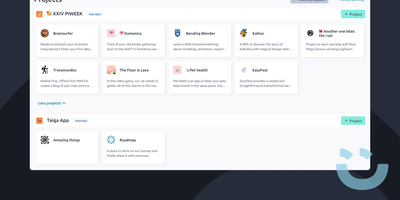
Winner of the 2015 Most Valued Agile Tool award and cited as a top project management platform by Opensource.com with over 2,100 GitHub stars on the Docker deployment repository alone, Taiga has served an estimated 20 million users worldwide with over 2 million Docker pulls since its creation in 2014 by Kaleidos. The platform delivers a complete agile project management experience through Scrum boards with backlog prioritization, sprint planning, story point estimation configurable per role, burndown charts at both project and sprint levels, and velocity tracking with a project doom-line indicator. Kanban boards offer customizable workflow columns with swimlanes, WIP limits, zoom controls, and the ability to switch between Scrum and Kanban at any point without losing data. The issue tracker supports custom types, priorities, and severities with the ability to promote issues directly to user stories. Team collaboration features include threaded comments, file attachments, email notifications, mentions, a built-in wiki for project documentation, and a team performance dashboard with the Iocane health metric for tracking team sustainability. The platform integrates with GitHub, GitLab, and Bitbucket for version control linking, provides importers for migrating from Trello and Jira, and exposes a REST API for custom integrations. Available in over 20 languages with custom fields, tags, roles, and permissions. Running on a dedicated VPS on RepoCloud with guaranteed CPU, RAM, and SSD, full root SSH access, and a browser serial console. MPL-2.0 licensed.
KeiRouter
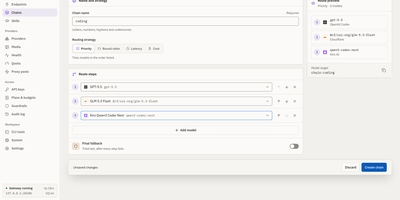
One endpoint, 130+ models from 90+ providers: KeiRouter is a self-hosted AI gateway, so apps, coding tools, and agents connect once and stop juggling provider keys. Your code speaks OpenAI Chat, OpenAI Responses, Anthropic Messages, or native Gemini, and KeiRouter translates to whichever upstream you want, including AWS Bedrock, Azure AI Foundry, Vertex, Snowflake Cortex, and self-hosted runtimes like Ollama and vLLM. Fallback chains keep requests moving when a provider goes down or hits a rate limit, using priority, round-robin, latency, or cost ordering, so coding sessions do not stop mid-task. Five token savers compress prompts on the way in and trim responses on the way out, with a live dashboard showing savings recovered. A response cache answers repeated prompts instantly for zero marginal cost, with optional semantic matching. Per-key budgets and rate plans set USD, token, RPM, and concurrency limits with auto-cutoff, stopping surprise bills. Guardrails scan for PII, prompt injection, toxicity, and banned topics at global, provider, model, chain, and key scopes, with a monitor showing what got blocked and what it cost. The dashboard tracks usage by provider and model, latency, a live console tracing each request through its fallbacks, and provider health. You can import from 9router or OmniRoute, white-label the portal for your team, and run replicas on Postgres and Redis for high availability. Running on a dedicated VPS on RepoCloud with guaranteed CPU, RAM, and SSD, full root SSH access, and a browser serial console. MIT licensed.
Octobox
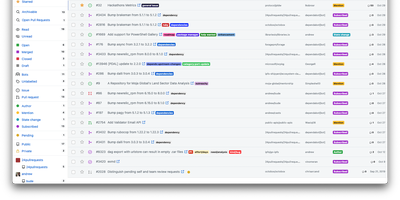
What Gmail did for email, Octobox does for GitHub notifications: an ephemeral, unmanageable stream becomes an inbox you can actually triage. GitHub marks notifications read the moment you glance at them and lets old ones vanish days later; heavy maintainers end up building elaborate Gmail filter systems just to cope. Octobox - a Ruby on Rails app over PostgreSQL - syncs your notifications into a persistent inbox with an explicit archived state: mark a thread done, and if the issue or PR sees new activity, it pops back automatically, so nothing silently falls through. Triage is keyboard-driven with Gmail-style shortcuts (j/k to navigate, e to archive, m to mute, s to star), and multi-select clears noisy repositories in bulk. Filtering is where it earns its keep: slice by repository, organization, type, action, state, reason, CI status, labels, author, assignee, or bot origin, combine prefix search filters, and pin favorite searches to the sidebar. The optional GitHub App enriches entries with live PR/CI status and labels so you can decide without clicking through. Auto-archive rules clear merged PRs and closed issues; muting and snoozing silence the rest. A REST API supports integrations. Self-hosting keeps your notification metadata - a map of everything you work on - on your own server.
Fynt
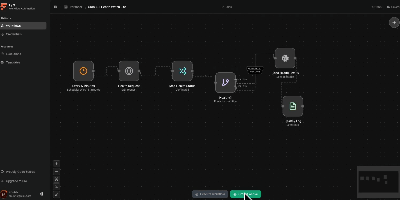
A clean alternative to n8n and Zapier that puts AI-native workflows front and center, Fynt is the MIT-licensed workflow automation platform where you drag nodes onto a React Flow canvas, wire them together with typed connections, and let a distributed BullMQ engine execute them — with every step streamed live to your browser over WebSockets so you never wonder what happened inside a run. The node library spans triggers (manual, webhook, cron scheduling), AI providers (OpenAI, Anthropic, and Gemini with structured output parsing), service integrations (GitHub webhooks, Notion databases, Slack channels, Discord bots, arbitrary HTTP endpoints), logic gates (conditional branching, filtering, data transformation), and utility nodes (delay, logging, payload mapping). The execution architecture separates concerns across three services: a Next.js 16 web application serving the React 19 workflow builder and tRPC API, a BullMQ worker processing jobs with node-level retries and checkpointing for crash-safe execution, and a dedicated WebSocket relay server broadcasting real-time run events via Redis Pub/Sub. All stored credentials are encrypted at rest using AES-256-GCM with per-credential initialization vectors. The full-stack deploys as a single Docker Compose stack (web, worker, realtime, PostgreSQL, Redis) or individually via pnpm workspaces in a Turborepo monorepo. Authentication is handled through better-auth with configurable OAuth providers. Running on a dedicated VPS on RepoCloud with guaranteed CPU, RAM, and SSD, full root SSH access, and a browser serial console. MIT licensed.

Cusdis
Comments for small sites without Disqus's baggage: Cusdis is a lightweight, privacy-first, open-source comment system for embedding under blog posts and articles. The embedded JavaScript SDK is about 5 KB gzipped (Disqus is roughly 24 KB), sets no cookies, runs no tracking, and does not require readers to create an account or sign in before commenting. Integration is two lines: a container div with your app ID and an async script tag, with ready-made adapters for common frameworks and static site generators. Moderation is approval-based - new comments stay hidden until you approve them from the dashboard, and email notifications include a Quick Approve link that approves or replies to a comment from your phone without logging in. A webhook fires on every new comment for integrations like Telegram notifications. The widget ships with built-in i18n and dark mode. The stack is TypeScript and Next.js with a Prisma data layer, deployable via Docker with PostgreSQL. Deliberately minimalist: no ads, no reader profiling, and your comment data lives in your own database.
AIUsage
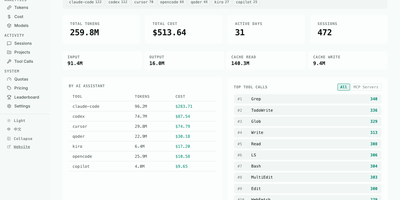
AIUsage shows where your AI coding spend actually went: it reads the session logs that Claude Code, Codex, Cursor, OpenCode, Copilot, Gemini CLI, and many other assistants leave behind, then turns them into one dashboard with tokens, estimated dollars, and activity. The Overview page totals tokens, cost, active days, and sessions for today, this week, this month, or all time, and filters by tool or device. Cost and Tokens pages chart daily spending and input, output, cache, and thinking usage, and Models ranks every model by share. The Sessions table lists duration, tool count, and cost per session, and a detail view walks through each API call and the tools it triggered. Tool Calls shows which built-in, MCP, and skill actions agents use most, Projects ranks directories by spend, and Quotas tracks subscription limits. Optional sync through GitHub, S3, R2, or MinIO merges several machines, and a public leaderboard accepts aggregate totals only. Running on a dedicated VPS on RepoCloud with guaranteed CPU, RAM, and SSD, full root SSH access, and a browser serial console. MIT licensed.
Pithagoras
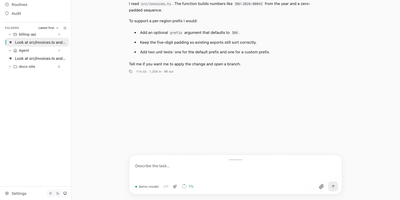
Hand a coding task to an AI agent, close the browser, and come back to find it finished. Pithagoras keeps every run on the server and records each event in a log, so a tab that reconnects days later replays everything it missed and then follows the live output. Chats work in the agent's Home folder or in projects with their own AGENTS.md instructions, and the sidebar groups sessions by folder with a status dot for running, idle, error, or interrupted. Beside the conversation you get panels for browsing and editing files, reviewing Git changes and branches, running a terminal, and watching background jobs. Add model providers from a setup assistant, including local llama.cpp or Ollama servers, OpenRouter, and Anthropic, then adjust tools, skills, MCP servers, and extensions per chat. Reach the same agent from Telegram, Slack, Discord, Signal, or a webhook, with roles, approvals, and an audit log. Scheduled routines report their results to a channel, and voice mode adds local speech in both directions. The portal installs as an app, supports light and dark themes, and speaks English and German. Running on a dedicated VPS on RepoCloud with guaranteed CPU, RAM, and SSD, full root SSH access, and a browser serial console. Apache-2.0 licensed.
Atlantis Diagrams
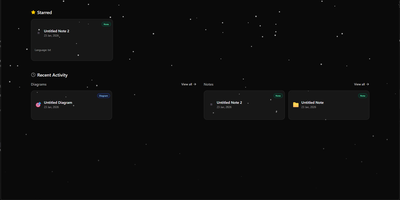
Technical teams frequently struggle to keep software architecture diagrams synchronized with evolving codebases and documentation repositories. Atlantis Diagrams delivers a unified self-hosted workspace that couples code-driven Mermaid.js diagramming with structured Markdown knowledge bases in a responsive web interface. Engineers can compose flowcharts, sequence diagrams, state machines, entity-relationship models, and Gantt schedules using split-view CodeMirror editors with real-time SVG rendering. An integrated version history tracker automatically captures revision checkpoints across the last 15 document states, letting authors compare modifications and restore previous iterations without data loss. The linked notes environment supports rich Markdown editing, LaTeX mathematical formulas, interactive task checklists, tag indexing, and full-text keyword searches across personal documentation libraries. Canvas controls allow users to pan, zoom, inspect individual nodes, and export finalized graphics directly into vector SVG, high-resolution PNG, or printable PDF documents. Storage engines adapt to deployment scale, running on zero-configuration SQLite databases out of the box with optional PostgreSQL, MySQL, and Redis caching layers for high-concurrency environments. Running on a dedicated VPS on RepoCloud with guaranteed CPU, RAM, and SSD, full root SSH access, and a browser serial console. MIT licensed.
Composr
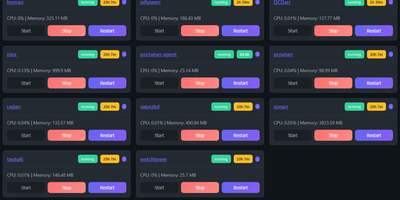
Managing multi-server container fleets often deteriorates into fragmented SSH sessions, mismatched compose files, and conflicting port allocations. Composr consolidates multiple Docker host daemons into a unified web dashboard that controls running containers, stack definitions, and system metrics from a single interface. Operators can connect remote Docker daemons through encrypted TCP sockets, inspect container health, and stream live execution logs with sub-second responsiveness. A built-in project creation wizard guides administrators through drafting new Compose topologies across local directories or remote server nodes. In-browser CodeMirror editors deliver live syntax highlighting for YAML files, configuration dotfiles, and reverse proxy definitions without detaching containers from disk. The platform tracks service properties directly, letting you toggle Compose profiles, relocate services between YAML manifests with pre-flight risk checks, and detect target port collisions before redeployment. Integrated backup managers bundle container metadata, compose files, and environment definitions into downloadable archive packages for automated disaster recovery. System operators can open interactive browser terminals into any active container, execute batch maintenance tasks, and configure scheduled image update checks. Running on a dedicated VPS on RepoCloud with guaranteed CPU, RAM, and SSD, full root SSH access, and a browser serial console. MIT licensed.
The0
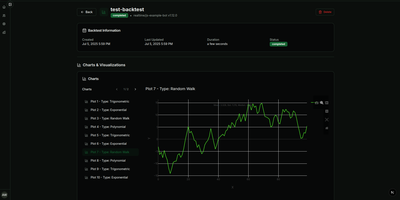
A trading strategy that works on your laptop still has to survive restarts, remember its positions, and tell you what it is doing at 3 a.m.; the0 is the self-hosted runtime that handles that last mile for algorithmic trading bots. Write your bot in Python, TypeScript, Rust, C++, C#, Scala, or Haskell with the matching SDK, package it as a reusable custom bot, and instantiate it as many times as you like with different symbols and parameters. Every instance runs in its own isolated container, either continuously for realtime strategies or on a cron schedule for periodic ones, with key-value state that survives between runs and restarts. Structured logs and metrics stream into the dashboard in real time, and you can ship a custom React frontend with your bot so its prices, signals, and positions render exactly the way you want. Deploy from the CLI in one command, drive everything from the REST API, or let an AI assistant list, deploy, and debug bots through the built-in MCP server. Scale from a single Docker Compose host to Kubernetes with the Helm chart, where bots become pods and CronJobs, and keep backtesting and market data in your own research stack, because the0 deliberately runs production strategies rather than simulating them. Running on a dedicated VPS on RepoCloud with guaranteed CPU, RAM, and SSD, full root SSH access, and a browser serial console. Apache-2.0 licensed.
LinkBreeze
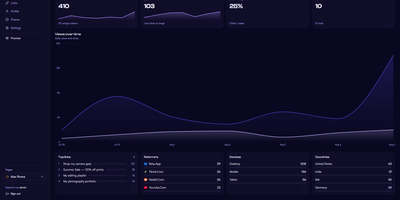
LinkBreeze is a self-hosted link-in-bio platform that lets you publish unlimited, fully themed link pages from your own server instead of renting one by the month. A guided setup wizard covers the admin credentials, profile, and theme, then a floating phone-frame preview refreshes as you edit while autosave stores your changes. Each page gets its own slug, theme, SEO tags, QR code, and analytics, so one install can serve a personal profile, a band, and a shop. Eleven built-in themes cover Aurora, Glassmorphism, Neon Cyberpunk, and Terminal Mono, backed by a token customizer for fonts, backgrounds, card styles, and raw CSS. Links pull in favicons automatically, accept thumbnails, and can be scheduled to appear and vanish on set dates, while embed widgets drop in YouTube, Spotify, SoundCloud, Vimeo, and Bandcamp players. A migration wizard imports profiles from Linktree, Bento, Hopp.bio, LittleLink, or an HTML or JSON export. Visitors can subscribe with an email address that you export to CSV, save your page as a vCard contact, or scan a QR code that downloads as SVG or PNG. Cookieless analytics track views, clicks, referrers, devices, and countries with hashed visitor IPs, and Plausible, Umami, Matomo, or Google Analytics can be added with one paste. The admin panel supports TOTP two-factor authentication, a UTM builder, JSON backup and restore, and seven interface languages. Running on a dedicated VPS on RepoCloud with guaranteed CPU, RAM, and SSD, full root SSH access, and a browser serial console. MIT licensed.
JobSpy API
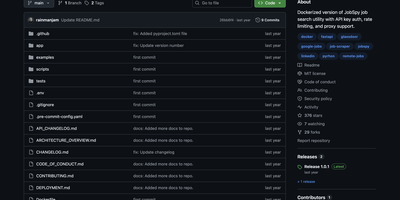
JobSpy API turns seven major job boards into a single REST endpoint, aggregating listings from LinkedIn, Indeed, Glassdoor, Google Jobs, ZipRecruiter, Bayt, and Naukri through one GET request. Built on FastAPI with the Python JobSpy scraping library, the API returns structured JSON or downloadable CSV containing job titles, companies, locations, salaries, descriptions, posting dates, and direct application URLs. Filters cover search terms, location, distance radius, job type (full-time, part-time, contract, internship), remote status, hours since posting, country, and salary range. Interactive Swagger UI and ReDoc interfaces provide try-it-now functionality for testing queries directly in the browser. Security includes x-api-key header authentication with configurable rotation, per-endpoint rate limiting with adjustable thresholds, and response caching with configurable TTL to reduce redundant scraping. Global proxy support routes outbound requests through HTTP/HTTPS proxies to avoid IP-based rate limiting from job boards. Environment variables control everything from default search parameters and logging levels to CORS origins and documentation paths. Health check and ping endpoints integrate with uptime monitoring services. Docker Compose exposes the API on a configurable port. MIT licensed.
LocalCA
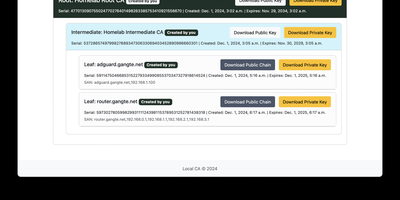
Your internal services deserve padlocks that browsers actually trust, and LocalCA is a small certificate authority you run yourself to issue them. From the web interface you create a self-signed root, install it once on your browsers and client devices, and then mint intermediate and leaf certificates underneath it for each service you host. Proxmox, Pi-hole, Jellyfin, Grafana, and the rest of a homelab stop showing insecure warnings and start presenting certificates your devices accept. The root can carry your own name, so the trust store shows your branding rather than a generic authority. Issued certificates also serve mutual TLS setups, where clients present certificates of their own before a service lets them in. Deployment stays deliberately small: a Docker Compose file brings the application up, ARM images cover Raspberry Pi class hardware, and a configurable time zone keeps expiry timestamps readable for your region. A reverse proxy path prefix is supported for placing the interface behind Traefik or Nginx at an address like /localca. Treat the instance as internal infrastructure, because issued private keys live in its database: keep it on a private network, change the default administrator password immediately, and restrict access to the host. Running on a dedicated VPS on RepoCloud with guaranteed CPU, RAM, and SSD, full root SSH access, and a browser serial console. AGPL-3.0 licensed.