Agent of Empires
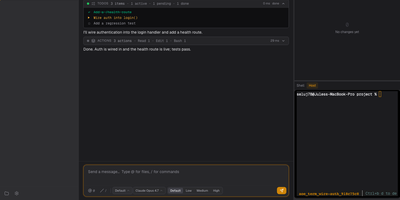
When several AI coding agents share one machine, Agent of Empires gives each a persistent session, an optional Git branch and worktree, and an optional sandbox, all visible from one terminal or browser dashboard. Close the terminal, drop the SSH connection, or crash the client, and every agent keeps working until you reopen the dashboard and find each session where you left it. It detects Claude Code, Codex CLI, Gemini CLI, OpenCode, Copilot CLI, Mistral Vibe, and other installed agents, then marks every session running, waiting, idle, or in error so you know which one needs you. Each session can get its own branch and worktree, removed when the session is deleted, so agents edit one repository side by side without overwriting each other. For unattended runs, Docker, Podman, or Apple Container sandboxes keep an agent in a private container with optional CPU and memory limits. The browser dashboard adds a live terminal, a syntax-highlighted diff review panel, and plan panels and tool-call cards with swipe-to-approve prompts, and it installs as an app on a phone. Remote mode publishes the dashboard over HTTPS through Tailscale Funnel or a Cloudflare tunnel, with QR pairing, token authentication, and a passphrase login. Running on a dedicated VPS on RepoCloud with guaranteed CPU, RAM, and SSD, full root SSH access, and a browser serial console. MIT licensed.

OpenSERP
Search the web from your own server, with no API key and no per-query bill: OpenSERP is a self-hosted search API that returns structured results from Google, Bing, Yandex, Baidu, DuckDuckGo, and Ecosia through one interface. Every answer arrives as ranked JSON with titles, URLs, snippets, source engines, and timing, ready for an agent, a RAG pipeline, or an SEO tracker to consume. A mega search aggregates and deduplicates across engines in a single call, image search does the same for pictures, and an extract mode reads linked pages back as clean Markdown for models to cite. AI agents connect over MCP with tools for search, mega search, fast search, image search, and batch extraction, and it is a built-in web search provider in Open WebUI. Developers get Python and TypeScript SDKs, an n8n node, a full OpenAPI reference, and a CLI that runs the same searches from a terminal. Engines load in a real browser session, proxy support routes traffic through HTTP or SOCKS5, and one Docker command serves everything on port 7000. Running on a dedicated VPS on RepoCloud with guaranteed CPU, RAM, and SSD, full root SSH access, and a browser serial console. MIT licensed.
M3E Canvas
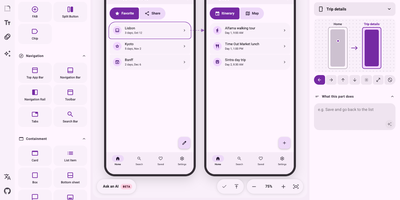
Why describe an app in words when M3E Canvas lets you sketch its screens, tap through the flow, and hand your AI coding tool a ready prompt? Drag real Material 3 Expressive parts such as buttons, FAB menus, chips, app bars, tabs, cards, sheets, sliders, and carousels onto phone or desktop screens, where they snap to a 4dp grid and nearby buttons fuse into groups. Switch any screen between a 412 by 892 phone and a 1280 by 800 desktop layout, link taps and swipes to other screens with slide, fade, or expand transitions, and press Preview to play the whole flow. One theme panel sets color from seven palettes or your own seed color, plus light or dark mode, three contrast levels, corner shapes, fonts, and expressive spring motion. The Prompt view turns the design, or one screen, into a concise brief in English, Japanese, Chinese, or Korean for Android or the web, with your notes on each part, ready to paste into Claude Code, Codex, Gemini CLI, or Cursor. It all runs in the browser with no account and autosaves as you go, an optional AI helper drafts designs from a sentence with your own OpenAI, Claude, Gemini, or DeepSeek key, and share links reopen any design on another canvas. Running on a dedicated VPS on RepoCloud with guaranteed CPU, RAM, and SSD, full root SSH access, and a browser serial console. MIT licensed.
Waxum
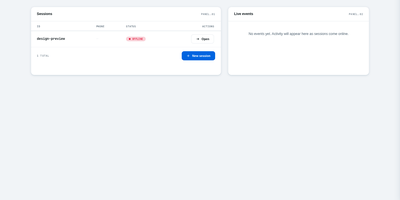
WhatsApp is where your customers already are, and Waxum is the self-hosted gateway that lets your own software talk to them there without renting a per-message platform. One REST API fronts two providers at once: multi-device sessions paired by QR code or pairing code, and Meta's official Cloud API, sharing the same message routes and webhook events. Send text, media, locations, contact cards, polls, reactions, and broadcast lists, schedule messages for later, or run paced bulk blasts with deduplication, retries, and a dead-letter queue when a send fails. Voice and video calls ring, play audio, speak text in hundreds of voices, record the peer side, and stream media over WebSocket, while groups, contacts, blocking, privacy settings, and presence are all manageable per session. Signed webhooks with event filters and circuit breakers push receipts and replies into your app, and a failed delivery can be replayed from the queue instead of lost. The built-in ops console shows your whole session fleet, and each session opens a playground covering dozens of endpoints, so you can test a send from the browser before writing code. Sessions export and import between instances as zip files, and Prometheus metrics with health probes keep the fleet observable. Running on a dedicated VPS on RepoCloud with guaranteed CPU, RAM, and SSD, full root SSH access, and a browser serial console. MIT licensed.
GPT Researcher
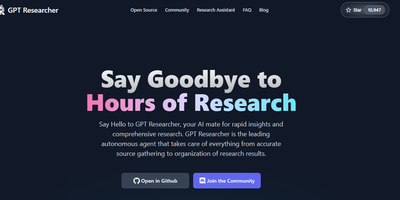
A question goes in; a cited, long-form report comes out - GPT Researcher is an open-source autonomous research agent. A planner agent decomposes the query into sub-questions, execution agents crawl 20+ web sources in parallel with JavaScript-enabled scraping, and a publisher aggregates findings into a 2,000+ word report with inline citations, exportable to PDF, Word, and Markdown. The Deep Research mode extends this recursively: each result yields follow-up questions that are explored to configurable breadth and depth in a tree pattern, while accumulated learnings, citations, and visited URLs are shared across branches. It also researches local documents (PDF, CSV, Word) alongside the web. LLM and search providers are pluggable, including OpenAI, Anthropic, Google, DeepSeek, and Ollama for models, and Tavily, Google, Bing, DuckDuckGo, and SearXNG for retrieval. It ships as a Python package, a FastAPI server with web frontend, a Docker image, and an MCP server for use inside Claude or Cursor. MIT-licensed.
Agent Zero
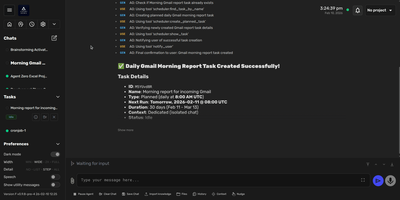
Agent Zero equips large language models with a persistent virtual Linux desktop, letting autonomous AI agents write code, research the web, and execute multistep tasks without supervision. Operating within an isolated container, the system opens an interactive XFCE graphical desktop in your browser canvas where the agent interacts with GUI applications like Blender and terminal sessions directly. Its embedded browser features interactive annotation tools, letting you click web elements to inspect stylesheet hierarchies, extract component markup, or submit automated testing instructions. You can cowork on spreadsheets, presentations, and Markdown specifications in real time alongside the agent, preserving document revisions through snapshot time travel. A multi-tier memory architecture backed by FAISS vector indexing and SearXNG web discovery retains problem-solving context across projects, while hierarchical delegation spins up specialized subordinate agents to parallelize complex engineering audits. The platform connects seamlessly to commercial LLMs via OpenAI, Anthropic, or OpenRouter, runs private local models through Ollama, and integrates custom toolkits via the Model Context Protocol and community Plugin Hub. Running on a dedicated VPS on RepoCloud with guaranteed CPU, RAM, and SSD, full root SSH access, and a browser serial console. MIT licensed.
OpenCode
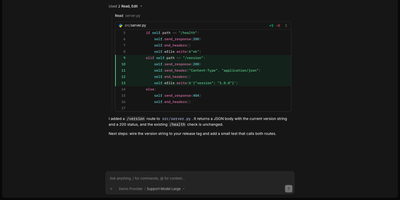
OpenCode puts a capable coding agent in a browser tab, so a project on your server can be worked on from any device. Start a session, describe the change, and watch the agent read files, edit code, and explain what it did in plain language. A review panel lists every changed file with unified or split diffs, a file tree, and a git changes view, so nothing lands without a look. Sessions open as tabs, run in parallel, and keep a searchable history per project. The model picker spans more than 200 providers plus free hosted models, and any OpenAI compatible endpoint can be added from a config file, which keeps local and self-hosted models in reach. Settings offer top tabs, side tabs, or an inbox layout, optional permission auto-accept, steer or queue behavior for follow-up prompts, timeline detail levels, themes, and fonts. Extensions cover MCP servers, plugins, and skills, and custom agents and commands capture the team's habits. One-time pairing links connect a new browser or app to the server in seconds. Running on a dedicated VPS on RepoCloud with guaranteed CPU, RAM, and SSD, full root SSH access, and a browser serial console. MIT licensed.
PancakeSlicer
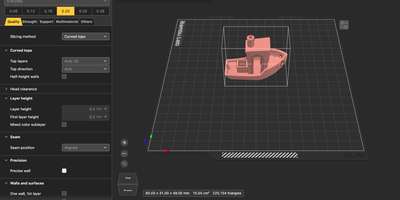
Hosting PancakeSlicer once gives every laptop, tablet, and phone in the workshop the same non-planar 3D printing slicer, with the same printers, filaments, and profiles. Load a model, pick a printer such as a Bambu Lab A1 mini or a Prusa MK4, and choose how the layers run: flat, curved tops, smooth morph, conformal layers, or slant, with Auto keeping the cleanest result of several styles. Curved paths are checked against print-head models for listed Bambu Lab, Prusa, Creality, Voron, and other printers, and the angle steps down before the nozzle would collide. The preview offers a layer slider, playback, a line-type legend with time per type, and a G-code viewer, while Compare overlays estimate top-surface error in microns for each method. Four dynamic profiles, Draft, Everyday, Fine Detail, and Strong, adapt to any printer, nozzle, and layer height, and projects keep a version history you can restore. The Device page shows camera, filament slots, temperatures, and recent jobs, and sliced files can go to Bambu Lab, Klipper, OctoPrint, PrusaLink, Duet, Flashforge, or Elegoo Link printers the server can reach. Non-planar slicing is experimental: review the G-code, supervise test prints, and set the bearer token before exposing the service. Running on a dedicated VPS on RepoCloud with guaranteed CPU, RAM, and SSD, full root SSH access, and a browser serial console. AGPL-3.0 licensed.

Pomodoist
Pomodoist pairs a task manager with a Pomodoro timer, so the list of what to do and the clock that gets it done live in the same app. Type a task the way you would say it and the quick-add bar sets its priority and estimates its Pomodoros as you type, filing it into the Inbox, Today, or Upcoming views. Plan the week on a calendar, drag cards across a kanban board, spread work along a timeline, or sort it into a four-quadrant priority matrix when everything feels urgent. Start a focus session and the timer tracks intervals against the task at hand, with configurable work and break lengths, while a 3D desktop companion focuses, rests, and celebrates along with you. Share a project and the discussion stays beside the tasks, with comments on shared items and the team's focus time visible next to the work itself. Reports chart weekly focus time, completed tasks, and habit streaks, and voice notes can become task checklists when typing is not an option. An MCP endpoint lets your AI tools manage the same projects after an OAuth sign-in, and optional Google Calendar and Telegram integrations meet the planner where you already are. The self-hosted instance unlocks every feature locally, with your own accounts and one-command backups of the whole database. Running on a dedicated VPS on RepoCloud with guaranteed CPU, RAM, and SSD, full root SSH access, and a browser serial console. AGPL-3.0 licensed.
Nango
The integrations your SaaS product offers its own users - that is what Nango, an open-source product-integrations platform, exists to build. It solves the repetitive infrastructure work behind every third-party API connection: OAuth flows, API key handling, token refresh, encrypted credential storage, rate-limit backoff, retries, and multi-tenant connection management. It ships pre-built auth configurations for 800+ APIs. Your users connect their accounts through an embeddable, white-label Connect UI, and your backend then reads or writes data through Nango's proxy, SDKs, or REST API without ever touching raw credentials. Integration logic is written as TypeScript functions covering actions, scheduled data syncs, and webhook processing - all running on one runtime with retries, checkpointing, and per-connection logs built in. Syncs pull records incrementally on a schedule, one-way or two-way, which suits RAG pipelines, search indexing, and keeping local copies of external data current. Selected actions can also be exposed as tool schemas or through a built-in MCP server, so AI agents operate on user-connected accounts without ever handling provider credentials. Auth support spans OAuth 2.0, OAuth 1.0a, API keys, basic auth, and JWT, and observability - logs, metrics, failure detection, and a reconnect flow for expired credentials - is scoped per customer connection for easier support debugging. Works with any backend language. Self-hosting on RepoCloud keeps all customer credentials and synced data on infrastructure you control, which matters for data residency and compliance requirements.
CompozyOS
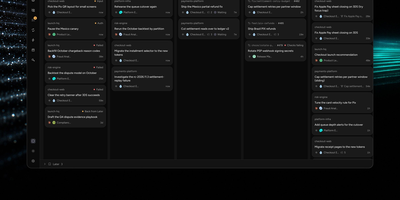
CompozyOS keeps your Claude Code, Codex, and Cursor agent sessions alive after the terminal closes and sorts them on one board by who owns the next step. Sessions land in Needs you, Working, Waiting, In review, or Done. Parallel agents each get their own worktree. The branch, the pull request, and its checks sit on the session. Fork a session, rewind it to a checkpoint, steer it mid-turn, or hand it to another agent CLI. Approvals hold a tool call until a person allows it. Always-on agents check in on a schedule, and a quiet check costs no model call. They watch sources such as new GitHub issues and propose actions. Approve each proposal, or let the agent act alone up to a daily limit. Loops pair a goal with a verifier and an iteration cap. Every Loop ends in one of seven named outcomes. Schedules, runtime triggers, and signed webhooks start agents on their own, and every run is recorded. Fifteen built-in integrations cover ten agent CLIs and five providers, on your own keys. A Marketplace adds extensions, plugins, and MCP servers in one step. The daemon starts reachable only from the machine itself, and remote access stays off until you turn it on. Running on a dedicated VPS on RepoCloud with guaranteed CPU, RAM, and SSD, full root SSH access, and a browser serial console. MIT licensed.
Hatamoto
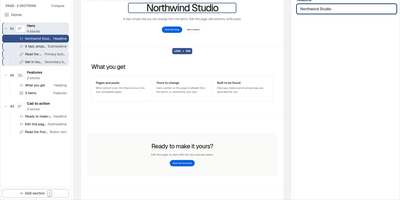
Hatamoto is a self-hosted CMS for site owners who want search engines and AI assistants to read their pages as well as people do. Pages come together on a visual canvas of sections and blocks, previewed at desktop, tablet, and phone widths, with undo and version history, while posts get a writing editor with SEO checks, scheduling, and suggested internal links. Every page is a typed record, so one edit updates the page, its structured data, its sitemap entry, and its llms.txt line together. Analytics count AI crawler fetches on the server, check each claimed bot against its operator's published IP ranges, flag impostors, and show visits sent by assistants as their own channel, all without cookies. You can allow or block crawlers by purpose, such as training, search, or user requests. Agents connect over MCP with scoped API keys that can expire, drafting and publishing pages, editing menus and redirects, and reading reports, while an audit log records every call. Moving from WordPress starts with a scan report predicting what imports cleanly, then copies content and menus and adds a permanent redirect for every changed address. Plugins and themes install as signed packages that list the permissions they request, and updates roll themselves back when the health check fails. Forms collect submissions with spam filtering and CSV export. Running on a dedicated VPS on RepoCloud with guaranteed CPU, RAM, and SSD, full root SSH access, and a browser serial console. Apache-2.0 licensed.
DevDocs
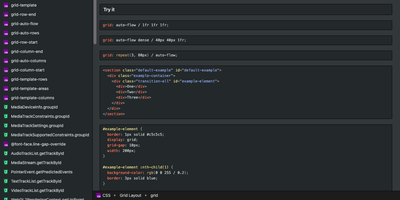
A half-remembered name like bgcp is enough for DevDocs to find background-clip in the reference documentation of hundreds of languages, frameworks, and tools. Search is fuzzy and instant. Type a project name or alias such as js or py, press Tab, and results narrow to that single reference. Share a link like #q=js date or add DevDocs to the browser address bar through OpenSearch. The catalog holds 247 documentations in 844 versions, including JavaScript, CSS, Python, PostgreSQL, Rust, Terraform, and Kubernetes. Enable only the versions your stack uses to keep the sidebar short and search results focused. The Offline page installs enabled documentation for use without a connection and lists every download's size. Export the whole set as a file and import it on another computer. Keyboard shortcuts move through the sidebar, open or copy the original page, and send a query to Google, Stack Overflow, or DuckDuckGo. Preferences offer automatic, light, and dark themes, custom fonts, fixed-width or justified layouts, and a custom CSS box. A mobile layout and installable web app keep references within reach on a phone. A shared instance gives a team or classroom one address for the same references, and the official build refreshes its documentation every month. Running on a dedicated VPS on RepoCloud with guaranteed CPU, RAM, and SSD, full root SSH access, and a browser serial console. MPL-2.0 licensed.
DocETL
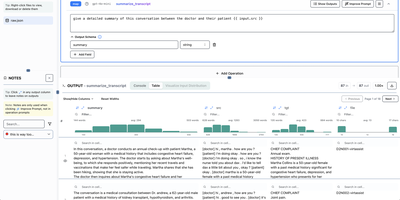
DocETL turns piles of contracts, transcripts, support tickets, and product reviews into clean, queryable tables, with every processing step written as a plain-English prompt. Map applies a prompt to each document, reduce summarizes groups, filter drops what does not qualify, and resolve merges "Jon Smith" and "John Smith" into one canonical entity. Split cuts long files into chunks, and gather hands each chunk the surrounding context it needs. Cluster groups items by meaning and summarizes each group, while the experimental equijoin matches two datasets by criteria the model judges. Prompts are templates over your own fields, outputs follow typed schemas, validation rules retry weak answers, and gleaning lets a second pass critique and refine them. Runs execute in parallel and every model call is cached, so rerunning an edited pipeline reuses earlier answers. The MOAR optimizer tries model swaps, prompt rewrites, and task decomposition, then returns several plans that trade accuracy against cost. In the DocWrangler playground you run a draft on a handful of documents, scan column histograms, annotate bad outputs, and ask for an improved prompt shown as a diff. You can also describe a goal, upload a CSV or JSON file, and review a drafted pipeline before applying it. More than 100 model providers are supported, including OpenAI, Anthropic, and Azure. Running on a dedicated VPS on RepoCloud with guaranteed CPU, RAM, and SSD, full root SSH access, and a browser serial console. MIT licensed.
OpenReply
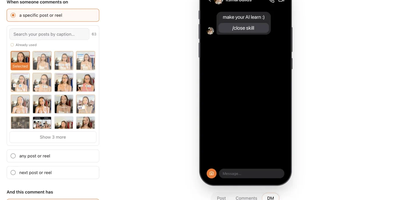
Someone comments LINK under your Instagram reel, and OpenReply, a free self-hosted ManyChat alternative, sends them a private DM with your link automatically. Each campaign ties one or many keywords, matched as whole words or partial, to a post or reel, and can add a public reply under the comment. The same keywords also fire on inbound DMs and text replies to Stories, so "Reply LINK to this Story" works with no post at all. Messages greet people by name with {username}, carry up to two link buttons, and route through tracked redirects that report clicks and click-through rate per campaign. An optional follow gate holds back the link until the person follows you, re-prompting until they do. The inbox lets you read Instagram conversations and reply from the dashboard within Meta's 24-hour window, and delivery logs record every send, skip, and failure with a reason. Sending stays under Meta's cap of 750 private replies per hour for each account, with overflow queued rather than dropped. Agencies can connect several Instagram accounts to one workspace, invite clients as owner, admin, or member, start from campaign templates, and read campaign settings and stats through a read-only API and MCP server. The dashboard speaks English, Traditional Chinese, Brazilian Portuguese, and Russian. Connect through Zernio's managed connection or your own Meta app, with no password sharing. Running on a dedicated VPS on RepoCloud with guaranteed CPU, RAM, and SSD, full root SSH access, and a browser serial console. MIT licensed.
Pricore
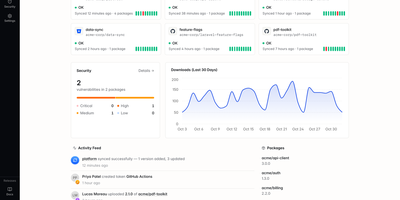
Private PHP packages get a proper Composer v2 registry on your own server, with a dashboard in place of the rebuild script. Point Pricore at GitHub, GitLab, Bitbucket, Gitea, Forgejo, Gogs, or any Git server over SSH or HTTPS, and it reads each composer.json, indexes every tag and branch, and serves the versions to Composer. Webhooks pick up a new tag within seconds, and monorepo support turns a packages/* directory into several packages whose versions follow the repository's tags. Registry mirrors import packages from Satis and other Composer registries, including commercial ones behind HTTP Basic or Bearer authentication, with optional dist archives. Packagist advisories feed automatic security audits, so vulnerable versions appear in the dashboard and composer audit works against the registry. Scoped tokens separate install-only access for CI from publish and API permissions for administrators, and every request is also checked against the member's role. The dashboard shows repository sync health, vulnerabilities by severity, download trends, an activity feed, and a package page with versions, advisories, and install commands. A versioned REST API with OpenAPI 3.1 documentation scripts the same actions, and a built-in MCP server lets Claude, Cursor, or VS Code search packages and check advisories after a one-time browser sign-in. Running on a dedicated VPS on RepoCloud with guaranteed CPU, RAM, and SSD, full root SSH access, and a browser serial console. Apache-2.0 licensed.
NocoDB
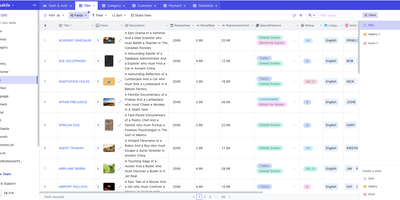
Any existing relational database becomes a collaborative, Airtable-style smart spreadsheet under NocoDB. It connects to PostgreSQL, MySQL, MariaDB, SQL Server, or SQLite, introspects the schema - tables, relationships, indexes - and renders it as interactive Grid, Gallery, Kanban, Calendar, and Form views without migrating a single row. Your business data stays in your database; NocoDB keeps only its own metadata (view configs, permissions, webhooks) in a separate store. Every connected table automatically gets REST APIs with Swagger documentation, effectively turning legacy databases into modern backends. The spreadsheet layer adds 20+ field types including formulas, lookups, rollups, links, attachments, and currency, plus sorting, filtering, grouping, and multi-field editing. Views can be locked or shared publicly with password protection, role-based access control scopes permissions per user, and webhooks plus CSV, Excel, and Airtable import round out integration. An ERD view visualizes the schema. Built with Node.js and Vue, deployed via Docker, handling millions of rows.

InnoShop
InnoShop runs your entire online store on your own server, from a multilingual storefront and checkout to orders, shipments, and returns, and it even lets an AI assistant operate the shop alongside you. Set up products with SKUs, attributes, brands, and categories, then sell through a responsive storefront that speaks your customers' languages and prices in their currencies. Orders flow into the admin panel with status updates, shipment tracking, and return handling, while customers pay through PayPal, Stripe, bank transfer, or payment and shipping plugins you install. A built-in media library keeps product photos and files organized and reusable across the whole catalog. Visit analytics show who is browsing the store, with bot detection and geographic aggregation separating real shoppers from crawler noise. The unusual part is the AI door: a built-in MCP server exposes more than 45 store operations as tools, so an assistant can list products, check inventory, update an order status, or pull a sales report in plain conversation. That door is disabled by default, opens only with an admin token, stays read-only until you explicitly enable write tools, and never exceeds the permissions of the account behind the token. Plugins extend the store without forking it, and themes reshape the storefront without touching the catalog underneath. Running on a dedicated VPS on RepoCloud with guaranteed CPU, RAM, and SSD, full root SSH access, and a browser serial console. OSL-3.0 licensed.