Categories
MCP Server Content Management Website Builder Web Analytics Headless CMS SEO Tools WordPress Alternative AI Search OptimizationStars
Forks
Watchers
Developer links
Hatamoto
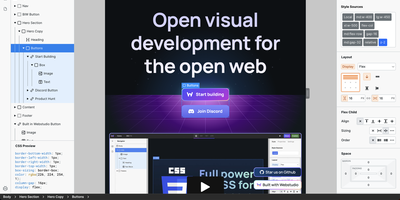
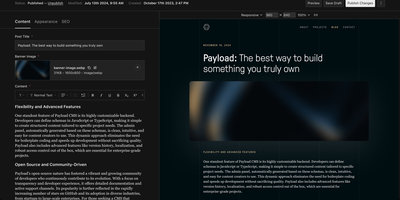
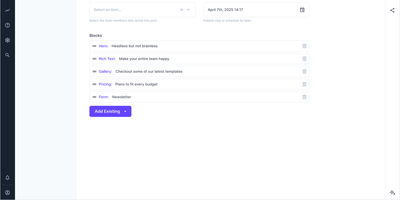
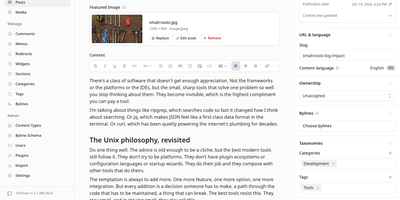
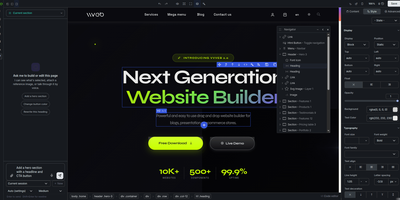
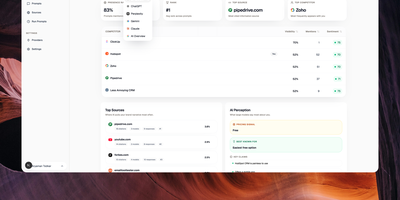
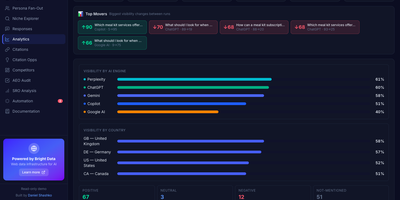
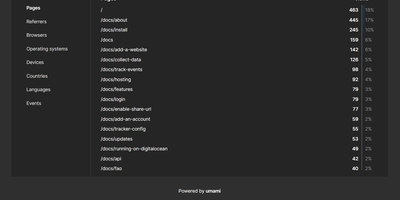
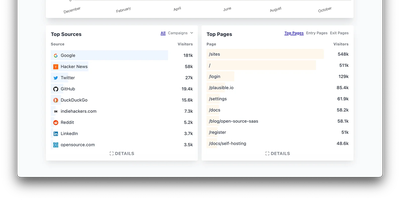
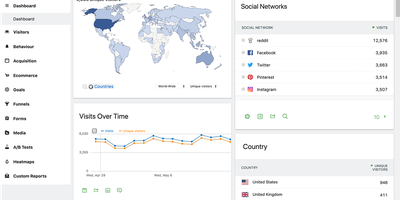
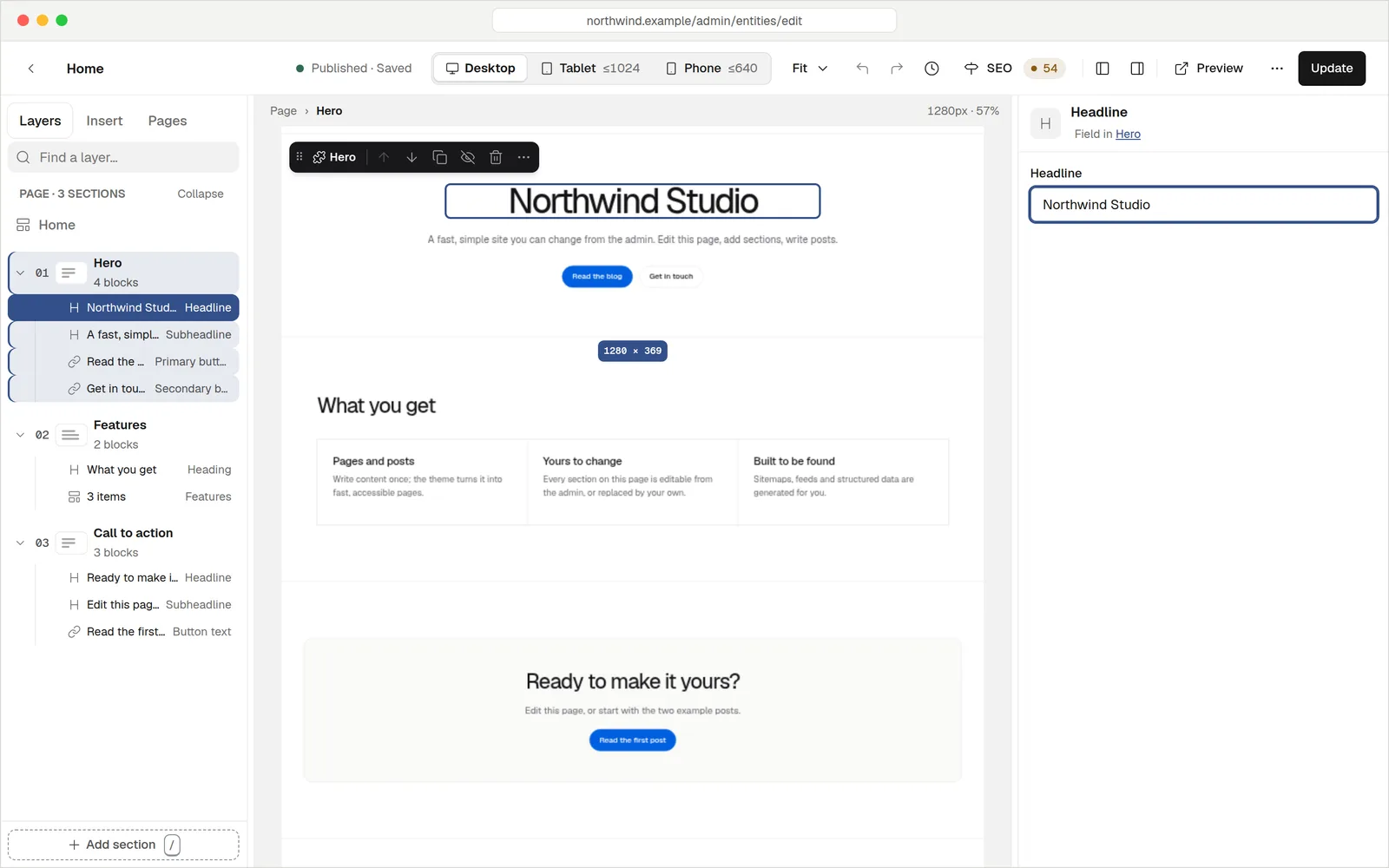
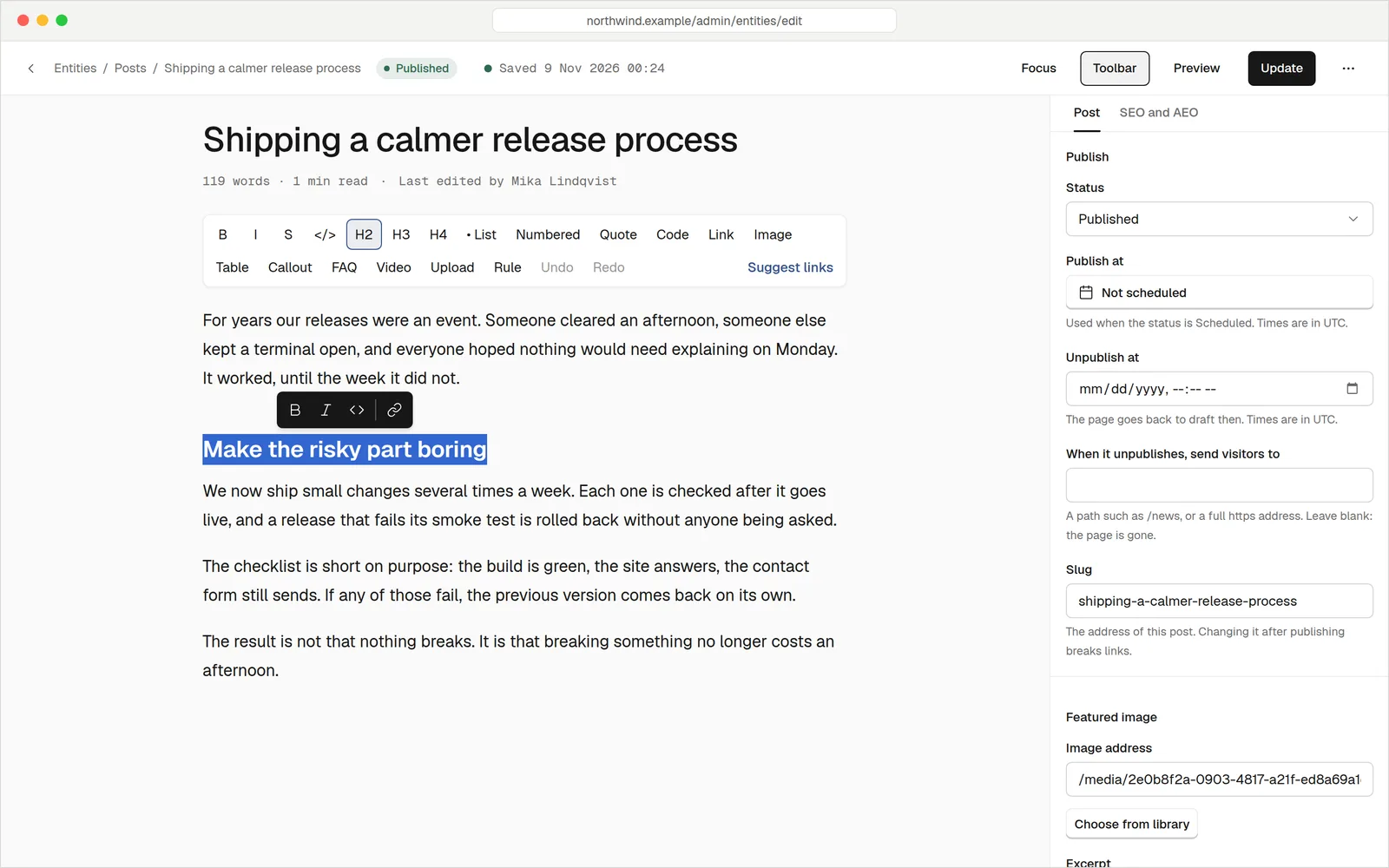
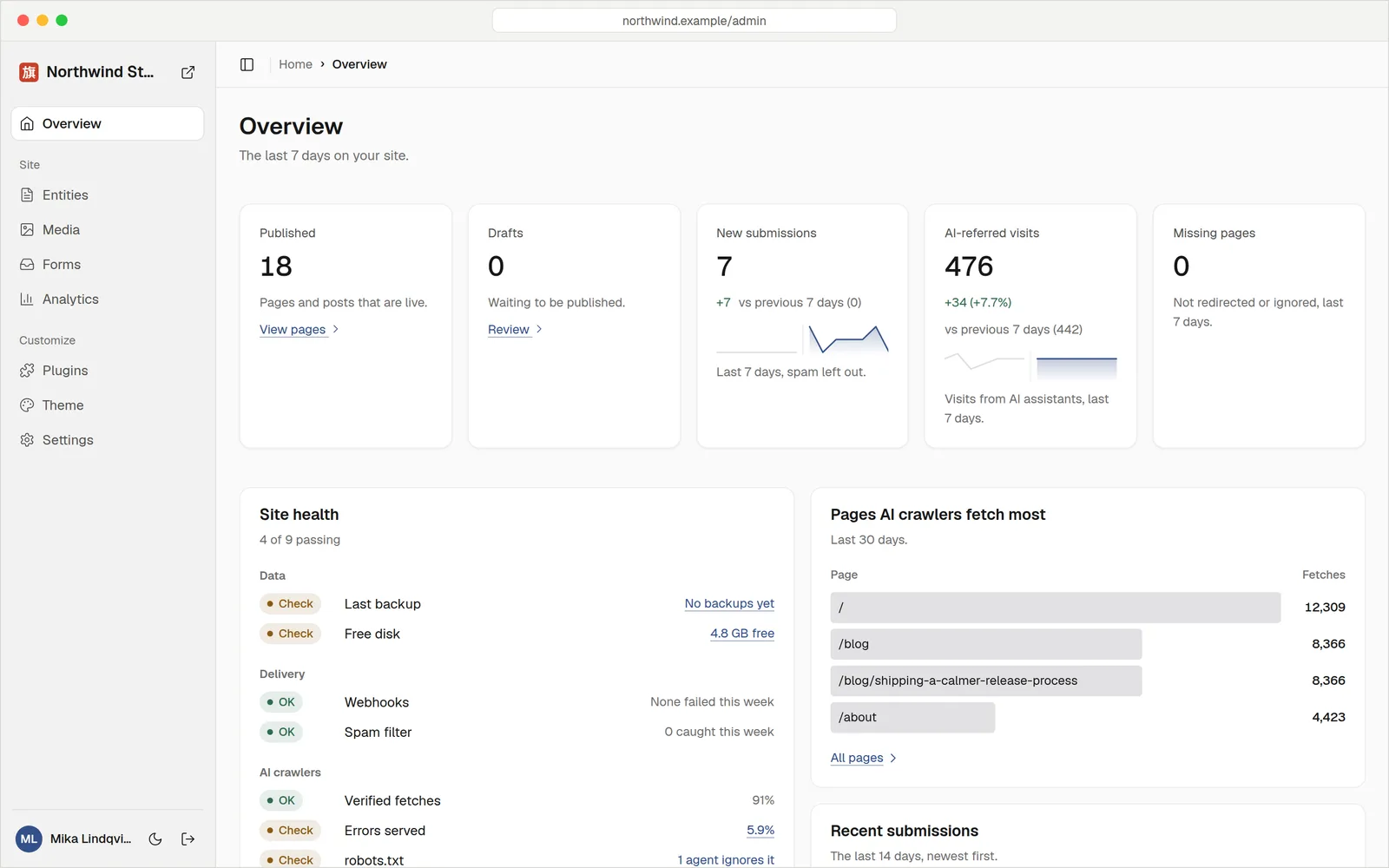
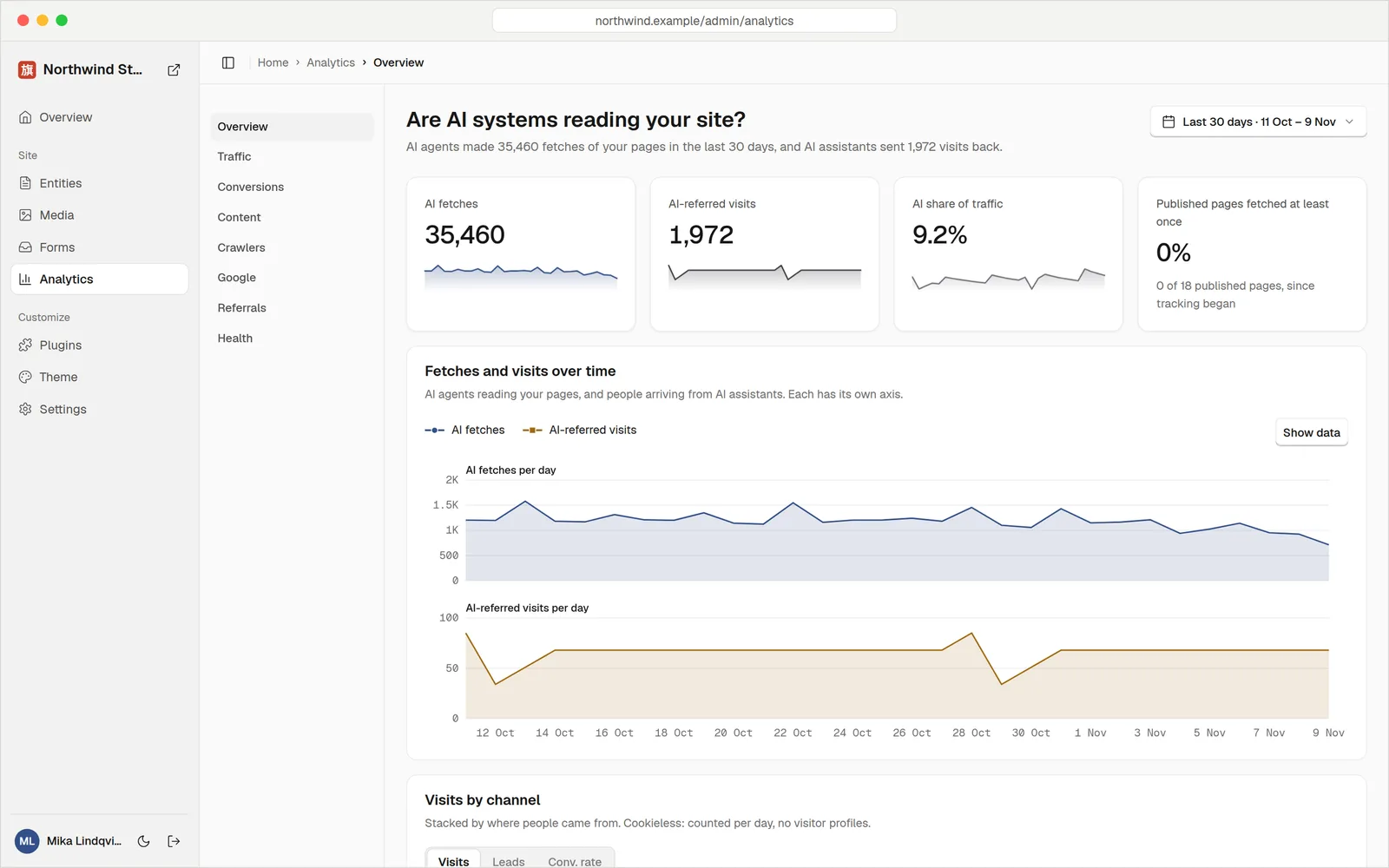
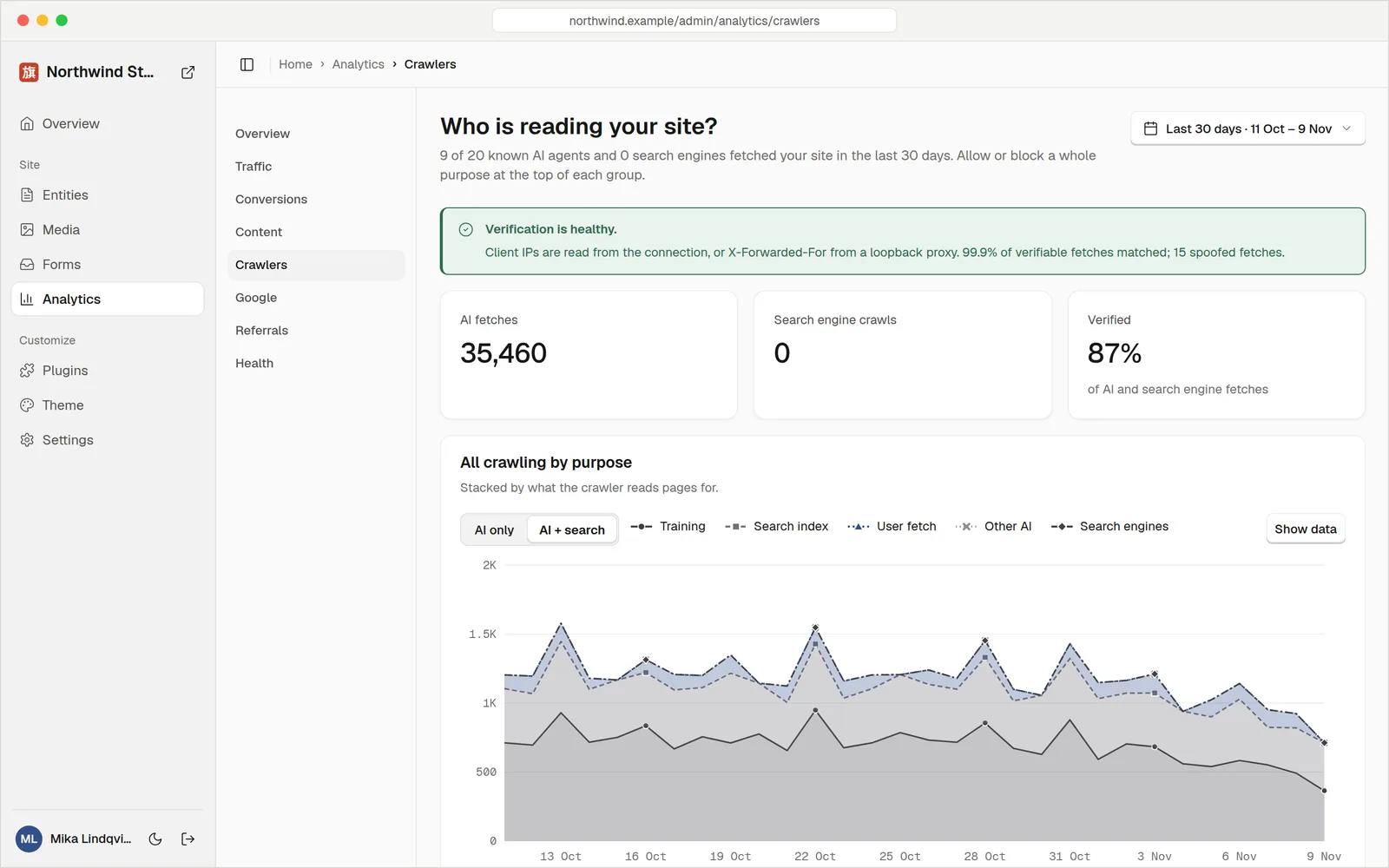
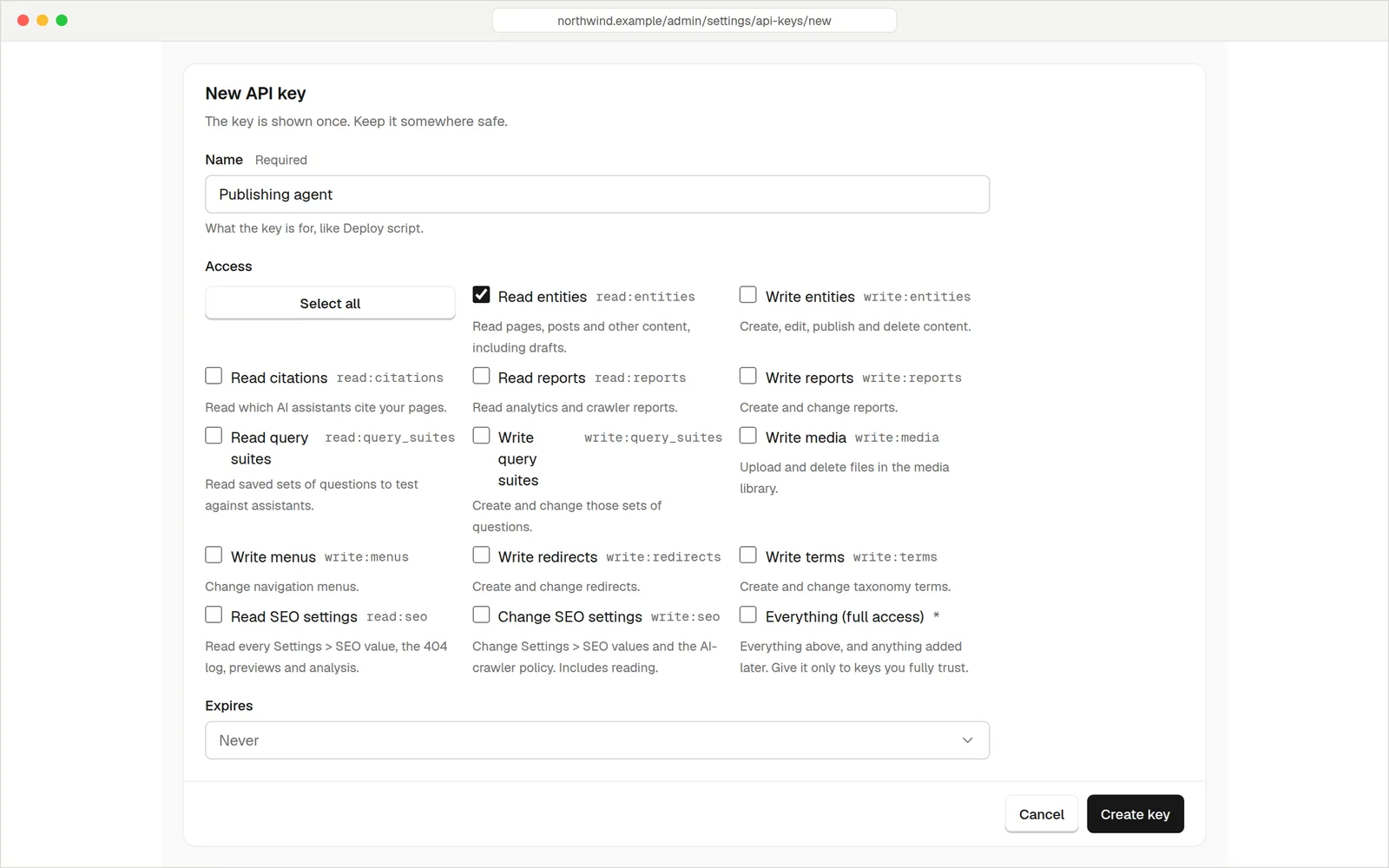
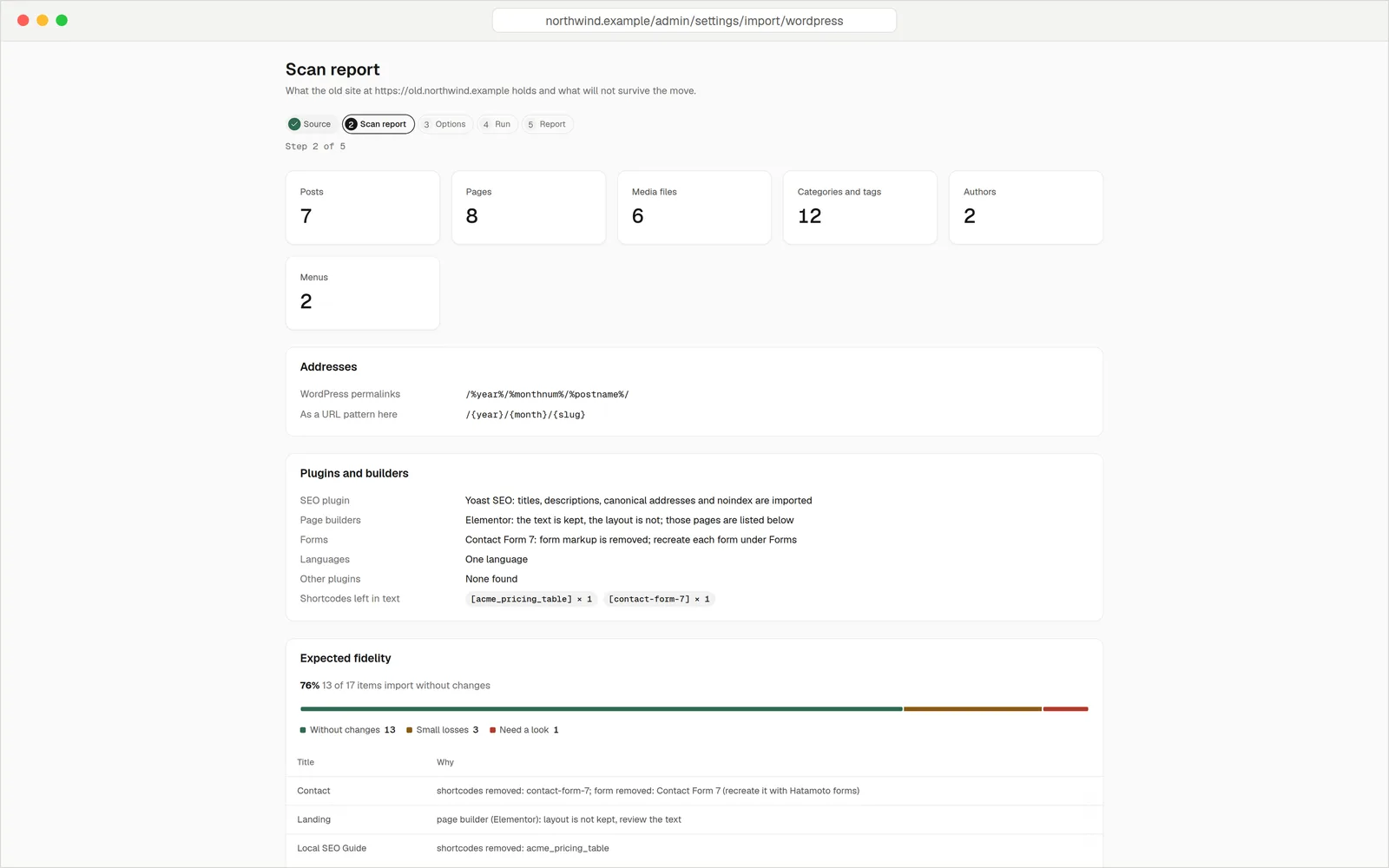
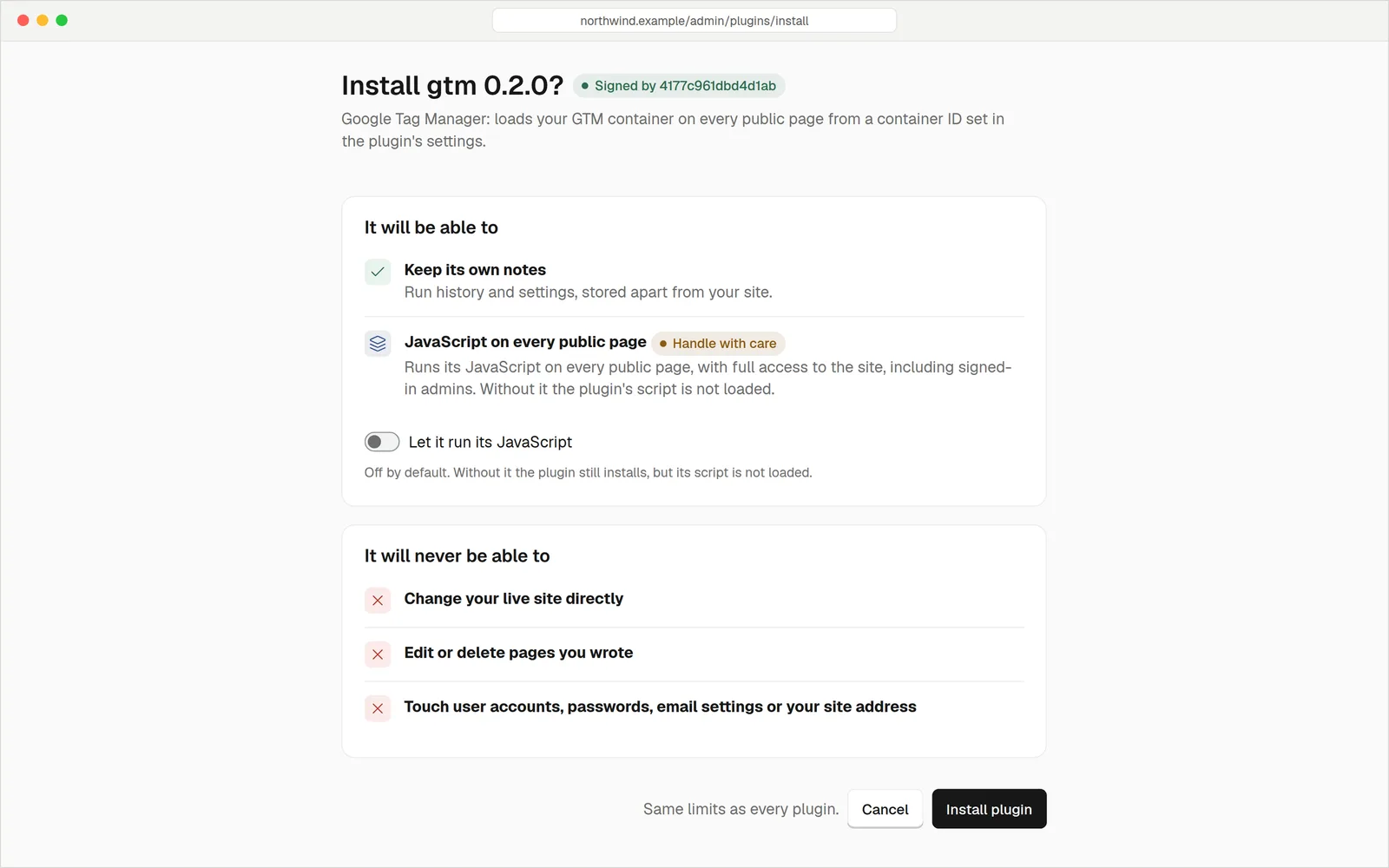
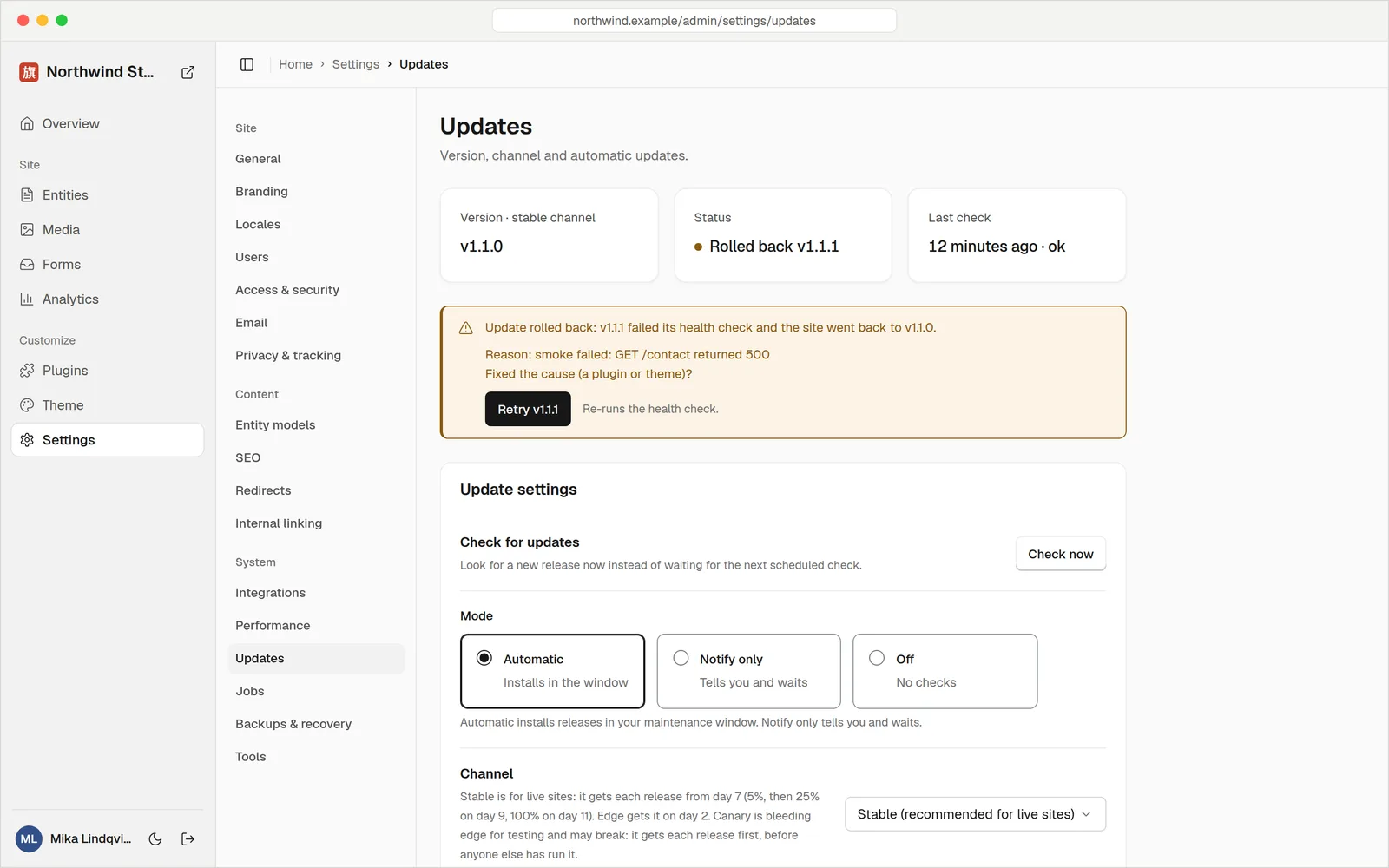
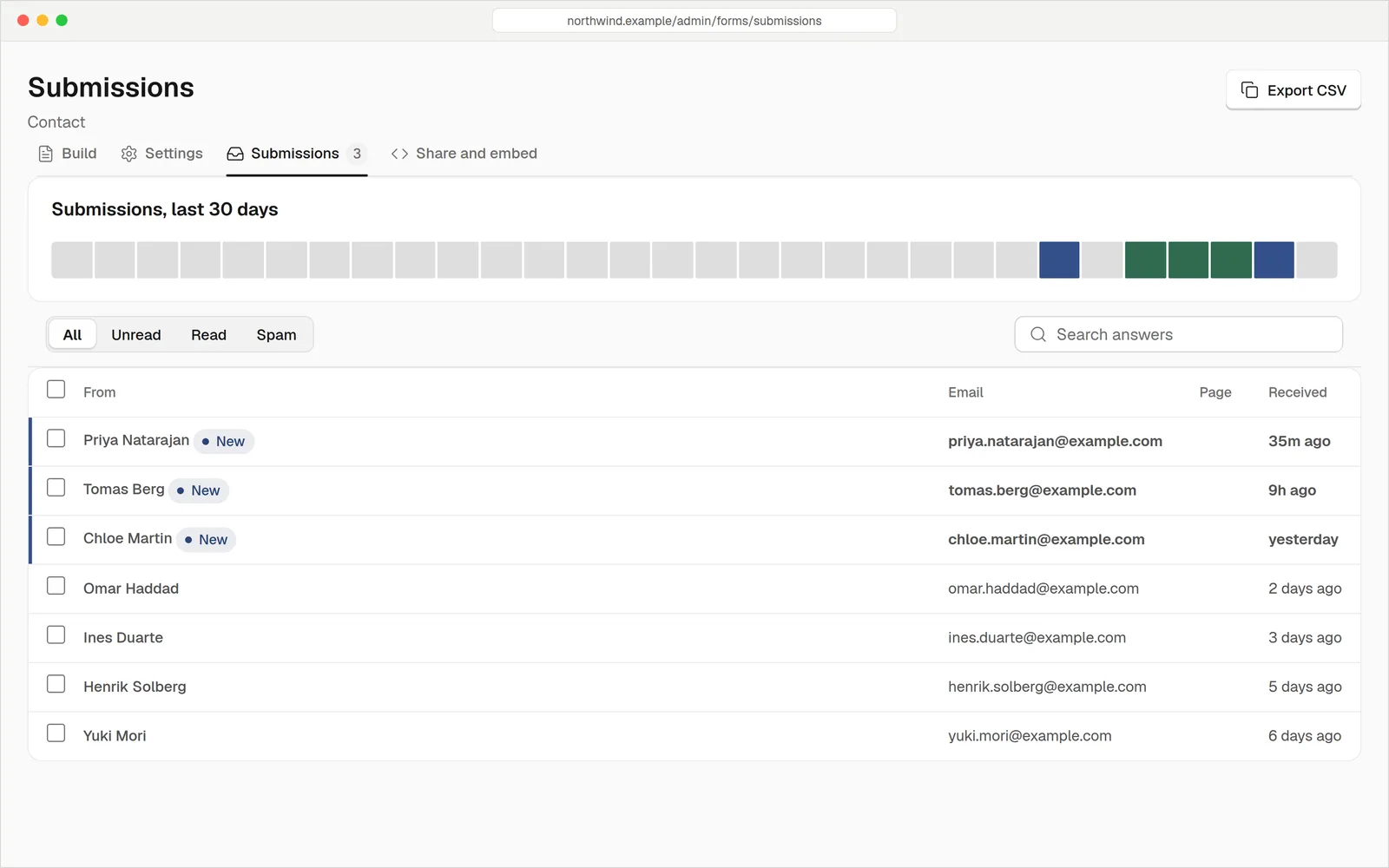
Hatamoto is a self-hosted CMS for site owners who want search engines and AI assistants to read their pages as well as people do. Pages come together on a visual canvas of sections and blocks, previewed at desktop, tablet, and phone widths, with undo and version history, while posts get a writing editor with SEO checks, scheduling, and suggested internal links. Every page is a typed record, so one edit updates the page, its structured data, its sitemap entry, and its llms.txt line together. Analytics count AI crawler fetches on the server, check each claimed bot against its operator's published IP ranges, flag impostors, and show visits sent by assistants as their own channel, all without cookies. You can allow or block crawlers by purpose, such as training, search, or user requests. Agents connect over MCP with scoped API keys that can expire, drafting and publishing pages, editing menus and redirects, and reading reports, while an audit log records every call. Moving from WordPress starts with a scan report predicting what imports cleanly, then copies content and menus and adds a permanent redirect for every changed address. Plugins and themes install as signed packages that list the permissions they request, and updates roll themselves back when the health check fails. Forms collect submissions with spam filtering and CSV export. Running on a dedicated VPS on RepoCloud with guaranteed CPU, RAM, and SSD, full root SSH access, and a browser serial console. Apache-2.0 licensed.
Benefits
- Know Which AIs Read You
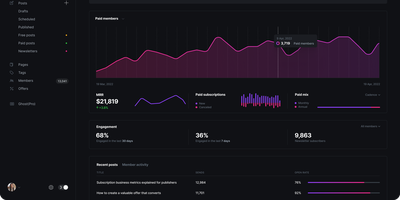
- Server-side analytics log every AI crawler fetch, verify each bot against its operator's published IP ranges, flag fakes, and count assistant-referred visits, with no cookies and no tracking script on the page.
- Let Agents Publish Safely
- The built-in MCP endpoint accepts scoped API keys that can expire, so agents draft and publish within set limits while an audit log records every tool call they make.
- Core Features, One Update
- Builder, SEO, page cache, forms, redirects, backups, and two-factor sign-in ship in core and update together, so there is no pile of separate plugins to patch.
- Leave WordPress, Keep Every URL
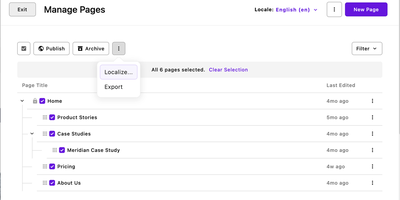
- A scan report predicts what imports cleanly, the importer copies content and menus, and every address that moves gets a permanent redirect, with a URL audit confirming old links still resolve.
Features
- Visual Page Builder
- Layers, insert, and inspector panes edit sections and blocks on a canvas with desktop, tablet, and phone previews, history, and a Ctrl+K palette; pages render as plain server HTML.
- Crawler Verification and Control
- A registry of more than 40 AI agents, checked against published IP ranges or reverse DNS and marked verified, spoofed, or unverifiable, with per-purpose allow and block switches.
- MCP Server With Scoped Keys
- The /mcp endpoint takes Bearer keys with per-scope tools for entities, media, menus, redirects, SEO, and reports, a default limit of 1,000 requests per hour, and an audit table.
- WordPress Import Wizard
- Scans a live site with an application password or a 256 MB export file, reports expected fidelity, maps permalinks to a URL pattern, writes redirects, and can re-sync before cutover.
- Sandboxed Signed Plugins
- Extism and wazero run plugins in a WebAssembly sandbox with memory and time limits and the permissions you tick; the Go SDK or any Extism PDK builds them.
- Self-Healing Signed Updates
- Releases are signed and ship on canary, edge, and stable channels; a failed post-install health check restores the previous version automatically, and installs wait for your maintenance window.