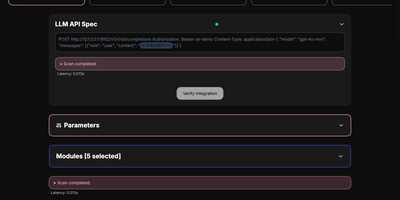
Agentic Security
Find out how easily your chatbot can be talked into misbehaving before a stranger on the internet does. Agentic Security points a library of attack prompts at any LLM endpoint you can describe in a few lines of HTTP, then reports which attack families got through. Paste a request template with a marker where the attack goes, press Verify Integration to confirm the endpoint answers, and start the scan. Pick from jailbreak corpora on Hugging Face, obfuscation mutations like Base64, ROT13, mirrored words, and scrambled text, or drop your own CSV of prompts into a folder. Presets cover OpenAI, DeepSeek, Groq, Gemini, Claude, Azure, and custom APIs. Set a token budget, switch on concurrency, and watch a per-module table of failure rates and estimated cost fill in live. Download failed prompts as a CSV, export the full log, or generate a config and run the same scan as a CI gate with failure thresholds. Re-run the same scan after every model or system prompt change to spot regressions early. Running on a dedicated VPS on RepoCloud with guaranteed CPU, RAM, and SSD, full root SSH access, and a browser serial console. Apache-2.0 licensed.
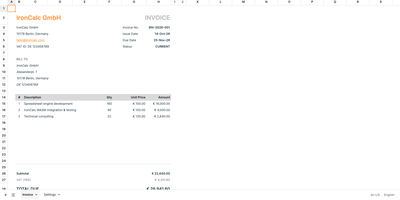
IronCalc
Spreadsheets deserve an engine that anyone can embed, audit, and run on their own server. IronCalc is an open-source spreadsheet engine with a browser editor that reads and writes real Excel files: open an xlsx, edit values and formulas in the grid, format cells, and save the workbook back without a round trip through a proprietary suite. The grid feels familiar on purpose, with a formatting toolbar for fonts, fills, borders, number formats, and alignment, sheet tabs along the bottom, and templates for invoices, expense trackers, calendars, timesheets, and project plans so a new workbook starts from structure instead of a blank page. Files import from xlsx and export again to the same format, which keeps IronCalc honest as a working tool instead of a viewer. Underneath, the calculation engine is a library other software can call, so the same formulas that evaluate in your browser can also run inside a Python script, a Node service, or a WebAssembly build embedded in your own product. Self-hosting puts the whole webapp behind your own address: one Docker Compose brings up the spreadsheet server with its proxy, and teams share workbooks from infrastructure they control rather than uploading budgets to a stranger's cloud. Running on a dedicated VPS on RepoCloud with guaranteed CPU, RAM, and SSD, full root SSH access, and a browser serial console. MIT and Apache-2.0 dual licensed.
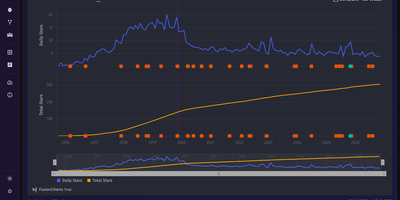
Daily Stars Explorer
From a one-day Hacker News spike to a decade of steady growth, Daily Stars Explorer charts any GitHub repository's star history day by day, next to the releases and mentions that explain it. Type an owner and repository name, and daily and cumulative stars appear. Range shortcuts: 10Y, 5Y, YTD, QTD, MTD, and All. Zoom with a draggable lower navigator, switch to a Log Y axis, and read the stars gained inside the selected window. Transforms reshape the series. A trend line projects 30 days ahead. Yearly, monthly, or weekly grouping. Peak normalization. LOESS smoothing. Running average and median. First and second derivatives. Weekly growth rate. Feed overlays, enabled by optional provider credentials, mark releases and mentions from Hacker News, Reddit, GitHub, and YouTube right on the curve. Compare two already-fetched repositories on shared axes, with an aggregate selector, Log Y, and optional star milestones, then copy the link. With a GitHub token, separate pages chart commits, with the longest gap highlighted on demand, plus pull requests, issues, forks, and contributors. Global activity counts the public repositories or pull requests created on GitHub each day. Featured repos lists Hacker News and Reddit posts that link to GitHub projects, sortable by points, comments, or date. Star history, commit, and activity charts export to CSV or JSON. Favorite repositories can be pinned. Running on a dedicated VPS on RepoCloud with guaranteed CPU, RAM, and SSD, full root SSH access, and a browser serial console. MIT licensed.
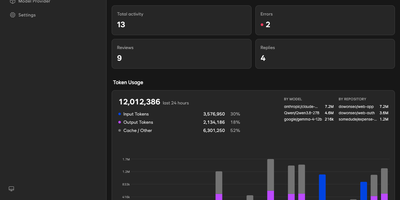
Proval
Proval is a self-hosted AI code review agent that reads every pull request on your GitLab, Forgejo, or GitHub server and posts a consolidated, severity-grouped review with inline comments, using a model you run yourself. When a pull request gets a meaningful push, a planning agent groups changed files into review units and dispatches specialist sub-agents in parallel, each exploring the codebase so cross-file issues surface. A writing agent merges their findings into one review, with comments on the affected lines, including multi-line ranges. Reply to any Proval comment and it reads the thread context and answers, and it works on issues too, greeting new ones and answering follow-ups on every message or only when mentioned. Choose per repository whether reviews run on first push only, every push, or not at all, skipping drafts until they are marked ready. Every review, reply, and issue comment is logged with its token usage, so each model's cost shows in the dashboard instead of hiding in an API bill. Your code is never stored; review context goes only to the LLM endpoint you configure, whether that is a cloud API or a local Ollama or llama.cpp server on your own network. Connect GitLab or Forgejo with an access token and webhooks, or GitHub through a GitHub App; Gitea and Codeberg use the same Forgejo-compatible path. Running on a dedicated VPS on RepoCloud with guaranteed CPU, RAM, and SSD, full root SSH access, and a browser serial console. AGPL-3.0 licensed.
RSSBox
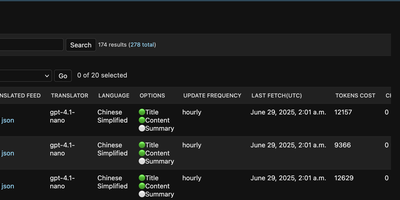
Foreign-language feeds are where good information usually goes to be ignored, and RSSBox fixes that by translating, filtering, and merging RSS sources, then republishing them as clean feeds your existing reader can subscribe to. Add a feed, pick a translation engine, and RSSBox republishes it with titles, full articles, or summaries translated, optionally showing both languages side by side. Each feed can use a different engine, from DeepL to any OpenAI-compatible model endpoint, and the admin shows translation status plus the tokens or characters each source has consumed. Update schedules are set per feed, so a fast-moving news source refreshes hourly while a quiet personal blog checks in once a day. Keyword filters quietly drop the recurring topics you never open, and AI filtering goes further by judging items against what you actually read. Tag several related sources and RSSBox merges them into a single unified feed, translations and filters applied, ready to follow as one stream. Full-text fetching pulls complete article bodies from feeds that only publish excerpts, so the translation covers the whole story rather than the teaser paragraph. Your reader app never changes: it simply subscribes to the translated feed URL like any other source. Running on a dedicated VPS on RepoCloud with guaranteed CPU, RAM, and SSD, full root SSH access, and a browser serial console. GPL-3.0 licensed.
RESTai
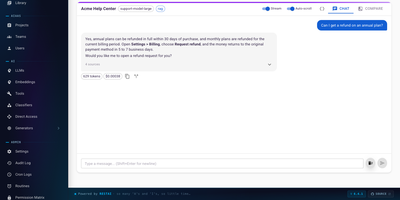
Every AI project you build in RESTai becomes an endpoint that any app can call over plain HTTP. RESTai gives you a browser dashboard where each project gets its own model, system prompt, tools, and chat playground. Build knowledge-base assistants over uploaded files and synced web pages, ReAct-style agents that call MCP servers, or drag-and-drop block projects that need no model at all. Connect Ollama, OpenAI, Anthropic, Gemini, vLLM, Azure, Bedrock, or any OpenAI-compatible endpoint, and let teams share the ones you approve. Daily charts follow tokens, cost, and latency per project, with rate limits, guardrails, prompt version history, and evaluation runs for quality tracking. Teams, roles, two-factor sign-in, white-label branding, and an audit trail cover administration. A one-line chat widget embeds a project on any website, and connectors reach Telegram, Slack, and WhatsApp. One install can serve several branded assistants and bill each team separately. Running on a dedicated VPS on RepoCloud with guaranteed CPU, RAM, and SSD, full root SSH access, and a browser serial console. Apache-2.0 licensed.
Latent Scope
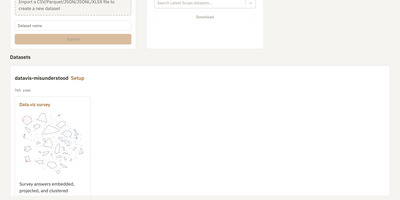
Survey answers, support tickets, and documents become an interactive map where similar rows sit together, so patterns show up before anyone reads a single row. Latent Scope imports a CSV, Parquet, JSON, JSONL, or XLSX file in the browser, then walks through five setup steps: embed the text with a local or hosted model, project the vectors to two dimensions, cluster the points, label every cluster, and publish the result as a scope. The Explore view pairs a searchable table with the map, so you can type a phrase to run a nearest-neighbor search, browse cluster lists, and open any row's full text. Setup keeps every experiment in a gallery with thumbnails and quality scores, which makes comparing parameters painless. Image collections get a zoomable image map, and ColBERT multi-vector embeddings support late-interaction search. Export tables, or render publication-ready plots with dark mode, glow, and custom fonts. A read-only mode and a Hugging Face downloader help you share finished scopes. Running on a dedicated VPS on RepoCloud with guaranteed CPU, RAM, and SSD, full root SSH access, and a browser serial console. MIT licensed.
ChainForge
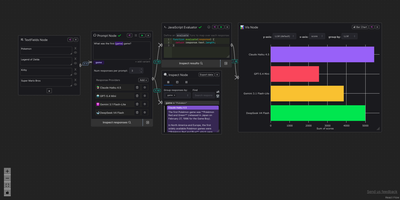
Comparing prompts and models by eye stops working fast, so ChainForge lays every experiment out on one visual canvas. Drop a table of inputs into a Prompt Node, add a handful of models, and the app sends every combination of template variable and model, then collects the answers in an Inspect Node that groups responses by any variable. Evaluator nodes score outputs with a few lines of code, and visualization nodes plot pass rates and numeric scores as histograms or box plots. Chat Turn nodes test follow-up questions, to see if a model caves when a user pushes back. Sparkle buttons draft synthetic table rows, test questions, and starter evaluator code with a model of your choice, and an LLM scorer can judge answers against a rubric you write. Example Flows open ready-made experiments, from a no-key starter with tiny in-browser models to prompt template comparisons, sycophancy checks, gender bias audits, red-teaming runs, and 188 flows converted from OpenAI Evals. Documents, Chunking, Retrieval, and Rerank nodes cover retrieval experiments. Finished flows export as cforge files, and results export to spreadsheets or JSON for the rest of the team. Running on a dedicated VPS on RepoCloud with guaranteed CPU, RAM, and SSD, full root SSH access, and a browser serial console. MIT licensed.
Indigo
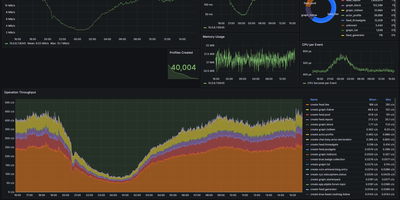
Indigo is Bluesky's Go toolkit for building services on the AT Protocol, and operators reach for it when they need to follow the whole network: run a relay that subscribes to many personal data servers and republishes one combined firehose, split that firehose for many subscribers, or filter it down to the accounts and record types a single application actually cares about. The relay holds upstream host and account state in PostgreSQL, verifies repository integrity and identity signatures, exposes an admin web interface for configuring limits and adding upstream hosts, and emits Prometheus metrics and tracing for production monitoring. Rainbow consumes a relay or PDS firehose and fans events out to large numbers of subscribers, buffering recent history on local disk so late joiners receive the events they missed. Tap handles verification, automatic backfilling of repository history, and filtered delivery by account list or record collection, sending simple JSON events to applications over WebSocket or webhook instead of requiring each developer to parse cryptographic repository formats. Hepa consumes the relay firehose and applies moderation rules to accounts and records, pushing labels into an existing moderation service for teams that operate their own trust and safety pipeline. Each service ships as a single Go binary with Docker packaging, and shared packages provide the client, identity, lexicon, and repository data structures the services are built from. Running on a dedicated VPS on RepoCloud with guaranteed CPU, RAM, and SSD, full root SSH access, and a browser serial console. MIT and Apache-2.0 licensed.
Music Player
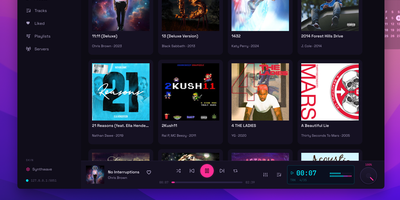
One binary scans your music folder and turns it into a server you can browse, search, and play from anywhere on your network. Start it and the daemon serves gRPC on port 5051, WebSocket events on 5052, and the web UI plus GraphQL on 5053. Later invocations detect the running daemon and act as clients, so the same command drives playback from a second terminal. Search lands instantly because tracks, albums, and artists sit in SQLite FTS5 tables kept current by database triggers. Playback handles more than 40 formats, from FLAC and Opus to WavPack, APE, and chiptunes, with EQ presets, crossfade, and ReplayGain. Browse and stream libraries hosted on Subsonic, Navidrome, and Jellyfin servers beside your own files. Cast to Chromecast and UPnP or DLNA renderers, or control another Music Player daemon as the output. Internet radio search covers Radio Browser and TuneIn stations, with bookmarks and a fullscreen now-playing view. Chromaprint fingerprints name badly tagged files from AcoustID and MusicBrainz data. Import Spotify, Last.fm, and Rocksky history into DuckDB analytics and ask about sessions, skips, and taste drift. Scrobble plays to Rocksky, sync radio bookmarks through the AT Protocol, and pick skins in the browser, desktop, or terminal interface. Running on a dedicated VPS on RepoCloud with guaranteed CPU, RAM, and SSD, full root SSH access, and a browser serial console. MIT licensed.

Nanocl
One server, treated properly: Nanocl runs your containers and full virtual machines from a single declarative Statefile, reconciling what is running against what the file says, so a lone host gets cluster discipline without cluster ceremony. Containers group into Cargoes with replica counts, ordered init containers, and health-aware restarts; finite jobs run to completion and stop. When a workload needs a real kernel or a custom disk image, it boots as a QEMU virtual machine beside the containers instead of forcing a second platform. Publishing is built in: the proxy controller terminates TLS and routes HTTP and TCP traffic, and the DNS controller keeps service names resolving while workloads come and go. Secrets for registries, certificates, and environment variables attach where they are used, never inside the file itself. The daily loop is a CLI and an API: list processes, follow logs, exec into a container, watch events, and back up the entire deployment state before you change it. Namespaces keep projects apart on the same host, and Statefile arguments, templates, and sub-states carry one definition from staging to production. Running on a dedicated VPS on RepoCloud with guaranteed CPU, RAM, and SSD, full root SSH access, and a browser serial console. MIT or Apache-2.0 licensed.
Lotus
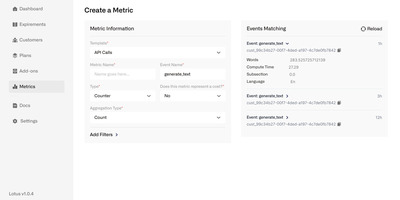
Lotus is an open-source pricing and billing engine that lets SaaS teams meter usage, design plans, and experiment with pricing without rebuilding their billing stack every time the model changes. You define how customers are charged: per seat, per API call, per gigabyte, in tiers, with prepaid credits, or as a bespoke enterprise arrangement negotiated over email. Plans are versioned and deployed like releases, so changing a price never means editing the plan that half your customers already signed. Usage events stream in from your product and are aggregated against each customer's plan, turning raw events into billable quantities your finance team can audit line by line. Before a new model goes live, you backtest it against historical usage to see exactly who would have paid what, and forecast the revenue before a single invoice changes. Experiments compare pricing variants on real customers, so the packaging debate ends with numbers instead of opinions. The control panel sits on top of your existing quote-to-cash stack, pulling from your payment, CRM, and data systems rather than demanding a rip-and-replace migration. Engineers integrate through the API: send events, read balances, and let Lotus handle the proration math when plans change mid-cycle. Running on a dedicated VPS on RepoCloud with guaranteed CPU, RAM, and SSD, full root SSH access, and a browser serial console. MIT licensed.
Yaade
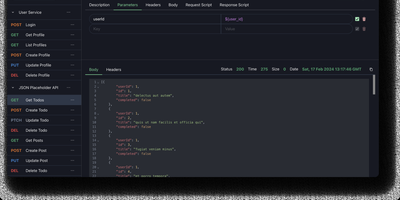
Yet Another API Development Environment delivers a self-hosted alternative to Postman designed from the ground up for teams that need secure, collaborative API development without sending sensitive credentials through third-party cloud services. The multi-user system manages team members with role-based permissions and supports external authentication through OAuth2 and OIDC providers, while all data persists in an H2 file-based database that survives container and server restarts. REST and WebSocket request testing includes environment variable substitution, request chaining, and Markdown documentation for each endpoint. The JavaScript scripting engine runs request and response scripts for automated testing and data extraction, with cron job scheduling and API-triggered execution for continuous integration workflows. Collections import directly from OpenAPI specifications and Postman exports, while outbound export generates request code in multiple languages and frameworks. The browser extension proxy for Chrome and Firefox routes requests through the user's browser to bypass CORS restrictions when testing localhost and internal APIs, with an alternative server-side proxy for headless environments. Single-file data import and export simplifies backup and migration between instances. The React and Vite frontend ships with dark mode enabled by default. Running on a dedicated VPS on RepoCloud with guaranteed CPU, RAM, and SSD, full root SSH access, and a browser serial console. MIT licensed.
Colspan
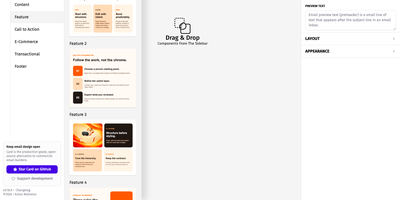
Hand-coding HTML emails means wrestling nested tables and Outlook quirks for hours; Colspan turns that work into dragging ready-made blocks onto a canvas and exporting code that holds together in Gmail, Outlook, and Apple Mail. The component catalog holds 78 blocks grouped into Menu, Header, Content, Feature, Call to Action, E-Commerce, Transactional, and Footer sets, so newsletters, receipts, and promotional campaigns all start from structured pieces instead of a blank file. You edit text inline with rich formatting and Google Fonts, arrange blocks in a synchronized component tree, and adjust each row for stacking order and visibility on mobile. Desktop and mobile previews render side by side, and the preview stays isolated from the editor chrome, so what you check is what recipients open. Finished designs export as responsive HTML with inline styles, or as JSON you can store, version, and re-import later in replace or append mode. Import validation and sanitization guard templates received from teammates or clients before they enter your workspace. Your work saves automatically in the browser and reloads where you left off, and undo and redo cover every edit during experimentation. Agencies can host the editor on a client-facing domain, marketing teams can produce campaign emails without developer time, and product teams can standardize receipts and notifications as reusable templates. Running on a dedicated VPS on RepoCloud with guaranteed CPU, RAM, and SSD, full root SSH access, and a browser serial console. AGPL-3.0 licensed.
Paaster
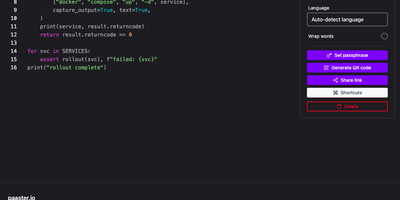
Paaster is the pastebin for snippets too sensitive for a public paste site: every paste is encrypted in your browser before upload, so the server only ever stores ciphertext it cannot read. Paste code or logs and the text is sealed with libsodium the moment you stop typing, with the secret riding in the link fragment that browsers never send to a server. Share the link and only its holder can open the paste; share it as a QR code, or beam it to your other device with a five-minute code using Send to device. Set a paste to delete after its first view or after a chosen time, protect it with an access code, and let automatic language detection syntax-highlight the result. Your own pastes stay browsable in a local history, themes and keyboard shortcuts keep the editor fast, and drag-and-drop file sharing works the same encrypted way. Upload from the terminal with the companion CLI or the REST API, and store everything in MongoDB with MinIO, S3, or Cloudflare R2 holding the encrypted blobs. Running on a dedicated VPS on RepoCloud with guaranteed CPU, RAM, and SSD, full root SSH access, and a browser serial console. AGPL-3.0 licensed.
Conduit
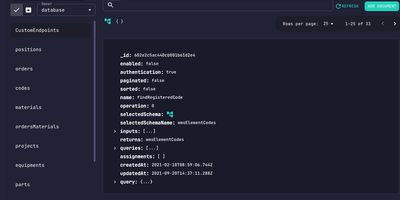
Conduit is a self-hosted backend platform that gives your application user accounts, databases, APIs, chat, and notifications out of the box, so you can skip months of boilerplate and ship the product itself. Define a data schema in the admin dashboard and Conduit generates CRUD and query endpoints for it automatically, backed by your choice of MongoDB or PostgreSQL. The Router module exposes every capability over REST, GraphQL, and WebSockets, and publishes Swagger documentation for each route as you build. Authentication covers a wide range of sign-in methods, and the Authorization module layers resource-level permission rules on top of every account. Realtime chat ships as a ready module with rooms and message history that clients join over WebSockets. Email and SMS modules send through multiple providers, and SMS doubles as a two-factor authentication channel that hardens sign-ins. File uploads land in the Storage module with several cloud providers supported, and PushNotifications keeps your mobile users informed. An Embeddings module adds text-to-vector generation and semantic search when you want AI features inside your app. Forms collect submissions and forward responses to an email address, covering contact pages and lead capture. A CLI bootstraps a working deployment in minutes, and production installs run on Docker Compose or Kubernetes. Running on a dedicated VPS on RepoCloud with guaranteed CPU, RAM, and SSD, full root SSH access, and a browser serial console. MIT licensed.
REI3
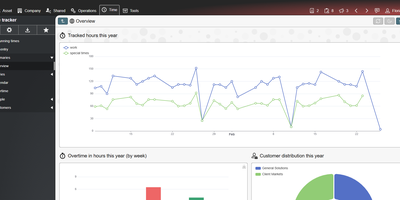
Replace the spreadsheet that quietly runs your department with a proper multi-user application that you design in a browser with REI3, a self-hosted low-code platform. Authors define their data model once, then assemble forms, lists, calendars, Gantt plans, Kanban boards, and charts around it, with form states that show, hide, or require inputs as a record moves through its workflow. Calendars create records from a drag-selected time range, Kanban cards change state by drag and drop, and bulk-update forms edit hundreds of records at once. Phones scan barcodes and QR codes through the camera, and signature pads capture drawings. Roles and record-level access policies decide who sees what, sign-in runs through LDAP, OpenID Connect, or multi-factor authentication, and end-to-end encryption keeps selected fields unreadable even to administrators. REST endpoints work in both directions, ICS feeds publish calendars, CSV moves data in bulk, and IMAP and SMTP accounts connect applications to email. A drag-and-drop PDF editor produces letterheads, labels, and documents with signatures and barcodes. More than a dozen free ready-made applications, including tickets, time tracking, IT assets, a password safe, and a CRM, install from the admin panel. Running on a dedicated VPS on RepoCloud with guaranteed CPU, RAM, and SSD, full root SSH access, and a browser serial console. MIT licensed.
Noisedash
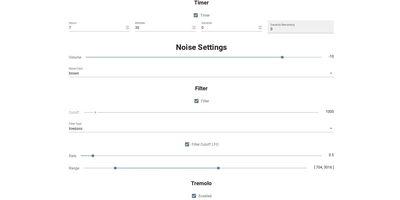
Noisedash is a self-hosted soundscape studio that generates the ambient noise you wish your surroundings made, from steady fan hums to layered rainstorms, and plays it in any browser. Start from white, pink, or brown noise and shape it with filters, LFOs, and effects until the hum in your head goes quiet. Upload your own recordings of rain, wind, thunder, or a café at noon, set loop points and fade-ins, and drop them into the mix as a continuous bed or an occasional sprinkle. Add reverb to a sample, let a thunderclap wander in every few minutes instead of looping, and balance every layer until the room feels right. Save the result as a noise profile, keep one for sleeping and another for deep work, and switch between them with a tap. Profiles travel: export one to share with a friend, import theirs, or record the generated audio to take the soundscape somewhere else entirely. An instance can host the whole household, with admin tools managing users, and the interface works as happily on a phone beside the bed as on a desktop. Running on a dedicated VPS on RepoCloud with guaranteed CPU, RAM, and SSD, full root SSH access, and a browser serial console. AGPL-3.0 licensed.