Categories
Self-Hosted Server Management Docker Management Container Orchestration DevOps Tools Infrastructure Automation VirtualizationStars
Forks
Watchers
Developer links
Nanocl
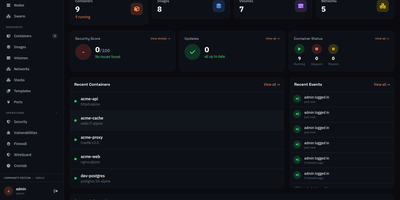
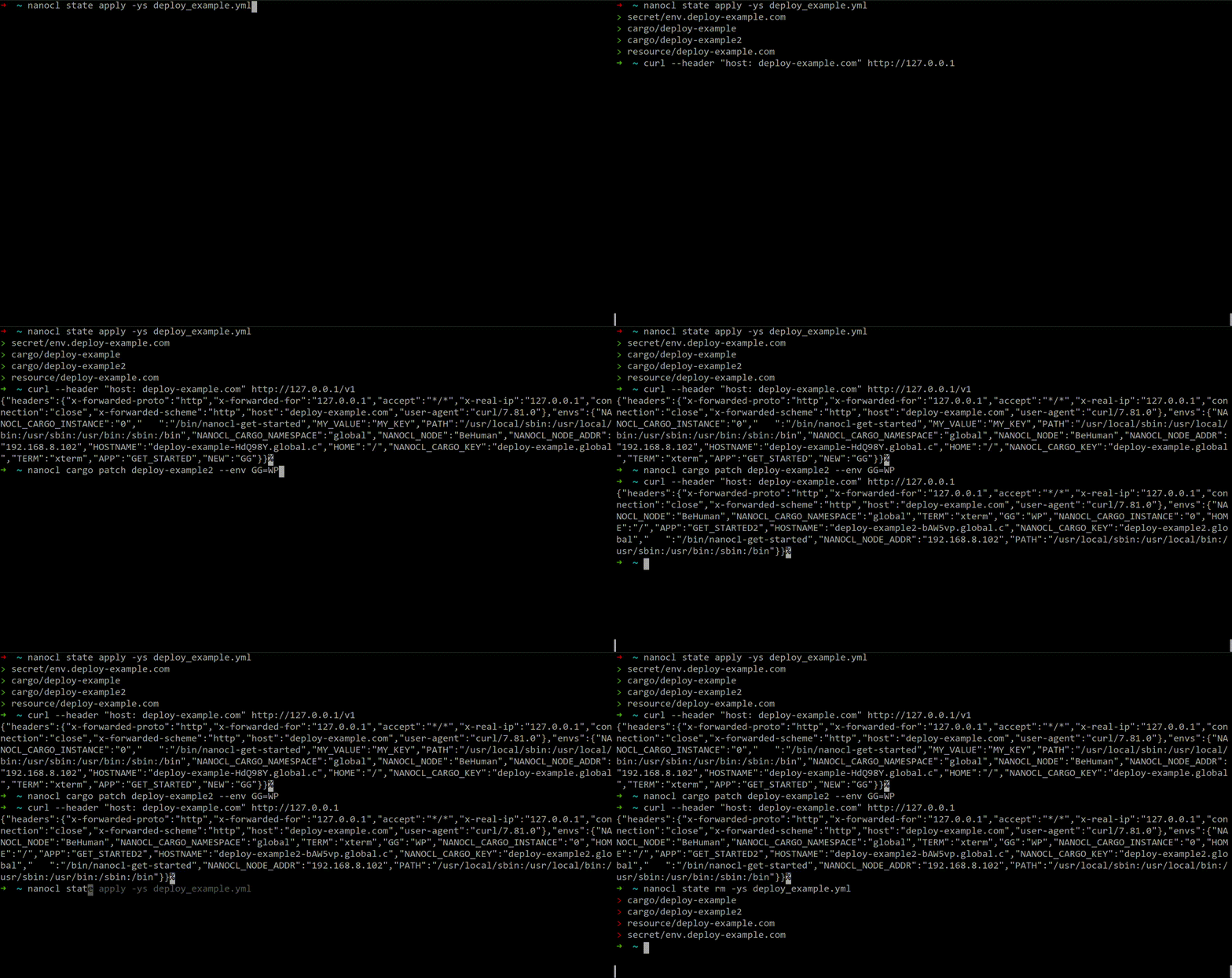
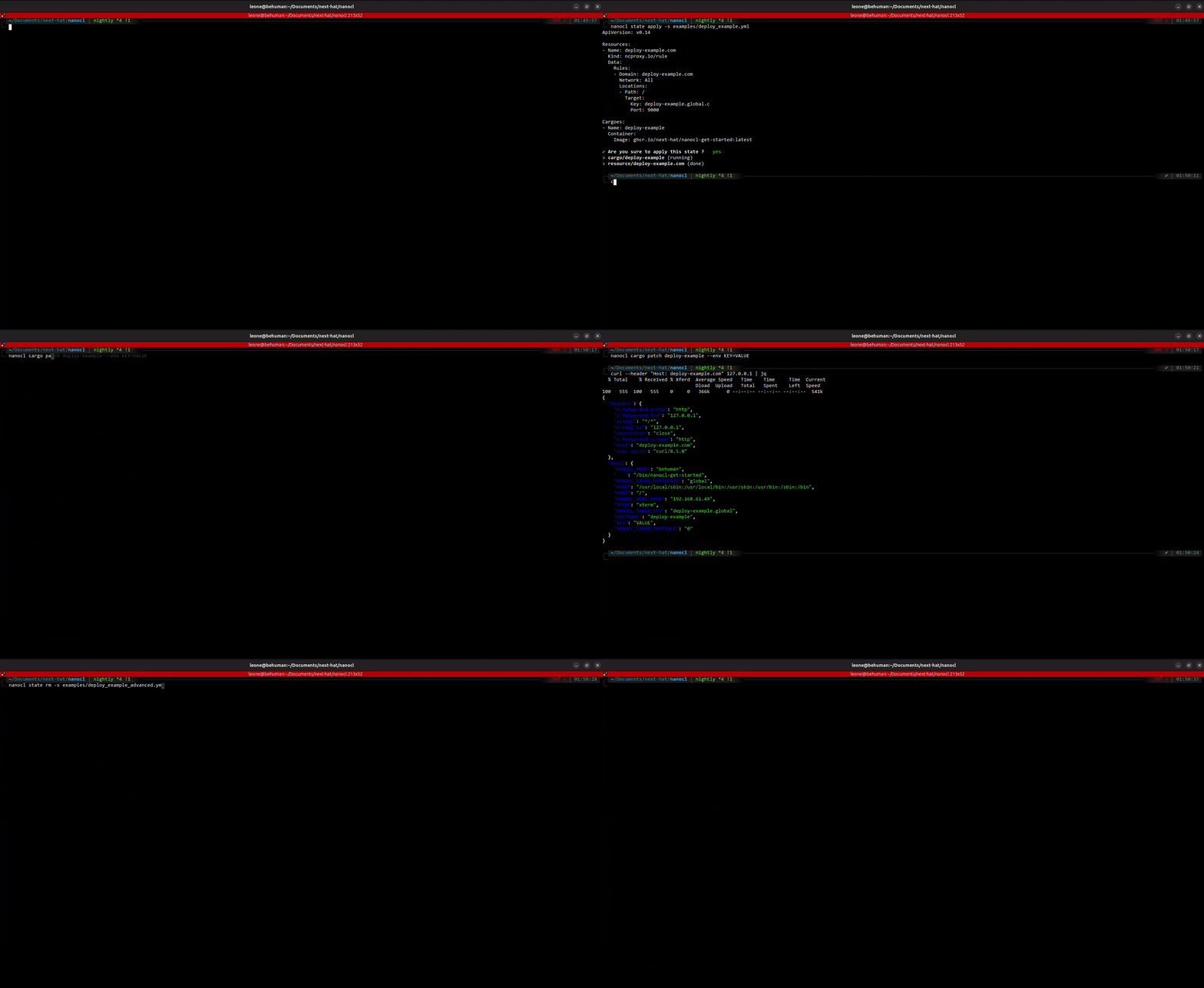
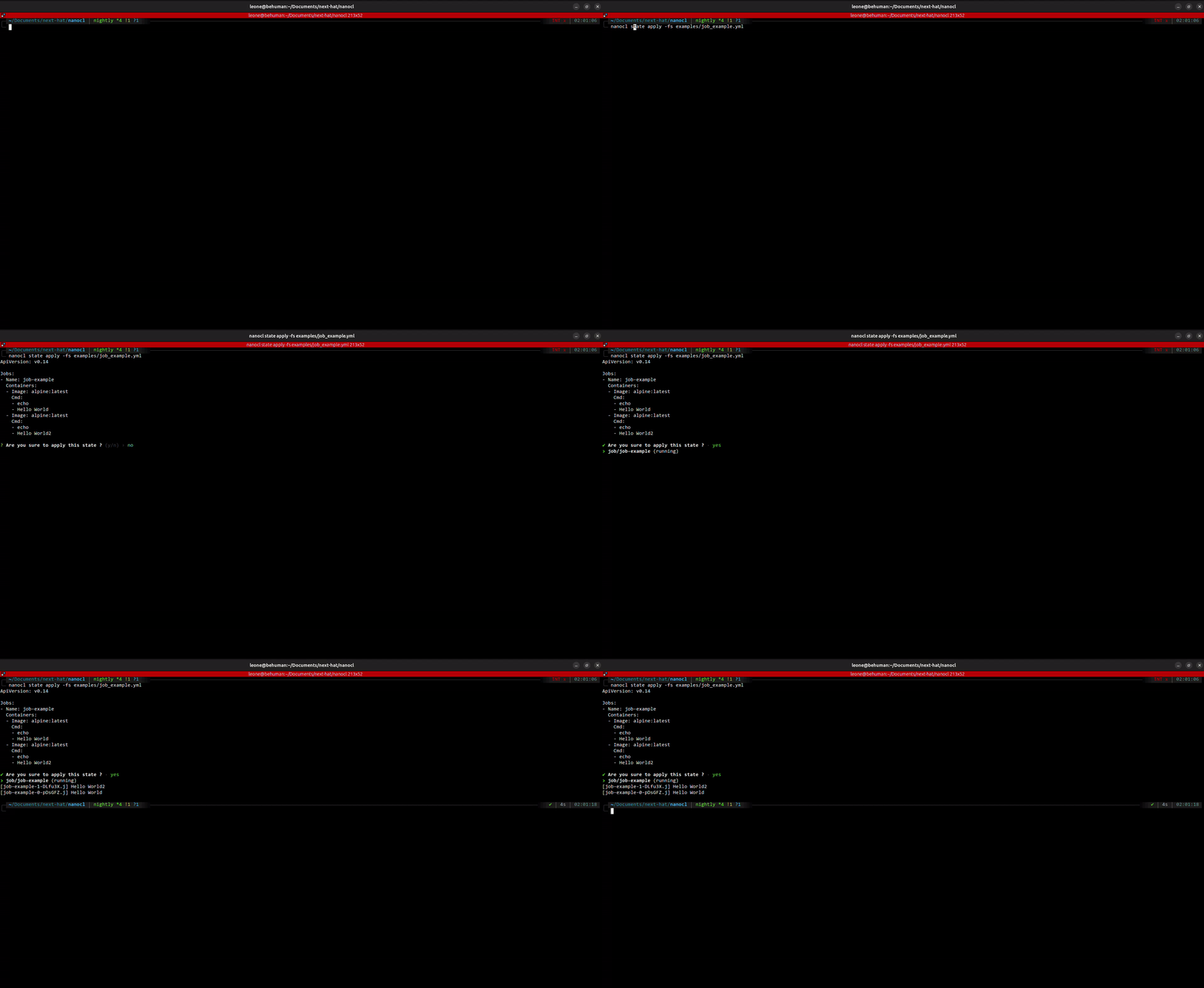
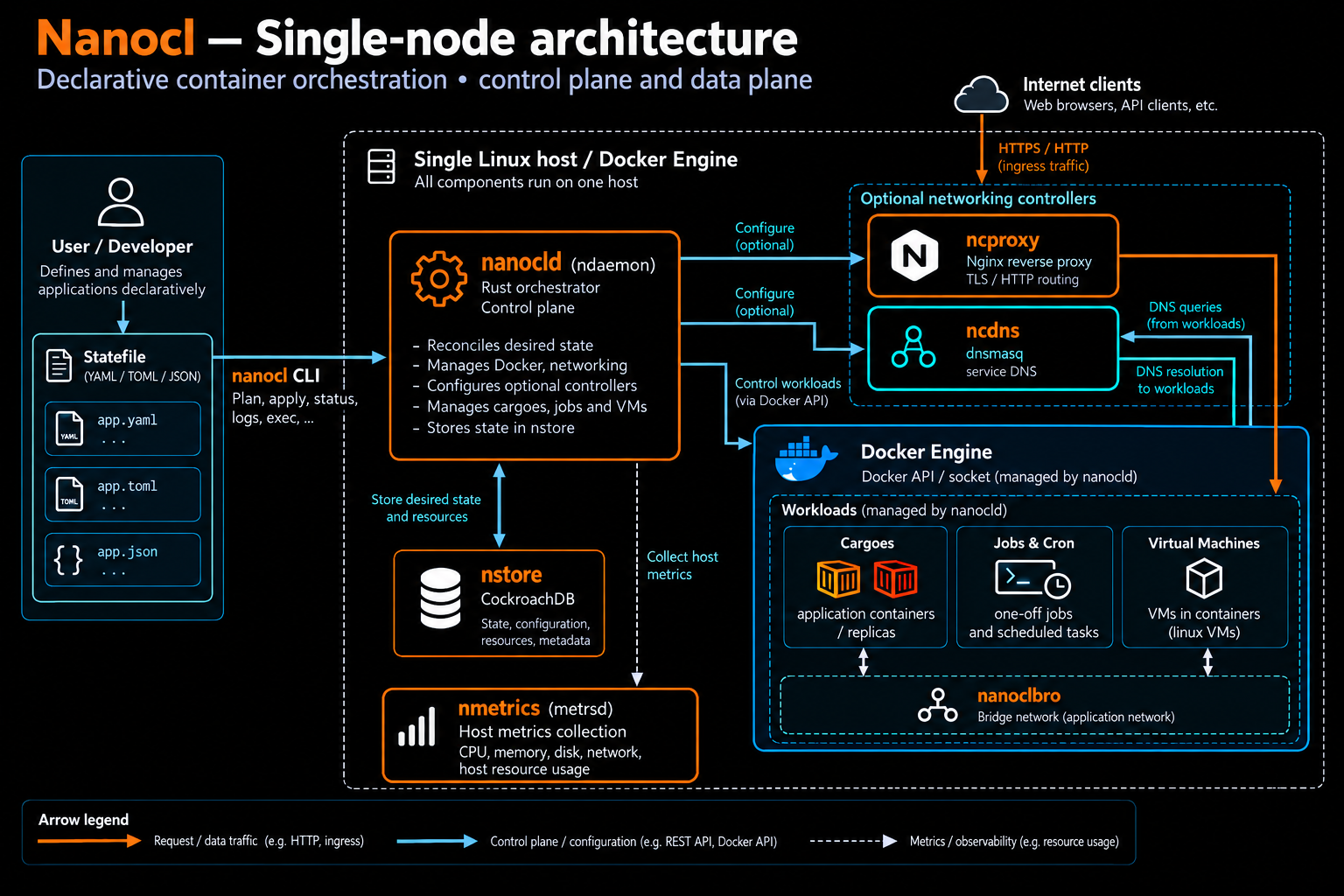
One server, treated properly: Nanocl runs your containers and full virtual machines from a single declarative Statefile, reconciling what is running against what the file says, so a lone host gets cluster discipline without cluster ceremony. Containers group into Cargoes with replica counts, ordered init containers, and health-aware restarts; finite jobs run to completion and stop. When a workload needs a real kernel or a custom disk image, it boots as a QEMU virtual machine beside the containers instead of forcing a second platform. Publishing is built in: the proxy controller terminates TLS and routes HTTP and TCP traffic, and the DNS controller keeps service names resolving while workloads come and go. Secrets for registries, certificates, and environment variables attach where they are used, never inside the file itself. The daily loop is a CLI and an API: list processes, follow logs, exec into a container, watch events, and back up the entire deployment state before you change it. Namespaces keep projects apart on the same host, and Statefile arguments, templates, and sub-states carry one definition from staging to production. Running on a dedicated VPS on RepoCloud with guaranteed CPU, RAM, and SSD, full root SSH access, and a browser serial console. MIT or Apache-2.0 licensed.
Benefits
- Containers And VMs Together
- One tool supervises Docker containers and QEMU virtual machines side by side, so legacy workloads needing full kernels and modern services share a single operational model.
- Whole Deployment In One File
- Statefiles keep workloads, proxy rules, DNS, and secrets together in YAML, TOML, or JSON, so the entire deployment is reviewable in Git and reproducible anywhere.
- Cluster Discipline, Single Server
- Replicas, init containers, health-aware restarts, namespaces, and controlled updates bring orchestration discipline to one node without Kubernetes control planes or multi-node operations.
- Routing And DNS Built In
- The proxy and DNS controllers publish services with TLS termination and dynamic rules, removing the separate reverse proxy and service discovery layers small deployments usually bolt on.
Features
- Declarative Statefiles
- YAML, TOML, or JSON files describe Cargoes, VMs, jobs, and resources; the daemon continuously reconciles the node with the declared state.
- Cargo Workloads
- Named containers are grouped into replicated Cargoes with ordered init containers, readiness handling, restarts, history, and controlled rolling updates.
- QEMU Virtual Machines
- VMs run inside managed runtime containers with local disk images, optional provisioning init containers, DHCP, and console access.
- Proxy And DNS Controllers
- ncproxy routes HTTP and TCP traffic through Nginx with TLS, while ncdns maintains dnsmasq rules that follow workload changes.
- Secrets And Namespaces
- Environment, registry, and TLS secrets scope to a Cargo or a single container, and namespaces isolate projects sharing one host.