Astrum Repository
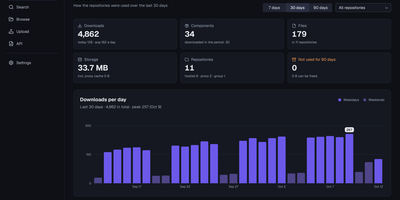
One server can hold every package your builds pull, publish, and cache, so the team stops juggling a different registry for every language. Astrum Repository hosts your own artifacts, proxies public registries so builds keep working when an upstream is down, and groups both behind a single address your tools already understand. Thirty-nine formats share that address: Docker and OCI images, Maven, npm, PyPI, Cargo, Go modules, Helm charts, NuGet, Terraform modules, APT and Yum packages, Hugging Face models, browser extensions, Git LFS, and even remote caches for Nx and Turborepo. Blob storage grows with you, moving between disk, S3, and agent-connected stores that combine into groups without relocating data. Access stays deliberate through users, roles, privileges, and content selectors, with LDAP and OpenID Connect sign-in and access tokens minted for CI pipelines. Day-to-day operations are visible rather than guessed: health endpoints, Prometheus metrics, scheduled tasks, cleanup policies, audit trails, and backups are built in, and several servers can share one database when a single node is no longer enough. The web interface speaks twelve languages, so a platform team spread across regions still works in one console. Running on a dedicated VPS on RepoCloud with guaranteed CPU, RAM, and SSD, full root SSH access, and a browser serial console. MIT licensed.
Aegra
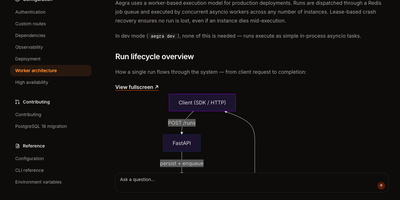
Aegra runs your LangGraph agents on your own infrastructure with the same SDK and APIs you would use on the managed platform, so moving in does not mean rewriting your agents. You deploy an agent once and clients connect through Agent Chat UI, LangGraph Studio, or CopilotKit, while threads, runs, and checkpoints persist between sessions instead of vanishing when a process restarts. Streaming answers arrive token by token over server-sent events, and if a connection drops, the stream reconnects and replays missed events rather than losing the run. Human-in-the-loop gates pause an agent at the step you choose, wait for a person to approve or edit, and then resume from exactly that state. Scheduled cron jobs trigger runs on standard or seconds-level expressions with timezone support, which turns agents into recurring workers for reports, checks, and follow-ups. When traffic grows, Redis-backed workers process runs with lease-based crash recovery, so a dead worker's job is picked up instead of disappearing. Authentication handlers plug in JWT, OAuth, or Firebase, custom endpoints sit beside the agent API, and traces fan out to the observability backend you already run. Running on a dedicated VPS on RepoCloud with guaranteed CPU, RAM, and SSD, full root SSH access, and a browser serial console. Apache-2.0 licensed.
SQL Chat
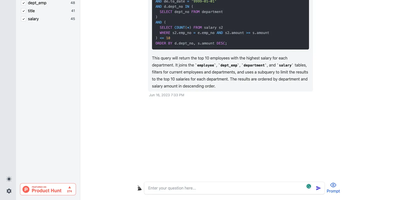
Describe what you want in plain language and get real SQL against your real schema: SQL Chat is an open-source, chat-based SQL client from the Bytebase team. Instead of writing queries in a traditional editor, you connect a database and describe what you want in plain language; the AI reads your schema automatically, generates SQL that references real table and column names, executes it, and returns tabular results in the conversation. Follow-up messages refine the query, so exploration becomes a dialogue - narrow a result set, add a join, change an aggregation - without retyping statements. It supports MySQL, PostgreSQL, SQL Server, TiDB Cloud, and OceanBase from one interface, and covers modification as well as reads: insert, update, and delete operations phrased conversationally. Built with Next.js and TypeScript, it deploys as a single stateless Docker container in single-user mode - connection profiles live in the browser, so there is nothing server-side to maintain. A custom AI endpoint setting routes inference through any OpenAI-compatible API, including self-hosted models, and an optional database-backed mode adds accounts and quotas for offering the tool to a team. MIT-licensed.
Tabularis
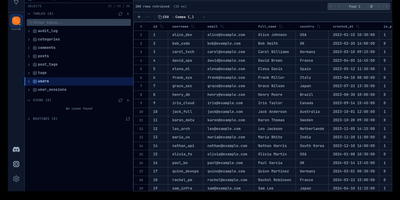
Instead of installing a different client for every database engine on your servers, Tabularis gives you one SQL workspace in the browser that speaks to PostgreSQL, MySQL, MariaDB, and SQLite directly, and to 26 more engines through installable driver plugins. The SQL editor autocompletes real table and column names as you type, runs multi-statement batches into separate result tabs, and can draw any result set as a bar or line chart. Notebooks mix executable SQL cells with Markdown and charts, sharing variables across cells for repeatable reports and investigations. You can edit rows inline in a virtualized grid that tracks pending changes before committing, build queries by dragging tables onto a canvas that writes the SQL for you, and generate an ER diagram from the live schema to see how everything connects. Natural-language prompts turn into SQL through OpenAI, Anthropic, Ollama, or any compatible endpoint you configure. Results export to CSV, JSON, or Markdown, whole databases dump to SQL files, and scheduled daily backups keep copies without manual effort. Connections reach databases through SSH or Kubernetes tunnels, and the built-in MCP server lets agents like Claude and Cursor inspect schemas and run queries under your control. Running on a dedicated VPS on RepoCloud with guaranteed CPU, RAM, and SSD, full root SSH access, and a browser serial console. Apache-2.0 licensed.
JSON Crack
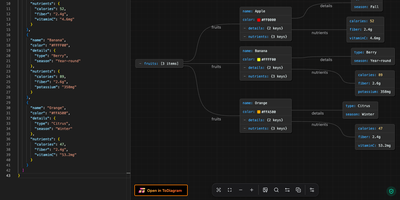
Deeply nested JSON stops being a wall of braces once JSON Crack, a free visual editor, renders it as an interactive graph you can zoom, search, and export. Paste or type JSON, YAML, XML, or CSV, and Live Transform redraws the graph on every keystroke while a validity badge flags syntax errors. Flip between graph and tree views, rotate the layout from left-to-right to top-to-bottom, collapse branches, and jump between matches with node search. Dark and light themes suit any screen. Import a file or point the editor at a remote URL, then export the picture as PNG, JPEG, or SVG with a custom or transparent background, or copy it straight to the clipboard. The Tools menu runs jq and JSONPath queries, validates data against a JSON Schema, and generates TypeScript, Go, Kotlin, Rust, or JSON Schema definitions from your sample. Teams can embed the viewer through an iframe widget, a postMessage API, or the jsoncrack-react component. Everything is parsed in the browser, so sensitive payloads stay on the device. Developers use it to untangle API responses, review configuration files, and explain data structures to colleagues. Running on a dedicated VPS on RepoCloud with guaranteed CPU, RAM, and SSD, full root SSH access, and a browser serial console. Apache-2.0 licensed.
DbGate
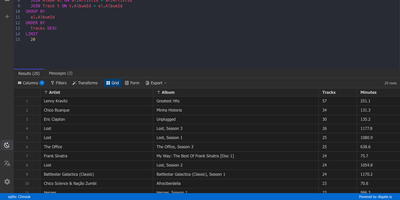
One browser tab can hold every database you manage, from MySQL and PostgreSQL to MongoDB and Redis, so there is no separate client to install for each engine. Connections are unlimited, and each can use its own SSH tunnel or SSL certificates. Tables open in an Excel-like grid where you edit cells inline, filter rows with expressions, and sort by any column. The SQL editor offers schema-aware code completion, a formatter, a join helper that builds clauses from foreign keys, query parameters, and a history of past runs, while result sets appear in separate tabs that you can filter, sort, and export. ER diagrams chart tables and their relations. The table editor creates columns, keys, and indexes and previews the SQL before anything is applied. Import and export move data between databases and files as SQL, CSV, JSON, XML, NDJSON, Excel, DBF, or YAML. Administrators can preconfigure connections through environment variables, mark them read-only, and protect the interface with logins that carry per-user permissions. Light and dark themes, customizable keyboard shortcuts, and translations into many languages keep daily work comfortable. Running on a dedicated VPS on RepoCloud with guaranteed CPU, RAM, and SSD, full root SSH access, and a browser serial console. GPL-3.0 licensed.
AIHelms
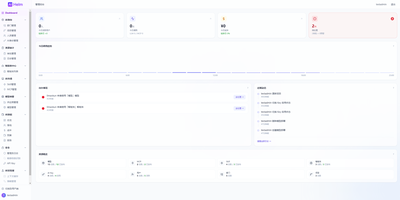
Every employee gets one AI key, and every dollar of model spending gets a name next to it. AIHelms is an admin console and user portal that sits in front of your model providers, so a team can use Claude, DeepSeek, GPT, and local models through one entry point, with IT keeping control. Administrators onboard providers, publish models, and balance traffic across several deployments of the same model, with both OpenAI and Anthropic request formats accepted. Each AI identity carries a model allow-list, quota, rate limits, and an expiry date. Budgets can be set per person, department, project, or model, with soft alerts and hard cut-offs. Internal settlement prices sit beside real provider costs, so departments can be billed with or without a markup. Dashboards show adoption, daily calls, token use, and top users, and weekly or monthly efficiency reports drill down by department. A built-in marketplace registers, approves, and distributes MCP servers and agent Skills, and an AI policy scan flags risky Skills before anyone installs them. Audit logs record every administrator action. Employees see their key, endpoint, models, and monthly spend in the portal. Running on a dedicated VPS on RepoCloud with guaranteed CPU, RAM, and SSD, full root SSH access, and a browser serial console. GPL-3.0 licensed.
GoatCounter
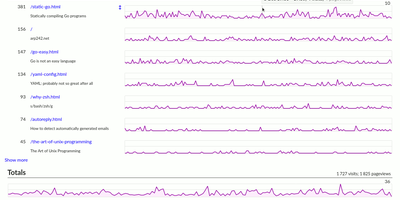
GoatCounter delivers meaningful web traffic insights — pageviews, referrers, browsers, screen sizes, country-level geolocation — without setting a single cookie, without collecting personal data, and without forcing GDPR consent banners on your visitors. Written entirely in Go and distributed as a single compiled binary consuming roughly 25MB of RAM, it adds just 3.5KB to your pages via the tracking script, with a JavaScript-free tracking pixel alternative for sites that avoid scripts entirely, plus backend middleware integration and log file import for server-side collection. The dashboard displays pageview counts per path with hourly resolution, referrer sources grouped by domain with full URL on hover, browser and OS version breakdowns, screen size distributions, and country-level location data derived from IP addresses that are immediately discarded after geolocation. Campaign tracking supports UTM parameters and custom data attributes. A public stats option exposes your dashboard at a shareable URL for build-in-public transparency. SQLite serves as the default database requiring zero administration, while PostgreSQL handles higher-traffic deployments with multi-site setups. Built-in ACME and TLS certificate management eliminates reverse proxy requirements for HTTPS — no Nginx or Caddy needed. The REST API provides programmatic access to all analytics data. Deploy as a single binary, via Docker with the official arp242/goatcounter image, or through native packages. Running on a dedicated VPS on RepoCloud with guaranteed CPU, RAM, and SSD, full root SSH access, and a browser serial console. EUPL-1.2 licensed.
OpenTutor
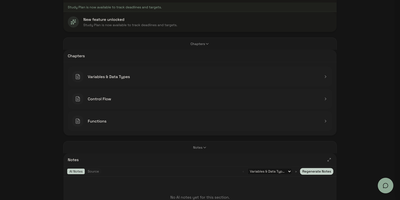
Your lecture slides go in one end, and a personal tutor who has actually read them comes out the other: OpenTutor turns uploaded course material into structured notes, flashcards, quizzes, and a chat tutor that answers from your own documents. Drop in a PDF, DOCX, or PPTX file, or connect Canvas LMS, and within seconds the workspace fills with generated study material organized into twelve composable blocks you can rearrange as your habits change. Ask the tutor questions and every answer cites the source material it came from, with a Socratic mode that prods you toward the answer and depth that adjusts when your replies show fatigue or repeated mistakes. Practice with seven question types, from multiple choice and fill-in-blank to matching, ordering, and coding, and wrong answers are tracked with diagnostic feedback that reshapes later difficulty. Flashcards return on an FSRS 4.5 spaced-repetition schedule tuned to what you are about to forget, and an experimental knowledge graph maps concept mastery, prerequisites, and weak spots into a learning path. Plan study sessions on the calendar, watch progress in analytics, export your work, and connect ten or more LLM providers or a local Ollama model so your documents never have to leave your server. Running on a dedicated VPS on RepoCloud with guaranteed CPU, RAM, and SSD, full root SSH access, and a browser serial console. MIT licensed.
Clawboo
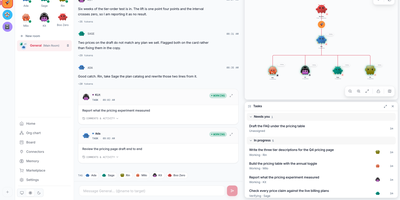
Describe the outcome once, in plain language, and a small crew of AI agents divides the work between them and reports back in the same chat. You type the request in the team chat; Boo Zero, the team lead, splits it into jobs on a shared board and hands each card to the teammate best placed to do it. Teammates run on Claude Code, Codex, Hermes, OpenClaw, or Clawboo's built-in runtime, and one team can mix them freely, so the researcher, the writer, and the coder can each work on their strongest tool. You follow every card live on the board and in the chat, watch the team graph to see who is doing what, and add a reviewer agent when a second pair of eyes matters. Finished work returns to Boo Zero, which pulls the pieces together and answers you in the chat. Ready-made teams from the marketplace cover marketing squads, dev teams, and research crews, and you can bring an API key from Anthropic, OpenAI, OpenRouter and more, a free local model through Ollama, or your ChatGPT subscription through the Codex CLI. Spend is tracked per team with budget warnings before costs surprise you. Running on a dedicated VPS on RepoCloud with guaranteed CPU, RAM, and SSD, full root SSH access, and a browser serial console. MIT licensed.
Doccano
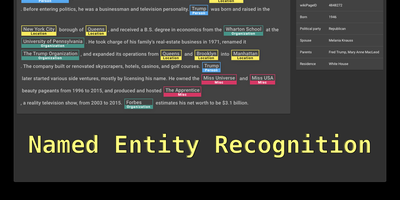
Doccano is a text annotation platforms for building machine learning training datasets. The web-based interface supports text classification for sentiment analysis and document categorization, sequence labeling for named entity recognition with overlapping entity support and relation extraction between labeled spans, and sequence-to-sequence annotation for text summarization and machine translation pairs. Collaborative annotation enables multiple annotators to work on the same project simultaneously with per-user progress tracking, annotation guidelines, example assignment to specific members, and filtering by assignee. Auto-labeling integrates with external machine learning model APIs through configurable request and response mapping templates, allowing pre-annotation that annotators can review and correct. Data import accepts plain text, JSONL, CoNLL, and Excel formats, while export produces JSONL and CoNLL datasets compatible with spaCy, Hugging Face Transformers, PaddleNLP, and other training frameworks through the doccano-transformer library. The Django backend with Django REST Framework exposes a complete RESTful API for programmatic project creation, dataset management, and annotation retrieval via the official doccano-client Python library. Celery handles background tasks including dataset import and export processing with Flower providing task monitoring. One-click deployment supports AWS CloudFormation and Heroku alongside Docker Compose for self-hosted environments. Running on a dedicated VPS on RepoCloud with guaranteed CPU, RAM, and SSD, full root SSH access, and a browser serial console. MIT licensed.
JadeAI
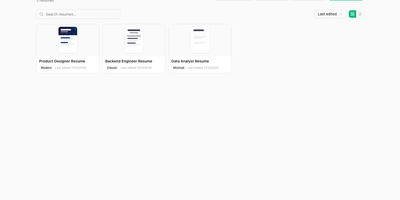
JadeAI is a self-hosted resume builder that pairs a clean drag-and-drop editor with AI help for writing, polishing, and tailoring every application. Pick from 50 templates, then adjust colors, fonts, spacing, and margins in a live preview, with undo and redo keeping every experiment reversible. Paste a job description to get a keyword match, an ATS score, and concrete suggestions, then generate a cover letter in a formal, friendly, or confident tone. A grammar check flags weak verbs and vague claims, a translation tool converts the whole resume into ten languages, and an in-editor chat assistant rewrites sections on request. Upload an existing PDF or image and the AI extracts every field for you. Practice with six preset interviewers, from HR to technical to leader, then review a scored report with a competency radar and an improvement plan. Export to PDF, one-page PDF, DOCX, HTML, TXT, or JSON, and share a link with an optional password and a view counter. Every user brings their own OpenAI, Anthropic, or compatible API key. Running on a dedicated VPS on RepoCloud with guaranteed CPU, RAM, and SSD, full root SSH access, and a browser serial console. Apache-2.0 licensed.
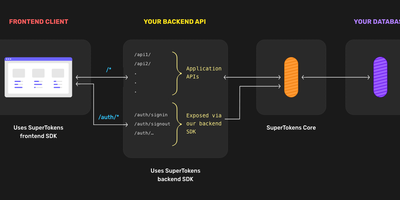
Supertokens Core
Authentication that lives inside your application rather than behind a redirect to an external identity provider - SuperTokens takes a fundamentally different architecture from Auth0 and AWS Cognito. Three tiers make that work - frontend SDKs (React, Angular, Vue, vanilla JS, React Native) render overridable login UI and manage tokens; backend SDKs (Node.js, Python, Go) expose auth endpoints on your own API domain; and SuperTokens Core, the piece you host here, is the stateless HTTP service handling core auth logic, password hashing, token signing, and database operations against PostgreSQL. The recipe system keeps features decoupled: use email/password, social login, passwordless (magic links, OTP), phone-password, multi-factor authentication (TOTP, WebAuthn), user roles, and microservice auth - individually or combined; you can even use SuperTokens purely for session management alongside another login provider. Sessions are where it shines: rotating refresh tokens with theft detection, automatic access-token refresh, CSRF protection, and secure cookie handling out of the box - the details that become vulnerabilities when hand-rolled. Verification happens locally in your backend via cached JWT signing keys, so the Core stays off the hot path. Self-hosted means no user limits, free forever, with all user data in your database. Apache-licensed.
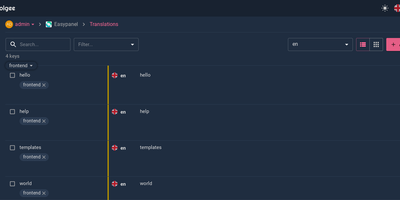
Tolgee
Hold Alt/Option, click any string in your running app, and edit the translation in place: Tolgee is an open-source localization platform built the way developers wish translation worked - changes save straight to the platform with no hunting through JSON or PO files. In-context editing works even in production via the Tolgee Tools browser extension, which injects credentials without touching source code, so a client or colleague with zero coding skills can translate the product inside the product. The SDKs (React, Angular, Vue, Svelte, plus iOS and Android) extract context from each UI element and capture one-click screenshots, giving both human translators and machines the surrounding meaning that raw string files lose. Autonomous translation uses that context: new keys are instantly filled from translation memory or machine translation (DeepL, Google Translate, AWS Translate), with optional human review afterward - shipping no longer waits on a translation agency. A CLI handles import/export, a REST API covers automation, a Figma plugin bridges design, and an MCP server lets AI coding assistants search keys, create translations, and trigger machine translation without leaving the editor. Self-hosting this Crowdin/Phrase/Lokalise alternative keeps every string, screenshot, and API key on your infrastructure.
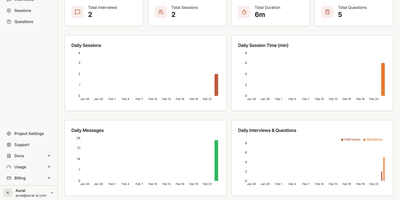
Aural
Aural runs the interview for you: describe the role in plain language, share one link, and its AI conducts the whole conversation with each candidate. The generator turns your brief into a complete interview with questions, assessment criteria, and recommended settings, or you build the flow yourself in the editor. Candidates join by chat, voice, or video, and the interviewer adapts in real time, adjusting follow-up depth, tone, and direction as answers develop. Technical rounds run inside the session with a full code editor for live programming questions and a whiteboard for sketching designs. Anti-cheating controls watch for tab switches, blocked external paste, and extra monitors, logging every event into a per-session integrity report. When the session ends, an AI report scores each question, pulls highlights, and names the areas to improve. Teams manage organizations, projects, and role-based access, invite candidates individually, in spreadsheet batches, or by parsing uploaded resumes, and rehearse with a practice mode that gives spoken feedback after every answer. Interviews speak English and Chinese, and the platform connects to the language model provider you already use. Running on a dedicated VPS on RepoCloud with guaranteed CPU, RAM, and SSD, full root SSH access, and a browser serial console. MIT licensed.
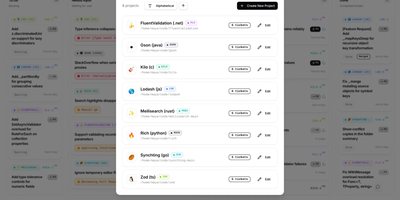
LoopTroop
Big coding tickets fall apart inside one endless AI chat, so LoopTroop splits each into stages with fresh, minimal context and ends in a pull request. A council of two to ten models drafts, scores, and votes on each plan, beginning with interview questions that reach you in adaptive batches. The winner refines its draft into a PRD of epics and user stories. That PRD is cut into beads, small tasks with acceptance criteria, target files, and validation steps. Each bead runs in OpenCode inside an isolated Git worktree, so your checked-out branch stays clean. During a bead the agent sees only that task, its target file, and the test file. When a bead fails, the Ralph Loop keeps a compact error trace, resets the worktree, and retries in a fresh session, so tickets can run unattended overnight. You approve specs, blueprints, and the final changes at human gates. Optional Manual QA hands you a checklist for the running app and turns failures into fix beads. A dashboard shows council progress, generated artifacts, live logs, and bead changes. Free-tier models from OpenRouter, NVIDIA NIM, or OpenCode let you start without paid API keys. LoopTroop collects no telemetry, and the project recommends a disposable VM because the agent runs with your permissions. Running on a dedicated VPS on RepoCloud with guaranteed CPU, RAM, and SSD, full root SSH access, and a browser serial console. MIT licensed.
Meshlan
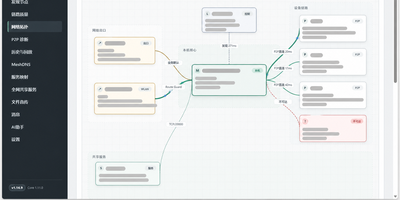
Meshlan turns your own Linux server into the control plane for a private virtual LAN that connects remote Windows devices as if they sat on the same router. Devices pair through your server, receive their certificates, and then talk directly to each other over encrypted tunnels whenever NAT allows, using dual-stack hole punching, UPnP, and STUN diagnostics to find a path. When a direct connection is impossible, traffic falls back to relays, and multiple relay nodes are chosen automatically by latency, jitter, packet loss, and health. You can publish a service that only listens on localhost, a local API, a web panel, a database, a game server, to the mesh on a custom port, with direct access or manual approval by its creator. Names stay stable while addresses change: devices answer to names like alice.mesh and services to api.alice.mesh, and an HTTPS gateway serves mesh websites without port numbers. Files move directly between devices over the encrypted link while the server only distributes metadata. The console shows the live topology with P2P and relay paths, latency, and service health, and local history keeps traffic and events for replay with a time slider. Optional AI automation keeps model keys on the server, encrypts context end to end, and asks for your confirmation before changing anything. Signed updates verify and roll back automatically when a health check fails. Running on a dedicated VPS on RepoCloud with guaranteed CPU, RAM, and SSD, full root SSH access, and a browser serial console. MIT licensed.
AnythingMCP
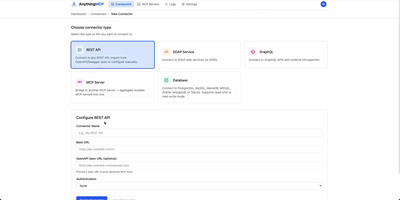
Connecting autonomous AI assistants to internal enterprise databases and legacy systems is streamlined by AnythingMCP, a visual Model Context Protocol gateway with automated knowledge graph generation and granular access controls. Engineers can import OpenAPI specifications, Postman collections, SOAP WSDL files, or raw database credentials to generate standardized Model Context Protocol tools in minutes without writing custom code. The built-in knowledge graph automatically maps entity relationships across disparate databases and software platforms, teaching agents how to correlate customer records in CRM tools with live order histories in enterprise resource planning software. System administrators can enforce fine-grained access policies by restricting tool execution permissions to specific roles and scoping database operations to read-only queries with strict row limits. An interactive web console provides real-time tool inspection, payload testing, request tracing, and comprehensive audit logs that capture every upstream invocation with full parameter visibility. Enterprise teams can integrate identity providers through OAuth2, SAML single sign-on, and SCIM automated user provisioning while protecting sensitive credentials using AES-256-GCM encryption at rest. Running on a dedicated VPS on RepoCloud with guaranteed CPU, RAM, and SSD, full root SSH access, and a browser serial console. GNU AGPLv3 licensed.