ClassicPress
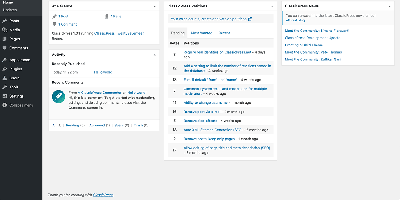
WordPress without Gutenberg: ClassicPress, the community-led fork, keeps the TinyMCE classic editor as the default and strips the block editor and Full Site Editing out of core entirely. The result is roughly half WordPress's size - obsolete libraries like jQueryUI, Thickbox, and Flash support are gone, replaced by native HTML5 elements and modern alternatives like SortableJS - which translates to a measurably faster admin and a leaner attack surface. Forked from WordPress 6.2, it remains compatible with the vast plugin and theme ecosystem targeting that lineage (anything not requiring blocks generally works, helped by a blocks-compatibility mode), and the PHP-first WordPress API developers have used for over a decade works unchanged - no React required to extend your CMS. The fork adds its own improvements: built-in media categories and tags with bulk editing, revision management that lets you prune database bloat, native HTML5 dialogs for accessible touch-friendly menus, and recent releases bring APCu object-cache support, vanilla-JS core widgets, and performant translations. Governance is democratic and community-driven rather than corporate. For content sites, business sites, and blogs where the classic editing workflow is the feature, ClassicPress is stability as a philosophy.
iTop
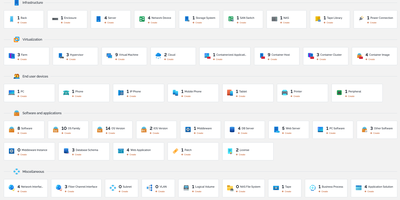
Keep every ticket tied to the servers, applications, and contracts it affects with iTop, an IT service management platform that joins a configuration management database (CMDB) to a helpdesk. Agents work user requests, incidents, problems, known errors, and changes through ITIL-style life cycles, and SLA targets for time to own and time to resolve move a ticket to an escalated status when a deadline passes. The CMDB models infrastructure, virtualization, end-user devices, software, and business applications, and its impact analysis graph shows what a failing server would take down. A service catalog of services and subcategories, backed by customer and provider contracts, feeds a user portal where employees and customers submit requests from a mosaic, tree, or list, follow progress, add comments and attachments, and reopen resolved tickets. Administrators bulk-load inventory from CSV, run consistency audits to catch data-quality problems, synchronize records from external sources, and connect other tools through REST web services. Sign-in works with local accounts, LDAP, or CAS, with optional two-factor authentication through authenticator apps, email codes, or recovery codes, and the console offers dark, high-contrast, and color-blind-friendly themes. Running on a dedicated VPS on RepoCloud with guaranteed CPU, RAM, and SSD, full root SSH access, and a browser serial console. AGPL-3.0 licensed.
OpenTickly
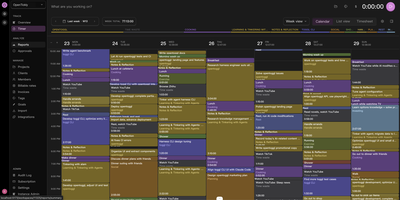
OpenTickly is a self-hosted Toggl alternative that keeps your timers, projects, clients, and reports on infrastructure you control, so tracking time does not mean renting access to your own work history. Start the timer from the web app or an installable mobile PWA that works offline, then review the week in a color-coded calendar, switch to list or timesheet views, or open reports to see where hours actually went. Projects, clients, tags, billable rates, invoices, goals, and favorites organize entries the way agencies and freelancers already work, with team activity, top projects, and time-by-project panels on the admin overview. Because the public API mirrors Toggl Track v9 and Reports v3, existing scripts, integrations, and reporting jobs carry over, and coworkers can move their Toggl data in or back out without losing entries. The generous API also suits AI workflows: pair it with toggl-cli and an agent can track, organize, and review your time for you, then combine it with the Lyubishchev method to spot time waste across learning, social, rest, and work categories. Approvals, an audit log, integrations, and instance administration round out team operations, and seat limits, per-user fees, and usage caps simply do not exist here. Running on a dedicated VPS on RepoCloud with guaranteed CPU, RAM, and SSD, full root SSH access, and a browser serial console. AGPL-3.0 licensed.
CodeX Docs
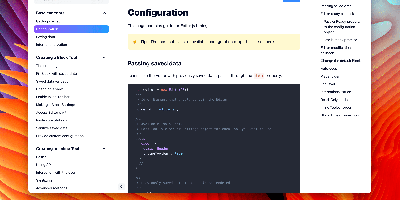
Writing docs should feel like editing a modern document, not wrangling Markdown files - CodeX Docs delivers that on Editor.js, the block-styled editor its CodeX team builds and thousands of products use. Content is composed from clean blocks (headings, lists, code, images, embeds) with a UI that reads well on both desktop and mobile, and pages render statically with human-readable, SEO-friendly URLs. Structure is free-form: pages nest to any depth, so a flat FAQ and a deep product manual coexist in one instance, and the UI tunes to fit - collapse sections, hide the sidebar. The operational footprint is deliberately tiny. No database is required: the default driver persists to a local folder, with MongoDB available when you want it, and the whole app configures through one YAML file (overridable with APP_CONFIG_ environment variables) covering title, start page, auth password, and JWT secret. Editing mode sits behind password authentication. Thoughtful extras are wired in: readers can report misprints straight to your Telegram or Slack, Hawk error tracking catches frontend and backend exceptions, and Yandex Metrica analytics is a one-line config. A ready-made Helm chart covers Kubernetes. Written in TypeScript.
stella
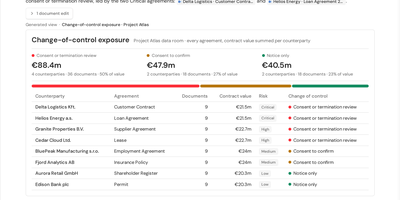
A legal team's matters, documents, and research can finally live in one tab that an AI agent can read. stella organizes work into matters, each with a file list showing author, version, status, and notes, plus correspondence and custom lists. Ask the agent about a whole data room and it replies with cited document chips and can turn the answer into a generated view for the partner meeting. Tabular Review pulls structured answers out of dozens of contracts into a table with status pills, due dates, and document types, ready to export as CSV, XLSX, or DOCX. A browser editor opens .docx files with version history, review, and anonymization panels, and a template library speeds up supply, lease, and share purchase agreements. The legal database covers court decisions, with search by case number or keywords and questions answered from the paragraphs of a judgment. Timesheets, contacts, and an inbox sit in the same sidebar, and an MCP server opens stella data to other agents. Running on a dedicated VPS on RepoCloud with guaranteed CPU, RAM, and SSD, full root SSH access, and a browser serial console. Apache-2.0 licensed.
Windshift
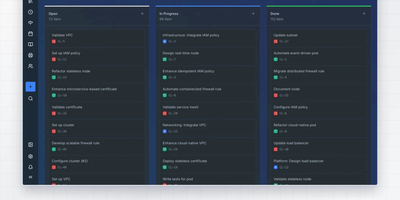
Windshift packs boards, sprints, roadmaps, test runs, time tracking, and a customer portal into one open-source tracker that replaces Jira on a server you control. Epics, stories, and sub-tasks form a hierarchy you can view as a board, list, tree, or map, and backlog items drag into dated sprints. The roadmap stretches across weeks, months, or quarters, and milestone pages show completion percentage with a status breakdown. Each workspace defines its own item types, custom fields, screens, statuses, priorities, workflows with conditions and approvals, and permissions, while JQL-style queries save as shared views. Event-driven rules update fields, notify people, and create work. Customers file requests through a public portal, and your team works them through queues with SLAs and approvals. Reusable test cases roll into test runs with success rates, and timers log billable and internal hours against projects and customers. GitHub, GitLab, Gitea, and Forgejo connections put branches and pull requests on the work item, and the importer brings over Jira projects, comments, attachments, and worklogs. A knowledge base and an asset register keep documentation and inventory next to the work. The interface speaks nine languages, including right-to-left Arabic, and sign-in supports OIDC single sign-on and passkeys. Running on a dedicated VPS on RepoCloud with guaranteed CPU, RAM, and SSD, full root SSH access, and a browser serial console. AGPL-3.0 licensed.
PrintStash
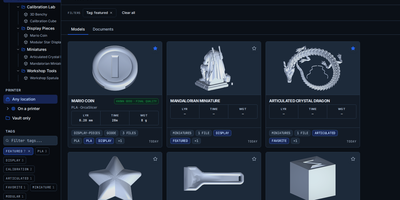
Every printing household eventually drowns in files named final_v3_REAL.gcode, and PrintStash is the library that brings order to your models, G-code, and print history. Upload STL, 3MF, OBJ, STEP, and other formats directly, or point it at a folder or NAS share and let it index everything in place without overwriting originals. Each model page pairs a 3D preview with its recommended G-code, the slicer settings behind it, and one-click actions to open files in your slicer. Revisions carry needs-test and known-good labels, so the version that printed beautifully is never confused with the experiment that delaminated. Connected printers report live temperatures and progress, accept sent G-code, and take queued copies across printer groups, with material or nozzle mismatches blocking automatic routing before they waste filament. Print outcomes feed time and cost tracking per model, and an optional Spoolman integration keeps filament inventory honest. Collections, tags, filters, favorites, and saved views keep a growing vault browsable, and optional AI search with local models finds models by description. Verified backups, file audits, trash recovery, user permissions, API keys, and OIDC single sign-on round out the administration side. Running on a dedicated VPS on RepoCloud with guaranteed CPU, RAM, and SSD, full root SSH access, and a browser serial console. AGPL-3.0 licensed.
Zusam
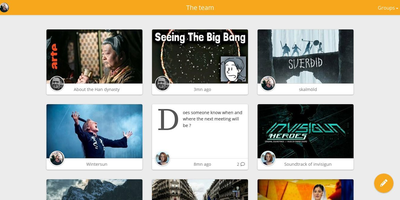
From the German "zusammen," together: Zusam is a private social space for a group of friends - a self-hosted alternative to the family WhatsApp group or the friends Facebook group, with no ads, algorithms, or data harvesting in between. The AGPLv3 project is deliberately modest in scope and stack: a Symfony PHP backend exposing a REST API over SQLite, with a lightweight Preact single-page frontend, designed for a low server footprint that runs comfortably on small hardware. Groups post messages into shared feeds that handle real life well: video and image uploads (with FFmpeg processing), photo albums for trips and events, and rich link previews with inline embeds for YouTube, Vimeo, Imgur, SoundCloud, Twitch, and Bandcamp - so sharing a song or a clip looks the way it should. When something needs to leave the circle, public link generation exposes a single message to non-members without opening the group. The interface is fully responsive and mobile-friendly, targeting Firefox ESR and recent Chrome. It is the small-web answer to a real question: where does a group chat's shared history live when you want it owned by the group instead of a platform?
FreeITSM
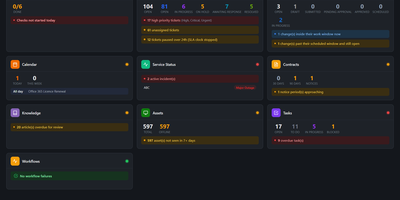
Run an entire IT service desk without paying per seat: FreeITSM turns email, chat, and portal requests into tickets and keeps assets, knowledge, changes, and projects in the same place. The inbox looks like Outlook, with folders by department or team, SLAs, canned replies, internal notes, time entries, and bulk actions. Messages arrive from Microsoft 365, Gmail, IMAP, WhatsApp, Telegram, Slack, Microsoft Teams, Mattermost, and an embeddable web chat widget. A Watchtower dashboard shows what needs attention across every module at a glance. Asset records collect hardware, software, storage, contracts, and lease dates, and a CMDB maps servers, databases, applications, and services. Change management tracks approvals and scheduled work windows, and a shared calendar covers on-call rotas and maintenance. Tasks run on a Kanban board with list, calendar, and timeline views, and projects add health rings and plans. Staff publish knowledge articles in folders with tags, and end users get a portal with a request catalogue. Optional AI features, using your own keys or a local model server, clean up replies and answer questions from the knowledge base. Running on a dedicated VPS on RepoCloud with guaranteed CPU, RAM, and SSD, full root SSH access, and a browser serial console. MIT licensed.
OpenRouteService
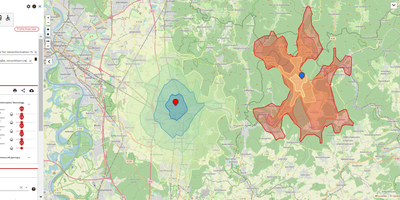
OpenRouteService gives applications driving directions, reachable-area polygons, and origin-destination travel times computed from OpenStreetMap data on hardware you control, with no metered API key. Ask for a route and it answers with turn-by-turn instructions, distance, duration, and elevation gain for cars, heavy trucks, several cycling styles, walking, hiking, and wheelchairs. Draw an isochrone and the map fills with the area reachable inside five, fifteen, or sixty minutes, ready for site selection, delivery zones, and coverage studies. The matrix endpoint prices every pairing in a grid of origins and destinations in one request, so fleet tools and location analytics stop making thousands of single calls. Steer results with avoid areas, controlled borders, tollways, ferries, and road classes, with per-request limits on distance and climb. Snap stray GPS points back onto the road network, export the underlying graph for your own network analysis, and watch instance health from the built-in status endpoints. Load the regional OpenStreetMap extract you actually serve, rebuild graphs on your schedule, and every answer stays inside your network at whatever volume your hardware allows. Running on a dedicated VPS on RepoCloud with guaranteed CPU, RAM, and SSD, full root SSH access, and a browser serial console. GPL-3.0 licensed.
Loomio
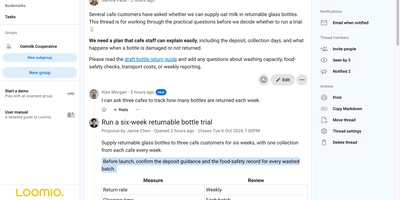
Decisions that scatter across email threads and chat scrollback get one home in Loomio, where a group discusses a question, votes, and publishes what it decided. Every decision starts as a thread with context, comments, @mentions, reactions, tags, and attachments, and tasks inside it carry assignees and emailed due-date reminders. Proposals ask for a defined response plus an optional written reason, using sense check, advice, consent, or consensus templates. Polls handle simple choices, scores, dot voting, ranked choice, meeting-time availability, and multi-winner STV elections. Coordinators set a participation quorum, require a vote share, weight votes, limit voting to appointed delegates, or hide results until close with anonymous voting. Groups nest subgroups, pick Open, Closed, or Secret visibility, and admit members freely, by request, or by invitation. People reply to discussion emails and catch up through a daily digest, and webhook integrations post invitations and outcomes to Slack, Discord, Microsoft Teams, Matrix, and Mattermost. Published outcomes stay searchable, and groups export CSV, HTML, or JSON and print threads to PDF. Comments translate on request, the interface is available in 24 languages, and a user API, server API, and webhooks connect other tools. Running on a dedicated VPS on RepoCloud with guaranteed CPU, RAM, and SSD, full root SSH access, and a browser serial console. AGPL-3.0 licensed.
Aurelio Finance
Your net worth is scattered across banks, brokers, a pension, and a mortgage, and no single screen shows all of it at once. Aurelio Finance gathers those pieces on your own server: record each institution's cash and holdings as dated situations, then let later transactions roll them forward so today's balance always traces back to a photograph of what you held and the events after it. Every position is priced from the market with its cost basis, gain, and dividends, while the look through view opens your ETFs and funds to show real exposure by country, sector, company, and currency, so overlapping funds stop hiding concentration. Recurring investment plans, homes and other real assets, and the loans against them sit beside income, expenses, and your savings rate, and each financial goal shows the return it needs to be reached. When you want a second opinion, Ask Aurelio reads your own records, can search the web, and proposes changes as cards you confirm or reject, never silently editing your data. Its analysis mode goes further, letting an analyst and a confidant argue over your portfolio before a synthesis tells you what to look at first, and surviving ideas land on a watchlist that your totals never count. Running on a dedicated VPS on RepoCloud with guaranteed CPU, RAM, and SSD, full root SSH access, and a browser serial console. MIT licensed.
Zomboid Control Panel
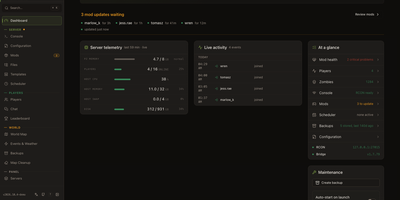
Friends are joining your Project Zomboid server, a mod just broke, and the log is scrolling faster than anyone can read. Zomboid Control Panel puts the fix in a browser tab. Start, stop, restart, and save the server from a dashboard that shows status, uptime, players online, host memory and CPU, disk space, and mods waiting for updates. A setup wizard installs a fresh Build 41 or Build 42 server through SteamCMD, or connects to one that already exists locally or over RCON. The mod manager tracks Workshop items, flags updates, imports Steam collections, scans for file conflicts, duplicate mod IDs, and missing dependencies, and sorts the load order. A structured INI editor covers server settings, sandbox options, spawn points, and regions, with a raw view for power users. Player pages handle kicks, bans, whitelists, access levels, and notes, and the live world map shows who is where. Events and weather controls trigger storms, hordes, and sounds. A scheduler runs timed restarts with countdown warnings, backups keep restorable world snapshots, and a Discord bot relays chat and answers slash commands. Admin, technician, moderator, and custom roles, plus OpenID Connect sign-in, decide who touches what. Community servers with several moderators, friends-only worlds, and hosts managing multiple servers from one panel all fit. Running on a dedicated VPS on RepoCloud with guaranteed CPU, RAM, and SSD, full root SSH access, and a browser serial console. MIT licensed.
LlamaForge
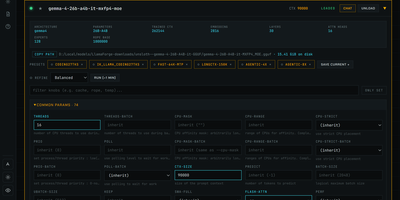
Running local models usually means choosing between a polished app that hides the engine and a terminal full of flags you half remember. LlamaForge refuses the trade: it installs and drives the official llama.cpp release itself, then puts a browser panel over all of it, every one of the 200-plus llama-server flags your build supports, grouped, searchable and editable per model. Before you load anything, each model is drawn into your GPUs at its real footprint, so the out-of-memory surprise happens on screen instead of in a crashed server; before you download anything, every quant on Hugging Face gets a fit rating for your VRAM, FITS, TIGHT or CPU OFFLOAD. Auto-Forge then measures placements, KV cache types and speculative drafters on your own hardware and keeps the fastest configuration, checking that a drafter still produces identical tokens before applying it with one click, and undoing it with one click. Keep several models loaded at once and a planner places each on the GPUs that fit it; when a game launches, Game Mode unloads your models and brings them back when you quit. Chat in llama.cpp's own interface, join from your phone by QR code, duel two models blind in the Arena under an Elo board, and let Embers, small local agents, keep a wiki and write scheduled briefs counting only facts they can quote verbatim. Running on a dedicated VPS on RepoCloud with guaranteed CPU, RAM, and SSD, full root SSH access, and a browser serial console. MIT licensed.
Daptin
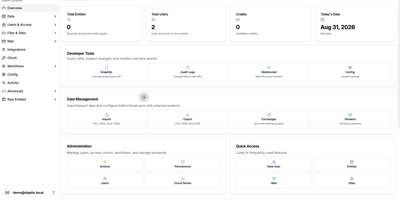
Define your tables once, and Daptin runs the backend around them: every schema becomes a permission-aware JSON:API resource with CRUD, relationships, filtering, and pagination, plus an optional GraphQL surface over the same model. Users, groups, and row-level permissions gate who can read or change each record, with JWT login, one-time codes, and OAuth and OIDC endpoints for sign-in. Files ride along as asset columns backed by local or cloud storage through rclone, with presigned uploads and storage sync. Actions chain validation, conditions, and ordered outcomes into reusable operations, scheduled tasks run them on a cron clock as a chosen user, and state machines track each record's lifecycle with an audit trail. Changes stream out live over WebSockets and feeds, while FTP, calendar and contacts routes, and an OpenAI-compatible LLM gateway expose the same model to other tools. Plans, quotas, and metering let you charge for API and model usage from the same server. Running on a dedicated VPS on RepoCloud with guaranteed CPU, RAM, and SSD, full root SSH access, and a browser serial console. LGPL-3.0 licensed.
CliRelay
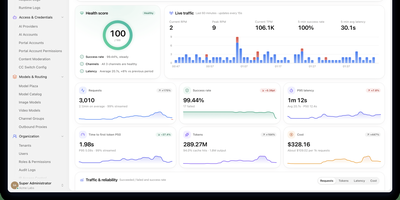
Anyone who pays for Claude Code, Codex, and Gemini CLI separately ends up juggling three endpoints, three sets of keys, and three kinds of rate-limit surprise, and CliRelay collapses all of that into one self-hosted gateway with a control panel. Clients speak the OpenAI Chat or Responses, Anthropic Messages, or Gemini protocol, and CliRelay translates each request for whichever upstream account is healthy. Channel groups limit where each key may send traffic, round-robin, fill-first, and session-sticky scheduling spread it, and cooldowns with automatic failover move requests off accounts that have run out of quota. Add upstreams from the /manage console through browser sign-in, device codes, or bulk credential import, covering Claude, Codex, Gemini, Antigravity, Vertex AI, AWS Bedrock, Grok, Qwen, Kimi, and any OpenAI-compatible service. Portal accounts own client keys with daily, period, and lifetime quotas, RPM and TPM limits, and per-model pricing. A monitor center scores health and charts live traffic, P50 to P99 latency, and time to first token, while every request lands in a searchable log with tokens, latency, and cost. Tenants, roles with resource.action permissions, content moderation profiles, an outbound proxy pool, and an audit trail make shared deployments workable, and the console speaks English, Simplified Chinese, and Russian. Running on a dedicated VPS on RepoCloud with guaranteed CPU, RAM, and SSD, full root SSH access, and a browser serial console. MIT licensed.
Tiny Tiny RSS
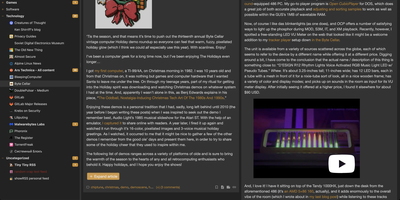
Tiny Tiny RSS is a self-hosted web feed reader that follows hundreds of RSS and Atom subscriptions for you, presenting every new article in a fast three-pane interface you open from any browser. Folders and subfolders organize subscriptions by topic, and the headline list refreshes in place as the background daemon fetches new articles on your schedule. Content filters score, tag, star, or hide articles by author, title, or keywords, so noisy feeds get trimmed before you ever see them. Starred articles, labels, and notes build a personal archive, and anything can be shared again as an exported RSS feed, a public link, or a post sent through social plugins. OPML import brings subscriptions from other readers in a single file, and OPML export carries them back out again just as easily. The JSON API connects mobile and desktop clients, keyboard shortcuts drive the whole interface, and plugins add full-text extraction, image deduplication, podcast handling, and new themes. Several accounts can share one installation, each with private feeds, filters, and preferences, making it practical for a household or a small team. Running on a dedicated VPS on RepoCloud with guaranteed CPU, RAM, and SSD, full root SSH access, and a browser serial console. GPLv3 licensed.
WebThings Gateway
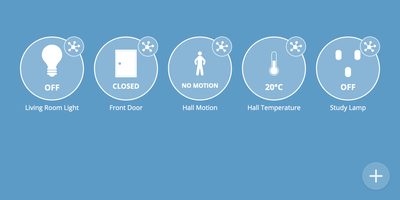
WebThings Gateway is a self-hosted smart home hub that puts monitoring and control of your whole house in one private web interface, with no vendor cloud in the middle. Lights, plugs, locks, thermostats, and sensors appear as live Things you can watch and operate from any browser, at home or remotely through your own server. Devices from different ecosystems meet here: adapter add-ons bridge a wide range of protocols into a standardized Web of Things API, so gear that never spoke the same language shares one dashboard. A drag and drop rules editor automates the house with if-this-then-that logic, turning motion into light, schedules into climate, and events into actions without code. Sensor history is logged and visualized over time, which makes energy use, temperature drift, and occupancy patterns visible instead of guessed. An interactive floorplan lays devices out on a plan of your home for at-a-glance status and control room by room. Add-ons extend compatibility with more devices and protocols as your setup grows, and everything runs locally, so the house keeps working on your terms and your data stays in the building. It installs from a Docker image and serves its interface over the web from your own hardware. Running on a dedicated VPS on RepoCloud with guaranteed CPU, RAM, and SSD, full root SSH access, and a browser serial console. Mozilla Public License 2.0 licensed.