Wag
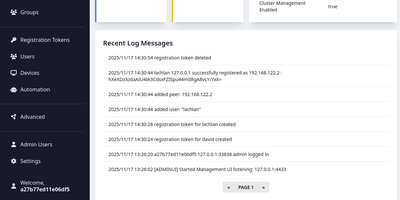
Wag is an authentication gateway for WireGuard that lets each device reach only the routes it should, and asks for a second factor before the sensitive ones open. Admins write access policies for everyone, groups, or single users, marking subnets, hosts, ports, and protocols as MFA-required, always allowed, or denied, and the most specific prefix wins, so one allowed address can sit inside a protected range. Devices join with a registration token, and the public endpoint answers with a finished WireGuard profile. Users then confirm a TOTP code, a WebAuthn security key, an OIDC single sign-on login that maps identity provider groups into Wag groups, or a PAM prompt, and repeated failures lock the account. Session lifetime and idle timeouts decide when they must prove themselves again. The browser portal lists users, devices, rules, registration tokens, and webhooks with real-time notifications, while a command line locks devices, resets MFA, and manages administrators. Webhooks turn JSON from an HR or identity system into new tokens or removed users and devices, and clients can fetch the list of guarded routes from a small API. Remote staff, contractors limited to one host, and homelabs are typical uses. When a server fails, the VPN remains reachable through clustering with witness nodes or an external etcd, and certificates arrive through ACME with HTTP-01 or Cloudflare DNS-01. Running on a dedicated VPS on RepoCloud with guaranteed CPU, RAM, and SSD, full root SSH access, and a browser serial console. BSD-3-Clause licensed.

Nanocl
One server, treated properly: Nanocl runs your containers and full virtual machines from a single declarative Statefile, reconciling what is running against what the file says, so a lone host gets cluster discipline without cluster ceremony. Containers group into Cargoes with replica counts, ordered init containers, and health-aware restarts; finite jobs run to completion and stop. When a workload needs a real kernel or a custom disk image, it boots as a QEMU virtual machine beside the containers instead of forcing a second platform. Publishing is built in: the proxy controller terminates TLS and routes HTTP and TCP traffic, and the DNS controller keeps service names resolving while workloads come and go. Secrets for registries, certificates, and environment variables attach where they are used, never inside the file itself. The daily loop is a CLI and an API: list processes, follow logs, exec into a container, watch events, and back up the entire deployment state before you change it. Namespaces keep projects apart on the same host, and Statefile arguments, templates, and sub-states carry one definition from staging to production. Running on a dedicated VPS on RepoCloud with guaranteed CPU, RAM, and SSD, full root SSH access, and a browser serial console. MIT or Apache-2.0 licensed.
Lotus
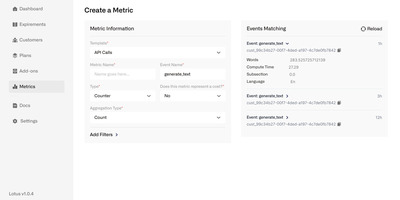
Lotus is an open-source pricing and billing engine that lets SaaS teams meter usage, design plans, and experiment with pricing without rebuilding their billing stack every time the model changes. You define how customers are charged: per seat, per API call, per gigabyte, in tiers, with prepaid credits, or as a bespoke enterprise arrangement negotiated over email. Plans are versioned and deployed like releases, so changing a price never means editing the plan that half your customers already signed. Usage events stream in from your product and are aggregated against each customer's plan, turning raw events into billable quantities your finance team can audit line by line. Before a new model goes live, you backtest it against historical usage to see exactly who would have paid what, and forecast the revenue before a single invoice changes. Experiments compare pricing variants on real customers, so the packaging debate ends with numbers instead of opinions. The control panel sits on top of your existing quote-to-cash stack, pulling from your payment, CRM, and data systems rather than demanding a rip-and-replace migration. Engineers integrate through the API: send events, read balances, and let Lotus handle the proration math when plans change mid-cycle. Running on a dedicated VPS on RepoCloud with guaranteed CPU, RAM, and SSD, full root SSH access, and a browser serial console. MIT licensed.

Romarr
Name a game and Romarr goes and finds a copy you can prove is good. Search every indexer at once, through Prowlarr or directly, and each release comes back scored with the reasons written out: seeders, the right region, a plausible size, points off for hacks, betas, and repacks. The winner goes to whichever client speaks its protocol, from thirteen torrent daemons and eight debrid services to SABnzbd or a plain watched folder, and within a minute of finishing, the ROM itself is picked out of its archive, multi-track discs kept together as a set. Then comes the part no other library manager does: every import is checksummed against your No-Intro and Redump DATs and stamped verified, bad dump, or unknown. A verified dump is byte-for-byte the published one, a bad dump is refused unless you force it, and homebrew or translations import without ceremony as unknown. A verified copy automatically upgrades an unverified one, collections compare against a DAT to show exactly what you are missing, and duplicates are audited before anything moves. Finished games land in RomM, Gaseous, Retrom, or a simple folder, routed per platform, and your library server is told to rescan so the game appears with its art. Running on a dedicated VPS on RepoCloud with guaranteed CPU, RAM, and SSD, full root SSH access, and a browser serial console. MIT licensed.
SHKeeper
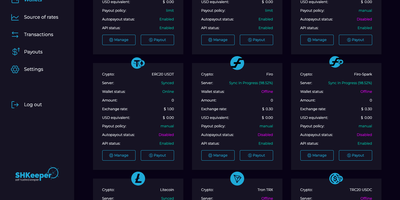
Self-hosted crypto payments for shops, hosting companies, and billing systems: SHKeeper accepts Bitcoin, Ethereum, Monero, and stablecoins straight into wallets you control and never holds anyone's keys but yours. Ready-made modules connect WooCommerce, WHMCS, OpenCart 3, and PrestaShop 8, and custom checkouts create invoices through the REST API. A fresh address is generated for every invoice and coin, so a shopper who changes coins mid-checkout receives a new address on the same invoice. Invoices move through unpaid, partial, paid, and overpaid statuses, with per-coin thresholds deciding when an invoice counts as settled and when extra money is credited to the customer's balance. Signed webhooks tell your store about each payment and repeat every minute until it acknowledges. The admin panel lists every wallet with sync state, balance, and exchange rate, lets you pick the rate source and add fees, and filters transactions by invoice, address, status, or date. Autopayout policies move funds to a cold wallet by limit or schedule, and payout calls send crypto to one or many destinations. USDT and USDC work on Ethereum, Tron, BNB Chain, Polygon, Avalanche, Arbitrum, and Optimism, and Bitcoin works on-chain or over Lightning. Administrators can switch on two-factor login, encrypt wallets if they wish, and watch a metrics endpoint for monitoring. Running on a dedicated VPS on RepoCloud with guaranteed CPU, RAM, and SSD, full root SSH access, and a browser serial console. GPL-3.0 licensed.
Lodestone
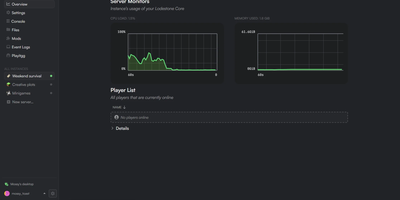
Lodestone Host is a free, open source Minecraft server manager that lets you create, mod, monitor, and share servers from a browser dashboard instead of juggling terminals and config files. A guided wizard builds Vanilla, Fabric, Forge, NeoForge, or Paper servers, or starts from a Fabric modpack found through Modrinth search, a pasted link, or an uploaded .mrpack file, and it downloads the right Java for every server. The instance page shows live CPU and memory charts and the player list, with a searchable console that accepts commands and a file manager that edits configs in the browser. Mods and plugins install straight from Modrinth, filtered to the instance's version and loader, with badges for what is already installed and what players need on their own client too. Lodestone Connect invite links bring friends in without port forwarding, and the companion launcher installs the right mods before joining; optional playit.gg tunnels offer another route in. Give helpers their own accounts with permission to create or delete servers and to view, start, stop, or open the console of chosen ones, then hand scripts and bots scoped, expiring API keys or the JSON-friendly CLI. Survival worlds, creative plots, and minigame servers can all run on hardware you control, sized to your players and not to a hosting provider's RAM tiers. Running on a dedicated VPS on RepoCloud with guaranteed CPU, RAM, and SSD, full root SSH access, and a browser serial console. AGPL-3.0 licensed.
Yaade
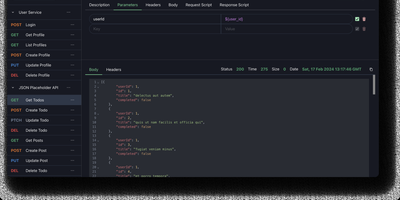
Yet Another API Development Environment delivers a self-hosted alternative to Postman designed from the ground up for teams that need secure, collaborative API development without sending sensitive credentials through third-party cloud services. The multi-user system manages team members with role-based permissions and supports external authentication through OAuth2 and OIDC providers, while all data persists in an H2 file-based database that survives container and server restarts. REST and WebSocket request testing includes environment variable substitution, request chaining, and Markdown documentation for each endpoint. The JavaScript scripting engine runs request and response scripts for automated testing and data extraction, with cron job scheduling and API-triggered execution for continuous integration workflows. Collections import directly from OpenAPI specifications and Postman exports, while outbound export generates request code in multiple languages and frameworks. The browser extension proxy for Chrome and Firefox routes requests through the user's browser to bypass CORS restrictions when testing localhost and internal APIs, with an alternative server-side proxy for headless environments. Single-file data import and export simplifies backup and migration between instances. The React and Vite frontend ships with dark mode enabled by default. Running on a dedicated VPS on RepoCloud with guaranteed CPU, RAM, and SSD, full root SSH access, and a browser serial console. MIT licensed.
Colspan
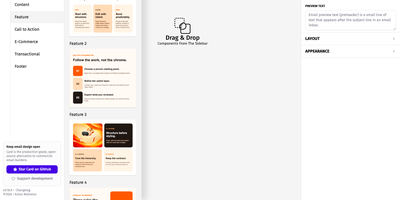
Hand-coding HTML emails means wrestling nested tables and Outlook quirks for hours; Colspan turns that work into dragging ready-made blocks onto a canvas and exporting code that holds together in Gmail, Outlook, and Apple Mail. The component catalog holds 78 blocks grouped into Menu, Header, Content, Feature, Call to Action, E-Commerce, Transactional, and Footer sets, so newsletters, receipts, and promotional campaigns all start from structured pieces instead of a blank file. You edit text inline with rich formatting and Google Fonts, arrange blocks in a synchronized component tree, and adjust each row for stacking order and visibility on mobile. Desktop and mobile previews render side by side, and the preview stays isolated from the editor chrome, so what you check is what recipients open. Finished designs export as responsive HTML with inline styles, or as JSON you can store, version, and re-import later in replace or append mode. Import validation and sanitization guard templates received from teammates or clients before they enter your workspace. Your work saves automatically in the browser and reloads where you left off, and undo and redo cover every edit during experimentation. Agencies can host the editor on a client-facing domain, marketing teams can produce campaign emails without developer time, and product teams can standardize receipts and notifications as reusable templates. Running on a dedicated VPS on RepoCloud with guaranteed CPU, RAM, and SSD, full root SSH access, and a browser serial console. AGPL-3.0 licensed.
Paaster
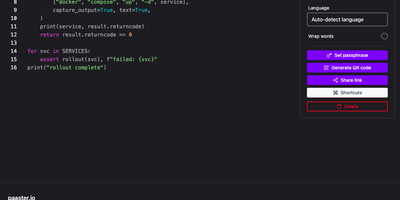
Paaster is the pastebin for snippets too sensitive for a public paste site: every paste is encrypted in your browser before upload, so the server only ever stores ciphertext it cannot read. Paste code or logs and the text is sealed with libsodium the moment you stop typing, with the secret riding in the link fragment that browsers never send to a server. Share the link and only its holder can open the paste; share it as a QR code, or beam it to your other device with a five-minute code using Send to device. Set a paste to delete after its first view or after a chosen time, protect it with an access code, and let automatic language detection syntax-highlight the result. Your own pastes stay browsable in a local history, themes and keyboard shortcuts keep the editor fast, and drag-and-drop file sharing works the same encrypted way. Upload from the terminal with the companion CLI or the REST API, and store everything in MongoDB with MinIO, S3, or Cloudflare R2 holding the encrypted blobs. Running on a dedicated VPS on RepoCloud with guaranteed CPU, RAM, and SSD, full root SSH access, and a browser serial console. AGPL-3.0 licensed.
PlugNmeet
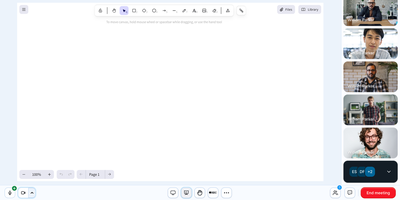
Video meetings on your own domain, branded your way, with no per-host bill: PlugNmeet is a self-hosted web conferencing system that runs full meetings in the browser. The room covers HD video and screen sharing, a collaborative whiteboard that annotates PDFs and office files, a shared notepad, chat, polls, and breakout rooms. Classes use raise hand, waiting rooms, per-user locks, and quiz-mode polls; webinars stream out over RTMP to YouTube or take in an OBS feed. Every meeting can be recorded to MP4, joined by phone through SIP dial-in, and captioned, translated, transcribed, and summarized by an AI agent connected to your own provider. Moderators manage participants and permissions, optional end-to-end encryption keeps even the server out of the media, and plugins drop the same rooms into WordPress, Moodle, Joomla, or any LMS over LTI. Behind it, APIs and PHP or JavaScript SDKs create rooms and mint join tokens from your product. Running on a dedicated VPS on RepoCloud with guaranteed CPU, RAM, and SSD, full root SSH access, and a browser serial console. MIT licensed.
Conduit
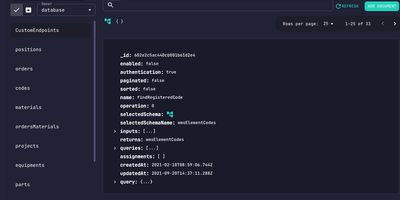
Conduit is a self-hosted backend platform that gives your application user accounts, databases, APIs, chat, and notifications out of the box, so you can skip months of boilerplate and ship the product itself. Define a data schema in the admin dashboard and Conduit generates CRUD and query endpoints for it automatically, backed by your choice of MongoDB or PostgreSQL. The Router module exposes every capability over REST, GraphQL, and WebSockets, and publishes Swagger documentation for each route as you build. Authentication covers a wide range of sign-in methods, and the Authorization module layers resource-level permission rules on top of every account. Realtime chat ships as a ready module with rooms and message history that clients join over WebSockets. Email and SMS modules send through multiple providers, and SMS doubles as a two-factor authentication channel that hardens sign-ins. File uploads land in the Storage module with several cloud providers supported, and PushNotifications keeps your mobile users informed. An Embeddings module adds text-to-vector generation and semantic search when you want AI features inside your app. Forms collect submissions and forward responses to an email address, covering contact pages and lead capture. A CLI bootstraps a working deployment in minutes, and production installs run on Docker Compose or Kubernetes. Running on a dedicated VPS on RepoCloud with guaranteed CPU, RAM, and SSD, full root SSH access, and a browser serial console. MIT licensed.

Databag
Families and small communities run their own messenger with Databag, where accounts live on a little home server and chats never pass through a platform company. Conversations live in topics instead of contact threads, so the ski trip, the shopping list, and the school parents each keep their own stream with unlimited participants. Seal a topic and end-to-end encryption means even you, the admin, cannot read it on the server. Friends on other Databag nodes join the same topics because accounts federate across servers, and identity comes from a public-private key pair rather than a phone number or a rented domain. Photos, videos, and files ride along in the thread, audio and video calls connect from the mobile and browser apps, and push alerts arrive through UnifiedPush, FCM, or APN when something new lands. The whole node sips resources, happily running on a Raspberry Pi class machine, and websockets deliver messages with low latency instead of polling. Host unlimited accounts for the whole household, protect sign-in with TOTP multi-factor authentication, and manage everything from apps on iOS, Android, F-Droid, or any browser. Running on a dedicated VPS on RepoCloud with guaranteed CPU, RAM, and SSD, full root SSH access, and a browser serial console. Apache-2.0 licensed.
ElixirOffice
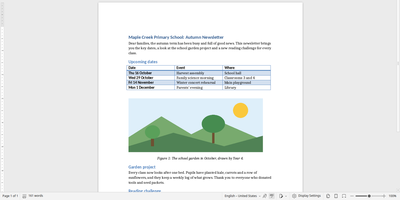
ElixirOffice gives teams a Word, Excel, and PowerPoint style editing suite that runs in the browser on a server you control. The ribbon tabs, Alt key tips, mini toolbar, and keyboard shortcuts match Microsoft Office, so muscle memory keeps working from the first day. Documents in .docx, .xlsx, .pptx, .odt, .ods, and .odp open with layout tuned to match Word, and free metric-compatible fonts keep page breaks stable. Comments appear in the margin, tracked changes show every edit, and several people can co-edit a file in real time. Connect Nextcloud or Murena Workspace through a revocable app password to browse, open, and save with conflict protection. Spreadsheets bring pivot tables, charts, Flash Fill, and Quick Analysis, and presentations add a slide sorter, sections, and Presenter View. An optional assistant called Ask Elixir can rewrite text, write formulas, build charts and pivot tables, or draft slides with the AI service you choose, including one you host yourself. It stays off until you enable it, and its edits wait for Accept or Discard. Forty-five interface languages and dozens of spelling dictionaries suit schools and international teams. Running on a dedicated VPS on RepoCloud with guaranteed CPU, RAM, and SSD, full root SSH access, and a browser serial console. AGPL-3.0 licensed.
OpenBudgeteer
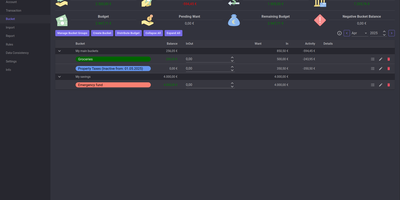
Allocating every incoming dollar into purposeful spending and savings buckets before transactions occur, OpenBudgeteer gives households complete financial control through a self-hosted zero-based envelope budgeting platform. Users can organize expenditures into customizable bucket hierarchies, grouping everyday living costs, debt repayments, and sinking funds into distinct categories with target balances. Financial planners can import bank statement files via flexible CSV mapping profiles that parse transaction descriptions, clean up merchant strings, and auto-assign records to corresponding expense buckets. The transaction registry provides split-transaction functionality, allowing shoppers to divide a single department store receipt across grocery, household, and clothing envelopes with exact currency precision. Interactive progress bars display bucket health throughout the billing month, signaling when spending velocity threatens allocated limits and calculating suggested contributions for forthcoming paychecks. Advanced forecasting reports plot multi-month net worth trajectories, track category expenditure patterns, and calculate burn rates against long-term retirement and emergency savings goals. Account balances synchronize across multiple physical checking accounts, credit cards, and cash wallets, ensuring total bucket balances reconcile perfectly against real bank reserves. Running on a dedicated VPS on RepoCloud with guaranteed CPU, RAM, and SSD, full root SSH access, and a browser serial console. AGPL v3 licensed.
REI3
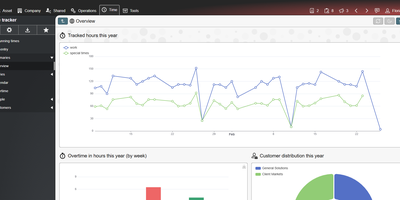
Replace the spreadsheet that quietly runs your department with a proper multi-user application that you design in a browser with REI3, a self-hosted low-code platform. Authors define their data model once, then assemble forms, lists, calendars, Gantt plans, Kanban boards, and charts around it, with form states that show, hide, or require inputs as a record moves through its workflow. Calendars create records from a drag-selected time range, Kanban cards change state by drag and drop, and bulk-update forms edit hundreds of records at once. Phones scan barcodes and QR codes through the camera, and signature pads capture drawings. Roles and record-level access policies decide who sees what, sign-in runs through LDAP, OpenID Connect, or multi-factor authentication, and end-to-end encryption keeps selected fields unreadable even to administrators. REST endpoints work in both directions, ICS feeds publish calendars, CSV moves data in bulk, and IMAP and SMTP accounts connect applications to email. A drag-and-drop PDF editor produces letterheads, labels, and documents with signatures and barcodes. More than a dozen free ready-made applications, including tickets, time tracking, IT assets, a password safe, and a CRM, install from the admin panel. Running on a dedicated VPS on RepoCloud with guaranteed CPU, RAM, and SSD, full root SSH access, and a browser serial console. MIT licensed.
ABC User Feedback
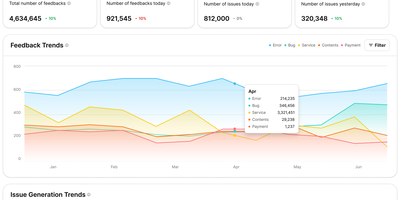
One board holds every piece of customer feedback, from app store reviews to survey answers, and turns the repeating ones into tracked issues. Each project defines channels like App Review, VOC, or Survey with custom fields for text, numbers, dates, selects, images, and AI-generated values. The feedback table filters by keyword, date, and field, expands rows for detail, and exports results when a report is due. Issues carry status labels and appear in a kanban or list view, with ticket links that point to Jira or another tracker. A dashboard charts feedback and issue trends over any date range, with counters for today and yesterday. The AI field can summarize, translate, or score sentiment on incoming messages, and issue recommendation suggests where a new message belongs, with token usage limits and notifications to cap spending. Webhooks announce events to other systems, API keys let apps submit feedback directly, and role-based access limits what each member can do. Members join by email invitation, and single sign-on connects an existing identity provider. A CLI starts the full stack, and optional OpenSearch improves search and AI accuracy. Running on a dedicated VPS on RepoCloud with guaranteed CPU, RAM, and SSD, full root SSH access, and a browser serial console. Apache-2.0 licensed.

SurveyKing
SurveyKing combines survey creation and online examination in a single platform — generate complete questionnaires from plain English via built-in LLM integration, administer timed exams with anti-cheating proctoring, and collect structured data through 20+ question types including matrix questions, cascading selectors, file uploads, and electronic signatures. Built on Spring Boot 3 with a React and TypeScript frontend using the UMI framework and Ant Design components, version 1.12 delivers each question type with independent validation rules, data type controls, and formula calculations. The AI engine connects to mainstream LLMs for survey generation from natural language prompts and provides real-time answer explanations during practice sessions. Exam mode features item banks with Word and Excel bulk import, fixed and randomized question selection, composite paper assembly, live proctoring dashboards with anti-cheating controls, automatic and manual grading with per-question scoring, and PDF score report archiving. The visual logic designer and DSL expression engine handle show/hide conditions, required rules, skip branching, quota controls, randomization, and cross-tabulation analysis with SPSS export. Role-based access controls support multi-user collaboration with department and permission management via Spring Security and JWT authentication. Redis handles caching and queuing while MyBatis Plus manages database operations. Deploy via a single Docker command with embedded H2 for trials or Docker Compose with MySQL for production. Running on a dedicated VPS on RepoCloud with guaranteed CPU, RAM, and SSD, full root SSH access, and a browser serial console. MIT licensed.

Monbooru
Monbooru is a private, tag-based gallery for your own image, video, and manga collection, searchable the way booru sites are, but hosted entirely on your server. Drop files into watched folders and they appear within seconds, with browser uploads, SHA-256 deduplication, and an inbox where new arrivals wait until you have reviewed and tagged them. Local auto-tagging runs ONNX models such as WD14, JoyTag, Camie, and PixAI on CPU or GPU, so a collection gets searchable labels without sending a single image to a cloud service. Tag management covers merges, aliases, implications, and custom categories, while rating tags with an SFW ceiling keep sensitive material hidden until you choose otherwise. Search combines wildcards, OR terms, and exclusions with filters for folder, date, size, dimensions, and AI generation settings, and saved searches keep favorite queries one click away. Batch actions retag, move, delete, or auto-tag whole selections at once, and the built-in manga reader opens CBZ and ZIP archives as single items. Image pages record sources, artist commentary, and your own notes, and near-duplicate detection lines up lookalikes side by side for cleanup. Multiple galleries can live in one instance, each with its own folders and database, and an optional password plus scoped REST API tokens control who and what can connect. Running on a dedicated VPS on RepoCloud with guaranteed CPU, RAM, and SSD, full root SSH access, and a browser serial console. AGPL-3.0 licensed.