9Drive
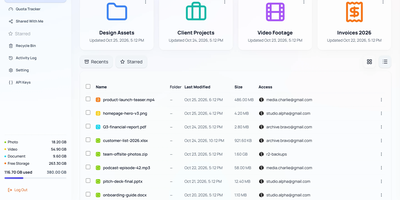
Four half-full cloud accounts become one big drive with a single search bar. Connect Google Drive accounts and S3-compatible buckets like Cloudflare R2, MinIO, Wasabi, or Backblaze B2, and the Quota Tracker shows total, used, and available space across all of them. Upload routing picks the destination by most free space, round-robin, or a custom priority order, and files stream straight through to storage without touching the server disk. The file manager offers nested virtual folders with custom colors and icons, list and grid views, filters for type, account, size, and date, previews for images, videos, PDFs, and Office files, a recycle bin, and a starred list. Public links open a built-in viewer with an embed mode, and invitations give other people viewer or editor access to a file or folder, tracked on a Shared page. An activity log records uploads, shares, and changes, and API keys with upload-only scope let scripts and CI jobs push files through a documented endpoint. Dark mode and a phone-friendly layout that installs as a PWA come built in. Running on a dedicated VPS on RepoCloud with guaranteed CPU, RAM, and SSD, full root SSH access, and a browser serial console. Apache-2.0 licensed.
Tabby
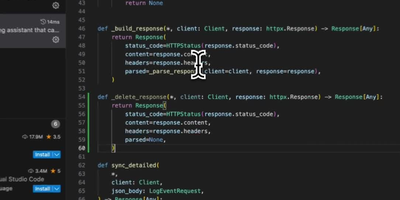
With over 33,000 GitHub stars and a codebase written in 92.9% Rust for maximum performance and memory safety, Tabby is the most widely adopted self-hosted alternative to GitHub Copilot — delivering real-time code completions entirely on your own infrastructure with zero code leaving your network. Deploy a single Docker container on any NVIDIA CUDA, Apple Silicon Metal, AMD ROCm, or CPU-only server and connect VS Code, JetBrains IDEs (IntelliJ, PyCharm, WebStorm, GoLand), Vim, Neovim, and Emacs through native extensions. The completion engine supports a curated registry of models including StarCoder2 (1B to 15B parameters), DeepSeek-Coder, CodeLlama, CodeGemma, Qwen2.5-Coder, and Mistral Code — swappable at runtime through the admin dashboard without redeployment. Repository indexing parses your Git repositories and feeds project-specific types, function signatures, and patterns into completion context via RAG, producing suggestions that understand your codebase rather than generic boilerplate. The Answer Engine provides instant responses to code queries within the IDE, while inline chat enables contextual code editing and explanation without switching windows. The admin dashboard manages per-developer API tokens, usage analytics, and model configuration. Enterprise features include SSO via LDAP, OAuth, and SAML, role-based access control, and audit logging for compliance environments. A single RTX 4090 workstation serves a team of 10-15 developers with sub-500ms completion latency. Running on a dedicated VPS on RepoCloud with guaranteed CPU, RAM, and SSD, full root SSH access, and a browser serial console. Apache 2.0 licensed.
HFS
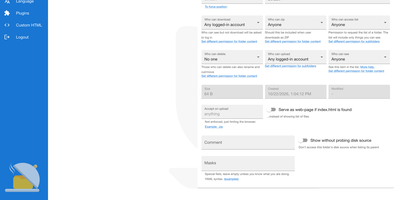
HFS turns any folder on a server into a file-sharing site that visitors open in a browser, with no upload step and no space or bandwidth cap beyond your own disk. Visitors browse, search, and download single files or whole folders as ZIP archives that start streaming immediately, and interrupted uploads or downloads can resume. A virtual file system lets you arrange and rename what is shared without touching the files on disk, while accounts and per-folder permissions decide who can see, download, upload, or delete. The admin web panel covers HTTPS with built-in certificate generation, bandwidth limits globally or per IP address, geographic blocking by country, and live connection monitoring with disconnect and IP ban. Plugins add thumbnails, share links, LDAP, two-factor sign-in, download quotas, and notifications, and a few lines of JavaScript in the admin panel can change the look or the backend behavior without a restart. The front end speaks 27+ languages, works on phones, and includes a media player for audio and video. Typical uses include sending large files to friends without uploading them first, publishing a download area, and collecting uploads from visitors. Running on a dedicated VPS on RepoCloud with guaranteed CPU, RAM, and SSD, full root SSH access, and a browser serial console. GPL-3.0 licensed.
Kener
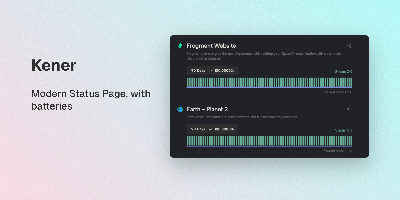
A polished public status page without Statuspage prices or a heavyweight observability suite: Kener is a status and uptime monitoring system built with SvelteKit and Node.js. It runs 11 monitor types - API, Ping, TCP, DNS, SSL certificate, SQL query, Heartbeat, gRPC, and GameDig game-server checks among them - each with configurable intervals and thresholds. Incident management covers the full lifecycle: structured timelines from investigation through resolution, acknowledgements, and subscriber-visible updates, plus maintenance windows with RRULE-based recurring schedules and automatic status transitions. Notifications reach email, Slack, Discord, and custom webhooks through trigger-based workflows with template-driven messaging. One instance can serve multiple branded status pages - per product, team, or region - with custom logos, colors, and CSS, localization into 21 languages, timezone-aware displays, and server-rendered pages that stay fast and SEO-friendly. Operations tooling includes role-based access for teams, API key management, a secrets vault, analytics integrations (Google Analytics, Plausible, Umami, and others), and a REST API with 17+ endpoints for automating incidents and monitors from CI/CD. MIT-licensed; Docker deployment with Redis, SQLite by default, PostgreSQL or MySQL for production.
cvENGINE
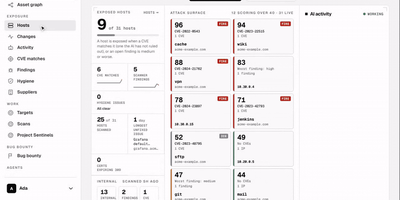
cvENGINE takes a domain name and returns a verdict on which of today's exploited vulnerabilities can actually reach you, with evidence attached. Continuous discovery builds a Shodan-style inventory of subdomains, IPs, ports, products, versions, certificates, and technologies, then rates every CVE as fire, smoke, or ice from real exploitation sources and scores each host from 0 to 100. Read-only validation reproduces a finding and records the exact command used. Optional AI triage sorts matches into confirmed, likely, or needs validation. A live dashboard, a change timeline with screenshot diffs, saved searches with alerts, and one-click PDF reports keep teams current. Sentinels run scans from other machines, including inside private networks, and an optional OpenVAS add-on extends coverage. Hygiene checks cover TLS, email and DNS records, exposed databases, cloud storage buckets, and WordPress sites. Organizations, roles, two-step sign-in, a REST API, and Slack, Discord, Telegram, and Lark alerts support shared use. A bug bounty workbench imports program scope and drafts reports. Running on a dedicated VPS on RepoCloud with guaranteed CPU, RAM, and SSD, full root SSH access, and a browser serial console. GPL-3.0 licensed.
AnsibleForms
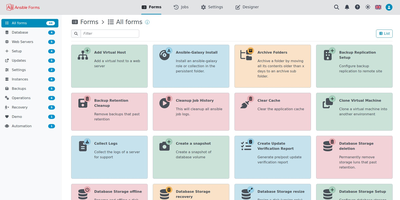
AnsibleForms turns Ansible playbooks into self-service web forms that colleagues can run safely, with the right variables, without filing a ticket or touching a terminal. A colleague picks the form, fills in fields that validate as they type, and the job launches with exactly the variables the playbook expects. Dropdowns can cascade from a database query, a REST call, or a small expression, so the environment list is never typed from memory and the wrong region is never an option. Forms feed playbooks running in runtime containers or templates on the AWX, Semaphore, Rundeck, or Jenkins servers you already have, and workflows chain them with conditions, success and failure paths, and an approval step when a person should look first. Runs can be scheduled, stored, aborted, and relaunched, with live output while they work and a full history afterward. Designers edit forms in the browser and keep everything in Git, sign-in stretches from local accounts to LDAP and OIDC, and credentials travel encrypted or straight from Vault. Running on a dedicated VPS on RepoCloud with guaranteed CPU, RAM, and SSD, full root SSH access, and a browser serial console. GPL-3.0 licensed.
Octo
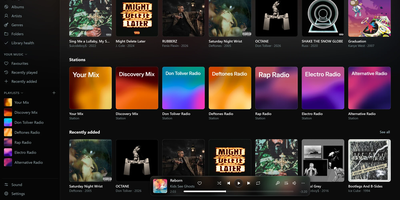
Octo turns Navidrome into a streaming service with a memory: search finds songs you do not own yet, they play the moment you pick them, and the ones you heart come home as properly tagged files that stay in your library forever. Point the music apps you already use at Octo's endpoint and sign in with your Navidrome login, and your library behaves as before, except search now reaches past your shelves and any result streams instantly as a preview with zero disk impact. Press plus or heart a keeper and Octo downloads the best copy it can find, FLAC first, from Soulseek peers or your own Lidarr, catches lossless files that were faked from MP3s, then identifies, tags, covers, and files the song so it appears in your library like something you bought. Bring the music you already love by importing liked songs and playlists from Spotify or any other service; Octo shows what you already own and quietly fetches the rest a few songs an hour. Stations and discovery playlists learn from your listening through Last.fm and refresh themselves, the downloads drawer shows every fetch with its full decision log, and the browser admin dashboard runs settings, notifications, family accounts, and one-click updates. Running on a dedicated VPS on RepoCloud with guaranteed CPU, RAM, and SSD, full root SSH access, and a browser serial console. GPL-3.0 licensed.
ClickHouse Loom
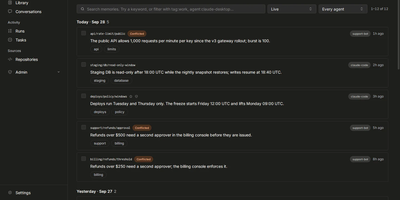
Give every AI agent you use the same memory, so what Claude Code learns on Monday is waiting for Codex or Cursor on Tuesday. Loom is a self-hosted server that stores memories, documents, conversations, and a code index, then serves them to agents over MCP, HTTP, and Python or TypeScript SDKs. Each fact is saved under a key with history and provenance, near-duplicates merge, and contradictions land in a review queue where a person keeps one side, drops one, or allows both. Search can abstain instead of guessing, and the Ask AI panel answers with numbered citations back to the memory or document behind each claim. A library indexes PDF, docx, and pptx files, and the repository explorer finds symbols, callers, and change impact with the commit it answers from. Namespaces, roles, and tokens let teams share memory safely, an audit log records every save, delete, and grant, and erasure requests are verified. Task inboxes pass work between agents with leases and retries. One installer script starts Loom and ClickHouse, and plugins connect Claude Code and Codex. Running on a dedicated VPS on RepoCloud with guaranteed CPU, RAM, and SSD, full root SSH access, and a browser serial console. Apache-2.0 licensed.
Chat UI
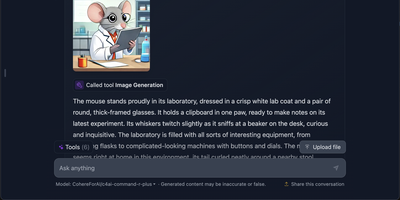
Self-hosting a language model is only half the job; people still need somewhere pleasant to talk to it, and Chat UI is that window, the same interface that powers HuggingChat. Point it at any OpenAI-compatible endpoint, your own Ollama or llama.cpp server, the Hugging Face router, or a hosted gateway like OpenRouter, and the models it serves appear in the picker automatically, with no per-model configuration. Conversations are saved to your database and stay browsable in the sidebar, so a thread from last week can be reopened, continued, and compared against a fresh answer from another model. Multimodal models accept image uploads right in the composer, and models that support it can call MCP tools mid-conversation to fetch data or run actions. For a shared team deployment, OpenID Connect sign-in keeps individual histories and settings separate, and per-user defaults travel with each account. Everything a consumer chatbot would keep on someone else's servers, prompts, uploaded files, and usage history, stays in the MongoDB you control on the same machine. Running on a dedicated VPS on RepoCloud with guaranteed CPU, RAM, and SSD, full root SSH access, and a browser serial console. Apache-2.0 licensed.
AI Video Transcriber
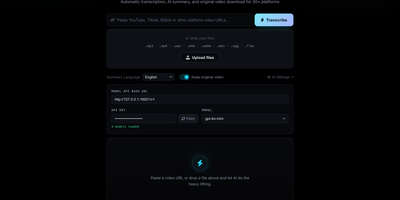
A two-hour podcast becomes a page of takeaways with AI Video Transcriber, a self-hosted web app that turns links and uploads into clean transcripts and short summaries. Paste a URL from YouTube, TikTok, Bilibili, Apple Podcasts, SoundCloud, or any of 30+ other platforms, or drag in an mp3, mp4, wav, or plain text file. When a video already carries subtitles, the transcript arrives in seconds with no audio download at all, and Whisper takes over only when captions are missing. A badge shows which path each job took, and live progress streams to the page as the job runs. Summaries come out in 11 languages, and a Translation tab appears whenever the transcript language differs from the one you picked. The original video or audio stays beside the results with an inline player and a one-click download, and every tab has its own download icon. Models are your choice: enter any OpenAI-compatible base URL and key in the interface, press Fetch to list what is available, and pick one. Agents get a command line tool, an MCP server, a Claude Code skill, and a Codex plugin. Running on a dedicated VPS on RepoCloud with guaranteed CPU, RAM, and SSD, full root SSH access, and a browser serial console. Apache-2.0 licensed.
Shelve
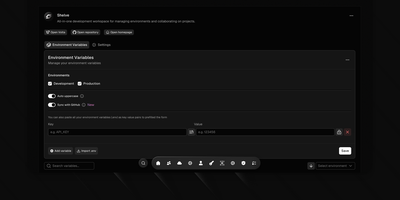
Eliminate scattered configuration files and leaked credentials across development teams with Shelve, an open-source secrets management platform that secures environment variables across development, staging, and production tiers. Engineering teams can organize sensitive database passwords and third-party API credentials within a centralized vault protected by AES-256 encryption and SHA-256 integrity verification. The platform synchronizes configurations directly to GitHub Actions and repository secret stores through an official GitHub App integration. Developers can inject encrypted variables directly into local processes using the dedicated CLI without saving plain-text secrets to disk. The built-in sharing vault creates self-destructing, password-protected links to exchange sensitive credentials securely with external contractors. Administrators can define custom workspace teams with granular role-based access controls, track change audit logs across configuration histories, and navigate management views using a keyboard-driven command palette. Automated schema validation engines detect missing parameters and enforce uniform uppercase naming standards across application tiers. Running on a dedicated VPS on RepoCloud with guaranteed CPU, RAM, and SSD, full root SSH access, and a browser serial console. Apache 2.0 licensed.
OpenAgentCore
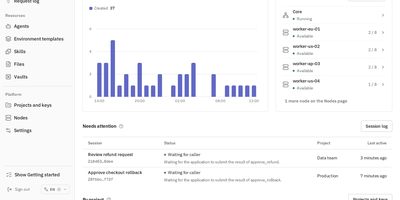
OpenAgentCore puts Codex, Claude Code, and MiniMax Code behind one self-hosted Agents API, so your applications start agent sessions through the official OpenAI SDK while the work runs on machines you control. Set OPENAI_BASE_URL to your installation and issue a Project API key, and the same client code that talks to OpenAI now talks to your Core. Each session runs a native harness, exactly as it runs on a developer's machine, with the model provider, model ID, and protocol you configure per harness or per session. Choose where sessions execute: microsandbox nodes you operate, Docker, E2B, or a self-hosted workstation, VM, or container connected by the oac-daemon with a credential scoped to one environment. Idle microsandbox sessions release their compute and resume on a compatible node with workspace files intact, so long investigations do not rent a machine while they sleep. The Web console walks operators through setup, tracks sessions and turns, manages models and credentials, and issues keys, while the separate Core API serves operators and the Agents API serves applications. Durable execution state in PostgreSQL keeps events, results, and schedules recoverable across restarts. Sandbox providers, workspace filesystems, harnesses, and model providers all plug in through defined protocols, so every layer can be replaced on its own. Running on a dedicated VPS on RepoCloud with guaranteed CPU, RAM, and SSD, full root SSH access, and a browser serial console. MIT licensed.
ZenNotes
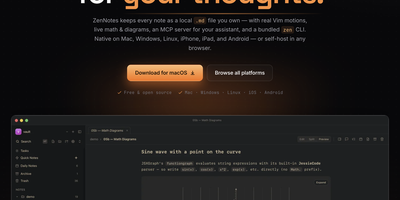
With over 2,200 GitHub stars and a philosophy that your notes should be files you own rather than rows in a database, ZenNotes is the keyboard-first Markdown editor that runs as a self-hosted web app backed by a Go server accessible from any browser on your network. Every note is a plain .md file in a vault directory you mount, with zero proprietary lock-in. Modal editing with real Vim motions, leader-key flows, and a command palette keeps your hands on the keyboard through edit, split, and preview modes. The rendering engine handles KaTeX math, Mermaid diagrams, TikZ graphics, and JSXGraph plots directly from Markdown syntax alongside wiki links and callout blocks. A first-party MCP server ships in the box with one-click integration for Claude Desktop and Cursor, letting AI assistants read and write the same Markdown files on disk without sync layers or duplicate copies. The bundled zen CLI provides note creation, search, tagging, task toggling, and piped capture with JSON output for shell scripting. Board views render plain CSV files as Kanban columns. Daily notes, quick capture, archive, and trash round out the vault workflow. The Go backend serves the browser frontend on port 7878 with token-based authentication, configurable browse roots, TLS proxy support, and file permission hardening at 0600/0700 defaults. Deploy via the multi-arch Docker image for linux/amd64 and linux/arm64. Running on a dedicated VPS on RepoCloud with guaranteed CPU, RAM, and SSD, full root SSH access, and a browser serial console. MIT licensed.
Open Intelligent UI
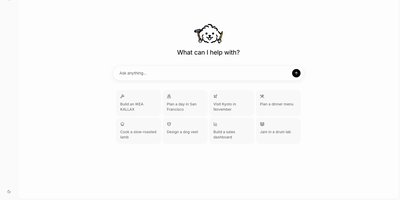
Ask for a day in San Francisco and get a routed map, photographs, and an editable itinerary instead of a wall of text. Open Intelligent UI recreates the interactive answers introduced in ChatGPT, with the model streaming a layout that the app renders live from a library of 55 components. A request for a phone comparison returns product cards and a side-by-side table, a money question returns sliders that recalculate loans and savings as they move, and a language question returns flip cards followed by a scored quiz. Dashboards offer date-range switches, KPI cards, area charts, ranked source bars, and sortable page tables, and maps add category filters, pins, expandable stops, and street routes. Fifty-nine built-in functions let each answer compute with its own state, so splits, schedules, and unit conversions update without another model call. Chat history keeps earlier answers, light and dark themes are one click away, and suggestion tiles start common requests. A development gallery shows worked examples, including a bike assembly guide, a retirement calculator, and a small arcade game, all without calling a model. Models connect through OpenUI Cloud, any OpenAI-compatible endpoint, or local Ollama, so keys and data stay in your control. Product teams, designers, and developers get a working reference for generative interfaces. Running on a dedicated VPS on RepoCloud with guaranteed CPU, RAM, and SSD, full root SSH access, and a browser serial console. MIT licensed.
FoxProfile
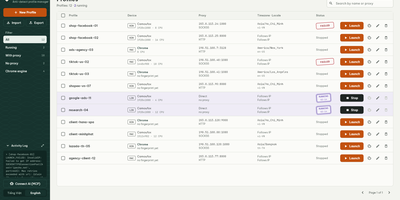
Every account you run deserves its own browser identity, and FoxProfile keeps those identities permanently separate instead of letting them bleed into one another. Create a profile once and it remembers its device: screen, GPU, CPU cores, fonts, and canvas noise are generated on first launch and reused on every later one, so the fingerprint a site saw yesterday is the fingerprint it sees tomorrow. Sessions stick too: history, cookies, and logins live in the profile directory, and the tabs you left open reopen where you left them. Each profile carries its own proxy (HTTP, HTTPS, SOCKS4, or SOCKS5, with a built-in checker) while timezone and locale follow the exit IP automatically or stay pinned to your choice, and the Check IP button compares the exit address across three services and flags mismatches or datacenter addresses. Cookies move in and out as standard editor JSON or Netscape files, whole profiles travel as ZIP archives, and bulk actions launch, stop, or delete fleets at once. On a server, the web panel runs profiles headlessly so you can manage them and view their screens from anywhere, the REST API scripts everything, and the MCP server lets AI agents drive the browsers directly. Running on a dedicated VPS on RepoCloud with guaranteed CPU, RAM, and SSD, full root SSH access, and a browser serial console. MIT licensed.
Super Agent Party
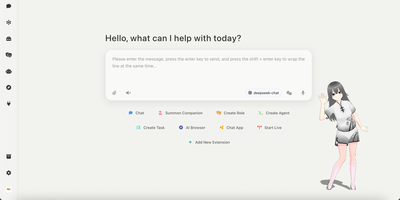
Super Agent Party gives you an AI companion with a face, a memory, and a to-do list, all running on your own server. The home screen starts a chat, summons a companion, creates a role or agent, queues a task, opens an AI browser, or adds an extension. Characters can appear as VRM 3D avatars, and character cards with long-term memory let several personas talk together in one group chat. The Task Center hands longer jobs to an agent that works in the background, calls tools through MCP and Agent Skills, and records every step in an execution timeline. A built-in browser lets agents open pages and act on them, and desktop vision tools can drive the mouse, keyboard, and terminal. One-click bot deployment connects an agent to Telegram, Discord, Slack, QQ, WeChat, Feishu, and DingTalk, and live-stream bots cover Bilibili, YouTube, and Twitch. The developer page serves an OpenAI-style endpoint, so other apps can call an agent as if it were a model. Extensions open in a sidebar or their own window. Running on a dedicated VPS on RepoCloud with guaranteed CPU, RAM, and SSD, full root SSH access, and a browser serial console. AGPL-3.0 licensed.

Ente
Your photo library belongs on infrastructure you control, encrypted so thoroughly that the server itself cannot peek, and that is exactly how Ente stores every picture and video you back up to it. Phone, desktop, and web clients encrypt each file on the device before upload, so backups, live photos, and videos arrive as ciphertext that only your keys can open. The browser app gives you the full library from anywhere: timelines, albums, favorites, a map of geotagged shots, and memories resurfacing old trips. Shared albums let family members add photos, comment, and like each other's shots, all still encrypted end to end. Collect links flip the flow around, giving wedding guests or clients a single link where they can drop their own photos into your album without creating an account. Face grouping and semantic search run on your devices, so you can find "beach sunset 2023" or every photo of a person without a server ever seeing the images. Duplicate detection and cleanup suggestions reclaim storage, exports download your entire library in open formats whenever you want it, and multiple accounts on one instance let a household share the same server. Running on a dedicated VPS on RepoCloud with guaranteed CPU, RAM, and SSD, full root SSH access, and a browser serial console. AGPL-3.0 licensed.
Carbone
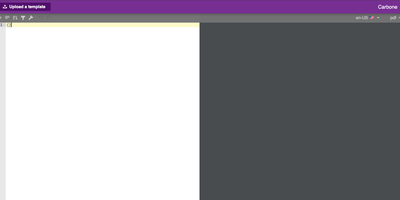
Document-generation code is the worst kind of code in your backlog - Carbone kills it. Its insight is separating design from data - templates are ordinary office documents (DOCX, ODT, XLSX, PPTX, HTML, even custom XML) built in LibreOffice, Microsoft Office, or Google Docs, with mustache-like markers such as {d.companyName} typed directly into the text. Send a template plus JSON from your existing APIs to the HTTP API, and Carbone returns the finished document - exported as-is or converted to PDF, XLSX, CSV, HTML, PNG, EPUB, and more via its integrated LibreOffice converter (Chromium and OnlyOffice engines are also supported for HTML-fidelity and office-format conversions). The template language goes well beyond substitution: loops over arrays render dynamic table rows, filters and aggregations run inside the document, and built-in formatters handle dates, numbers, currencies, timezones, and locales, with custom JavaScript formatters when needed. One template serves multiple languages through translation markers with auto-maintained translation files. The XML-agnostic engine means anything your document editor can design - pagination, headers, footers, nested tables, charts - survives generation intact, and Carbone guarantees no breaking changes in template syntax. Node.js-based, fast via multi-threaded LibreOffice conversion. The invoices, contracts, and reports your product owes its users become template edits, not sprints.