QM Music
Rip a CD once, drop the files into a folder, and QM Music turns that folder into your household streaming service: phones, desktops and web players all browse the same library of MP3, FLAC, AAC and WAV files, organised by album, artist and genre from their ID3 tags and cover art. Because the server speaks the Subsonic API, Feishin, StreamMusic, Amperfy, Substreamer and Music Assistant sign in with an address and a login, no app-store rental required. Point a phone on hotel Wi-Fi at your home collection and it plays. At home, playback can pull pristine FLAC; on mobile data the transcoder serves an MP3 or AAC stream sized for the train ride. Keep a family happy in the background: each person gets an account with individual permissions, favourites that sync between devices in real time, private playlists and lyrics following the current track. Finding something new to hear takes recommendations from listening history, similar artists and similar songs, and two years of play history sit behind the statistics. Scheduled scans collect fresh rips automatically, refresh happens on demand when a disc lands, and the catalogue idles around 150 MB of memory on the server. Running on a dedicated VPS on RepoCloud with guaranteed CPU, RAM, and SSD, full root SSH access, and a browser serial console. Apache-2.0 licensed.
Trackarr
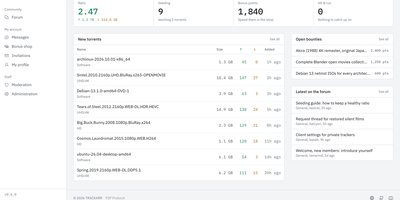
Trackarr gives a community everything it needs to run its own private BitTorrent tracker, from torrent uploads and member ratios to forums, messaging, and moderation. Members land on a home page showing their ratio, seeding count, bonus points, and hit-and-run status next to the newest torrents, open bounties, and forum threads. Browse torrents by category with search by name or hash, open a torrent for its swarm stats, description, and comments, and request missing titles by posting a bounty backed by a pot of points. Seeding earns bonus points to spend in the shop on upload credit, invites, and avatars, and admins can declare timed or open-ended freeleech. Private messages, invitations, reports, and a moderation queue keep the community orderly. Sonarr, Radarr, and Prowlarr connect through the Torznab API, and personal RSS feeds cover everything else. The admin area charts peers, seeders, and growth, and a panic button encrypts sensitive data on demand. Running on a dedicated VPS on RepoCloud with guaranteed CPU, RAM, and SSD, full root SSH access, and a browser serial console. MIT licensed.
LinkSift
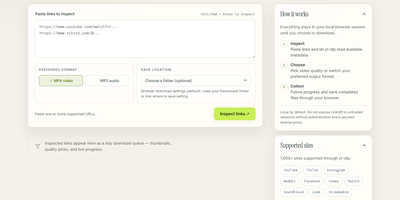
LinkSift is a self-hosted media downloader that turns pasted links into finished MP4 or MP3 files through a calm browser queue you run on your own server. Paste one URL or a whole batch and it first inspects the metadata, showing titles and available qualities before a single byte of media moves. You pick MP4 or MP3, choose the video height the source actually offers, and can even request both outputs from the same link, in which case the audio is extracted from the downloaded video instead of fetched twice. Every job reports its phase, percentage, downloaded bytes, speed, and ETA live, including real encoding progress while the audio is being packaged. Reloading or reopening the tab restores the queue exactly where it was, because a running server job is never re-submitted or cancelled by a closed browser. Finished files save through the normal browser download flow, or into a folder you pick in Chromium-based browsers. A configurable concurrency limit keeps a long batch from saturating your connection, and light, dark, and system themes keep long queues easy on the eyes. There is deliberately no account system or telemetry, so the queue stays a private tool on your network. Running on a dedicated VPS on RepoCloud with guaranteed CPU, RAM, and SSD, full root SSH access, and a browser serial console. MIT licensed.
Playerr
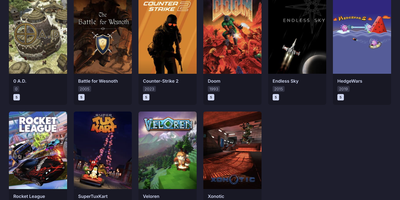
Playerr is a self-hosted library manager that organizes your game collection the way Radarr and Sonarr organize movies and shows, with scanning, metadata, and automated downloads in one web interface. Point it at your game folders and its recognition engine recursively identifies platforms and maps local files to the right titles. Each game is enriched with artwork, descriptions, ratings, and release dates pulled from IGDB and Steam, turning a pile of folders into a browsable collection. Search indexers through Prowlarr and Jackett when you want to grow the library, then hand downloads to qBittorrent, Transmission, SABnzbd, or NZBGet and watch progress from the same screen. Folders are renamed automatically from sanitized IGDB titles while the original release structure stays intact, so the library stays tidy without manual filing. Your Steam library syncs into the same unified view alongside locally stored games. Installation packages are processed automatically, with the primary executable identified to streamline setup. Remote access can be enabled from settings so the collection is reachable from phones, tablets, and laptops on your network. Running on a dedicated VPS on RepoCloud with guaranteed CPU, RAM, and SSD, full root SSH access, and a browser serial console. MIT licensed.
Black Candy
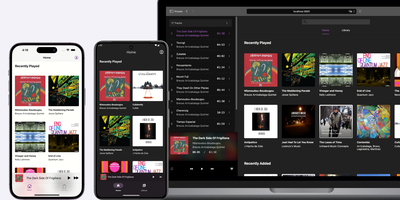
With 4,300+ GitHub stars and native mobile apps on three platforms, Black Candy transforms any VPS into a private Spotify-style streaming service for your personal music collection. The Ruby on Rails 7 backend with Hotwire Turbo and Stimulus delivers a responsive single-page-feeling web player supporting album browsing, artist views, playlists, favorites, and queue management without full page reloads. Point it at a media directory containing MP3, FLAC, OGG, AAC, or WAV files and Black Candy indexes metadata, fetches album artwork from Discogs API, and begins streaming immediately with on-the-fly transcoding that adapts bitrate to client bandwidth. Multi-user support gives each account independent playlists, favorites, and listening history while sharing the same music library — ideal for families or shared households. Native iOS, Android, and F-Droid apps maintained as separate repositories provide offline caching, background playback, and server discovery for mobile listening. The admin panel manages user accounts, configures media paths, and sets Discogs API tokens for automatic cover art retrieval. Deployment requires one Docker command — `docker run -p 80:80 ghcr.io/blackcandy-org/blackcandy:latest` — with persistent storage volumes for the SQLite database and media directory. For larger deployments, switch to PostgreSQL via environment variables with dedicated database URLs for ActionCable, SolidQueue, and SolidCache. Running on a dedicated VPS on RepoCloud with guaranteed CPU, RAM, and SSD, full root SSH access, and a browser serial console. MIT licensed.
RetroAssembly
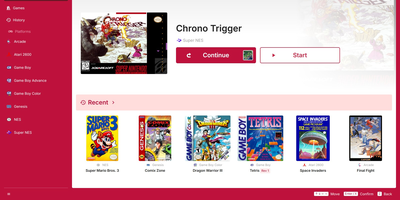
Want your ROM collection playable from any browser? RetroAssembly turns it into a retro arcade cabinet with box art, save states, and touch controls. Upload your own game files and the library detects box art and covers automatically, grouped by platform, with a Continue shelf that resumes your last session and a history view of recent games. More than two dozen systems run here, including NES, Super NES, Genesis, Game Boy, Game Boy Advance, arcade, Atari, PC Engine, and PlayStation 1. Save states can be created at any moment, synchronized, and resumed later, and some emulators can rewind gameplay after a mistake. Spatial navigation moves through games with a keyboard or gamepad, and an on-screen virtual controller makes touch devices playable without hardware. Retro-style shaders add visual effects. Each game page lists platform, release date, genres, developer, and publisher with screenshots and videos, and platform pages describe the console itself with its history and manufacturer. Running on a dedicated VPS on RepoCloud with guaranteed CPU, RAM, and SSD, full root SSH access, and a browser serial console. MIT licensed.
HRConvert2
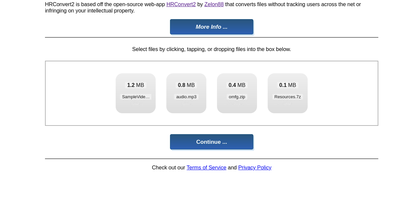
Stop pasting your files into ad-riddled online converters and handing strangers copies of your documents: HRConvert2 runs the whole conversion workshop on your own server instead. Drop a file onto the browser page and pick an output format from a catalogue of 488, covering documents, spreadsheets, presentations, ebooks, comics, images, audio, video, subtitles, and archives. Built-in OCR reads scanned PDFs and images and hands back editable text documents you can search and reuse. It converts 3D models and CAD drawings, renders OpenSCAD projects with their multi-file assemblies resolved, and can even build bootable ISO disk images for x86 and ARM machines from ordinary uploads. Live streams are captured and re-encoded straight from .m3u8 playlists, and every uploaded file can be virus-scanned with ClamAV before or after conversion. Finished files go back out through temporary share links that expire on their own, so sending a converted video to a client takes one click. Each visitor works in an isolated scratch space, files delete themselves when they age out, and nobody needs an account, ever. When traffic spikes, the server watches its own CPU and memory, throttles conversions, and spreads storage across disks so it stays upright. Three interfaces, seven color schemes, and 26 languages let each user shape the page to taste, and the whole thing runs happily on a Raspberry Pi with no database at all. Running on a dedicated VPS on RepoCloud with guaranteed CPU, RAM, and SSD, full root SSH access, and a browser serial console. GPL-3.0 licensed.
PodFetch
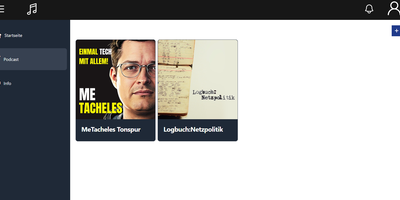
Podcast enthusiasts and homelab archivers automate digital episode preservation and stream personal audio feeds using PodFetch, an open-source self-hosted podcast manager that combines scheduled RSS downloads, Podcasting 2.0 transcript indexing, and browser playback into a modern listening platform. Listeners can subscribe to international podcast channels through direct feed URLs, Apple Podcasts directory searches, or bulk OPML subscription imports, configuring background polling timers to download new releases automatically upon publication. The integrated audio player supports variable speed playback, episode bookmarks, listening histories, and fullscreen visualization modes directly inside responsive desktop and mobile browser sessions. Advanced search capabilities leverage Podcasting 2.0 synchronized transcripts and automated speech-to-text generation via OpenAI-compatible Whisper APIs, allowing collectors to run full-text keyword searches across every spoken phrase in their audio archive. Built-in GPodder API synchronization maintains subscription lists and playback positions across popular smartphone apps like AntennaPod and native companion clients without relying on commercial cloud accounts. Server operators can assign multi-user accounts with private favorites lists, export customized RSS aggregation streams, and route storage paths between fast solid-state drives and large secondary mechanical hard disks. Running on a dedicated VPS on RepoCloud with guaranteed CPU, RAM, and SSD, full root SSH access, and a browser serial console. Apache-2.0 licensed.
Tidarr
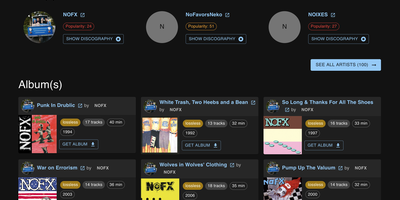
Tidarr turns a Tidal subscription into a personal music archive you control, downloading tracks, albums, playlists, mixes, and music videos at up to 24-bit 192 kHz FLAC quality. Search by keyword or paste an artist, album, playlist, track, or mix URL, then queue downloads that are processed on the server and filed into your library folder. Playlists, mixes, favorites, and artists can be watched and synced on a schedule, existing tracks are skipped, and covers and M3U playlist files are generated with customizable paths. Optional OpenID Connect or password protection secures the interface on port 8484, and the quality selector can be locked for shared instances. Downloaded releases are tagged on the fly by Beets, custom shell scripts can run in the post-processing pipeline, and finished additions trigger library refreshes in Plex, Jellyfin, or Navidrome. Completion notifications arrive through Gotify, Ntfy, Apprise, or a Mattermost webhook. Lidarr can use Tidarr as both a Newznab indexer and a SABnzbd download client, folding high-quality acquisition into an existing monitored library workflow. ReplayGain values, download history, rate-limited modes, and custom CSS round out daily use, and a REST API exposes the same functions to external automation. Running on a dedicated VPS on RepoCloud with guaranteed CPU, RAM, and SSD, full root SSH access, and a browser serial console. MIT licensed.
SyncTube
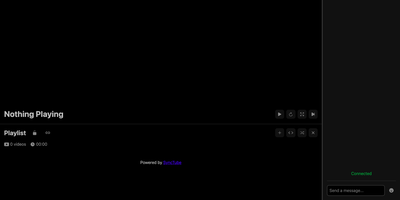
SyncTube turns any browser into a shared movie room where one link opens a synchronized player and live chat for the whole group. Paste a YouTube, Twitch, Vimeo, or PeerTube URL, or a direct mp4 or m3u8 link, and the room watches the same frame at the same moment. A leader takes global control of play, pause, seeking, and playback rate, and smaller groups can open pausing or resuming to everyone. Local files start playing for the room while they upload, and external subtitle files plus separate audio tracks cover voiceovers and fan translations. Chat doubles as a remote control: timed commands jump the whole room forward or back, skip a sponsored segment, boost quiet audio, or return to the moment before an accidental rewind. Playlists accept ranged link patterns for episode batches, viewers vote to skip, and keyboard shortcuts drive fullscreen, refresh, and sync toggles without leaving the player. Operators can cache supported site videos on the server, restyle every front-end file, and extend subtitle rendering or quality switching through plugins. Admins moderate with bans and kicks from chat, and the whole service runs from one small server that fits a private friends-only room or a public community channel. Running on a dedicated VPS on RepoCloud with guaranteed CPU, RAM, and SSD, full root SSH access, and a browser serial console. MIT licensed.
Bragibooks
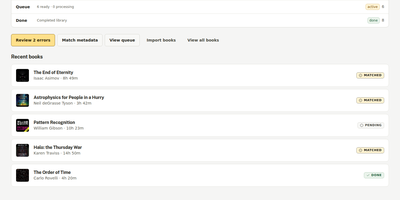
A folder of loose audiobook chapters goes in; a single, perfectly tagged m4b library comes out. Bragibooks is the operations board for that transformation: you select a batch of audiobook folders from your server, and it searches AudiobookDB to match each one with the right title, author, narrator, and release, with a custom search on hand when the first match is wrong. Confirmed books enter a processing queue where m4b-merge merges split mp3, m4a, and m4b parts, converts formats, strips stale metadata, and writes clean, consistently tagged files while you watch the live job output in your browser. Saved output profiles let you route different batches to different directories or path formats, and the books library keeps every finished title with its metadata, files, and processing history a click away. The whole thing runs as one container with the interface built in, a SQLite database on a mounted config volume, and access restricted to your local network by default, with an optional API key for external tools. Audiobook collectors use it to tame download folders before importing into their player of choice, and hoarders of split-chapter rips finally get uniform Chapter 01 style files. Running on a dedicated VPS on RepoCloud with guaranteed CPU, RAM, and SSD, full root SSH access, and a browser serial console. GPL-3.0 licensed.

Afilmory
Afilmory turns a storage bucket full of originals into a polished photography portfolio, complete with EXIF panels, a GPS map, and a GPU-accelerated viewer that makes full-resolution images feel instant. Point the builder at Amazon S3, Cloudflare R2, MinIO, Backblaze B2, a GitHub repository, an Eagle library, or a plain local folder, and it syncs your photos, converts HEIC and TIFF files for the web, generates multi-size thumbnails with ThumbHash placeholders, and extracts complete metadata into a manifest the gallery reads at runtime. Visitors browse a responsive masonry grid that loads progressively, open any shot in a WebGPU viewer (WebGL fallback included) with smooth zoom and pan, and inspect camera body, lens, focal length, aperture, ISO, and GPS coordinates for every frame. Geotagged work appears on an interactive MapLibre map, iPhone Live Photos play back as motion, HDR gain-map images render properly on HDR displays, and Fujifilm shooters get their film simulation recipes displayed alongside the shot. Photographers can organize by the folders they already keep, since directory structure becomes tags automatically, and backend-powered galleries add visitor comments and reactions. Deploy it as a static site on any CDN or as a server-rendered Node.js application with per-photo Open Graph previews for sharing. Running on a dedicated VPS on RepoCloud with guaranteed CPU, RAM, and SSD, full root SSH access, and a browser serial console. AGPL-3.0 licensed.
OpenQuok
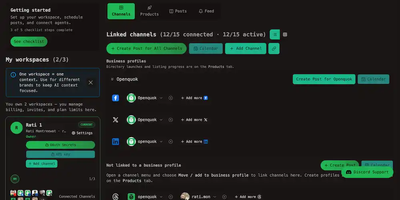
Monday starts with a blank composer and eleven open tabs. OpenQuok replaces those tabs with one open-source Content OS where social scheduling and directory launch share a workspace, a media library, and a review queue. You connect the accounts once: Facebook Page, Threads, Instagram, LinkedIn, X, YouTube, TikTok, Dev.to, Bluesky, Reddit, Skool. Then the week takes shape on a calendar you can drag around. A post begins in Global mode, one caption for everywhere. Unlock a channel and that network gets its own words, its own media, its own settings, with a preview that shows exactly what its audience will see. Drafts wait on the kanban board until a person signs off. Clients comment through preview links, and nothing reaches a live channel before that approval, no matter which tool drafted it. Agents queue drafts through MCP, the CLI, or the public API, and playbooks repeat the campaigns that worked last month. When launch day comes, the other half of the workspace opens. Your product profile already holds the copy, the readiness check names the missing fields, and each directory submission and live URL is tracked beside the posts announcing it. Separate workspaces keep separate brands honest, each with its own teammates, timezone, templates, and tags. Running on a dedicated VPS on RepoCloud with guaranteed CPU, RAM, and SSD, full root SSH access, and a browser serial console. AGPL-3.0 licensed.
Houndarr
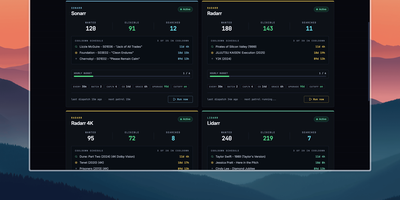
Radarr, Sonarr, and their sibling apps watch RSS feeds for new releases but never go back for what your library is still missing, and Houndarr fills that gap by asking them to search in small, polite batches. It reads the wanted lists of every connected Radarr, Sonarr, Lidarr, Readarr, and Whisparr instance and sends a few search commands per cycle, so a big backlog drains over days instead of arriving as one Search All Missing burst. Each instance has its own batch size, sleep interval, hourly cap, per-item cooldown, and post-release grace period, plus an optional download-queue limit, allowed search windows such as 09:00-23:00, and tag filters that include or exclude items. Three independent passes run per instance: missing items, cutoff-unmet items below your quality profile, and upgrades for files that already meet cutoff, with the last two off until you enable them. Sonarr, Lidarr, and Readarr can search by season, artist, or author, and search order is random or oldest-first. The dashboard shows library health, recent hunts, hourly budgets, and a cooldown schedule per instance, with Run Now buttons for on-demand cycles. The Logs page records every search and skip with its reason in a filterable audit trail that copies as TSV. A key-gated widget endpoint feeds Homepage dashboards, and built-in login or reverse-proxy authentication protects the interface. Running on a dedicated VPS on RepoCloud with guaranteed CPU, RAM, and SSD, full root SSH access, and a browser serial console. AGPL-3.0 licensed.
Cliparr
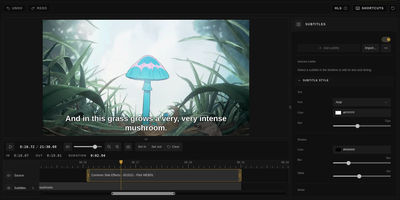
You are halfway through a film when a scene begs to be shared, and Cliparr is the self-hosted clip maker that turns moments from your Plex, Jellyfin, or local video library into shareable clips without opening a full video editor. Connect a media server and Cliparr follows live playback sessions automatically, so the scene you are watching is already loaded when you decide to keep it. Local video files open directly in the browser without being uploaded anywhere first. Mark the range, fine tune the start and end, then crop the frame freely or to a fixed aspect ratio with mouse or touch controls, which makes vertical clips for phones as easy as widescreen ones. Exports run entirely in your browser as video, audio only files, or GIFs, so the server never turns into a render box and the clip lands on the device you are using. Source details, artwork, and clip timing travel inside supported containers, keeping the exported file labelled with where it came from. Captions are a first class step: write your own subtitles, import an existing file, style the text, and burn it into the picture before export. Editor keyboard shortcuts, access control, and reverse proxy support round out a tool that fits into an existing media setup instead of replacing it. Running on a dedicated VPS on RepoCloud with guaranteed CPU, RAM, and SSD, full root SSH access, and a browser serial console. MIT licensed.
Labby
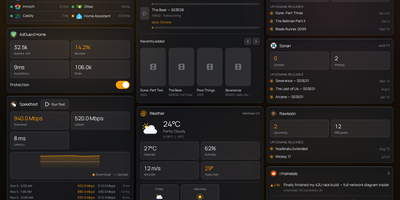
Labby gathers a whole homelab onto one live dashboard you host yourself, covering services, containers, downloads, and media servers. Widgets watch your service monitor, Docker containers, qBittorrent or Transmission queues, SABnzbd, AdGuard Home, Jellyfin, Emby, Plex, Beszel, Radarr, Sonarr, plus weather, calendar, speedtest, bookmarks, Reddit, and Hacker News, and the server pushes every change to your browser over server-sent events so nothing waits on a refresh timer. The dashboard is not a read-only poster: start and stop containers, pause and resume torrents, and toggle AdGuard protection straight from its widgets. Everything configures from the in-app Manage Services page, where service URLs, API keys, poll intervals, and multiple instances of the same integration (two Radarr servers, say) live in a small SQLite database instead of scattered environment files. Named color schemes restyle the board and save with the config, and icon sources span dashboard-icons, selfh.st, Lucide, or your own URLs. Login is off by default for trusted home networks, with a clear warning to keep it behind a LAN, VPN, or forward-auth proxy, and optional OIDC sign-in through Authentik, Authelia, Keycloak, or Pocket ID when you want a real front door. One container, one volume, and your lab finally explains itself at a glance. Running on a dedicated VPS on RepoCloud with guaranteed CPU, RAM, and SSD, full root SSH access, and a browser serial console. MIT licensed.

Lunarr
Lunarr turns the movie and TV folders you already store into a private streaming service with posters, progress tracking, and play-anywhere convenience. Point it at local disks or at libraries living on SFTP and WebDAV servers, and it scans, identifies, and decorates everything with TMDb artwork, cast pages, similar titles, and because-you-watched recommendations. Press play and the file either streams directly or is transcoded on the fly into seekable HLS, generating only the segments around the moment you are watching instead of converting whole films up front. Continue watching follows you between sessions, sidecar subtitles are picked up automatically, and known intros and credits can be skipped. Send the picture to the big screen with Chromecast or AirPlay, pair new devices without typing passwords, and hand a guest a share link instead of your account. Underneath, an admin console manages users, roles, and which libraries each person may see, watches background jobs, and holds API keys and registration settings. Rescans run on schedules you set from minutes to a month, local folders can be watched live for new arrivals, and metadata refreshes itself on a timer. Running on a dedicated VPS on RepoCloud with guaranteed CPU, RAM, and SSD, full root SSH access, and a browser serial console. Apache-2.0 licensed.
Narratarr
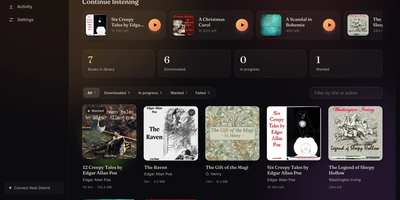
Narratarr finds free audiobooks, fetches them through your download stack, and plays them back in the browser, so a book goes from curiosity to chapter one in a single click. Discovery starts with more than 30,000 legal titles from LibriVox and Old-Time Radio, browsable by genre, popularity, language, and format. Search forgives your spelling: type a mangled author name and the right books still surface, ranked by how well they match. Every title shows its runtime, format, size, and description before you commit, and one click queues the download, files it under Author and Title with cover art attached, and tracks progress live on the Activity page. Playback needs no second app. The built-in player handles chapters, including markers buried inside m4b files, plays from three-quarter speed to triple speed, and offers a sleep timer that can stop at the chapter boundary. Your place is kept per listener, so a household can share one library without losing anyone's bookmark. Follow authors and series on the Wanted list and new releases arrive on their own; notifications land in ntfy, Gotify, Discord, or any webhook when downloads start and finish. Ebooks ride along too, readable as EPUBs in the same interface. Running on a dedicated VPS on RepoCloud with guaranteed CPU, RAM, and SSD, full root SSH access, and a browser serial console. MIT licensed.