AutoXpose
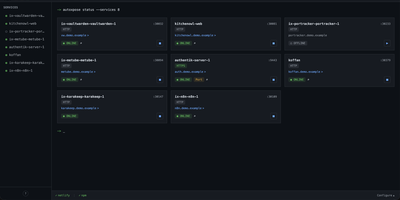
Tag a Docker container with two labels, and AutoXpose turns it into a published service with a DNS record, a reverse proxy route, and HTTPS, without you opening a single provider dashboard. From the web dashboard you connect one of six DNS providers, Cloudflare, Netlify, DigitalOcean, Porkbun, Aliyun, or Tencent DNSPod, and point it at the Nginx Proxy Manager or Caddy instance you already run. It watches your containers continuously after that: a new label creates the record, propagation is verified before the service shows as live, and removing the container removes its public entries too. Auto-expose mode publishes containers the moment they appear, while manual mode stages them in the dashboard for approval first. Color-coded service tags sort what you run into web, database, and media groups at a glance, and dashboard warnings flag misconfigurations before they become broken links. Nginx Proxy Manager access lists attach by label, so an admin panel stays reachable only from the networks you trust. When containers vanish, orphaned cleanup hunts down the stale DNS records and proxy hosts they left behind. Settings and state live inside the same single container, so the publishing pipeline for a homelab or a small fleet stays one compose service you can back up as a unit. Running on a dedicated VPS on RepoCloud with guaranteed CPU, RAM, and SSD, full root SSH access, and a browser serial console. MIT licensed.
Simon
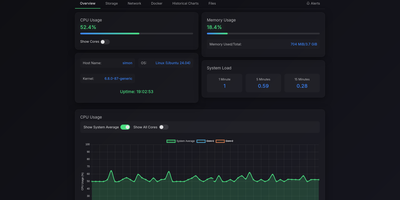
Simon is a lightweight self-hosted system monitor that shows live CPU, memory, disk, and network metrics for your server and its Docker containers in one web dashboard, with threshold alerts and a built-in file browser. Open the dashboard to watch real-time gauges alongside historical charts, so a slow memory leak becomes visible hours before it takes a service down. Every running container appears with its own CPU and memory stats, and its logs open in a searchable viewer, so routine diagnosis never needs a terminal session on the host. The file browser lets you navigate the directories you choose to expose, preview file contents, upload with drag and drop, create folders, and move or delete items. Downloads support range requests, which means large files resume cleanly after a dropped connection and media files stream instead of failing halfway. Alert rules fire when CPU, memory, disk, or network activity crosses thresholds you set, and notifications arrive through Telegram, ntfy, Gotify, Pushover, Pushbullet, Matrix, or any custom webhook. Prebuilt notification templates get common setups running in minutes, and password authentication keeps the dashboard private on a public server. Resource-constrained machines benefit most: the monitor runs comfortably on single-board computers and small instances where heavier monitoring stacks would consume the very memory they exist to watch. Running on a dedicated VPS on RepoCloud with guaranteed CPU, RAM, and SSD, full root SSH access, and a browser serial console. MIT licensed.
Pricore
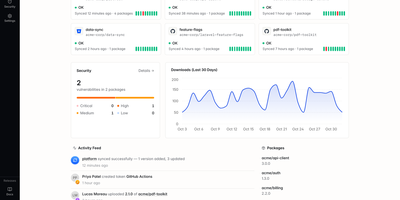
Private PHP packages get a proper Composer v2 registry on your own server, with a dashboard in place of the rebuild script. Point Pricore at GitHub, GitLab, Bitbucket, Gitea, Forgejo, Gogs, or any Git server over SSH or HTTPS, and it reads each composer.json, indexes every tag and branch, and serves the versions to Composer. Webhooks pick up a new tag within seconds, and monorepo support turns a packages/* directory into several packages whose versions follow the repository's tags. Registry mirrors import packages from Satis and other Composer registries, including commercial ones behind HTTP Basic or Bearer authentication, with optional dist archives. Packagist advisories feed automatic security audits, so vulnerable versions appear in the dashboard and composer audit works against the registry. Scoped tokens separate install-only access for CI from publish and API permissions for administrators, and every request is also checked against the member's role. The dashboard shows repository sync health, vulnerabilities by severity, download trends, an activity feed, and a package page with versions, advisories, and install commands. A versioned REST API with OpenAPI 3.1 documentation scripts the same actions, and a built-in MCP server lets Claude, Cursor, or VS Code search packages and check advisories after a one-time browser sign-in. Running on a dedicated VPS on RepoCloud with guaranteed CPU, RAM, and SSD, full root SSH access, and a browser serial console. Apache-2.0 licensed.
Better Status Page
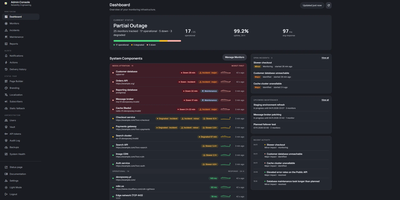
Better Status Page watches your services around the clock and turns outages into calm, branded status updates for your users instead of a flood of support tickets. Its monitors probe HTTPS endpoints with authentication flows and TLS expiry warnings, ping and TCP ports, DNS records, Docker containers, mail servers over SMTP, IMAP, and POP3, and databases from PostgreSQL and MySQL to Redis, MongoDB, SQL Server, and Oracle. A slower-than-usual alert fires when a monitor's p95 response time climbs against its own last seven days, and passive webhook heartbeats catch jobs that simply stop checking in. Alerts reach the team through email, Slack, Discord, Microsoft Teams, Telegram, ntfy, Pushover, webhooks, and Twilio SMS or voice calls, with failure thresholds, quiet hours, rate caps, and grouping keeping the noise down. Incidents carry severity levels, public updates, linked monitors, and recurring maintenance windows, and subscribers follow along by email, webhook, RSS or Atom feed, or a JSON status API. A drag-and-drop builder restyles the public page with your branding, dark mode, and translations, a static fallback keeps the page readable if the server itself falls over, and uptime reports export to CSV for SLA reviews. Running on a dedicated VPS on RepoCloud with guaranteed CPU, RAM, and SSD, full root SSH access, and a browser serial console. MIT licensed.
Mycorrhiza
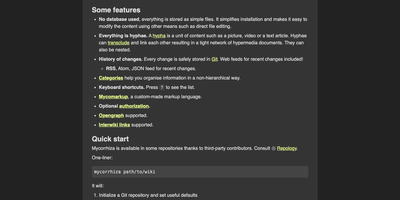
Most wikis bury your writing inside a database you can never quite export cleanly; Mycorrhiza keeps every page as a plain file you can open, edit, and back up with ordinary tools. Each unit of content is a hypha, a page that can be an article, an image, or a video, and hyphae transclude and link to one another so related notes weave into a dense hypertext network instead of a stack of isolated pages. You write in Mycomarkup, a markup language designed to stay unambiguous while remaining quick to type, and categories organize pages without forcing a rigid hierarchy, although nested hyphae are there when you want one. Every edit is committed to Git automatically, giving the wiki a complete, inspectable history, and recent changes flow out as RSS, Atom, and JSON feeds. Keyboard shortcuts drive navigation for people who live in the editor, authorization supports plain accounts or Telegram login, and Open Graph metadata makes shared pages preview properly elsewhere. Interwiki links connect your wiki to others, and because there is no database to provision, a single small binary serves the whole site. Running on a dedicated VPS on RepoCloud with guaranteed CPU, RAM, and SSD, full root SSH access, and a browser serial console. AGPL-3.0 licensed.
Unkey
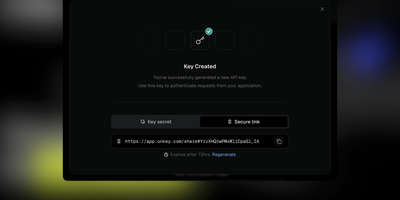
Unkey is the open-source platform that unifies API key management, rate limiting, deployment, and observability into a single control plane. The Go API service validates keys with sub-millisecond latency using regional Redis caches and MySQL 8.0 persistent storage, while ClickHouse captures every verification event for per-key and per-keyspace analytics with filterable time-series charts, request counters, and active key tracking. Keyspaces organize API keys by product, environment, or tier, each configurable with custom prefixes, byte lengths, IP whitelists, encrypted key recovery, and delete protection. Per-key settings include expiration dates, rate limit quotas with configurable windows, RBAC roles and permissions, owner identities linking multiple keys to a single user or organization, and key rotation with grace periods from immediate revocation through 24-hour overlap. The deployment pipeline connects GitHub repositories for automatic Docker container builds, generates preview environments per commit, promotes tested versions to production, and validates releases with OpenAPI diff detection flagging breaking changes before production. The edge gateway authenticates and rate-limits requests at the closest region before routing to the nearest API instance. Immutable audit logs track every key creation, verification, deletion, and configuration change with actor, timestamp, and event metadata. The CLI provides terminal access to key management, analytics queries, and deployment operations. On RepoCloud, deploy Unkey on a dedicated VPS with Docker, root SSH access, and complete control over your API infrastructure, all under the AGPL license.
ContainerFlow
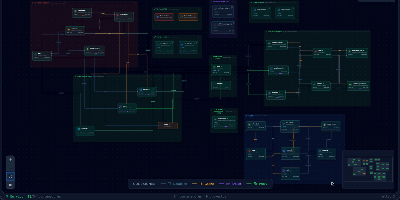
Your database container is probably not at 98 percent memory, whatever docker stats claims, because most of that figure is reclaimable page cache; ContainerFlow subtracts the full cache and shows the memory your containers actually hold. Point it at a Docker socket and it draws the whole estate as a living map: every Compose project discovered automatically, services grouped and colour coded, and the connections between them inferred, app to database, proxy to app, worker to broker. CPU and memory refresh every three seconds, the graph flashes when a container starts, stops, or restarts, and seven days of metric history wait in a local store when you need to know what happened overnight. Click any node and a detail panel opens with live logs you can filter by stream, an inline terminal that runs commands inside the container, and buttons to start, stop, restart, rebuild, recreate, or remove it. The same panel teaches as it works, flagging containers that run with no memory limit, no CPU limit, or no restart policy, while Discord webhooks fire when a container you care about crosses a threshold you set. Running on a dedicated VPS on RepoCloud with guaranteed CPU, RAM, and SSD, full root SSH access, and a browser serial console. AGPL-3.0 licensed.
Print Farm Manager
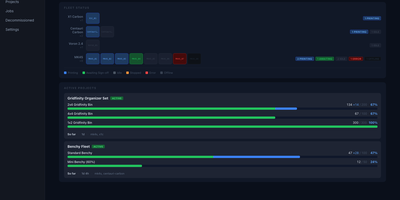
Print Farm Manager runs your whole 3D printer farm, whatever mix of brands it contains, from one self-hosted dashboard that watches every machine and feeds work to the idle ones. The live fleet view refreshes every 15 seconds with each printer's status, progress, and time remaining, so a walk past the screen replaces a walk past every machine. Define projects and parts, upload the G-code, and the scheduler assigns jobs to whichever suitable printer frees up next. When a print finishes, an operator confirms the result before the next job starts, which stops one failed bed from wasting a queue of filament overnight. Prusa machines connect over PrusaLink, Elegoo over SDCP or MQTT, Bambu over MQTT and FTPS with AMS slot selection, and Klipper and OctoPrint machines over their REST APIs, all in the same fleet. Onboarding a roomful of printers takes one CSV import instead of fifty afternoons of clicking, and the TV dashboard mode turns a spare monitor into a shop wall status board. The whole farm, configuration and job history included, exports to a single JSON file for backup or migration. It is built for a trusted local network, reached on port 3000 over the LAN or a VPN. Running on a dedicated VPS on RepoCloud with guaranteed CPU, RAM, and SSD, full root SSH access, and a browser serial console. MIT licensed.
BlogFactory
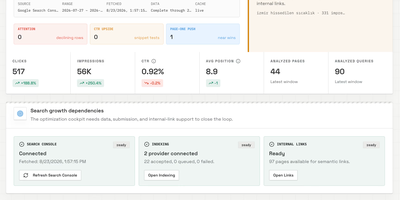
BlogFactory is the first open-source agent control plane purpose-built for multi-site content operations, shipping 16 distinct capabilities across four operational pillars — Operate, Grow, Control, and Deliver — in its v0.1.0 release. The platform keeps source evidence, AI-generated drafts, revisions, SEO metadata, human review, preflight checks, and CMS delivery destinations in one workspace while enforcing a server-side authority ceiling that prevents agents from ever publishing live content, accessing credentials, or performing administrative actions. AI agents connect through a Streamable HTTP MCP endpoint with OAuth authentication and site-scoped tool discovery, compatible with Codex, ChatGPT, and any MCP-capable client. Content creation supports single articles from keywords, titles, URLs, PDFs, text, or YouTube sources, batch campaigns, and programmatic content via reusable templates with structured data rows. The Search Growth module connects Google Search Console complete-day data to ranked optimization opportunities, 30-day growth plans, content classification by signal type (growing, low-CTR, almost-ranking, page-two, zero-click), indexing checks, and semantic internal-link suggestions. Brand Voice separates global voice rules, writer profiles, knowledge context, and brand guidelines from article mechanics. Approved drafts are delivered as CMS drafts to WordPress, Ghost, Wix, or Framer through idempotent, optimistic-locking-protected handoffs with explicit destination selection and preflight validation. The stack runs on React/Vite, a Hono/TypeScript API, PostgreSQL, and MinIO via Docker Compose, with providers including OpenRouter, OpenAI, and Google services under a bring-your-own-AI model. Running on a dedicated VPS on RepoCloud with guaranteed CPU, RAM, and SSD, full root SSH access, and a browser serial console. AGPL-3.0 licensed.
OpenResto
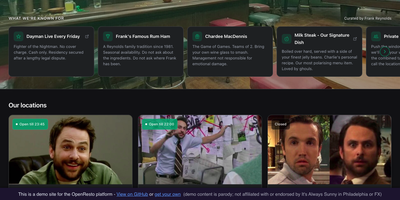
OpenResto is a self-hosted booking system that lets restaurants, bars, and cafes take reservations from their own website instead of paying a platform for every cover. Guests browse your locations, pick a party size, date, and time, and the exact table is held for five minutes while they type a name and email, with no account to create and nothing to install. Slots are grouped into Lunch, Dinner, and Off-Peak so guests jump straight to the sitting they want, and confirmation pages offer calendar export, reminders, and directions. Staff run the night from a dashboard with a live bookings list, a day timetable, and a service view, extending or cancelling reservations and pausing new bookings during private events without editing any configuration. One instance manages several restaurants, each with its own floor sections such as Patio or Bar, opening hours in its own timezone, policies, and pacing rules. The whole guest experience carries your name, colors, and icon, and the same screens can even be published as your own phone app. Every admin action lands in an append-only activity trail, and scoped API keys let your other tools read bookings without ever seeing guest contact details. Running on a dedicated VPS on RepoCloud with guaranteed CPU, RAM, and SSD, full root SSH access, and a browser serial console. MIT licensed.
Headroom
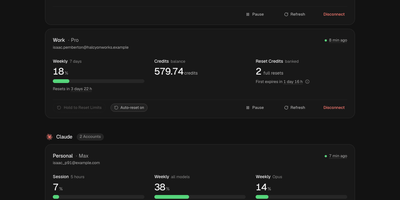
Headroom answers the question every multi-plan AI subscriber asks mid-task: which of my accounts still has room to work? It puts the live limits, reset times, credits, and spend of Claude, Codex, Cursor, Copilot, Grok, Antigravity, and Vercel AI Gateway accounts on one self-hosted dashboard instead of seven provider pages. Connect each account once, through its official CLI sign-in or a credential import, and a background scheduler refreshes every figure on schedule, renews tokens before they expire, and keeps 90 days of readings. Five-hour sessions, weekly pools, per-model limits, credit balances, banked resets, and on-demand spend sit side by side, and unreported figures show as unknown rather than a fake zero. Compare ranks same-provider accounts by the room they have left and names the one to use next, while Timeline lays every reset window on a two-week calendar. Analytics charts when you work, when you run dry, and whether each plan fits, and Wallet totals subscriptions, usage spend, and top-ups in one currency with renewals and budget alerts. In-app notices, Telegram messages, and signed webhooks warn about low limits, expiring resets, and broken sign-ins, and optional automations can spend a banked Codex reset or log a credit top-up the moment it lands. Personal, work, and side-project accounts stay separate under one owner login with passkeys and a Privacy Mode that blurs emails on screen. Running on a dedicated VPS on RepoCloud with guaranteed CPU, RAM, and SSD, full root SSH access, and a browser serial console. MIT licensed.
Docker Updater
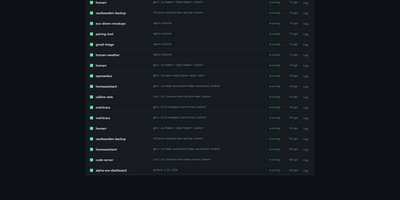
Docker Updater puts you back in charge of container updates: it watches your registries for newer images, and nothing updates until you approve it, so no database restarts itself at dinner. Polls run on a schedule you set, and each container card shows the newer image waiting before anything is pulled. The check costs nothing: it compares the digest your container runs against the registry manifest without pulling a byte, across Docker Hub, GHCR and other Bearer-token registries. Read the last five GitHub releases for an image before committing, update one container or a batch, and watch the pull percentage, layer count and recreation step stream live on the card. If the new container fails to start, the old one returns automatically, and you can keep a backup even after a clean update. Not ready? Defer an update for 7, 14, 30 or 90 days, or indefinitely, and it leaves your notifications alone until then. Several Docker hosts join the same dashboard over SSH or TCP with health indicators, and Compose stacks restart together so services find new addresses. Notifications arrive through an auto-generated ntfy topic or your own Apprise URL, every update keeps a persistent log, and a reclaimable-images view shows what disk space old images hold. The dashboard serves on port 9090 in English or Simplified Chinese, with optional login. Running on a dedicated VPS on RepoCloud with guaranteed CPU, RAM, and SSD, full root SSH access, and a browser serial console. MIT licensed.
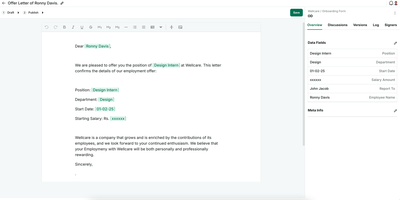
Wraft
Wraft takes the documents your business runs on, from offer letters and contracts to reports, and gives them a proper lifecycle instead of a life scattered across word processors and email threads. Designers capture the house style once as themes and layouts, template authors build documents from reusable blocks and variants with dynamic fields, and everyone else simply fills in the values and generates a finished, on-brand PDF. Flows define how a document travels from drafting through review and approval to signing and distribution, with an activity log that shows who touched it and when. Pipelines go further, turning one set of data inputs into many generated documents automatically, which is how a hundred personalized letters stop being a hundred manual edits. Workspaces keep teams, roles, and fine-grained permissions separate per organization, imported templates bring existing documents into the system, and because everything is stored as Markdown and JSON your content stays readable and portable long after any single tool. Running on a dedicated VPS on RepoCloud with guaranteed CPU, RAM, and SSD, full root SSH access, and a browser serial console. AGPL-3.0 licensed.
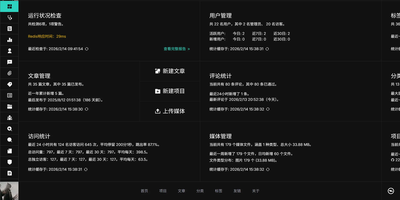
NeutralPress
Bloggers and small communities who love static-site speed but miss a real admin panel get both from NeutralPress, a dynamic CMS that regenerates pages only when content changes and serves everything else like a static site. You write in a WYSIWYG editor or in Markdown and MDX, manage drafts and versions, and build custom pages by dragging components together with live preview, all inside a backend that shares the frontend's design language instead of feeling like a separate era. A media system compresses and optimizes images, shows EXIF data, builds photo walls, and guards against hotlinking, while tags and categories organize the archive. Readers get nested comments with moderation and anti-spam, full-text search tuned for content and code terms, RSS and newsletter subscriptions, and a friend-links system that checks its own links and hides the dead ones. Behind the scenes, multi-role permissions, OAuth and passkey sign-in, two-factor authentication, rate limiting, audit logs that can restore changes, visitor analytics with keyword and device breakdowns, and scheduled health checks keep the site safe and understood. Storage can live on local disk, S3, R2, or other object stores, with several strategies running side by side. Running on a dedicated VPS on RepoCloud with guaranteed CPU, RAM, and SSD, full root SSH access, and a browser serial console. MIT licensed.
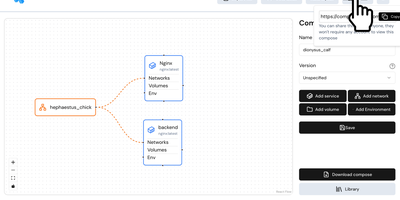
Compose Craft
Compose Craft is an open-source visual diagramming and management platform that transforms raw Docker Compose configuration files into an interactive canvas of interconnected service nodes. Developers can drag and drop container services to map complex microservice architectures, automatically wiring port mappings, internal bridge networks, volume mounts, and dependency relationships. The real-time synchronization engine reflects every node repositioning, environment variable adjustment, and resource constraint directly into standard docker-compose syntax alongside a live editable code preview pane. Teams can import existing configuration files to diagnose routing conflicts, auto-format tangled service trees, and generate clean architectural documentation for operational handoffs. Engineers can generate shareable read-only public links to demonstrate infrastructure topologies to teammates and external reviewers without forcing them to register accounts. The built-in playground lets administrators experiment with container restart policies, healthcheck definitions, build contexts, and secret keys before deploying to production hosts. Running on a dedicated VPS on RepoCloud with guaranteed CPU, RAM, and SSD, full root SSH access, and a browser serial console. MIT licensed.

Urocissa
Urocissa is a self-hosted photo and video gallery engineered to browse, search, and filter a million-image library in under a second on modest hardware. Its photo stream scrolls endlessly without pagination or lazy loading, flying past the browser DOM height limit that breaks other galleries long before a million items. Search understands boolean operators, so a query mixing and, or, and not narrows a lifetime of photos in milliseconds, and select-all is equally instant across the whole collection. Point it at folders and it watches them for new arrivals, importing photos and videos automatically while duplicate detection keeps redundant copies out. EXIF data is extracted for every image, and your own tags layer manual organization on top, with timeline navigation and rotation built in. Albums share collections with family or clients, a read-only mode publishes a public gallery safely, and videos play inline without leaving the page. The index that makes this fast lives in memory at roughly half a gigabyte per million photos, and the whole application ships as a binary of about 25 megabytes, optionally protected by a password. Running on a dedicated VPS on RepoCloud with guaranteed CPU, RAM, and SSD, full root SSH access, and a browser serial console. MIT licensed.
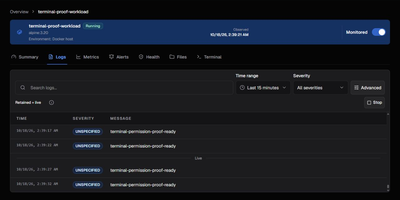
LogForge
LogForge puts container logs, metrics, events, alerts, and guarded fixes behind one self-hosted web UI for Docker. The overview gathers container health, status, logs, metrics, Docker events, and file access for its host, so a sick container gets inspected without juggling docker commands across terminals. Logs stream in real time, interactive terminals open into running containers, and collected logs, metrics, and events are stored for later review and trend checks. Alert rules watch logs, metrics, and container events, and one-click templates cover stability, performance, log, and security signals. Fired rules notify through Email, Slack, Teams, Discord, Telegram, Gotify, or webhooks, and alert history records acknowledgements plus delivery attempts. A rule can also act: restart, stop, start, kill, or run a script, throttled by cooldowns, rate limits, backoff, and verification delays so automation cannot thrash a host. Other Docker hosts join through mTLS-protected agent enrollment, letting one console watch a small fleet. Running on a dedicated VPS on RepoCloud with guaranteed CPU, RAM, and SSD, full root SSH access, and a browser serial console. Apache-2.0 licensed.
WPMgr
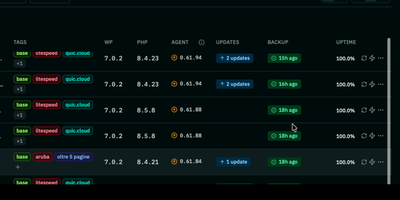
One dashboard for every WordPress site you look after: that is WPMgr, a self-hosted control panel that replaces dozens of separate wp-admin tabs with a fleet view you own. Enroll a site by URL, paste a one-time code into its agent plugin, and the connection flips live on its own. From there the daily grind changes shape. Backups stream straight out of PHP with no mysqldump and no shell access, chunked and deduplicated, scheduled per site, and restorable as a whole site or just the database. Updates stop being a weekend ritual: preview the run dry, apply it across the fleet, and let the automatic snapshot and health check roll back a bad release before a client notices. Uptime probes split DNS, TLS, and time-to-first-byte, flag certificates about to expire, and open exactly one incident per outage instead of a storm of alerts. The Sites grid leads with a fresh screenshot of every homepage, so the dead site is visible before the client calls. Core files get diffed against official WordPress.org checksums, brute-force logins meet escalating lockouts, and an IP firewall fires before other plugins load. Page caching, Redis object cache, image optimization, and per-site email fill the remaining gaps, and every command between dashboard and agent is signed so nothing can be forged in transit. Running on a dedicated VPS on RepoCloud with guaranteed CPU, RAM, and SSD, full root SSH access, and a browser serial console. AGPL-3.0 licensed.