Redmine
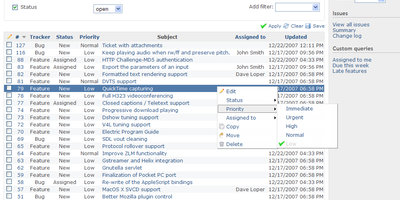
Nearly two decades running engineering organizations: Redmine is the veteran open-source project management and issue tracker, a Ruby on Rails application (GPLv2) still in active development. Its core strength is configurability: define your own trackers (bug, feature, task, or anything else), issue statuses, and role-based workflows that control exactly which transitions each role may perform, then extend records with custom fields of every type. Issues support subtasks, relations (blocks, precedes, duplicates), watchers, categories, and full journaled history, with saved custom queries and cross-project filtering for slicing the backlog any way you need. Around the tracker sit Gantt charts and calendars, a roadmap driven by versions, per-project wikis, forums, news, and document repositories, plus time tracking with estimated versus spent hours and activity-based reporting. Multi-project support runs deep - subprojects, per-project modules, and granular role-based permissions - and repository integration (Git, Subversion, Mercurial) links commits to issues automatically. Email notifications, inbound email-to-issue creation, LDAP authentication, a REST API, and a large plugin and theme ecosystem round it out. Recent 6.x releases brought substantial query and rendering optimizations. Self-hosting keeps your entire project history in your own database, free of per-seat licensing.
RustDesk Console
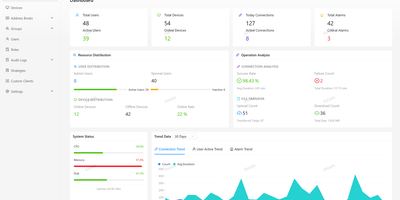
RustDesk Console is a self-hosted management panel for RustDesk that gives administrators one place to oversee devices, address books, access policies, and audit trails across a whole remote desktop fleet. The dashboard opens with overview statistics, trend charts, and real-time monitoring across several metrics. Device pages group machines, track online status, apply batch operations, and force-disconnect a session when something looks wrong. Personal and shared address books carry tags, peer entries, and access rules, so teams can hand out the right connections to the right people. Strategies can be assigned to a device, a user, or a group, with priority resolution deciding which wins and heartbeat delivery pushing settings to clients. Four audit logs record connections, file transfers, security alarms, and console operations for compliance reviews. Sign-in supports TOTP two-factor codes, passkeys, OIDC single sign-on, and email verification. An optional server profile runs hbbs and hbbr beside the console and manages relay nodes from the same interface. Running on a dedicated VPS on RepoCloud with guaranteed CPU, RAM, and SSD, full root SSH access, and a browser serial console. AGPL-3.0 licensed.
Ties
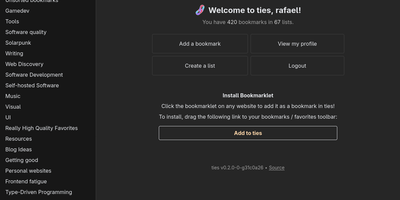
A federated bookmark manager written in Rust: Ties (formerly linkblocks) is your own small corner of the web for saving, organizing, and sharing good pages, connected to the fediverse over ActivityPub. Instead of rigid folders, bookmarks live in arbitrarily nested lists that link together into a knowledge graph. Saved pages are fetched, converted to a readable archived version, and stored in the database, so full-text search covers titles, URLs, and the actual page text - and the content survives if the original disappears. The federation model is deliberately anti-viral: there is no global timeline and no algorithmic feed. You publish public lists for anyone, follow users whose taste you trust, and mark trusted users whose bookmarks become part of your search range - extendable to trusted-users-of-trusted-users for a wider net. Public bookmarks post to Mastodon timelines, and WebFinger lookup makes your handle discoverable across fediverse platforms. Operationally it is about as light as web software gets: a single binary with all assets baked in, integrated TLS so it can run without a reverse proxy, PostgreSQL as the only dependency, OIDC single sign-on, and a bookmarklet for one-click saves. Note the project is alpha: single-user instances only, and all data should be considered public. AGPL-3.0 licensed, built with Rust and htmx.
OpenMES
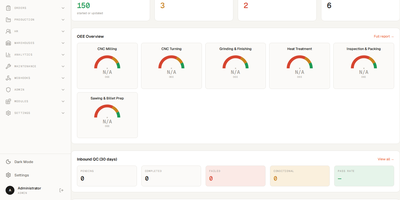
Admins, supervisors, and operators each get their own screens in OpenMES, a free self-hosted manufacturing execution system for small factories. Drag work orders across weekly, daily, hourly, and monthly planner views, and any order that stock cannot cover gets flagged. Automatic scheduling drafts a feasible plan from shift calendars, maintenance, and material shortages, and nothing changes until a supervisor applies it, with undo. Work orders carry partial batches, reusable process templates, and priority scores built from customer tier, planned quantity, and hours until due, and CSV or Excel imports bulk-load orders, materials, and recipes. Operators work from touch-optimized tablet queues, where one tap starts, completes, or reports an issue, even offline, and a critical issue halts production automatically. When a machine stops, MQTT, Modbus TCP, or OPC UA signals record the downtime automatically, and the same signals drive good and reject counters and OEE. At goods-in, an inbound inspection records pass or fail criteria and a disposition such as accept, rework, scrap, or quarantine. Material lots track received and available quantities with hold and release status, and the production cost report splits each finished order into material, labor, and additional costs, with CSV export. Supervisors follow the shift on a live monitor. Webhooks, a REST API, and hook-based modules connect OpenMES to ERP systems and custom code. Running on a dedicated VPS on RepoCloud with guaranteed CPU, RAM, and SSD, full root SSH access, and a browser serial console. AGPL-3.0 licensed.
Nowen Note
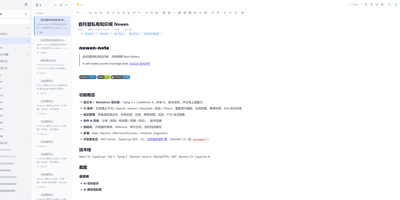
Nowen Note is a self-hosted knowledge base where your notes, tasks, daily journals, and mind maps live in one private workspace you control. One tree holds folders, rich-text documents, and Markdown notes side by side, with drag-and-drop ordering, unlimited nesting, colored tags, pinning, and full-text search across everything. Each note can switch between a rich-text editor and Markdown with live preview, split view, outlines, tables, code blocks, math formulas, diagrams, comments, and version history. Connect the AI provider you prefer, such as an OpenAI-compatible API, Gemini, DeepSeek, or local Ollama, to continue drafts, rewrite passages, translate, summarize, and ask questions answered from your own notes. Tasks get list, board, calendar, and timeline views with dependencies, recurring rules, reminders, and templates, while daily journals capture short entries, moods, and photos and roll them into AI weekly and monthly reviews. Teammates edit together in real time, and folder-level permissions, passwords, allow and deny rules, share links with expiry dates, and guest comments decide exactly who sees what. Imports arrive from Obsidian, SiYuan, Word documents, web pages, and plain Markdown, attachments can live on local disk or S3-compatible storage, and scheduled backups travel to email or WebDAV. Keep working offline with a cached workspace that syncs when you reconnect, clip pages from the browser extension, and connect other tools through the OpenAPI, SDK, webhooks, and MCP server. Running on a dedicated VPS on RepoCloud with guaranteed CPU, RAM, and SSD, full root SSH access, and a browser serial console. GPL-3.0 licensed.
TgWitness
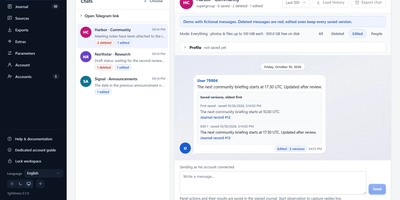
TgWitness preserves what your Telegram account actually saw, even when a message is edited three times and deleted before breakfast. A collector watches the chats, folders, or whole account you choose and records every captured message, edit version, and deletion notice in a local journal. The workspace reads like a familiar conversation view, with captured edits and deletion markers alongside the messages, and a searchable journal timeline ties observations together across chats. Open the edit history to compare versions side by side without overwriting the earlier observation. Connect people, replies, and shared links across recorded chats to trace how a claim travelled. Each account gets an isolated workspace with its own session and signing key, so separate investigations never contaminate each other. When a case moves, export the record as readable HTML, structured JSON or CSV, or a signed ZIP bundle whose hash-linked, Ed25519-signed records expose any tampering, verifiable offline with an independent fingerprint. Optional local OCR and transcription make media searchable, signed webhooks announce new observations, and encrypted backups copy the journal and timestamped checkpoints to S3-compatible storage. Read-only MCP access lets approved tools query the archive without touching the collector. Coverage reports show honestly where downtime left gaps. Running on a dedicated VPS on RepoCloud with guaranteed CPU, RAM, and SSD, full root SSH access, and a browser serial console. MIT licensed.
Playerr
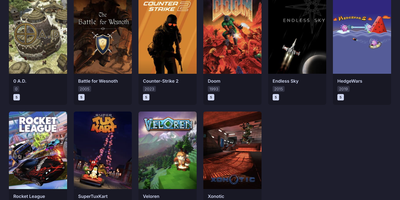
Playerr is a self-hosted library manager that organizes your game collection the way Radarr and Sonarr organize movies and shows, with scanning, metadata, and automated downloads in one web interface. Point it at your game folders and its recognition engine recursively identifies platforms and maps local files to the right titles. Each game is enriched with artwork, descriptions, ratings, and release dates pulled from IGDB and Steam, turning a pile of folders into a browsable collection. Search indexers through Prowlarr and Jackett when you want to grow the library, then hand downloads to qBittorrent, Transmission, SABnzbd, or NZBGet and watch progress from the same screen. Folders are renamed automatically from sanitized IGDB titles while the original release structure stays intact, so the library stays tidy without manual filing. Your Steam library syncs into the same unified view alongside locally stored games. Installation packages are processed automatically, with the primary executable identified to streamline setup. Remote access can be enabled from settings so the collection is reachable from phones, tablets, and laptops on your network. Running on a dedicated VPS on RepoCloud with guaranteed CPU, RAM, and SSD, full root SSH access, and a browser serial console. MIT licensed.
Nacos
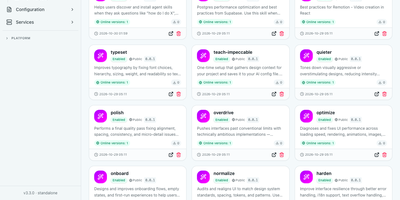
Every microservice has to find the others and learn its own settings, and Nacos is the discovery and configuration platform that answers both needs from a single server. Producers register instances with names, addresses, weights, and metadata, and consumers look services up or subscribe to changes, so a fresh instance receives traffic without hand-edited load balancer rules. Health checks drop dead instances from discovery results, while weight controls in the console shift traffic gradually during a rollout or drain a node before maintenance. Configuration lives apart from code: publish properties and YAML under a Data ID and Group, split environments with namespaces, and subscribed clients apply changes within seconds. History keeps every published version, so a typo is recoverable: rollback republishes an earlier value, and listener queries show which clients picked the change up. Gray releases push a new value to a chosen slice of instances first, so a risky flag reaches a fraction of the fleet before the rest. The registry covers AI building blocks too: MCP servers register their tools, prompts and skills carry versions and visibility, and agents publish discovery cards that gateways look up like any service. Spring Cloud, Dubbo, and Kubernetes workloads plug in through SDKs for Java, Go, Python, and other languages; run one standalone node for development or a Raft-backed cluster for production. Running on a dedicated VPS on RepoCloud with guaranteed CPU, RAM, and SSD, full root SSH access, and a browser serial console. Apache-2.0 licensed.
GrayMatter
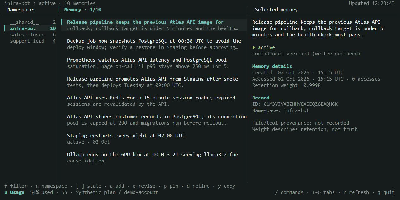
GrayMatter gives AI agents a persistent memory that survives between sessions, so every new run starts from stored facts instead of a blank slate. Agents save facts once and recall them by meaning, receiving the top eight relevant entries instead of a full history replay. A consolidation cycle extracts typed entities (people, organizations, and projects) and links co-mentioned items into a knowledge graph that grows from ordinary use. Every recall can return receipts showing the per-signal ranks, fused score, and provenance behind each fact, so you can audit why the agent remembered something. Deterministic decay gives facts a 30-day half-life and retires stale entries to tombstones, keeping the store current without manual cleanup. Claude Code hooks inject routine recall on every turn, and the context-sync command projects top facts into CLAUDE.md or AGENTS.md inside a set token budget. Agents curate their own memory through the memory_reflect tool, adding, updating, forgetting, and linking facts during a session. The workbench opens six views (Memory, Recall, Activity, Graph, Usage, and Status) for browsing namespaces, inspecting ranking receipts, and tracking subscription limits or API spend. Connect Claude Code, Cursor, Codex, OpenCode, Antigravity, or any MCP-compatible client over stdio, or call the REST API server on port 8080 from your own tooling. Export the graph to Obsidian with one command, turning entities into notes and edges into links. Running on a dedicated VPS on RepoCloud with guaranteed CPU, RAM, and SSD, full root SSH access, and a browser serial console. MIT licensed.
Scrumboy
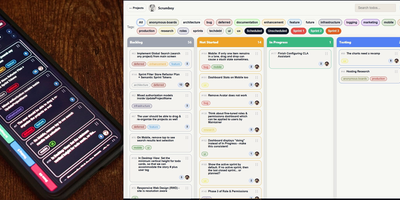
Scrumboy is a Kanban and sprint management tool that ships as a single Go binary backed by SQLite, deploys in under ten seconds via Docker, and uniquely integrates with AI coding agents through a standards-compliant MCP JSON-RPC endpoint. The dual-mode architecture supports Full mode with bootstrapped authentication, TOTP two-factor auth, OIDC/SSO integration through Keycloak, Authentik, Auth0, or Entra ID, role-based access control across Owner, Admin, User system tiers plus per-project Maintainer, Contributor, and Viewer roles, and Anonymous mode that generates instant shareable boards accessible via unique URLs with zero signup requirement. Custom workflows allow user-defined lane configurations per project including designated "Done" lanes, while sprints with configurable one or two-week cycles include board-level sprint filtering and the ability to disable and re-enable sprint tracking without losing history. Real-time Server-Sent Events power instant multi-user board updates, and outbound webhooks deliver JSON payloads to registered URLs when domain events fire with HMAC signature verification. The MCP endpoint at /mcp/rpc enables native integration with Cursor, Claude Code, and other AI agents through OAuth 2.1 with PKCE authorization, while API access tokens support CLI automation and CI/CD pipelines. Additional capabilities include VoiceFlow voice commands, per-project sticky-note walls, Markdown and Mermaid diagram support in task notes, append-only audit trails, VAPID Web Push notifications, SMTP password reset, Trello import, JSON backup with merge/replace/copy strategies, and 22-language internationalization. Running on a dedicated VPS on RepoCloud with guaranteed CPU, RAM, and SSD, full root SSH access, and a browser serial console. AGPL v3.0 licensed.
Lakasir
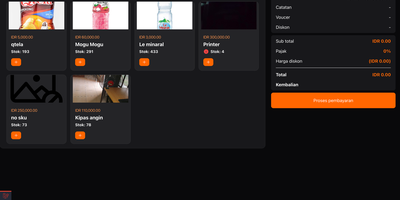
A corner shop, a small cafe, or a minimarket can run its till on Lakasir, a point-of-sale system that keeps sales, stock, and the money owed in one tidy web panel. Cashiers process sales from the cashier menu, apply a discount to a single item or to the whole bill, and print receipts on a USB thermal printer straight from the browser. Products can carry a different price for each basic unit, so a carton, a pack, and a single piece of the same goods all ring up correctly. Purchasing records orders to suppliers, and barcode scanning speeds up receiving, stock counts, and checkout alike. Stock opname sessions walk the shelves with a scanner and reconcile counted quantities against the system, exposing shrinkage before it grows. Receivables track what customers owe the shop and what the shop owes others, with due amounts visible instead of buried in a notebook. Vouchers can be created, handed out, and tracked through redemption, and payment methods are defined by the owner rather than hard-coded. The real-time dashboard watches sales and performance as the day unfolds, and simple accounting rolls income, expenses, and profit into the same picture. Roles and permissions decide who may open the register, edit prices, or see the books. A companion mobile application puts the shop data in a pocket for checks away from the counter. Running on a dedicated VPS on RepoCloud with guaranteed CPU, RAM, and SSD, full root SSH access, and a browser serial console. GPL-3.0 licensed.
HashiCorp Vault
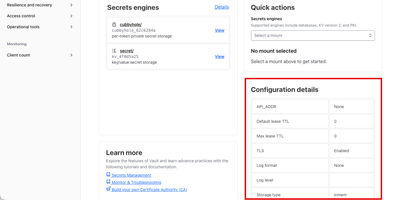
With over 36,000 GitHub stars and adoption by organizations including Adobe, Shopify, and Roblox, HashiCorp Vault is the industry-standard platform for secrets management, encryption services, and privileged access control across hybrid and multi-cloud infrastructure. The key/value secrets engine stores arbitrary secrets with full versioning, soft-delete, and metadata tracking, while dynamic secrets engines generate on-demand, short-lived credentials for AWS, Azure, GCP, databases including PostgreSQL, MySQL, MongoDB, and MSSQL, and SSH access with automatic revocation after configurable lease periods. The PKI secrets engine dynamically issues X.509 certificates on demand with automatic rotation and ACME protocol support, eliminating manual certificate management workflows entirely. Encryption as a service through the transit secrets engine lets applications encrypt, decrypt, sign, verify, and generate HMACs without managing cryptographic keys directly, supporting AES-GCM-256, ChaCha20-Poly1305, RSA-2048/4096, ECDSA-P256/P384, and ED25519 algorithms. Authentication integrates with LDAP, OIDC/OAuth2, SAML, AppRole for machine-to-machine access, Kubernetes service accounts, AWS IAM, Azure Active Directory, and GitHub tokens. Fine-grained ACL policies use path-based rules with glob patterns and sentinel policies for programmatic enforcement. The integrated Raft storage backend provides high-availability clustering without external dependencies, while alternative backends include Consul, S3, DynamoDB, PostgreSQL, and MySQL. The built-in web UI provides a visual interface for browsing secrets, managing policies, configuring auth methods, and monitoring cluster health. Running on a dedicated VPS on RepoCloud with guaranteed CPU, RAM, and SSD, full root SSH access, and a browser serial console. BSL 1.1 licensed.
CockroachDB
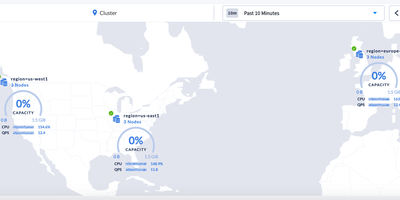
With over 32,000 GitHub stars and adoption by DoorDash, Netflix, and Bose, CockroachDB is the distributed SQL database designed to survive disk failures, machine outages, rack losses, and entire datacenter failures while maintaining strongly-consistent ACID transactions with serializable isolation by default. The architecture layers SQL on a transactional key-value store using the Raft consensus protocol for synchronous replication, automatically splitting data into ranges that distribute and rebalance without manual sharding. PostgreSQL wire protocol compatibility means existing drivers, ORMs, and tools including psycopg2, pgx, ActiveRecord, Django ORM, GORM, Hibernate, and Prisma work without modification. Multi-region capabilities include configurable survival goals at region or zone level, table-level locality settings for pinning data to specific geographies for GDPR compliance, and follower reads for low-latency global queries. The built-in DB Console provides cluster overview dashboards, node maps showing geographical distribution, SQL activity pages tracking statement fingerprints, transaction latency percentiles, session details, and real-time metrics for queries per second, storage capacity, and replication status. Change data capture streams row-level changes to Apache Kafka, Google Cloud Pub/Sub, or webhook endpoints for event-driven architectures. Online schema changes execute ALTER TABLE without locking or downtime, and distributed backup supports full and incremental snapshots to S3, GCS, Azure Blob, and NFS. Running on a dedicated VPS on RepoCloud with guaranteed CPU, RAM, and SSD, full root SSH access, and a browser serial console. CockroachDB Software License (source-available).
ClickStack
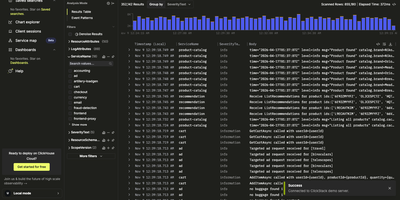
ClickStack is an open-source observability platform that unifies logs, metrics, traces, session replays, and errors in one searchable interface, so engineers can move from an alert to the exact request that broke in minutes. Search uses an intuitive full-text and property syntax (for example level:err), with SQL available when a question needs full analytical power. Live tail streams fresh logs and traces as they arrive, and event deltas surface anomalies by comparing current behavior against earlier windows. Dashboards chart high-cardinality events without a complex query language, and alerts can be created in a few clicks from any search or chart. Session replays connect a user's browser experience to the backend traces and database queries behind it, giving full-stack visibility from click to query. Native JSON string querying handles nested payloads, and the schema-agnostic design works on top of an existing ClickHouse schema instead of forcing a new one. OpenTelemetry is supported out of the box, with SDKs and collectors for Kubernetes, JavaScript, Python, Java, Go, Ruby, PHP, .NET, Elixir, and Rust. The all-in-one Docker image bundles the interface, ClickHouse, the OpenTelemetry Collector, and supporting services on port 8080, and a terminal CLI serves engineers who prefer the shell. Running on a dedicated VPS on RepoCloud with guaranteed CPU, RAM, and SSD, full root SSH access, and a browser serial console. MIT licensed.
Loomio
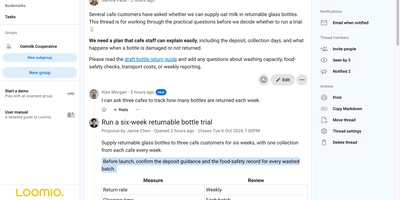
Decisions that scatter across email threads and chat scrollback get one home in Loomio, where a group discusses a question, votes, and publishes what it decided. Every decision starts as a thread with context, comments, @mentions, reactions, tags, and attachments, and tasks inside it carry assignees and emailed due-date reminders. Proposals ask for a defined response plus an optional written reason, using sense check, advice, consent, or consensus templates. Polls handle simple choices, scores, dot voting, ranked choice, meeting-time availability, and multi-winner STV elections. Coordinators set a participation quorum, require a vote share, weight votes, limit voting to appointed delegates, or hide results until close with anonymous voting. Groups nest subgroups, pick Open, Closed, or Secret visibility, and admit members freely, by request, or by invitation. People reply to discussion emails and catch up through a daily digest, and webhook integrations post invitations and outcomes to Slack, Discord, Microsoft Teams, Matrix, and Mattermost. Published outcomes stay searchable, and groups export CSV, HTML, or JSON and print threads to PDF. Comments translate on request, the interface is available in 24 languages, and a user API, server API, and webhooks connect other tools. Running on a dedicated VPS on RepoCloud with guaranteed CPU, RAM, and SSD, full root SSH access, and a browser serial console. AGPL-3.0 licensed.
Thesys
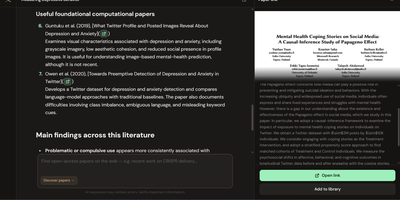
Thesys is a research workspace where you search academic papers, build your own library, and ask questions that answer with citations you can click straight onto the highlighted passage of the PDF. Discovery searches OpenAlex and arXiv in one pool, so a paper you find can be previewed and added to your library without leaving the workspace. Uploaded PDFs are ingested locally, and when you ask a question the answer cites its sources in the document, jumping the preview to the retrieved passage with either a full-passage or a tighter focused highlight. Reader mode opens a paper full-width so you can select any span of text and ask about that exact passage. Document summaries follow a consistent structure of problem statement, methodology, key findings, limitations, and metrics, with citations that still land on the source text. Figures and flowcharts are described during ingest, so questions and summaries can reference them too. When two papers disagree, Compare mode takes one claim and classifies each retrieved pair as corroboratory, contradictory, or neutral, with confidence shown in a side panel. Your bibliography exports as BibTeX, RIS, EndNote, or CSV for whatever reference manager you already use. Papers, embeddings, and chat history stay on your own disk the whole time. Running on a dedicated VPS on RepoCloud with guaranteed CPU, RAM, and SSD, full root SSH access, and a browser serial console. AGPL-3.0 licensed.
Parabol
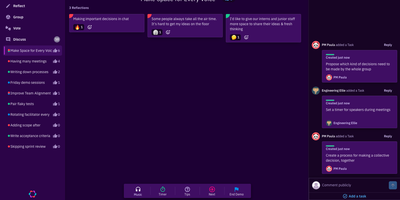
Retrospectives, sprint poker, check-ins, and standups all get a home in Parabol, a meeting workspace that walks agile teams through each ritual one stage at a time and keeps every outcome in one place. A retrospective flows from icebreaker to reflect, group, vote, and discuss, with anonymous reflection cards that stay hidden until everyone is done writing, then cluster into themes before dot voting decides what deserves airtime; Start/Stop/Continue, 4Ls, and Mad/Sad/Glad templates are ready to use or customize. Sprint Poker estimates stories on Fibonacci, T-shirt, or custom scales, pulling backlog items from Jira Cloud, GitHub, GitLab, or Linear and pushing the agreed estimate back. Check-ins work through agenda items and task updates, while standups gather written answers on a recurring schedule so distributed teams stay current across time zones. A facilitator timer sets deadlines for asynchronous contributions, with optional Slack or Mattermost notifications to the team. Action items land on a shared task board with active, stuck, done, and future columns, and Pages hold real-time collaborative notes next to the meetings that produced them. Every meeting closes with a summary of attendees, discussion, and next steps that can be emailed to the team. Running on a dedicated VPS on RepoCloud with guaranteed CPU, RAM, and SSD, full root SSH access, and a browser serial console. AGPL-3.0 licensed.
Atomic CRM
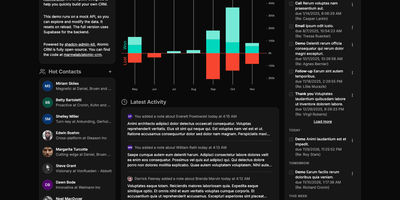
Atomic CRM keeps every contact, company, deal, and follow-up task in one shared workspace that a sales team opens from any browser. Each contact and company carries its full history: call and meeting notes, tasks with reminders, and an activity log that lines up every interaction in order. Email stops living in personal inboxes, because CCing the CRM address files the thread as a note on the right record automatically. Deals sit on a Kanban board where value and owner are printed on every card, so the quarter's state is visible at a glance and stalled opportunities stand out. Contact import and export move spreadsheets in and out, and custom fields capture the attributes your business tracks rather than a vendor's defaults. The team signs in with Google, Azure, Keycloak, or Auth0 accounts it already has. Themes, fields, and components are yours to reshape, and upstream component improvements flow into your fork through the project's component registry. An API connects the CRM to the rest of your stack, and the same PostgreSQL backend runs on Supabase cloud or your own server. Running on a dedicated VPS on RepoCloud with guaranteed CPU, RAM, and SSD, full root SSH access, and a browser serial console. MIT licensed.