Whirl
Whirl puts every top AI model in a single conversation and remembers what you were working on last week, so you can switch models mid-thought without losing the thread. Ask for a report, a chart, or a small interactive page and it appears as a living artifact in a side panel, still editable while you keep chatting, and shareable by link when it is ready to leave the conversation. Connect your own tools over MCP, with OAuth sign-in handled for you, or install skills that teach the app new tricks your team relies on. Long-term memory carries your preferences and project context from chat to chat, and live web search with page reading grounds answers in today's pages instead of the model's training data. Sensitive threads can be locked with a password that encrypts them on your device, where the server never sees the key and only zero-retention models may answer. Around those headline pieces sits the everyday kit: incognito mode, a message queue for when you think faster than the model replies, voice input, image generation, file attachments, folders, and sharing controls. An admin console manages the model catalog, integrations, and skills, and the interface itself switches between light and dark with your choice of accent color, installable as a mobile web app. Running on a dedicated VPS on RepoCloud with guaranteed CPU, RAM, and SSD, full root SSH access, and a browser serial console. MIT licensed.
CompozyOS
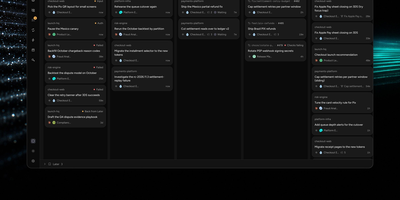
CompozyOS keeps your Claude Code, Codex, and Cursor agent sessions alive after the terminal closes and sorts them on one board by who owns the next step. Sessions land in Needs you, Working, Waiting, In review, or Done. Parallel agents each get their own worktree. The branch, the pull request, and its checks sit on the session. Fork a session, rewind it to a checkpoint, steer it mid-turn, or hand it to another agent CLI. Approvals hold a tool call until a person allows it. Always-on agents check in on a schedule, and a quiet check costs no model call. They watch sources such as new GitHub issues and propose actions. Approve each proposal, or let the agent act alone up to a daily limit. Loops pair a goal with a verifier and an iteration cap. Every Loop ends in one of seven named outcomes. Schedules, runtime triggers, and signed webhooks start agents on their own, and every run is recorded. Fifteen built-in integrations cover ten agent CLIs and five providers, on your own keys. A Marketplace adds extensions, plugins, and MCP servers in one step. The daemon starts reachable only from the machine itself, and remote access stays off until you turn it on. Running on a dedicated VPS on RepoCloud with guaranteed CPU, RAM, and SSD, full root SSH access, and a browser serial console. MIT licensed.
Hatamoto
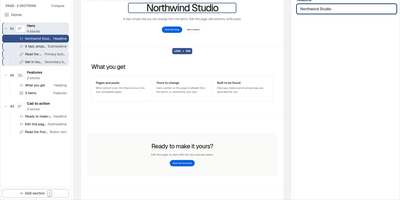
Hatamoto is a self-hosted CMS for site owners who want search engines and AI assistants to read their pages as well as people do. Pages come together on a visual canvas of sections and blocks, previewed at desktop, tablet, and phone widths, with undo and version history, while posts get a writing editor with SEO checks, scheduling, and suggested internal links. Every page is a typed record, so one edit updates the page, its structured data, its sitemap entry, and its llms.txt line together. Analytics count AI crawler fetches on the server, check each claimed bot against its operator's published IP ranges, flag impostors, and show visits sent by assistants as their own channel, all without cookies. You can allow or block crawlers by purpose, such as training, search, or user requests. Agents connect over MCP with scoped API keys that can expire, drafting and publishing pages, editing menus and redirects, and reading reports, while an audit log records every call. Moving from WordPress starts with a scan report predicting what imports cleanly, then copies content and menus and adds a permanent redirect for every changed address. Plugins and themes install as signed packages that list the permissions they request, and updates roll themselves back when the health check fails. Forms collect submissions with spam filtering and CSV export. Running on a dedicated VPS on RepoCloud with guaranteed CPU, RAM, and SSD, full root SSH access, and a browser serial console. Apache-2.0 licensed.
Preloop
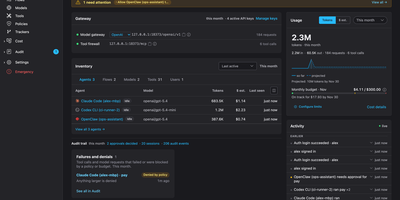
Preloop is a self-hostable control plane that governs every AI agent tool call and model call, and can run ticket-triggered agent work that returns as reviewable pull requests. An MCP firewall can allow, deny, or hold any tool call for approval, with require-justification rules written as YAML and CEL policy. Human approvals arrive on mobile, watch, Slack, Mattermost, email, webhook, or the command line, and agents can ask a person a question before continuing. The model gateway speaks OpenAI, Anthropic, and Gemini formats, applies budgets and allowed-model lists, and attributes token spend by model, agent, session, API key, flow, and user. Flows start agents from GitHub, GitLab, Bitbucket Cloud, Jira, webhooks, or CI jobs, in hosted containers or on private runners that connect over an outbound WebSocket. Twenty-one presets review pull requests, implement issues, triage tickets, scan for vulnerabilities, and collect evidence packs. Operators can steer a running agent from the console, phone, or watch with notes, then review the resulting pull request. One session timeline records tool calls, model calls, policy decisions, approvals, spend, outcomes, and synchronized recordings. Fleet Map shows people, devices, agents, models, and observed work in one view. An account kill switch blocks gateway and tool traffic and stops managed runs, with audited recovery. Running on a dedicated VPS on RepoCloud with guaranteed CPU, RAM, and SSD, full root SSH access, and a browser serial console. Apache-2.0 licensed.
MCPProxy
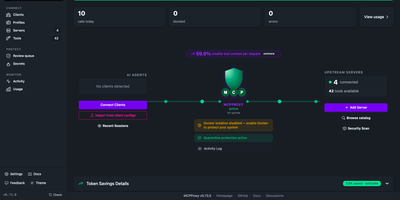
MCPProxy puts one safe endpoint in front of every MCP server your AI agents use, and it holds each new server in quarantine until a person approves it. Add stdio or HTTP servers on the Servers page, then review the captured tool definitions and scanner findings in the Review queue before any agent can call them. The Tools page lists every tool with a Read, Write, or Destructive tier, an approval state, and a usage count, plus switches to hide whatever you do not want exposed. Agents see a short set of discovery and call tools instead of the full catalog, and the Home dashboard estimates how much context that saves per request. The Activity Log records each call with its server, intent, status, and duration, and exports for audits. The Usage page charts calls per tool, response sizes, errors, latency, and activity over time, filtered by profile, client, or token. Profiles and agent tokens scope what each client may reach, a Secrets page keeps credentials out of config files, and a setup wizard connects Claude Code, Claude Desktop, Cursor, Windsurf, and VS Code. Platform teams and solo builders get one place to see and control everything their agents can touch. Running on a dedicated VPS on RepoCloud with guaranteed CPU, RAM, and SSD, full root SSH access, and a browser serial console. MIT licensed.
Token Bank
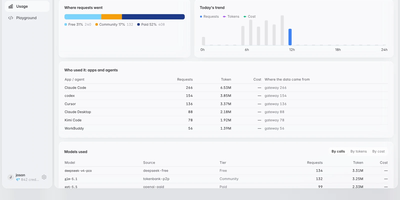
Run one local gateway and every AI coding agent you use shares the same address, key, and usage ledger. Token Bank onboards Claude Code, Codex CLI, Kimi Code, OpenCode, Claude Desktop, OpenClaw, and WorkBuddy in one click by injecting base-URL variables or patching configs, and Revert restores the official settings. Agents keep native model names while the gateway quietly reroutes requests to Ollama, Groq, Cerebras, or DeepSeek, converting between Anthropic Messages, OpenAI Chat, and Codex Responses. Route chains step from local models to free APIs, subscriptions, and pay-as-you-go keys with failover, scene and task presets, and optional lossless JSON compression. Every call is traced with route, model, tokens, latency, and cost, local session logs are imported, and signed-in devices merge into one dashboard. An assets library holds MCP servers, skills, prompts, and agent templates, projects them onto each installed runtime, and a rule-driven butler repairs broken projections. The unified agent API dispatches tasks to local apps, professional templates, external agents joined by pairing code, or agents hired per task, returning results synchronously, in the background, or as a stream. A credit-based market lets you rent out idle quota while keys stay on your machine. The container build serves the desktop interface in a browser on port 11431, with the gateway on 11430 and access control left to your firewall or proxy. Running on a dedicated VPS on RepoCloud with guaranteed CPU, RAM, and SSD, full root SSH access, and a browser serial console. Apache-2.0 licensed.
MCPJam Inspector
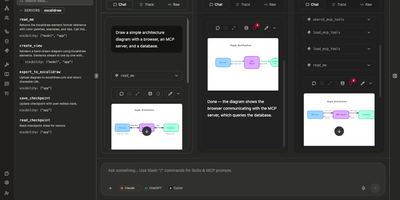
Every AI client reads a Model Context Protocol (MCP) server a little differently, and MCPJam Inspector is the testing platform that shows exactly where yours breaks before your users find out. Connect a remote HTTP server or a local STDIO one, then send a single prompt to Claude, ChatGPT, and Cursor panes side by side and compare answers, tool calls, token counts, and latency in Chat, Trace, and Raw views. MCP App widgets render inline in a device emulator with locale, light and dark mode, and safe-area controls. The OAuth Debugger walks authorization one request at a time across the 2025-03-26, 2025-06-18, 2025-11-25, and draft 2026-07-28 spec versions, with dynamic client registration, pre-registered clients, and client ID metadata documents. Conformance runs score protocol, apps, tasks, and OAuth checks in one report, and Evals turn expected tool calls into repeatable test cases that models must pass. Run tools, resources, prompts, and elicitation flows by hand with every JSON-RPC message logged, script the same checks from the CLI and SDK, and gate pull requests in GitHub Actions or GitLab CI. Chat uses free hosted models or your own OpenAI, Anthropic, Google, xAI, Groq, or Mistral keys. Running on a dedicated VPS on RepoCloud with guaranteed CPU, RAM, and SSD, full root SSH access, and a browser serial console. Apache-2.0 licensed with an enterprise-licensed evals and services module.
cvENGINE
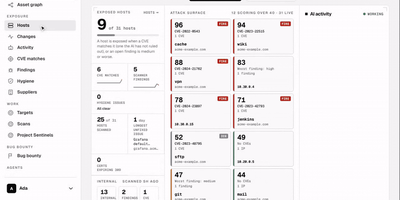
cvENGINE takes a domain name and returns a verdict on which of today's exploited vulnerabilities can actually reach you, with evidence attached. Continuous discovery builds a Shodan-style inventory of subdomains, IPs, ports, products, versions, certificates, and technologies, then rates every CVE as fire, smoke, or ice from real exploitation sources and scores each host from 0 to 100. Read-only validation reproduces a finding and records the exact command used. Optional AI triage sorts matches into confirmed, likely, or needs validation. A live dashboard, a change timeline with screenshot diffs, saved searches with alerts, and one-click PDF reports keep teams current. Sentinels run scans from other machines, including inside private networks, and an optional OpenVAS add-on extends coverage. Hygiene checks cover TLS, email and DNS records, exposed databases, cloud storage buckets, and WordPress sites. Organizations, roles, two-step sign-in, a REST API, and Slack, Discord, Telegram, and Lark alerts support shared use. A bug bounty workbench imports program scope and drafts reports. Running on a dedicated VPS on RepoCloud with guaranteed CPU, RAM, and SSD, full root SSH access, and a browser serial console. GPL-3.0 licensed.
Heym
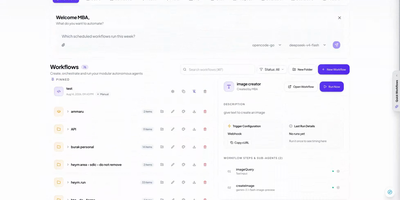
Heym lets you build AI agents and workflows on a visual canvas, run them from APIs, schedules, or chat, and watch every execution, token, and cost. Describe a system in text or voice and the AI Assistant draws the graph. Prefer hands-on? Compose it from LLM and Agent nodes, conditions, switches, loops, merges, and sub-workflows. An orchestrator calls named sub-agents in parallel. RAG runs on Qdrant or pgvector, and a knowledge graph keeps facts across runs. Triggers: cron, webhooks, messaging integrations, inbox events, WebSocket messages. Playwright nodes automate browsers, and Codex or OpenCode steps work on repositories. Checkpoints pause an agent so a person can accept, edit, or refuse before the run resumes. Every run lands in History. Traces list model requests, tool calls, tokens, latency, and USD cost, and alerts fire on errors, duration, spend, or run count. Evals compare prompts across models. OpenTelemetry exports reach Jaeger, Grafana Tempo, or Datadog. Publish workflows as REST or SSE endpoints, as MCP tools for Claude Desktop and Cursor, or as public Portal chat pages, then add dashboard widgets, Data Tables, a Kanban Board, and Drive file sharing. Running on a dedicated VPS on RepoCloud with guaranteed CPU, RAM, and SSD, full root SSH access, and a browser serial console. Source-available under the MIT License with the Commons Clause.
Argus Agentic SOC
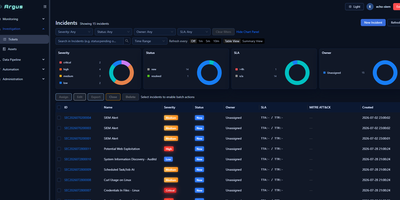
Every incident ticket in Argus, an open-source security operations center, comes with its own AI analyst, ready to explain the alert and suggest what to do next. Scheduled pipeline tasks pull alerts in from Elasticsearch and other sources, and tickets carry severity, owner, and SLA clocks that measure MTTA, MTTI, MTTC, and MTTR with color-coded buckets. Decision buttons walk each case from New through Acknowledged, Triaged, and Contained to Resolved. A War Room gathers analyst notes, system logs, files, pasted images, and extracted indicators. One click on Run AI Assistant returns a plain-language alert explanation, a suggested risk level, finished tasks, and next steps; scoped chat plus @ai and @playbook mentions keep the conversation inside the ticket. Built-in MCP tools look up CMDB assets, find similar past cases, and extract IPs, domains, and hashes, and you can register your own MCP servers and SKILL.md skills with usage monitors. A drag-and-drop workflow editor fires playbooks on new alerts, ticket changes, cron schedules, or webhooks. Detection engineers import Sigma rules from GitHub URLs or files, map fields to Splunk and Elastic ECS names, and review a publish history. Running on a dedicated VPS on RepoCloud with guaranteed CPU, RAM, and SSD, full root SSH access, and a browser serial console. Apache-2.0 licensed.
Overmind
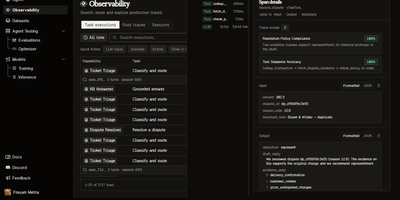
When an agent fails in production, Overmind scores the trace against your metrics and trains a specialized model on the evidence. Point it at the agent's repository and it maps capabilities, prompts, tools, and tasks into a graph, then matches every incoming OpenTelemetry trace to the capability that produced it and scores it on arrival. Auto-instrumentation picks up the LLM SDKs you already use, any OTel exporter can post to the API, and existing traces from Langfuse, LangSmith, Braintrust, or Galileo sync through connectors. Production traces and uploaded files become versioned datasets, with local English OCR for scanned PDFs and images, and optimisers run prompt, tool, and control-flow experiments in your repository and hand back the winner as a git diff. You fine-tune models whose weights you own, backtest them against the agent's own traces, and serve them, alongside optional OpenRouter frontier models, through one OpenAI-compatible API. Cursor, Claude Code, OpenCode, and Codex drive the whole loop through an MCP server and /overmind commands that cover tracing, datasets, fine-tuning, optimising, and backtesting. Self-hosting keeps traces and training data in your network: one Docker Compose file starts it, a seed command loads a demo workspace, and your own OpenRouter, Modal, and AWS keys power judging, training, and checkpoints. Running on a dedicated VPS on RepoCloud with guaranteed CPU, RAM, and SSD, full root SSH access, and a browser serial console. AGPL-3.0 licensed.
NornicDB
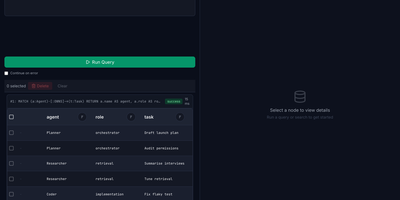
Agents forget things, and a graph database that learns is a fine place to keep what they should remember. NornicDB stores connected data as nodes and relationships, then answers Cypher queries from the browser console or from any Bolt driver you already use. Results appear in a sortable table, and selecting a row opens node details with labels, properties, and a Find Similar action. Switch to the Graph Explorer to see a node's neighborhood drawn as a graph, with a depth setting and filters for labels, edge types, and properties. Vector and full-text search run beside traversal, so one database can answer both who is connected and what is similar. Historical reads keep earlier states available through MVCC, and a lifecycle page shows pressure, prune runs, and schedules. Knowledge policies define decay and promotion rules for agent memory, and API tokens secure MCP and other integrations. Running on a dedicated VPS on RepoCloud with guaranteed CPU, RAM, and SSD, full root SSH access, and a browser serial console. MIT licensed.
Vibe-Trading
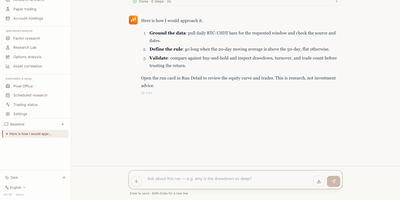
Ask for a backtest of a 20/50 moving-average crossover on BTC-USDT for 2024, and Vibe-Trading plans the run, fetches the bars, writes the strategy, and returns a run card with drawdown, trades, and a buy-and-hold comparison. The web chat keeps every session, accepts uploaded filings and spreadsheets, and links each answer to a Run Detail page with the equity curve and the data source used. Eleven backtest engines cover A-shares, global equities, crypto, futures, forex, options portfolios, and cross-market composites, and the alpha zoo benchmarks factor libraries like GTJA191 across a chosen universe. Swarm teams (investment committee, quant desk, risk review) split a question among macro, quant, and catalyst workers and merge the result into one report. Paper trading tracks cash, fills, and NAV between sessions, the portfolio view proposes allocation changes, the options page draws multi-leg payoffs and Greeks, and scheduled playbooks repeat a brief on a timetable. The Shadow Account reads broker trade journals, extracts implicit rules, and replays your trades against a rule-based alternative. Model providers include OpenRouter, OpenAI, Anthropic, DeepSeek, and local Ollama, and any broker execution is opt-in within limits you set and can halt. Running on a dedicated VPS on RepoCloud with guaranteed CPU, RAM, and SSD, full root SSH access, and a browser serial console. MIT licensed.
Pitot
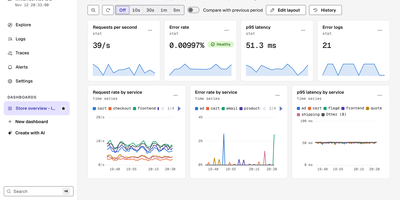
Point your OpenTelemetry exporters at one port and get traces, logs, metrics, dashboards, alerts, and an AI investigator, with no storage cluster to babysit. Pitot accepts OTLP over gRPC and HTTP, keeps everything in a single data directory as Parquet files you own, and lets you query with Explore and PitotQL even when no AI provider is configured. Ask the built-in agent which service is slowest right now and it runs typed queries across traces, logs, and metrics, then explains the evidence inline. Describe a dashboard in one sentence and it drafts, checks, and saves panels for request rate, error rate, p95 latency, service dependencies, slowest operations, and recent errors. Alerts watch service error rate, latency, throughput, and log volume. Prefer your own assistant? A remote MCP endpoint lets Claude Code or any MCP client search logs, inspect traces, query telemetry, and create dashboards after you approve its scopes through OAuth in the browser. Sign in with single-use login links or an OIDC provider, choose OpenAI or Anthropic for chat, and set how many days of telemetry to keep, 30 by default. Pitot runs as one node, which suits a single machine's worth of telemetry rather than fleet-scale clusters. Running on a dedicated VPS on RepoCloud with guaranteed CPU, RAM, and SSD, full root SSH access, and a browser serial console. Apache-2.0 licensed.
SurfSense
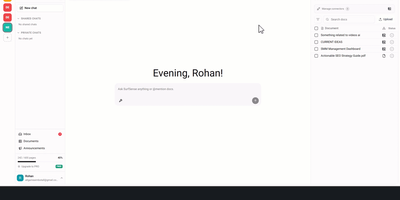
Positioned as the open-source NotebookLM alternative for AI agents, SurfSense delivers a live web research platform where your agents access structured data from Reddit, YouTube, Instagram, TikTok, Amazon, Walmart, Google Maps, Google Search, Indeed, and any page on the open web through one REST API or MCP server. Scheduled and event-triggered agents transform findings into briefs, alerts, podcasts, and presentations, while a built-in knowledge base keeps every discovery searchable with Perplexity-style cited answers using hybrid semantic and full-text search powered by PostgreSQL with pgvector. Upload PDFs, Office documents, images, and audio files, or sync Google Drive, OneDrive, and Dropbox — 50+ file formats supported with AI file sorting that auto-organizes documents by source, date, and topic. The MCP server exposes scrapers, knowledge base, and workspaces as native tools for Claude, Cursor, and any MCP-compatible agent. Cross-country proxy rotation handles Reddit, TikTok, and Google Search scraping with geo-aware sticky sessions and captcha-aware anti-bot handling. The platform features collaborative chats, multi-format document export, git-native knowledge base with Open Knowledge Format export, and a desktop quick-ask panel with global shortcut. Docker Compose deployment manages nine services including Caddy proxy, PostgreSQL, Redis, FastAPI backend, Celery workers, zero-cache real-time sync, and Next.js frontend with automatic Watchtower updates. Running on a dedicated VPS on RepoCloud with guaranteed CPU, RAM, and SSD, full root SSH access, and a browser serial console. AGPL-3.0 licensed.
ClickHouse Loom
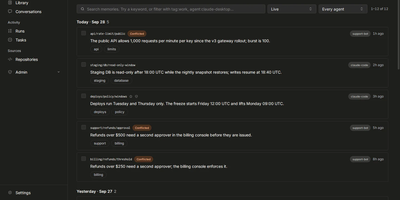
Give every AI agent you use the same memory, so what Claude Code learns on Monday is waiting for Codex or Cursor on Tuesday. Loom is a self-hosted server that stores memories, documents, conversations, and a code index, then serves them to agents over MCP, HTTP, and Python or TypeScript SDKs. Each fact is saved under a key with history and provenance, near-duplicates merge, and contradictions land in a review queue where a person keeps one side, drops one, or allows both. Search can abstain instead of guessing, and the Ask AI panel answers with numbered citations back to the memory or document behind each claim. A library indexes PDF, docx, and pptx files, and the repository explorer finds symbols, callers, and change impact with the commit it answers from. Namespaces, roles, and tokens let teams share memory safely, an audit log records every save, delete, and grant, and erasure requests are verified. Task inboxes pass work between agents with leases and retries. One installer script starts Loom and ClickHouse, and plugins connect Claude Code and Codex. Running on a dedicated VPS on RepoCloud with guaranteed CPU, RAM, and SSD, full root SSH access, and a browser serial console. Apache-2.0 licensed.
CowAgent
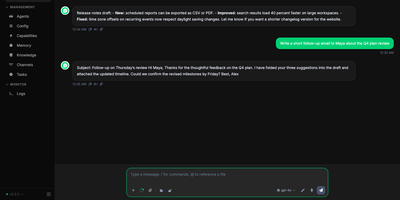
CowAgent is a personal AI agent that plans a task, picks the right tool, and keeps working until the job is done, all from a browser console on your own server. Open the chat page to hand it a request, and watch it read files, run terminal commands, search the web, and report back. Build a team of agents, each with its own role, model, skills, and knowledge, then have them collaborate in one shared conversation. Memory is layered into context, daily notes, and core facts, so the agent gets to know you over time, and a knowledge base organizes saved articles and documents into a browsable wiki. Install skills from a hub, from GitHub, or by describing one in plain language, and connect MCP tools through a form or pasted JSON. Provider credentials for chat, vision, image generation, speech, and embeddings live in one Models page, so each capability can use a different vendor. Connect Telegram, Slack, Discord, WeChat, Feishu, DingTalk, or WeCom and schedule recurring tasks. An OpenAI-compatible Chat API and shareable guest pages put the agent in front of other people. Running on a dedicated VPS on RepoCloud with guaranteed CPU, RAM, and SSD, full root SSH access, and a browser serial console. MIT licensed.
CISO Assistant
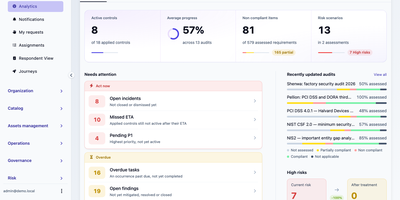
Compliance audits, risk registers, vendor reviews, and evidence usually sit in separate spreadsheets; CISO Assistant keeps them in one connected, self-hosted GRC platform. Run audits against more than 200 frameworks, including ISO 27001, NIST CSF, SOC 2, PCI DSS, NIS2, DORA, GDPR, and HIPAA, scoring each requirement and attaching evidence and applied controls. A mapping from the library projects a finished audit onto another framework, so the same questions are not answered twice. Risk assessments rate scenarios on configurable matrices, record current and residual levels, link the controls that treat them, and open matrix and action-plan views, plus EBIOS RM studies and quantitative analysis. Applied controls, policies, and recurring tasks carry owners and due dates, evidence attaches to them, and a month-by-month control plan shows what is outstanding. Third-party risk covers vendors, solutions, contracts, criticality tiers, and questionnaires that vendor representatives answer themselves. Assets, business impact analyses, incidents, and a GDPR register with DPIA screening share the same workspace. Analytics tabs list what needs attention, and a workflow builder can email scheduled digests or react to events. An MCP server with 139 tools lets Claude, ChatGPT, or LM Studio read and change records, and an optional chat assistant answers questions with a local or hosted model. SAML or OIDC single sign-on, MFA, a REST API, and a CLI cover access and automation. Running on a dedicated VPS on RepoCloud with guaranteed CPU, RAM, and SSD, full root SSH access, and a browser serial console. AGPL-3.0 licensed.