OpenDirector
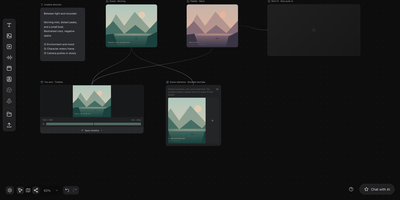
Turn a rough idea into a downloadable short film without leaving one tab. OpenDirector gives you an infinite canvas where text, image, video, audio, and timeline nodes connect with reference lines, so a mood board can feed a prompt and a prompt can feed a shot. Talk to the AI assistant, type @ to pull in any asset as a reference, and watch generation tasks in a history panel for cancelling or resuming them. Image tools include smart edit, outpainting, upscaling, cutout, presets for character and product three-views, a crop and color editor, and a layer studio with masks. Open the timeline to trim, split, change speed and volume, mix audio tracks, and render an MP4 in the browser, or export JSON, FCPXML, and a media package for another editor. Connect your own provider APIs or self-hosted vLLM and vLLM-Omni services for text, image, video, and audio. Autosave keeps every canvas on disk, and the interface switches between English and Chinese. Install with Python, run opendirector serve, and open it on port 8000. Running on a dedicated VPS on RepoCloud with guaranteed CPU, RAM, and SSD, full root SSH access, and a browser serial console. Apache-2.0 licensed.
SD.Next
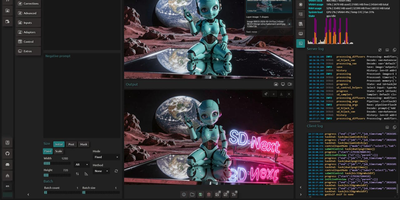
Pick a diffusion model, type a prompt, and SD.Next renders an image or a video clip on hardware you control. It handles text-to-image, image-to-image, text-to-video, and image-to-video, with inpainting, outpainting, a detailer pass, and hires or refine stages for edits. Models come from a reference list that downloads on demand or from your own files, which are detected automatically, and the catalog spans Stable Diffusion, FLUX, Qwen-Image, Wan, and HiDream. LoRA, ControlNet, IP-Adapters, and prompt enhancement steer each result. Kanvas, the built-in editor, offers up to ten stages with painting, a magic wand, text, and masking. Caption and Process tools describe images with vision-language models, interrogate them with CLiP, upscale, remove backgrounds, and turn frame sets into video. A scheduler queues jobs in order, runs them inside an active-hours window, and keeps task history. SDNQ quantization and CPU or GPU offloading fit large models into less memory, and one interface covers NVIDIA CUDA, AMD ROCm, ZLUDA, Intel Arc, OpenVINO, Apple Silicon, or plain CPU. The web UI also offers themes, interface languages, a mobile layout, and a live GPU monitor with server logs. Optional login credentials and TLS certificates protect the web server, and scripts or extensions add more. Running on a dedicated VPS on RepoCloud with guaranteed CPU, RAM, and SSD, full root SSH access, and a browser serial console. Apache-2.0 licensed.
ima2-gen
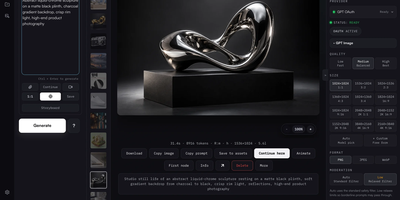
ChatGPT, Grok, Gemini, NovelAI, and ComfyUI sit behind one prompt composer in ima2-gen, a studio that branches favorite AI images into variants and keeps every image and video in a searchable gallery. Multimode fires several candidates from one prompt and fills the slots as they finish, with up to five reference images attached. In the node graph a favorite grows into gold, marble, or forest variants that each remember their parent, so the original is never overwritten. Canvas Mode annotates, erases, and cuts out backgrounds, verifies GPT transparency from the decoded bytes, then exports PNG, SVG with an embedded raster, or traced vector paths. Grok video models turn text, one image, or a set of references into clips, and Storyboard mode keeps characters and scenes consistent across frames. Further lanes reach AtlasCloud, MiniMax, and MCP-connected Runway and Higgsfield, and each job goes only to the provider you choose. A prompt library imports packs from local files or GitHub folders, Prompt Builder refines rough ideas, and the gallery stores each render with its prompt, timing, and settings. A CLI and three Markdown skills let coding agents generate assets, vectorize logos, and run video jobs against the same studio. Binding to a network address requires an access token. Running on a dedicated VPS on RepoCloud with guaranteed CPU, RAM, and SSD, full root SSH access, and a browser serial console. MIT licensed.
KoboldCpp
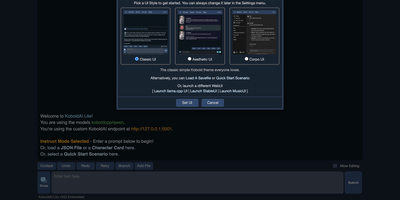
One file runs your own language model and serves it to any browser tab. KoboldCpp loads GGUF models on CPU or GPU. A web UI opens on port 5001. OpenAI, Ollama, Anthropic, and KoboldAI style endpoints answer every app that expects a cloud API. The bundled KoboldAI Lite interface covers chat, instruct, story, and adventure modes in Classic, Messenger, Aesthetic, and Corpo themes, with memory, world info, author's notes, character cards, scenarios, and saveable sessions. A llama.cpp style chat interface and interactive API documentation share the same port. Add a vision projector and the model reads images. Load Stable Diffusion, Flux, or video models for pictures and clips, Whisper for transcription, and Kokoro or Qwen3TTS for spoken replies. Tool calling, web search, retrieval over your own documents, an MCP bridge, and a built-in agent for editing code come included. Context size, GPU layers, batch size, and samplers including DRY and XTC are set from the launcher or the command line. A no-model option points it at a remote provider instead. An API key protects the endpoint before it faces a network. Running on a dedicated VPS on RepoCloud with guaranteed CPU, RAM, and SSD, full root SSH access, and a browser serial console. AGPL-3.0 licensed.
Presenton
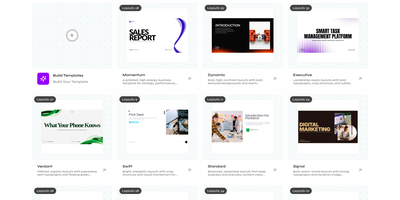
Describe a topic in a sentence, or drop in a document, and get back a finished slide deck that you can still edit slide by slide. You write a brief, pick a design from the template gallery, and review an outline of every slide before generation starts, so the story is settled before any layout work happens. The editor then shows each slide on the canvas with thumbnails on the left and a side panel for blocks, text, charts, tables, images, and shapes. Charts, icons, and speaker notes arrive with the slides, and an AI panel sits beside the canvas for further changes. Finished decks export as PowerPoint or PDF files, and a dashboard keeps every deck you have made. Any text model works, from hosted services at OpenAI, Gemini, Anthropic, Azure, or Bedrock to local ones on Ollama or LM Studio, and image sources include AI image models and stock libraries. A custom template builder turns an existing PowerPoint file into reusable layouts, and a REST API and built-in MCP server let other tools generate decks on demand. Use it for sales reports, weekly status reviews, training material, or pitch decks. Running on a dedicated VPS on RepoCloud with guaranteed CPU, RAM, and SSD, full root SSH access, and a browser serial console. Apache-2.0 licensed.
Hollama
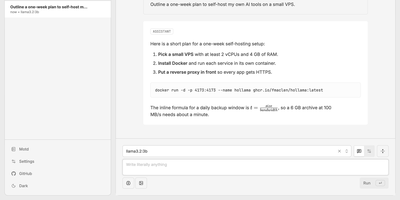
A tidy, account-free chat client for every language model server you run. Ollama, the OpenAI API, and OpenAI-compatible servers like llama.cpp plug in side by side, and each of their models appears in one picker. Prompts accept images for vision models, and answers render Markdown, highlighted code, and KaTeX formulas. Reasoning models keep their thinking in a separate panel from the final answer. Messages can be edited, retried, or copied, and the session panel holds a system prompt plus Ollama options for temperature, Top K, Top P, and seed. Knowledge notes, written in a built-in code editor, attach to a session as reusable context. The Settings page pulls new Ollama models by tag, labels each connection, and filters model names by prefix. Tabs stay in sync, themes switch between light and dark, and the interface is translated into many languages. Servers, preferences, sessions, and knowledge export and import as files. Nothing sits in a cloud database, because history lives in the browser of whoever opens it. A single Docker container on port 4173 serves a whole team. Running on a dedicated VPS on RepoCloud with guaranteed CPU, RAM, and SSD, full root SSH access, and a browser serial console. MIT licensed.
big-AGI
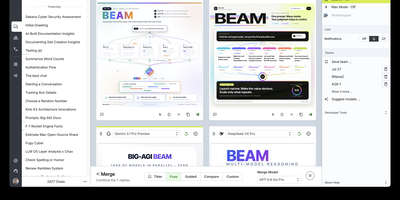
big-AGI is an open-source generative AI workspace that provides a unified, local-first interface for orchestrating multi-model reasoning, automated code execution, and custom persona workflows across private infrastructure. Users query multiple large language models simultaneously through the Beam scatter-gather engine, which prompts independent AI systems in parallel, compares candidate completions side by side, and merges optimal passages into a single refined response. Knowledge workers assemble tailored AI personas equipped with specialized system instructions, custom temperature settings, and predefined document context to handle domain-specific tasks ranging from architectural design reviews to legal contract analysis. The application renders rich multimedia outputs including interactive Mermaid sequence diagrams, LaTeX mathematical formulas, syntax-highlighted code blocks with live execution previews, and AI-generated image generation canvases. Teams integrate local inference servers like Ollama and LocalAI alongside commercial API endpoints to route confidential datasets strictly through internal networks while monitoring per-prompt token usage and operational latency. Users attach complex PDF documents, spreadsheets, and source code repositories for automatic parsing and semantic retrieval, while local-first storage engines ensure private chat transcripts and custom presets remain encrypted on host drives. Running on a dedicated VPS on RepoCloud with guaranteed CPU, RAM, and SSD, full root SSH access, and a browser serial console. MIT licensed.
Paperless-GPT
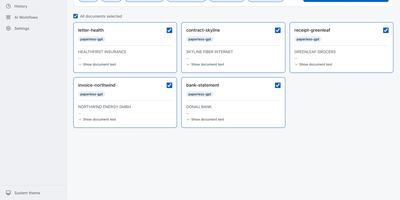
Paperless-GPT is an AI sidekick for paperless-ngx that names, tags, and files scanned documents for you. Picture a folder of scan_0042.pdf files: add a tag, and an LLM reads each one and proposes a title, tags, correspondent, document type, created date, and custom fields. Reviewers compare the current value with the suggestion field by field, edit what looks off, and apply a single document or the whole queue. A history list records every write and reverts any single field. In the OCR Playground, the scan sits next to freshly recognized text, so page limits, process modes, and prompts can be tuned before defaults are saved and documents are tagged for hands-off runs, with an activity log of what ran overnight. OCR options include LLM vision, Google Document AI, Azure Document Intelligence, and Docling, with searchable PDF export that carries a transparent text layer. Document Link fields tie a reminder to the invoice it cites and an amendment to its contract. Ad-hoc analysis summarizes a handful of documents with a custom prompt, and AI Workflows give invoices, contracts, and private mail separate prompts and steps. Local Ollama models keep paperwork on your own hardware. Running on a dedicated VPS on RepoCloud with guaranteed CPU, RAM, and SSD, full root SSH access, and a browser serial console. MIT licensed.
Swirl
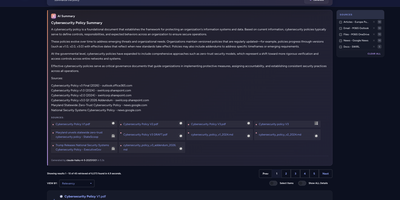
Type one question and SWIRL Community queries your connected apps live, ranks what comes back, and can draft a cited answer, with no vector database and no second copy of your data. Aim it at SharePoint, Confluence, and Drive and you get one knowledge base search where every hit links back to its source. Support assistants search docs and tickets to draft grounded replies, and developer assistants answer from GitHub, Jira, and documentation. Each query runs with the user's own permissions, and Microsoft 365 connects through OAuth2 so people only see what they can already open. Results are re-scored with cosine similarity, duplicates are detected, and the Galaxy UI highlights matches above a configurable relevancy threshold. View By reorders the list by relevancy, date, or top pick, and Source checkboxes narrow it to chosen systems. Queries accept AND, OR, and NOT, and starting one with a tag such as company: searches only the sources carrying that tag. Connect OpenAI, Azure OpenAI, or an OpenAI-compatible endpoint and the Generate button writes a cited summary of the best results. Select Items picks exactly which results the AI reads, and optional instructions steer its tone, length, and focus. The admin console manages sources, AI providers, users, and API tokens, and developers call the REST API or write their own connectors and mixers. Running on a dedicated VPS on RepoCloud with guaranteed CPU, RAM, and SSD, full root SSH access, and a browser serial console. Apache-2.0 licensed.
OpenManga
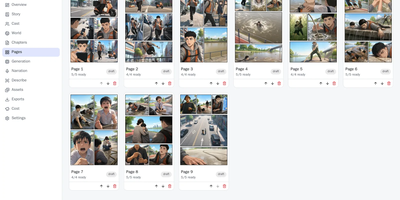
A written story becomes a manga chapter, manhwa episode, vertical webtoon, or narrated YouTube recap in OpenManga, with the same characters and places recognisable from the first panel to the last. It starts when AI splits a pasted story into cast, locations, chapters, scenes, and panel specs. You approve the reference portraits, turnarounds, outfits, and location sheets once, and every later panel is drawn against them. In the page editor you move panels, bubbles, captions, and sound effects, paint masks for targeted edits, compare art versions, and run a vision check on each panel. A production run prices the remaining work before it starts, respects a per-project budget cap, and can use half-price provider batches. The same run carries the project through artwork, narration, thumbnail, video, and YouTube text. Kokoro voices the narration locally, or you can cut it from your own recording. Exports cover print PDFs with KDP trim sizes, layered PSDs, CBZ, EPUB, webtoon strips, MP4, and Shorts. Supply your own keys for OpenAI, Gemini, Anthropic, DeepSeek, Meta Muse, OpenRouter, or ElevenLabs, or use paste mode with no key at all. Invite editors, comment on panels, share reader links, or let ChatGPT or Claude drive projects over MCP. Sign-up is closed until the admin opens it, and local narration wants about 8 GB of RAM. Running on a dedicated VPS on RepoCloud with guaranteed CPU, RAM, and SSD, full root SSH access, and a browser serial console. Apache-2.0 licensed.
Open Game Master
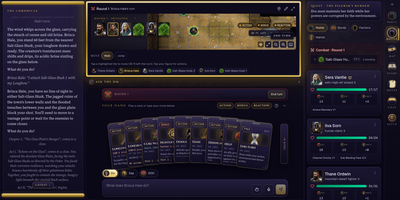
Start a fantasy campaign tonight, share an invite code with friends, and let an AI narrate the story as the server does the rolling. The model never owns the numbers: dice, hit points, spell slots, conditions, and the death track are computed and clamped by the backend, and the model changes game state only through validated tools. Players get a hand of action cards under a fogged battle map with initiative order, a chronicle of the story so far, and a party panel. A guided wizard builds SRD 5.1 characters from 48 classes and 49 backgrounds, and AI companions have real sheets that level up with the party. A secret story arc advances as chapters close and surfaces as a quest log. The workshop and map studio handle prep: paint maps, build encounters, cast, factions, bestiary entries, roll tables, and lore, then import them into any campaign. Pick the narrator from llama.cpp, Ollama, LM Studio, vLLM, OpenAI, OpenRouter, or a Codex, Grok Build, Claude Code, or opencode subscription. Optional ComfyUI or OpenAI images paint portraits and scene art, and live voice chat, ambience, and a 3D dice tray round out the table. A human Game Master mode keeps sheets and dice straight for a person narrating. Data stays in an encrypted SQLite database with no telemetry. Running on a dedicated VPS on RepoCloud with guaranteed CPU, RAM, and SSD, full root SSH access, and a browser serial console. MIT licensed.
Biniou
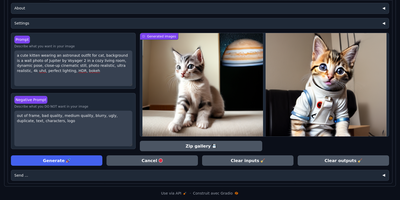
Thirty generative AI tools behind one login on your own server: that is Biniou, a self-hosted studio for making images, text, music, video, and 3D objects without sending a prompt anywhere else. The chatbot module runs GGUF language models locally, a multimodal variant sees images, Whisper transcribes speech, and a translation module covers 200 languages. Image work spans text-to-image across Stable Diffusion, SDXL, Flux, PixArt, and Kandinsky model families, plus img2img, inpainting, outpainting, ControlNet, face swapping, upscaling with Real-ESRGAN, and face restoration with GFPGAN. Music arrives from MusicGen, MusicLDM, AudioGen, and Bark voice generation, video from Modelscope, AnimateDiff, and Stable Video Diffusion, and Shap-E turns text or images into 3D shapes. Modules hand outputs to each other, so a generated caption can become a prompt and a still can become a clip. Everything runs from 8GB of RAM with no dedicated GPU, works offline once models are downloaded, and a control panel inside the interface handles updates, restart, authentication, network access, and one-click sharing. Models are managed from the same panel, generation settings are saved as metadata in every file, and CUDA acceleration is there when hardware allows. Running on a dedicated VPS on RepoCloud with guaranteed CPU, RAM, and SSD, full root SSH access, and a browser serial console. GNU General Public License v3.0 licensed.
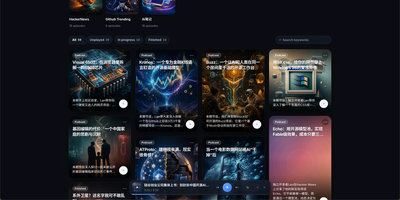
BokeBox
BokeBox turns the read-later pile into private podcast episodes you can finish on a commute. Upload a video or audio file, paste a link, or drop in a draft, and the pipeline runs transcription, a spoken-style rewrite, cover art, notes, flashcards, and voice synthesis, with progress shown on the home screen. A host persona sets name, role, tone, and speaking style, and each episode can override it with a preset voice or a voice described in words. The player shows scrolling lyrics, notes, flashcards, and an outline, remembers where you stopped, and offers speed control and a sleep timer. Albums queue episodes for continuous play, and the Star Map links episodes by shared tags. Schedules pull RSS feeds, URL lists, GitHub Trending, and Hacker News on a cadence and create episodes automatically. Plugins add new content sources, speech recognition engines, and voices. An MCP endpoint lets Cursor, Claude, or Codex create podcasts from a URL or text and check job status. Running on a dedicated VPS on RepoCloud with guaranteed CPU, RAM, and SSD, full root SSH access, and a browser serial console. LGPL-3.0 licensed.
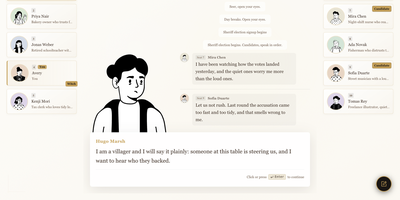
Wolfcha
Nobody free on a Tuesday night to play Werewolf? Wolfcha fills the empty chairs for you, seating you at an 8 to 12 player table where every opponent is an AI character with a stable personality, a hidden role, and a memory of who said what. Pick Villager, Werewolf, White Wolf King, Seer, Witch, Hunter, Guard, or Idiot, and the game walks you through each phase with role art, short guides, and prompts that appear when it is your turn. Nights belong to the wolves and the special roles. Days open with a sheriff election, then speeches in order, free discussion, and a vote with a live tally of who backed whom. AI players accuse, defend, bluff, and shift their reads as deaths and votes pile up, and the retro visual style adds day and night transitions, eye-blink effects, and lip-synced avatars. Optional AI voice playback reads speeches aloud, and spectator mode offers a front-row view of a table of AI personalities colliding without taking a seat. Scenario backdrops, from a class reunion to a New Year dinner, change the backstory the characters are generated from. Settings cover volume, sound effects, auto-advance dialogue, and exportable game logs. Running on a dedicated VPS on RepoCloud with guaranteed CPU, RAM, and SSD, full root SSH access, and a browser serial console. Apache-2.0 licensed.
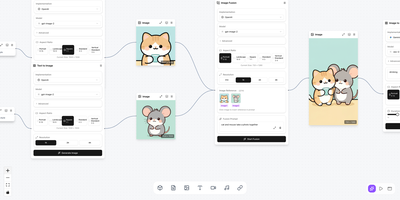
TongFlow
Text, images, audio, video, 3D models, documents, and links share one canvas in TongFlow, where a campaign brief can become copy options, key visuals, and a short clip without leaving the page. Every step is one of three actions: add material, transform it, or combine several pieces, and each result stays on the canvas as a node you can branch from. Over 60 capability slots cover image generation and editing, video generation, music, speech synthesis and recognition, noise reduction, speaker separation, matting, image-to-3D, and shot splitting. A capability is separate from the model that runs it, so swapping OpenAI, Gemini, DeepSeek, OpenRouter, or a Modal-hosted open model leaves the surrounding steps untouched. The plugin manager installs official plugins in place, and credentials live in a Settings dialog. Agents get the same tools through a local MCP server and a Claude Code plugin, producing workflow files that people can open, edit, and run again, and each run is kept in a history with its inputs, outputs, and timing. App Mode turns a finished workflow into a simple form that colleagues can fill in, even from a phone browser. Spend-heavy steps wait for a person's approval. Running on a dedicated VPS on RepoCloud with guaranteed CPU, RAM, and SSD, full root SSH access, and a browser serial console. AGPL-3.0 licensed.
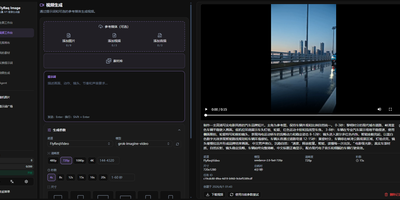
FlyReq Image Studio
FlyReq Image Studio replaces a pile of model-specific tabs with one workbench for generating images, videos, and animated GIFs from whichever API you plug in. Type a prompt or drop in up to sixteen reference pictures, then pick resolution, aspect ratio, and model; the form adapts to what the chosen model supports. Video mode takes reference images, clips, and audio with duration and size controls. Agent mode is a conversation: describe the goal, read the analysis and optimized prompt, and watch it pick a model and render the picture, with optional web search. Reverse Prompt turns any uploaded image into a written prompt. The GIF workspace renders a frame grid and stitches it into a looping animation in the browser. An infinite canvas wires image, text, and prompt nodes into generation chains. A prompt plaza offers searchable community prompts, and My Materials keeps every result, reference, and prompt in one library with backup and restore. Tasks queue persistently, update live over WebSocket, and survive reconnects. Running on a dedicated VPS on RepoCloud with guaranteed CPU, RAM, and SSD, full root SSH access, and a browser serial console. AGPL-3.0 licensed.
SD WebUI Forge
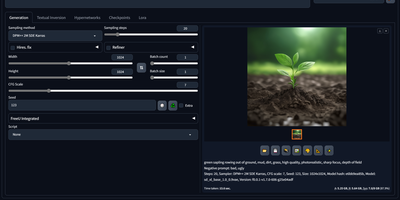
With 12,800 GitHub stars and backing from the same developer who created ControlNet, Stable Diffusion WebUI Forge replaces Automatic1111's inference backend with a dynamic GPU memory management system that runs SDXL 30-75% faster while consuming significantly less VRAM — enabling 1024x1024 generation on 6GB cards where A1111 requires 8GB or more. The Gradio 4 interface provides txt2img, img2img, inpainting, and outpainting workflows with a Forge Canvas supporting pressure-sensitive input from Wacom tablets and Microsoft Surface devices. Native Flux.1 model support loads Flux Dev and Schnell checkpoints using BitsandBytes NF4 and FP8 quantization for deployment on consumer GPUs without model splitting. Built-in ControlNet integration includes all preprocessors — Canny, Depth, Normal, OpenPose, MLSD, Scribble, Segmentation, Tile, and IP-Adapter — without requiring separate extension installation. The extension ecosystem maintains full compatibility with popular Automatic1111 extensions including Adetailer for face enhancement, After Detailer, Regional Prompter, and Dynamic Prompts. LoRA loading supports standard, LyCORIS, and DoRA formats with automatic weight detection. The API provides RESTful endpoints for txt2img, img2img, extra single/batch processing, and progress monitoring enabling headless batch generation. Deploy via one-click installer package, Python virtual environment, or Docker with NVIDIA GPU passthrough. Running on a dedicated VPS on RepoCloud with guaranteed CPU, RAM, and SSD, full root SSH access, and a browser serial console. AGPL-3.0 licensed.
llmfit
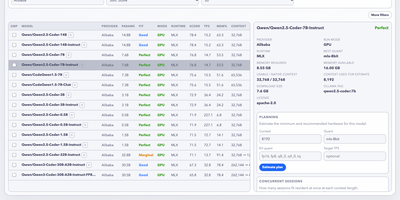
llmfit tells you which open LLMs will actually run on your machine, and how fast, before you download a single gigabyte. Guessing wrong means a huge download that crawls or never loads, so it reads your CPU, RAM, and GPU and scores thousands of models on memory fit, estimated tokens per second, quality, and context length. Start llmfit serve and a browser dashboard opens on port 8787, with a sortable fit table, filters for runtime, use case, and provider, and a detail panel that names the best quantization, the memory required, and the download size. Thinking of renting a bigger box? Type a RAM, VRAM, and core count and every score recalculates for that imaginary machine. The planner estimates minimum and recommended hardware for a chosen context and quantization, shows how many concurrent sessions fit at each context length, and sizes the SSD for a whole library of models. Tick a few rows to compare them side by side. Scripts can pull system info and ranked models from JSON endpoints, and cluster mode checks whether a model splits across several Ray nodes before you launch vLLM. The bench command measures real speed against Ollama, llama.cpp, MLX, or LM Studio, and the interface offers ten themes and a Chinese translation. Running on a dedicated VPS on RepoCloud with guaranteed CPU, RAM, and SSD, full root SSH access, and a browser serial console. MIT licensed.