Evolution API
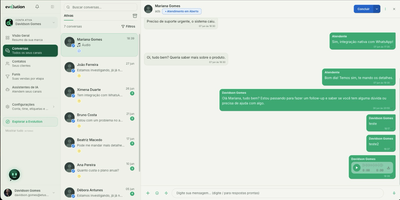
Evolution API gives your applications a production-ready REST interface to WhatsApp, supporting both free Baileys-based Web connections and Meta's official Business Cloud API from the same server. With 9,200+ stars and 7,100+ forks, it is the most widely deployed WhatsApp integration layer available. Each installation handles unlimited isolated instances (one per phone number) with independent auth, webhooks, and database separation via Prisma ORM against PostgreSQL or MySQL, cached through Redis. Message types include text, images, audio, video, documents, contacts, locations, interactive buttons, list messages, carousel cards, and PIX payment links through unified endpoints. Native integrations connect to Typebot for chatbot flows, Chatwoot for multi-agent support, Dify and OpenAI for AI conversations, N8N and Flowise for workflow automation, and RabbitMQ, Kafka, or SQS for enterprise event streaming. Socket.io delivers real-time message and connection events. Amazon S3 or MinIO handles media offloading. The Evolution Manager v2 dashboard provides visual instance creation, QR code scanning, connection monitoring, and integration configuration without touching the API directly. Docker Compose bundles the server, PostgreSQL, and Redis with environment-variable-driven setup. Running on a dedicated VPS on RepoCloud with guaranteed CPU, RAM, and SSD, full root SSH access, and a browser serial console. Apache 2.0 licensed.
Atom
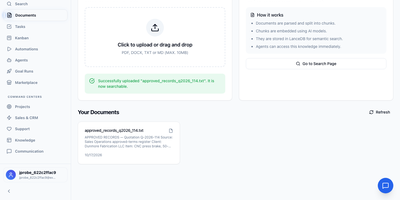
Give an AI agent a price list and it drafts the quote; hand it an invoice and it checks the numbers against purchase and receiving records before anyone pays. Atom is a self-hosted AI agent platform for business automation that wraps every agent action in governance: permissions, ordered policies authored in a canvas editor, human approval checkpoints, and durable audit records. Work starts from your files and instructions, with demonstrated workflows that map unfamiliar spreadsheet columns, calculate against source records, and produce cited Word or PowerPoint documents you can inspect line by line. Corrections become reusable teaching: saved field mappings, commercial terms, and contextual lessons carry into new work, and each job keeps the accepted snapshot it started with. Questions, approvals, and waits survive restarts, completed operations are retained, and uncertain effects must be reconciled before anything retries, so long-running business processes do not silently double-act. Results keep provenance back to the source records and operations that produced them, and unresolved requirements block completion instead of being invented away. You bring the model: configure a hosted provider or a local OpenAI-compatible endpoint, route by capability and cost, and run everything in a single-tenant workspace with user, role, and workspace boundaries. A starter sample runs with no model or cloud key at all. Running on a dedicated VPS on RepoCloud with guaranteed CPU, RAM, and SSD, full root SSH access, and a browser serial console. AGPL-3.0 licensed.
Astron RPA
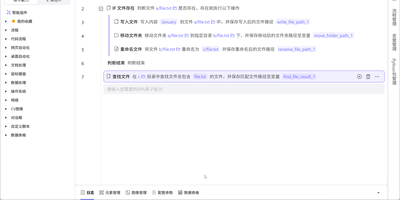
The invoices, reconciliations, and report downloads your team repeats every week are exactly the work a robot should be doing at 2 a.m. Astron RPA is an open-source robotic process automation platform: business users assemble workflows in a visual designer from more than three hundred pre-built components for clicking through desktop applications, driving browsers, reading and writing Excel and PDF files, querying databases, and calling APIs, then robots execute those workflows on schedule, on demand, through API calls, or through MCP services. The platform covers Windows desktop software and web pages alike, reaching office suites, browsers, and the finance and ERP systems that never grew an API, and Python scripting extends any step the components do not cover. A built-in excellence center and team marketplace let organizations publish shared automations, manage permissions, monitor executions, and reuse each other's robots across departments instead of rebuilding the same process ten times. AI components and a native agent platform connect language models to the workflows, so an agent can reason about a task and hand the clicking to a robot, and a workflow can call the agent back when judgment is needed. Self-hosters run the control plane themselves with Docker: database, identity service, and web console behind their own domain and certificates. Running on a dedicated VPS on RepoCloud with guaranteed CPU, RAM, and SSD, full root SSH access, and a browser serial console. Apache-2.0 licensed.
Trinity
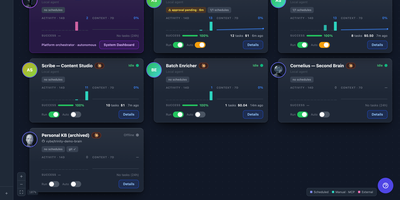
Trinity runs your AI agents the way a company runs employees, with departments, roles, reporting lines, and receipts for everything they do. Each agent holds a seat on record tied to an objective and a declared metric, so whether it is working is a number with a date on it rather than an impression. Agents work on three runtimes, Claude Code, OpenAI Codex, and Gemini CLI, chosen per chat without changing the agent's state, history, or permissions. A schedule fires, the agent works inside its own container, and anything irreversible waits in a human approver's Inbox as a card naming the agent, the skill, and the input until someone approves, discusses, or rejects it. Every agent is a git repository you own: it commits its own work, its tool calls land in an append-only audit log, and every run appears in an execution ledger with its trigger, cost, and outcome, searchable across the fleet. The same agents answer in the browser Workspace, in Slack, Telegram, and WhatsApp, over a public chat link, through MCP, and from the CLI. Guardrails bind agents by what they hold rather than what they are told, with hooks they cannot switch off, cost limits, loop budgets, and a kill switch for outbound calls. Running on a dedicated VPS on RepoCloud with guaranteed CPU, RAM, and SSD, full root SSH access, and a browser serial console. Apache-2.0 licensed.