Stars
Forks
Watchers
Developer links
Trinity
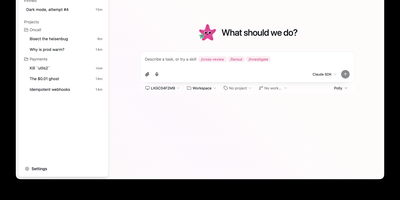
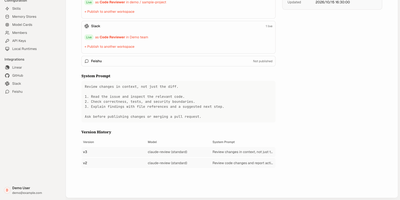
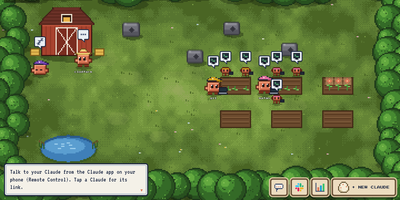
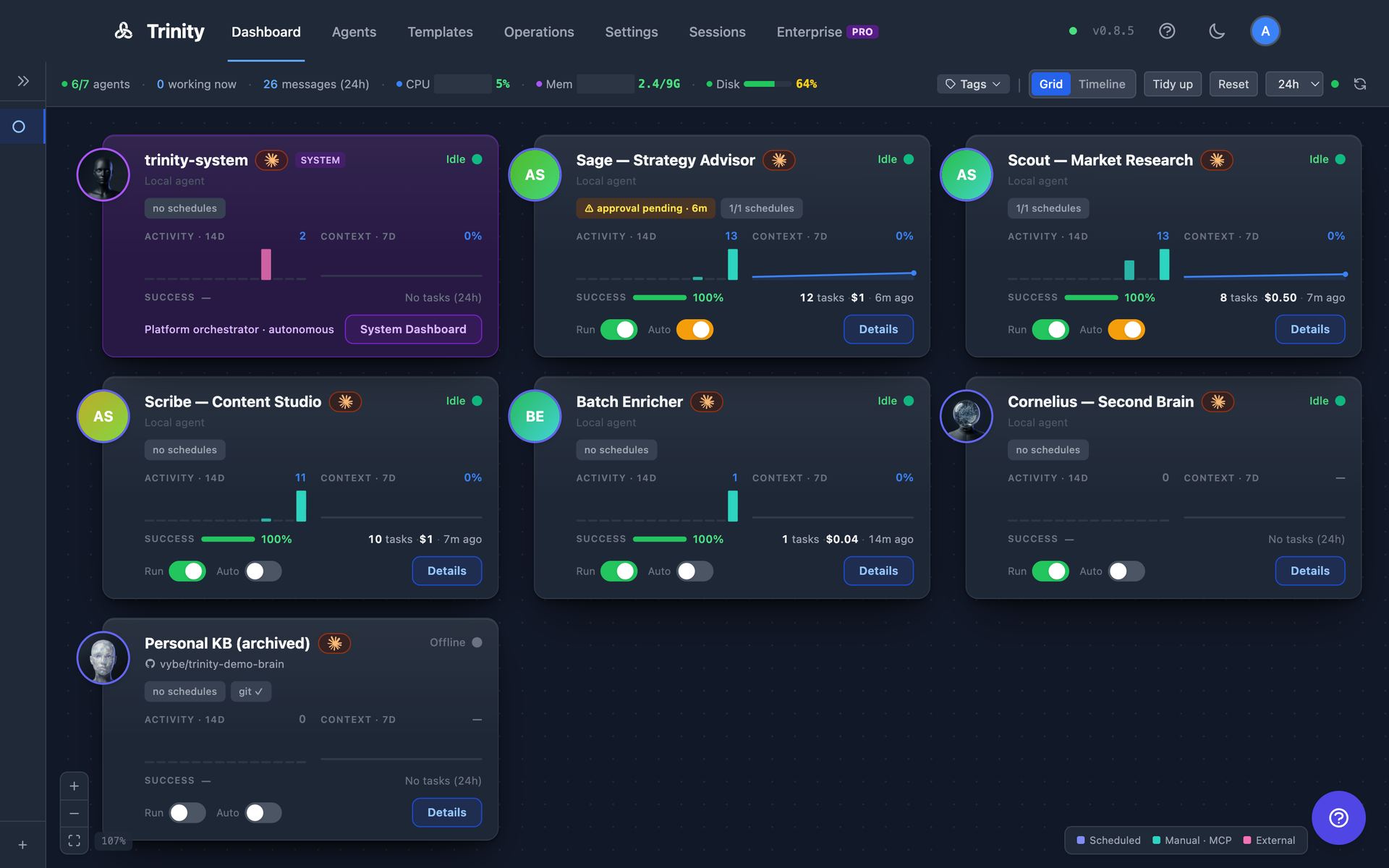
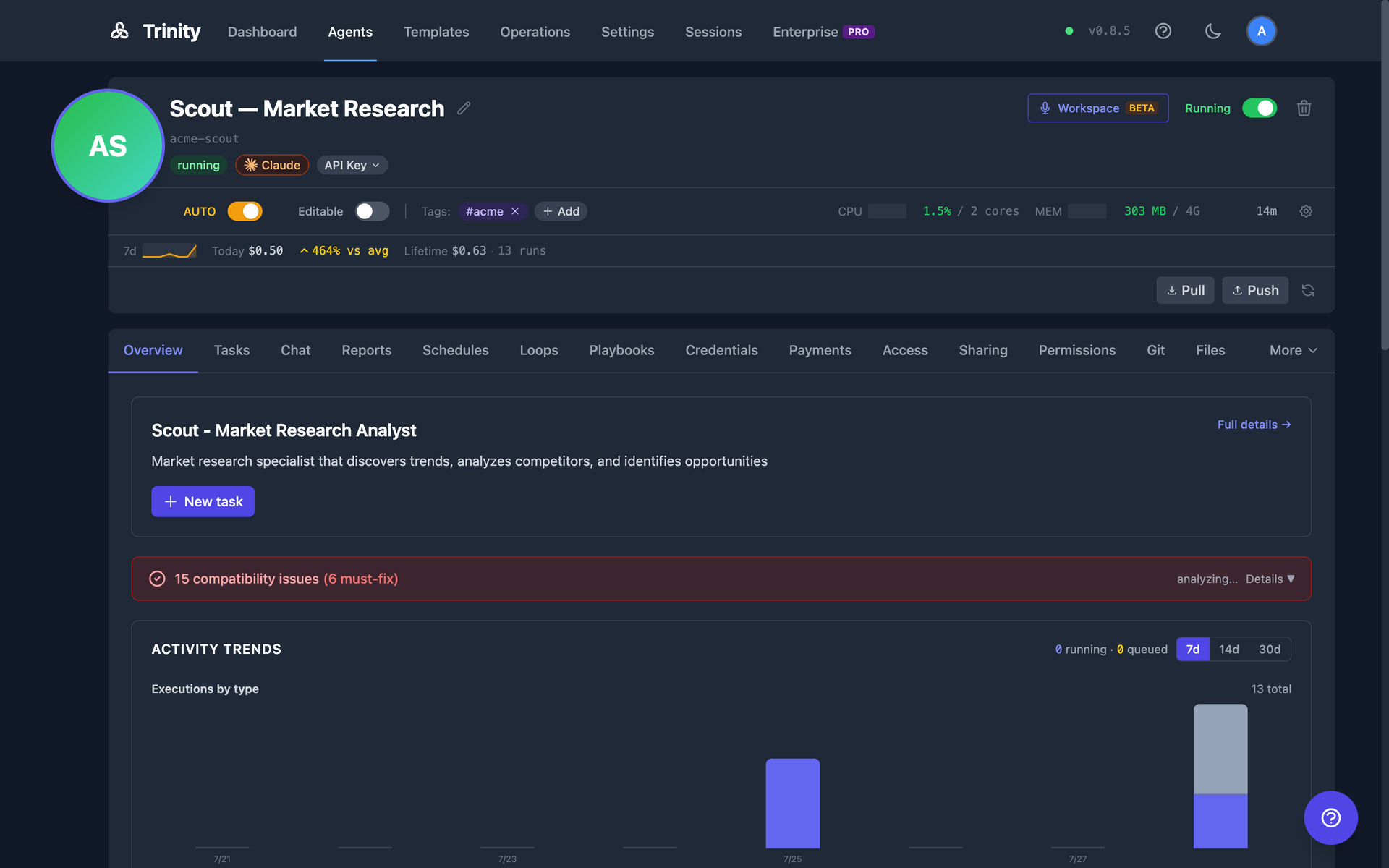
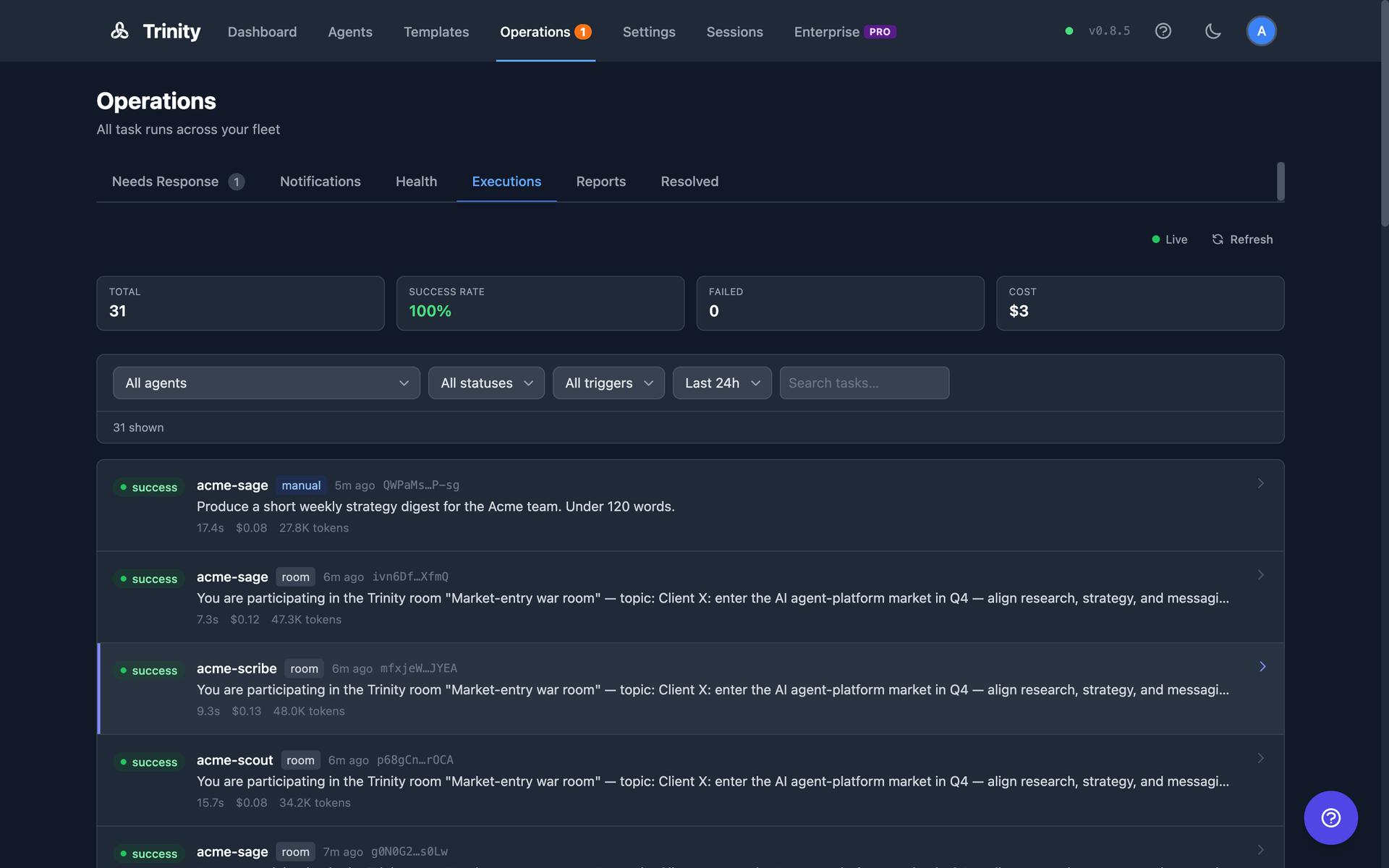
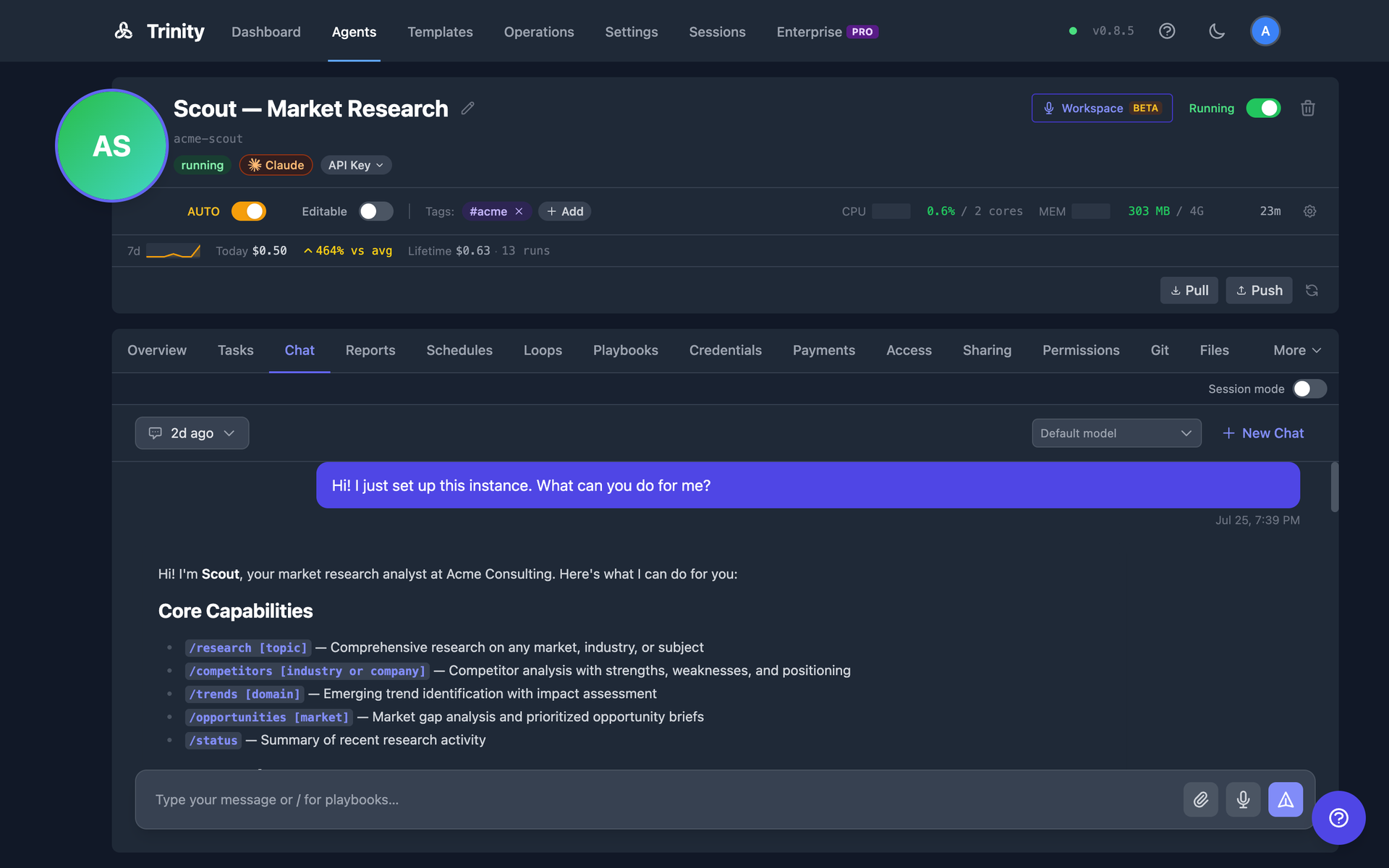
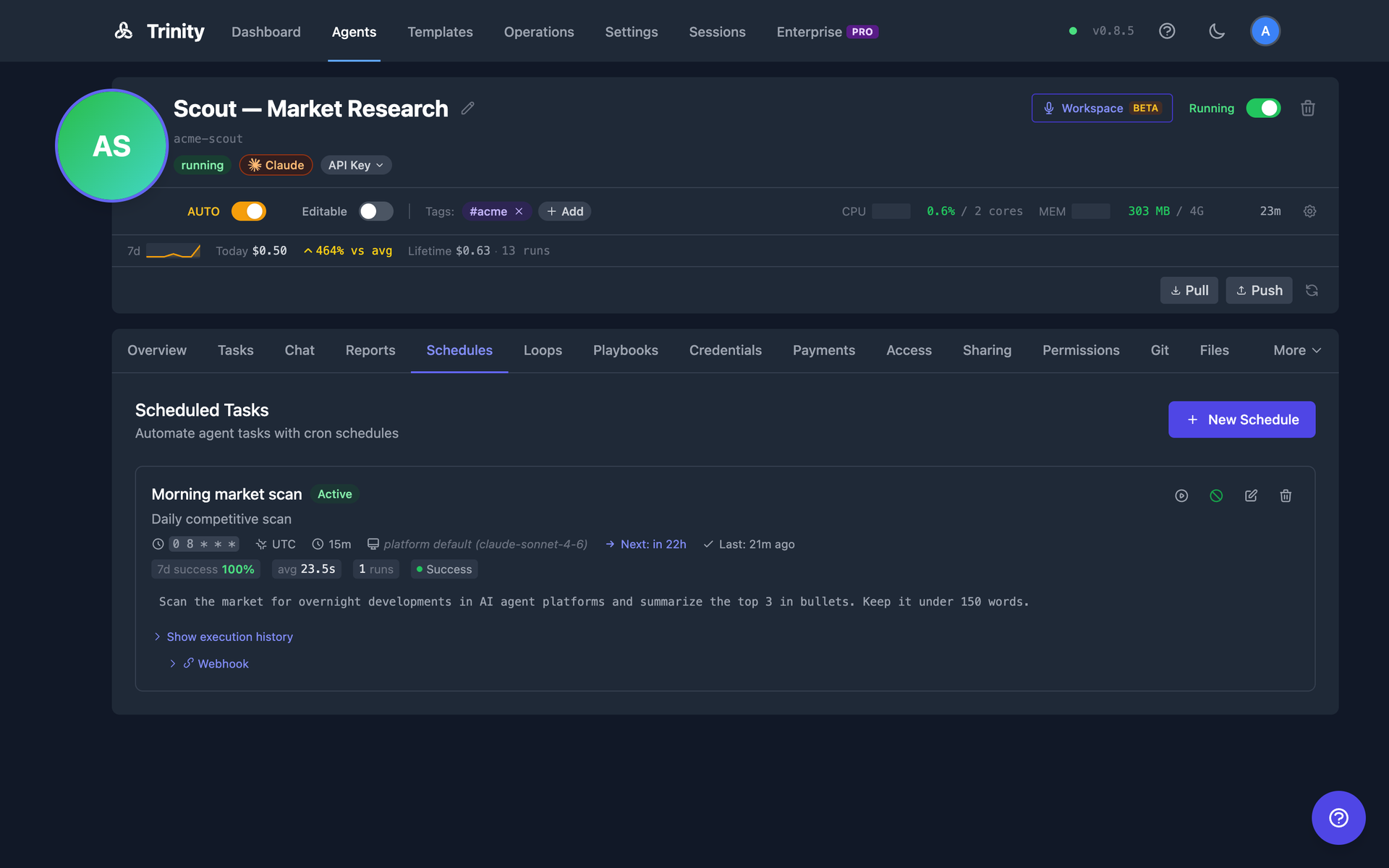
Trinity runs your AI agents the way a company runs employees, with departments, roles, reporting lines, and receipts for everything they do. Each agent holds a seat on record tied to an objective and a declared metric, so whether it is working is a number with a date on it rather than an impression. Agents work on three runtimes, Claude Code, OpenAI Codex, and Gemini CLI, chosen per chat without changing the agent's state, history, or permissions. A schedule fires, the agent works inside its own container, and anything irreversible waits in a human approver's Inbox as a card naming the agent, the skill, and the input until someone approves, discusses, or rejects it. Every agent is a git repository you own: it commits its own work, its tool calls land in an append-only audit log, and every run appears in an execution ledger with its trigger, cost, and outcome, searchable across the fleet. The same agents answer in the browser Workspace, in Slack, Telegram, and WhatsApp, over a public chat link, through MCP, and from the CLI. Guardrails bind agents by what they hold rather than what they are told, with hooks they cannot switch off, cost limits, loop budgets, and a kill switch for outbound calls. Running on a dedicated VPS on RepoCloud with guaranteed CPU, RAM, and SSD, full root SSH access, and a browser serial console. Apache-2.0 licensed.
Benefits
- Agents With Real Jobs
- Every agent holds a role inside a department, tied to an objective and a declared metric with a target date, so performance is measured rather than vibes-based.
- Approvals Before Irreversibility
- Gated skills freeze before the agent sees the request and wait in an approver's Inbox with the agent, skill, and input named; approve runs it exactly once.
- Receipts for Everything
- Agents commit their work to git repositories you own, tool calls enter an append-only audit log, and every run is a searchable ledger row with trigger, cost, and outcome.
- Contained by Construction
- Each agent runs in its own container on an isolated network, credentials stay encrypted and scrubbed from runtimes, and guardrails include cost limits, loop budgets, and a kill switch.
Features
- Three Agent Runtimes
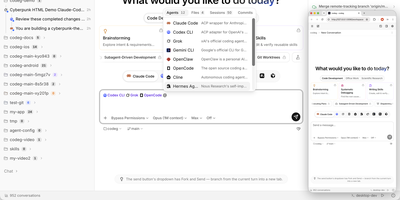
- Claude Code, OpenAI Codex, and Gemini CLI are selectable per chat, while the agent's state, history, and permissions stay unchanged across the switch.
- Everywhere Your Team Is
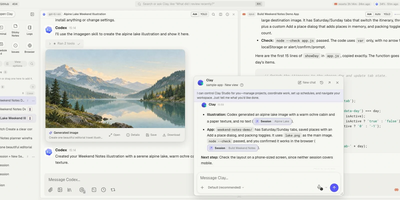
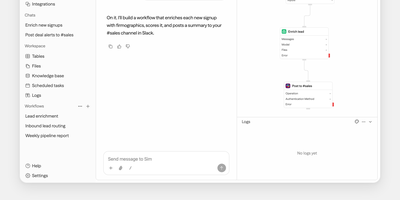
- The same agents answer through the browser Workspace, Slack, Telegram, WhatsApp, phone calls, public chat links, MCP, and the Trinity CLI.
- Cornelius Knowledge Compounding
- Lessons from runs become notes, notes become instructions, and instructions become the next agent's starting point, all as files in repositories you own.
- Fleet-Wide Orchestration
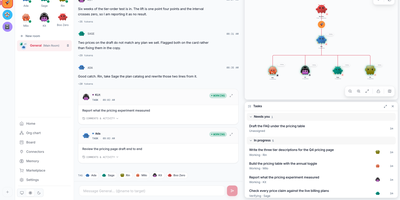
- Schedules, loops, agent-to-agent calls, fan-out, and recovery run across the fleet, with agents able to call only the agents they have been granted edges to.
- One-Line Docker Install
- A single install script brings the platform up with Docker Compose on your machine, where you claim the admin account and connect a model in the setup overlay.