Alarik
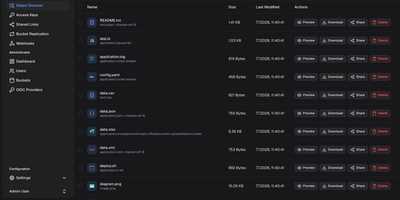
Alarik is a self-hosted S3-compatible object storage server that lets you store files, backups, media, and application data on your own hardware while keeping the S3 APIs your tools already expect. Create buckets, upload objects with multipart support for large files, and retrieve them again through core operations, range reads, presigned URLs, and bucket or object tagging. Versioning keeps earlier copies, delete markers, and listings under your control, while lifecycle rules expire old versions and clean up incomplete uploads automatically. The web console lets you drag and drop files or whole folders, search recursively across nested folders, edit metadata in place, preview individual versions, and share time limited public links. Administrators manage users, access keys, bucket policies, and public access blocks from the same console, with live charts for CPU, memory, traffic, and storage. Bucket webhooks send event notifications when objects change, and replication rules continuously copy data to remote S3 compatible targets, synchronously or asynchronously per rule. Clusters add erasure coded storage across nodes, read repair, bit rot scrubbing, and automatic rebalancing when nodes join, drain, or return. Running on a dedicated VPS on RepoCloud with guaranteed CPU, RAM, and SSD, full root SSH access, and a browser serial console. Apache 2.0 licensed.
AI Chatbot Framework
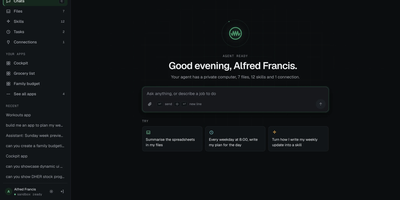
Ask for a job in plain words and an agent with its own private computer does it: it reads files, runs commands, calls connected apps, and reports back in the chat. Every user gets a persistent sandbox workspace, so one person's files and commands never touch another's. Type a new message mid-run and the agent picks it up without stopping, or press Stop at any time. For bigger jobs the agent starts sub-agents that work side by side, each on a model of its choice, and the chat shows what each one is doing. Skills teach it repeatable methods in the open Agent Skills format; upload a zip, write one by hand, or let the agent write its own, and use them from a slash menu. The Connections page links Linear, Notion, Jira, Stripe, and other apps through one-click OAuth sign-in, or any MCP server by address. Scheduled tasks run on a repeating or one-time schedule, and each run becomes a readable chat. Small personal apps like a to-do cockpit or budget view appear in the sidebar, and charts, plans, and forms can render right inside answers. A files browser, an artifacts panel, a command menu, light and dark themes, and a phone layout round out the interface. Running on a dedicated VPS on RepoCloud with guaranteed CPU, RAM, and SSD, full root SSH access, and a browser serial console. MIT licensed.
APITable
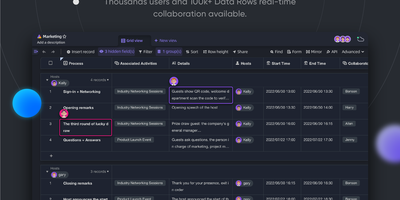
With over 15,000 GitHub stars and positioning itself as the most feature-complete open-source alternative to Airtable, APITable combines a buttery-smooth spreadsheet interface with a full database engine and automatic API generation that turns every datasheet into a queryable REST endpoint without writing a single line of backend code. Real-time collaborative editing powered by Operational Transformation algorithms supports 100,000+ rows with multiple simultaneous users, while seven built-in view types — Grid, Kanban, Gallery, Gantt chart, Calendar, Mindmap, and Form — let teams visualize the same data in whatever format suits their workflow. The one-click API panel exposes every table as a documented REST API with filtering, sorting, and pagination, effectively functioning as a backend-as-a-service for frontend developers and automation builders. Robot automation triggers workflows on record changes with integrations into n8n, Zapier, Appsmith, and Slack, while the extensible widget system provides 20+ open-source widgets for custom charts, dashboards, and data visualizations embedded directly into datasheets. Enterprise features include SAML single sign-on, field-level and row-level permissions via Mirrors, organizational team management, audit logging, database auto-backup, and data export. Bi-directional table linking with infinite cross-links creates relational data models across workspaces, and built-in templates cover CRM, project management, inventory, and content planning. Running on a dedicated VPS on RepoCloud with guaranteed CPU, RAM, and SSD, full root SSH access, and a browser serial console. AGPL-3.0 licensed.
Row-Bot
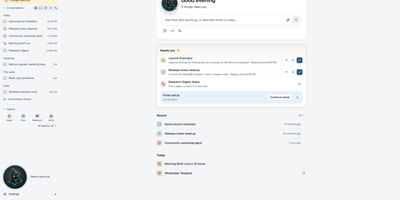
Conversations, goals, memory, and scheduled workflows live together in one private AI assistant that runs on your own server and opens in any browser, on a laptop or a phone. Chat with local models through Ollama, provider API keys, ChatGPT, Claude, or Grok subscriptions, or any OpenAI-compatible endpoint, and every tool call shows up in the transcript. Risky actions pause for Approve or Deny in the chat, on the Home screen, or on a connected channel. Memory grows into a personal knowledge graph with recall, review, and an Obsidian-compatible wiki vault. Ask for a deck, a mockup, or an app and a design or code panel opens beside the chat, with Present, export to PDF, HTML, PNG, or PPTX, a changes view, Git, pull requests, checks, and an interactive terminal. Goals keep going until done, delegated agents get their own conversations, and workflows run on a schedule, a webhook, or a chain, with run history and delivery to channels. Telegram, WhatsApp, Discord, Slack, and SMS channels, voice dictation, and an app catalog for GitHub, Notion, Linear, and Stripe extend it, and health checks propose one fix per problem. Pairing a phone takes a QR code and a one-time invitation, and the server serves a single owner across many devices. Running on a dedicated VPS on RepoCloud with guaranteed CPU, RAM, and SSD, full root SSH access, and a browser serial console. Apache-2.0 licensed.
Cronmaster
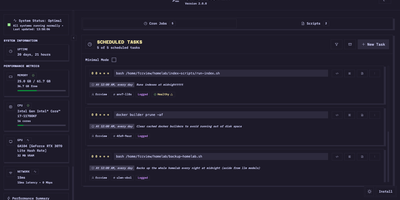
Silent background task failures and scattered crontab files across Linux hosts make routine maintenance risky, which Cronmaster solves with a visual scheduling dashboard and live execution log viewer. Five-field cron expressions translate automatically into plain English alongside one-click schedule presets. Operators can create, comment, clone, pause, or delete scheduled jobs across single or multiple Linux users in seconds. A built-in script manager lets you write, duplicate, and organize reusable Bash scripts from starter templates right inside the browser. Turning on per-job execution logging wraps commands automatically to record standard output, standard error, start and finish timestamps, duration, and exit codes. Log retention policies keep disk usage bounded automatically. Long-running tasks stream their console output live over Server-Sent Events, and any job can be triggered on demand with a single click. Across the top of the workspace, real-time hardware telemetry cards report system uptime, CPU load, memory consumption, network throughput, and GPU utilization. Administrators can protect the interface with local password authentication, OpenID Connect single sign-on with group and role rules, or Bearer API keys for the full REST API. Running on a dedicated VPS on RepoCloud with guaranteed CPU, RAM, and SSD, full root SSH access, and a browser serial console. AGPL-3.0 licensed.
Smartstore
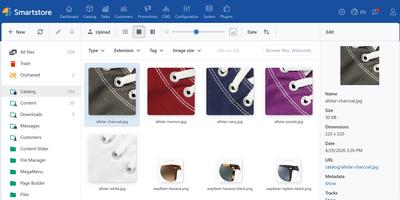
Smartstore is a self-hosted eCommerce platform that lets one install run several multilingual, multi-currency storefronts, with a drag-and-drop page builder and built-in AI writing tools. The catalog takes unlimited products and categories, with variants, bundles, grouped and downloadable products, tier pricing, and cross-selling, while faceted search keeps large assortments easy to filter. Shoppers get a responsive storefront with a streamlined checkout, reviews, wishlists, and wallet or gift-card payments; staff get order, shipment, and return handling plus a dashboard with sales statistics and bestseller lists. Marketing tools cover discounts, coupons, reward points, newsletters, affiliates, a blog, and forums, and the visual Rule Builder grants discounts, offers shipping and payment methods, and assigns customers to roles automatically. AI helpers draft product descriptions and meta tags with OpenAI, Gemini, Claude, DeepSeek, or a self-hosted Ollama model, and image tools create or edit pictures. A Media Manager organizes images and files in folders with filters and metadata. Import and export profiles move catalogs in and out on a schedule, a REST API connects other systems, and tree-based permissions decide which staff roles may do what. The Docker image starts a browser installer that connects to MySQL, PostgreSQL, or SQL Server. Running on a dedicated VPS on RepoCloud with guaranteed CPU, RAM, and SSD, full root SSH access, and a browser serial console. AGPL-3.0 licensed.
Voicebox
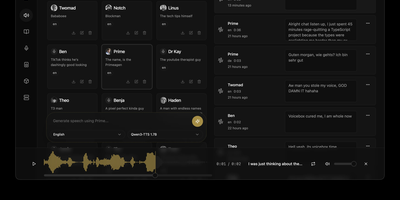
Voicebox is a voice studio that clones a voice from a few seconds of audio and then speaks any script in it, all on hardware you control. Eight speech engines cover multilingual cloning, preset voices, voices described in plain words, and expressive tags like laughs and sighs, across 23 languages. Long scripts are split at sentence boundaries and crossfaded, so chapters and articles render in one pass. A post-processing rack adds pitch shift, reverb, delay, chorus, compression, and filters, with presets like Robotic and Radio. The Stories editor lays voices on a multi-track timeline for podcasts and dialogues, then exports the mix. Voice profiles can be recorded in the app, imported, exported, and given personas that a bundled local language model uses to compose, rewrite, or respond. Global dictation turns a held hotkey into transcribed text with optional cleanup of filler words. A built-in MCP server and REST API let coding agents call a single speak tool and talk back in a cloned voice. Running on a dedicated VPS on RepoCloud with guaranteed CPU, RAM, and SSD, full root SSH access, and a browser serial console. MIT licensed.
openGym
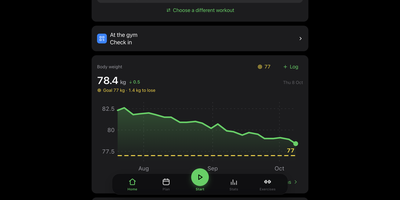
openGym is a self-hosted gym and body-weight tracker that plans your weekly routines, guides every set with pre-filled weights and rest timers, and keeps your training data on a server you control instead of inside a subscription app. Over 5,600 exercises come with animated demos, searchable by body part and the equipment you own, and you can add custom ones with your own photo or video. Progression follows a rule you pick per routine (linear, Greyskull LP, double, triple, or added time), and each target explains where it came from. Supersets, warm-ups, drop sets, rest-pause, timed planks, and cardio by time and speed all log properly, and plate math shows what goes on each side of the bar. A muscle map shows where your volume went, what is still recovering, and what went untrained, beside estimated one-rep maxes, a year-long heatmap, and body weight charted against your goal. Imports from FitNotes, Strong, and Hevy carry your history over. Several people can share one server, each with a private passkey profile, and an optional admin dashboard handles invite-only signup. An optional AI coach, off by default, drafts routines and suggests changes through your own Anthropic, OpenAI, Gemini, or Ollama endpoint, and nothing applies without your approval. The interface speaks 19 languages. Running on a dedicated VPS on RepoCloud with guaranteed CPU, RAM, and SSD, full root SSH access, and a browser serial console. AGPL-3.0 licensed.
FeatherPanel
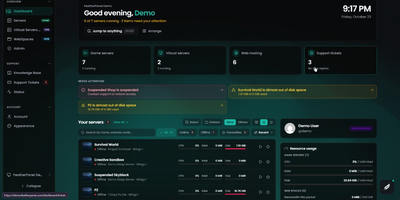
FeatherPanel is one control panel for game servers, Proxmox virtual machines, and web hosting, so a small host stops juggling three different admin tools to run its infrastructure. Game servers deploy from spells (the egg system Pterodactyl users will recognize, with egg imports supported) and open into a live websocket console with power actions, install logs, and CPU, memory, and disk graphs. The built-in file manager browses, edits, uploads, archives, and shares server files, while per-server databases, scheduled backups with retention limits, cron-style schedules, and lifecycle hooks automate the routine work around each server. Virtual machines and containers come from Proxmox nodes with browser VNC consoles, snapshots, ISO mounting, and reinstalls, and web hosting accounts get domains, SSL, databases, mailboxes, one-click WordPress and other apps, and Git deployment in the same UI. Customers help themselves through support tickets, a knowledgebase, and a public status page, while subusers receive fine-grained permissions instead of shared passwords. Plugins and themes from the marketplace extend the panel, a REST API and MCP server connect external tools and AI assistants, and any of the three hosting modules can be switched off when you only need part of the stack. Running on a dedicated VPS on RepoCloud with guaranteed CPU, RAM, and SSD, full root SSH access, and a browser serial console. AGPL-3.0 licensed.
TYPO3
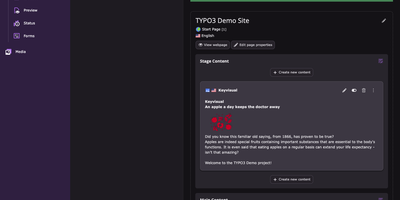
TYPO3 lets an organization run any number of multilingual websites from one installation, with editors working in a page tree and administrators deciding who may touch what. Editing happens in a context panel that slides in beside the page layout, and a guided wizard creates new pages step by step. Translations can be copied or connected to their source with change tracking, and sites can mix languages, including right-to-left scripts. Workspaces keep edits away from the live site until they are previewed and approved, while access lists, page permissions, and mounts control which parts of the tree each backend user may change. Marketing teams get a QR code module and a short URL module with hit counters and expiry dates, and redirects are created automatically whenever a page slug changes. The Form Framework builds forms with multiple file uploads in one field, CKEditor 5 text editing, and email notifications customized in the backend. A dashboard shows widgets such as recent documents and backend logins, and a Bookmark Manager groups shortcuts into large page trees. The Camino starter theme gives integrators a ready-made frontend with several color schemes, and developers shape sites further with Fluid templates and TypoScript, plus extensions from extensions.typo3.org. Running on a dedicated VPS on RepoCloud with guaranteed CPU, RAM, and SSD, full root SSH access, and a browser serial console. GPL-2.0 licensed.
Open Notebook
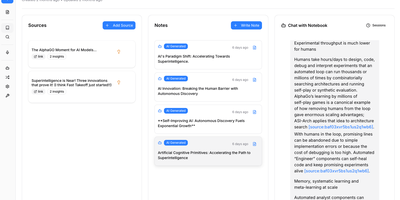
The most feature-complete open-source alternative to Google's NotebookLM — a self-hosted research platform where you upload PDFs, videos, audio files, and web pages into organized notebooks, then chat with your content, generate multi-speaker podcasts, and run semantic search across everything without sending a single byte to Google's servers. The podcast engine supports 1-4 fully customizable speakers with backstories, personalities, and expertise profiles, generating professional audio dialogue through OpenAI, ElevenLabs, Google TTS, or completely local text-to-speech via Kokoro for maximum privacy. Content processing uses token-based chunking with RAG-powered retrieval grounded in your uploaded sources, while both full-text keyword search and semantic vector search via SurrealDB enable conceptual discovery across all notebooks. The 18+ supported AI providers include OpenAI, Anthropic, Google Gemini, Groq, Ollama, LM Studio, and more — configurable per task so you can route cheap models to summarization and powerful models to analysis. Content transformations extract insights, generate summaries, create study guides, and produce structured outputs from any source material. The MCP integration connects Open Notebook to Claude Desktop, VS Code, and other MCP clients for seamless workflow integration. A full REST API on port 5055 enables complete automation of notebook management, source upload, and podcast generation. Deploy via Docker Compose with the application container, SurrealDB v2 on RocksDB, and optional TTS containers. Running on a dedicated VPS on RepoCloud with guaranteed CPU, RAM, and SSD, full root SSH access, and a browser serial console. MIT licensed.
ioBroker
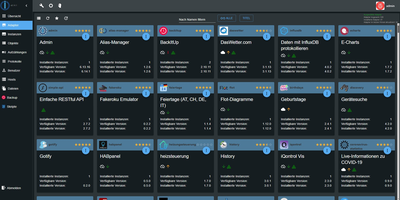
Every device in a smart home speaks a different language, and ioBroker is the open-source home automation platform that translates Zigbee lamps, cloud-tied heating, and Modbus solar inverters into one system under your control. Adapters do the translating: more than 800 of them connect devices, protocols, and online services, from Philips Hue, Shelly, and HomeMatic hardware to MQTT, KNX, Telegram, and weather feeds. Everything an adapter learns lands in one shared structure of objects and live states, so a motion sensor from one brand can switch lights from another without either vendor knowing the other exists. Automations start simple: the rules editor clicks triggers, conditions, and actions together from lists, and the same logic grows into Blockly diagrams or full JavaScript and TypeScript scripts when a routine outgrows the form. Dashboards are yours to design in the vis-2 editor, where switches, sliders, gauges, and floor-plan views are dragged onto pages and bound to any data point in the tree. The whole installation is managed from the browser admin interface: install adapters, configure instances, browse the object tree, watch live states, read logs, and manage users without editing a single configuration file. Voice control joins through Alexa, Google Home, and Matter bridges, remote access works over VPN or the optional ioBroker.pro link, and because automations execute locally, the house keeps behaving when the internet drops. Running on a dedicated VPS on RepoCloud with guaranteed CPU, RAM, and SSD, full root SSH access, and a browser serial console. MIT licensed.

Velocity
Velocity watches aircraft, ships, and satellites move across a live map and records everything it sees, so you can rewind the world to any moment you captured instead of begging commercial trackers for history. Thousands of contacts move across the globe in real time with no account and no API keys, and clicking any aircraft or vessel opens its dossier: identity, kinematics, route, track history, and a note on which feeds reported the position and how fresh it is. A scrubber along the bottom replays the last hour or the last week at up to 3600x speed, turning yesterday's near-miss or dark vessel into something you can actually inspect. Layers add GPS jamming, ships with AIS switched off, flight restrictions, earthquakes, military bases, ports, and maritime chokepoints such as Hormuz and Malacca with live transit counts. An autonomous watch officer ranks spoofing, jamming, and dark-vessel alerts into an inbox and writes cited incident briefs, while anything worth keeping drops into an evidence locker with hash-verified custody records exportable as reports. Running on a dedicated VPS on RepoCloud with guaranteed CPU, RAM, and SSD, full root SSH access, and a browser serial console. AGPL-3.0 licensed.
AiSOC
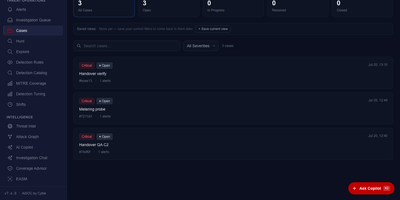
AiSOC delivers an open-source AI Security Operations Center that unifies event ingestion, graph correlation, autonomous triage, and purple-team adversary emulation into a single self-hosted console. Security analysts triage alerts across an interactive Investigation Rail that visualizes six-event attack timelines, pivot-path entity graphs, and recommended containment steps. The underlying LangGraph agentic engine reasons over ingested telemetry, querying MITRE ATT&CK frameworks, CISA Known Exploited Vulnerabilities catalogs, and Shodan intelligence while recording every prompt, tool execution, and evidentiary citation in an immutable Investigation Ledger. Incident responders execute automated containment playbooks, including host network isolation, credential revocation in identity providers, and firewall blocklist updates with human-in-the-loop sign-offs. Threat hunters input plain-English hypotheses into the natural-language hunt workbench to generate and execute ES|QL, SPL, and KQL queries against historical telemetry stores. Platform operators connect over seventy vendor connectors spanning CrowdStrike, SentinelOne, Microsoft Defender, AWS Security Hub, Okta, and Cloudflare to normalize streaming events into Open Cybersecurity Schema Framework standards. Running on a dedicated VPS on RepoCloud with guaranteed CPU, RAM, and SSD, full root SSH access, and a browser serial console. MIT licensed.
Alook
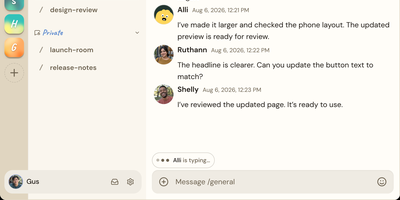
Alook gives the coding agent on your machine a seat in the team chat, with its own handle, inbox, and room memberships, so colleagues can ask it for work the same way they would message a person. You create servers, channels, and direct messages where people and agents are both first-class members, and an agent keeps one persistent identity across every room it joins. Claude Code, Codex, Cursor, OpenCode, Pi, Grok, and Antigravity connect through a small daemon, so the agent keeps running on your own hardware while the room stays reachable from anywhere. Because the agent holds memory across rooms, it can pick up a thread in one channel, report progress in another, and move tasks forward without you relaying messages by hand. Inviting a teammate takes a link; they join the room and talk with your agent directly instead of waiting for you to copy answers back and forth. The same room follows you from desktop to phone, so a question asked at your desk is still there, with the agent's reply, when you check it later. Self-hosting runs the web app, realtime WebSocket service, email worker, and wake-up queue on your own server with a local database, started with a single npx command. Running on a dedicated VPS on RepoCloud with guaranteed CPU, RAM, and SSD, full root SSH access, and a browser serial console. Apache 2.0 licensed.
Duckle
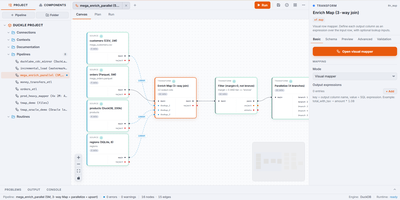
Duckle compiles visual data integration pipelines into vectorized analytical SQL executed on an embedded columnar engine, eliminating the overhead and cloud egress costs of traditional ETL infrastructure. Engineers can construct data pipelines on a drag-and-drop canvas, connecting hundreds of data sources spanning relational databases, cloud object storage, streaming event buses, vector databases, and SaaS application programming interfaces. An interactive mapping editor enables complex joins between primary data inputs and lookup streams with typed transform expressions and live sample inspections. Built-in transformation blocks execute change data capture, slowly changing dimensions, aggregation rollups, and integrated dbt models with zero row-based metering or cloud egress fees. Teams schedule headless production executions through a dedicated web console equipped with role-based access management, execution audit trails, and automated failure alerts dispatched to webhook endpoints. Embedded Model Context Protocol capabilities allow AI coding assistants to validate schema configurations, inspect execution logs, and trigger batch workflows directly through conversational commands. Workspaces store entire pipeline definitions as individual files in version control, ensuring reproducible deployments across staging and production environments. Running on a dedicated VPS on RepoCloud with guaranteed CPU, RAM, and SSD, full root SSH access, and a browser serial console. Apache-2.0 licensed.

Comp AI
Comp AI turns the months-long slog of SOC 2, ISO 27001, HIPAA, and GDPR certification into a largely automated process by connecting to your existing infrastructure and continuously collecting the evidence auditors actually ask for. Point it at your AWS account, Google Cloud project, GitHub organization, or any of 580+ supported integrations, and autonomous agents pull configuration snapshots, access logs, encryption status, and policy compliance data on a recurring schedule so your compliance posture reflects reality rather than last quarter's manual export. The AI policy engine analyzes your tech stack, team structure, and risk tolerance to generate organization-specific policies for information security, access control, incident response, data retention, and vendor management; no two companies get the same boilerplate. An open-source device agent runs on employee machines checking disk encryption, firewall status, screen lock settings, password length, and antivirus presence around the clock, flagging failures the moment they occur instead of surfacing them during an audit. Built-in penetration testing agents scan your codebase and API endpoints for vulnerabilities like SQL injection and output audit-ready reports. The vendor risk management module scores third-party services and surfaces compliance gaps before they become findings. A public trust center lets prospects verify your compliance status directly, eliminating security questionnaire bottlenecks. Running on a dedicated VPS on RepoCloud with guaranteed CPU, RAM, and SSD, full root SSH access, and a browser serial console. AGPL-3.0 licensed.
Bugsink
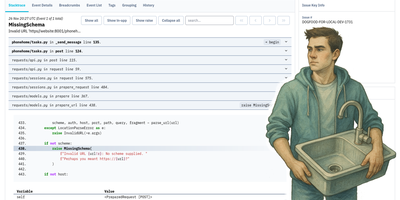
Bugsink has earned over 1,800 GitHub stars as the lightweight self-hosted error tracking platform that replaces Sentry without per-event billing by accepting error reports from any Sentry-compatible SDK across Python, JavaScript, Node.js, Ruby, Java, PHP, Go, and every other language Sentry supports. Simply update the DSN in your existing Sentry configuration and Bugsink captures the same stack traces, local variables, request context, and breadcrumbs that Sentry processes, displayed through a focused interface designed for debugging rather than dashboarding. Automatic issue grouping collapses duplicate error events into single actionable issues based on exception type, message, and stack frame context, turning thousands of raw events into a manageable list. Issue status tracking supports resolved, resolved-in-next-release, and muted states with automatic regression detection when resolved issues recur. Release tracking associates events with deploy versions to correlate error spikes with specific rollouts. Tag-based search filters issues by environment, release, user, browser, operating system, or any custom key-value pair sent by the SDK. Alerting notifies your team through Slack, Discord, Mattermost, and email when new issues appear or resolved issues regress, with per-project webhook configuration and user-level notification preferences. Per-project retention policies with automatic event eviction manage storage growth. A REST API with OpenAPI documentation enables custom integrations and dashboards. Source map support links minified JavaScript to original source. Deploy via Docker with the bugsink/bugsink image. Running on a dedicated VPS on RepoCloud with guaranteed CPU, RAM, and SSD, full root SSH access, and a browser serial console. PolyForm Shield licensed.