Paymenter
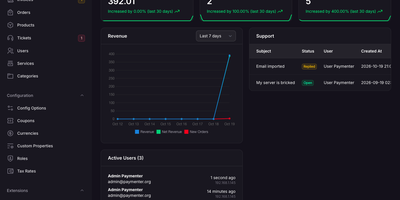
Hosting companies that sell VPS plans, game servers, or dedicated machines get a branded storefront, recurring billing, and a ticket desk from Paymenter, running on their own server. A customer browses a category, picks a free, one-time, or recurring plan billed every few days, weeks, months, or years, and shapes the order with select, radio, checkbox, text, number, or textarea options, some of which carry their own price. Prices can differ per currency, and a setup fee is optional. Payment runs through Stripe, PayPal, or Mollie, with tax rates and coupons set from the admin panel. Once it clears, a server extension for Pterodactyl, Virtualizor, VirtFusion, Convoy, cPanel, Plesk, DirectAdmin, or Enhance creates the service. A daily job issues renewal invoices, suspends overdue accounts, and terminates long-overdue ones. The customer portal covers services, invoices, and tickets in 24 languages, and tickets accept replies by IMAP email piping. Staff work with roles, audit logs, email logs, and notification templates, while API keys and OAuth clients connect outside tools. Optional extensions add an affiliate program, announcements, and Discord alerts. Moving over from WHMCS takes one built-in command that imports clients, products, services, tickets, and invoices from a copy of your database. Running on a dedicated VPS on RepoCloud with guaranteed CPU, RAM, and SSD, full root SSH access, and a browser serial console. MIT licensed.
LinkBreeze
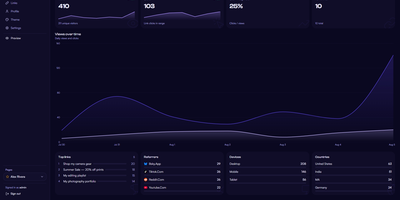
LinkBreeze is a self-hosted link-in-bio platform that lets you publish unlimited, fully themed link pages from your own server instead of renting one by the month. A guided setup wizard covers the admin credentials, profile, and theme, then a floating phone-frame preview refreshes as you edit while autosave stores your changes. Each page gets its own slug, theme, SEO tags, QR code, and analytics, so one install can serve a personal profile, a band, and a shop. Eleven built-in themes cover Aurora, Glassmorphism, Neon Cyberpunk, and Terminal Mono, backed by a token customizer for fonts, backgrounds, card styles, and raw CSS. Links pull in favicons automatically, accept thumbnails, and can be scheduled to appear and vanish on set dates, while embed widgets drop in YouTube, Spotify, SoundCloud, Vimeo, and Bandcamp players. A migration wizard imports profiles from Linktree, Bento, Hopp.bio, LittleLink, or an HTML or JSON export. Visitors can subscribe with an email address that you export to CSV, save your page as a vCard contact, or scan a QR code that downloads as SVG or PNG. Cookieless analytics track views, clicks, referrers, devices, and countries with hashed visitor IPs, and Plausible, Umami, Matomo, or Google Analytics can be added with one paste. The admin panel supports TOTP two-factor authentication, a UTM builder, JSON backup and restore, and seven interface languages. Running on a dedicated VPS on RepoCloud with guaranteed CPU, RAM, and SSD, full root SSH access, and a browser serial console. MIT licensed.
Komari
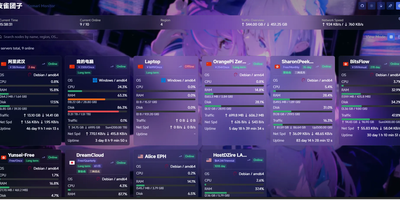
Komari turns a scattered fleet of VPS boxes into one clean status wall that shows which servers are alive, struggling, or about to expire. Every node reports CPU, GPU, memory, swap, disk, load, network speed, traffic totals, and uptime to a real-time dashboard, with history views from ten minutes to thirty days or any custom range. Flip between a card grid and a table, search by name, region, or operating system, and tag each machine with its price, billing cycle, and days until renewal. Latency tasks send ICMP, TCP, or HTTP probes and plot the results in per-node charts. Offline alerts wait out a per-node grace period before firing, expiry reminders warn before a plan lapses, and Webhook and custom JavaScript channels deliver them. A multi-tab browser terminal that reattaches after disconnects, remote command execution, and a remote file manager with an editor let you fix problems without leaving the panel. Agents install with a script, a binary, Docker, or an auto-discovery key for batch rollouts, and administrators can switch an agent's version remotely. Plugins run on an embedded JavaScript runtime and can add scheduled jobs, HTTP hooks, static pages, and notification channels. Administrators can add two-factor authentication, OAuth sign-in, API keys for a JSON-RPC 2.0 endpoint, themes from a theme market, and backups. Running on a dedicated VPS on RepoCloud with guaranteed CPU, RAM, and SSD, full root SSH access, and a browser serial console. MIT licensed.
salt.md
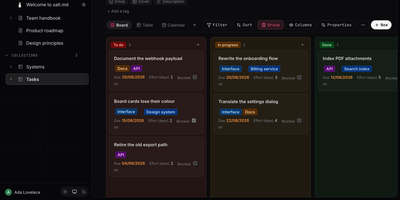
salt.md is an open-source, self-hosted workspace where your team and its AI agents work on the same documents and databases, under the same permissions and with the same history. A slash-menu block editor handles checklists, tables, callouts, columns, code, diagrams, and embeds. Page links, backlinks, and a graph view show how pages connect. Any page can become a collection with typed properties like select, date, person, relation, rollup, and formula, shown as a table, board, list, gallery, calendar, timeline, or form. Ctrl+K searches titles, body text, row values, and the text inside uploaded PDFs. Two people can type in the same paragraph at once with live cursors. Comments, page history, and an activity log record who changed what. Publish a page as a read-only link with an optional password and expiry, or hand people without accounts a form that adds rows to a collection. Agents connect over MCP with 33 tools for searching, writing, building databases, and commenting, using tokens scoped to one workspace or read-only. Signed webhooks, iCalendar feeds, and Google or Microsoft sign-in link it to the rest of your stack. Import Markdown, ZIP archives, or a Notion export, and export pages as Markdown, HTML, or PDF. Use it for handbooks, meeting notes, project boards, and a knowledge base your assistants can read. Running on a dedicated VPS on RepoCloud with guaranteed CPU, RAM, and SSD, full root SSH access, and a browser serial console. AGPL-3.0 licensed.
freehire
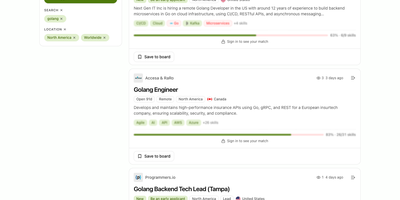
A job search engine you host yourself, freehire collects postings from employer career pages, so results link back to the original listing instead of a recruiter repost. Adapters for Greenhouse, Lever, Workday, Ashby, iCIMS, and dozens more normalize every posting into one schema and collapse cross-board duplicates into one entry. Full-text search narrows results by region, work mode, seniority, skills, and salary using curated dictionaries instead of model guesses, so filters return what they promise. Saved searches send email or Telegram digests of new matches, shared boards travel as unindexed links, and insights and trends show which skills are gaining postings and what roles pay by region. A ghost-job signal flags repost patterns and stale listings and shows its evidence, so you can spot roles that never actually close. The CV builder renders PDFs from templates marked ATS-safe or not, a deterministic score compares CVs with vacancies, and a connected LLM tailors CVs using only facts you assert, then rehearses the interview. An application board tracks every stage, a mail inbox links recruiter replies to the application they answer, and reminders flag silent leads. Self-hosters choose their own sources: one catalog row adds a company, and cron-driven workers crawl and index it. A keyless public API, a CLI, and an autofill Chrome extension extend it. Running on a dedicated VPS on RepoCloud with guaranteed CPU, RAM, and SSD, full root SSH access, and a browser serial console. MIT licensed.
Open Wearables
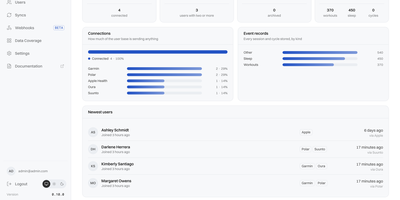
Garmin, Oura, Whoop, and Apple Health each speak a different data dialect, and Open Wearables translates all of them into one consistent REST API that you host yourself. Users authorize through a connection link or the connect widget, history backfills on the first sync, and heart rate, HRV, SpO2, sleep, workouts, and meals land in one normalized schema. When two devices record the same night, configurable data priorities decide which provider and device type wins. Native iOS, Android, Flutter, and React Native SDKs push Apple Health, Samsung Health, and Health Connect data from the phone, and full Apple Health XML exports can be imported too. Outgoing webhooks announce new data with signed payloads, test events, and delivery logs, while a live sync stream shows every pull as it happens. The developer portal adds a dashboard, user profiles with sleep, meals, scores, and women's health tabs, sync history, data coverage, API keys, team invitations, retention policies, and a seed data generator. Sleep and resilience scores ship with open algorithms you can audit and tune. An MCP server lets Claude Desktop or Cursor answer questions such as how a user slept last week. Use it for AI health coaches, fitness coaching apps, healthcare platforms, research cohorts, or a personal health archive with n8n automations on top. Running on a dedicated VPS on RepoCloud with guaranteed CPU, RAM, and SSD, full root SSH access, and a browser serial console. MIT licensed.
VictoriaLogs
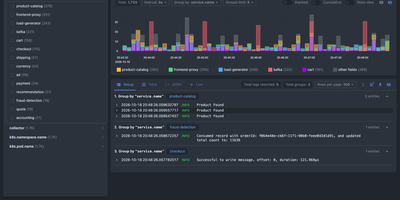
Instead of running an Elasticsearch or Loki cluster, VictoriaLogs stores and searches your logs from a single zero-config server. Ship from Filebeat, Fluent Bit, Fluentd, Logstash, Vector, Promtail, Telegraf, the OpenTelemetry Collector, or the Datadog Agent. Syslog, journald, and Splunk endpoints work too. Query with LogsQL: word, phrase, and prefix filters combine with pipes that extract fields from raw lines and compute stats, top values, and facets. See results as a table, grouped by stream, as raw JSON, or as a live tail. Chart them in Grafana, or work from a terminal with vlogscli and pipe output into grep, less, or jq. Events with hundreds of fields are supported. So are high-cardinality fields like trace_id and user_id. Late, out-of-order backfills are accepted. During an incident, stream_context pulls the lines around any match. Tenants are keyed by AccountID and ProjectID headers. vmalert evaluates LogsQL queries as alerting and recording rules. CEF messages sent over Syslog are parsed automatically for SIEM work. Retention defaults to 7 days and can be capped by disk space. Per-day partitions snapshot and copy out with rsync or rclone. Cluster mode splits ingestion, querying, and storage across nodes for logs that outgrow one server. Running on a dedicated VPS on RepoCloud with guaranteed CPU, RAM, and SSD, full root SSH access, and a browser serial console. Apache 2.0 licensed.
Sharkord
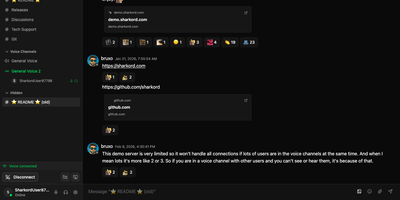
On game night Sharkord carries voice, webcams, and screen sharing, and on Monday morning it carries the team's threaded chat, all from one server you control. For the gaming crowd, voice rooms offer noise suppression, echo cancellation, webcams up to 2160p, and screen sharing in VP8, VP9, H264, or AV1, with optional simulcast layers for slow viewers. An experimental Bridge app keeps push-to-talk and mute hotkeys working with a game in focus, and plugins add a music bot or a soundboard. For a family group, invite links can carry a role, a use limit, and an expiry, and replies, reactions, custom emoji, pins, and direct messages keep conversation casual, with uploads up to 2 GB each. For a small team, text channels sit in categories with threads, mentions, and search, roles stack with per-channel permissions for private rooms, and OpenID Connect sign-in works with Authentik, Keycloak, Zitadel, Entra ID, or Google Workspace. Admins cap storage per user or role and can sign upload URLs. There is no premium tier, no member cap, no ads, and no tracking, and a built-in marketplace installs plugins in one click. Running on a dedicated VPS on RepoCloud with guaranteed CPU, RAM, and SSD, full root SSH access, and a browser serial console. MIT licensed.
Krawl
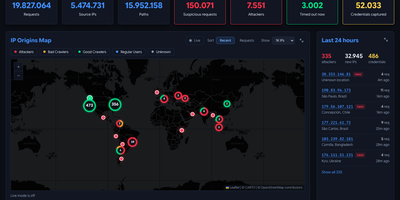
Leave a fake door unlocked and see who walks through: Krawl is a self-hosted honeypot that poses as a sloppy web server and records everything scanners and scrapers try. Fake WordPress, phpMyAdmin, and admin logins. Every attempt logged, every credential captured. A .env file leaking fake database strings, AWS keys, and Stripe secrets. SQL injection, XSS, path traversal, XXE, and command injection traps that answer with believable fake output. SQLMap gets a different database error on every request. Malicious crawlers wander an endless maze of random links. An optional tarpit adds delay and word salad that cost scrapers time, storage, and tokens. Optional AI-generated pages write a plausible decoy for any path an attacker requests. A hidden dashboard shows an attacker map, top IPs, captured credentials, and per-IP forensics. TLSH fuzzy hashing groups webshell variants into campaigns. A behavior score labels each IP attacker, bad crawler, good crawler, or regular user. Export bans as raw lists, iptables, or nftables rules, with guides for Fail2Ban, OPNsense, and RouterOS. A canary-token link in decoy pages emails you the IP and user agent of anyone who follows it. Running on a dedicated VPS on RepoCloud with guaranteed CPU, RAM, and SSD, full root SSH access, and a browser serial console. MIT licensed.
ISMS Builder
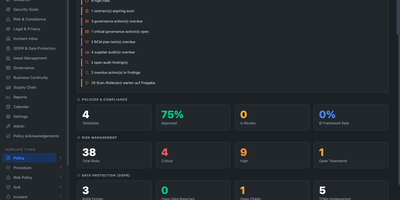
For teams that need ISO 27001, NIS2, and GDPR evidence without handing compliance data to a SaaS vendor, ISMS Builder is a self-hosted information security management system for policies, risks, assets, audits, and incidents. Compliance managers move policies from draft through review to approved and archived, and recipients confirm each one through a token link that needs no login. Security officers close gaps in a Statement of Applicability that cross-maps BSI IT-Grundschutz, NIS2, EUCS, the EU AI Act, and the Cyber Resilience Act, with ISO 27001 controls imported from their own licensed copy. Risk owners keep treatment plans, turn Greenbone and OpenVAS reports into risk drafts, and score assets for confidentiality, integrity, availability, and authenticity. Data protection officers run records of processing, processor agreements, impact assessments, data subject requests, a 72-hour timer, and a deletion log with email alerts. The CISO inbox collects incidents, including reports from a public form that needs no login, beside a 30-item NIS2 Article 21 checklist and Article 23 deadline alerts. Auditors work from a findings register, a compliance matrix, and an exportable audit log of every create, update, delete, and login. Administrators enforce TOTP two-factor sign-in, choose among German, English, French, and Dutch, run semantic search locally through Ollama, and publish approved policies to Nextcloud or ownCloud as PDFs. Running on a dedicated VPS on RepoCloud with guaranteed CPU, RAM, and SSD, full root SSH access, and a browser serial console. AGPL-3.0 licensed.
Tracely
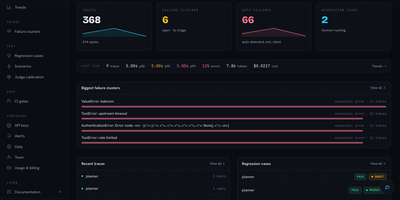
When an AI agent breaks in production, Tracely freezes that exact run into a replayable regression test and blocks the pull request that would ship the bug again. Span soup hides the failure. OTLP/HTTP traces group into conversation threads, and a waterfall marks the failing span in red with its input and output. Nobody knows if an answer was good. Evaluators sit as columns on the trace table, mixing model-free checks with LLM judges at conversation, run, or span level. Thirty-one broken runs, one issue. Clustering turns them into a single counted issue and can suggest the evaluator that would have caught it. A fix nobody can prove. One click promotes a failing trace into a hermetic case with recorded fixtures and a fail-to-pass contract, and scenarios send a red-team model after an adversarial goal. Model bills on every CI run. The suite replays offline with no API keys and no model spend, and tracely gate posts a commit status, comments on the pull request, and blocks regressions. No warning when it breaks again. Alert flows drawn on a canvas react to failed gates, broken conversations, unseen failure modes, or rising failure rates by messaging Slack, sending email, calling a webhook, or prompting an LLM. Coding agents can read traces and write evaluators through an MCP endpoint. Running on a dedicated VPS on RepoCloud with guaranteed CPU, RAM, and SSD, full root SSH access, and a browser serial console. MIT licensed.
PanWatch
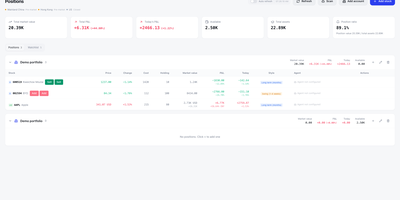
PanWatch's three scheduled AI agents plan the trading day before the bell, watch the session, and review it after the close for your China A-share, Hong Kong, and U.S. holdings. Day one begins with the portfolio: several brokerage accounts, holdings and profit and loss, and search for stocks or listed ETFs by code or name. The pre-market agent folds overnight moves, news, and technical structure into that plan and skips exchange holidays. Through the session, the intraday monitor watches for unusual moves and technical signals. Price alerts combine price, percentage change, turnover, and volume ratio with AND/OR logic, cooldowns, and expiry times. Each rule picks its own channel from Telegram, WeCom, DingTalk, Feishu, Bark, or a webhook. Spot something odd? The brain icon next to a holding starts TradingAgents, where four analyst roles feed a bull and bear debate, a risk review, and a portfolio-manager decision, with the reasoning trail in the app and your notifications. The opportunities screen ranks AI-scored ideas with entry levels and targets, and paper trading simulates signal-based entries and exits and tracks equity and performance. At day's end, the daily report reviews the session and prepares the next trading day's plan. OpenAI-compatible providers or local Ollama models power the analysis, and the PWA installs on a phone in English or Simplified Chinese. Running on a dedicated VPS on RepoCloud with guaranteed CPU, RAM, and SSD, full root SSH access, and a browser serial console. MIT licensed.
Open DroneLog
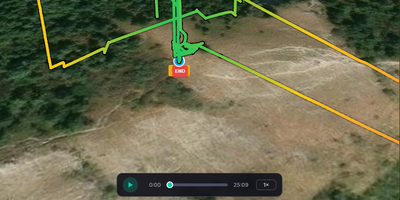
Every DJI and Litchi flight you have ever logged becomes a searchable dashboard on your own server with Open DroneLog, a free, open-source alternative to DroneLogbook, Airdata UAV, and Flight Reader. Drop in DJI .txt logs, Litchi CSV files, or Airdata CSV exports and units are detected automatically, while deduplication on drone serial, battery serial, and start time lets you re-import a folder without duplicate flights. Each flight opens as a 3D terrain map with satellite, topographic, and OpenStreetMap layers, then replays from 0.5x to 16x speed with live telemetry and an RC joystick overlay. Synchronized charts plot height, speed, battery cell voltages, attitude, RC signal, GPS, and distance to home, with drag-to-zoom. Filters narrow flights by date, drone, battery, controller, duration, altitude, distance, tag, or map area, and automatic tags such as Night Flight and Low Battery arrive with offline reverse-geocoded locations. The overview dashboard adds an activity heatmap, per-drone and per-battery charts, and a cluster map. Battery health bars track cycle counts and capacity history, and maintenance thresholds show as color-coded progress bars. Export flights as CSV, JSON, GPX, or KML, build printable HTML flight reports that save as PDF, or generate a FlyCard image for social media. A sync folder imports new logs automatically, pilot profiles can sit behind passwords, and full-database backup and restore moves data between desktop and Docker. Running on a dedicated VPS on RepoCloud with guaranteed CPU, RAM, and SSD, full root SSH access, and a browser serial console. AGPL-3.0 licensed.
Craftplan
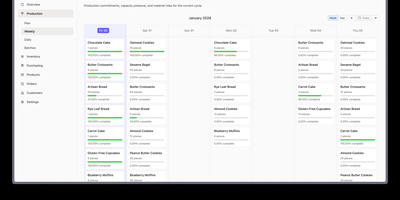
Every batch a craft business ships carries a recipe version, a cost, and a trail of ingredient lots, and Craftplan, an open-source ERP, keeps all three connected. Receiving stock against a purchase order records each supplier lot code and optional expiry date, and partial deliveries keep the order open. Customer orders appear on a delivery calendar and can generate invoices. Scheduled items wait on the production board as unbatched cards until Batch All creates one batch with a frozen copy of the recipe. Capacity warnings flag products over their daily limit, and a forecast highlights materials that will run short. Finishing a batch consumes ingredient lots earliest-expiry first, skips any lot on hold or rejected, and snapshots material, labor, and overhead costs. Recipes are versioned, so past costs never change. A blend made in-house can be stocked as its own material, with its actual yield, lot costs, and source lots intact. Allergens and nutrition facts roll up from each material through every recipe, and completed batches print A5 or compact labels with a scannable barcode. The Trace Center follows a supplier lot forward to every customer who received it, or a finished batch back to its sources. Recall mode can place the lot on hold, and the trace exports as CSV or prints for the recall file. Running on a dedicated VPS on RepoCloud with guaranteed CPU, RAM, and SSD, full root SSH access, and a browser serial console. AGPL-3.0 licensed.
Misago
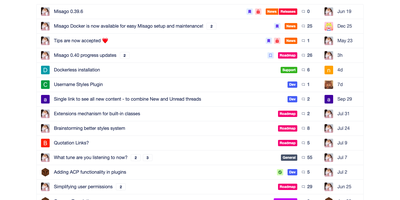
A Misago forum comes with threads, polls, private conversations, nested categories, and the moderation tools to keep them in order. Categories nest to any depth. Permissions follow rank, role, and category. Registration can require e-mail activation or administrator approval, and a Q&A challenge, reCAPTCHA, Stop Forum Spam, or an IP blacklist can turn away spam sign-ups. More than 50 OAuth providers, including Google, GitHub, Steam, and Facebook, can handle sign-in. Posts accept GitHub-flavoured Markdown, a BBCode subset, or both, and attachments get thumbnails. Polls allow public or private voters, multiple choices, vote changes, and deadlines. Question threads let one reply be marked as the best answer. A post-accurate read tracker flags threads with new replies. Private threads stay visible only to the people invited. Presence shows who is online, and members can hide their own activity from non-admins. Custom profile fields get their own display and validation rules. Features and settings for GDPR compliance are included. Themes restyle the forum from the admin panel, and plugins extend it through action and filter hooks. Moderators can edit, move, hide, approve, delete, or close content, and a moderation queue holds new submissions for review before other members see them. If someone empties a post, the edit log shows the original wording and can restore it. Running on a dedicated VPS on RepoCloud with guaranteed CPU, RAM, and SSD, full root SSH access, and a browser serial console. GPL-2.0 licensed.
Karma
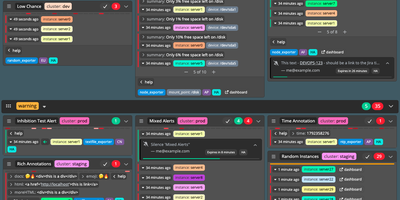
When an alert fires on any of your Prometheus Alertmanagers, Karma shows it once, on one filterable dashboard, and lets you acknowledge or silence it from there. Identical alerts from different servers merge into one entry tagged with every server that saw it, HA pairs included. Groups follow the group_by settings of your Alertmanager routes, and shared labels and annotations collapse into a footer. Multi-grid mode gives each value of a label, or each Alertmanager, cluster, or receiver, its own grid, keeping production and staging apart. Configurable label colors make hosts and severities easy to spot. Optional history draws 24 hourly blocks per group from the Prometheus servers that fired it, and an inhibited alert's muted button lists whatever is suppressing it. One click acknowledges an alert with a short-lived silence, and the separate kthxbye daemon can keep extending it until the alert resolves. The silence modal creates, edits, and expires silences, and ticket IDs in comments can become links. A Dead Man's Switch check raises a visible error when the alerting pipeline goes quiet. Basic auth or a proxy's header identifies each user, silence ACLs stop one team from silencing another's alerts, and read-only mode disables silence management. Default filters open the view your team triages first, and light and dark themes follow the browser. Running on a dedicated VPS on RepoCloud with guaranteed CPU, RAM, and SSD, full root SSH access, and a browser serial console. Apache-2.0 licensed.
ProjectSend
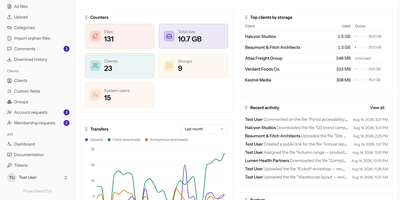
ProjectSend gives every client a private, signed-in page on your own server where only the files you assigned to them appear, so contracts, photo shoots, and quarterly reports skip the third-party file-sharing service. You upload once, then share a file or a whole folder with one client, a group, or anyone holding a public link, with an optional expiry date or download limit. Clients search, preview, and download files one by one or as a zip, whole folders included, comment on a document so questions stay beside it, and send files back within the quota you set. Uploads of up to 2 GB travel in resumable pieces, so a dropped connection pauses a transfer instead of ruining it. Folders, categories, custom client fields, and linked file versions keep a growing library tidy, while roles with granular permissions let staff work without becoming administrators. The activity log and download history record who received what and when, and the log exports to CSV. Sign-in works with email and password, LDAP, or Google and Microsoft accounts, with optional two-factor authentication. Your logo, watermark, themes, and editable email templates carry your brand, and the interface is translated into 16 languages. Optional virus scanning quarantines suspicious uploads, and a REST API with scoped tokens automates uploads, sharing, and account management. Running on a dedicated VPS on RepoCloud with guaranteed CPU, RAM, and SSD, full root SSH access, and a browser serial console. GPL-2.0-or-later licensed.
degoog
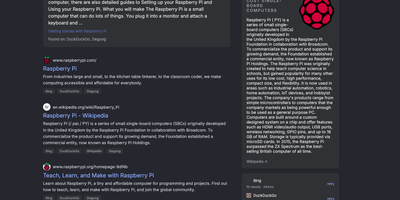
Instead of trusting one search company with every query, degoog is a self-hosted search aggregator that fans each one out to the engines you choose, from your own server, and merges the answers into one deduplicated, ranked list. It installs with no engines at all; a first-run tour then walks you through picking Google, Bing, DuckDuckGo, Brave, Startpage, Reddit, or Wikipedia from the built-in Store. Pages found by several engines collapse into a single row that lists every source, while a sidebar times each engine, explains failures like rate limits or CAPTCHAs, and retries only the one that failed. Tabs appear for each search type your engines serve, and the Images tab adds size, color, layout, and safe-mode filters beside a zoomable preview panel. Bangs target one engine or run commands (!w for Wikipedia, !ip, !speedtest, !uuid), and Store plugins add weather, definitions, QR codes, and search across your own Jellyfin or Meilisearch libraries. Owners can block, rewrite, or score domains, serve a script-free page to text browsers, and turn on an indexer that remembers seen results for later recall. A JSON search API, a SearXNG-compatible response mode for Open WebUI, and an MCP companion feed the same results to scripts and LLM clients. Running on a dedicated VPS on RepoCloud with guaranteed CPU, RAM, and SSD, full root SSH access, and a browser serial console. AGPL-3.0 licensed.