
Atsumeru
Atsumeru is the bookshelf server for people whose manga and comic collection lives in CBZ files scattered across drives: point it at the folders and it becomes a tidy library you can read from anywhere. Series organize themselves into auto categories, custom categories, and metacategories, and metadata edits are painless, with automatic import from ComicInfo.xml and book_info.json files and parsing from supported catalogs when you want richer records. Reading happens in native apps for Windows, Linux, Mac, and Android, or in the built-in WebUI, and two-way history synchronization keeps your place when you move from desk to phone. Whole series download inside supported apps for offline reading, which turns a commute into a chapter backlog clearing session. Multiple users get separate histories and powerful access controls, so a household shares one server without sharing reading progress or seeing each other's shelves. A documented REST API with Swagger on board covers automation and custom clients. The server runs as a single jar or a Docker container on port 31337, small enough for the spare machine already holding the files. Running on a dedicated VPS on RepoCloud with guaranteed CPU, RAM, and SSD, full root SSH access, and a browser serial console. MIT licensed.
Coddy
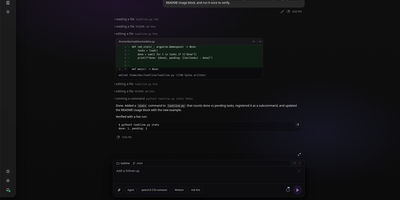
A single static binary is all it takes to put a tireless AI agent on your server, ready to read your codebase, run shell commands, edit files, and report back through a web UI, a terminal console, your editor, or a Telegram chat. Start it as a server and the embedded web interface gives you streaming chat sessions with visible tool calls, session history, plan documents, a background task board, and a visual map of connected nodes. Point any OpenAI-compatible client at its HTTP API, or drive the same sessions from Zed, VS Code, or Obsidian through the built-in ACP editor server. Delegate bounded work to subagents that run in isolated contexts with narrowed permissions, then resume them later in their own sessions if a run stops short. Teach it your project once: rules are picked up from .coddy, .cursor, .claude, and .codex folders, AGENTS.md files are honored as work proceeds, and installable skill packs turn repeatable procedures into slash commands. Schedule recurring jobs as plain Markdown files on a cron timetable, keep long-term memory across conversations, and connect external tool servers over MCP globally or per workspace. A Prometheus exporter reports provider calls, tokens, and task health for the whole fleet. Running on a dedicated VPS on RepoCloud with guaranteed CPU, RAM, and SSD, full root SSH access, and a browser serial console. MIT licensed.
Huf
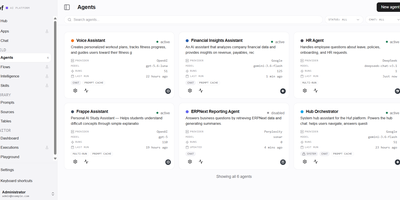
Give your team one console to build agents, ground them in real data, and reach them through email, Telegram, Slack, and WhatsApp: Huf is a self-hosted multi-agent AI platform running on servers you operate. Create agents visually, assign each one a provider and model, and watch runs, last activity, and status from a grid that shows every agent at a glance; the same console manages prompts, skills, flows, data tables, and knowledge sources. Connect agents to Gmail and email, Telegram, Slack, WhatsApp, and custom HTTP webhooks, and inbound messages trigger runs whose replies route back to the original channel automatically. Agents read, create, update, and delete any Frappe document, work ERPNext data, and call external systems through Model Context Protocol servers with managed OAuth credentials. Code-heavy tasks run in hardened execution profiles: a local Python environment, an isolated venv, direct SSH, a Frappe SSH connection, or a Docker container, each gated by role-based permissions for agents, tools, data tables, and MCP servers. Teams package prompt templates, tools, and MCP configurations into shareable skills and Huf Apps, run models from cloud providers, or keep everything local with Ollama, LM Studio, or any OpenAI-compatible endpoint. Running on a dedicated VPS on RepoCloud with guaranteed CPU, RAM, and SSD, full root SSH access, and a browser serial console. AGPL-3.0 licensed.
Velocity
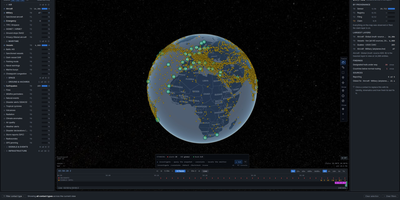
Velocity watches aircraft, ships, and satellites move across a live map and records everything it sees, so you can rewind the world to any moment you captured instead of begging commercial trackers for history. Thousands of contacts move across the globe in real time with no account and no API keys, and clicking any aircraft or vessel opens its dossier: identity, kinematics, route, track history, and a note on which feeds reported the position and how fresh it is. A scrubber along the bottom replays the last hour or the last week at up to 3600x speed, turning yesterday's near-miss or dark vessel into something you can actually inspect. Layers add GPS jamming, ships with AIS switched off, flight restrictions, earthquakes, military bases, ports, and maritime chokepoints such as Hormuz and Malacca with live transit counts. An autonomous watch officer ranks spoofing, jamming, and dark-vessel alerts into an inbox and writes cited incident briefs, while anything worth keeping drops into an evidence locker with hash-verified custody records exportable as reports. Running on a dedicated VPS on RepoCloud with guaranteed CPU, RAM, and SSD, full root SSH access, and a browser serial console. AGPL-3.0 licensed.
Astrum Repository
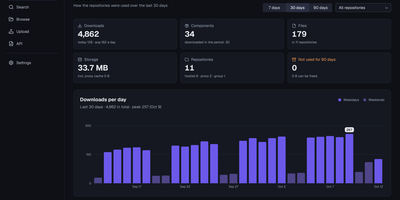
One server can hold every package your builds pull, publish, and cache, so the team stops juggling a different registry for every language. Astrum Repository hosts your own artifacts, proxies public registries so builds keep working when an upstream is down, and groups both behind a single address your tools already understand. Thirty-nine formats share that address: Docker and OCI images, Maven, npm, PyPI, Cargo, Go modules, Helm charts, NuGet, Terraform modules, APT and Yum packages, Hugging Face models, browser extensions, Git LFS, and even remote caches for Nx and Turborepo. Blob storage grows with you, moving between disk, S3, and agent-connected stores that combine into groups without relocating data. Access stays deliberate through users, roles, privileges, and content selectors, with LDAP and OpenID Connect sign-in and access tokens minted for CI pipelines. Day-to-day operations are visible rather than guessed: health endpoints, Prometheus metrics, scheduled tasks, cleanup policies, audit trails, and backups are built in, and several servers can share one database when a single node is no longer enough. The web interface speaks twelve languages, so a platform team spread across regions still works in one console. Running on a dedicated VPS on RepoCloud with guaranteed CPU, RAM, and SSD, full root SSH access, and a browser serial console. MIT licensed.
JobOps
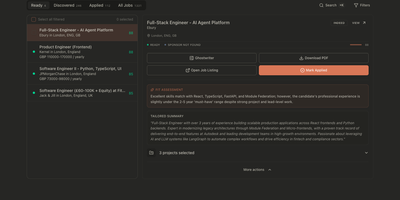
Job hunting usually means twenty open tabs, five versions of the same CV, and a spreadsheet you stopped updating in week two; JobOps replaces that sprawl with one self-hosted pipeline that searches LinkedIn, Indeed, Glassdoor, Adzuna, Hiring Cafe and more than ten other boards from a single screen. Every role it finds gets a fit score from 0 to 100 against your profile, so you review a ranked shortlist instead of doomscrolling listings, and sponsorship checks flag which UK roles can actually support a visa before you invest an evening in them. For the roles worth chasing, it rewrites your CV against the exact job description and exports a polished PDF locally or through Reactive Resume, while deliberately never auto-applying, because recruiters spot mass automation and quietly blacklist it. Once you apply, connecting Gmail lets it read recruiter replies for you: interview invitations move the application to Interviewing, rejections close it out, and uncertain matches wait in an inbox with a suggested job attached for one-click confirmation. You choose the brain behind the scoring, OpenAI, Gemini, OpenRouter, or a local model through Ollama or LM Studio, and webhooks, scheduled backups, analytics and multi-user workspaces round out the tracking. Running on a dedicated VPS on RepoCloud with guaranteed CPU, RAM, and SSD, full root SSH access, and a browser serial console. AGPL-3.0 licensed.
OwnPilot
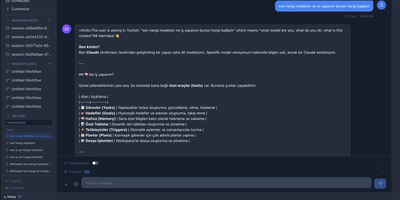
Bridging local hardware and cloud intelligence, OwnPilot orchestrates autonomous multi-channel agent swarms and visual workflow pipelines while keeping sensitive personal records strictly on private infrastructure. Users can trigger autonomous task runs that browse websites using headless browser automation, extract data tables, and summarize research directly into encrypted markdown notebooks. The built-in workflow canvas allows individuals to construct branching automation sequences combining large language models, conditional logic gates, iterative data loops, and human-in-the-loop approvals. Users delegate calendar scheduling, task tracking, expense budgeting, and contact lookups through conversational chats conducted over web portals, Telegram bots, or WhatsApp numbers. Operators can dispatch coding agents to inspect local repositories, execute shell commands in sandboxed environments, and stream live terminal logs as automated patches develop. The platform also enables home automation enthusiasts to monitor MQTT telemetric feeds from microcontrollers, queue device commands, and receive instant alert notifications when sensor thresholds trigger. Advanced security layers inspect all incoming prompts for personal data patterns, enforce strict permission boundaries across file directories, and generate tamper-evident audit logs for every autonomous tool call. Running on a dedicated VPS on RepoCloud with guaranteed CPU, RAM, and SSD, full root SSH access, and a browser serial console. MIT licensed.
Pastefy
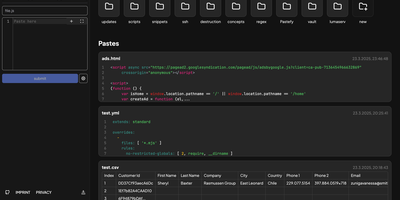
Pastefy gives developers a self-hosted pastebin and GitHub Gist workspace where multi-file code snippets, Mermaid architecture diagrams, and terminal recordings can be shared in a single click or cURL command. Its multi-tab editor highlights syntax across more than 200 programming languages so you can bundle scripts, configuration files, and documentation inside one URL. Markdown notes render cleanly. SVG graphics, CSV tables, GeoJSON maps, unified diffs, calendar events, regex testers, and Asciinema `.cast` terminal sessions all preview interactively in the browser. Sensitive snippets stay locked behind client-side AES password encryption, automatic expiration timers, and public, unlisted, or private visibility controls. Authenticated users organize pastes into nested folders, fork community snippets, generate QR codes or styled code screenshots, and embed interactive viewers into external docs. Command-line users pipe output directly via `curl -F [email protected]`, manage pastes from VS Code or Raycast extensions, and automate workflows through the REST API v2 with official JavaScript, Java, and Go SDKs. Single sign-on supports GitHub, Google, Discord, Twitch, and custom OpenID Connect providers. Running on a dedicated VPS on RepoCloud with guaranteed CPU, RAM, and SSD, full root SSH access, and a browser serial console. MIT licensed.
Shep
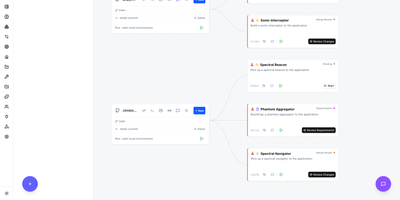
Type one sentence about a feature, and Shep spins up an AI coding agent on its own branch and worktree, then carries the work through commit, push, CI, and a draft pull request. Run three features, five, or ten at once, with Claude Code, Codex, Copilot, Cursor, Gemini, Kimi Code, Cline, or local models picked per feature. A control center draws every repository and feature as a live graph with a fleet bar that counts what is cruising, queued, waiting on you, or failed. When an agent is unsure it asks a blocking question with a recommended answer and a deadline, and you reply from the web, the CLI, chat, or the terminal console. Optional spec-driven mode writes requirements, research, and a plan as YAML for you to approve before any code exists. CI watch reads failing logs and pushes fixes, a checkpoint follows every agent step so you can diff or restore it, and nothing merges without your approval. Tool pages, skills, plugins, webhooks, project memory, and per-feature chat round out the workspace, and an app starter plans a brand new project from a prompt. State stays in a local SQLite database, and usage metrics can be switched off. Running on a dedicated VPS on RepoCloud with guaranteed CPU, RAM, and SSD, full root SSH access, and a browser serial console. MIT licensed.
LogForge
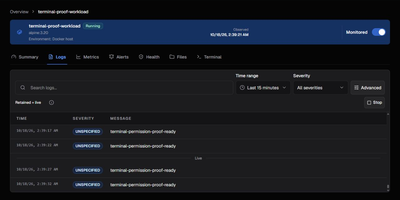
LogForge puts container logs, metrics, events, alerts, and guarded fixes behind one self-hosted web UI for Docker. The overview gathers container health, status, logs, metrics, Docker events, and file access for its host, so a sick container gets inspected without juggling docker commands across terminals. Logs stream in real time, interactive terminals open into running containers, and collected logs, metrics, and events are stored for later review and trend checks. Alert rules watch logs, metrics, and container events, and one-click templates cover stability, performance, log, and security signals. Fired rules notify through Email, Slack, Teams, Discord, Telegram, Gotify, or webhooks, and alert history records acknowledgements plus delivery attempts. A rule can also act: restart, stop, start, kill, or run a script, throttled by cooldowns, rate limits, backoff, and verification delays so automation cannot thrash a host. Other Docker hosts join through mTLS-protected agent enrollment, letting one console watch a small fleet. Running on a dedicated VPS on RepoCloud with guaranteed CPU, RAM, and SSD, full root SSH access, and a browser serial console. Apache-2.0 licensed.
OvertChat
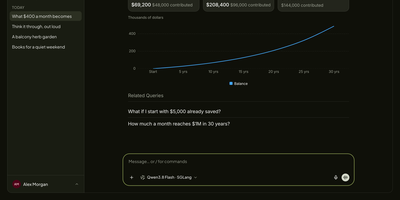
Your household gets one private chat front door for the models you already run, local or hosted, with voice, search, and coding agents included from the same server. Point it at Ollama, vLLM, llama.cpp, SGLang, or LM Studio, then add OpenAI, Anthropic, Gemini, DeepSeek, Bedrock, or OpenRouter beside them. Models that support tools can answer with charts, tables, forms, and follow-up buttons instead of plain paragraphs. Ask for a live conversation and speak, hear the reply, cut in mid-sentence, and keep going; Parakeet handles recognition and Kokoro speaks back on CPU or GPU. Documents open beside the chat for drafting and revising Markdown, code, web pages, SVG, and Mermaid diagrams. Attach spreadsheets, PDFs, images, Word, Excel, CSV, or source files and run Python on them in an offline sandbox that returns charts, cleaned data, or finished documents. Search the web through bundled SearXNG or Brave, read pages with inline citations, connect MCP servers, and set thinking controls per local model. Replies keep streaming after you close the tab, full-text search finds old answers, and read-only links share a conversation. Coding agents run on your machines or over SSH and stay reachable from browser, desktop, Android, or iOS. Running on a dedicated VPS on RepoCloud with guaranteed CPU, RAM, and SSD, full root SSH access, and a browser serial console. MIT licensed.
HotHost
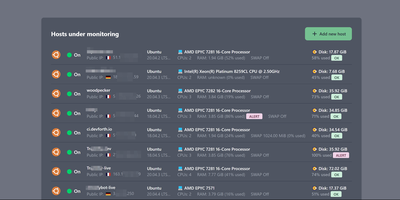
HotHost answers the only two questions that matter about every server you own, is it up and is the disk about to fill, before your users ask them instead. One web container collects metrics from a tiny agent you paste onto each host as a Docker or shell snippet, and the fleet lands in a single table: hostname, public IP, RAM and disk usage, CPU model and cores, swap state, and country. Disk and RAM get loud ALERT badges at a configurable threshold, ninety percent by default, and notifications fire on failure and again on recovery, so a resolved incident closes its own loop. The same console watches your websites directly, requesting each URL on your interval and checking the status code, a required keyword in the response, or basic auth behavior. SSL certificates get an expiration reminder fourteen days out by default, long before the browser warnings start. When memory climbs, the top ten RAM-consuming processes are charted over the last two days, turning "something is eating the box" into a named culprit. Alerts route through Email, Slack, Telegram, or Gmail plugins, and the plugin system accepts your own notifiers. Running on a dedicated VPS on RepoCloud with guaranteed CPU, RAM, and SSD, full root SSH access, and a browser serial console. MIT licensed.

OrcaQ
For developers and database administrators who want a full database IDE inside the browser without installing separate desktop clients on every machine, OrcaQ provides a unified workspace for PostgreSQL, MySQL, MariaDB, Oracle, SQLite, Cloudflare D1, Turso, and Redis. Engineers organize connections into named workspaces with SSH bastion tunneling, granular SSL configuration, and color-coded environment tags whose strict mode requires explicit confirmation before executing destructive mutations against production databases. The Quick Query data grid lets users filter, sort, paginate, and edit table rows inline while jumping across foreign-key relationships and inspecting table DDL metadata. When writing complex multi-statement SQL, the Raw SQL Editor provides context-aware autocomplete, query variables, nested script folders, and visual EXPLAIN execution plan analysis. Database architects can render interactive entity-relationship diagrams for single tables or entire schemas, compare two database schemas side by side to generate safe migration scripts, and manage Redis keys across string, hash, list, set, and sorted-set structures in a dedicated workbench. PostgreSQL administrators also gain a visual role-permission matrix, real-time instance health monitoring for active sessions, locks, and replication lag, native backup and restore job tracking, and an optional AI Orca Agent that drafts queries and detects anomalies while requiring human approval before any data modification runs. Running on a dedicated VPS on RepoCloud with guaranteed CPU, RAM, and SSD, full root SSH access, and a browser serial console. MIT licensed.
Bugsink
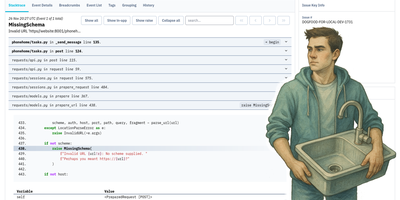
Bugsink has earned over 1,800 GitHub stars as the lightweight self-hosted error tracking platform that replaces Sentry without per-event billing by accepting error reports from any Sentry-compatible SDK across Python, JavaScript, Node.js, Ruby, Java, PHP, Go, and every other language Sentry supports. Simply update the DSN in your existing Sentry configuration and Bugsink captures the same stack traces, local variables, request context, and breadcrumbs that Sentry processes, displayed through a focused interface designed for debugging rather than dashboarding. Automatic issue grouping collapses duplicate error events into single actionable issues based on exception type, message, and stack frame context, turning thousands of raw events into a manageable list. Issue status tracking supports resolved, resolved-in-next-release, and muted states with automatic regression detection when resolved issues recur. Release tracking associates events with deploy versions to correlate error spikes with specific rollouts. Tag-based search filters issues by environment, release, user, browser, operating system, or any custom key-value pair sent by the SDK. Alerting notifies your team through Slack, Discord, Mattermost, and email when new issues appear or resolved issues regress, with per-project webhook configuration and user-level notification preferences. Per-project retention policies with automatic event eviction manage storage growth. A REST API with OpenAPI documentation enables custom integrations and dashboards. Source map support links minified JavaScript to original source. Deploy via Docker with the bugsink/bugsink image. Running on a dedicated VPS on RepoCloud with guaranteed CPU, RAM, and SSD, full root SSH access, and a browser serial console. PolyForm Shield licensed.
Minecraft Server Manager
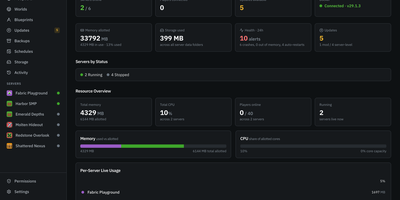
One Minecraft server is easy, but a Fabric test world, a Paper survival realm, and a Forge modpack on the same machine need a proper control room. Minecraft Server Manager runs every server as its own resource-capped container and offers create, start, stop, restart, rebuild, and delete from the browser, with a graceful RCON stop and crash detection. A guided wizard offers Simple and Advanced modes with plain-English help. Modpacks stay pinned to an exact version, and upgrades come with a preview, an automatic backup, health monitoring, and one-click rollback. Search Modrinth, CurseForge, Hangar, SpigotMC, and GitHub Releases from one browser, add mods by link, or import .mrpack files and zips, with checksum-verified downloads. A live console streams logs with filters and an RCON command bar, and player tools cover whitelists, ops, bans, IP bans, and teleports. Cron schedules run restarts, backups, and RCON commands, backups follow retention rules, and storage analytics enforce disk quotas. Crash reports are parsed and can be shared to mclo.gs for automated insights, and blueprints export a server as a recipe. A one-click BlueMap live map and an optional public status page show the world off. Admin, operator, and viewer roles with per-server permissions keep helpers in their lane. Friends-only survival worlds, modded community realms, and hosts running many test servers are what it was built for. Running on a dedicated VPS on RepoCloud with guaranteed CPU, RAM, and SSD, full root SSH access, and a browser serial console. MIT licensed.
Pingvin Share X
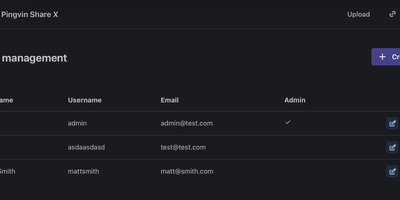
Pingvin Share X is your own WeTransfer, running on your server, with none of the transfer limits or expiring-link anxiety of the free tiers. Drop in a file of any size, get a link, and decide exactly how it behaves: an expiration date after which it vanishes, a password gate, a cap on how many visitors may open it, or all three. Email the link straight to recipients from the share dialog, and get notified when they download. Reverse shares flip the flow around: send someone a link and they upload files to you through it, which is perfect for collecting client deliverables, application documents, or the family photo archive without a single email attachment thread. Attachments can be scanned with ClamAV before anyone touches them, and storage lives on your disks or in S3-compatible buckets. Accounts connect through OIDC or LDAP single sign-on for teams, and an extensive admin panel tunes everything from password policy to upload chunk sizes. Registration rules decide whether your instance is a private family tool or an open drop point for your whole crew. Running on a dedicated VPS on RepoCloud with guaranteed CPU, RAM, and SSD, full root SSH access, and a browser serial console. BSD-2-Clause licensed.
GammaGrid
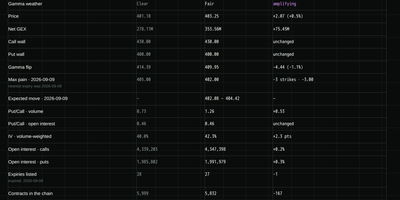
Dealer gamma exposure, max pain, open interest, and the full IV surface for an entire options watchlist land in one self-hosted dashboard that keeps every snapshot it collects. Add any US-listed ticker, press Collect data, and a banner above every view states net GEX, call and put walls, the gamma flip, and a plain-language regime label. The GEX heatmap lays out strike by expiry with historical replay, and the Changes tab compares two trading days side by side. A Contract view splits one option's price move into delta, gamma, vega, theta, and an honest residual. The screener lists every contract with seven greeks and range filters, unusual activity flags volume outliers against each contract's own history, and OI Delta ranks the biggest overnight position changes. Collection can run automatically from every 15 minutes to once a day, and it sleeps through closed markets to save disk space. The 3D volatility surface and skew slices show how implied volatility is priced across the chain. Running on a dedicated VPS on RepoCloud with guaranteed CPU, RAM, and SSD, full root SSH access, and a browser serial console. AGPL-3.0 licensed.
CRW
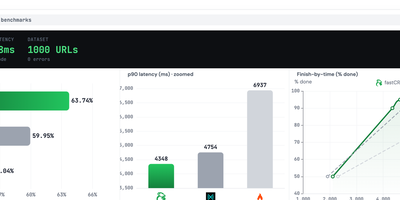
CRW gives your apps and AI agents a private web data API that scrapes pages, crawls sites, maps links, and searches the web without sending every request to a hosted scraping service. Post a URL to the scrape endpoint and receive clean Markdown, HTML, screenshots, links, or structured JSON shaped by a schema you supply. Start a crawl when a whole section matters, then poll for progress while CRW walks pages asynchronously and returns the collected content in one job. Use map first to discover the URLs on a site before spending effort extracting pages you do not need. Connect agent tools through the MCP endpoint so assistants can search, scrape, and crawl from the same self-hosted service your applications call. Add browser rendering when JavaScript-heavy pages hide content from a plain HTTP fetch, and keep simpler pages on the fast lightweight path. Protect a public deployment with Bearer token authentication, your own reverse proxy, logging, and rate limits, or keep the service inside a private network for internal tools. Run one Docker container for the core API, or use the Compose stack when you want bundled search and rendering sidecars beside it. Running on a dedicated VPS on RepoCloud with guaranteed CPU, RAM, and SSD, full root SSH access, and a browser serial console. AGPL-3.0 licensed.