Marble
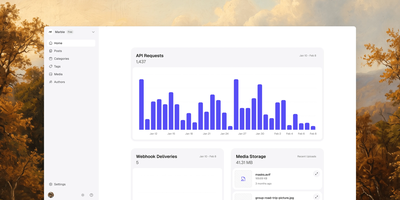
Marble gives your blog, changelog, or product updates a calm editorial home, then hands clean JSON to whatever website you already built. Writers work in a focused rich-text editor with headings, lists, code blocks, images, video, and embeds, while a readability score quietly grades each draft as it grows. Every post carries authors, one category, tags, a cover image, and typed custom fields, so a changelog entry and a long guide can share one predictable structure. Your frontend pulls sanitized HTML or Markdown through the REST API or typed SDK, filtering by category, tag, or search in a single request. Read-only public keys serve published posts safely, while scoped private keys unlock drafts and write access for the tools you trust. Uploads of images, video, audio, and documents land in a media library with alt text and dimensions, ready to embed anywhere. Signed webhooks announce every change to your site, Slack, or Discord with retries and a delivery log, and an MCP server lets AI agents search and draft content too. Running on a dedicated VPS on RepoCloud with guaranteed CPU, RAM, and SSD, full root SSH access, and a browser serial console. AGPL-3.0 licensed.
YAFFA
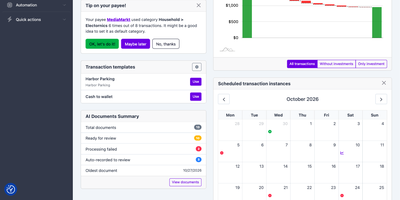
If your money is split across a bank app, a brokerage portal, and a half-abandoned spreadsheet, YAFFA, a self-hosted personal finance application, gathers it into one ledger with budgets, scheduled transactions, and forecasts. Record withdrawals, deposits, and transfers across unlimited accounts, and split a single supermarket receipt across categories so it lands in both Food and Household. Suggestions surface your most-used accounts and payees, and each payee's default category fills in automatically. Define rent, salary, or a loan payment once as a scheduled transaction; it appears on the dashboard calendar, enters with one action or records itself, and feeds the forecast. Import bank history from CSV or QIF files with rules for country- and bank-specific formats, and review every row before it is recorded. Optional AI document processing turns a receipt, invoice, or forwarded email into a draft transaction with payee, date, amount, and line items, using your own OpenAI or Gemini key and self-hosted Tesseract OCR for images. Accounts in different currencies roll up into your default currency using daily rates from the free Frankfurter service. Investments track gain and loss, with optional daily prices from Alpha Vantage. The dashboard summarizes accounts and upcoming schedules, the cash flow report can look ahead with a forecast, and Find Transactions filters history by payee, category, tag, or date. Running on a dedicated VPS on RepoCloud with guaranteed CPU, RAM, and SSD, full root SSH access, and a browser serial console. MIT licensed.
Vedetta
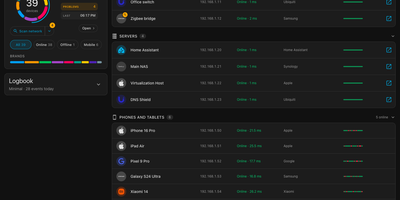
Your router calls it "Unknown device" at 192.168.1.23; Vedetta calls it the kitchen light and shows its work. Vedetta is a Home Assistant app that scans your local network, identifies what each device actually is, and explains every identification. One scan lists every device it can find with presence and latency history, in tile or list view, light or dark, on a computer or a phone. Behind each name sits the recognition engine: it weighs many weak clues together, counts a repeated fact once, groups devices by family, and shows certainty honestly, keeping anything doubtful in Other rather than inventing a label. Tap the info marker beside a name, brand, or type and a pop-up lists every clue, its weight, and the hypotheses that were rejected. Names or rooms you set by hand are never overwritten by later scans, and sleeping phones are remembered instead of flickering in and out. Choose from three search levels depending on how hard you want it to probe, let the nightly deep search refresh the picture, and use the network doctor to spot duplicate addresses, repeated restarts, devices that drop together, or a slowing gateway. It can also publish what you choose to Home Assistant and MQTT, display devices from other networks your Home Assistant already sees, and mask exports before they leave the machine. Running on a dedicated VPS on RepoCloud with guaranteed CPU, RAM, and SSD, full root SSH access, and a browser serial console. MIT licensed.
Lalabase
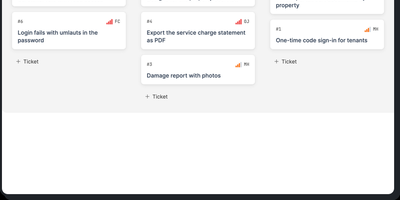
Lalabase is project management built for developers who work with clients, putting tickets, time tracking, documentation, and meetings in one workspace instead of five separate tools. Each client gets an organisation with its own projects and its own access, and roles decide exactly what clients can see. Tasks run as a list or a board with the statuses, priorities, and fields you define per project, rather than the workflow a vendor chose for you. Time tracking records several sessions per ticket, each billable on its own, with exports that go straight into the invoice. Documentation lives beside the work: notes and documents sit in the project, and a folder in your GitHub or GitLab repository becomes the project's docs automatically. Meetings keep their transcript, an AI summary, and the tasks that follow from what was actually said. When you need an answer, the AI assistant takes one question across tickets, comments, documents, hours, and meetings, and it cites the ticket, page, or conversation every answer came from. It even reads your repository's indexed code structurally, so questions about what is implemented get answered against the code. The assistant stays off until you enable it with your own provider key or a model in your own network. An MCP server and REST API let your own agents list, create, and update tickets, comment, and log time. Running on a dedicated VPS on RepoCloud with guaranteed CPU, RAM, and SSD, full root SSH access, and a browser serial console. AGPL-3.0 licensed.

Uchiyomi
Uchiyomi is the manga server that also does the fetching, so your library keeps itself up to date while you just read. Follow a series once and new chapters download automatically from MangaDex, from sites you add by URL, or through installable Mihon extensions, with a release radar estimating when the next chapter is likely to land. The reader is built for webtoons first: continuous scrolling flows straight into the next chapter, wide pages split cleanly, borders crop away, and credit pages collapse so you reach the story faster. Your existing CBZ, CBR, PDF, and image files join downloaded series in one searchable library with covers, progress, filters, and smart lists you can share with the household. A health screen hunts down chapter gaps, short or corrupt downloads, duplicates, and failing sources, and Fix Everything works through the repairs on demand or nightly. Reading stats draw a year heat map of your habits, top series, and reading time, while Moments let you star favorite panels with notes. Each household member gets their own account, progress, libraries, and age limits, with two-factor sign-in and offline downloads that keep favorites ready on your phone. Running on a dedicated VPS on RepoCloud with guaranteed CPU, RAM, and SSD, full root SSH access, and a browser serial console. MPL-2.0 licensed.
Wildbox
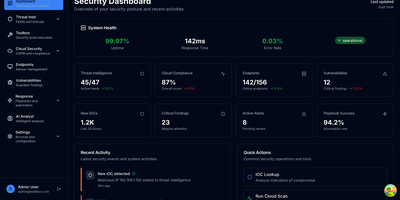
Enterprise security stacks assume an enterprise budget; Wildbox assumes a server you already own. It runs your whole security operation as a set of cooperating services behind a single HTTPS gateway: threat intelligence collectors pull indicators from seven public feeds on a schedule, starting with abuse.ch's Feodo Tracker, and every indicator is searchable in one place. Fifty-two security tools sit behind one API, covering DNS, TLS, email security, headers, and port analysis. The cloud posture service runs 22 configuration checks against your live AWS accounts and keeps each scan's report, while the vulnerability service inventories your assets, prioritizes findings by risk, and tracks them through remediation with SLA checks and alert rules. When something needs doing, YAML playbooks execute response workflows as background jobs, and the agents service writes Claude-generated threat-enrichment reports for suspicious indicators when you give it an API key. An osquery-based sensor streams endpoint telemetry from your hosts into the platform, kept separate per team. Users, teams, roles, and scoped API keys live in the identity service, and the backends accept nothing that did not arrive through the gateway, so your security data never leaves hardware you control. Optional Compose profiles add n8n automation and Prometheus monitoring. Running on a dedicated VPS on RepoCloud with guaranteed CPU, RAM, and SSD, full root SSH access, and a browser serial console. MIT licensed.
Issuerd
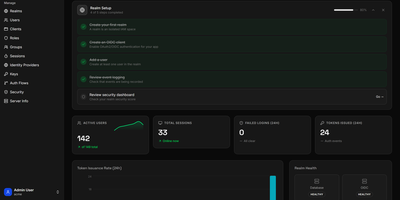
One login for every internal tool, without handing your users another password to forget: Issuerd is a Keycloak-compatible identity provider that runs single sign-on for your whole stack from a single binary. Administrators manage realms, users, groups, clients, roles, client scopes, and protocol mappers in an embedded admin console, while end users get their own account console for passwords, passkeys, and two-factor settings. Authentication flows cover MFA, social login, and themable, localized login pages with per-realm language and email templates, so each audience sees a sign-in that looks like your product. Federation connects Samba AD, OpenLDAP, and Active Directory with user and group sync, password validation and write-through, plus Kerberos and SPNEGO for desktop single sign-on. For modern clients it implements DPoP token binding so stolen access tokens are useless without the holder's key, CIBA for approvals that happen on a second device, and token exchange patterns aimed at AI agents calling downstream services. Declarative YAML provisioning, a full management API, OpenAPI export, Prometheus metrics, and health probes round out day-two operations, and nodes scale horizontally behind any load balancer with no sticky sessions. Running on a dedicated VPS on RepoCloud with guaranteed CPU, RAM, and SSD, full root SSH access, and a browser serial console. Apache-2.0 licensed.
Platypus
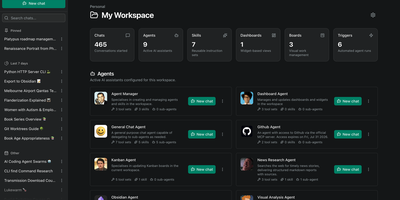
Platypus gives a whole team always-on AI agents that reason, call tools, and keep working on your own servers while everyone is offline. Build an agent once by choosing a provider and model, writing its instructions, and capping its tool-calling loop, then reuse that preset across chats and scheduled runs. Agents load reusable Skills on demand and delegate specialist work to sub-agents that appear to the parent as tools. Connect local and remote data through Model Context Protocol servers, or expose an agent to outside agents and chat platforms through A2A endpoints with a token per client. Triggers run agents on a cron schedule, as one-off jobs, or when workspace events such as a card moving on a board occur, and every run records its result. Kanban boards give agents work they can move and update themselves, while notifications and HMAC-signed webhooks push board and workspace events into your own systems with filtering and retries. Facts and preferences are extracted from conversations in the background and injected into future chats, so returning users are remembered. Sandbox backends give agents shell and filesystem access inside an isolated per-workspace environment instead of the host. Organizations and workspaces keep each team's agents and data separate, and blueprints package shared agents, skills, MCP servers, and providers so a new workspace starts pre-equipped. Running on a dedicated VPS on RepoCloud with guaranteed CPU, RAM, and SSD, full root SSH access, and a browser serial console. MIT licensed.
Cairn
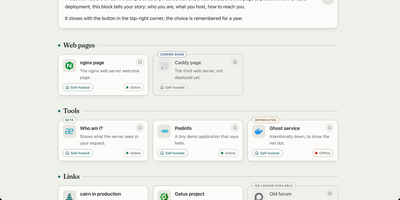
Cairn gives the people you host services for one calm directory page that explains each service in plain language and shows whether it works right now. Your family does not want another dashboard; they want to know what this thing is and what to click. Group tools by need, write a welcome note in your own words, and give each service a Learn more page that explains whom to ask for an account. Status comes from the monitor you already run, Gatus, Uptime Kuma, Cachet, or a hosted status page, polled by your server so a visitor's browser never has to call anything. Labels say honestly where a service stands: coming soon, beta, new, deprecated, or retired, with dead links removed for the last two. Search finds the one service by name from anywhere on the page, eight shipped languages plus your own inline translations cover the relatives abroad, and legal notice and privacy pages are served by Cairn itself, because self-hosters never have anywhere to put those. The whole directory is one YAML file and a five-megabyte image. Running on a dedicated VPS on RepoCloud with guaranteed CPU, RAM, and SSD, full root SSH access, and a browser serial console. GPL-3.0 licensed.
Depl0y
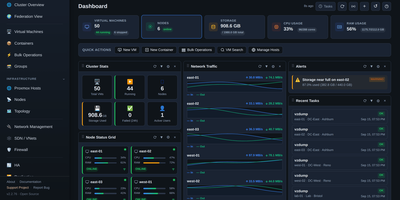
Three Proxmox sites, a lab host in the corner, and a rack of Dell and HPE servers can all share one screen when Depl0y runs the show. The dashboard totals virtual machines, containers, CPU, RAM, storage, and network traffic across every registered endpoint, with draggable widgets, alerts, and recent task feeds. Virtual machine pages cover start, stop, restart, snapshots, cloning, migration, templates, and a browser console, and node pages add metric charts, storage, networking, and update status. A guided failover wizard checks quorum, storage, and disks, then protects a guest so it restarts on another node if its host fails. A topology view maps hosts, guests, bridges, storage, and BMCs, with PNG, SVG, and draw.io export. Hardware pages poll iDRAC and iLO for health, temperature, power draw, DIMMs, drives, and firmware, and power controls reach machines that are fully off. Deployment tools build VMs from cloud images, import OVA, VMDK, and QCOW2 files, and launch self-hosted LLM guests. Admin, Operator, and Viewer roles, TOTP, host pinning, and a searchable audit log keep access tidy. MSPs managing client clusters, homelabs with several nodes, and data center teams that want hypervisor and hardware status together are the target audience. Running on a dedicated VPS on RepoCloud with guaranteed CPU, RAM, and SSD, full root SSH access, and a browser serial console. MIT licensed.
Breeze
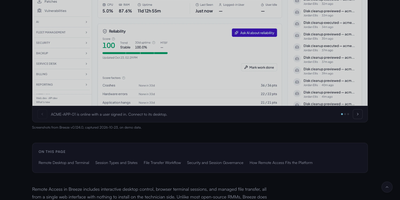
Breeze is an open-source RMM and PSA platform for MSPs that watches every managed device, and its built-in AI operator investigates alerts and drafts fixes for your approval. See live CPU, memory, disk, and network health for the whole fleet, with hardware and software inventory on every Windows, macOS, and Linux endpoint. Approve and deploy operating system and application patches in rings and maintenance windows, or push scripts and software to hundreds of devices at once. Open a remote terminal, browse files, or take over the desktop with multi-display support when a user needs hands-on help. Network discovery scans each site for unmanaged devices, while configuration policies and drift checks keep machines aligned with your baseline. Tickets, time entries, quotes, and invoices live beside the device work, so a resolved issue becomes a billable record without a second system. Clients get their own portal to raise requests and follow progress, and the multi-tenant structure keeps every customer separate from day one. When the AI operator acts, tiered approvals and a full audit log show exactly what it did and who allowed it. Running on a dedicated VPS on RepoCloud with guaranteed CPU, RAM, and SSD, full root SSH access, and a browser serial console. AGPL-3.0 licensed.
OpenDirector
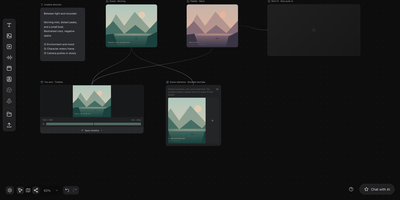
Turn a rough idea into a downloadable short film without leaving one tab. OpenDirector gives you an infinite canvas where text, image, video, audio, and timeline nodes connect with reference lines, so a mood board can feed a prompt and a prompt can feed a shot. Talk to the AI assistant, type @ to pull in any asset as a reference, and watch generation tasks in a history panel for cancelling or resuming them. Image tools include smart edit, outpainting, upscaling, cutout, presets for character and product three-views, a crop and color editor, and a layer studio with masks. Open the timeline to trim, split, change speed and volume, mix audio tracks, and render an MP4 in the browser, or export JSON, FCPXML, and a media package for another editor. Connect your own provider APIs or self-hosted vLLM and vLLM-Omni services for text, image, video, and audio. Autosave keeps every canvas on disk, and the interface switches between English and Chinese. Install with Python, run opendirector serve, and open it on port 8000. Running on a dedicated VPS on RepoCloud with guaranteed CPU, RAM, and SSD, full root SSH access, and a browser serial console. Apache-2.0 licensed.
FeedCraft
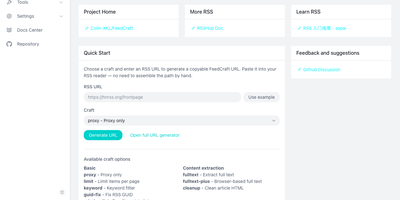
Excerpt-only feeds, truncated teasers, and articles in languages you do not read make RSS feel broken; FeedCraft sits between the source and your reader and fixes the feed itself. Pick from more than twenty single-step crafts: extract the full article text, even from JavaScript-rendered pages through a headless browser, translate titles or whole articles, add AI introductions and summaries, strip ads and clutter, or filter items by keyword, embedding similarity, or a natural-language prompt to your own LLM. Chain crafts into FlowCraft pipelines, so one pass can limit a feed to ten items, fetch every full text, drop the advertorials, and summarize what survives. Save the result as a recipe and FeedCraft hands you a permanent crafted feed URL that drops straight into the reader you already use, while portable mode transforms any feed on the fly from a single crafted URL prefix. When a site has no feed at all, the visual generators build one from a webpage with CSS selectors, from a JSON API with curl import, or straight from search results. Running on a dedicated VPS on RepoCloud with guaranteed CPU, RAM, and SSD, full root SSH access, and a browser serial console. GPL-3.0 licensed.
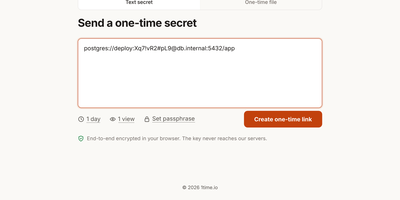
1time
Stop pasting passwords into chat threads that keep them forever: 1time turns a secret into a link that opens once and then deletes itself. Paste a database URL, an API key, or any sensitive text, choose how long the link may live, from an hour to thirty days, and decide whether one person or up to ten may open it. Add a passphrase when the link alone should not be enough, then copy the ready link and send it through whatever channel you already use. The recipient opens it, sees the decrypted message with a copy button, and the message is burned, gone from the server the moment it is read. Files work the same way up to 250 MB, encrypted with their name and type and uploaded in pieces so a dropped connection only resends one chunk. Encryption happens in your browser before anything uploads, and the key travels inside the link itself, so the server holds only ciphertext it cannot read. A password generator, a command line client, and a browser extension that shares selected text speak the same protocol against your own instance. Running on a dedicated VPS on RepoCloud with guaranteed CPU, RAM, and SSD, full root SSH access, and a browser serial console. MIT licensed.
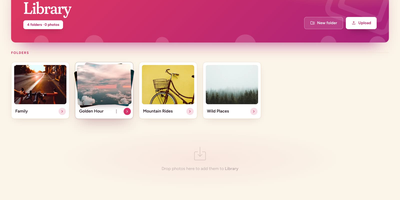
Sora Frame
An old tablet on the shelf can show family photos all day once Sora Frame feeds it. The slideshow runs in any browser with soft cross-fades, a large clock, date, and weather widget, and it keeps the screen awake, even on iPads and phones. Install it to the home screen like an app, then pick what plays: every photo or a single folder, nested folders included. The library takes photos by drag and drop or the Upload button, builds folder covers from their own pictures, moves photos with a drag, deletes a multi-selection in one go, and offers an optional Google Photos import. JPEG, PNG, WebP, GIF, and iPhone HEIC files are accepted, and only a resized copy is stored. Notes slip a message like a visit reminder into the rotation, with up to four photos, a date range, an optional event countdown, and a choice of eight memory-book layouts. Each frame or family member gets a PIN limited to chosen folders, and a new frame pairs by scanning a QR code or opening an address that carries the PIN. The interface speaks English, Spanish, French, German, Portuguese, Italian, Dutch, Hindi, Japanese, Chinese, and Arabic, and keyboard shortcuts cover play, next, fullscreen, and photo info. A living room shelf, a grandparent's tablet, or an office desk display makes a fine home for it. Running on a dedicated VPS on RepoCloud with guaranteed CPU, RAM, and SSD, full root SSH access, and a browser serial console. AGPL-3.0 licensed.
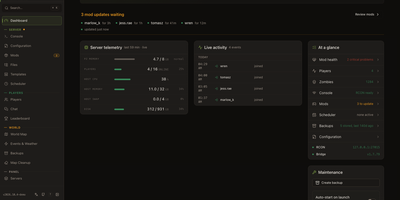
Zomboid Control Panel
Friends are joining your Project Zomboid server, a mod just broke, and the log is scrolling faster than anyone can read. Zomboid Control Panel puts the fix in a browser tab. Start, stop, restart, and save the server from a dashboard that shows status, uptime, players online, host memory and CPU, disk space, and mods waiting for updates. A setup wizard installs a fresh Build 41 or Build 42 server through SteamCMD, or connects to one that already exists locally or over RCON. The mod manager tracks Workshop items, flags updates, imports Steam collections, scans for file conflicts, duplicate mod IDs, and missing dependencies, and sorts the load order. A structured INI editor covers server settings, sandbox options, spawn points, and regions, with a raw view for power users. Player pages handle kicks, bans, whitelists, access levels, and notes, and the live world map shows who is where. Events and weather controls trigger storms, hordes, and sounds. A scheduler runs timed restarts with countdown warnings, backups keep restorable world snapshots, and a Discord bot relays chat and answers slash commands. Admin, technician, moderator, and custom roles, plus OpenID Connect sign-in, decide who touches what. Community servers with several moderators, friends-only worlds, and hosts managing multiple servers from one panel all fit. Running on a dedicated VPS on RepoCloud with guaranteed CPU, RAM, and SSD, full root SSH access, and a browser serial console. MIT licensed.
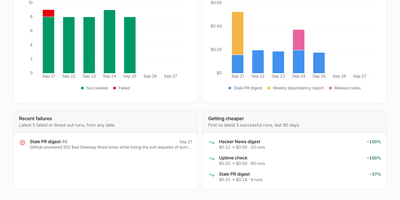
Umpteenth
Recurring chores should get cheaper every time you run them, and Umpteenth is a self-hosted agent service built on that idea: describe a job once in plain language, and each run teaches it to need less help. A job starts on a schedule, a webhook call, the API, or the Run now button, and each run gets a fresh disposable container destroyed afterwards. The first run is an Explore run where the agent works out the steps; afterwards a reflection step reads the transcript and writes short learnings plus reusable toolkit scripts into a numbered playbook version. Later runs are Assisted, starting from those learnings, and after three successful assisted runs that take the same steps, the job graduates: reflection writes a main script, and scripted runs execute it alone, spending no model tokens unless a check asks for a judgment call. If a scripted check fails, the agent takes over in the same sandbox, finishes the job, and repairs the script. The job page charts cost per run dropping toward zero. Connect HTTP MCP servers such as GitHub or Slack; model keys and MCP credentials stay on the host and never enter the sandbox. Each job sets its own schedule, model, reach, and per run spending limit. Deploy with Docker Compose, or on Kubernetes with the Helm chart, where every sandbox is a pod. Running on a dedicated VPS on RepoCloud with guaranteed CPU, RAM, and SSD, full root SSH access, and a browser serial console. AGPL-3.0 licensed.
Deft
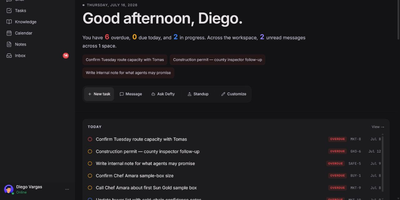
One self-hosted workspace holds your team's chat, tasks, notes, and calendar, and Deft lets AI agents work in it beside your people. People get real-time chat with spaces, direct messages, threads, mentions, reactions, files, and presence. Tasks open as Board, Table, Timeline, or Calendar views, with dependencies, subtasks, recurrence, and bulk actions. Notes, decisions, and channel memory become durable knowledge, with graph views and links back to the source conversation. Native calendar events sit beside read-only ICS subscriptions. Agent employees can join channels and receive task assignments. Tag the built-in assistant Defty to draft a task, answer a workspace question, or take a governed action, then review the proposal in an approval card before anything changes. Personal connections let Codex, Claude, ChatGPT, and other streamable HTTP MCP clients act as the signed-in user within revocable scopes. Approval tiers, trust levels, token scopes, revocation, activity history, and action receipts record who or what acted and what changed. OpenAI, Anthropic, OpenRouter, OpenAI-compatible endpoints, and local Ollama-style models are supported providers. Chat, tasks, notes, and calendars keep working with no AI key. Modules add company-specific records, relationships, and views, with a bundled Contacts module as the first example. Running on a dedicated VPS on RepoCloud with guaranteed CPU, RAM, and SSD, full root SSH access, and a browser serial console. AGPL-3.0-only licensed.