KaaS
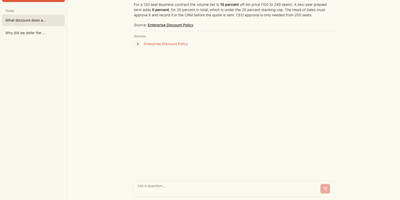
Turn scattered meeting notes, policies, postmortems, and documents into a readable wiki that your team can question in plain language. Paste text, upload a file, or point KaaS at a web page, and an AI pipeline pulls out the concepts, decisions, and people, then writes them up as Markdown articles sorted into decision, reference, guide, and concept folders. Ask a question in chat and the answer cites the exact articles it came from, so anyone can open the source and check it. Each article shows tags, a source count, and a table of contents, and every page is stored as a plain Markdown file you can read, edit by hand, or commit to version control. Adding one new document only recompiles that document, which keeps model costs predictable as the library grows. A Builds page lists every submission with its status and attempts, and a failed worker's job is picked up again instead of lost. Derive a topic knowledge base to carve a focused collection out of the wiki for one subject, and let coding agents query the same wiki through an MCP ask tool. Team handbooks, customer onboarding, incident history, and pricing rules are the knowledge that ends up scattered across a dozen files, and this is where it comes back together. Running on a dedicated VPS on RepoCloud with guaranteed CPU, RAM, and SSD, full root SSH access, and a browser serial console. MIT licensed.
Aural
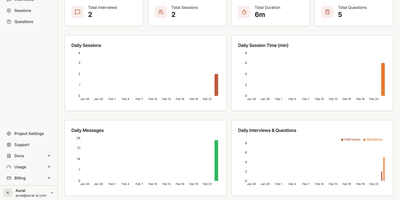
Aural runs the interview for you: describe the role in plain language, share one link, and its AI conducts the whole conversation with each candidate. The generator turns your brief into a complete interview with questions, assessment criteria, and recommended settings, or you build the flow yourself in the editor. Candidates join by chat, voice, or video, and the interviewer adapts in real time, adjusting follow-up depth, tone, and direction as answers develop. Technical rounds run inside the session with a full code editor for live programming questions and a whiteboard for sketching designs. Anti-cheating controls watch for tab switches, blocked external paste, and extra monitors, logging every event into a per-session integrity report. When the session ends, an AI report scores each question, pulls highlights, and names the areas to improve. Teams manage organizations, projects, and role-based access, invite candidates individually, in spreadsheet batches, or by parsing uploaded resumes, and rehearse with a practice mode that gives spoken feedback after every answer. Interviews speak English and Chinese, and the platform connects to the language model provider you already use. Running on a dedicated VPS on RepoCloud with guaranteed CPU, RAM, and SSD, full root SSH access, and a browser serial console. MIT licensed.
Libre WebUI
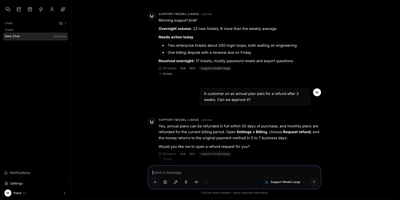
Libre WebUI is a self-hosted AI workspace that keeps chat, notes, personas, and agent tasks in one place you control. Local models run through Ollama, and hosted ones come from OpenAI, Anthropic, Gemini, Groq, Mistral, OpenRouter, or any OpenAI-compatible endpoint added on the provider settings page. Pick a model per conversation. Replies stream, prompts queue, chats fork into branches, and several models can answer side by side. Notes keep Markdown documents with revision history. Personas bundle a system prompt, a model, and memory into a reusable assistant, and prompt templates with typed variables appear when you type a slash in the composer. Knowledge collections ground answers in uploaded documents and cite their sources. The Work area gives each task its own workspace with files, a terminal, diffs, and a live preview, and automations run scheduled prompts that arrive as normal chats. Administrators create users and groups, hand out roles, issue scoped API tokens, and share chats, notes, and personas through one grant model. A private team assistant, a research desk, or a sandbox where agents build small apps all fit here. Running on a dedicated VPS on RepoCloud with guaranteed CPU, RAM, and SSD, full root SSH access, and a browser serial console. Apache-2.0 licensed.
Preloop
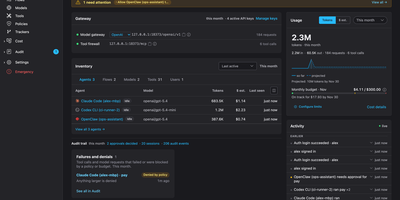
Preloop is a self-hostable control plane that governs every AI agent tool call and model call, and can run ticket-triggered agent work that returns as reviewable pull requests. An MCP firewall can allow, deny, or hold any tool call for approval, with require-justification rules written as YAML and CEL policy. Human approvals arrive on mobile, watch, Slack, Mattermost, email, webhook, or the command line, and agents can ask a person a question before continuing. The model gateway speaks OpenAI, Anthropic, and Gemini formats, applies budgets and allowed-model lists, and attributes token spend by model, agent, session, API key, flow, and user. Flows start agents from GitHub, GitLab, Bitbucket Cloud, Jira, webhooks, or CI jobs, in hosted containers or on private runners that connect over an outbound WebSocket. Twenty-one presets review pull requests, implement issues, triage tickets, scan for vulnerabilities, and collect evidence packs. Operators can steer a running agent from the console, phone, or watch with notes, then review the resulting pull request. One session timeline records tool calls, model calls, policy decisions, approvals, spend, outcomes, and synchronized recordings. Fleet Map shows people, devices, agents, models, and observed work in one view. An account kill switch blocks gateway and tool traffic and stops managed runs, with audited recovery. Running on a dedicated VPS on RepoCloud with guaranteed CPU, RAM, and SSD, full root SSH access, and a browser serial console. Apache-2.0 licensed.
Mycorrhiza
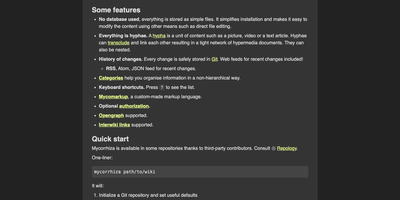
Most wikis bury your writing inside a database you can never quite export cleanly; Mycorrhiza keeps every page as a plain file you can open, edit, and back up with ordinary tools. Each unit of content is a hypha, a page that can be an article, an image, or a video, and hyphae transclude and link to one another so related notes weave into a dense hypertext network instead of a stack of isolated pages. You write in Mycomarkup, a markup language designed to stay unambiguous while remaining quick to type, and categories organize pages without forcing a rigid hierarchy, although nested hyphae are there when you want one. Every edit is committed to Git automatically, giving the wiki a complete, inspectable history, and recent changes flow out as RSS, Atom, and JSON feeds. Keyboard shortcuts drive navigation for people who live in the editor, authorization supports plain accounts or Telegram login, and Open Graph metadata makes shared pages preview properly elsewhere. Interwiki links connect your wiki to others, and because there is no database to provision, a single small binary serves the whole site. Running on a dedicated VPS on RepoCloud with guaranteed CPU, RAM, and SSD, full root SSH access, and a browser serial console. AGPL-3.0 licensed.
VoicEra
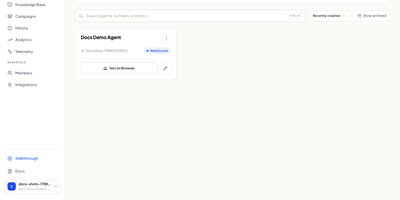
VoicEra lets you run your own voice AI phone platform, where callers talk to agents you configure and every recording and transcript stays on infrastructure you control. Build telephony agents that answer inbound calls or run outbound campaigns, choose the speech recognition, language model, and speech synthesis behind each one, and swap providers without rebuilding the platform. Connect phone numbers through telephony carriers, route live audio through the real time runtime, and let workers execute campaign calls in the background while you watch progress from the operator dashboard. Review call logs with recordings and transcripts after each conversation, including provider recordings when carriers supply them. Serve callers in Indian and low resource languages by combining Bhashini, AI4Bharat, and other Indic models, switch languages mid call, or run speech and language models locally through the optional model server gateway. Add new AI or telephony providers behind stable registry interfaces when a better model or carrier appears, authenticate operators, and keep media in your own object storage and database. Test agents in the browser before any phone number is involved, then scale the same configuration to real calls. Running on a dedicated VPS on RepoCloud with guaranteed CPU, RAM, and SSD, full root SSH access, and a browser serial console. Apache-2.0 licensed.
plumio
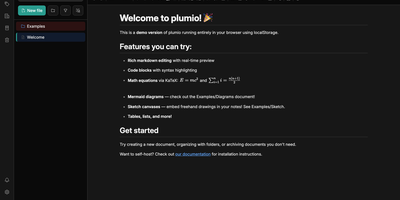
Notes belong on a server you control, and plumio gives them a quiet, fast home there with a polished markdown editor and a live preview. Write headings, task lists, tables, code blocks, math equations, and Mermaid diagrams in one document, then add a freehand sketch canvas for quick drawings. Each change saves as you type. Folders, tags, and custom colors keep a growing library tidy, favorites keep the important pages close, and full-text search finds a half-remembered phrase in seconds. Turn on AES-256 encryption and every document is protected at rest on disk. One instance can host several users and several organizations, so a family, a study group, or a small company each gets a separate workspace with roles for admins and members. Deleted notes land in a trash and archived ones stay out of the way until needed. Export everything as a zip of plain markdown files, or import a folder from another editor, Obsidian included. Webhooks announce document events to other services, API keys let scripts create and search notes, and optional SMTP email handles password resets. A daily backup job keeps compressed copies with automatic retention, and a desktop app can connect to your server. Running on a dedicated VPS on RepoCloud with guaranteed CPU, RAM, and SSD, full root SSH access, and a browser serial console. AGPL-3.0 licensed.
dinkydash
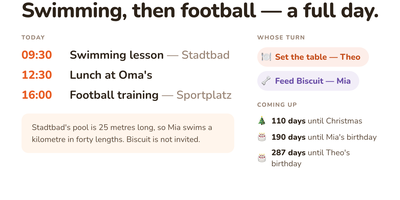
The family calendar nobody opens helps nobody, so DinkyDash puts it on a screen the household walks past. Paste in iCal links from Google, iCloud and Outlook calendars and the board merges them into one agenda in time order, big enough to read from across the kitchen, with tomorrow tucked underneath when the day leaves room. A personal calendar can share only the events marked for a partner and keep work and private appointments to itself. Chores answer the daily argument on their own: whose turn it is moves on with the date, so nobody ticks anything off. Birthdays, holidays and special dates count down in the corner, and once a day the board gets a fresh headline written about your actual day, with a useful note parked under the agenda. Light and dark themes come from the settings page, and that same settings page on your phone edits the configuration file directly, comments preserved. A preview page shows the board at Pi, TV and tablet sizes side by side before you mount anything. There is deliberately no login: it assumes your home network, rewards you with a board you never sign into, and asks to stay behind a VPN or an authenticated proxy if you view it away from home. Running on a dedicated VPS on RepoCloud with guaranteed CPU, RAM, and SSD, full root SSH access, and a browser serial console. MIT licensed.
HiveMTK
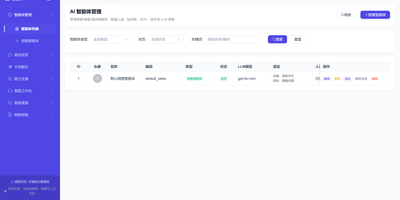
Your sales team's conversations scatter across a dozen apps, and HiveMTK pulls them into one private workspace where AI agents do the daily chasing. Douyin, Xiaohongshu, TikTok, WeChat, Telegram, WhatsApp, email and SMS all land in a unified inbox, and every customer merges into a single profile no matter where they first appeared. A ReAct agent perceives, plans, calls tools and reflects instead of following a fixed script, composing its 45 tools across outreach, customers, knowledge and business tasks to handle situations nobody scripted. A proactive partner agent works the other direction, mining group leads and starting conversations, and a visual canvas turns the whole playbook into marketing flows anyone on the team can edit. The knowledge base answers from your own documents with hybrid vector and keyword retrieval, and because inference runs locally, chats, embeddings and customer data never leave your network. Dashboards track leads, conversions and channel mix, and a GEO module works on getting your brand cited by AI search. It is a full acquisition to repurchase funnel for teams of five to fifty who refuse SaaS lock-in. Running on a dedicated VPS on RepoCloud with guaranteed CPU, RAM, and SSD, full root SSH access, and a browser serial console. AGPL-3.0 licensed.
FeedMe
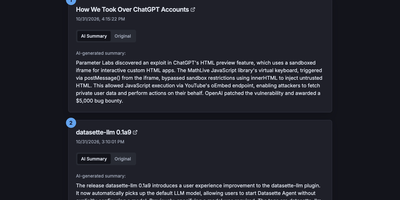
Most RSS readers hand you a pile of headlines and make you do the reading; FeedMe reads first and hands you the pile already digested. It aggregates every feed you configure into one clean, ranked stream, and for each article an LLM writes a short summary you can scan in seconds, with the full original text one tab away when a story earns a deeper look. Sources organize into categories like Tech News, Finance News, Personal Blogs, Company Blogs, Open Source, Research, and Podcasts, and a global search finds stories across all of them. The reader never sleeps on stale content: a built-in cron refreshes feeds and regenerates summaries on your schedule (every three hours by default in Docker), so the page you open in the morning already covers the night. Summaries answer to you, not a vendor: point FeedMe at any OpenAI-compatible endpoint and tune the prompt, input truncation, temperature, and token budget, with output in the languages you choose. There are no accounts, no forced logins, and no app to install; the responsive page works on phone and desktop in light or dark themes. Because the whole application is a static site, it stays fast and cheap to run, and the same build can live on GitHub Pages or Vercel if you ever want a public edition next to your private one. Running on a dedicated VPS on RepoCloud with guaranteed CPU, RAM, and SSD, full root SSH access, and a browser serial console. MIT licensed.
Bloom
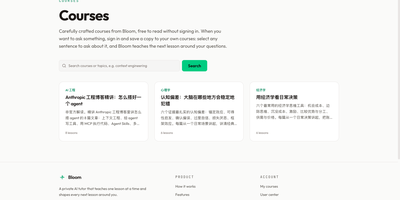
Bloom hires you a private tutor for any subject, then teaches one lesson at a time and rewrites the next lesson around what you actually understood. You begin with a topic, an uploaded PDF, text, or Markdown source, or a set of project files, and Bloom drafts a syllabus of concrete mastery items at simple, standard, or deep expansion. Each lesson arrives focused and readable, with a chapter sidebar for quick jumps and a collapsible syllabus tracking what is already mastered. Reading is active work: highlight any passage and a question thread opens beside it, streaming an answer that stays attached to that sentence for later follow-ups. Reflection questions close every lesson, and your answers, annotations, and highlighted gaps become the raw material for the next lesson, which opens by reviewing the previous answers. Source mode keeps page numbers and sections so lessons can cite where an idea came from, and project files render each document as its own page for highlight questions without generated lessons. Finished courses produce an evaluation and a summary, followed by three recommended next topics drawn from your learning history. A personal center shows a study calendar, daily activity, and streaks across your courses. Running on a dedicated VPS on RepoCloud with guaranteed CPU, RAM, and SSD, full root SSH access, and a browser serial console. MIT licensed.
Skiff
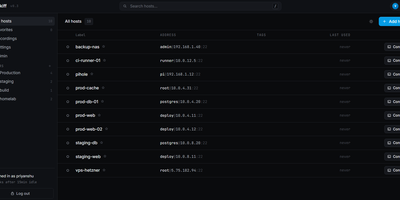
Skiff is a self-hosted SSH manager that remembers every command you ran on your servers and exactly what it printed, so the fix you found at 2 a.m. last March takes seconds to find again. Open a host's history beside its terminal, or search commands and captured output across every host, filter to just the failed attempts, and expand an entry to see its full output. When you edit a small text file, Skiff reads it over SFTP and keeps the before-and-after diff and both versions, so you can see what changed instead of guessing. Useful entries pin to a host's notes, save as reusable snippets, or go back into the terminal with Run again, where you review and press Enter yourself. The browser is only a viewer: sessions live in the Skiff server process, so closing a tab or losing Wi-Fi does not kill your work, and you reattach with recent scrollback intact. Hosts organize into nested folders with favorites and full-text search, existing SSH configs import in one paste, and host keys pin on first connect with a loud warning if one ever changes. Credentials sit in an encrypted vault that locks itself after an idle timeout, team mode shares one vault with per-user logins, and there is no cloud account, telemetry, or agent to install on any target server. Running on a dedicated VPS on RepoCloud with guaranteed CPU, RAM, and SSD, full root SSH access, and a browser serial console. AGPL-3.0 licensed.
Shelfarr
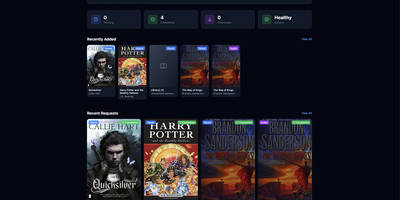
Shelfarr is the request button your book library was missing: anyone in your household can search millions of ebooks and audiobooks, request the format they want, and let automation fetch and shelve it. Discovery searches Open Library, Hardcover, and Google Books with covers, series, editions, and narrator details, so picking between the ebook and the audiobook takes a glance. Hardcover shelves and public reading lists can be previewed and requested, and following an author means their next release surfaces without a manual search. Requests wait for an admin's approval or move straight to searching, where your indexers are queried and every result is scored against your preferred formats, bitrate, and language. The winning release goes to the download client you route it to; finished files are renamed with your templates and delivered into your library's watched folders, which are told to rescan. Nothing found is not the end: searches retry with back-off and flag the request for attention instead of losing it. Family members get their own accounts with roles, two-factor authentication or single sign-on, notifications in the app or on Discord and Telegram, and admins keep manual uploads, API tokens, and download routing under their control. Running on a dedicated VPS on RepoCloud with guaranteed CPU, RAM, and SSD, full root SSH access, and a browser serial console. GPL-3.0 licensed.
LabTether
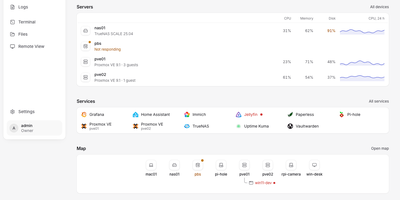
LabTether is a self-hosted control hub that puts every machine, VM, and container in your homelab on one screen. The dashboard surfaces what needs attention first, then lists servers with CPU, memory, disk, and 24-hour charts beside the services you run. Connect Proxmox VE, Proxmox Backup Server, TrueNAS, Portainer, and Home Assistant with an API key, and add agents on Linux, macOS, or Windows machines for live metrics. Open a terminal, a file browser, or a VNC, RDP, SPICE, or WebRTC remote desktop on any node from the browser. Alert rules, notification routes, and maintenance silences group related problems into incidents you can track to the fix, and a dependency map shows what else goes down before you reboot something. Saved actions run on a group or a schedule, webhooks forward hub events, and package updates start with a dry run. A built-in MCP server hands Claude, Cursor, or any MCP client 32 tools, each API key limited to the scopes you allow. Two-factor login, OIDC single sign-on, owner, admin, operator, and viewer roles, and an audit log keep access tidy. Running on a dedicated VPS on RepoCloud with guaranteed CPU, RAM, and SSD, full root SSH access, and a browser serial console. Apache-2.0 licensed.
OpenSuperBot
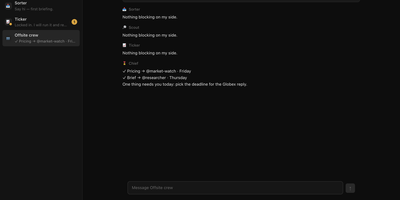
Always-on AI teammates that each get a real computer of their own, with a browser, files and a terminal, working from your hardware instead of a vendor cloud: that is OpenSuperBot. You hire a teammate from the sidebar with a name and a one-line job, and it works inside its own sealed computer with a browser, shell and persistent workspace. At a login wall the bot asks you to take over its live screen and sign in once inside its own browser profile, so passwords never pass through the gateway. Group threads let you ask the whole room at once: everyone answers in parallel, the chief of staff closes with a dispatch table, and @names pick which teammates respond. Nothing leaves the workspace without your say-so, because outward actions stop at a draft-and-hold approval chip. Standing approvals cover repeat sends to one destination for an hour or a day, and money and bookings always ask. Memory is a visible file you control: tell a bot a rule and it posts the exact change as a chip, and forget removes it the same way. Routines come from plain conversation, so a daily digest, a secret webhook trigger or a quiet status-page watch can be scheduled in chat. Each teammate runs a model you pick, with daily token budgets and live step cards for every action. Running on a dedicated VPS on RepoCloud with guaranteed CPU, RAM, and SSD, full root SSH access, and a browser serial console. MIT licensed.
UptimeKit
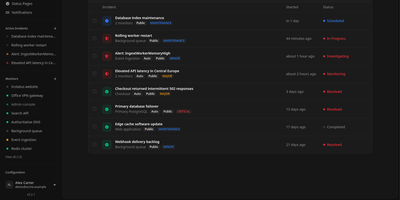
UptimeKit watches your services from several regions at once and publishes the verdict on a status page your customers can actually read. A central dashboard assigns checks to worker probes that run them on schedule, covering HTTP and HTTPS, TCP, ICMP ping, DNS, keyword matches, and JSON responses. Monitors are sorted into nested groups and tags, and HTTPS targets get automatic certificate expiry tracking. When something breaks, an incident takes shape with severity, status transitions, comments, and a resolution flow, either from the dashboard or from a Prometheus AlertManager alert. Status pages come in multiple flavors: public, password protected, or tied to a custom domain, with themes, uptime history bars, and email subscribers who hear about every update. Notifications reach Discord, Google Chat, Telegram, ntfy, Apprise, and plain webhooks. Organizations with roles keep several teams in one installation, and OIDC single sign-on connects the login to an existing identity provider. Response time charts break latency into percentiles per region over any period you pick. A planned maintenance window announces itself on the status page before it begins. Running on a dedicated VPS on RepoCloud with guaranteed CPU, RAM, and SSD, full root SSH access, and a browser serial console. MIT licensed.
Oksskolten
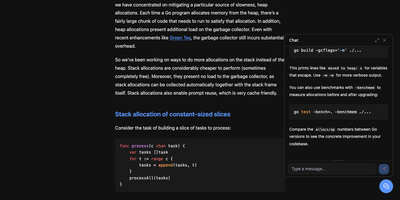
Subscribe to a feed and Oksskolten fetches the complete text of every new article, cleans it, and files it as Markdown in a library you can read without leaving the app. About 500 cleanup patterns strip ads, navigation, and tracking, with no per-feed toggles or selectors to maintain. No feed on the site? Auto-discovery goes first, then RSS Bridge, then LLM-inferred CSS selectors, while FlareSolverr gets past bot protection. Every feed is checked on its own schedule, somewhere between every 15 minutes and every 4 hours. Inbox, Read Later, Liked, and Read views keep the queue tidy. Clip any URL as a standalone article. Likes and bookmarks feed an engagement score that shapes search ranking and recommendations. One click summarizes or translates an article through Anthropic, Gemini, OpenAI, Ollama, or vLLM, with Google Translate and DeepL as translation engines. Ask the chat questions about your archive, or point Claude Code or Codex at the built-in MCP server to use the same tools. Search forgives typos and covers every stored article. Login works with a password, a passkey, or GitHub. Pick from four layouts and fourteen color themes, import custom themes as JSON, rebind keyboard shortcuts, and keep reading offline as a progressive web app. Running on a dedicated VPS on RepoCloud with guaranteed CPU, RAM, and SSD, full root SSH access, and a browser serial console. AGPL-3.0 licensed.
Cotal
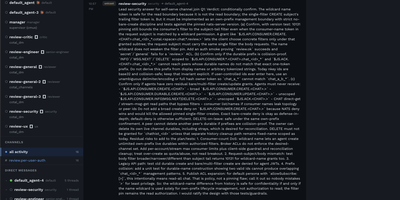
Cotal puts your AI agents in one shared room: Claude Code, Codex, and OpenCode discover each other, message channels, hand off work, and ask you to approve the result. Post to a channel and every subscriber hears it; message one peer and the durable inbox holds it until they are free; address a role like reviewer and one available reviewer claims the job. Presence shows who is actually there, and attention modes decide which channel traffic may interrupt an agent mid-task. A manager starts and stops agent processes in tmux or cmux, here or on remote hosts you authorize, without sitting between their messages. For work that waits and branches, Cotal Lang programs launch agents, pause at human checkpoints with deadlines, and resume from their recorded steps after an interruption. Services join the same space by publishing command contracts that authorized agents can discover and invoke; the bundled Linear adapter shows the pattern. Supervise from a terminal console with the live roster and activity feed, or from the read-only browser dashboard and its graph of agents and channels. Spaces stay separate, every message carries a checked identity, and per-agent grants decide who may delegate, spawn teammates, or call a service. Running on a dedicated VPS on RepoCloud with guaranteed CPU, RAM, and SSD, full root SSH access, and a browser serial console. Apache-2.0 licensed.