AnsibleForms
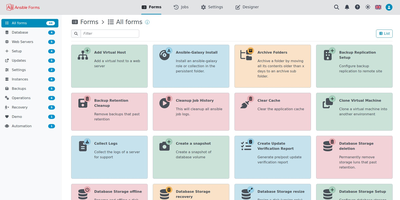
AnsibleForms turns Ansible playbooks into self-service web forms that colleagues can run safely, with the right variables, without filing a ticket or touching a terminal. A colleague picks the form, fills in fields that validate as they type, and the job launches with exactly the variables the playbook expects. Dropdowns can cascade from a database query, a REST call, or a small expression, so the environment list is never typed from memory and the wrong region is never an option. Forms feed playbooks running in runtime containers or templates on the AWX, Semaphore, Rundeck, or Jenkins servers you already have, and workflows chain them with conditions, success and failure paths, and an approval step when a person should look first. Runs can be scheduled, stored, aborted, and relaunched, with live output while they work and a full history afterward. Designers edit forms in the browser and keep everything in Git, sign-in stretches from local accounts to LDAP and OIDC, and credentials travel encrypted or straight from Vault. Running on a dedicated VPS on RepoCloud with guaranteed CPU, RAM, and SSD, full root SSH access, and a browser serial console. GPL-3.0 licensed.
Agenvo
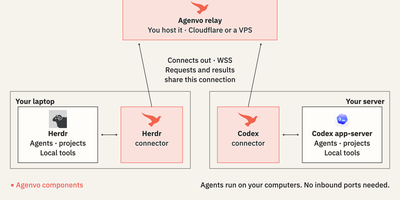
Your coding agents are scattered across a laptop, a server, and whatever machine you left running at home, and Agenvo is the self-hosted relay that lets one AI assistant reach all of them through a single MCP endpoint. Ask ChatGPT on your phone to check on Codex running on your server, or have an agent in Herdr on your laptop fix a failing test, from wherever you are. Connectors for Herdr, Codex app-server, Paseo, and Lody dial out to the relay over WSS, so the computers running agents need no inbound ports, no VPN, and no port forwarding. Your assistant sees the agents running in Herdr without restarting them, resumes Codex threads later, and starts new work where it fits: a Codex thread on the server, or Codex, Claude, or Devin in a Herdr pane. When an agent finishes a turn, waits for input, or exits, the relay pushes a change event back, so a watching assistant or ChatGPT dot reads the output and takes the next step. Closing the chat or losing the network does not stop the agents; connectors reconnect on their own, and your assistant picks up from each agent's current state. Deploy the relay on a single VPS with Docker or on Cloudflare, authorize MCP clients with OAuth over Streamable HTTP, and discover targets and method schemas with search before calling execute. Running on a dedicated VPS on RepoCloud with guaranteed CPU, RAM, and SSD, full root SSH access, and a browser serial console. Apache-2.0 licensed.
Taskuary
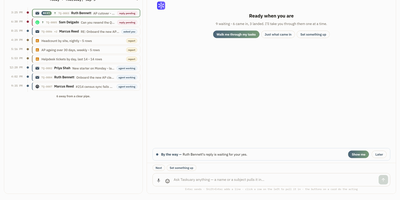
Mail, chats, tickets, alerts, and reports stop being five inboxes to check and become one sorted rail in Taskuary, your self-hosted AI work partner. A triage pass reads each arrival and gives it one verdict: nothing to do, a sentence settles it, an agent should work it, talk it through, or it is yours. The rail groups what survives into Urgent, On you, Goals, Agents working, For later, Reports, Advisor ideas, and FYI, and a morning card recaps what changed overnight, what was learned, and today's meetings. The Assistant can walk you through the pile one task at a time, presenting each card with Next, Write reply, Send to agent, and Mark done actions. Coding jobs go to the CLI you already run (Claude Code, Codex, Gemini, Cursor, Copilot, Qwen Code, OpenCode, or Kimi Code) inside your checkout; general jobs open a conversation instead. Results return as drafts attached to the task, and nothing leaves until you approve: replies, comments, invoices, and posts all wait for your click. Disagreeing with a verdict teaches the triage, and learned memory carries your preferences into the next decision. Running on a dedicated VPS on RepoCloud with guaranteed CPU, RAM, and SSD, full root SSH access, and a browser serial console. MIT licensed.
Tamari
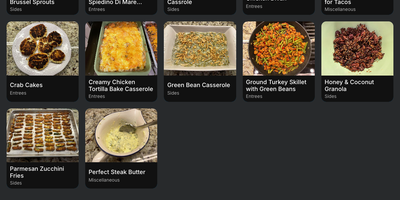
Recipes scattered across bookmarks, screenshots, and open browser tabs become one searchable cookbook with Tamari, which adds meal planning, per-store shopping lists, and one-click imports from a built-in library of over 400,000 recipes. Save each dish with its photo, ingredients, instructions, servings, time estimates, and nutrition information, then find it again through search, categories, or your favorites list. The Explore collection gathers more than 400,000 recipes from 300 cooking websites, and any of them moves into your personal cookbook with a single click. Pick a recipe and its full ingredient list lands on a shopping list at once, organized per store so a supermarket run and a farmers market run stay separate. Check items off as you shop, or scan a barcode to add something the moment you notice it running out at home. The meal planner assigns recipes to specific dates up to 30 days ahead, turning the weekly what-is-for-dinner debate into a settled schedule. Adjust how your cookbook displays, with large photos to show dishes off or compact photos to fit more on screen, sorting by title or date added, and light or dark themes for late-night cooking sessions. Share recipes with family members, reset a forgotten password by email, and manage everything programmatically through the REST API from scripts or other tools. Running on a dedicated VPS on RepoCloud with guaranteed CPU, RAM, and SSD, full root SSH access, and a browser serial console. GPL-3.0 licensed.

Openfront
Why rent your own shop from a platform that takes a cut and sets the rules? Openfront runs the whole store, storefront and back office together, on a server you own. Customers get a fast, mobile-responsive store where they can browse the catalog, open product pages with variants, fill a cart, check out, create an account, and follow their orders. You get the dashboard behind it: products and variants, orders and fulfillment, customers, payments through Stripe and PayPal, shipping integrations, and the everyday work of running a store without ten browser tabs. Stock is tracked across multiple locations with movements and backorders, so a warehouse and a shop floor stop disagreeing about what exists. Gift cards run their full life from creation to redemption, returns and refunds follow a proper claims workflow instead of an email thread, and discounts can be simple codes or automated campaigns. Selling abroad is built in, with multiple currencies and regional pricing, while analytics and reporting show what is actually selling. When clicking through menus is slower than saying it, the built-in AI assistant can add products, change prices, and configure regions from a chat, working inside your own logged-in permissions so it can only do what your role allows. Running on a dedicated VPS on RepoCloud with guaranteed CPU, RAM, and SSD, full root SSH access, and a browser serial console. MIT licensed.
Subarr
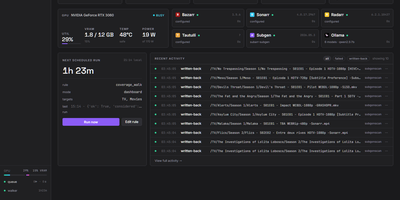
Subarr is the coordination, measurement, and quality layer for Whisper subtitle generation, sitting between Bazarr, Sonarr, Radarr, and subgen to decide what gets transcribed, in what order, and whether the result is any good. Its Coverage walk scans your whole library and scores every subtitle gap with a reason: no track, embedded-only, Bazarr-wanted, audio mislabeled, or low quality. Queue a file, a folder, or an entire series from the Library tab and watch it move through probing, transcribing, and write-back on the dashboard. The Review queue plays you the actual dialogue, picked out by voice-activity detection, so you can verify a subtitle really matches the audio language before it lands. It flags files whose default audio track is not the original language and swaps tracks in place, heading off the double-translation trap. A provider leaderboard records which subtitle sources actually deliver for your library, and the Tuning Lab lets you tune Whisper recipes against your own media. Rules and scheduled walks keep the work flowing, with Tautulli now-playing signals boosting whatever you are about to watch. Finished subtitles are written next to your media, and your Plex or Jellyfin library refreshes the moment one lands. Running on a dedicated VPS on RepoCloud with guaranteed CPU, RAM, and SSD, full root SSH access, and a browser serial console. MIT licensed.
Ogcode
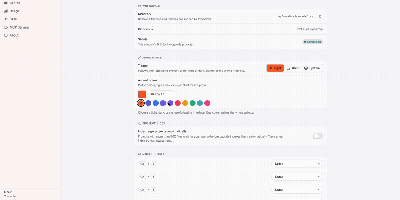
Ogcode puts a full AI coding agent in a browser tab pointed at your own server, where it maps your codebase semantically before reading it, plans changes across files, runs your builds and test suites, and answers with diagrams and documents alongside the shipped code. Before reading files it maps the project with a semantic index, outlines what matters with exact line ranges, and reads only the parts that count, so unfamiliar code becomes navigable in one session. Ask it to implement a feature or chase a failing test and it plans the work, edits across files, runs your builds and test suites, and investigates failures instead of retrying blindly. You stay in control through per-session permission modes: Ask approves each step, Auto gates by risk, and Yolo lets it run, with every decision remembered when you want it to be. Past decisions are recalled instead of replaying whole transcripts, so long sessions stay focused and affordable, and the agent can research as it goes with built-in web search, reusable SKILL.md workflows, and external MCP servers. Answers come back richer than text when the work calls for it, with diagrams, rendered documents, charts, and downloadable artifacts in the same session. Connect Anthropic, OpenAI, OpenRouter, or a local Ollama endpoint and start working. Running on a dedicated VPS on RepoCloud with guaranteed CPU, RAM, and SSD, full root SSH access, and a browser serial console. AGPL-3.0 licensed.
LogicalDOC
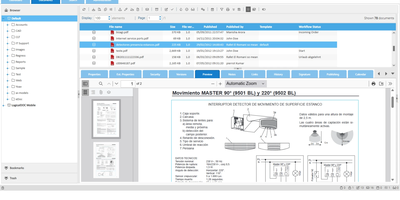
LogicalDOC is a document management system that gives a company one controlled home for its files instead of letting contracts, invoices, and procedures scatter across drives and inboxes. Staff store any kind of document in a repository organized on multiple levels, then find it again through advanced search that reaches inside document content, not just filenames. Colleagues collaborate on the same documents and projects while version control keeps the history straight, so nobody works from last quarter's draft by accident. Administrators define roles for different users, set access control and user quotas, and choose the security level for each area, with detailed activity logs showing who opened, changed, or shared what. Automations handle the routine flow of documents through the business, and the web services API lets an ERP or other systems integrate document management into existing processes. Information can be collected from any digital source, knowledge gets reused instead of recreated, and mobile apps for phones and tablets keep the repository reachable away from the desk. The official Docker image and Tomcat bundles make the Community Edition straightforward to run on your own infrastructure. Running on a dedicated VPS on RepoCloud with guaranteed CPU, RAM, and SSD, full root SSH access, and a browser serial console. LGPL-3.0 licensed.
LLemonStack
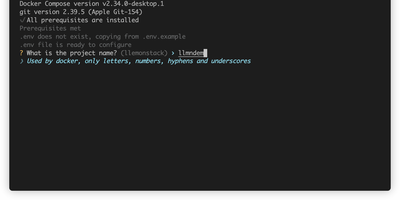
One CLI command deploys a complete AI development environment: n8n, Flowise, Supabase, Ollama, Qdrant, LiteLLM, Langfuse, Open WebUI, LightRAG, Browser-Use, Firecrawl, Crawl4AI, and more, all pre-wired with networking, credentials, and database connections. LLemonStack eliminates the hours of Docker Compose configuration that typically precede any local AI agent project. The llmn CLI initializes isolated project environments with auto-generated secure credentials, starts services in dependency order (databases first, then middleware, then apps), and displays a dashboard showing every service URL and access token. n8n brings 400+ workflow integrations, Flowise provides visual agent building, Ollama runs local LLMs like Llama and Mistral, Qdrant stores vectors at high performance, Open WebUI offers ChatGPT-style model interaction, and LiteLLM proxies requests to any provider with cost tracking. Langfuse automatically logs traces for every LiteLLM query, providing full observability. Each project maintains isolated Postgres schemas preventing data collision across parallel stacks. Firecrawl and Crawl4AI extract web content into LLM-ready formats for RAG pipelines feeding LightRAG or Qdrant. Dozzle streams live container logs for debugging. Import/export tooling migrates workflows between projects with automatic credential reconfiguration. Running on a dedicated VPS on RepoCloud with guaranteed CPU, RAM, and SSD, full root SSH access, and a browser serial console. AGPL-3.0 licensed.
EveryOS
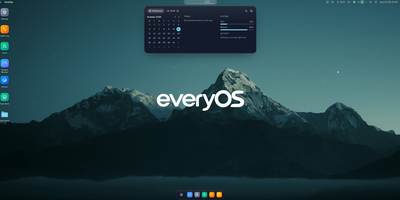
EveryOS gives the Linux server you already own a desktop it never had: open a browser and your machine greets you with windows you can move, snap, and stack, a dock, virtual desktops, widgets, and a launcher, all remembering exactly how you left them. Your files live in a private home with the usual folders, previews, a text editor, and a trash you can restore from, and plugging in a USB disk makes it appear on the desktop ready to mount. An app store installs self-hosted applications from catalogs and follows each deployment, later offering updates that keep your settings, rollbacks when one goes wrong, and backups of app data. The same workspace watches the machine itself: CPU, memory, disk, and network at a glance, systemd services and logs, available package updates, and a Docker view for containers and Compose projects. A real terminal opens in the browser under your own Linux account, Home Assistant arrives as a panel and desktop widgets with its tokens kept on the server, and an AI assistants app can find or install a local model server such as Ollama and chat with it privately. Running on a dedicated VPS on RepoCloud with guaranteed CPU, RAM, and SSD, full root SSH access, and a browser serial console. MIT licensed.
SongMirror
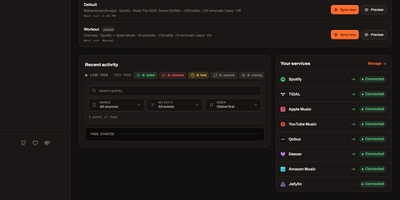
Switching streaming services should not mean rebuilding ten years of playlists by hand. SongMirror keeps your playlists mirrored across Spotify, Apple Music, YouTube Music, Amazon Music, Deezer, TIDAL, and Qobuz, so the collection you curate in one place exists everywhere. Choose one-way copies, merge several sources into a single destination, declare an authoritative group that wins disagreements, or turn on full bidirectional sync where every service converges on the same tracks. Matching leans on ISRC codes first, so the song that lands is the same recording you started with, not a karaoke tribute with a similar title. One-off transfers handle migrations in a single pass, while scheduled syncs keep everything current in your original date-added order without you thinking about it again. A local mirror can download audio into a Jellyfin-ready library for the playlists you want physically on disk. Playlist metadata backups guard against a service deleting something you love, credential renewal keeps connected accounts working, and safety rails stop a bad run from wrecking a good library. The whole thing also runs headless from the command line with the same sync engine, and the interface speaks fifteen languages including a right-to-left Arabic layout. Running on a dedicated VPS on RepoCloud with guaranteed CPU, RAM, and SSD, full root SSH access, and a browser serial console. MIT licensed.
SyncWatch
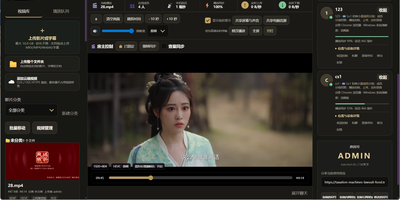
Movie night should not depend on everyone pressing play at the same second; SyncWatch runs your own watch-party server so friends in different places watch the same frame together. The host controls play, pause, seeking, and playback speed for the whole room, and late joiners or drifting clients are corrected back to the shared position automatically. You build the program from uploads or direct HTTPS media links, with subtitles, audio, images, and documents handled in the same library. Rooms can be permanent or temporary, protected by passwords and member limits, with host, admin, and permission-group control over who may operate playback. Between scenes, people talk through public and private chat, on-screen danmaku comments, emoji, voice messages, or full-room voice. Anyone can share a browser tab, window, desktop, or phone screen into the room, so a clip, a game, or a presentation becomes the shared screen. The server also keeps friends, notifications, online presence, bans, registration approvals, and an operations log, so a private community can run itself without a platform account. Uploaded media is analyzed and thumbnailed automatically, with browser-compatible versions generated for awkward formats. Backups, data export, a recycle bin, mail verification, and network diagnostics round out the admin side. Running on a dedicated VPS on RepoCloud with guaranteed CPU, RAM, and SSD, full root SSH access, and a browser serial console. Apache-2.0 licensed.

Dewarr
Your want-to-read shelf and your audiobook library finally talk to each other, so the next book you finish can trigger the hunt for the one after it. Dewarr syncs Goodreads shelves, CSV exports, custom public lists, and Hardcover lists, then watches them for new additions worth listening to. Connect Audiobookshelf or Grimmory and it knows what you already own, importing finished downloads into verified library folders instead of leaving files stranded in a downloads directory. Follow authors and series to catch future releases, with back-catalog review, filters, and exclusions before anything is grabbed, including release-day acquisition for titles you are waiting on. When you approve auto-download, it searches MyAnonamouse, Prowlarr, and AudiobookBay, ranks sources by your format, size, and seed preferences, and hands transfers to qBittorrent. Multi-file MP3 releases come back as one chapterized M4B, a chapter per file, ready for your player. The discovery page personalizes shelves with followed lists, award collections, trending books, and new releases. Household members get individual accounts, reading lists, and permissions, with sign-in through OpenID Connect providers or Plex. Notifications for grabs, imports, and digests go out over Discord, ntfy, Apprise, or plain webhooks. Running on a dedicated VPS on RepoCloud with guaranteed CPU, RAM, and SSD, full root SSH access, and a browser serial console. MIT licensed.
Monbooru
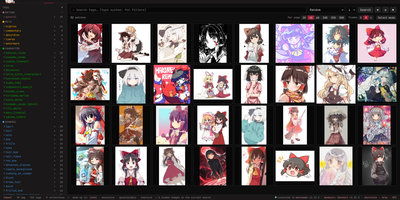
Monbooru is a private, tag-based gallery for your own image, video, and manga collection, searchable the way booru sites are, but hosted entirely on your server. Drop files into watched folders and they appear within seconds, with browser uploads, SHA-256 deduplication, and an inbox where new arrivals wait until you have reviewed and tagged them. Local auto-tagging runs ONNX models such as WD14, JoyTag, Camie, and PixAI on CPU or GPU, so a collection gets searchable labels without sending a single image to a cloud service. Tag management covers merges, aliases, implications, and custom categories, while rating tags with an SFW ceiling keep sensitive material hidden until you choose otherwise. Search combines wildcards, OR terms, and exclusions with filters for folder, date, size, dimensions, and AI generation settings, and saved searches keep favorite queries one click away. Batch actions retag, move, delete, or auto-tag whole selections at once, and the built-in manga reader opens CBZ and ZIP archives as single items. Image pages record sources, artist commentary, and your own notes, and near-duplicate detection lines up lookalikes side by side for cleanup. Multiple galleries can live in one instance, each with its own folders and database, and an optional password plus scoped REST API tokens control who and what can connect. Running on a dedicated VPS on RepoCloud with guaranteed CPU, RAM, and SSD, full root SSH access, and a browser serial console. AGPL-3.0 licensed.
Joulenap
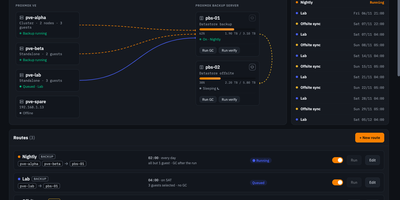
A dedicated backup server is the right way to keep copies on separate hardware, and a strangely expensive one to leave humming in the corner for a job that runs twenty minutes a night. Joulenap lets that machine sleep: at the scheduled hour it sends a Wake-on-LAN packet to your Proxmox Backup Server, waits until the API answers, runs the backup, applies retention, runs garbage collection and verification if you asked for them, then powers the box back down or suspends it for network cards that only wake from sleep. You describe your setup as routes: which hosts back up to which backup server, on what schedule, keeping how many copies, with guests as everything on a host or an explicit list. Fan several hosts into one server nightly, or copy one backup server to another across town for an off-site second copy with its own retention. A second route kind starts nothing at all: your Proxmox hosts keep their own schedules while Joulenap simply wakes the box, watches their tasks, and switches it off when they go quiet. Watch live task output, stop a run mid-flight if you must, and get results through Apprise, Telegram, ntfy, Discord or email per route. Status widgets feed Homepage, Homarr, Dashy and Glance, and a Prometheus endpoint lets Grafana alert you when a guest stops being backed up. Running on a dedicated VPS on RepoCloud with guaranteed CPU, RAM, and SSD, full root SSH access, and a browser serial console. AGPL-3.0 licensed.
UWAS
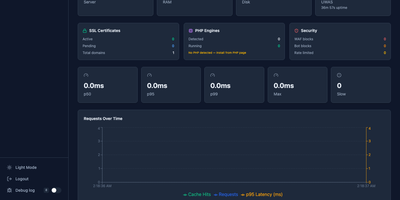
One 18 MB Go binary does the job of Apache, Nginx, Varnish, Caddy, and cPanel combined. Point UWAS at your /var/www directory and it auto-detects sites, provisions Let's Encrypt certificates, enables HTTP/3 via QUIC, and activates a two-tier caching engine with L1 memory shards and L2 disk storage, all before you write a single line of configuration. The React 19 admin dashboard provides 42 management pages for domains, PHP versions, databases, cron jobs, DNS records, file management, backup and restore, SFTP users, and uptime monitoring with real-time SSE updates. PHP sites run through FastCGI with connection pooling and full .htaccess compatibility, so WordPress, Laravel, and legacy applications work without migration effort. The built-in WAF catches SQL injection, XSS, path traversal, and shell exploits, while per-domain rate limiting and bandwidth caps protect against abuse. Reverse proxy mode supports five load balancing algorithms, circuit breakers, canary deployments, and mirroring for blue-green rollouts. Git deploy clones your repository, runs the build, checks health, and restarts the service with rollback on failure. An MCP server lets AI agents manage domains, cache, and deployments through natural language. The Nginx and Apache migration CLI converts existing configurations to UWAS format automatically. Deploy on a dedicated VPS on RepoCloud with guaranteed CPU, RAM, and SSD, full root SSH access, and a browser serial console. AGPL-3.0 licensed.
Lalabase
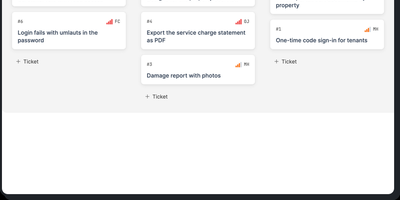
Lalabase is project management built for developers who work with clients, putting tickets, time tracking, documentation, and meetings in one workspace instead of five separate tools. Each client gets an organisation with its own projects and its own access, and roles decide exactly what clients can see. Tasks run as a list or a board with the statuses, priorities, and fields you define per project, rather than the workflow a vendor chose for you. Time tracking records several sessions per ticket, each billable on its own, with exports that go straight into the invoice. Documentation lives beside the work: notes and documents sit in the project, and a folder in your GitHub or GitLab repository becomes the project's docs automatically. Meetings keep their transcript, an AI summary, and the tasks that follow from what was actually said. When you need an answer, the AI assistant takes one question across tickets, comments, documents, hours, and meetings, and it cites the ticket, page, or conversation every answer came from. It even reads your repository's indexed code structurally, so questions about what is implemented get answered against the code. The assistant stays off until you enable it with your own provider key or a model in your own network. An MCP server and REST API let your own agents list, create, and update tickets, comment, and log time. Running on a dedicated VPS on RepoCloud with guaranteed CPU, RAM, and SSD, full root SSH access, and a browser serial console. AGPL-3.0 licensed.
Flare
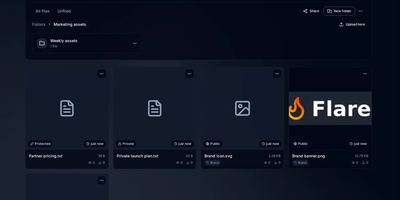
Screenshot, copy link, done: that is the loop Flare is built to make instant on your own server. Connect ShareX, Flameshot, KDE Spectacle, or a plain upload script once, and captures land in a vault you control instead of a third-party host that deletes them next month. Files live in folders with nested structure, bulk moves, automatic tagging rules, and one share link per folder, while previews handle images, video, PDFs, and syntax-highlighted code without downloading anything. Search digs through filenames, dates, and text extracted from images by OCR, so the screenshot from three weeks ago is findable by what it says. Password-protect a sensitive file, keep another private entirely, or publish it with a rich embed that unfurls properly wherever you paste the link. An appearance studio restyles branding, color palettes, and share page layouts, upload profiles carry reusable defaults between browser and screenshot tools, and the extras round out the kit: a URL shortener with click tracking, a pastebin, storage quotas, invite links, and tokens with signed webhooks for your own integrations. Running on a dedicated VPS on RepoCloud with guaranteed CPU, RAM, and SSD, full root SSH access, and a browser serial console. MIT licensed.