Euron CodeAgent
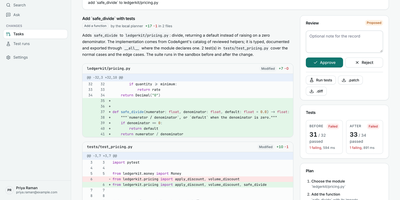
Euron CodeAgent answers questions about your repository with citations to exact lines, and its patches arrive with sandboxed test results for a person to approve. Upload a zip or tar.gz, or give an HTTPS git URL, and the code is indexed with a graph of calls, imports, and inheritance. Search matches symbols by exact name, prefix, or fuzzy spelling, text by literal or regular expression, and code by meaning. Each answer streams in with numbered chips that open the cited lines. When the code holds no answer, CodeAgent says so. Describe a change and the agent runs your tests, edits a scratch copy, reruns them, and files a patch with the diff, reasoning, and both results. Built-in offline skills rename a symbol across the codebase, add a tested helper, and repair a failing test with small verified changes. Reviewers comment on lines or the whole patch and approve or reject with a note, and a setting bars requesters from deciding their own tasks. Approved patches apply to a branch in CodeAgent's own copy and export as .diff or git am files, so nothing is pushed to your git host. Tests run in a throwaway container with no network and limits on CPU, memory, processes, and time. It runs offline with no key, and an OpenAI-compatible API or Ollama can be added for open-ended changes. Running on a dedicated VPS on RepoCloud with guaranteed CPU, RAM, and SSD, full root SSH access, and a browser serial console. MIT licensed.
Taxonero
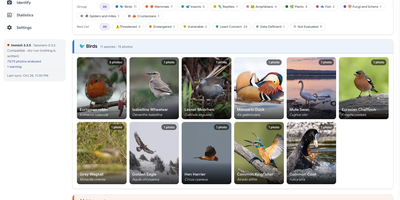
Taxonero turns a photo library into a species log: it finds the birds, insects, plants, and fungi in your pictures, names them, and tags them on your own server without touching the originals. Subjects are detected with MegaDetector v6 and OWLv2, identified by BioCLIP 2 across about 950,000 taxa, and checked against GBIF observations to see whether the species lives where the photo was taken. Confident, locally plausible results are confirmed automatically, and the rest wait in a review dashboard with status tabs, group filters, bulk actions, and a keyboard-driven viewer showing candidates, confidence, and a range map. Compare candidates with iNaturalist reference photos, draw boxes by hand, and set a location for photos without GPS. Species pages show names in 15 languages, taxonomy, range maps, and Wikipedia articles, a tree view runs from kingdom to species, and statistics cover accumulation curves and seasonality. The Identify page names a dropped image without storing it. Results reach Immich as hierarchical tags and a description, or XMP sidecar files for local folders, darktable, and Lightroom Classic, and one action removes what it wrote to Immich. Writes are dry-run by default, and its API key cannot delete or upload photos. Install it from CPU, NVIDIA, AMD, or Intel Docker images, a TrueNAS SCALE file, or a desktop app for Windows, macOS, and Linux. Running on a dedicated VPS on RepoCloud with guaranteed CPU, RAM, and SSD, full root SSH access, and a browser serial console. AGPL-3.0 licensed.
ZIM Pro
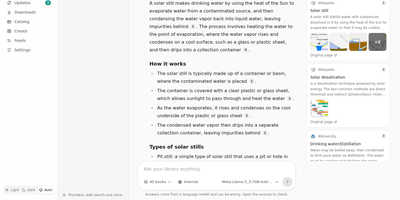
Offline Wikipedia, DevDocs, iFixit and the rest of the Kiwix catalog become a library you can read, search and question when ZIM Pro serves your folder of ZIM files. Ask AI writes answers from the books themselves, with numbered citations, the source passages beside them, and the pictures and videos from the pages it used. Any OpenAI-compatible chat API works, local or hosted, and two free providers need no account or key. Search covers one book or the whole library, with results grouped by book and a history of past searches. Any article can be read as Markdown with its pictures, ready to copy into another tool. Updates compare each book with the Kiwix catalog under a per-book policy: automatic, ask first or pinned. Downloads use several connections across the mirrors, verify checksums and resume after a pause or crash. Your own ZIMs can be made from web links, whole sites, or uploaded PDF, EPUB and Kindle books, with RSS and Atom feeds syncing on a schedule. Claude and other LLM apps search and read the library over MCP, protected by named keys that can be revoked. Queue controls pause, reorder and retry jobs, and monitoring pages chart health checks, traffic and live logs. The web app installs on phones and includes a dark theme. Running on a dedicated VPS on RepoCloud with guaranteed CPU, RAM, and SSD, full root SSH access, and a browser serial console. GPL-3.0 licensed.
Better Status Page
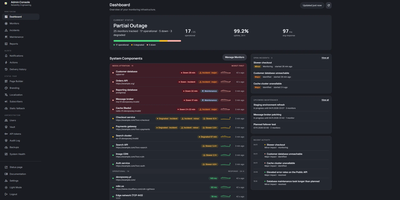
Better Status Page watches your services around the clock and turns outages into calm, branded status updates for your users instead of a flood of support tickets. Its monitors probe HTTPS endpoints with authentication flows and TLS expiry warnings, ping and TCP ports, DNS records, Docker containers, mail servers over SMTP, IMAP, and POP3, and databases from PostgreSQL and MySQL to Redis, MongoDB, SQL Server, and Oracle. A slower-than-usual alert fires when a monitor's p95 response time climbs against its own last seven days, and passive webhook heartbeats catch jobs that simply stop checking in. Alerts reach the team through email, Slack, Discord, Microsoft Teams, Telegram, ntfy, Pushover, webhooks, and Twilio SMS or voice calls, with failure thresholds, quiet hours, rate caps, and grouping keeping the noise down. Incidents carry severity levels, public updates, linked monitors, and recurring maintenance windows, and subscribers follow along by email, webhook, RSS or Atom feed, or a JSON status API. A drag-and-drop builder restyles the public page with your branding, dark mode, and translations, a static fallback keeps the page readable if the server itself falls over, and uptime reports export to CSV for SLA reviews. Running on a dedicated VPS on RepoCloud with guaranteed CPU, RAM, and SSD, full root SSH access, and a browser serial console. MIT licensed.
Hornhoof
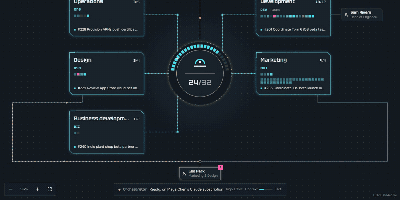
Hornhoof turns the AI plans you already pay for into a company of agents that splits goals across departments and has other makers' agents check the work, all on your own computers. Employees are real programs such as Claude Code, Codex, Kimi Code, and Antigravity, and one department can mix them freely. An orchestrator reads a goal in plain words, proposes departments, and hands each head a share of the work. One map shows who is working, who is waiting, and who stands idle. Open any agent and its real terminal appears in your browser. Each department keeps a task tracker with goals, owners, and dates, shown as a list, a board, or a graph. Every change is reviewed by an agent of another maker and tested before it joins the release. When one plan hits its limit, the task moves to the same role on another plan. Spare laptops and home servers take the full test runs, and a machine with a full copy takes over if the server stops. Only irreversible deletions wait for the CEO by default, and every question sits in one list you can answer by phone. Releases wait for your yes or ship themselves once every check is green. Templates cover marketing, sales, support, finance, and a household of devices and bills. Running on a dedicated VPS on RepoCloud with guaranteed CPU, RAM, and SSD, full root SSH access, and a browser serial console. MIT licensed.
Gideon
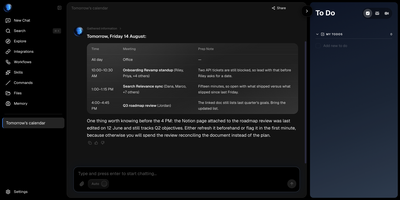
Connected to Gmail, Slack, Calendar, Notion, Linear, and GitHub, Gideon is an AI coworker that drafts replies in your voice, preps you for meetings, and runs workflows while you are away. A chat window plans a task, calls the tools it needs, and answers from what it found, with extended thinking, file understanding, and streaming replies. Workflows are plain-English instructions on a schedule from every few minutes to weekly, and a Slack mention, a CC'd email, or a WhatsApp message can start a run too. Memory builds a graph of the people, projects, preferences, and topics it learns, and a Hub gathers the day's meetings, todos, and suggested follow-ups from Slack, email, Linear, and GitHub. Todos can be delegated to a teammate over a Slack group message with recurring nudges until the work is marked done. Skills teach Gideon your email and Slack tone, custom slash commands save prompts you reuse, and per-model token and dollar accounting shows what each model costs. Every AI feature routes on its own to Anthropic, OpenAI, or any OpenAI-compatible endpoint, so the chat model and the cheaper background agent can differ. Other connectors reach Drive, Sheets, Docs, Figma, PostHog, Grafana, Freshdesk, and Exa web search, and a ClickHouse option answers questions with SELECT-only SQL. Running on a dedicated VPS on RepoCloud with guaranteed CPU, RAM, and SSD, full root SSH access, and a browser serial console. Apache-2.0 licensed.
Sparkkeep
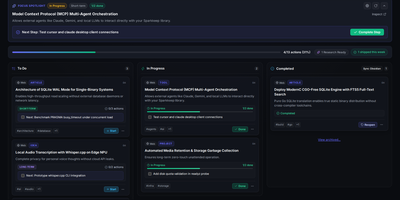
Send Sparkkeep a link, note, screenshot, or voice memo and it screens out the junk, drafts a brief, and parks the keepers on a board you work from. Telegram, Discord, Slack, a browser extension, or a webhook can feed the inbox, and a note with no link works too. A noise gate drops engagement bait and spam. The model you choose writes each brief, covering a TL;DR, why it matters, open questions, and a next-action checklist. Keys 1, 2, and 3 sort a card in the triage deck into the short-, medium-, or long-term horizon. The board adds a Focus Spotlight that picks your best next card, a seven-day Execution Pulse, swimlanes by horizon or card type, and a docked inspector. Research runs follow bounded playbooks that search, cite sources, and verify claims before ending in a Pursue, Watch, or Skip verdict. Playbook Studio lets you reorder steps, lint research health, and see the estimated cost before a zero-cost dry run. A digest over 7, 14, or 30 days tallies wins, shows momentum, and ends with an executive briefing in your model's voice. Obsidian, Notion, and Joplin receive finished notes, while an RSS outbox and intents hand cards to Logseq, Things 3, Todoist, and GitHub. Models come from Ollama, LM Studio, vLLM, OpenAI, or DeepSeek, with a different one per role. Running on a dedicated VPS on RepoCloud with guaranteed CPU, RAM, and SSD, full root SSH access, and a browser serial console. AGPL-3.0 licensed.
Luna AI Engine
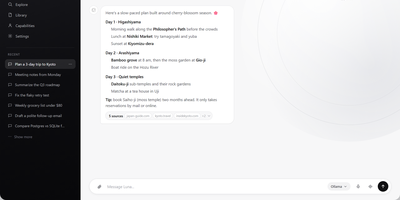
Chat, voice and files meet in Luna, an AI assistant that remembers your preferences, writes meeting minutes and answers through a local Ollama model or any cloud model you choose. Claude, Gemini, OpenAI, Groq, Mistral, Cohere, NVIDIA NIM and OpenRouter work through a setting, and several Ollama servers can be ranked ahead of a cloud fallback. Attached PDFs, Word files, spreadsheets, slides and code land in a searchable Library, and persistent memory carries facts and a learned style between chats. Wake-word and push-to-talk voice let Luna listen and answer back with local text-to-speech. Meeting mode records audio, transcribes it locally and writes minutes with decisions, action items and open questions. A skill is a JSON file plus a Markdown file, with built-ins for research, coding, documents, datasets, job search, news, papers and store-price comparison. Google Workspace, Microsoft 365, GitHub and Spotify connect as integrations, and six MCP servers hand memory, web research and workspace files to Claude Desktop and other clients. Fitbit, Oura, Garmin and Apple Health data sync into local metrics for questions such as how last week's sleep went. A business variant adds multi-user sign-in, rate limits and Telegram, Discord, Slack and webhook channels. The desktop, Android and home-screen iPhone apps reach the server privately over Tailscale. Running on a dedicated VPS on RepoCloud with guaranteed CPU, RAM, and SSD, full root SSH access, and a browser serial console. MIT licensed.
Ontoplano
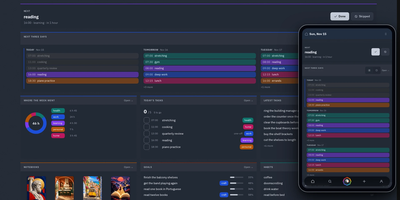
Open Ontoplano on a Monday and the whole week is in front of you: calendar blocks, tasks, bills falling due and a shopping list that fills itself as stock runs short. Blocks repeat or happen once, and any one day's block can be moved, skipped or finished without touching the rest. A day board lines up what is pending, doing and done. Reminders ring even when the app is closed. Goals count their own progress from linked tasks and workouts. The weekly review asks about every block that was skipped. Each notebook holds one subject's notes, tasks, shopping and bills. Beside them sit a diary, ideas and a people list with birthdays. Inventory tracks places, quantities and restocking. Recipes are made from what is in the cupboard. Ledgers import statements, and each movement is classified as an expense, income, transfer, refund, fee or cash withdrawal. Monthly budgets and insights show where the money goes. A capture wheel writes down a task, note or reminder in one gesture. Assistants such as Claude or ChatGPT connect to the built-in MCP server from a screen where each permission can be unticked, and a tool without permission is never offered to them. Exports keep their pictures, while webhooks and a calendar feed link other tools. The app is translated into six languages. Running on a dedicated VPS on RepoCloud with guaranteed CPU, RAM, and SSD, full root SSH access, and a browser serial console. AGPL-3.0 licensed.
Outbound OS
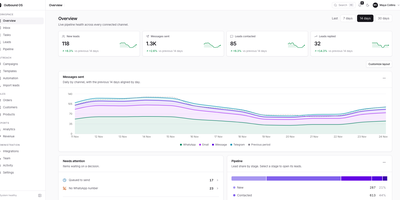
For sales desks that live in WhatsApp, Outbound OS is a CRM where the shared inbox, the follow-up sequences and the pipeline all hang off one lead record. Leads flow in from website forms (plain HTML, Webflow, WordPress, Framer), Facebook Lead Ads, Zapier, Make and n8n webhooks, and CSV or JSON imports, and a configured first contact goes out on an eligible channel. WhatsApp runs through Meta's official Cloud API: the composer checks the 24-hour reply window and offers an approved template once it has closed, while photos, PDFs and voice notes open in the inbox. Email works with any SMTP/IMAP mailbox or Brevo, and Telegram and iMessage (through a Mac running BlueBubbles) join the same thread list. Sequences follow each lead's working hours and stop on a reply, an opt-out or a closed deal, and campaigns target any slice by tag, status, country or score. A pipeline board, tasks, orders, invoices, shipments and revenue reports carry the sale past the first reply, with admin, manager, agent and viewer roles for the team. Dashboard widgets can be rearranged per account, and the phone workspace installs to the Home Screen from the browser. An MCP server lets ChatGPT, Codex, Claude and other remote clients search leads, read replies, preview audiences and prepare campaigns, with sends governed by the client's approval settings. Running on a dedicated VPS on RepoCloud with guaranteed CPU, RAM, and SSD, full root SSH access, and a browser serial console. AGPL-3.0 licensed.
Mongo Manager
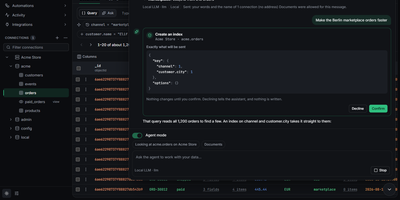
MongoDB Compass is a desktop app for one person; Mongo Manager runs once on your own server and opens in every teammate's browser. Tell its AI agent what you want in plain words, and it writes and runs the query or pipeline, showing each step. Every change, whether to a collection, an index, a backup, a schedule, or a user, waits on a card for your confirmation. Decline, and nothing is written. Anthropic, Google Gemini, any OpenAI-compatible server, or Ollama on your own network can power it, and personal data stays hidden from it. Documents show as a table, cards, or JSON, with a visual filter builder and bulk updates previewed before they run. The aggregation builder previews each stage on a sample, and a slow query shows its plan as a tree with the index that would help. Live charts keep seven days of history, and alerts reach you by e-mail or webhook. Replica set members, replication lag, change streams, and sharded clusters show up live, while rules hide personal fields from people who should not see them. Roles, per-connection access, two-factor sign-in, and a hash-chained audit log keep a team in order. Backups run on a schedule to S3, Google Drive, WebDAV, or a server folder, and live sync ends with a cutover. Running on a dedicated VPS on RepoCloud with guaranteed CPU, RAM, and SSD, full root SSH access, and a browser serial console. AGPL-3.0 licensed.
Agents Platform
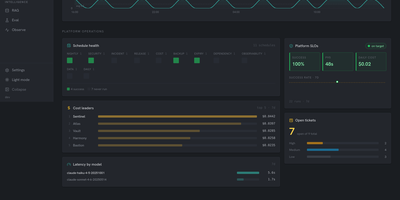
Twenty ready-made AI agent personas, a scheduler, a pipeline builder and a ticket board share one dashboard in Agents Platform, so recurring operations audits run, get summarized and turn into tracked work. Each agent carries a system prompt, skills in the SKILL.md format (adopted from the Anthropic skills catalog or imported by URL), MCP tool servers provisioned into SSH runs, and memories distilled from earlier results. Work runs in parallel, in sequence or as structured meetings, through conditional DAG pipelines or saved crews, on cron schedules or from inbound webhooks such as Prometheus alerts, git pushes and n8n flows. Execution happens over SSH on a host with Claude Code, through the Anthropic API, or against any OpenAI-compatible endpoint including local Ollama models. On SSH runs every tool call streams live into a step timeline, safety tiers stop read-only agents from writing files, supervised runs wait for approval, and scoped API keys guard the trigger endpoints. Recurring runs fuse into Combined Reports with a health score and metric trends, critical verdicts open tickets on a Kanban, Table or Gantt board, and Discord announces results. Cost, latency and SLO dashboards show per-agent spend, while eval suites with LLM-as-judge scoring and prompt A/B tests promote better prompts. A demo mode seeds weeks of sample history so everything can be explored without an API key. Running on a dedicated VPS on RepoCloud with guaranteed CPU, RAM, and SSD, full root SSH access, and a browser serial console. MIT licensed.
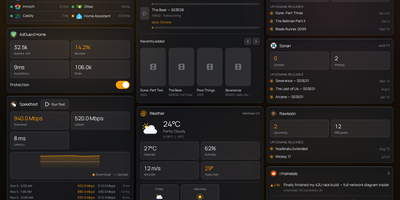
Labby
Labby gathers a whole homelab onto one live dashboard you host yourself, covering services, containers, downloads, and media servers. Widgets watch your service monitor, Docker containers, qBittorrent or Transmission queues, SABnzbd, AdGuard Home, Jellyfin, Emby, Plex, Beszel, Radarr, Sonarr, plus weather, calendar, speedtest, bookmarks, Reddit, and Hacker News, and the server pushes every change to your browser over server-sent events so nothing waits on a refresh timer. The dashboard is not a read-only poster: start and stop containers, pause and resume torrents, and toggle AdGuard protection straight from its widgets. Everything configures from the in-app Manage Services page, where service URLs, API keys, poll intervals, and multiple instances of the same integration (two Radarr servers, say) live in a small SQLite database instead of scattered environment files. Named color schemes restyle the board and save with the config, and icon sources span dashboard-icons, selfh.st, Lucide, or your own URLs. Login is off by default for trusted home networks, with a clear warning to keep it behind a LAN, VPN, or forward-auth proxy, and optional OIDC sign-in through Authentik, Authelia, Keycloak, or Pocket ID when you want a real front door. One container, one volume, and your lab finally explains itself at a glance. Running on a dedicated VPS on RepoCloud with guaranteed CPU, RAM, and SSD, full root SSH access, and a browser serial console. MIT licensed.
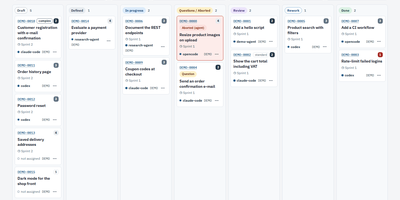
TaskBrigade
TaskBrigade is agile project management for teams of AI agents: a backlog, kanban board, sprints and pull request review where Claude Code, Codex, OpenCode and human teammates all pick up assigned work. Tasks carry acceptance criteria and their own branch, and finished work arrives as a pull request that a human or a reviewer agent approves, rejects or returns with change requests. An inbox gathers open questions, results waiting for review and aborted runs in one place. Workflows turn a chain of tasks into a reusable template that starts by hand, on a cron or workday schedule, or on an event, with approval steps, parallel groups and token budgets that pause a run at 100 percent. Projects marked local-only hand work exclusively to agents whose model runs on your own hardware, which keeps confidential material away from cloud models. Telegram and email notifications follow a per-event matrix with quiet hours, and from Telegram you can approve a review or answer an agent's question. Orchestrator agents, or OpenClaw messages in Telegram, create, split and assign tasks across several machines, each with its own work directory and parallel-task limit. Claude Desktop and Codex Desktop connect through MCP to draft and assign tasks straight from a chat. The interface speaks English or German and folds into a bottom tab bar and single-column board on phones. Running on a dedicated VPS on RepoCloud with guaranteed CPU, RAM, and SSD, full root SSH access, and a browser serial console. Apache-2.0 licensed.
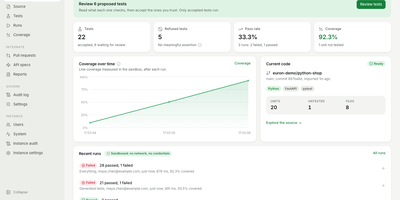
Euron Open TestForge
Because a generated test that asserts nothing is worse than no test, Euron Open TestForge refuses it, then runs every accepted test in a sandbox with no network. Connect a GitHub repository at a branch, tag, or commit, import a pull request, or upload a ZIP, and it reads the code without ever running it. Unit, edge-case, negative, and API tests are written from each function's signature, docstring, documented examples, and raise conditions, plus tests for every operation in an OpenAPI document. Every test lists what it asserts, and you accept or regenerate tests one at a time. Runs have no network or credentials, and a run that crosses its CPU, memory, output, or time limit is stopped with the limit named. A failure shows the actual and expected values from that same run, with a plain-language explanation. Coverage is tracked per file and function over time, and reports export as HTML or CSV. Pull request mode writes tests for exactly the functions a change touches, and the CLI exits non-zero unless every test passes. Teams get roles, scoped API keys, signed webhooks, and an append-only audit log. Use OpenAI, Anthropic, Gemini, Ollama, or any compatible endpoint, or start with the built-in mock model and no key. Running on a dedicated VPS on RepoCloud with guaranteed CPU, RAM, and SSD, full root SSH access, and a browser serial console. MIT licensed.
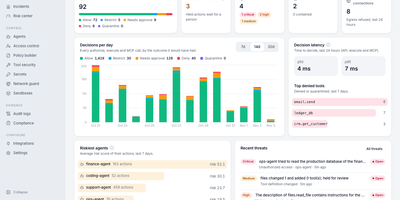
Euron Open AgentGuard
Euron Open AgentGuard decides every action an AI agent takes before it happens, so a poisoned web page cannot talk one into refunding the wrong account. Credentials for HTTP tools, MCP calls, and sandboxed code never reach the agent: AgentGuard runs them itself, and agents authenticate with short-lived identities. A YAML policy answers allow, restrict with row limits or field redaction, hold for a person, deny, or quarantine the agent, and an explicit deny always wins. Drafts can be dry-run on one request, replayed over recorded decisions, or tried in audit mode, which logs what enforcement would have done. Approvals are tied to a hash of the agent, tool, action, and parameters, and one changed byte starts a new request. Nobody approves their own. Once a run reads content that tries to command the agent, it is tainted and its next high-risk action waits for a human. Registered MCP servers share one governed endpoint that hides forbidden tools, scans outputs for injected instructions, and holds a changed tool definition for review. Secrets are written once and injected only for the hosts they are bound to, and an egress proxy limits each agent's destinations. Records are hash-chained and verifiable on demand, with incident reports and an OWASP agentic Top 10 report. SDKs for LangGraph, CrewAI, and Express treat any error as a deny. Running on a dedicated VPS on RepoCloud with guaranteed CPU, RAM, and SSD, full root SSH access, and a browser serial console. MIT licensed.
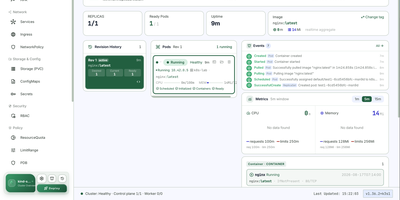
AliangBoard
AliangBoard puts every Kubernetes cluster you run behind one web panel, where you manage resources yourself or ask an AI agent to do it with your approval. Connect each cluster with a bearer token or basic auth and the panel persists the connection, so switching clusters, namespaces, and workloads takes one click instead of another kubeconfig. More than thirty resource types stay in sync: create workloads, services, ingress, config, storage, and RBAC through structured forms, edit anything as YAML, apply multi-document manifests at once, and delete optimistically with automatic rollback when the API refuses. Pod work goes deep: a tmux-backed exec terminal survives browser refreshes, port-forwards resolve services to their backend pods, files move up and down with progress, and debug containers inject into running pods without restarting them. Day-two operations are buttons, not flag memorization: scale, rolling restart, rollout undo, manual CronJob triggers, and node cordon or drain. Global search, a layered namespace topology, live event streams, and CPU and memory metrics keep orientation effortless. Then there is the operator: an Agent workbench and MCP server let your LLM read logs, debug containers, and propose changes in natural language, while every write waits for a human click and lands in an audit log that names who did what. Running on a dedicated VPS on RepoCloud with guaranteed CPU, RAM, and SSD, full root SSH access, and a browser serial console. Apache-2.0 licensed.
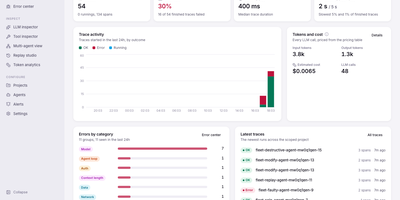
Euron Open AgentDebugger
When an AI agent gives the wrong answer on step three, Euron Open AgentDebugger shows which prompt went out, which tool the model chose and where the run broke. Decorated Python or Node functions become traces of agent, LLM and tool spans, and any OpenTelemetry exporter can post to the OTLP/JSON endpoint with no SDK. A zoomable timeline and an execution graph with highlighted delegation edges show every span, filterable by agent, kind, model, tool and status. A supervisor calling a child agent over HTTP still produces one correctly parented trace, and the multi-agent view lists each agent's share of time and tokens. The LLM inspector shows provider, model, tokens, latency, finish reason and cost, and the tool inspector shows arguments, results, errors and retries. The error center sorts failures into ten categories and groups repeats by fingerprint, while a loop detector flags a stuck agent without stopping it. Replay studio reconstructs a past run with zero new calls, re-runs it with recorded tool results, or changes one input and runs live side by side, and side-effect steps are refused unless allowed. Prompt and response text stays off unless a project turns on content capture. Alerts on error rate, latency or cost reach signed webhooks, and token analytics break spend down by model and agent. Running on a dedicated VPS on RepoCloud with guaranteed CPU, RAM, and SSD, full root SSH access, and a browser serial console. MIT licensed.