Knock-Knock
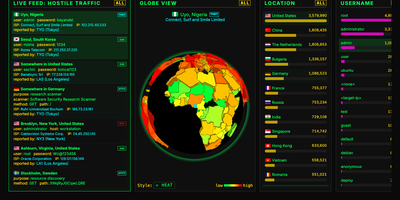
Bots that knock on your server's login ports are always turned away by Knock-Knock, a multi-protocol honeypot that shows every attempt on a live dashboard. Honeypots answer on the standard ports for SSH, Telnet, FTP, RDP, SMB, SIP, HTTP, and SMTP, with MQTT, Node-RED, Modbus, S7, and SNMP as optional extras. Authentication is always rejected, so no bot ever gets a shell. Who is knocking? The live feed shows each attempt's country, username, password, ISP, IP, and protocol. From where? A 3D globe marks the origin in one of six styles, including an extruded country heat map. Trying what? Leaderboards rank countries, usernames, passwords, ISPs, and IP addresses, and a trivia panel explains why bots favor certain credentials. A protocol filter re-slices the feed, globe, and leaderboards together; SIP shows dialed numbers and toll-call destinations, and RDP shows hostnames and accounts. Too fast? Press the space bar to pause, right-click any knock for details, or switch on a virtual Geiger counter that clicks as attacks arrive. Want to fight back? Download hourly 30-day and 365-day blocklists with recipes for CSF, CrowdSec, ipset, nftables, and pfSense, or query the optional API for any IP, CIDR range, or ASN. Several honeypot servers can stream into one aggregated dashboard. Running on a dedicated VPS on RepoCloud with guaranteed CPU, RAM, and SSD, full root SSH access, and a browser serial console. MIT licensed.
Simon
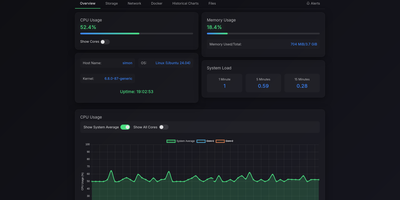
Simon is a lightweight self-hosted system monitor that shows live CPU, memory, disk, and network metrics for your server and its Docker containers in one web dashboard, with threshold alerts and a built-in file browser. Open the dashboard to watch real-time gauges alongside historical charts, so a slow memory leak becomes visible hours before it takes a service down. Every running container appears with its own CPU and memory stats, and its logs open in a searchable viewer, so routine diagnosis never needs a terminal session on the host. The file browser lets you navigate the directories you choose to expose, preview file contents, upload with drag and drop, create folders, and move or delete items. Downloads support range requests, which means large files resume cleanly after a dropped connection and media files stream instead of failing halfway. Alert rules fire when CPU, memory, disk, or network activity crosses thresholds you set, and notifications arrive through Telegram, ntfy, Gotify, Pushover, Pushbullet, Matrix, or any custom webhook. Prebuilt notification templates get common setups running in minutes, and password authentication keeps the dashboard private on a public server. Resource-constrained machines benefit most: the monitor runs comfortably on single-board computers and small instances where heavier monitoring stacks would consume the very memory they exist to watch. Running on a dedicated VPS on RepoCloud with guaranteed CPU, RAM, and SSD, full root SSH access, and a browser serial console. MIT licensed.
Conformiti
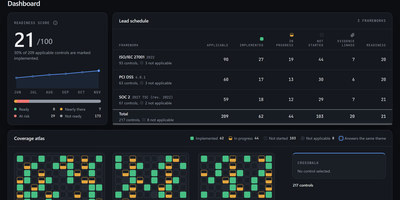
Audit season stops being a six week archaeology dig through shared drives when Conformiti keeps your whole compliance programme in one self-hosted system built for SOC 2, ISO/IEC 27001:2022, and PCI DSS v4.0.1. Its three complete control libraries hold 217 controls with a cross-framework crosswalk, so satisfying one requirement can answer its equivalents elsewhere instead of duplicating work. Evidence lives in a folder tree generated from those libraries, where every document declares which controls it satisfies and every control lists its documents, ending the hunt for proof at fieldwork time. Readiness is calculated rather than vibes: each control scores from implementation status, owner, evidence freshness, and testing, minus a penalty for open risks, and the dashboard tracks that score with daily snapshots. Documents carry review cadences with escalating email reminders before they expire, versions archive instead of overwriting, and uploads can pass through ClamAV scanning. A five by five risk register, vendor register with shared responsibility matrices, periodic access reviews, and a RACI matrix keep the rest of the programme beside the controls instead of in separate spreadsheets. When assessors arrive, you issue them a sealed, signed evidence package for a fixed window that verifies offline, rather than handing over drive access that outlives the engagement. Running on a dedicated VPS on RepoCloud with guaranteed CPU, RAM, and SSD, full root SSH access, and a browser serial console. AGPL-3.0 licensed.
Tagr
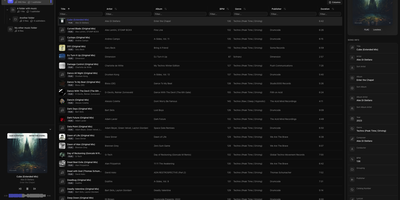
When a music library is full of wrong tags, missing covers, and blank ratings, Tagr lets you fix the whole collection from any browser, on desktop or phone. Three roles divide the work on your own server. Admins mount a music folder, press scan, and get a searchable table of every track, with sortable and filterable columns, more than 40 editable fields, and room for custom tags. Taggers make the changes: edit fields inline, swap album art, and match one song or a whole selection against MusicBrainz, ticking which fields to overwrite. Mistakes are cheap, because every edit is stored in a persistent change history with a revert action, viewable per song or per folder. Rule-based smart playlists, such as every track with an empty comment, show what still needs attention. Listeners browse and play without edit rights, using the waveform player, a Recently played view, and optional ListenBrainz scrobbling that each person connects to their own account. Supported formats include MP3, FLAC, WAV, AAC, OGG, M4A, M4B, WMA, AIFF, and Opus, with changes written straight back into the files. Swipe-friendly panels, an installable PWA, and five interface languages make the phone a comfortable place to work. Running on a dedicated VPS on RepoCloud with guaranteed CPU, RAM, and SSD, full root SSH access, and a browser serial console. AGPL-3.0 licensed.
Digarr
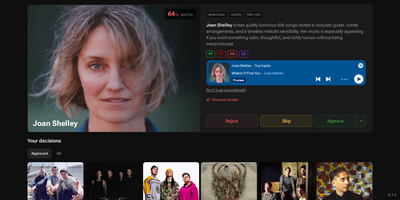
Your next favorite record is hiding in your listening history, and Digarr is the self-hosted discovery engine that finds it, scores it, and queues it for your library. Connect ListenBrainz, Last.fm, Spotify, Deezer, Discogs, or your Plex, Jellyfin, Emby, or Subsonic server, and Digarr builds a taste profile from what you actually play. An AI provider you choose, from Anthropic, OpenAI, and Gemini to a local Ollama model, proposes candidates, and a weighted scoring system ranks them by consensus, similarity, genre overlap, and your past feedback. Every suggestion lands in a review queue where you can preview tracks, approve, reject, or permanently block artists before anything touches your collection. Approve an artist and Digarr adds them to Lidarr with your quality profile, queues the release in slskd, or exports a playlist to Spotify, Navidrome, Jellyfin, Emby, or Plex. Album-level discovery runs on its own: Release Radar catches new releases from artists you follow, Library Gap-Fill surfaces the studio albums you are missing, and scheduled subscriptions keep fresh candidates flowing in without you lifting a finger. Share the instance with family or friends, each with their own queue and connections, protected by local accounts or OIDC single sign-on, and get notified through webhooks, ntfy, Telegram, or Apprise when new picks arrive. Running on a dedicated VPS on RepoCloud with guaranteed CPU, RAM, and SSD, full root SSH access, and a browser serial console. MIT licensed.
VodMax
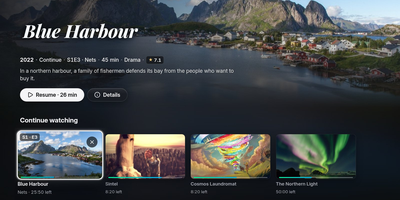
Live TV, movies, and series usually live in separate apps; VodMax gathers them in one home server with a set-top-box feel. Zap channels by number, browse a program guide grid, pause and rewind a live show, or start it from the beginning. Record from the guide or with rules, and even type a sentence like "record tonight's film" to the optional assistant. Playlists from M3U or Xtream Codes sit beside local folders of movies and series, and posters, plots, cast, continue watching, next episode, and skip intro work across all of them. Each person gets a profile with their own progress, favorites, and a kids mode, and TVs and phones pair with a short code or a home sign-in. Plex, Jellyfin, and Emby can see the server as a tuner, and TiviMate, Kodi, and VLC read its playlist and guide. A catalog filter keeps only your countries, years, and categories, and an optional built-in WireGuard tunnel keeps playlist traffic private. Encrypted backups, downloads for offline viewing, and an interface in six languages round it out. Running on a dedicated VPS on RepoCloud with guaranteed CPU, RAM, and SSD, full root SSH access, and a browser serial console. AGPL-3.0 licensed.
Circuit Breaker
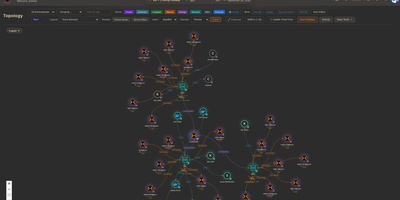
Mapping every physical server, virtual machine, container, and network link across a sprawling homelab into a live interactive canvas, Circuit Breaker gives infrastructure operators real-time topology visualization, IP address management, and rack elevation modeling on a single screen. Operators can switch between hierarchical, concentric, cortex ring, radial, and force-directed graph layouts where animated edges reflect link speeds and color-coded status rings display live hardware health. Automated discovery scans local subnets using nmap, SNMP, and ARP while querying Proxmox VE clusters, TrueNAS storage pools, and UniFi controllers, staging newly detected nodes in a review queue before adding them to the map. For multi-site labs or isolated VLANs, lightweight remote agents connect outbound over Noise-encrypted links after fingerprint approval to report host telemetry and run scoped network scans without opening inbound firewall ports. Rack diagrams let administrators drag servers into U slots with cabling overlays using a built-in catalog covering Dell, HPE, Supermicro, Ubiquiti, MikroTik, Synology, and APC gear alongside live iDRAC, iLO, and UPS metrics. Role-based access control, OIDC single sign-on, TOTP multi-factor authentication, encrypted full-state snapshots, and a SHA-256 hash-chained audit log keep multi-user operations accountable. Running on a dedicated VPS on RepoCloud with guaranteed CPU, RAM, and SSD, full root SSH access, and a browser serial console. MIT licensed.

Pinakes
A small library deserves real library software, not a spreadsheet with aspirations: Pinakes runs the whole operation, from the barcode on the spine to the reminder in a reader's inbox. Catalogers add a book by ISBN and watch metadata and covers arrive from Open Library and Google Books, then file it under Dewey categories with barcodes for every physical copy. Circulation handles requests, approvals, pickups, renewals, and returns, with FIFO reservation queues that notify the next reader the moment a copy frees up, and due dates that respect the library's own closure calendar. Patrons browse a public catalog with instant search and filters, reserve from home, renew loans, read ebooks and listen to audiobooks in the browser, and get due-date reminders automatically. The same installation can describe archives to ISAD(G) standards, exchange records through MARC, SRU, Z39.50, and OAI-PMH, and present digitized pages through IIIF viewers. Sixteen bundled plugins, custom staff roles, a homepage editor, and ten themes make it feel like your library, and it installs on ordinary shared hosting with a guided setup. Running on a dedicated VPS on RepoCloud with guaranteed CPU, RAM, and SSD, full root SSH access, and a browser serial console. GPL-3.0 licensed.
mkfd
Plenty of sites you follow have no feed, a broken feed, or announcements buried in an inbox, and mkfd turns all three into clean RSS feeds you control. You point it at a webpage, a REST API, or an IMAP mailbox and describe what counts as a story: an item selector plus selectors for title, link, date, author, and enclosures. Drill chains follow links across several pages when the real content sits deeper than the listing page, and an advanced scraping mode with a real browser handles pages that need JavaScript or your own browser extensions. An integrated selector helper helps you pinpoint elements on the target page instead of guessing. Email feeds watch a folder continuously and publish new messages as feed items the moment they arrive, with mailbox passwords encrypted before they touch disk. Every feed gets a schedule, is rebuilt in its own worker, and is served from an endpoint your reader can subscribe to, and the whole configuration lives in a portable file you can version and reuse. Access to the builder is guarded by a passkey, and feed endpoints stay open for your reader. Running on a dedicated VPS on RepoCloud with guaranteed CPU, RAM, and SSD, full root SSH access, and a browser serial console. MIT licensed.
KamiYomu
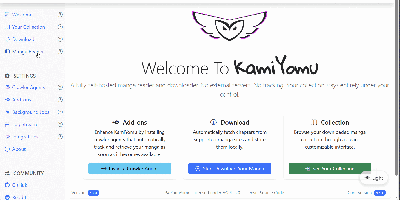
Manga readers use KamiYomu to build a private, self-hosted library: it fetches chapters from the websites they already follow, archives them locally, and serves everything back through a clean web reader on any device. The discovery flow runs on Crawler Agents, small plugins that teach KamiYomu how a particular source site lists series, chapters, and pages, so searching and fetching metadata happens inside the same interface as reading. Downloads land in a structured local archive, and reading picks up where you left off with history, filters for your library, and weekly views that surface new chapters and fresh releases. When a series is complete, export it as CBZ, PDF, or ZIP and take the files anywhere, no account or cloud library involved. Your e-reader and phone apps join through the built-in OPDS catalog, the same standard used by Moon+ Reader and KyBook, while a Swagger-documented API exposes the collection to your own scripts. Scheduled jobs keep watched series current in the background, checking sources and pulling new chapters without you babysitting tabs. Running on a dedicated VPS on RepoCloud with guaranteed CPU, RAM, and SSD, full root SSH access, and a browser serial console. AGPL-3.0 licensed.
Pi-Remote
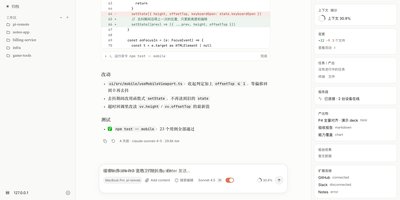
Your pi agent is mid-refactor on the server at home, you are on a train with only a phone, and Pi-Remote is the self-hosted relay that puts that live session in your browser so the work does not wait for your desk. Output, tool calls, and status changes sync in real time, with incremental catch up after a reconnect, and the session itself never leaves the local pi process. Send messages while pi is busy and they queue or steer, with delivery confirmed; switch the model or thinking level, compact the context, fork or clone a session, and walk the session tree, all executed locally. Several machines share one relay, and the UI lists each device, its online state, and its sessions, and can start a new session on the device you pick. Link a device by scanning a QR code, checking the 2 digit code on the confirmation page, and approving with the admin token. Desktop and mobile get separate layouts with six skins in Cursor, Claude, and Codex looks, dark and light, and token and cost usage updates in the status area. At home the relay can run serverless over the LAN, with a Cloudflare Tunnel switched on when you leave; on a server it runs under systemd or Docker Compose, and a device stays reachable only while its attach window is open. Running on a dedicated VPS on RepoCloud with guaranteed CPU, RAM, and SSD, full root SSH access, and a browser serial console. MIT licensed.
Agenvo
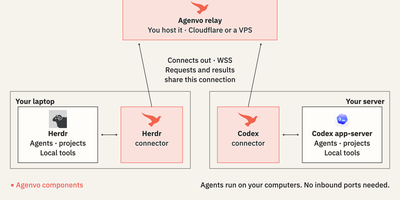
Your coding agents are scattered across a laptop, a server, and whatever machine you left running at home, and Agenvo is the self-hosted relay that lets one AI assistant reach all of them through a single MCP endpoint. Ask ChatGPT on your phone to check on Codex running on your server, or have an agent in Herdr on your laptop fix a failing test, from wherever you are. Connectors for Herdr, Codex app-server, Paseo, and Lody dial out to the relay over WSS, so the computers running agents need no inbound ports, no VPN, and no port forwarding. Your assistant sees the agents running in Herdr without restarting them, resumes Codex threads later, and starts new work where it fits: a Codex thread on the server, or Codex, Claude, or Devin in a Herdr pane. When an agent finishes a turn, waits for input, or exits, the relay pushes a change event back, so a watching assistant or ChatGPT dot reads the output and takes the next step. Closing the chat or losing the network does not stop the agents; connectors reconnect on their own, and your assistant picks up from each agent's current state. Deploy the relay on a single VPS with Docker or on Cloudflare, authorize MCP clients with OAuth over Streamable HTTP, and discover targets and method schemas with search before calling execute. Running on a dedicated VPS on RepoCloud with guaranteed CPU, RAM, and SSD, full root SSH access, and a browser serial console. Apache-2.0 licensed.
Sealskin
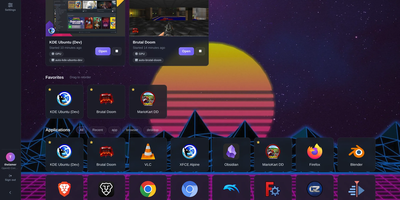
SealSkin is a self-hosted browser isolation platform that runs desktop applications in isolated containers on your server and streams them to any browser or phone, so links, files and downloads open remotely and nothing from the web ever executes on the device in front of you. Right-click a link, send a download, or drop a file from your local browser through the extension, and it opens in a fresh container on the server; close it and nothing is left behind, or keep a persistent home directory for work you return to. The catalog holds more than a hundred applications: browsers, office suites, IDEs, media editors, emulators and 3D tools from LinuxServer.io images, plus any Selkies-compatible image you add, with NVIDIA and DRI3 GPU acceleration for demanding workloads. Files stay on the server behind a file manager with chunked uploads, intercepted downloads, and password-protected public share links. Launch any app into a collaboration room with chat, voice and video, gamepad slots, and hand-over of mouse and keyboard control. Administrators brand the web app, manage users, groups, application keys, VPN profiles, and audit logs, and can route a session out through a WireGuard or OpenVPN exit at launch. Servers cluster with shared users and applications and no master node, and one manifest runs the whole thing on Kubernetes. Running on a dedicated VPS on RepoCloud with guaranteed CPU, RAM, and SSD, full root SSH access, and a browser serial console. MPL-2.0 licensed.
nextDash
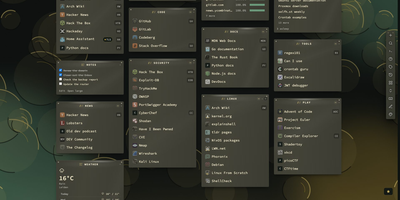
A bookmark bar that also knows if your homelab is on fire is the pitch behind nextDash. Links live on pages and categories with tags, notes, an inbox for unsorted finds, and one search panel for bookmarks, commands, and containers. Mark any link as Monitor and the server checks it every few minutes, keeping 30 days of uptime, certificate and domain expiry dates, and drift warnings, with alerts to ntfy, Slack, Discord, Telegram, Gotify, Apprise, or a phone push. A Containers view lists every Docker container with logs, start, stop, and update with automatic rollback, each matched to its bookmark. Dashboard widgets cover weather, feeds, CPU, memory, disks, Unraid, Jellyfin, Plex, Sonarr, Radarr, qBittorrent, and Home Assistant. A theme studio offers 390 themes and 267 backdrops in six languages, and an optional assistant answers in plain words when you switch it on. Imports arrive from every browser, Pocket, Raindrop, and linkding, and automatic backups with a 30-day trash protect the collection. The weekly digest sums up broken links, expiring certificates, and pending container updates. Running on a dedicated VPS on RepoCloud with guaranteed CPU, RAM, and SSD, full root SSH access, and a browser serial console. MIT licensed.
GuideAnts
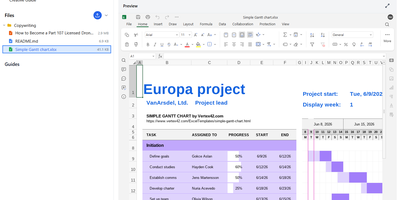
GuideAnts is an AI workspace where files, conversations, and generated documents stay together in project notebooks, so good work gets reused instead of vanishing into chat history. Projects own folders, notebooks, guides, assistants, and usage records, and each notebook keeps its conversation, file context, artifacts, and version history side by side. Word, PowerPoint, Excel, and OpenDocument files open and co-edit in place through an optional document server, Markdown has a live-preview editor, and extracted Markdown copies feed retrieval. A Guide Builder packages instructions, tools, files, starter prompts, and model choices into reusable guides and assistants, and portable SKILL.md packages can be imported or authored there. Published guides get friendly URLs, a web component for embedding in other sites, public APIs, and MCP access to their skills, with anonymous, key-protected, or webhook-validated entry plus daily and billing-period charge limits. Telemetry attributes each message, tool call, and charge to a model and assistant, so you can see which steps truly need a frontier model; the maintainers report one public workload falling from hundreds of dollars a day to about ten. Chat, embeddings, document intelligence, image generation, and speech can each route to a different cloud or local provider, with slim, CPU, NVIDIA, AMD, and Vulkan runtimes to choose from. Running on a dedicated VPS on RepoCloud with guaranteed CPU, RAM, and SSD, full root SSH access, and a browser serial console. Apache-2.0 licensed.
Hatamoto
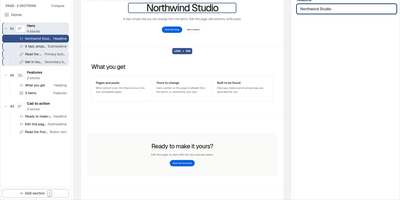
Hatamoto is a self-hosted CMS for site owners who want search engines and AI assistants to read their pages as well as people do. Pages come together on a visual canvas of sections and blocks, previewed at desktop, tablet, and phone widths, with undo and version history, while posts get a writing editor with SEO checks, scheduling, and suggested internal links. Every page is a typed record, so one edit updates the page, its structured data, its sitemap entry, and its llms.txt line together. Analytics count AI crawler fetches on the server, check each claimed bot against its operator's published IP ranges, flag impostors, and show visits sent by assistants as their own channel, all without cookies. You can allow or block crawlers by purpose, such as training, search, or user requests. Agents connect over MCP with scoped API keys that can expire, drafting and publishing pages, editing menus and redirects, and reading reports, while an audit log records every call. Moving from WordPress starts with a scan report predicting what imports cleanly, then copies content and menus and adds a permanent redirect for every changed address. Plugins and themes install as signed packages that list the permissions they request, and updates roll themselves back when the health check fails. Forms collect submissions with spam filtering and CSV export. Running on a dedicated VPS on RepoCloud with guaranteed CPU, RAM, and SSD, full root SSH access, and a browser serial console. Apache-2.0 licensed.
HitKeep
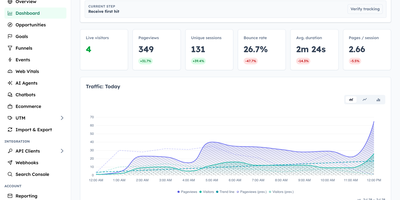
HitKeep is a sovereign web analytics platform that consolidates cookieless visitor telemetry, conversion funnels, e-commerce revenue reports, and AI engine visibility into a privacy-respecting dashboard that replaces Google Analytics and complex tracking clouds. Marketing teams can monitor inbound visitor journeys without installing intrusive consent banners or violating regional GDPR regulations. Custom conversion funnels and goal milestones track user registrations, checkout transactions, newsletter subscriptions, and software downloads with exact revenue attribution. Integrated Google Search Console synchronization brings organic search queries, keyword impression rankings, and click-through metrics directly alongside real-time pageview logs. A dedicated artificial intelligence visibility dashboard monitors crawling bots, retrieval citations, and direct referral visits originating from ChatGPT, Claude, Perplexity, and other generative search agents. Growth analysts can pose natural language questions to an embedded AI reporting assistant, generating instant cohort breakdowns and engagement trends without assembling complex manual filters. Site operators can configure custom tracking domains, whitelist reverse proxy networks, filter out referrer spam, and schedule automated database backups across persistent storage volumes. Complete data sovereignty controls allow teams to export raw event telemetry into open Parquet and CSV archives or stream metrics into external business intelligence warehouses via webhooks. Running on a dedicated VPS on RepoCloud with guaranteed CPU, RAM, and SSD, full root SSH access, and a browser serial console. MIT licensed.
WyrmRSS
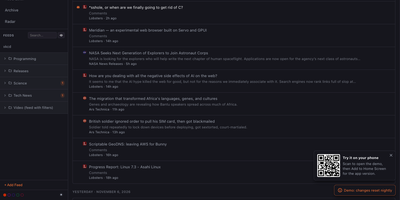
Your reading, back under your own roof: WyrmRSS is a self-hosted RSS reader that follows all your feeds from one web and mobile interface you control. Paste a blog homepage or a YouTube channel URL and feed discovery finds the actual feed for you, then background polling keeps every subscription fresh on an interval you set. Posts can be browsed per feed or as one combined river, and each feed gets a display mode: River for the main flow, Feed only for direct visits, or Radar for quiet sources you check occasionally. Folders in a collapsible sidebar carry unread counts and survive OPML import and export, so moving an existing subscription list in or out takes minutes. Per-feed filters include or exclude entries by URL, title, or content patterns, which tames noisy channels by dropping shorts, trailers, or job posts before they reach you. YouTube and HLS or Reddit video play inline in the reader, full-text search covers titles and descriptions, and Read Later plus archiving keep the important pieces. Keyboard shortcuts move, open, mark, save, and archive without the mouse and can be rebound in Settings, webhooks notify Discord, Slack, or custom endpoints on new posts, and feeds behind authentication are handled with per-host credentials. Running on a dedicated VPS on RepoCloud with guaranteed CPU, RAM, and SSD, full root SSH access, and a browser serial console. GPL-3.0 licensed.