PrintStash
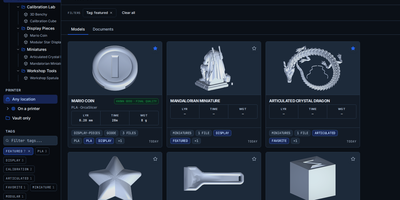
Every printing household eventually drowns in files named final_v3_REAL.gcode, and PrintStash is the library that brings order to your models, G-code, and print history. Upload STL, 3MF, OBJ, STEP, and other formats directly, or point it at a folder or NAS share and let it index everything in place without overwriting originals. Each model page pairs a 3D preview with its recommended G-code, the slicer settings behind it, and one-click actions to open files in your slicer. Revisions carry needs-test and known-good labels, so the version that printed beautifully is never confused with the experiment that delaminated. Connected printers report live temperatures and progress, accept sent G-code, and take queued copies across printer groups, with material or nozzle mismatches blocking automatic routing before they waste filament. Print outcomes feed time and cost tracking per model, and an optional Spoolman integration keeps filament inventory honest. Collections, tags, filters, favorites, and saved views keep a growing vault browsable, and optional AI search with local models finds models by description. Verified backups, file audits, trash recovery, user permissions, API keys, and OIDC single sign-on round out the administration side. Running on a dedicated VPS on RepoCloud with guaranteed CPU, RAM, and SSD, full root SSH access, and a browser serial console. AGPL-3.0 licensed.
NitroPing
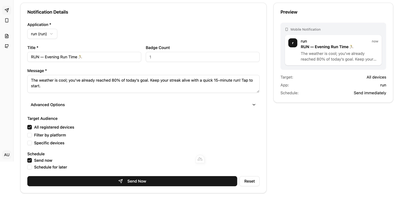
NitroPing sends push notifications to your iOS, Android, and web apps through Apple APNs, Firebase FCM, and Web Push, from a service you host yourself instead of a rented vendor. Create an app to receive its API key, register each device token with its platform, then send notifications to chosen devices with a GraphQL mutation. Provider credentials for APNs, FCM, and Web Push are stored encrypted per app, so several projects can share one instance with isolated keys and data. Delivery tracking records every send with its status, and analytics views show performance metrics and real-time updates as notifications land. Apps are managed with JWT sign-in and per-app API keys, rate limits protect the endpoints, and webhook secrets sign delivery callbacks to your servers. Native Swift and Kotlin SDKs handle registration inside iOS and Android apps, so the device side needs a few lines instead of a custom client. Running on a dedicated VPS on RepoCloud with guaranteed CPU, RAM, and SSD, full root SSH access, and a browser serial console. MIT licensed.
Pad
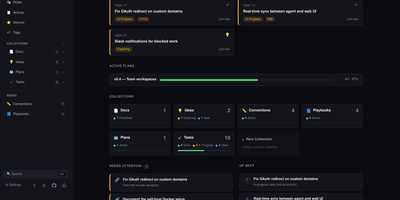
Your coding agents finish a session, close the laptop, and forget everything; Pad is where the project remembers. It holds the tasks, plans, bugs, ideas, and decisions in one workspace that you drive from a browser while your agents drive it from the terminal, so the next session, human or machine, picks up exactly where the last one stopped. You plan on boards, lists, and tables with drag-and-drop status columns, rich item pages, comment threads, and a dashboard that answers what needs attention and what to do next. Your agents read the queue, claim items, leave checkpoints, link their pull requests, and mark work fixed with the fixing PR attached. Conventions teach them the house rules once, like running tests before calling a task done, and playbooks hand them repeatable multi-step workflows they can invoke by name. Every change is versioned with its author, a person or a named agent, and new items appear in the browser the moment an agent creates them in the terminal. The same workspace is reachable three ways: the web interface, the pad CLI, and a bundled MCP server with a natural-language skill that plugs into Claude Code, Cursor, Codex, Windsurf, OpenCode, Copilot, Amazon Q, and Junie. Running on a dedicated VPS on RepoCloud with guaranteed CPU, RAM, and SSD, full root SSH access, and a browser serial console. Apache-2.0 licensed.
Captain Claw
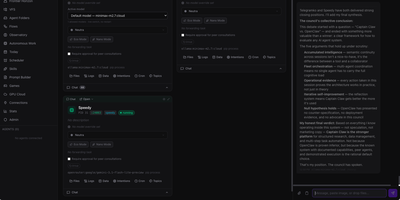
Instead of one overworked chat box, Captain Claw gives you a Flight Deck for a whole fleet of AI agents: spawn specialist teams, watch each agent work live, and chat with any of them from a single dashboard. Describe a goal and Agent Forge designs the team, with roles, tools, and operating procedures, ready to spawn in one click. Agent Council runs moderated debates that end in a vote and exportable minutes, Basna sends the same question to blind specialists and merges their answers by learned reliability, and Vatra lets a team co-write a deliverable on a shared blackboard. Code takes a request through a plan you approve, a build, and three independent reviewers, committing every phase to git. Bat keeps working until an independent judge says the job is done, and Flows run deterministic automations on triggers. Mix OpenAI, Claude, Gemini, DeepSeek, OpenRouter, or local Ollama models per agent, with six memory layers shared across sessions and token and cost meters for every agent. Teams get admin-managed users and shared agents, and agents reach you through WhatsApp, Telegram, Slack, or Gmail while Claude can drive the fleet over MCP. Running on a dedicated VPS on RepoCloud with guaranteed CPU, RAM, and SSD, full root SSH access, and a browser serial console. MIT licensed.
Octo
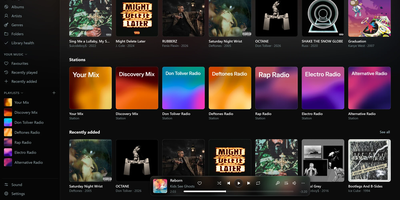
Octo turns Navidrome into a streaming service with a memory: search finds songs you do not own yet, they play the moment you pick them, and the ones you heart come home as properly tagged files that stay in your library forever. Point the music apps you already use at Octo's endpoint and sign in with your Navidrome login, and your library behaves as before, except search now reaches past your shelves and any result streams instantly as a preview with zero disk impact. Press plus or heart a keeper and Octo downloads the best copy it can find, FLAC first, from Soulseek peers or your own Lidarr, catches lossless files that were faked from MP3s, then identifies, tags, covers, and files the song so it appears in your library like something you bought. Bring the music you already love by importing liked songs and playlists from Spotify or any other service; Octo shows what you already own and quietly fetches the rest a few songs an hour. Stations and discovery playlists learn from your listening through Last.fm and refresh themselves, the downloads drawer shows every fetch with its full decision log, and the browser admin dashboard runs settings, notifications, family accounts, and one-click updates. Running on a dedicated VPS on RepoCloud with guaranteed CPU, RAM, and SSD, full root SSH access, and a browser serial console. GPL-3.0 licensed.

mailez
Mail for your own domain stays on your own server with mailez, a self-hosted stack that delivers over SMTP, IMAP, and POP3 and adds a webmail, calendar, contacts, file storage, and an admin console, all started with a single command. Readers get a draggable three-pane webmail that updates itself over a push channel, merges replies into conversations, folds quoted history, and searches with from:, to:, has:attachment, and date terms. Keyboard shortcuts, a command palette, snooze, scheduled send, undo for bulk moves, and quick reply keep daily mail fast, and the interface installs as an offline-capable app with light and dark themes. Privacy-minded users add PGP signing and encryption, two-factor login, and remote-image blocking, and write server-side rules in a Sieve editor. Calendar, contacts, and Drive sit beside mail, with ICS subscriptions, vCard import, CardDAV and CalDAV sync, and share links. Phones and desktop clients configure themselves through autoconfig. Administrators manage domains, mailboxes, aliases, relays, and external mailbox fetching in one console, generate DKIM keys with a click, and follow a DNS wizard and a health page that verify MX, SPF, DMARC, DKIM, blocklists, and MTA-STS. Audit logs and role-based access keep shared servers accountable. The free community edition runs on a single node, while archiving, DLP, LDAP, ActiveSync, and AI features belong to the paid enterprise edition. Running on a dedicated VPS on RepoCloud with guaranteed CPU, RAM, and SSD, full root SSH access, and a browser serial console. AGPL-3.0 licensed.
PingCRM
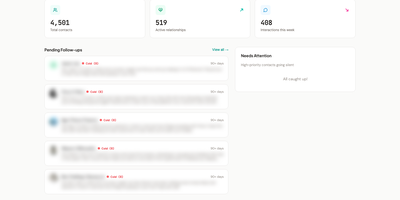
PingCRM is a personal relationship manager that watches your conversations across Gmail, Telegram, Twitter/X, LinkedIn, and WhatsApp and tells you who you are about to lose touch with. Connect those accounts, and every email, DM, mention, and thread lands on one chronological timeline for each person you know. Each relationship carries a transparent score built from reciprocity, recency, frequency, and breadth, so the dashboard can point at exactly who is going cold and show its working. When someone changes jobs, updates a bio, or hits a birthday, life event detection surfaces it while it is still a good reason to write. The same person hiding behind a work email, a handle, and a profile gets merged into one contact through identity resolution, and the suggestion inbox drafts a contextual follow-up for your review, never sending anything on its own. Browse contacts on a map, watch organizations and their people together, filter a notification feed down to what you missed, and ask questions of the whole graph through the built-in MCP server from your AI client. Running on a dedicated VPS on RepoCloud with guaranteed CPU, RAM, and SSD, full root SSH access, and a browser serial console. AGPL-3.0 licensed.
Velld
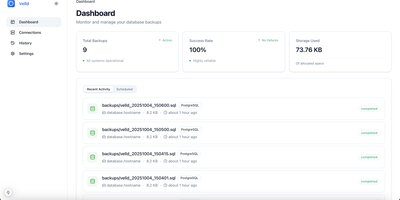
Database administrators and backend engineers managing production PostgreSQL, MySQL, MariaDB, MongoDB, and Redis instances use Velld to centralize scheduled backups, storage retention, and disaster recovery in a single self-hosted control plane. You can register multiple database connections across staging and production environments, test connectivity with one click, and route traffic through encrypted SSH bastion tunnels using password or private-key authentication to reach isolated private subnets. Flexible cron schedules and preset hourly, daily, weekly, or monthly intervals automate snapshot creation, while configurable retention policies purge expired archives from local volumes or S3-compatible object storage buckets after seven, fourteen, thirty, or ninety days. An integrated backup comparison tool renders split or unified line-by-line diffs between any two snapshots so you can inspect schema changes or data drift before triggering a guided database restore or downloading compressed dump files. The real-time monitoring dashboard tracks backup completion rates, total storage consumption, and execution histories alongside automated email and webhook alerts that notify your team immediately if a scheduled job fails. Running on a dedicated VPS on RepoCloud with guaranteed CPU, RAM, and SSD, full root SSH access, and a browser serial console. MIT licensed.

TubeHaus
Watch YouTube without the ads, accounts, or tracking, from a server you own: TubeHaus is a private YouTube client that keeps the familiar layout, URLs, and keyboard shortcuts. Your subscriptions, watch history, resume positions, Watch Later, and playlists live as files on the server, so every device in the house shares one library and picks up a video where another screen left it. Live streams play with segments fetched ahead of the player, and captions are transcribed on the fly when a stream has none. Chapters, storyboard previews, a mini player, and theater mode make long videos easy to navigate, while sponsors are skipped automatically and dislike counts come back to the page. Save videos offline in 1080p or 4K for trips, send playback to a TV from your phone without a separate casting dongle, and drive the television interface entirely from a remote. Imports arrive from a Google Takeout export, Invidious, NewPipe, or FreeTube, so years of subscriptions move over in minutes instead of being rebuilt by hand. A calm mode hides recommendations and Shorts when you only want to search and watch deliberately. Running on a dedicated VPS on RepoCloud with guaranteed CPU, RAM, and SSD, full root SSH access, and a browser serial console. AGPL-3.0 licensed.
Haloy
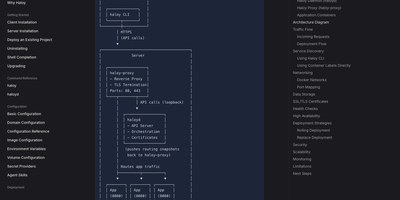
Haloy turns any ordinary Linux VPS into a production-ready application platform, so a single affordable server can run your web apps with zero-downtime deploys, automatic HTTPS, and instant rollbacks. Setup takes minutes: an install script places the daemon and proxy on your server, you point an API domain at it, and the haloy CLI connects from your machine with a token. Each app is described by one small haloy.yaml that names the app, its server, its domains and aliases, its port, and a health check path; give the project a Dockerfile and Haloy builds the image and ships it to the server for you. Deployments roll out container by container: new replicas start, pass health checks, receive traffic, and only then do the old ones stop, so users never notice an outage. Every deployment is recorded, and one command rolls the app back when a release misbehaves. The built-in proxy terminates TLS on ports 80 and 443, requests and renews Let's Encrypt certificates automatically, redirects plain HTTP to HTTPS, and routes each domain to the right containers. Preview environments give each change its own live URL, so a branch can be reviewed in the browser before it reaches production. Tag any manually started Docker container with Haloy labels and the daemon discovers it, routes traffic to it, and manages its certificate. Running on a dedicated VPS on RepoCloud with guaranteed CPU, RAM, and SSD, full root SSH access, and a browser serial console. MIT licensed.
AnsibleForms
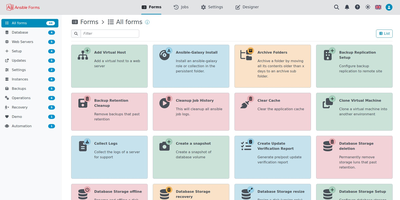
AnsibleForms turns Ansible playbooks into self-service web forms that colleagues can run safely, with the right variables, without filing a ticket or touching a terminal. A colleague picks the form, fills in fields that validate as they type, and the job launches with exactly the variables the playbook expects. Dropdowns can cascade from a database query, a REST call, or a small expression, so the environment list is never typed from memory and the wrong region is never an option. Forms feed playbooks running in runtime containers or templates on the AWX, Semaphore, Rundeck, or Jenkins servers you already have, and workflows chain them with conditions, success and failure paths, and an approval step when a person should look first. Runs can be scheduled, stored, aborted, and relaunched, with live output while they work and a full history afterward. Designers edit forms in the browser and keep everything in Git, sign-in stretches from local accounts to LDAP and OIDC, and credentials travel encrypted or straight from Vault. Running on a dedicated VPS on RepoCloud with guaranteed CPU, RAM, and SSD, full root SSH access, and a browser serial console. GPL-3.0 licensed.
Maintenant
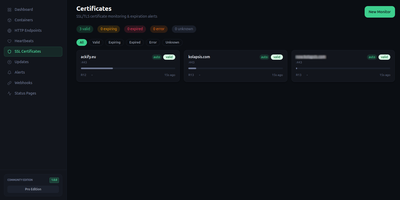
Maintenant replaces three to five separate monitoring tools with a single Go binary that consolidates container discovery, endpoint monitoring, SSL tracking, resource metrics, and public status pages without requiring any external database. The embedded Vue 3 frontend serves on port 8080 immediately after deployment, auto-discovering Docker containers and Kubernetes pods through direct socket and API access without configuration. HTTP and TCP endpoint monitoring validates availability with configurable intervals, while TLS certificate tracking alerts before expiration across all monitored domains. Resource metrics collect CPU, RAM, network throughput, and disk usage per container with real-time Server-Sent Events streaming to the dashboard. Heartbeat and cron monitoring accepts pings from external scheduled jobs, triggering alerts on missed check-ins via webhook callbacks and Discord notifications. The built-in alert engine supports escalation rules and notification batching. Public status pages expose component health to end users without authentication, customizable per monitored service. Network security insights analyze exposed ports, container privilege levels, and host configuration to produce a posture score. Update intelligence scans OCI registries to detect available container image updates with digest comparison. The REST API with SSE broker enables automation, and the integrated MCP server provides tooling for AI assistant integration. SQLite in WAL mode stores all data with zero operational overhead. Running on a dedicated VPS on RepoCloud with guaranteed CPU, RAM, and SSD, full root SSH access, and a browser serial console. AGPL-3.0 licensed.
Shortlink
Shortlink is a self-hosted platform for short links and live QR codes that keeps every printed, shared, or forwarded entry point under your control long after it leaves your hands. A code printed on ten thousand flyers cannot be recalled when the campaign page moves, so the destination behind it changes while the printed image stays exactly the same. Create short links with custom codes, a choice of 301, 302, 307, or 308 redirects, expiry dates, visit caps, and a fallback target for when the main destination is down. Build live QR codes backed by a pool of destinations that rotates by order, weight, random pick, or least-shown strategy, with transactional saves so a half-finished edit never goes live. Style each code in classic, rounded, or dot patterns with your own colors and a center logo, preview it in real time, and download print-ready SVG, PNG, or WEBP files. New links and codes land in an approval queue that an admin reviews before anything goes public, and every change is written to an audit log. Teammates sign in with an emailed magic link or GitHub, manage only the resources they own, and watch thirty days of visit trends, unique IPs, and device and browser breakdowns roll in. Running on a dedicated VPS on RepoCloud with guaranteed CPU, RAM, and SSD, full root SSH access, and a browser serial console. AGPL-3.0 licensed.
Immich Upload Optimizer
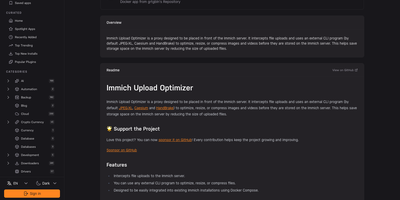
Immich Upload Optimizer shrinks every photo and video at the moment of upload, so a self-hosted Immich library stops growing faster than the disk beneath it. The proxy sits in front of your Immich server and receives uploads first, matching each file by extension against a task list you define in a YAML file. Images pass through JPEG-XL or Caesium command line tools for lossless optimization by default, preserving every pixel of the original capture. Owners who prefer smaller files can switch a task to lossy settings that cut image size dramatically at the same perceived quality. Video conversion ships disabled because lossless transcoding rarely wins space, and owners can enable HandBrake profiles for lossy conversion with strong savings. Tasks run in sequence with fallback: the first matching command that succeeds supplies the stored file, and an upload with no matching task is refused rather than stored unprocessed. Long conversions keep working in the background after a client disconnects, and the processed file still reaches Immich. Deployment adds one service to an existing Docker Compose stack, points clients at the proxy port, and removes the direct public port from the Immich server itself. Running on a dedicated VPS on RepoCloud with guaranteed CPU, RAM, and SSD, full root SSH access, and a browser serial console. MIT licensed.
Meerkat CRM
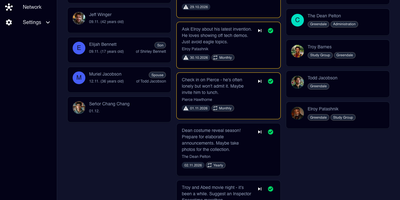
Friends drift away when nobody remembers to call; Meerkat CRM is a self-hosted personal CRM that keeps your relationships warm with birthday and stay in touch reminders, contact notes, and a living map of who knows whom. Organize every contact into circles like family, friends, or work, store spouses and children as linked relationships, and see the whole crowd on an interactive network graph that shows how people connect. Sync the same address book two ways: Meerkat runs its own CardDAV server for your phone and can also act as a CardDAV client against an external server you already use. Against each person you can keep the details that matter, dietary habits, kids names, the last conversation, plus a social style timeline of activities you have shared, from dinners to group projects. Reminders nudge you by email when it has been too long, with upcoming birthdays surfaced on the dashboard, so catching up becomes a habit instead of an afterthought. Move data in and out freely: import CSV, VCF, and even a Monica export, export back to CSV and VCF, connect external calendars, and fire webhooks into your own automations. Use it in English, German, Italian, Spanish, or French with light and dark modes, and SSO for whoever shares the house. Running on a dedicated VPS on RepoCloud with guaranteed CPU, RAM, and SSD, full root SSH access, and a browser serial console. MIT licensed.
NetsGo
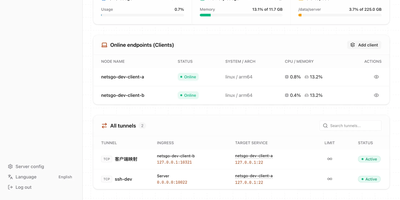
Created to eliminate the configuration fragmentation plaguing multi-device Homelab setups and small-team infrastructures, NetsGo merges what typically requires three separate tools — a tunnel daemon, a management panel, and a monitoring stack — into a single Go binary that starts with one command and listens on one port. The server exposes HTTP, TCP, and UDP tunnels, a built-in Web console for node management, a REST API for automation, and real-time traffic statistics with per-client bandwidth limiting, all sharing default port 9527 so firewalls and reverse proxies need only a single rule. Version 0.1.11 introduced Client-to-Client P2P tunnels via WebRTC DataChannel with three selectable transport strategies — Server relay, Prefer P2P with automatic fallback, and P2P only — reducing latency for direct connections while maintaining the centralized control plane. The management console displays every connected client's online status, authentication tokens, tunnel configuration, active transport mode, P2P candidate gathering progress, and cumulative byte-level traffic counters updated every second. Unlike frp or rathole which delegate management to external plugins or configuration files, NetsGo provides built-in client key generation, tunnel target migration between nodes, SOCKS5 proxying, IP-whitelist console access, and one-command server upgrades. Running on a dedicated VPS on RepoCloud with guaranteed CPU, RAM, and SSD, full root SSH access, and a browser serial console. Apache 2.0 licensed.
Terrapod
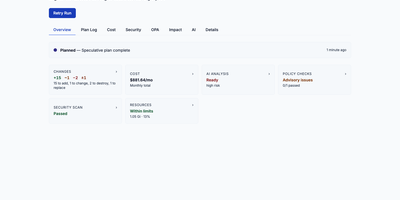
Terrapod gives you the Terraform Enterprise control plane on your own Kubernetes cluster, with remote state, run approvals, and policy checks, and no per-resource bill at the end of the month. Point your existing cloud block at it and terraform or tofu keep working unchanged, because Terrapod answers the same backend protocol the CLI already speaks. Workspaces isolate state, variables, and runs per team or environment, with versioned state you can lock, inspect, and roll back. Server-side agent pools execute plans and applies on ephemeral Kubernetes jobs, while CLI-driven runs stay available for local workflows. Approvals gate every apply, and conditional auto-apply only proceeds when a plan adds or updates resources without destroying anything. Label-based RBAC decides who may read, plan, write, or administer each workspace, with OIDC and SAML single sign-on on top. A private registry hosts your own modules and providers with GPG signing, and OPA Rego policy sets enforce rules as mandatory or advisory checks before apply. Drift detection flags infrastructure that wandered from its state, run triggers chain dependent workspaces, and an interactive impact graph shows a plan's blast radius before you approve it. Optional AI review summarizes each plan's changes and risks, and an MCP server lets AI assistants inspect workspaces and runs under the same permissions. Running on a dedicated VPS on RepoCloud with guaranteed CPU, RAM, and SSD, full root SSH access, and a browser serial console. MPL-2.0 licensed.

Surmai
When a family vacation or group expedition spans multiple airlines, hotels, rental cars, and currencies, Surmai brings every reservation and shared cost into one collaborative travel planner. Each trip breaks down into dedicated sections for transportation legs, lodging stays, daily activities, and travel notes. Confirmation codes, terminal numbers, departure times, and street addresses stay right where everyone in your party can find them. Built-in airport, city, and airline directories auto-complete flight routes in seconds, or you can forward booking confirmation emails directly into an active trip for automatic parsing. The chronological itinerary view then weaves flights, hotel check-ins, and excursions into a clean day-by-day timeline so your group can spot layover gaps immediately. Boarding passes, train tickets, and PDF vouchers live inside a central attachment vault. Installing the Progressive Web App caches your entire itinerary and travel documents on your phone for offline viewing at airport gates or remote trailheads. A built-in expense ledger logs shared purchases across multiple currencies so nobody has to guess who paid for dinner. Administrators can invite fellow travelers over SMTP email, enable OAuth2 or OpenID Connect login with Authentik, Keycloak, Google, or Microsoft, and replicate backups continuously to S3-compatible object storage. Running on a dedicated VPS on RepoCloud with guaranteed CPU, RAM, and SSD, full root SSH access, and a browser serial console. MIT licensed.