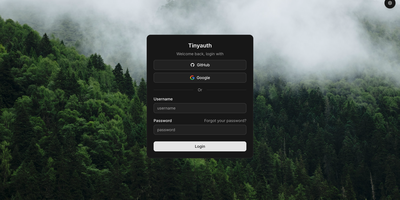
Tinyauth
To protect self-hosted web services behind a unified single sign-on portal without deploying complex enterprise identity suites, Tinyauth acts as an OpenID Certified authentication server and reverse proxy middleware. Homelab operators and infrastructure teams place it in front of internal dashboards, media servers, and administrative tools routed through Traefik, Caddy, Nginx, Nginx Proxy Manager, or LinuxServer SWAG. Users can sign in with local bcrypt-hashed credentials, scan QR codes to enroll time-based one-time password authenticators for two-factor verification, or authenticate through external OAuth providers like GitHub, Google, and Pocket ID. Organizations running centralized directories can bind Tinyauth directly to an LDAP server such as LLDAP or OpenLDAP and automatically synchronize group memberships for role-based authorization. Fine-grained access control rules configured via dynamic Docker container labels or environment variables let administrators whitelist or block specific usernames, OAuth email regex patterns, OIDC groups, client IP CIDR ranges, and URL path prefixes per subdomain. For applications that support native federated login, the built-in OpenID Connect 1.0 discovery endpoint, authorization code flow, and userinfo API allow seamless single sign-on with optional consent skipping for trusted clients. Running on a dedicated VPS on RepoCloud with guaranteed CPU, RAM, and SSD, full root SSH access, and a browser serial console. AGPL-3.0 licensed.
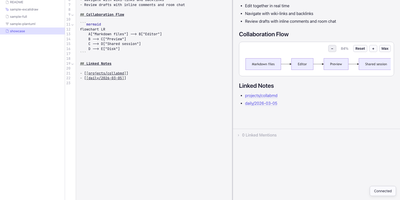
CollabMD
Your team's knowledge already lives in a folder of Markdown files, and CollabMD turns that exact folder into a shared workspace everyone can edit together in the browser, with nothing to migrate and no database swallowing your notes. Point it at an Obsidian vault, a plain docs directory, or a git-backed repository and the filesystem stays the source of truth: files are never moved, renamed, or deleted unless someone does it deliberately in the app. Several people can type in the same document at once with live cursors and presence indicators, follow a collaborator's view while they present, and drop comments anchored to a specific line or text selection instead of scattering feedback across chat threads. Edits made outside the browser, in Obsidian or any text editor, sync back into open documents automatically, so local and remote work never fork. Diagrams are first-class citizens: Mermaid, PlantUML, Structurizr C4 models, Excalidraw canvases, and draw.io files all open and render beside your prose, and a git panel lets you review changes and commit with a message without leaving the tab. Global full-text search, wiki-links with backlinks, team chat, file uploads, and optional password or Google sign-in round out a workspace that respects how your files already live. Running on a dedicated VPS on RepoCloud with guaranteed CPU, RAM, and SSD, full root SSH access, and a browser serial console. MIT licensed.
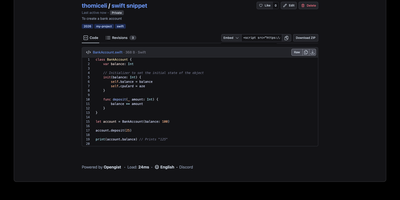
Opengist
Every code snippet in Opengist lives inside a real Git repository that you can initialize, clone, pull, and push over HTTP or SSH while browsing syntax-highlighted files, revision diffs, and Markdown documents through a self-hosted web interface that replaces GitHub Gist. Create public, unlisted, or private multi-file gists directly from your browser, terminal Git client, or the OpenAPI-documented REST API v1 using personal access tokens. Rich rendering displays source code across hundreds of languages alongside Markdown documents with Mermaid diagrams, LaTeX math, CSV tables, images, and downloadable ZIP archives. Full-text code and metadata search powered by Bleve or Meilisearch lets teams locate snippets by content, filename, extension, language, user, or topic tags in milliseconds. Users can star, fork, archive, and embed snippets into external websites via JavaScript widgets or fetch raw files and structured JSON payloads. Enterprise authentication supports GitHub, GitLab, Gitea, OpenID Connect, and LDAP directories, reinforced by TOTP two-factor authentication and WebAuthn passkeys, while administrators control anonymous access and monitor Prometheus metrics. Running on a dedicated VPS on RepoCloud with guaranteed CPU, RAM, and SSD, full root SSH access, and a browser serial console. AGPL-3.0 licensed.
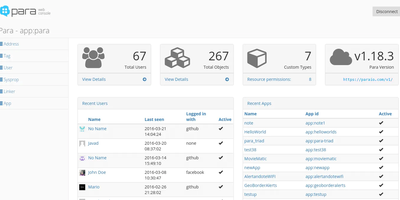
Para
The name means steam in Bulgarian, and the job matches: Para is the boiler room that powers your application's backend so you never build one from scratch. You store plain JSON objects through a REST API and get them back persisted, indexed for full-text search, and cached on every write, without designing schemas or gluing three systems together yourself. One server hosts many applications at once, each with its own table, search index, and cache, so a client project, a side app, and an internal tool can share a single deployment without sharing data. Users sign in with social accounts, LDAP, or SAML and receive JSON Web Tokens, while resource permissions decide exactly which objects each client may touch. Queries go beyond key lookups: field, wildcard, geo point, and more-like-this searches all run against the same stored objects. Signed webhooks notify your own endpoints when data changes, and an MCP server lets AI assistants manage configuration, data, and search against the same backend. The admin Web Console handles users, objects, backups, and permissions from the browser, and client libraries cover JavaScript, PHP, Java, C#, Android, and iOS. Running on a dedicated VPS on RepoCloud with guaranteed CPU, RAM, and SSD, full root SSH access, and a browser serial console. Apache-2.0 licensed.
SuggestArr
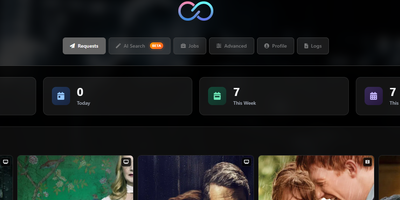
Instead of manually hunting for what to watch next after finishing a series on Plex, Jellyfin, or Emby, let SuggestArr turn your household's recent viewing history into automated media discovery and download requests. The platform analyzes recently watched movies, shows, and anime, queries TMDb or any OpenAI-compatible LLM (including Ollama, OpenRouter, and LiteLLM) for tailored recommendations with plain-language explanations, and dispatches requests straight to Seer, Jellyseerr, or Overseerr. Built-in AI Search lets users describe a mood or plot in natural language and request matching titles in a single click. Administrators can schedule recurring discovery jobs, import public watchlists from Trakt and MDBList, and enforce granular filters for minimum ratings, release years, genres, and regional streaming service availability so you never download content you already pay to stream. Smart request controls pause jobs when Seer queues are full, require optional human approval before submission, auto-decline stale requests, and clean up unwatched suggestions automatically. Running on a dedicated VPS on RepoCloud with guaranteed CPU, RAM, and SSD, full root SSH access, and a browser serial console. MIT licensed.
Movary
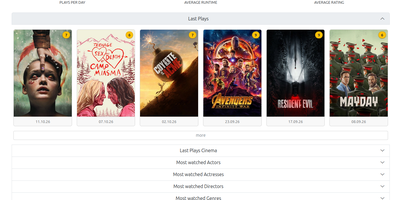
Catalog, rate, and analyze every film you watch with Movary, a self-hosted movie tracking hub and personal cinema diary that replaces Letterboxd and Trakt. Each time a movie finishes playing on Plex, Jellyfin, Emby, or Kodi, automated webhook scrobblers record the viewing session and star rating directly into your timeline without manual logging. You can also bring over years of existing watch history by importing exports from Letterboxd, Trakt, or Netflix, and automatically cross-post newly logged reviews and ratings to Mastodon or feed Watchlist additions straight into Radarr. Customizing your personal dashboard lets you rearrange analytical widgets that break down your viewing habits by most-watched actors, directors, genres, original languages, release decades, and custom watch locations like local cinemas or home theaters. Movie metadata, posters, and ratings pulled from TMDB and IMDb are cached locally on your server, while built-in background job schedules keep artwork and cast details refreshed automatically. Multi-user account controls, TOTP two-factor authentication, granular profile visibility settings, and personal Bearer API tokens make it easy to run a private household log or a shared film club server. Running on a dedicated VPS on RepoCloud with guaranteed CPU, RAM, and SSD, full root SSH access, and a browser serial console. MIT licensed.
Bar Assistant
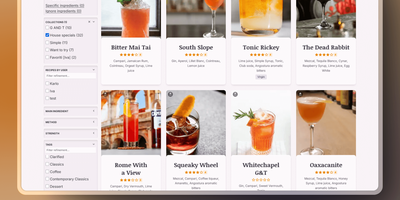
Turn your scattered collection of liquor bottles and bar tools into a master mixology station with an intelligent digital cellar. Bar Assistant tracks your personal liquor cabinet, inventory levels, and available mixers against a catalog of more than 500 cocktail recipes. The platform calculates exact alcohol by volume ratings, computes ingredient costs per serving, and dynamically highlights every cocktail you can craft with on-hand supplies. Built-in recipe scrapers extract formula details, measurements, and glassware requirements directly from web links, JSON payloads, or YAML files. Multi-bar workspaces allow home mixologists and commercial venues to separate private collections from communal drink menus while handling complex ingredient substitutions, custom infusions, and shopping lists. Integrated Meilisearch indexing powers instant typo-tolerant searches across spirit categories, flavor tags, and cocktail strengths. Visual cocktail cards display high-resolution drink photography, user ratings, glassware requirements, and step-by-step garnish instructions. Deploy Bar Assistant on RepoCloud with dedicated VPS compute, full root SSH credentials, and in-browser console access, backed by an open-source MIT license.
Iso
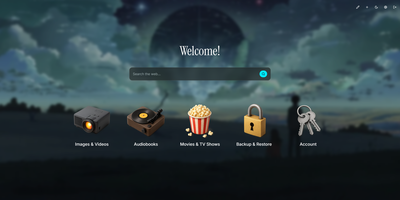
Drop a single container onto your host to launch Iso, a minimalist self-hosted startpage and service launcher that organizes every homelab web application behind a clean isometric icon grid and integrated search bar. No external database is required. Everything lives inside one human-readable JSON file or gets edited directly through the in-browser visual configuration modal. Add new service tiles in seconds, drag to reorder their display priority, and pick from a curated library of 3D isometric icons or upload custom graphics up to 25 megabytes. Switch instantly between built-in color palettes like Amethyst or upload a custom wallpaper with adjustable background blur and opacity sliders. A central search bar sits at the top of your startpage, routing queries directly to Google, DuckDuckGo, Startpage, Qwant, Searx, Bing, or any custom query URL template. Localize the interface into English, Spanish, French, or German with a single toggle. Custom greeting banners and optional page-load animations personalize the daily browsing experience for family members or lab users. Protect the dashboard and its visual editor behind shared password authentication configured via environment variables. Running on a dedicated VPS on RepoCloud with guaranteed CPU, RAM, and SSD, full root SSH access, and a browser serial console. MIT licensed.
RackPeek
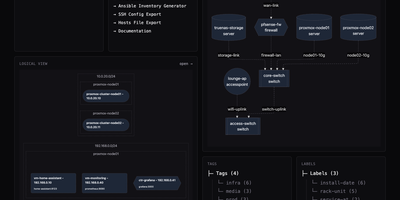
Every server, switch port, virtual machine, and network VLAN in a homelab or small IT environment can be cataloged, visualized, and exported through RackPeek's unified web interface and command-line toolkit. Operators record rack-mounted servers, managed switches, routers, firewalls, wireless access points, and uninterruptible power supplies alongside their CPU, memory, and storage specifications in a clean browser dashboard. Beyond physical gear, the inventory tracks operating systems, containerized or bare-metal services, IP subnets, and port-to-port cable connections while organizing assets with searchable tags and key-value labels. From that structured inventory, the interactive visualization engine renders live physical wiring diagrams and logical subnet-grouped service maps that export directly as high-resolution PNG graphics or Mermaid flowcharts. Because all state lives in a single human-readable configuration file backed by built-in Git repository synchronization, teams can version-control infrastructure changes or push automated updates through the authenticated REST API with dry-run diff previews. Day-to-day administration becomes faster with built-in generators that turn your cataloged hosts into ready-to-use Ansible inventory files, SSH client configurations, and tag-filtered hosts tables. Line-and-column validation feedback in the web editor catches schema mistakes immediately before changes are committed. Running on a dedicated VPS on RepoCloud with guaranteed CPU, RAM, and SSD, full root SSH access, and a browser serial console. AGPL-3.0 licensed.
Wastebin
Wastebin is a self-hosted pastebin that turns any text or code snippet into a shareable link with syntax highlighting, optional password encryption, and expiration you control. Code pastes are highlighted for more than 170 languages, and nine built-in color themes in light and dark variants keep long listings readable. Markdown pastes render as formatted HTML with tables, task lists, and admonitions, and a single keystroke flips between the rendered page and the highlighted source. Sensitive snippets can be locked behind a password, and links can expire after a set time or burn after a single reading, which makes it a clean way to hand over credentials, tokens, and one-off secrets. Every paste view can show a QR code that opens the same page on your phone, and keyboard shortcuts cover raw view, URL copying, line wrapping, and the rendered toggle without touching the mouse. There are no accounts to create: you paste anonymously, and an owner cookie lets you delete your own entries later. Scripts and terminals are first-class citizens through a small JSON API, and a Neovim plugin pastes the current buffer without leaving the editor. The whole service is one small program with almost no upkeep, and stored pastes are compressed on disk so a busy instance stays lean for years. Running on a dedicated VPS on RepoCloud with guaranteed CPU, RAM, and SSD, full root SSH access, and a browser serial console. MIT licensed.
Olla
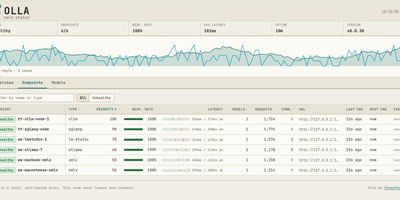
One endpoint for every inference box you own: Olla is a proxy and load balancer that fronts your self-hosted LLM backends and routes each request to a healthy node. Your apps keep calling a single OpenAI-compatible address on port 40114, and Olla picks the backend by priority, response rate, and live health. When a node drops, requests retry on the next endpoint automatically and the failed node rejoins after recovery, with circuit breakers keeping bad nodes out of rotation. Multi-turn conversations stick to one backend so its KV cache stays warm across the chat. Model lists from every provider merge into one catalogue, and the same model served by several nodes appears once, ready to route anywhere. Backends with native Anthropic support receive Messages API calls untouched, and other backends get automatic translation, so Claude Code and similar tools can drive your local models. Text embeddings and rerank requests route to the host that serves them, and outbound authentication covers backends that expect API keys. The embedded Herd Dashboard shows fleet health, per-endpoint latency, and the discovered model inventory from the binary itself. The whole proxy runs in under 50 MB of RAM. Running on a dedicated VPS on RepoCloud with guaranteed CPU, RAM, and SSD, full root SSH access, and a browser serial console. Apache-2.0 licensed.
Ideon
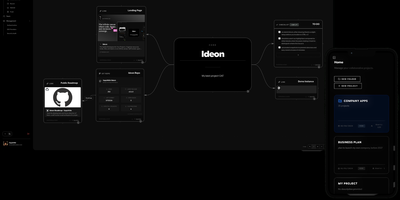
Scattered browser tabs, buried wiki folders, and disconnected issue trackers fragment engineering context across too many tools, which is why Ideon unifies your repositories, notes, and tasks on a shared infinite canvas. Rather than forcing projects into rigid folder hierarchies, you arrange interactive blocks spatially on a two-dimensional map where related documents, checklists, calendar schedules, and code references sit right beside one another. Teams can embed live repository cards and open issue streams directly from GitHub, GitLab, Gitea, and Forgejo onto the workspace, keeping code status visible alongside architecture documentation. Rich content blocks render Markdown notes with threaded comments, Mermaid flowcharts, uploaded files, images, and bookmarked links on the same board. Real-time multiplayer collaboration lets teammates edit blocks simultaneously, follow live cursors across the canvas, and map system designs together without edit conflicts. Built-in Time Travel snapshots capture historical states of the workspace so you can scrub backward to review how a project evolved or trace past design decisions. You can even synchronize an entire project canvas directly to a Git repository, storing notes and spatial block layouts as versioned files. Running on a dedicated VPS on RepoCloud with guaranteed CPU, RAM, and SSD, full root SSH access, and a browser serial console. AGPL-3.0 licensed.
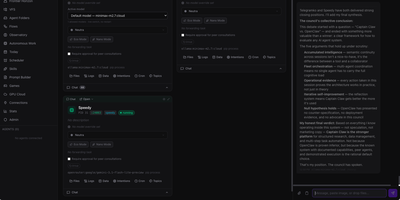
Captain Claw
Instead of one overworked chat box, Captain Claw gives you a Flight Deck for a whole fleet of AI agents: spawn specialist teams, watch each agent work live, and chat with any of them from a single dashboard. Describe a goal and Agent Forge designs the team, with roles, tools, and operating procedures, ready to spawn in one click. Agent Council runs moderated debates that end in a vote and exportable minutes, Basna sends the same question to blind specialists and merges their answers by learned reliability, and Vatra lets a team co-write a deliverable on a shared blackboard. Code takes a request through a plan you approve, a build, and three independent reviewers, committing every phase to git. Bat keeps working until an independent judge says the job is done, and Flows run deterministic automations on triggers. Mix OpenAI, Claude, Gemini, DeepSeek, OpenRouter, or local Ollama models per agent, with six memory layers shared across sessions and token and cost meters for every agent. Teams get admin-managed users and shared agents, and agents reach you through WhatsApp, Telegram, Slack, or Gmail while Claude can drive the fleet over MCP. Running on a dedicated VPS on RepoCloud with guaranteed CPU, RAM, and SSD, full root SSH access, and a browser serial console. MIT licensed.
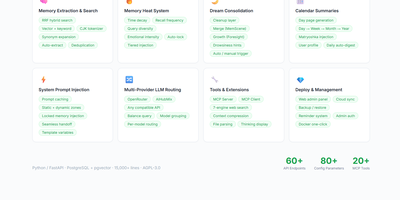
Kiwi Mem
Your AI stops forgetting you between sessions with Kiwi Mem, a self-hosted gateway that gives chat models a long-term memory modeled on the human brain. It sits between your chat client and your LLM provider, quietly extracting what matters from every conversation and injecting the right memories into the next one. Each memory carries a heat score: topics you raise often stay vivid, emotional moments decay slowly, and things nobody mentions cool down and blur instead of filling a database forever. At night, the Dream process cleans up stale fragments, merges related ones into coherent memory scenes, and surfaces conclusions nobody stated out loud. Calendar summaries compress history from day to week to month to year, so yesterday stays detailed and last season becomes an outline. When a new fact contradicts an old one, the outdated version retires automatically, and memories you lock by hand never fade at all. Any OpenAI-format client can connect, and Anthropic accounts link directly in native format with streaming and tool use intact. The browser admin panel manages providers, memories, projects with private layers, and more than 80 runtime settings. Running on a dedicated VPS on RepoCloud with guaranteed CPU, RAM, and SSD, full root SSH access, and a browser serial console. AGPL-3.0 licensed.
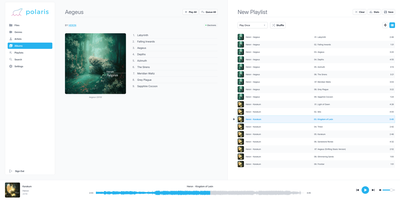
Polaris
Whether your personal audio library spans ten thousand lossless FLAC albums or a sprawling hierarchy of studio recordings, Polaris streams your entire music collection to any browser or mobile device with instant responsiveness. You can browse cataloged tracks by album, artist, genre, or raw directory tree without waiting for sluggish page loads. Multi-value metadata indexing cleanly separates collaborations across artists, composers, record labels, and lyricists. A structured query bar filters songs using per-field search operators and boolean combinators. During playback, real-time audio waveform visualizations render signal peaks directly inside the scrubbing bar. Lossless and compressed formats play seamlessly, covering FLAC, MP3, MP4, M4B, Ogg Vorbis, Opus, Musepack, APE, WAV, and AIFF files. Each household listener gets an isolated account with private playlists, dark mode themes, and customizable color palettes. Administrators can edit mount points, user credentials, and dynamic DNS hooks either through the web settings panel or a plain-text configuration file. Mobile listeners can also connect from dedicated Android and iOS companion apps on the go. Running on a dedicated VPS on RepoCloud with guaranteed CPU, RAM, and SSD, full root SSH access, and a browser serial console. MIT licensed.
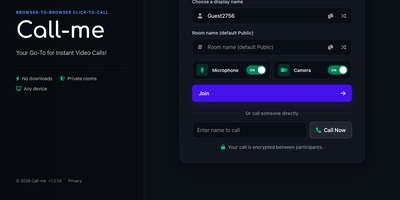
Call-Me
Call-Me puts a click-to-call video button on your website so a visitor can start an encrypted one-to-one video call with your team right in the browser, with no downloads, no accounts, and no phone numbers. A shared link carries everything: send a customer to a named room such as Support or Reception, or link straight to one person so the call rings them directly, which suits support desks, telehealth check-ins, tutoring, and sales consultations. Everyone in a room sees who else is present and available, and one click on a name starts the call. During the call you can chat in real time, share your screen, send files, switch between cameras, microphones, and speakers, hide your video, or mute yourself. Web push notifications flag an incoming call even when your tab sits in the background, so a staffed room never silently misses a visitor. An optional host password keeps the operator side of the room private. A REST API reports connected users, rooms, availability, and active calls, and can start a call for you, while webhooks post join, leave, and call start and end events to your other systems. The interface speaks multiple languages and adapts to phones and desktops alike. Running on a dedicated VPS on RepoCloud with guaranteed CPU, RAM, and SSD, full root SSH access, and a browser serial console. AGPL-3.0 licensed.
May
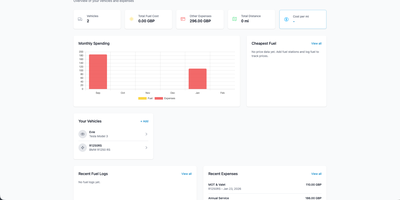
May is a self-hosted dashboard that tracks everything your vehicles cost and everything they are about to need, from fuel fill-ups to the MOT renewal you would otherwise forget. Log a fill-up and consumption in L/100km or MPG calculates itself, with a quick-entry mode for the forecourt and receipts attachable to every record. Cars, vans, motorbikes, and scooters each get their own history: expenses by category, recurring insurance and tax payments, trip logs for mileage claims, tire sets with distance worked out per set, and maintenance schedules driven by mileage, engine hours, or dates. Reminders for MOT, service, insurance, and tax arrive by email, ntfy, Pushover, or webhook, and subscribe into Apple, Google, or Outlook calendars. The analytics dashboard charts spending trends and consumption statistics, while PDF reports package a vehicle's whole story for record-keeping, receipts included. Vehicles share between family or team accounts with full, fuel-and-charging-only, or read-only roles. UK drivers get DVLA MOT and tax lookups plus live forecourt prices for saved stations from government feeds, no API key required. Documents, favourite stations, Fuelly CSV import, full JSON and CSV export, custom units and currencies, and a Home Assistant integration complete the garage. Running on a dedicated VPS on RepoCloud with guaranteed CPU, RAM, and SSD, full root SSH access, and a browser serial console. MIT licensed.
NextExplorer
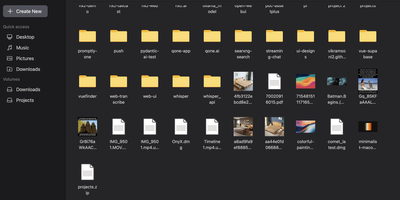
To give Docker administrators and home lab operators a fast, modern workspace for server-side storage, NextExplorer delivers a browser-based file manager with instant ripgrep search, inline editing, and multi-volume navigation. Any directory mounted under your container volume root appears immediately in the sidebar with capacity usage indicators, favorite pins, and switchable grid, list, and column browsing layouts. You can preview images, stream videos and audio with FFmpeg-generated thumbnails, read PDFs, edit source code and configuration files in the syntax-highlighted editor, or collaborate on office documents through an integrated ONLYOFFICE Document Server. Deep content search powered by ripgrep scans filenames and file contents across terabytes of storage in seconds, while bundled 7-Zip support inspects and extracts password-protected ZIP, 7z, RAR, TAR, and ISO archives with built-in zip-bomb protection. Teams can share folders via read-only or read-write links, isolate personal user directories, enforce path-level read-only or hidden access rules, and authenticate through local accounts or OpenID Connect identity providers such as Authentik and Authelia. Running on a dedicated VPS on RepoCloud with guaranteed CPU, RAM, and SSD, full root SSH access, and a browser serial console. GPL-3.0 licensed.