Open Wearables
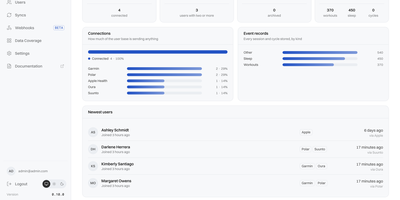
Garmin, Oura, Whoop, and Apple Health each speak a different data dialect, and Open Wearables translates all of them into one consistent REST API that you host yourself. Users authorize through a connection link or the connect widget, history backfills on the first sync, and heart rate, HRV, SpO2, sleep, workouts, and meals land in one normalized schema. When two devices record the same night, configurable data priorities decide which provider and device type wins. Native iOS, Android, Flutter, and React Native SDKs push Apple Health, Samsung Health, and Health Connect data from the phone, and full Apple Health XML exports can be imported too. Outgoing webhooks announce new data with signed payloads, test events, and delivery logs, while a live sync stream shows every pull as it happens. The developer portal adds a dashboard, user profiles with sleep, meals, scores, and women's health tabs, sync history, data coverage, API keys, team invitations, retention policies, and a seed data generator. Sleep and resilience scores ship with open algorithms you can audit and tune. An MCP server lets Claude Desktop or Cursor answer questions such as how a user slept last week. Use it for AI health coaches, fitness coaching apps, healthcare platforms, research cohorts, or a personal health archive with n8n automations on top. Running on a dedicated VPS on RepoCloud with guaranteed CPU, RAM, and SSD, full root SSH access, and a browser serial console. MIT licensed.
Profilarr
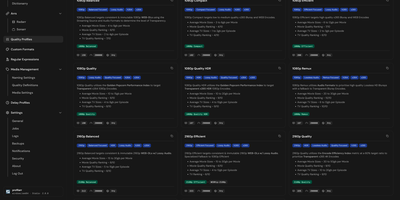
Profilarr orchestrates media library quality profiles, custom formats, and release matching rules across all your Radarr and Sonarr servers from a single centralized management console. Instead of manually copying regex strings and scoring tables between home server instances, you can link community configuration databases like TRaSH Guides and Dictionarry to automate standardization. The visual pattern workbench lets you test regular expressions directly against real-world media release titles, highlighting matches for audio codecs, HDR formats, and release group tags. You can simulate release scoring before deploying, inspecting exactly why a candidate download gets accepted or rejected based on your custom ranking conditions. Media managers can define custom delay profiles, establishing protocol priorities and minimum score thresholds to prevent premature grabs before high-quality releases surface. Granular synchronization tools push updated profiles and formatting rules to multiple production Arr instances simultaneously while preserving your local server overrides. When indexers publish new release naming conventions, you can update conditions once in your central database and roll out updates across your entire infrastructure. Running on a dedicated VPS on RepoCloud with guaranteed CPU, RAM, and SSD, full root SSH access, and a browser serial console. GNU AGPLv3 licensed.