Qeli
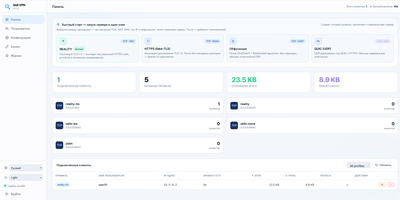
Qeli is a self-hosted VPN built for networks where ordinary VPN protocols get recognized and blocked, disguising its traffic as ordinary web traffic while keeping the classic full-tunnel experience. Where WireGuard, OpenVPN, and IKEv2 carry fingerprints that deep packet inspection has learned to spot, Qeli answers with five wire modes: plain, TLS mimicry, ChaCha20 obfuscation behind WebSocket fronting, REALITY, and a flagship mode that carries the private stream inside a genuine HTTP/2 request within a real TLS 1.3 exchange. A probe without a valid token never learns the difference, because the server bridges it to the configured public target site. The handshake is hybrid post-quantum, X25519 plus ML-KEM-768, with a ChaCha20-Poly1305 data plane, and the tunnel itself behaves like the VPNs people already know: full-tunnel or split routing, OS-level DNS, and per-app include or exclude rules on Windows, macOS, and Android. A one-command installer on a clean Debian or Ubuntu server asks for a profile and a port, writes the NAT configuration, creates the first users, and prints ready-to-paste connection links. The web panel then issues qeli:// links and QR codes per person behind an Argon2id login, so onboarding a phone is a camera scan instead of a config file. Clients cover Linux, Windows, macOS, Android, and Keenetic and OpenWrt routers, and published lab benchmarks average around 1220 Mbit/s across all twelve profiles. Running on a dedicated VPS on RepoCloud with guaranteed CPU, RAM, and SSD, full root SSH access, and a browser serial console. AGPL-3.0 licensed.
Deploy