HomeGallery
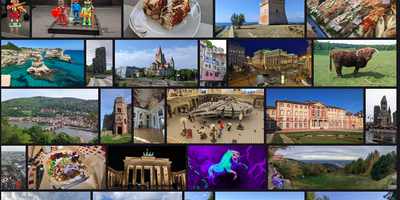
HomeGallery turns the photo and video folders on your server into a mobile-friendly web gallery. Your files and folder structure stay exactly as they are. Point it at camera files, phone files, or offline drives, and previews and metadata are extracted once. Scroll one endless stream, newest first. Open any image for its file name, dimensions, capture date, source paths, camera settings, street address, tags, and detected objects. Swipe between photos, then pinch or double-tap to zoom. The Map view clusters photos by place, with counts. The plant button lists similar images, so one sunset finds every other sunset. Face search finds the same person in other photos. A search box accepts expressions like tags in (vacation, family), type:video year in [2015:2020] order by duration, or not exists(geo). In Edit mode, select many photos at once and type comma-separated tags; a minus prefix removes one. Videos are transcoded for playback. Renamed or moved files keep their previews. An archive disk can stay unplugged once indexing is done. Optional logins limit each user to a query filter. Install it as a PWA for a lightweight mobile app. Running on a dedicated VPS on RepoCloud with guaranteed CPU, RAM, and SSD, full root SSH access, and a browser serial console. MIT licensed.

ChronoFrame
Publish high-resolution photography without social media compression using ChronoFrame, a self-hosted portfolio and gallery platform built around EXIF camera telemetry, live motion media, and interactive map exploration. Drop JPEG, PNG, WebP, TIFF, or HEIC images alongside paired MOV clips into the browser uploader, and the background task queue automatically extracts camera bodies, lenses, focal lengths, shutter speeds, and RGB histograms while pairing Apple Live Photos and Motion Photos for hover playback. Visitors browse your work through a responsive masonry grid with instant ThumbHash placeholders, inspect fine details inside a hardware-accelerated WebGL tiled viewer, or explore shooting locations on an interactive MapLibre or Mapbox globe powered by reverse geocoding. Curators can group shots into reordered albums, protect private collections with passwords, edit ratings and metadata in bulk, and generate custom share preview cards. Storage scales across local disks, S3-compatible buckets, and OpenList backends with configurable CDN delivery. Running on a dedicated VPS on RepoCloud with guaranteed CPU, RAM, and SSD, full root SSH access, and a browser serial console. MIT licensed.
Chevereto
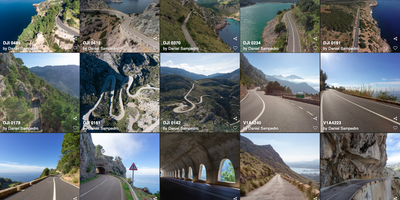
Build your own image and video sharing site, with public galleries, private albums, and embeddable links, on a server you control. Uploads arrive by drag and drop, clipboard paste, image URL, camera, ShareX, or API, in AVIF, JPEG, PNG, GIF, WebP, BMP, MOV, MP4, and WebM, and chunked transfers handle large files. Lossless JPEG handling fixes orientation and can strip EXIF data. Duplicate detection catches repeat uploads. Tags are created on the fly with autocomplete, camera models become tags automatically, and albums nest into sub-albums with covers, privacy levels, and passwords. Categories, search, and explore views help visitors find things; a bulk importer brings in folders of existing media. Each file gets viewer, direct, thumbnail, and medium links plus HTML, Markdown, and BBCode snippets with one-click copy, and oEmbed lets other sites preview a link. Roles split admin, manager, and user duties, profiles can be private, and two-factor authentication protects accounts. Files sit on local disk or S3-compatible storage, optionally served through a CDN URL. A dashboard tracks usage, color palettes and custom CSS and JavaScript restyle the site, and a single-profile mode suits a personal portfolio. Running on a dedicated VPS on RepoCloud with guaranteed CPU, RAM, and SSD, full root SSH access, and a browser serial console. AGPL-3.0 licensed.

Piwigo
With over 3,800 GitHub stars and continuous development since 2002 spanning 24 years of active maintenance through version 16.4.0 released in May 2026, Piwigo has proven itself as one of the most battle-tested self-hosted photo gallery platforms available, trusted by professional photographers managing 150,000+ high-resolution images alongside small teams sharing event photos. The PHP backend with MySQL or MariaDB storage serves a responsive web interface that organizes photos into hierarchical albums with nested sub-albums, tag-based categorization, and smart albums generated dynamically from search criteria. Batch management tools handle bulk uploads, metadata editing, tag assignment, and album moves across thousands of images simultaneously. User permission controls define access at the album level with configurable public, private, and group-restricted visibility, while guest access allows public galleries without authentication. Image processing via ImageMagick or PHP GD generates multiple thumbnail sizes, watermarks, and responsive derivatives automatically. The plugin ecosystem with over 200 community-built extensions adds functionality from EXIF metadata display and GPS mapping to social sharing, download controls, and Lightroom synchronization for desktop workflow integration. The REST Web API with personal API key authentication enables programmatic album creation, photo uploads, and metadata queries from external applications. Mobile apps for iOS and Android provide on-the-go upload and browsing capability. Docker deployment via the official container or traditional LAMP installation on any hosting provider. Running on a dedicated VPS on RepoCloud with guaranteed CPU, RAM, and SSD, full root SSH access, and a browser serial console. GPL-2.0 licensed.
PiGallery2
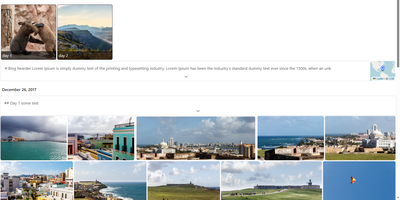
PiGallery2 turns any mounted folder of images and home videos into a high-speed web gallery without modifying your raw files or forcing migration into a database silo. The server scans directories in read-only mode, keeping folder structures intact while generating responsive previews with hardware-accelerated Sharp processing. Users can inspect detailed camera EXIF metadata, toggle custom full-screen lightboxes with swipe gesture navigation, and stream high-definition MP4 or WebM video clips. Embedded GPS coordinates automatically pin photos onto interactive OpenStreetMap or Mapbox views, allowing travel albums to display alongside synchronized GPX track routes. Powerful boolean search expressions filter across dates, keywords, camera models, and Adobe XMP face regions without requiring expensive background machine learning models. Built-in link sharing creates password-protected access links with custom expiration dates for friends and family. Running on a dedicated VPS on RepoCloud with guaranteed CPU, RAM, and SSD, full root SSH access, and a browser serial console. MIT licensed.
Pixelfed
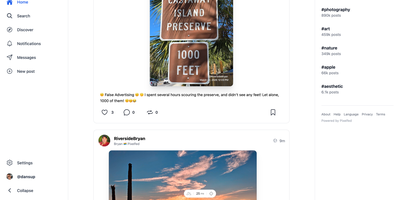
With nearly 7,000 GitHub stars and instances spanning hundreds of federated servers, Pixelfed has become the leading open-source alternative to Instagram — delivering ad-free, algorithm-free photo sharing across the Fediverse. Built on Laravel with a Vue.js frontend, Pixelfed provides a polished, mobile-responsive interface where users upload photos and videos, apply built-in filters, create multi-image posts with alt text, share ephemeral stories, organize content into curated collections, and exchange direct messages — all without tracking, algorithmic manipulation, or targeted advertising. Federation through the ActivityPub protocol means Mastodon, Pleroma, and other Fediverse users can follow Pixelfed accounts, view photo posts in their timelines, and interact through likes, boosts, and replies, while Pixelfed users can discover content through both local and federated timelines. Instance administrators control registration policies, content moderation rules, federation blocklists and allowlists, storage backends including local or S3-compatible options, and server-wide settings. The Mastodon-compatible API enables third-party mobile app support alongside the built-in Progressive Web App experience. Advanced features include blurhash image placeholders for smooth loading, federated groups for community building through FEP-400e and FEP-1b12 extensions, HTTP Signatures with Authorized Fetch for secure federation, and comprehensive data export for full portability. Deployment requires PHP 8.1+, MySQL or PostgreSQL, Redis, and a reverse proxy, with Docker Compose configurations available for streamlined setup. Running on a dedicated VPS on RepoCloud with guaranteed CPU, RAM, and SSD, full root SSH access, and a browser serial console. AGPL-3.0 licensed.

Photofield
Instead of paging through albums, Photofield lays a whole photo library out on one zoomable canvas, where thousands of thumbnails sharpen into full-resolution pictures as you zoom. Collections come straight from directories named in a configuration file. One setting turns every subfolder into its own collection. Pick a layout per collection: album grouped by date, timeline with month markers, wall, map, highlights with dates and place names, or flex. Sort oldest first, newest first, or shuffled hourly, daily, weekly, or monthly. Tiles load progressively, and an info drawer shows the date, file name, and dimensions. A right-click menu opens or copies an image, copies its link, or finds similar images. Originals are never modified, so a read-only mount is safe. Indexing runs at up to 10,000 files per second on a fast SSD with a warm cache. JPEG, PNG, AVIF, HEIC, DNG, GIF, MP4, and MOV files are recognized. Place names resolve from an embedded database, with no external lookups. The optional photofield-ai companion adds search by words like beach sunset or cat eyes, plus a Faces layout of detected faces. Alpha tagging lets you label photos. Running on a dedicated VPS on RepoCloud with guaranteed CPU, RAM, and SSD, full root SSH access, and a browser serial console. MIT licensed.