Kimai
From a freelancer logging billable hours to companies with hundreds of users, Kimai scales professional-grade open-source time tracking - a Symfony/PHP application without the per-seat pricing of Harvest or Toggl. Tracking is flexible by design: run multiple concurrent timers, use punch-in/punch-out mode, or enter times manually, organized by customer, project, and activity with tags, and priced by user-, customer-, or project-specific rates. The billing pipeline is where Kimai earns "professional grade": generate invoices directly from timesheet data with configurable templates (DOCX, ODS, XLSX, PDF), entry grouping, and invoice-number generators, while an export flag locks billed records against editing and excludes them from future invoices - the audit-safety detail spreadsheet workflows never get right. E-invoicing supports EN 16931, XRechnung 3.0, and Zugferd/Factur-X. Enterprise controls come standard: SAML and LDAP login against Google Workspace, Azure AD, or Authentik, TOTP two-factor auth, customizable role permissions, and teams that scope customers and projects to departments. Money and time budgets alert before overruns, advanced reporting slices recorded time by any dimension, and an extensive JSON API plus a plugin marketplace (expenses, approvals, and more) integrate it with existing infrastructure. Over 30 translations, multi-timezone, AGPL-licensed.
Solidtime
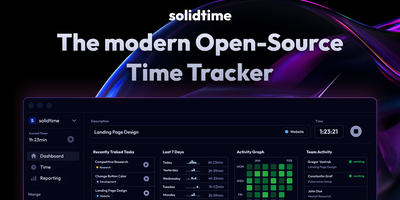
Solidtime is a time tracker for freelancers and agencies, offering a modern SaaS-quality interface that rivals commercial tools like Toggl and Clockify. The time tracking interface provides a running timer, calendar view, and weekly timesheet for flexible entry across desktop, mobile, and the dedicated macOS, Windows, and Linux desktop applications. Project management organizes work by client with hierarchical billable rates configurable at organization, member, project, and project-member levels, ensuring accurate billing across complex team structures. The invoicing module generates polished PDF invoices and structured EU e-invoices with configurable VAT rates, percentage and fixed discounts, EU reverse-charge handling, reusable company templates, and automatic line item generation from billable time entries. Reporting provides filterable summaries by user, project, client, and date range with exportable data for billing audits and team retrospectives. Multi-organization support manages separate workspaces from a single account with role-based permissions controlling access across organizations. Data import from Toggl, Clockify, and generic Timeentry CSV files enables migration from existing tools without losing historical records. The RESTful API with bearer token authentication enables automation and integration with external services. Docker deployment with PostgreSQL runs behind Nginx or Traefik reverse proxy. Running on a dedicated VPS on RepoCloud with guaranteed CPU, RAM, and SSD, full root SSH access, and a browser serial console. AGPL-3.0 licensed.
Ever Teams
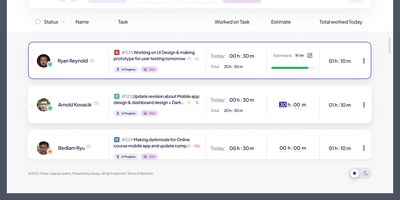
Powering distributed teams seeking full visibility into work patterns and productivity, Ever Teams is an open-source platform unifying time tracking, task management, project coordination, and team collaboration in a single self-hosted application. The real-time timer tracks work against tasks and projects with one-click start/stop, while the Electron desktop app captures periodic screenshots at configurable intervals, monitors keyboard and mouse activity levels, detects idle periods, and syncs offline sessions automatically. Kanban boards with drag-and-drop, calendar views, and daily planning tools organize work across custom statuses, priorities, and sizes. Built-in video conferencing powered by Jitsi or LiveKit enables meetings without leaving the platform. Timesheet management supports submission, review, and approval workflows with configurable time limits and budgets. The backend runs on the Ever Gauzy NestJS platform providing REST and GraphQL APIs, multi-tenant architecture with organization and team scoping, role-based access control, and an integration framework connecting GitHub issues and pull requests bidirectionally plus JIRA import and sync. Infrastructure includes PostgreSQL, Redis for caching and pub/sub, MinIO for S3-compatible storage, Elasticsearch for full-text search, and Cube.js for OLAP analytics. Built with Next.js 16, React 19, Tailwind CSS, and Recoil, with native iOS and Android clients via Expo, Electron desktop apps for Windows, macOS, and Linux, and Plasmo browser extensions for Chrome and Firefox. Internationalization spans 13-plus locales with dark, light, and system themes. Running on a dedicated VPS on RepoCloud with guaranteed CPU, RAM, and SSD, full root SSH access, and a browser serial console. AGPL v3.0 licensed.
Super Productivity
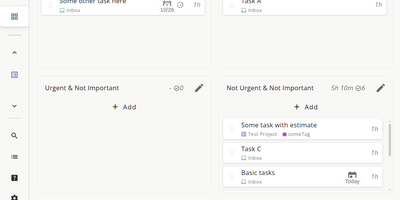
Super Productivity eliminates the context switching between issue trackers, calendars, and timer apps that fragments developer focus, pulling tasks from Jira, GitHub, GitLab, Gitea, OpenProject, Linear, ClickUp, Trello, and Azure DevOps into one local-first interface. With 21,000+ stars and availability across web, desktop, Android, and iOS, it syncs issue status, subtasks, and time logs bidirectionally so sprint planning and worklog submission happen without leaving the app. CalDAV integration pulls calendar events into your task timeline for visual timeboxing. Built-in Pomodoro and Flowmodoro timers enforce focused intervals with configurable break schedules. Data stays under your control in browser IndexedDB by default, with optional AES-encrypted sync via WebDAV, Nextcloud, Dropbox, or the SuperSync server ensuring no task data touches infrastructure you do not own. The extensible plugin system supports JavaScript-based custom panels, automations, and MCP plugins for AI workflows. A REST API on port 3876 enables external script integration for desktop automation. Time tracking generates exportable timesheets compatible with corporate reporting systems. The Docker container serves the Angular PWA through Nginx on port 80, consuming roughly 50 MB of RAM. Running on a dedicated VPS on RepoCloud with guaranteed CPU, RAM, and SSD, full root SSH access, and a browser serial console. MIT licensed.
TimeTracker
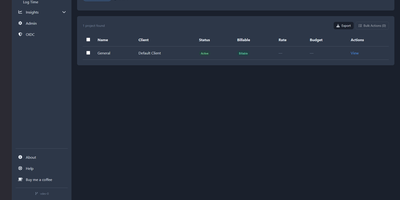
Why export timesheets from one tool, manage Kanban tasks in a second, and copy billable hours into a third just to send a client invoice when TimeTracker handles the entire agency workflow in one self-hosted platform? Start a persistent server-side timer from any browser or log hours manually using saved templates, bulk entry forms, and automatic idle detection. Project managers organize deliverables across drag-and-drop Kanban boards, Gantt timelines, and threaded task comments while monitoring real-time project budgets and cost burn rates. A built-in CRM tracks client contacts, lead scores, and sales pipeline stages before work even begins. When billing day arrives, you convert unbilled hours, reimbursable receipts, mileage logs, and per diem allowances directly into branded multi-currency invoices without double-billing a single minute. Finance teams can customize PDF invoice layouts, automate recurring billing schedules, and transmit EN 16931 compliant electronic invoices via Peppol or embedded ZUGFeRD/Factur-X XML. Interactive analytics dashboards and scheduled CSV or Excel exports give every stakeholder complete visibility into billable utilization. Running on a dedicated VPS on RepoCloud with guaranteed CPU, RAM, and SSD, full root SSH access, and a browser serial console. GPL-3.0 licensed.
TimeTagger
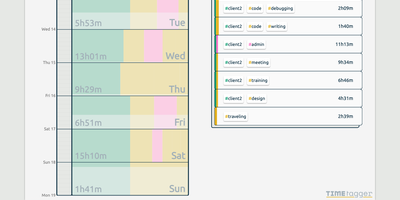
Freelancers, consultants, and solo workers get an accurate record of their hours from TimeTagger, a time tracker that logs tagged tasks on an interactive timeline and summarizes them as billable reports. Press S, type a description, and hit Enter to start the clock without the mouse, or drag across the timeline to log finished work. Hashtags in a description become autocompleting tags, with no projects to set up. Renaming a tag updates every record that uses it. Drag a record's edges to fix its times, then zoom the timeline out to a week or month with mouse, touch, or arrow keys. An overview panel totals time per tag combination for the selected range, and the Report button saves it as a client-ready PDF or a CSV with decimal hours. Daily, weekly, and monthly targets track progress toward your goals, and an optional Pomodoro timer alternates work and break periods with an alarm and a notification. Settings add a dark theme, local date notations, a Monday-to-Friday week, and a day offset for night shifts. The interface adapts from desktop to phone, installs as a progressive web app, works offline, and syncs records across devices once the connection returns. A web API and a command-line client let you query, create, and update records from scripts or the terminal. Running on a dedicated VPS on RepoCloud with guaranteed CPU, RAM, and SSD, full root SSH access, and a browser serial console. GPL-3.0 licensed.
Traggo
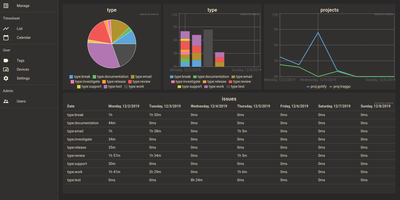
With over 1,600 GitHub stars and a design philosophy that fundamentally rethinks how time tracking should work, Traggo abandons the traditional project-task hierarchy that forces your work into rigid categories and instead lets you tag time spans with arbitrary key-value pairs — project:website, type:coding, client:acme, billable:yes — enabling cross-dimensional analysis that conventional trackers cannot replicate. The Go backend compiles into a single binary that runs alongside a SQLite database and embedded web UI in under 10MB total, consuming approximately 50MB of RAM at runtime and starting in seconds on even the smallest VPS. Tags are the fundamental data model: create any tag key with any set of values, then apply multiple tags to each time span simultaneously to track by project, client, task type, energy level, or any other dimension your workflow demands. Customizable dashboards render pie charts, bar charts, and line graphs from tag-aggregated data, letting you visualize time distribution across any combination of dimensions over configurable date ranges. The calendar view displays time spans as colored blocks across days and weeks, while the list view provides chronological entry browsing with inline editing. Multiple themes including light and dark modes adapt the interface to personal preference, and simple user management with role-based access supports small team deployments. Docker deployment runs a single container exposing port 3030 with multi-architecture support for amd64, arm64, and arm v7. Running on a dedicated VPS on RepoCloud with guaranteed CPU, RAM, and SSD, full root SSH access, and a browser serial console. GPL-3.0 licensed.