Viseron
Homeowners and facility operators deploy Viseron to turn standard RTSP and ONVIF security cameras into a self-hosted network video recorder with local AI object detection, face recognition, and license plate reading. Instead of uploading private camera feeds to subscription cloud services, you monitor low-latency WebRTC live streams, scrub through an interactive event timeline, and review 24/7 continuous recordings directly from a responsive web dashboard. You can draw custom detection zones and privacy masks in the visual camera tuning editor to filter out street traffic, while lookback buffering captures footage several seconds before motion or an object triggers an event. Pluggable computer vision pipelines connect your cameras to YOLOv7 Darknet, Google Coral EdgeTPU, CompreFace, dlib, and CodeProject.AI to classify people, vehicles, known faces, and license plates in real time. Tiered storage policies automatically migrate older video segments from fast NVMe drives to high-capacity archival disks based on age and quota rules. Bidirectional MQTT integration and Home Assistant auto-discovery let you toggle cameras on demand, ingest external motion sensors, and dispatch instant snapshot alerts to Telegram or Discord. Running on a dedicated VPS on RepoCloud with guaranteed CPU, RAM, and SSD, full root SSH access, and a browser serial console. MIT licensed.
LightNVR
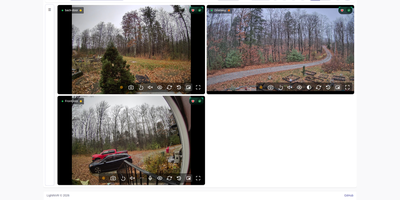
At 3 a.m., your driveway camera is the only witness that matters, and LightNVR makes sure the footage lives on a drive in your house, not a subscription cloud. ONVIF discovery finds cameras on the network; an RTSP address adds the rest. Recording runs continuously, on a schedule, or only when something happens: draw a polygon over the gate, pick the object classes worth alerting on, set a confidence threshold, and clips keep a pre-event buffer so the lead-up survives too. Plate recognition turns passing traffic into a searchable log. Playback splits two ways. The live grid streams over WebRTC at sub-second latency, overlays detection boxes on the picture, and the Investigation workspace lines sixteen cameras onto one shared clock after an incident. Storage obeys retention policies, protected recordings stay put, and full disks archive out to S3, NFS or SAN volumes. Access comes with database users, roles, TOTP two-factor codes and API keys. Prometheus metrics report the recorder's own health, MQTT events feed Home Assistant, and a REST API carries detections into the rest of the house. The binary idles within 256 MB on supported boards and speaks nineteen languages. Running on a dedicated VPS on RepoCloud with guaranteed CPU, RAM, and SSD, full root SSH access, and a browser serial console. GPL-3.0 licensed.