Part-DB
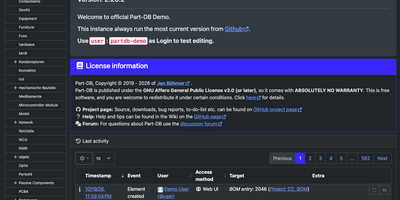
Across electronics labs, hardware startups, and university makerspaces, Part-DB indexes thousands of resistors, microcontrollers, and SMD reels with datasheets, storage locations, and live supplier pricing. Each component record tracks categories, footprints, manufacturers, multi-currency order histories, electrical tolerances, and custom tags for instant parametric search. New shipments populate part attributes, product photos, and PDF datasheets directly from Octopart, DigiKey, Mouser, Farnell, LCSC, or TME, alongside AI-assisted extraction from uploaded datasheets. Print custom barcode labels on demand. Scan internal IDs, GTIN codes, or distributor DataMatrix labels with a webcam or USB scanner to jump straight to any bin. Hardware engineers import KiCad bills of materials into project workspaces to calculate buildable board quantities and deduct stock in one step. Schematic designers can even connect Part-DB as a native KiCad 8 HTTP library source to place verified lab components with pre-linked footprints directly inside their EDA editor. Fine-grained group permissions, SAML single sign-on, WebAuthn two-factor authentication, and a versioned audit log with rollback protect shared inventories. Running on a dedicated VPS on RepoCloud with guaranteed CPU, RAM, and SSD, full root SSH access, and a browser serial console. AGPL-3.0 licensed.
Atlas CMMS
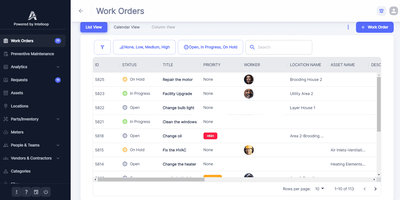
Unplanned equipment downtime and scattered paper work orders cost facility teams hundreds of maintenance hours every year, an operational bottleneck that Atlas CMMS resolves through a centralized, self-hosted computerized maintenance management platform. Maintenance supervisors can create, prioritize, and assign reactive or scheduled work orders to internal technicians and external contractors, attaching multi-step inspection checklists, labor timers, and completion photos. Automated preventive maintenance rules generate recurring tasks on daily, weekly, monthly, or meter-based intervals so critical machinery receives servicing before breakdowns happen. Asset managers can organize hierarchical equipment registers mapped to physical facility locations via Google Maps, tracking downtime history, repair costs, and reliability metrics per machine. Built-in spare parts inventory management monitors stock levels with low-quantity alerts and links directly to purchase order creation and multi-stage vendor approval workflows. Non-technical staff can submit maintenance requests through a simplified service portal, while field technicians update tickets, scan barcodes, and log parts usage from the companion Android and iOS mobile apps. Executive analytics dashboards export compliance rates, mean time to repair, and labor cost breakdowns across 18 supported interface languages. Running on a dedicated VPS on RepoCloud with guaranteed CPU, RAM, and SSD, full root SSH access, and a browser serial console. AGPL-3.0 licensed.
Spoolman
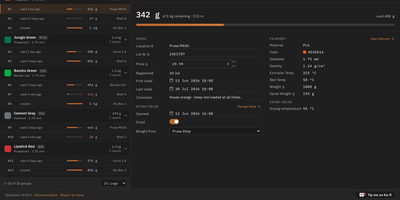
Running out of filament mid-print ruins multi-hour 3D printing jobs, and Spoolman solves this by tracking every gram of plastic across your entire workshop in a centralized, self-hosted inventory database. Connected directly to Klipper, Moonraker, Mainsail, Fluidd, OctoPrint, and OctoEverywhere, the service deducts filament weight automatically over live WebSockets as your extruders run. You can import manufacturer specifications from the community SpoolmanDB catalog, filter your library by color similarity or material type, and organize spools on a drag-and-drop board grouped by storage location or custom fields. A built-in label designer generates printable QR code sheets containing spool metadata, while NFC and RFID tag scanning lets you tap a physical roll against an ESPHome reader or Android phone to pull up its record immediately. Multi-printer workshops can monitor concurrent consumption from several machines simultaneously, expose inventory metrics to Prometheus and Home Assistant, and query stock levels through a Model Context Protocol (MCP) server. Running on a dedicated VPS on RepoCloud with guaranteed CPU, RAM, and SSD, full root SSH access, and a browser serial console. MIT licensed.
Koillection
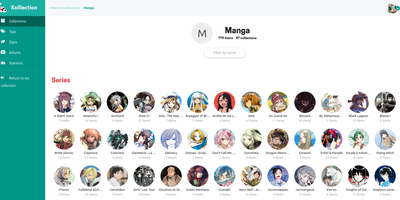
Koillection is a self-hosted physical collection and inventory manager that organizes books, vinyl records, video games, stamps, trading cards, and any custom hobby catalog using hierarchical folders, reusable metadata templates, wishlists, and loan tracking. Collectors can structure nested sub-collections like a file system and attach tailored attributes to each item, ranging from star ratings, purchase dates, and country flags to autographs, PDF manuals, and video clips. Reusable item templates and choice lists standardize data entry across uniform categories so adding a new comic issue or board game takes seconds rather than repetitive typing. Custom HTML and JSON scrapers let you pull item titles, cover art, and structured fields directly from external catalog websites into your forms using XPath or JMESPath selectors. Cross-collection tags link related pieces across separate folders, while dedicated photo albums store supplementary event galleries or condition photographs alongside your main inventory. Built-in wishlists track desired acquisitions with target prices and currencies, and a loan manager records which friend borrowed an item and when it was returned. Granular visibility settings let households run independent multi-user accounts or share read-only collection pages with guests, and a REST API exposes every catalog entity for external automation. Running on a dedicated VPS on RepoCloud with guaranteed CPU, RAM, and SSD, full root SSH access, and a browser serial console. MIT licensed.

Bar Assistant
Turn your scattered collection of liquor bottles and bar tools into a master mixology station with an intelligent digital cellar. Bar Assistant tracks your personal liquor cabinet, inventory levels, and available mixers against a catalog of more than 500 cocktail recipes. The platform calculates exact alcohol by volume ratings, computes ingredient costs per serving, and dynamically highlights every cocktail you can craft with on-hand supplies. Built-in recipe scrapers extract formula details, measurements, and glassware requirements directly from web links, JSON payloads, or YAML files. Multi-bar workspaces allow home mixologists and commercial venues to separate private collections from communal drink menus while handling complex ingredient substitutions, custom infusions, and shopping lists. Integrated Meilisearch indexing powers instant typo-tolerant searches across spirit categories, flavor tags, and cocktail strengths. Visual cocktail cards display high-resolution drink photography, user ratings, glassware requirements, and step-by-step garnish instructions. Deploy Bar Assistant on RepoCloud with dedicated VPS compute, full root SSH credentials, and in-browser console access, backed by an open-source MIT license.
Craftplan
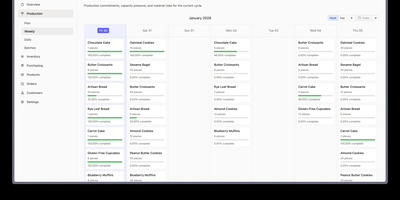
Every batch a craft business ships carries a recipe version, a cost, and a trail of ingredient lots, and Craftplan, an open-source ERP, keeps all three connected. Receiving stock against a purchase order records each supplier lot code and optional expiry date, and partial deliveries keep the order open. Customer orders appear on a delivery calendar and can generate invoices. Scheduled items wait on the production board as unbatched cards until Batch All creates one batch with a frozen copy of the recipe. Capacity warnings flag products over their daily limit, and a forecast highlights materials that will run short. Finishing a batch consumes ingredient lots earliest-expiry first, skips any lot on hold or rejected, and snapshots material, labor, and overhead costs. Recipes are versioned, so past costs never change. A blend made in-house can be stocked as its own material, with its actual yield, lot costs, and source lots intact. Allergens and nutrition facts roll up from each material through every recipe, and completed batches print A5 or compact labels with a scannable barcode. The Trace Center follows a supplier lot forward to every customer who received it, or a finished batch back to its sources. Recall mode can place the lot on hold, and the trace exports as CSV or prints for the recall file. Running on a dedicated VPS on RepoCloud with guaranteed CPU, RAM, and SSD, full root SSH access, and a browser serial console. AGPL-3.0 licensed.