ReadMeABook
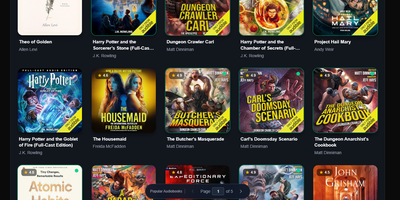
Instead of manually hunting through indexers and stitching chapter files together, ReadMeABook automates the entire audiobook request, download, and M4B library organization pipeline for Audiobookshelf and Plex. Users search an Audible-backed catalog by title, author, narrator, or series, inspect full book summaries with runtime and publisher metadata, and submit one-click requests from a clean browser portal. Once approved, the engine queries Prowlarr across torrent and Usenet indexers, dispatches releases to qBittorrent or SABnzbd, and monitors download progress until completion. Multi-file MP3 downloads merge automatically into a single chapterized M4B audiobook via FFmpeg, complete with embedded cover art, narrator tags, and series ordering metadata before triggering a media server library scan. Not sure what to listen to next? BookDate pairs OpenAI, Anthropic Claude, or local LLM endpoints with a swipeable card deck that learns your reading tastes and queues new titles with a single swipe right. Optional e-book sidecar fetching grabs companion EPUB or PDF files alongside audio releases, while multi-user approval queues, OIDC single sign-on, Goodreads shelf syncing, and Discord, Pushover, Apprise, or ntfy notifications keep household libraries running smoothly. Running on a dedicated VPS on RepoCloud with guaranteed CPU, RAM, and SSD, full root SSH access, and a browser serial console. AGPL-3.0 licensed.

MinusPod
Eliminating repetitive sponsor reads and dynamic mid-roll commercials before an episode even reaches your headphones, MinusPod operates as a self-hosted podcast ad-removal server and RSS feed manager. You subscribe to shows inside the web dashboard using PodcastIndex search or OPML import, and the server generates clean replacement RSS feeds compatible with Pocket Casts, Overcast, Apple Podcasts, and Audiobookshelf. When a new episode drops via scheduled polling or instant Podping notifications, the pipeline transcribes the audio locally with faster-whisper or Parakeet, or routes it through a remote transcription API. Your choice of LLM provider, including Ollama, Anthropic Claude, OpenRouter, or any OpenAI-compatible endpoint, scans overlapping transcript windows to pinpoint sponsor reads, cross-promotions, and intros. Programmatic audio analysis reinforces AI detection by measuring EBU R128 loudness jumps, Chromaprint acoustic fingerprints, show jingles, and dynamically inserted ad transitions before FFmpeg splices the audio or marks segments as skippable Podcasting 2.0 chapters. A browser-based Ad Editor lets you audition pre-cut and post-cut audio, nudge start and end timestamps, and confirm detections that train global, network, and show-specific sponsor patterns. Running on a dedicated VPS on RepoCloud with guaranteed CPU, RAM, and SSD, full root SSH access, and a browser serial console. MIT licensed.

PigeonPod
To listen to your favorite YouTube channels, video playlists, and Bilibili creators during a commute without keeping a browser tab open, PigeonPod converts video subscriptions into private, standard podcast RSS feeds for any podcast player. Paste a channel URL, playlist link, or single video address to preview uploads and generate a protected feed for Apple Podcasts, Overcast, Pocket Casts, or AntennaPod. You can select audio-only or video output, customize bitrates and formats, and generate Podcasting 2.0 chapter markers for topic scrubbing. Scheduled background sync jobs fetch new releases automatically while on-demand history backfill queues older catalog episodes in bulk. Per-feed keyword rules, duration thresholds, and retention limits keep storage clean by filtering out shorts or marathon livestreams. Upload YouTube or Bilibili cookies for member-only streams, route traffic through custom proxies, and update the yt-dlp engine directly inside the web dashboard. A built-in web player, one-click public episode share pages, and OPML export let you stream in the browser or migrate subscriptions. Media files store on local disk or S3-compatible buckets such as Cloudflare R2 and MinIO, accompanied by YouTube API quota monitors and failure alerts. Multi-user role permissions support shared accounts across eight interface languages. Running on a dedicated VPS on RepoCloud with guaranteed CPU, RAM, and SSD, full root SSH access, and a browser serial console. GPL-3.0 licensed.
Metadata Remote
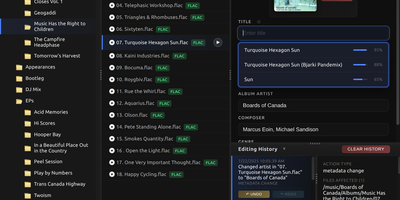
Metadata Remote is a browser-based audio tag editor designed specifically for headless music servers, enabling collectors to fix ID3 tags, embed high-resolution cover art, and match releases against MusicBrainz without moving files off their NAS. Navidrome, Jellyfin, and Plex administrators can browse mounted directories directly from any browser, inspect standard and extended metadata fields, and apply single-file or bulk folder-wide updates in one click. Clicking an empty or incomplete field activates the smart inference engine, which analyzes filenames, directory hierarchy, and sibling tracks alongside live MusicBrainz queries to present candidate values ranked by confidence percentage, including specialized matching rules for classical works, multi-artist compilations, and live bootlegs. Built-in audio streaming lets you audition MP3, FLAC, OGG, OPUS, M4A, M4B, WMA, WAV, and WavPack files inside the interface to verify mysterious tracks before renaming files or folders inline. A dedicated long-form text editor automatically opens for lyrics and liner notes exceeding 100 characters, while the album art manager previews image dimensions, bulk-embeds covers across entire albums, and repairs corrupted artwork headers automatically. Every single-track edit, custom field creation, and batch folder operation is tracked in a 1,000-step undo and redo history with full keyboard-only navigation. Running on a dedicated VPS on RepoCloud with guaranteed CPU, RAM, and SSD, full root SSH access, and a browser serial console. AGPL-3.0 licensed.

Grimmory
Consolidate fragmented collections of digital novels, graphic novels, manga, and audiobooks into Grimmory, an open-source media library server that combines automated file sorting with rich in-browser reading environments. The server indexes diverse media formats including EPUB, MOBI, AZW3, FB2, PDF, CBZ, CBR, CB7, M4B, and MP3 files across isolated storage directories. Readers explore literature through specialized browser viewports that provide customizable typography, CFI highlight annotations, two-page comic spreads with right-to-left manga modes, and chapter-based audiobook playback with sleep timers. Automated BookDrop watch folders ingest incoming files, retrieving book covers, author biographies, and community ratings from Google Books, Open Library, and Amazon APIs. Dynamic Magic Shelves organize catalogs automatically using nested boolean rule trees that filter books by page counts, genres, release dates, or narrator identities without server reload overhead. External e-readers access media catalogs through standard OPDS feeds or native Kobo and KOReader synchronization endpoints that match documents by binary content hashes. Built-in email delivery sends formatted books directly to Kindle devices with a single click, while OpenID Connect authentication enforces granular multi-user library permissions. Running on a dedicated VPS on RepoCloud with guaranteed CPU, RAM, and SSD, full root SSH access, and a browser serial console. GNU AGPLv3 licensed.
Swing Music
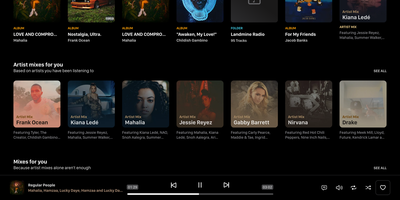
Swing Music transforms your personal audio collection into a private streaming platform with a responsive interface modeled after modern on-demand music apps. The server scans local directories, normalizes messy metadata tags, and categorizes tracks by version labels such as Deluxe, Remaster, or Live editions. Listeners can explore automated Daily Mixes compiled from real listening activity, browse folder hierarchies directly, or curate custom collections across related artists and releases. Audio playback combines intelligent silence detection with configurable cross-fade transitions to deliver seamless, uninterrupted listening across web browsers and mobile devices. Integrated Last.fm scrobbling keeps external listening statistics updated in real time, while personal playback history powers internal analytics and favorites. Multi-user account support enables family members to preserve separate playlists, favorites, and mix recommendations on a shared audio library. Running on a dedicated VPS on RepoCloud with guaranteed CPU, RAM, and SSD, full root SSH access, and a browser serial console. GNU AGPLv3 licensed.
PinePods
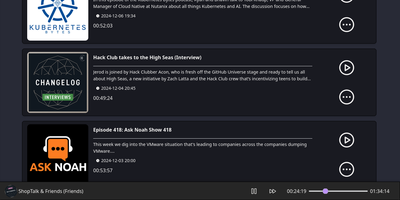
PinePods delivers a centralized, self-hosted podcast ecosystem that liberates personal listening histories, audio files, and show subscriptions from commercial streaming walled gardens. Users can discover new shows through built-in search connectors across Podcast Index, iTunes, and YouTube, streaming audio and video episodes with variable playback speed, chapter markers, and synchronized transcripts. A persistent queue and custom playlist builder keep media sequences orderly across web browsers, desktop installations, and mobile clients with native CarPlay and Android Auto support. Built-in gPodder server synchronization enables seamless cross-device progress tracking with third-party podcast apps like AntennaPod. Automatic episode downloader engines monitor subscribed feeds, archiving new releases to local server storage according to customizable retention rules and storage quotas. Multi-user authentication secures household access through OIDC single sign-on and two-factor TOTP verification, while an integrated terminal client lets command-line enthusiasts manage queues directly over SSH. Running on a dedicated VPS on RepoCloud with guaranteed CPU, RAM, and SSD, full root SSH access, and a browser serial console. GPL-3.0 licensed.