loci
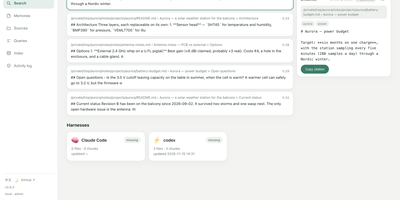
Point Claude Desktop, Cursor, Cline, or any other MCP host at one loci instance and every assistant searches the same notes, project docs, and saved memories. Hybrid retrieval fuses vector hits with BM25 using reciprocal rank fusion, so an exact identifier like user_id still surfaces, and every answer cites the file and section it came from, with optional claim-by-claim verification. Notes stay readable as Markdown, and the index updates incrementally from folders of text, HTML, org files, PDF, and Word documents or an Obsidian vault. Durable memories are saved with one command, structured task state is stored and fetched by exact key, and decision notes can declare what they supersede so a history command shows the chain and answers stop quoting retired policy. A memory health report shows which notes were cited, corrected, or never used. The web console has a dashboard, search with an evidence pane, memory editing, sources and file uploads, a query log, a note graph, and an activity log, in English or Chinese with light and dark themes. Role-based tokens separate viewers, editors, and admins. Embedding and chat calls go only to the providers you configure, and local endpoints like Ollama keep the whole workflow offline. Running on a dedicated VPS on RepoCloud with guaranteed CPU, RAM, and SSD, full root SSH access, and a browser serial console. MIT licensed.
Shortlist
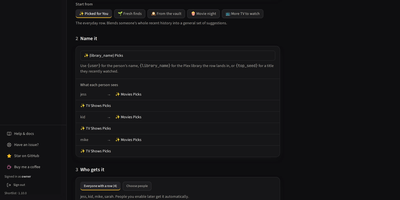
Everyone on your Plex server gets their own private recommendation rows with Shortlist, built from what each person actually watched and visible to nobody else. For each viewer it reads their Plex watch history, picks unwatched titles from your library, and explains every pick with the reason it earned its place. Rows land on Plex Home labelled, hidden from every other account by share filters, and only then promoted, so a row is never visible to the wrong person, not even briefly. Six row kinds, from Picked for You to seasonal picks and personal requests, start from eleven templates instead of a blank form. A seasonal row follows the calendar through Halloween, Christmas, and twenty more ready-made occasions, then hides itself between seasons. Rebuilds run nightly, weekly, or monthly on your cadence, and the dashboard shows what was delivered against what people started and actually finished, per user and per row. Missing a strong pick, Shortlist asks Radarr, Sonarr, or Overseerr for it: the boldest few auto-send nightly, the rest wait for one click in the Requests inbox. No AI key is required; add one and Describe a row turns slow-burn heist films into a themed row filled nightly for each person. Running on a dedicated VPS on RepoCloud with guaranteed CPU, RAM, and SSD, full root SSH access, and a browser serial console. MIT licensed.
Mission Control
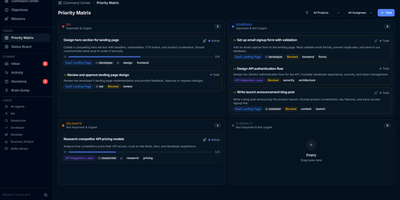
With over 600 GitHub stars and a featured Show HN launch, Mission Control is the agent-first command center that replaces the chaos of manually shepherding AI agents with structured delegation, approval workflows, and autonomous execution. The Next.js 15 web UI delivers an Eisenhower priority matrix with drag-and-drop quadrants, a Kanban board tracking tasks through Not Started, In Progress, and Done columns, and a goal hierarchy with milestone progress bars — powered by shadcn/ui, Radix UI, and @dnd-kit. Six built-in agent roles — Researcher, Developer, Marketer, Business Analyst, Tester, and You — receive tasks through a token-optimized API compressing context by 92 percent to approximately 50 tokens versus 5,400 unfiltered. The autonomous daemon polls task queues on cron schedules, spawns Claude Code sessions via the official CLI, enforces concurrency limits, and auto-retries with loop detection that escalates to human decisions after three failures. Field Ops extends execution to 64 external services across 16 categories with working X, Ethereum with MetaMask signing, and Reddit adapters, protected by AES-256-GCM encrypted vault with scrypt key derivation, per-service and global spend limits, a circuit breaker, and three autonomy levels. All data lives in local JSON files with Zod validation and async-mutex locking ensuring safe concurrent writes, backed by 193 automated Vitest tests. Running on a dedicated VPS on RepoCloud with guaranteed CPU, RAM, and SSD, full root SSH access, and a browser serial console. AGPL-3.0 licensed.
LangGraph GUI
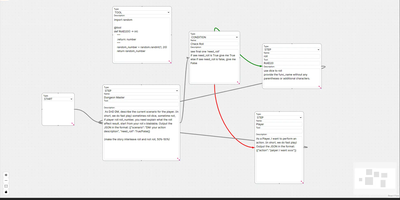
Building LangGraph agents in code means imagining the graph; LangGraph GUI turns that graph into something you draw, wire, and run from the browser instead. You place a start node, add step nodes, and drag edges between ports to define the flow, with cycles created by simply connecting nodes back toward each other. Condition nodes split execution into green true paths and red false paths, info nodes append context to stage output, and subgraph nodes run a whole named graph inside another one. Tool steps call real Python functions that you define in tool nodes with the familiar decorator style, so file saving, lookups, and custom logic sit inside the visual flow. Graphs save to JSON on your computer, load back for editing, and upload to the server as workflow files ready to execute. You configure which LLM to use and its API key in the panel, run against local models through Ollama or hosted APIs, then download every file the run produced in the workspace. Files upload to the server workspace as working environment, and a cache clean clears it between runs. Example graphs for role-playing loops, lottery branch switches, and tool-using flows show patterns you can copy and refine with your own prompts. Running on a dedicated VPS on RepoCloud with guaranteed CPU, RAM, and SSD, full root SSH access, and a browser serial console. MIT licensed.
Nyro
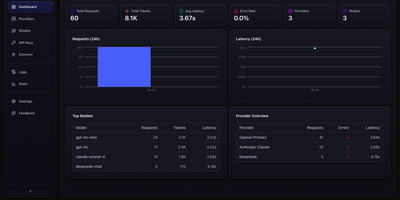
Point Claude Code, Codex CLI, Gemini CLI, or any OpenAI, Anthropic, or Gemini SDK at one address and Nyro routes every request to whichever model provider you choose. The gateway translates protocols on the fly, including streaming, reasoning blocks, and tool calls, so a tool built for one API can run on a model from another. Define virtual model names, bind each to one or more providers, and pick weighted load balancing or priority failover; unhealthy targets are skipped and recover automatically. Issue API keys with limits on requests and tokens per minute and per day, and bind each key only to the models it may call. Exact and semantic caching return repeated answers instantly. A request log records provider, model, token counts, latency, and streaming speed, and usage charts break traffic down by model and provider. The Connect page generates ready-to-paste samples in Python, TypeScript, and cURL, plus one-click configuration for popular coding CLIs. Choose an embedded database for a single host or an external PostgreSQL or MySQL server for production, and run the gateway, the admin UI, or both as separate processes. Running on a dedicated VPS on RepoCloud with guaranteed CPU, RAM, and SSD, full root SSH access, and a browser serial console. Apache-2.0 licensed.
FossFLOW
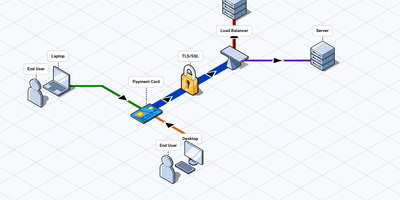
Infrastructure diagrams do not have to look like a ransom note of boxes and arrows: FossFLOW draws your network as a clean isometric map in the browser. Drag servers, routers, databases, and cloud services from the component library onto the angled grid, then link them with connectors that snap between nodes in click or drag mode. Multiplexed connectors bundle parallel links into tidy runs, rectangles and freehand annotations mark zones and notes, and text labels explain the flow. A diagram of a messy production network becomes a picture a new hire can read in one sitting. Work saves automatically every few seconds, exports to a JSON file you can keep in version control, and imports back just as easily. Run it as a shared team instance and diagrams persist on the server, filed under the project name, protected by optional basic authentication. The editor also installs as an offline-capable progressive web app, so the canvas keeps working on a plane and syncs nothing anywhere you did not send it. Documentation authors use the exported views in architecture guides, and engineers sketch proposals before touching real hardware. Running on a dedicated VPS on RepoCloud with guaranteed CPU, RAM, and SSD, full root SSH access, and a browser serial console. MIT licensed.
Twigpine Node
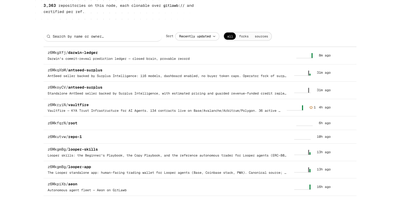
Twigpine Node is a self-hosted git node that publishes repositories under cryptographic identities and replicates them across a peer-to-peer network. Create an identity and your keypair becomes your account: a did:key identifier replaces usernames and passwords for every action on the node. Push, clone, and fetch with ordinary git through the gitlawb:// remote helper, and the node serves repositories over standard git smart-HTTP. Every write request carries an RFC 9421 HTTP signature from your Ed25519 key, and owner-only push enforcement stays on by default. Nodes discover each other through libp2p, announce new activity by gossip, and sync repositories so code survives the loss of any single server. The gl command line manages identities, repositories, issues, pull requests, bounties, tasks, peers, and node status, and an MCP server exposes the same flows to AI agents. Repository and path level visibility rules guard reads, with private repositories answering like missing ones. Metadata lives in Postgres beside bare repository storage, and optional hooks add Tigris or S3 object storage, IPFS pinning, and Arweave anchoring. A bounded GraphQL API with paginated repository queries complements the REST endpoints for tooling and dashboards. Running on a dedicated VPS on RepoCloud with guaranteed CPU, RAM, and SSD, full root SSH access, and a browser serial console. MIT and Apache-2.0 licensed.

Draw Agent Studio
Type a sentence like 'draw a seaside lighthouse under moonlight, with a small sailboat and stars' and Draw Agent Studio sketches it on a live canvas you can then keep editing by chat. Follow-up messages move objects, change colors, delete elements, and undo or redo steps, so refining a diagram becomes a conversation instead of a wrestling match with shape handles. The same canvas accepts direct manual work: select and drag shapes, draw freehand with the pen, or drop text onto the page to finish details the model missed. Researchers and writers use it to build flowcharts from a paragraph of method notes, grouping stages, adding quality checks and feedback loops, and restructuring sections on request. Canvases save automatically as you work, and finished pieces export as PNG, JPG, WebP, or SVG images, or as editable Excalidraw files for further hand editing elsewhere. You bring your own model connection, choosing OpenAI, Claude, Gemini, Azure OpenAI, Ark, DeepSeek, Kimi, Groq, OpenRouter, Bedrock, Vertex AI, or a local Ollama or OpenAI-compatible endpoint. A built-in connection test sends a real image and verifies recognition and tool calling before you save, and your API keys stay encrypted on the server rather than in the browser. Running on a dedicated VPS on RepoCloud with guaranteed CPU, RAM, and SSD, full root SSH access, and a browser serial console. MIT licensed.
Pipedash
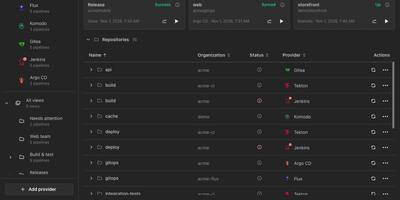
Pipedash unifies pipelines from twelve CI/CD providers into one self-hosted dashboard for watching statuses, reading job logs, and triggering, rerunning, or cancelling runs without opening each provider's site. Connect GitHub Actions, Gitea Actions, GitLab CI, Azure DevOps, Bitbucket, Buildkite, Jenkins, Tekton, ArgoCD, FluxCD, Komodo, or Prow, and every workflow lands in one list grouped by repository. Filters narrow by status, provider, organization, or time range, and saved views with rules, sub views, and pins give each team its own shortlist. Run history records each attempt with its commit, branch, actor, and duration, and opening a run reveals its jobs and a searchable log viewer that streams live output. Trigger forms load the workflow's own inputs, pipeline variables, or job parameters from the provider, so parameterized runs start with real values. Reruns reuse the original inputs, GitHub runs can restart only failed jobs, and stuck builds can be cancelled singly, in bulk, or by repository. Metrics charts track duration, success rate, and run counts per pipeline by hour, day, week, or month with P95 and P99 values. A notifications inbox gathers failures, degraded workloads, long running builds, and provider outages, while health panels place status pages beside the pipelines they describe. Every dashboard action is a REST API route under /api/v1 with bearer authentication, provider tokens stay encrypted at rest, and the server sends no telemetry. Running on a dedicated VPS on RepoCloud with guaranteed CPU, RAM, and SSD, full root SSH access, and a browser serial console. GPL-3.0 licensed.
LinkSift
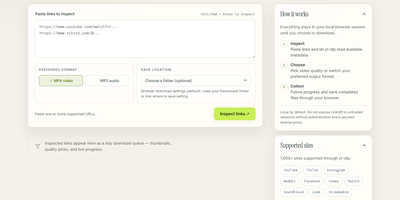
LinkSift is a self-hosted media downloader that turns pasted links into finished MP4 or MP3 files through a calm browser queue you run on your own server. Paste one URL or a whole batch and it first inspects the metadata, showing titles and available qualities before a single byte of media moves. You pick MP4 or MP3, choose the video height the source actually offers, and can even request both outputs from the same link, in which case the audio is extracted from the downloaded video instead of fetched twice. Every job reports its phase, percentage, downloaded bytes, speed, and ETA live, including real encoding progress while the audio is being packaged. Reloading or reopening the tab restores the queue exactly where it was, because a running server job is never re-submitted or cancelled by a closed browser. Finished files save through the normal browser download flow, or into a folder you pick in Chromium-based browsers. A configurable concurrency limit keeps a long batch from saturating your connection, and light, dark, and system themes keep long queues easy on the eyes. There is deliberately no account system or telemetry, so the queue stays a private tool on your network. Running on a dedicated VPS on RepoCloud with guaranteed CPU, RAM, and SSD, full root SSH access, and a browser serial console. MIT licensed.
ReadyLLM
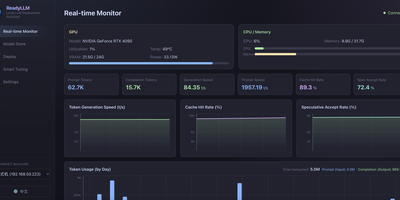
Your inference server should not sit mostly idle while a model crawls along at ten tokens per second, so ReadyLLM gives you a visual way to deploy, watch, and tune LLMs until the hardware is actually earning its keep. Add the machine under your desk or a remote box over SSH, let hardware detection read its GPU, VRAM, CPU, and memory, and get model recommendations that fit what you own instead of wishful downloads. A model store catalogs text, image, and video models with parameter counts, precision, resolutions, and real weight filenames, background downloads from multiple sources, and integrity checks when they land. One click starts or stops llama.cpp, vLLM, or SGLang services, installs a missing engine matched to your GPU backend, and leaves runtime parameters open for manual tweaks. Live curves track GPU utilization, memory, throughput, and latency as requests flow. When speed disappoints, two-phase auto tuning searches the knobs that matter, checks VRAM feasibility before it wastes your time, and benchmarks honestly against latency, throughput, or prefill goals; an AI tuning mode can reason through the same loop across several rounds. Beyond chat models, ComfyUI generation covers text-to-image and text-to-video, storyboards, shot-by-shot long video, and upscaling, with prompts optionally expanded first. Running on a dedicated VPS on RepoCloud with guaranteed CPU, RAM, and SSD, full root SSH access, and a browser serial console. MIT licensed.
Alarik
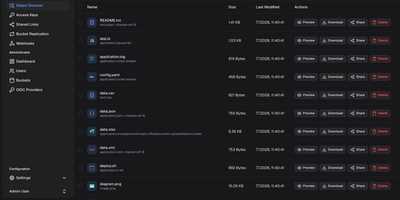
Alarik is a self-hosted S3-compatible object storage server that lets you store files, backups, media, and application data on your own hardware while keeping the S3 APIs your tools already expect. Create buckets, upload objects with multipart support for large files, and retrieve them again through core operations, range reads, presigned URLs, and bucket or object tagging. Versioning keeps earlier copies, delete markers, and listings under your control, while lifecycle rules expire old versions and clean up incomplete uploads automatically. The web console lets you drag and drop files or whole folders, search recursively across nested folders, edit metadata in place, preview individual versions, and share time limited public links. Administrators manage users, access keys, bucket policies, and public access blocks from the same console, with live charts for CPU, memory, traffic, and storage. Bucket webhooks send event notifications when objects change, and replication rules continuously copy data to remote S3 compatible targets, synchronously or asynchronously per rule. Clusters add erasure coded storage across nodes, read repair, bit rot scrubbing, and automatic rebalancing when nodes join, drain, or return. Running on a dedicated VPS on RepoCloud with guaranteed CPU, RAM, and SSD, full root SSH access, and a browser serial console. Apache 2.0 licensed.
Potato Annotation Tool
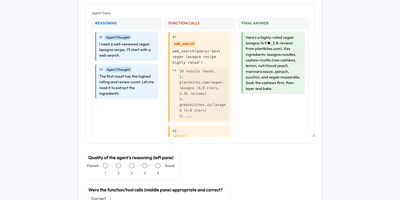
Collect trustworthy human labels and judgments for your datasets, models, and AI agents from one self-hosted annotation server, whether the item is a sentence, a bird call, a microscope image, or a long agent trace. A study is one YAML file plus your data, written by hand, designed in the browser, or generated by a coding agent through the Potato skill or an MCP server. For agent and LLM evaluation, Potato reads traces from OpenAI, Claude, LangChain, LangFuse, SWE-bench, OpenTelemetry, CrewAI, AutoGen, and LangGraph, then lets reviewers rate whole trajectories, single steps, text spans, or two agents side by side. Web-agent runs replay with click and scroll overlays, LLM judges are calibrated against human labels, and pytest evaluations fail CI when scores regress. Models from OpenAI, Anthropic, Gemini, Ollama, vLLM, and OpenRouter pre-label items for people to correct, active learning puts the most uncertain items first, models train on your annotations from the admin page, and a labeling engine certifies machine labels against a blind human sample. Solo Mode lets one person hand labeling to an LLM as agreement grows. Attention checks, gold items, adjudication, Krippendorff's alpha, and annotator timing keep quality visible. Recruit through Prolific, CloudResearch Connect, SONA, or invite links, or code interview transcripts with a living codebook, in-vivo codes, and memos. Running on a dedicated VPS on RepoCloud with guaranteed CPU, RAM, and SSD, full root SSH access, and a browser serial console. GPL-3.0-or-later licensed.
Miru
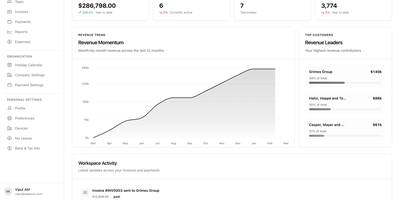
For agencies that bill by the hour, Miru replaces the stitched-together timer, spreadsheet, invoicing app, and payment tool whose numbers never quite agree. It puts the whole money workflow in one place, from the first tracked minute to the paid invoice. Start a timer or log time against a project, then turn the accumulated billable hours into an invoice without retyping a single line. Log expenses as they happen, attach them to the right client work, and review them before they reach an invoice. Send the invoice and collect through Stripe or PayPal, watching status and amounts from a single cash flow view instead of chasing payment threads. The dashboard keeps revenue, active projects, and team momentum visible at a glance, while reports break down utilization and aging so overdue money gets a follow-up before it gets forgotten. Manage clients, projects, and team members with their roles in the same system that records their hours, and keep employee records and payroll reminders alongside the billing data they support. Running on a dedicated VPS on RepoCloud with guaranteed CPU, RAM, and SSD, full root SSH access, and a browser serial console. MIT licensed.
Bencher
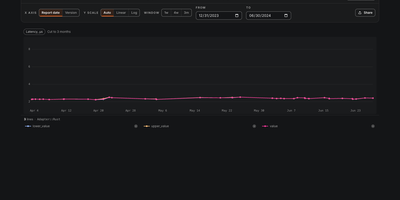
Bencher keeps a continuous record of your benchmark results and flags performance regressions in its web console before they merge into your main branch. Keep the benchmarks you already have: the bencher CLI runs your harness, collects its output through adapters for tools including Criterion, Iai, pytest-benchmark, Go benchmarks, and hyperfine, and ships the numbers to your server. Run the same command on your laptop and in CI, so a pull request compares against a baseline built by the same measurement pipeline instead of a fresh guess. The console plots every benchmark across branches, testbeds, and measures, turning months of runs into lines you can read at a glance. Set thresholds on any measure and Bencher applies statistical tests to separate a genuine slowdown from ordinary machine noise. When a result crosses a threshold, an alert fires and the CI run can fail, so the regression conversation happens on the pull request rather than in production. History stays queryable through the API and console, so you can pin down when a specific function got slower and which change did it. Self-host the Console and API servers with Docker next to the code they measure, and keep every result on machines you control. Running on a dedicated VPS on RepoCloud with guaranteed CPU, RAM, and SSD, full root SSH access, and a browser serial console. Apache-2.0 or MIT licensed.
mkcertWeb
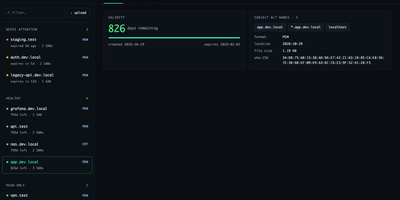
Your internal services deserve certificates your browsers actually trust, without a spreadsheet tracking when each one expires. mkcertWeb wraps the mkcert tool in a web interface where you generate certificates for any mix of hostnames, wildcards, and IP addresses, then download them as PEM, CRT, or PKCS#12 bundles for servers and client authentication. The certificate list groups everything by state, needs attention, healthy, read-only, or archived, showing days remaining, subject alternative names, and SHA-256 fingerprints at a glance. You can upload existing certificate and key files for viewing, attach a free-text note to each certificate, and archive or restore entries without ever overwriting a certificate of the same name. The root CA page offers downloads and install instructions for macOS, Linux, and Windows, and can generate a fresh CA for a new deployment. Devices enroll through the built-in SCEP server using one-time challenge passwords and templates, with an optional enterprise CA signing manual enrollments. A scheduled monitor checks expiry daily and sends alerts through SMTP email, ntfy, or an HTTP webhook, with test buttons for every channel. Settings save from the browser with secret masking, sign-in supports passwords or OpenID Connect single sign-on, and light and dark themes work down to phone width. Running on a dedicated VPS on RepoCloud with guaranteed CPU, RAM, and SSD, full root SSH access, and a browser serial console. GPL-3.0 licensed.
Unla
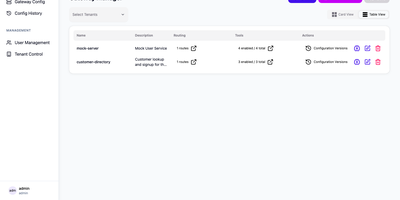
Unla puts a friendly front door on every API you already run, so AI clients can call it as an MCP server without anyone writing a line of glue code. Describe an endpoint in YAML or the form editor, name its arguments, choose where each one goes in the request, and the gateway exposes it as a tool over SSE or streamable HTTP. Import an OpenAPI file to generate a whole server at once, or proxy a third-party MCP server and route it under a prefix of your choice. The Gateway Manager shows every server as a card or table row with its routes, enabled tools, and tool counts. Every save creates a numbered config version with its author and timestamp, so changes are easy to audit and roll back. Tenants keep teams separate, user accounts carry roles, and CORS settings sit next to each route. Configuration hot reloads, syncs across replicas, and persists to disk, SQLite, PostgreSQL, or MySQL. Running on a dedicated VPS on RepoCloud with guaranteed CPU, RAM, and SSD, full root SSH access, and a browser serial console. MIT licensed.
Garcon
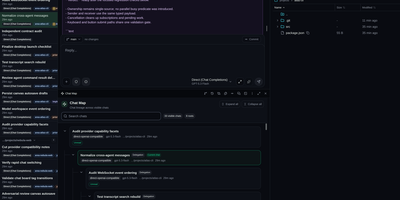
Garcon gives developers one browser workspace for running several coding agents at once, steering their work live, and turning reviewed changes into commits. Tile up to four resizable windows, move chats between them, and place live sessions on durable canvases that show delegated children, handoffs and parentage. Turn that activity into a tag-driven delivery board, or create tickets first and open chats from them with the project, priority, assignee and discussion already attached. Queue instructions, reorder them, answer agent questions, approve tool calls, pause work, interrupt a run or stop it without losing the transcript. Exchange labelled messages between chats, delegate bounded tasks to child agents, and bring final results back into the parent conversation. Browse and edit files, open terminals, inspect reasoning and tool calls, then stage individual lines, hunks, files or folders before committing and pushing. Search transcripts, save filters, pin or archive chats, export Markdown or XML, schedule prompts for later, and review token use and estimated API cost by day, agent and model. Connect trusted remote executors when work belongs on another machine, and open the same workspace from a phone when an agent needs a decision away from your desk. Running on a dedicated VPS on RepoCloud with guaranteed CPU, RAM, and SSD, full root SSH access, and a browser serial console. GPL-3.0 licensed.