OpenReplay
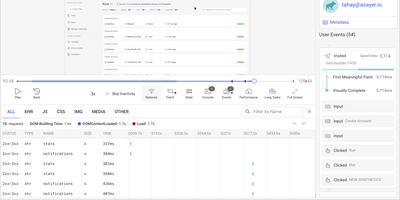
Backed by 12,400+ GitHub stars and positioned as the self-hosted alternative to FullStory and Hotjar, OpenReplay delivers the open-source session replay platform that keeps every byte of user behavior data on your own infrastructure. The JavaScript tracker captures pixel-perfect recordings of clicks, scrolls, form inputs, and navigation with automatic sensitive data masking, while simultaneously logging network requests, console errors, JavaScript exceptions, and Redux, VueX, MobX, NgRx, Pinia, and Zustand store state changes for complete technical context. DevTools mode reconstructs each session with full stack traces, GraphQL queries from Apollo and Relay, Fetch and Axios request payloads, CPU and memory metrics, and page speed waterfall charts — effectively giving developers a browser inspector tied to any user session. Product analytics surfaces conversion funnels, user journeys, click heatmaps, web vitals trends, and retention cohorts without requiring custom instrumentation. Co-browsing connects support agents to live user sessions with cursor control and WebRTC audio, enabling real-time assistance without third-party screen-sharing software. Integrations push session context into Sentry, Datadog, CloudWatch, Stackdriver, and Elastic for front-to-back debugging. Feature flags enable gradual rollouts with session-level targeting. The platform deploys to any cloud via Docker and Kubernetes with auto-scaling ingestion handling up to 50,000 sessions per month on the open-source edition. Running on a dedicated VPS on RepoCloud with guaranteed CPU, RAM, and SSD, full root SSH access, and a browser serial console. AGPLv3 licensed.
Rustunnel
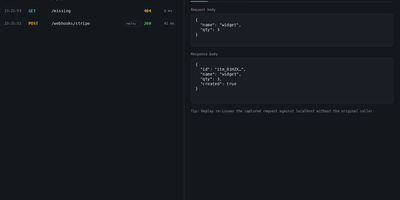
Rustunnel turns a service running on your laptop or private network into a public HTTPS, TCP, or UDP endpoint without opening inbound ports on the machine where it lives. Point the client at a local port and share the public address for webhook testing, a quick demo, an AI agent tool, SSH access, a game server, or an IoT device that cannot accept inbound connections. Give tunnels custom subdomains on your own wildcard domain, terminate HTTPS with automatic Let's Encrypt certificates, and keep client traffic encrypted from edge to local service. Put several backends behind one subdomain or TCP port and let TCP or HTTP health probes remove sick members before visitors hit them. When two peers can reach each other directly, start a P2P tunnel with NAT hole punching and QUIC, with relay fallback when the direct path fails. Watch sessions, tunnel health, traffic, and request logs from the live dashboard, inspect headers and bodies in the local request inspector, and replay a captured call while debugging a webhook. Manage tunnels, tokens, groups, captured requests, and history through the REST API, scrape Prometheus metrics, review audit logs, or let an MCP-compatible coding assistant create and close tunnels in plain language. Running on a dedicated VPS on RepoCloud with guaranteed CPU, RAM, and SSD, full root SSH access, and a browser serial console. AGPL-3.0 licensed.
ChartDB
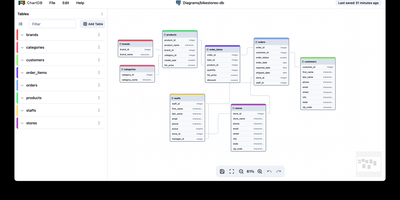
Paste one SQL query result into a browser and get an interactive entity-relationship diagram instantly, with no installations, no credentials, and no account required. ChartDB's "Smart Query" runs a single statement in your existing database client that exports table definitions, relationships, indexes, and column types as JSON metadata, meaning the application never touches your database passwords. The canvas renders draggable entities with cardinality markers, collapsible grouping areas, and sticky notes for documentation. AI-powered DDL export generates migration scripts between dialect pairs like PostgreSQL to MySQL or SQLite to CockroachDB, analyzing your schema to produce target-specific DDL with correct type mappings and constraint translations. Import paths cover Smart Query JSON, raw DDL scripts, and DBML files from tools like dbdiagram.io. The AI layer connects to OpenAI or any compatible inference server including local vLLM instances running models like Qwen2.5-32B. Database coverage includes PostgreSQL (with Supabase and Timescale extensions), MySQL, SQL Server, MariaDB, SQLite (with Cloudflare D1), CockroachDB, ClickHouse, and Oracle. Exports to SVG with inline styles or SQL DDL in any target dialect. Ships as a React/Vite frontend behind Nginx in Docker, deployable on RepoCloud with dedicated VPS resources under the AGPL-3.0 license.
Tau
Tau delivers a complete self-hosted cloud platform where Git is the control plane and WebAssembly is the runtime. The Go binary deploys as interconnected nodes that form a P2P network using libp2p for automatic service discovery, eliminating Kubernetes entirely. Serverless functions compile to WebAssembly for secure multi-tenant execution with automatic horizontal scaling — write in Go, Rust, AssemblyScript, or C and deploy by pushing to Git. Branch-based environments map Git branches to isolated deployments, so staging and production run identical infrastructure from different refs. Static website hosting serves frontends with global distribution and automatic content-addressed deduplication via IPFS-derived storage. The built-in K/V database provides distributed storage with automatic replication across nodes, while object storage handles file management with content addressing. Pub/Sub messaging enables real-time communication between functions and external services including WebSocket support. Spore Drive automates multi-host deployment and rolling updates from a single command across bare metal or VMs running Ubuntu. The Dream CLI provides a complete local development environment that mirrors production exactly — same services, same routing, same deployment flow. Zero-configuration HTTPS provisions TLS certificates automatically for custom domains. The web console at console.taubyte.com provides visual project management, or use the tau CLI for Git-native workflows. Running on a dedicated VPS on RepoCloud with guaranteed CPU, RAM, and SSD, full root SSH access, and a browser serial console. BSD-3-Clause licensed.
New API
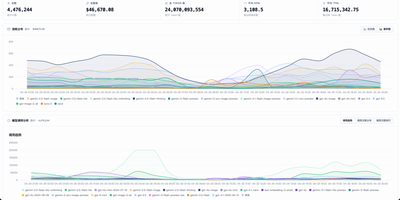
New API is a Go-powered LLM gateway that funnels over 40 AI providers, from OpenAI and Anthropic to Google Gemini, Azure, AWS Bedrock, DeepSeek, and Mistral, through a single OpenAI-compatible endpoint with intelligent routing and enterprise cost controls. Bidirectional format conversion translates between OpenAI Chat Completions, Claude Messages, and Gemini GenerateContent APIs transparently, so clients call any provider using their preferred format while the gateway handles the rest. Routing logic supports weighted random channel selection, priority-based failover, and automatic retry on provider errors to maximize uptime. The React admin dashboard shows usage charts, token consumption tracking, per-model cost breakdowns, and real-time request monitoring. Multi-tenant architecture includes three role levels, token-based authentication, per-user quota management, and a three-phase billing system with tiered pricing via a custom expression language. Multimodal support covers text completion, vision, embeddings, text-to-speech, speech-to-text, image generation, and creative task providers like Midjourney-Proxy and Suno-API. The interface ships in five languages including English, Chinese, Japanese, and French. Docker deployment runs with SQLite or MySQL for persistence. 45,000+ GitHub stars. AGPL-3.0 licensed.
AppFlowy
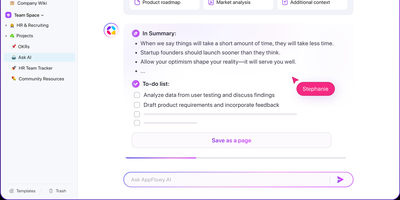
With over 75,000 GitHub stars and native apps across macOS, Windows, Linux, iOS, and Android, AppFlowy is the most widely adopted open-source alternative to Notion — delivering the same block-based workspace model with full data sovereignty. The Flutter frontend renders natively on every platform while a Rust backend powered by Actix-web and Tokio handles CRDT-based real-time collaboration, ensuring sub-second sync across devices with conflict-free concurrent editing. Relational databases support grid, board, kanban, calendar, and gallery views over the same dataset, with two-way relations, rollups, advanced filters, sorts, and formula calculations that cover the majority of Notion's database workflows. The block editor supports 40+ content types including nested pages, toggles, callouts, code blocks with syntax highlighting, embeds, and slash-command insertion. AI integration connects to OpenAI, Anthropic, or local models via Ollama for writing assistance, summarization, and translation — all without sending data off-premises when using on-prem LLMs. Team spaces with workspace-level and per-page permissions, OAuth and SSO authentication through GoTrue, and S3-compatible object storage via MinIO provide enterprise-grade access control and file management. The self-hosted stack deploys through Docker Compose with PostgreSQL for metadata, Redis for caching and pub/sub, and a dedicated background worker for imports and email notifications. Offline-first architecture ensures the desktop app functions without connectivity, syncing changes when the connection resumes. Running on a dedicated VPS on RepoCloud with guaranteed CPU, RAM, and SSD, full root SSH access, and a browser serial console. AGPL-3.0 licensed.

Serviette
Your documents change every day, and your RAG answers should change with them: Serviette keeps a chat and REST API continuously in sync with the files you point it at, no re-indexing jobs to remember. Point it at a local folder, Google Drive, S3 or MinIO bucket, SharePoint library, or even an FTP or WebDAV share, and edits, additions, and deletions flow into the index in real time. One YAML file, or the interactive wizard, chooses among eight vector databases, from embedded DuckDB with zero setup to pgvector, Qdrant, Milvus, Chroma, Weaviate, Pinecone, or MongoDB Atlas. Text, Office files, PDFs with tables, and scanned images are parsed and answerable by default, with audio and video joining when you add the keys. Embeddings can run fully locally with no credentials, and keyless answers simply quote the retrieved passages with their sources. The indexer and the stateless server scale independently, the server shards across workers with one config line, and both a ChatGPT-style web chat and a versioned /api/v1 retrieval API answer on the same port. A free license key from Pathway activates the engine, and benchmarks cover corpora up to 50 GB of text. Running on a dedicated VPS on RepoCloud with guaranteed CPU, RAM, and SSD, full root SSH access, and a browser serial console. MIT licensed.
Respan Gateway
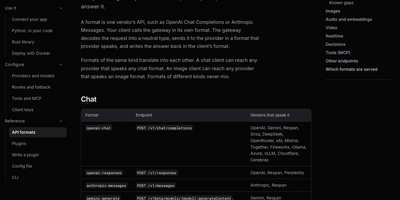
Respan Gateway is a single-binary LLM gateway that lets the SDK you already use call any AI model from any provider, translating between OpenAI, Anthropic, and Gemini API formats on the way through. Point an OpenAI, Anthropic, or Gemini client at it and you reach chat models on sixteen providers, plus any OpenAI-compatible endpoint of your own, with streaming, tools, images, and reasoning translated. Traffic control works the way operators think: name a route, send it to the cheapest or fastest provider, retry on failure, fall back to a second vendor, or hedge a slow call by racing another provider. Models that never had tools get them anyway, because MCP servers and built-in search, browsing, code, document, and memory tools run inside ordinary chat requests behind the gateway. Realtime voice crosses vendors too, with an OpenAI Realtime client able to talk to Gemini Live, alongside images, speech, transcription, embeddings, and video through one endpoint. A live request log in the web UI shows the client key, model, provider, status, tokens, cost, and latency of every call, so runaway agents and surprise bills are visible immediately. Everything is a plugin on one public Rust API, from routing and pricing to tracing, with examples for guardrails, PII masking, and billing. One TOML file configures keys, providers, routes, and tools, validates before it starts, and reloads on signal. Running on a dedicated VPS on RepoCloud with guaranteed CPU, RAM, and SSD, full root SSH access, and a browser serial console. Apache-2.0 licensed.
Duplicati
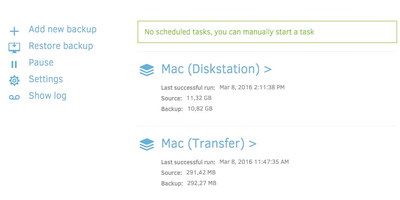
Encrypted, incremental, compressed backups on storage you already have - Amazon S3, Backblaze B2, Google Drive, Azure, OneDrive, Dropbox, MEGA, Storj, WebDAV, SFTP, FTP, SMB, or a plain local disk - is what the MIT-licensed Duplicati has quietly done for years. Its security model is Trust No One: every block is encrypted with AES-256 (or a local GPG instance) before leaving the machine, and the passphrase never travels, so the storage provider holds only ciphertext. The block-based storage engine gives the best of both backup worlds: after one initial full backup, only changed data blocks upload - modify a tiny part of a huge file and only that part transfers - yet every backup version restores like a full backup in a single operation, with no incremental chains to replay. Deduplication and compression keep remote storage growth slow even across years of versions. A web interface manages everything: the built-in scheduler keeps backups current automatically, flexible filters select folders, file types, or custom patterns, retention policies prune old versions, and an integrated updater flags new releases. On compatible object-lock backends, immutable (WORM) storage protects backup data from ransomware that reaches the credentials. Runs on Windows, macOS, and Linux, free even for commercial use.
Jean
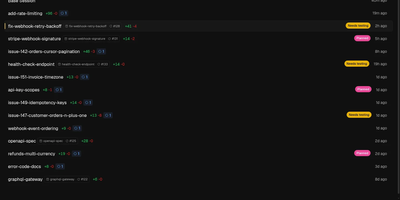
On your own server, Jean runs a team of AI coding agents, each in its own git worktree, and lets you steer them all from a browser tab. Every task starts from real context: a GitHub issue, pull request, workflow run, Dependabot alert, security advisory, Linear ticket, Sentry error, or a plain prompt. Jean creates an isolated worktree with its own chat sessions, terminal, and diff, so several agents can edit one repository without colliding. Choose the backend per task from Claude, Codex, Cursor, OpenCode, Pi, Command Code, Grok, and Kimi Code, using your own subscriptions and CLI logins. Plan, Build, and Yolo modes, plan approval, and session recaps keep long runs reviewable. Magic commands handle commits, pull request descriptions, AI code review with tracked findings, merge conflict resolution, and release notes, and every prompt is editable with its own model and reasoning effort. A split or stacked diff viewer covers uncommitted changes, branches, commits, and checkpoints, with line comments. Mr. Robot, a beta sweeper, polls open issues and drafts plans in fresh worktrees. Linked projects share context across repositories, and MCP servers can be switched on per project or per session. Token-protected web access works from a laptop or a phone, and the desktop app can attach to the same server. Running on a dedicated VPS on RepoCloud with guaranteed CPU, RAM, and SSD, full root SSH access, and a browser serial console. Apache-2.0 licensed.
Openship
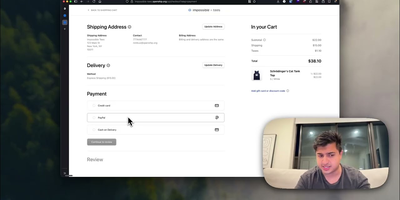
Point Openship at a GitHub repo, local folder, or prebuilt artifact and it detects your stack, builds a Docker container, provisions databases, configures domains with automatic Let's Encrypt TLS, and routes traffic through an OpenResty edge layer on ports 80 and 443. Already past 10,000 stars since launching in March 2026, it turns any Linux VPS into a managed application host. Language support covers Node.js, Python, Go, Rust, PHP, Ruby, Java, .NET, Docker, and monorepo projects with push-to-deploy CI/CD, pull request preview environments on unique subdomains, staging/production flows, and one-click rollbacks. Integrated backend services include managed Postgres, MySQL, MongoDB, Redis, persistent volumes, WebSocket proxying, object storage, and worker processes, all provisioned from the dashboard without compose files. A built-in SMTP server handles transactional email with automatic DKIM, SPF, and DMARC configuration, eliminating external email services. The edge layer serves HTTP/3 with Brotli compression, configurable cache rules, and instant purging. Real-time monitoring streams build logs, container metrics, visitor geography, and per-status-code analytics at 1.4 microsecond overhead with zero database writes. Scheduled backups cover databases and volumes with one-click restore and export. Three interfaces (web dashboard, desktop app for macOS/Windows/Linux, and the openship CLI) drive the same API, plus a Model Context Protocol endpoint for AI integration. Running on a dedicated VPS on RepoCloud with guaranteed CPU, RAM, and SSD, full root SSH access, and a browser serial console. Apache 2.0 licensed.
Mikka
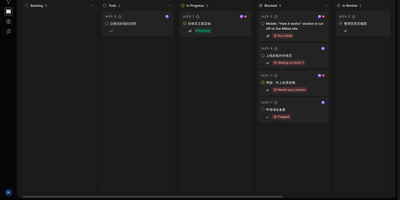
Instead of babysitting three coding agents in three terminal windows, you describe the work once and let Mikka run the team: its Coordinator bot plans the job, dispatches runs to Claude Code, Codex, or Cursor on your connected machines, and only interrupts you when a decision is actually yours. Every piece of work lives in a thread with its own conversation, so dispatched runs appear as cards that report progress, ask questions, and flag blocks while you watch, reply, or stop them from the web, desktop, or phone. Unclear requests come back as choice cards before anything runs, and finished work moves through review and verification runs, back to a fix run when a check fails, then to acceptance where the pull request merges as you. Runs use leases and checkpoints, so a machine that drops mid-task hands the work to another connected computer with the same repository. You can create your own bots beside the Coordinator, each with its own chat, memory, and threads, and answers can arrive as charts, tables, stat cards, and task chips with sources cited. Daemons connect over SSH or from the desktop app, other agents drive Mikka through MCP, and Telegram or Slack messages reach the Coordinator too. Running on a dedicated VPS on RepoCloud with guaranteed CPU, RAM, and SSD, full root SSH access, and a browser serial console. AGPL-3.0 licensed.
Temps
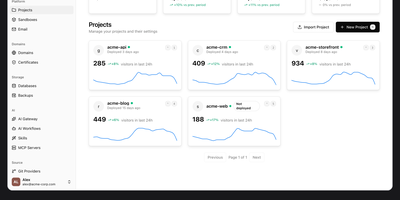
Consolidate application hosting, web analytics, error tracking, and performance monitoring into Temps, an open-source developer platform that replaces disparate SaaS subscriptions with a single compiled Rust binary. Engineering teams deploy full-stack web applications, background daemons, and microservices directly from Git repositories with automated TLS certificate provisioning powered by an embedded Cloudflare Pingora reverse proxy. The centralized web console unifies real-time visitor analytics, conversion funnels, and rrweb-powered session replay recordings without third-party tracking scripts. Integrated error monitoring ingests runtime exceptions with full stack traces and source map resolution, while continuous health checks evaluate container CPU utilization, memory thresholds, and network throughput across custom alerting rules. Developers manage infrastructure through an extensive command line interface containing over 440 operations across 69 command groups, or deploy drop-in skill files that allow AI coding assistants like Claude Code and Codex to provision preview environments autonomously. The platform also provides serverless key-value storage, S3-compatible blob buckets, and native transactional email routing with custom DKIM validation. Running on a dedicated VPS on RepoCloud with guaranteed CPU, RAM, and SSD, full root SSH access, and a browser serial console. Apache 2.0 licensed.
SITREP
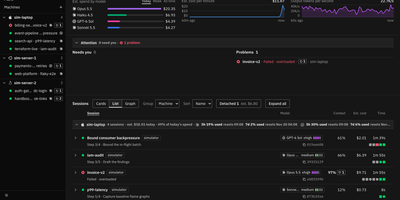
Watch every coding agent you run, on every machine, from one live browser dashboard. Sessions appear as cards, a sortable list, or a graph, grouped by machine or project, each showing its plan and current step, subagents, model and effort, context fill, git branch, and cost. Anything waiting on you, like a permission, a question, or a plan to approve, rises to a Needs you panel with the longest wait first, and you can answer it from the page or in the terminal. A Problems panel flags sessions that are stuck, failed, or colliding on the same file. The Plans board sorts every plan step into pending, in progress, review, blocked, and done. A session page adds a timeline of loops and subagents, changed files, and token and context charts. Spend is broken down by model and machine, and plan windows show how close each provider is to its limit. History keeps ended sessions by day, a wall view suits a spare screen, and browser alerts fire when a session needs you. Running on a dedicated VPS on RepoCloud with guaranteed CPU, RAM, and SSD, full root SSH access, and a browser serial console. MIT licensed.
Runelay
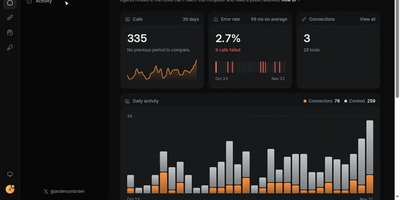
When Claude Code, Codex, and Cursor all need the same Linear login, the same skill, and the same project rule, Runelay is the one MCP endpoint they share. Accounts are connected once, from a searchable catalog with one-click OAuth that includes GitHub and a connector per Google service, or by adding any remote MCP server or OpenAPI spec, where each operation becomes a tool. Credentials stay encrypted and agents only ever see masked values. Memories are shared notes that link to each other, keep a version history, and get health checks for untouched, broken, and isolated notes, with a graph view and pinned notes added to every agent's instructions. SKILL.md folders are searchable, can be switched off without deleting them, and are served on demand. One setup command wires every agent on a computer to the endpoint, and the CLI migrates MCP servers, memories, skills, and instructions from Claude Code, Codex, Cursor, Grok, Gemini, and OpenCode. Keys are rate-limited and issued per agent with a ready-to-paste config, so you can revoke one without touching the others. An overview charts calls, error rate, and daily activity, and a live activity log lists every tool call, filtered by agent or connector. Running on a dedicated VPS on RepoCloud with guaranteed CPU, RAM, and SSD, full root SSH access, and a browser serial console. MIT licensed.
Agenvoy
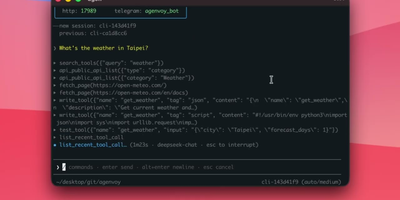
While ordinary chatbots sit idle between prompts, Agenvoy runs around the clock on your own machine, turning one-sentence requests into finished research, files, and reports. Say what you need once and it builds the missing tool itself, tests that tool inside a sandbox, saves it, and reaches for it again the next time a similar job appears. Recurring work becomes a schedule in plain words; a morning briefing, a watched folder, or a weekly report then runs unattended, and a long task interrupted mid-run resumes from its checkpoint instead of starting over. Ask questions about your own files and it searches them like a private archive, transcribing audio and video into text it can quote back to you. Each task is routed to the model tier that fits it, a light model for lookups and a heavy one for hard reasoning, across subscription logins, API keys from eleven providers, or a local Ollama that never phones home. Commands run in a sandbox with the network off until you approve a call, sensitive paths ask before they open, and credentials wait in the system keychain instead of the chat history. You drive it from the terminal, the browser dashboard, or Telegram and Discord when you are away from the desk, and it lends its sandboxed tools to Claude Code and Codex over MCP. Running on a dedicated VPS on RepoCloud with guaranteed CPU, RAM, and SSD, full root SSH access, and a browser serial console. AGPL-3.0 licensed.
PostHog
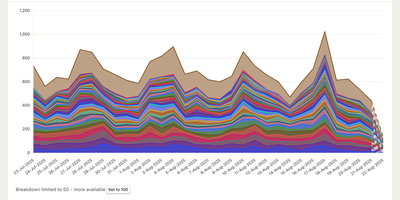
With over 37,000 GitHub stars and used by teams at Y Combinator, Airbus, and Phantom, PostHog replaces an entire stack of paid analytics tools — Mixpanel, Amplitude, Heap, LaunchDarkly, Hotjar, and Google Analytics — with a single open-source platform where every tool shares a common event layer and user context. Product analytics captures events automatically or via manual instrumentation with HogQL (SQL) access for custom queries, while web analytics provides GA-like dashboards for traffic, conversions, and Core Web Vitals. Session replay records user interactions with DOM snapshots and network waterfall analysis, linking directly to errors and feature flag exposures. Feature flags safely roll out changes to specific cohorts with multivariate support and instant rollback, while experiments run A/B tests with automatic Bayesian significance calculations and revenue attribution. Error tracking captures stack traces linked to session replays and user properties for immediate reproduction context. AI observability monitors LLM generations, traces, token usage, latency, and costs across model versions. The managed data warehouse syncs 120+ external sources including Stripe, Postgres, Salesforce, and HubSpot alongside product events, queryable through a unified SQL editor. An MCP server enables AI agents in Cursor, Claude Code, or VS Code to query analytics and execute SQL directly. Running on a dedicated VPS on RepoCloud with guaranteed CPU, RAM, and SSD, full root SSH access, and a browser serial console. MIT licensed.
NotifKit
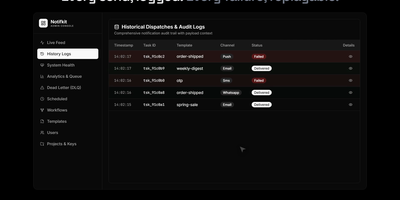
One notify() call is all your product needs to reach users on push, email, SMS, chat, and webhooks, with NotifKit deciding how and when each message travels. List the channels in the order you prefer and NotifKit tries each in turn, so a failed push quietly becomes an SMS or an email instead of a lost message. Per-user preferences, consent, and quiet hours in each user's own timezone hold non-urgent sends until morning, while critical messages such as one-time passwords travel their own lane immediately. Templates, multi-step workflows that wait days or block on events, scheduling, throttling, and deduplication all run behind that single call, defined in TypeScript and kept in your repository. Delivery logs record every attempt, and the admin dashboard shows a live activity feed, queue depth per priority lane, workflow runs step by step, and a replayable dead-letter queue. Several products can share one deployment as separate projects with their own API keys, rate limits, and data, and any service can call the REST API without the TypeScript SDK. Ask an AI assistant why a password reset never arrived by connecting the built-in MCP server to Claude Code, Cursor, or another MCP client. Running on a dedicated VPS on RepoCloud with guaranteed CPU, RAM, and SSD, full root SSH access, and a browser serial console. MIT licensed.