Crawl4AI
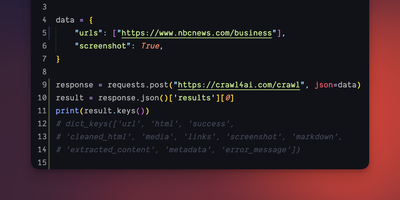
With over 77,000 GitHub stars, Crawl4AI is the most-starred open-source web crawler on GitHub and the go-to tool for converting the web into AI-ready data. Built on Python and Playwright, it transforms any website into clean Markdown with headings, tables, code blocks, and citation hints optimized for LLM ingestion, or extracts structured JSON via CSS selectors, XPath expressions, or direct LLM-based schema extraction through OpenAI, Anthropic, and Ollama providers. The self-hosted Docker server exposes a REST API on port 11235 with endpoints for crawling, streaming results, screenshots, PDF generation, JavaScript execution, and LLM-powered extraction. Version 0.9.x introduced secure-by-default operation with mandatory JWT authentication, strict request validation, declarative hooks replacing inline code, and bounded job queues. Adaptive crawling uses information foraging algorithms to determine when sufficient data has been gathered, while deep crawl mode traverses link graphs intelligently. The async browser pool manages concurrent sessions with stealth plugins, proxy rotation, custom headers, and session persistence for authenticated scraping. A built-in MCP server enables direct integration with Claude, ChatGPT, and Cursor for AI-driven web research workflows. Content filtering applies BM25 and TF-IDF relevance scoring to extract only pertinent sections from noisy pages. Running on a dedicated VPS on RepoCloud with guaranteed CPU, RAM, and SSD, full root SSH access, and a browser serial console. Apache 2.0 licensed.
Locust
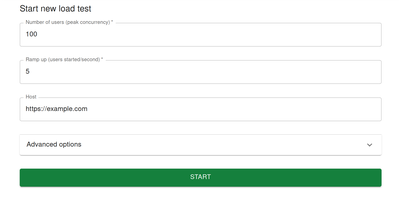
Locust is a load-testing tool that turns plain Python scripts into swarms of simulated users, so you can find out exactly how much traffic your service survives before it falls over. You model real behavior with ordinary Python: classes describe user types, tasks carry weights, and waits plus conditional logic mimic how people actually browse, log in, and check out. The web interface starts the swarm, charts requests per second, response times, and failures as they happen, and lets you raise or lower the load mid-run the moment a bottleneck appears. One machine is rarely the limit: a master process coordinates worker processes across as many machines as you can give it, and every worker runs thousands of greenlet users without thread overhead. HTTP is the home turf, but custom clients let the same scripts load-test WebSockets, gRPC, databases, message queues, or any protocol you can call from Python. Custom load shapes bend the user curve into steps, waves, or double peaks that mirror launches and flash sales instead of a flat ramp. Results export as CSV data and standalone HTML reports for the team, stats can stream into TimescaleDB and Grafana during long runs, and headless mode drops the whole test into CI pipelines. Running on a dedicated VPS on RepoCloud with guaranteed CPU, RAM, and SSD, full root SSH access, and a browser serial console. MIT licensed.
GitNexus
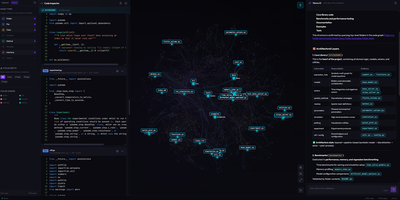
GitNexus turns any codebase into an interactive knowledge graph that maps every dependency, call chain, functional cluster, and execution flow, giving AI coding assistants the deep structural awareness they need to stop breaking things. Drop a repository URL or ZIP file into the browser-based explorer and watch Tree-sitter parsers decompose your code into a navigable property graph you can zoom, click, and query. The MCP server integrates directly with Cursor, Claude Code, Codex, Antigravity, and other editors through 16 specialized tools covering architectural queries, impact analysis, safe multi-file renames, change detection, and cross-repo contract matching. Need to know the blast radius before touching a shared utility? The impact analyzer traces every caller, implementer, and downstream consumer in milliseconds. Teams reviewing pull requests get automated blast-radius annotations powered by the same graph. The registry architecture lets a single MCP server manage multiple indexed repositories simultaneously, so switching between projects requires zero re-indexing. For visual exploration, the web interface renders interactive community-clustered graphs where you can trace execution paths, browse file trees, and chat with an AI agent grounded in the graph's structural data rather than raw file snippets. Everything runs locally; your source code never leaves the machine. Running on a dedicated VPS on RepoCloud with guaranteed CPU, RAM, and SSD, full root SSH access, and a browser serial console. PolyForm Noncommercial 1.0.0 licensed.
Local Deep Research
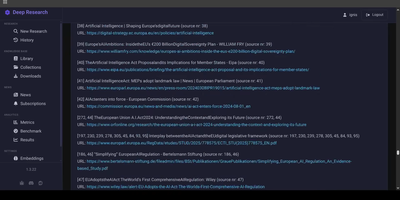
Execute comprehensive multi-angle investigations across scientific journals and web repositories using Local Deep Research, an autonomous intelligence engine designed for researchers, analysts, and knowledge workers. Users can submit complex analytical questions through a self-hosted web console to initiate agentic research cycles powered by LangGraph workflows. The application dynamically queries search providers including SearXNG, arXiv, PubMed, Wikipedia, and Google, iteratively evaluating discovered content to formulate targeted follow-up queries. Discovered academic papers and web sources can be indexed into an encrypted personal library to combine internal documentation with external search intelligence. Reports are synthesized with structured outlines, section headings, and verifiable academic citations that link directly to source references. Individual research sessions, system logs, and user credentials remain isolated in per-user SQLCipher databases protected by AES-256 encryption. Automated subscriptions deliver scheduled news digests and topic monitoring summaries directly to connected notification channels. Running on a dedicated VPS on RepoCloud with guaranteed CPU, RAM, and SSD, full root SSH access, and a browser serial console. MIT licensed.
Web-Check
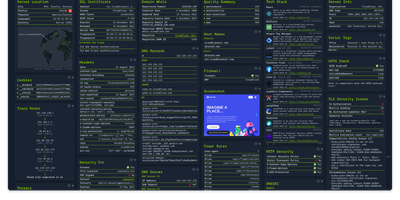
Enter a URL and get a dashboard of everything publicly discoverable about its security posture, server architecture, and technology stack: Web-Check is an all-in-one OSINT tool for analyzing any website. One scan surfaces IP info and server location, the full SSL certificate chain with issuing authority and validity, DNS records (A, MX, NS, CNAME, TXT) with DNSSEC status, HTTP response headers interpreted for security directives like HSTS, CSP, and X-Frame-Options, cookies and their flags, WHOIS domain info, robots.txt crawl rules, a sitemap-derived page map, the redirect ledger, open ports, traceroute, detected technologies, third-party trackers, associated hostnames, site performance, and even carbon footprint. Each card explains what the data means and why it matters, which makes the tool double as a security education resource - junior engineers learn headers and attack surfaces by scanning real sites. Practical uses span pre-deployment security audits (catch missing headers and misconfigurations before they ship), privacy compliance checks (identify trackers and cookie behavior for GDPR work), competitive tech-stack research, and network debugging via DNS and redirect inspection. Built by Lissy93 in TypeScript, it deploys as a single Docker container, and self-hosting keeps your reconnaissance targets and audit activity off third-party services.

ima2-gen
ChatGPT, Grok, Gemini, NovelAI, and ComfyUI sit behind one prompt composer in ima2-gen, a studio that branches favorite AI images into variants and keeps every image and video in a searchable gallery. Multimode fires several candidates from one prompt and fills the slots as they finish, with up to five reference images attached. In the node graph a favorite grows into gold, marble, or forest variants that each remember their parent, so the original is never overwritten. Canvas Mode annotates, erases, and cuts out backgrounds, verifies GPT transparency from the decoded bytes, then exports PNG, SVG with an embedded raster, or traced vector paths. Grok video models turn text, one image, or a set of references into clips, and Storyboard mode keeps characters and scenes consistent across frames. Further lanes reach AtlasCloud, MiniMax, and MCP-connected Runway and Higgsfield, and each job goes only to the provider you choose. A prompt library imports packs from local files or GitHub folders, Prompt Builder refines rough ideas, and the gallery stores each render with its prompt, timing, and settings. A CLI and three Markdown skills let coding agents generate assets, vectorize logos, and run video jobs against the same studio. Binding to a network address requires an access token. Running on a dedicated VPS on RepoCloud with guaranteed CPU, RAM, and SSD, full root SSH access, and a browser serial console. MIT licensed.
OpenDeepWiki
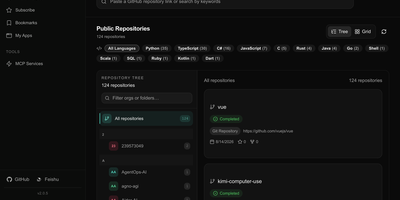
OpenDeepWiki transforms code repositories from GitHub, GitLab, Gitee, Gitea, and AtomGit into structured, searchable knowledge bases by leveraging Microsoft's Semantic Kernel for AI orchestration across OpenAI, Azure OpenAI, Anthropic, and DeepSeek providers. The three-phase Gather-Think-Write pipeline analyzes repository tree structures, generates README summaries, project overviews, wiki catalogs, and document content while producing Mermaid mind maps and optional Graphify visualization artifacts. Repository-scoped MCP endpoints at /api/mcp/{owner}/{repo} expose indexed knowledge to external AI tools, while the built-in chat assistant, embedded chat APIs, and share links provide conversational access to repository understanding. The Next.js 16 frontend serves public documentation on SEO-friendly routes with multi-language translation support, and the admin console manages repositories, users, roles, API keys, AI provider and model configuration, skills, and GitHub App imports. Background workers handle incremental updates using LibGit2Sharp to keep documentation synchronized with evolving codebases, while Polly integration provides transient failure retry handling for LLM requests. The platform supports SQLite, PostgreSQL, and MySQL database backends with Entity Framework Core providers. Running on a dedicated VPS on RepoCloud with guaranteed CPU, RAM, and SSD, full root SSH access, and a browser serial console. MIT licensed.
Address
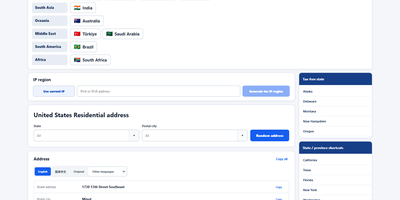
Address is a self-hosted generator that returns real, verifiable postal addresses for 27 countries and regions, each labelled with its source, precision, and coordinates, for form testing, validation checks, and logistics demos. Records come from official registers, open map data, or validated geocoding, and any field it cannot confirm stays empty instead of being invented. Pick a country, region, city, district, or postcode filter that follows the real administrative hierarchy, choose one of ten display languages, and generate. Results can be copied, exported, saved to favorites, or opened in Google Maps or AMap. QA teams fill checkout and signup forms with them, developers test address-format validation, and logistics demos finally show streets that are on the map. The OpenAPI-documented JSON API covers single and batch generation, location search, coverage queries, and address translation. A public coverage monitor shows how complete each country is. Behind the login, the admin console tracks sync history, quick locations, provider credentials, translation routing, access control, and API tokens. Incremental imports back off and stop when a source has nothing new. Running on a dedicated VPS on RepoCloud with guaranteed CPU, RAM, and SSD, full root SSH access, and a browser serial console. MIT licensed.
Hasura
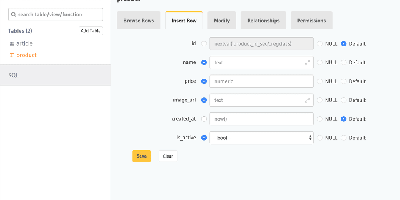
A PostgreSQL database becomes a production-grade GraphQL API the moment Hasura GraphQL Engine points at it: track tables and relationships - existing schemas included - and full query, mutation, and subscription types appear with where, order_by, limit, offset, and on_conflict arguments, no resolvers or boilerplate written. Its Haskell core compiles GraphQL to efficient SQL, and any query becomes a real-time live query with a single keyword, powering dashboards and collaborative UIs over standard GraphQL subscriptions. Authorization is where Hasura earns its enterprise reputation: role-based access control with row- and column-level permission policies driven by session variables from JWTs, auth webhooks, or headers - each role effectively sees its own GraphQL schema containing only what it may touch, integrating cleanly with Auth0, Firebase, or homegrown auth. Event triggers fire webhooks on inserts, updates, and deletes for asynchronous business logic; Actions extend the schema with custom REST handlers; remote schema stitching merges external GraphQL services into one endpoint; and auto-generated REST endpoints serve clients that skip GraphQL. A browser console handles data modeling and API exploration, the CLI manages migrations and metadata as code, and deployment is a single stateless Docker container beside Postgres.
SignuDoc
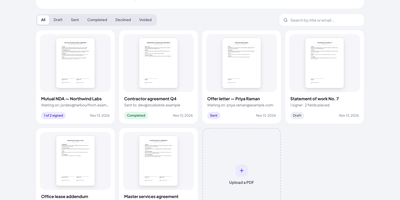
SignuDoc is an open-source e-signature platform that lets an organization send, sign, and seal PDF agreements on its own server, with no per-seat pricing. Upload a PDF, add up to 10 signers in signing order plus copy-only recipients, and place signature, initials, date, name, text, number, checkbox, dropdown, and radio fields, each required or optional. Signers open an emailed link, consent to electronic records, and sign with a typed or drawn signature on any phone, tablet, or computer. Earlier signers' fields stay locked, and each signer can decline with a reason. Add an access code or an emailed one-time code when a link alone is not enough. A dashboard shows every document as a card with its status, from draft to completed, declined, voided, or expired, with search, filters, deadlines from 3 to 90 days, and automatic reminders every 1, 2, 3, or 7 days. Save any envelope as a template with roles instead of names. Finished PDFs and audit certificates carry a PAdES seal and a hash-chained audit trail, and a public Verify page checks any copy by its SHA-256 fingerprint without uploading the file. Administrators set the organization's name, logo, color, and domain, choose who may create accounts, configure retention, and answer signer data requests with a built-in export and erasure tool. Running on a dedicated VPS on RepoCloud with guaranteed CPU, RAM, and SSD, full root SSH access, and a browser serial console. MIT licensed.
Numa
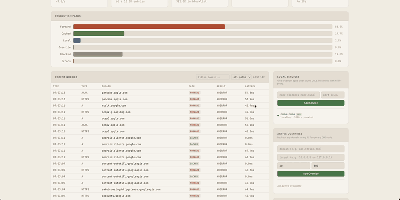
Numa is a DNS resolver you run yourself that gives every service on your network a real name, blocks ads and trackers before they load, and keeps your queries private with encrypted DNS. Register a frontend on port 5173 once, and https://frontend.numa opens in your browser with a valid certificate and WebSocket passthrough, no mkcert, no nginx, no editing hosts files. Path-based rules send app.numa/api to a backend on another port, so multi-service projects get one clean address instead of a spreadsheet of port numbers. Tracker and ad domains die at resolution time through the Hagezi Pro blocklist, refreshed daily, and every device that points its DNS at your instance inherits the filtering. Temporary overrides redirect any hostname for testing or debugging and revert on their own, and scripts can create them through the REST API. You choose how answers are found: forward to your existing DNS, resolve recursively from the root servers, or seal queries with Oblivious DNS over HTTPS so no single party sees both your address and your question. Phones and laptops connect over DNS-over-TLS on port 853, a QR-code flow points an iPhone at your resolver in minutes, and mDNS discovery lets one machine reach services registered on another. The dashboard on port 5380 manages services, overrides, and diagnostics, with token sign-in away from loopback. Running on a dedicated VPS on RepoCloud with guaranteed CPU, RAM, and SSD, full root SSH access, and a browser serial console. MIT licensed.
walgit
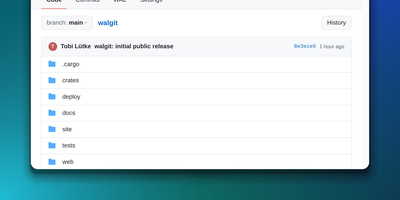
walgit is a self-hosted Git server that keeps every repository inside one S3 or GCS bucket, so the machine serving your code is disposable while your history stays durable. Point the binary at a bucket, start it, and pushing to a new repository name creates that repository on the spot, with no admin console or provisioning step in between. Developers clone, fetch, and push over smart HTTP with Git LFS support for large files, and big clones are delivered as static bundle files so multi-gigabyte repositories never bottleneck the server process. The built-in web interface lets you browse file trees, read files, review commit history, and inspect diffs directly in the browser. Per-repository policy files control protected branches, fast-forward-only references, and bypass lists, so release branches stay guarded without a separate compliance tool. A JSON API and the dependency-free repos.js SDK let scripts, internal dashboards, and automation agents read repository data programmatically, with long operations streaming progress as server-sent events. Webhooks deliver exactly-once reference events to CI systems, chat tools, and deployment pipelines whenever branches or tags move. Background checkpoints and compaction keep storage tidy on their own, while token or OpenID Connect sign-in decides who may read and who may push. Running on a dedicated VPS on RepoCloud with guaranteed CPU, RAM, and SSD, full root SSH access, and a browser serial console. MIT licensed.
Cerbos
Cerbos decouples authorization logic from application code entirely, evaluating human-readable YAML policies in under one millisecond through a stateless Policy Decision Point that requires no application state synchronization or cross-network fan-out. Its custom decision engine benchmarks up to 17x faster than OPA-based alternatives. Access control policies use conditions expressed in Google's Common Expression Language, supporting role-based, attribute-based, and policy-based access control patterns including derived roles, scoped policies, and permissions-aware data filtering that pushes authorization predicates directly into database queries. The PDP exposes both gRPC and HTTP APIs with SDKs for JavaScript, Python, Go, Java, .NET, Rust, PHP, and Ruby, making integration a single function call regardless of tech stack. GitOps-native workflows treat policies as code with Git versioning, CI validation through GitHub Actions, coverage reports, breaking-change detection, and audit logs of every authorization decision for ISO27001, SOC2, and HIPAA compliance. Deployment flexibility spans Kubernetes sidecars, standalone services, systemd daemons, AWS Lambda functions, and WebAssembly-embedded PDPs that run authorization logic directly in browsers, serverless architectures, and edge devices. The Admin API manages policy lifecycle operations programmatically, while the built-in Playground and REPL provide interactive testing environments for policy authoring and debugging. Running on a dedicated VPS on RepoCloud with guaranteed CPU, RAM, and SSD, full root SSH access, and a browser serial console. Apache 2.0 licensed.
Langflow
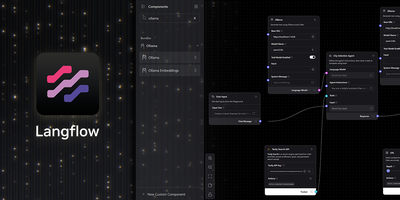
Langflow turns LLM application development into a visual canvas where every node maps to a real LangChain primitive (chains, agents, retrievers, memory, vector stores, and tools) that teams wire together without writing integration boilerplate. The platform supports 15+ LLM provider components including OpenAI, Anthropic, Google Gemini, Mistral, Groq, Cohere, Azure OpenAI, HuggingFace, and Ollama for fully local inference, with LiteLLM proxying to over 100 additional providers through a single OpenAI-compatible endpoint. Vector database integrations cover Pinecone, Weaviate, Chroma, Qdrant, Astra DB, OpenSearch, FAISS, and Milvus, while built-in Knowledge Bases introduced in version 1.8 allow RAG pipelines without any external vector service. Multi-agent orchestration enables agent-to-agent communication with conversation management, persistent Memory Bases for cross-session context retrieval, and step-by-step reasoning visibility in the interactive Playground. Every flow automatically becomes a callable REST API endpoint via the /run route and an MCP server exposable to Claude Desktop, Cursor, or any MCP-compatible client. Every component is a real Python class that developers can customize, extend, or replace, while Extension Bundles package third-party integrations as independent pip packages for modular installation. Tool integrations include web search, Slack, Gmail, Google Drive, GitHub, and custom REST API calls. Docker deployment with PostgreSQL persistence runs on port 7860. Backed by 153,000+ stars and DataStax. Running on a dedicated VPS on RepoCloud with guaranteed CPU, RAM, and SSD, full root SSH access, and a browser serial console. MIT licensed.
Kiro Crew
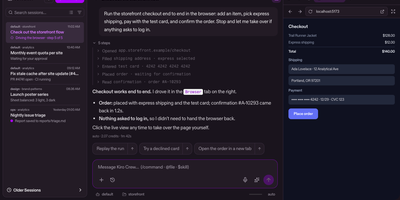
Kiro Crew keeps AI agents working on your projects after the chat window closes, remembering your corrections and carrying tasks through to the end. Sessions run side by side, resume after a restart, and can drive a live browser preview that you can take over at any time. Named bots own ongoing jobs such as build health or release readiness, each with its own memory, tools, and limits. Cron schedules, webhooks, and messaging events start work while you are away, and every run is logged and checkpointed. Long tasks are planned, validated, retried, and resumed from checkpoints. Corrections become lessons and repeated workflows become skills, saved as Markdown files you can read, edit, or delete, and a Knowledge Library lets you search stored lessons and facts in list or graph views. Subagents fan out parallel research and report back into the parent conversation. Apps such as Issue Radar, which reviews open pull requests, give recurring workflows their own views, and an App SDK lets you build more. Each Slack thread becomes an isolated session, with Discord and Telegram as alternatives. Tool approvals, OS sandboxing, credential redaction, deny rules, and signed audit logs decide what an agent may touch, and the dashboard listens on localhost until you configure authenticated remote access. Running on a dedicated VPS on RepoCloud with guaranteed CPU, RAM, and SSD, full root SSH access, and a browser serial console. Apache-2.0 licensed.
Hermes Studio
The most comprehensive open-source control plane for Hermes Agent — a full workspace combining AI chat, visual workflows, multi-agent orchestration, coding agent management, and platform channel integration in one self-hosted dashboard. Real-time chat streaming over Socket.IO connects to any OpenAI-compatible backend including Ollama, OpenAI, Anthropic, and custom endpoints with multi-session management, tool call expansion, inline file previews for HTML, PDF, DOCX, images, and source code, plus profile-scoped uploads and workspace attachments. The visual workflow builder provides a Vue Flow canvas for constructing DAG-structured pipelines with directed edges, conditional routes, approval gates, loops, and live execution with per-node status updates. Platform channel integration configures Telegram, Discord, Slack, WhatsApp, Matrix, Feishu, DingTalk, QQBot, WeChat, and WeCom bots from one page with credential management and per-platform behavior settings. Multi-agent group chat rooms enable real-time messaging with @mention routing, automatic context compression, and SQLite message persistence. The coding agent panel installs, launches, and monitors Claude Code and Codex with built-in terminal, session history, and file diffs. Usage analytics track token consumption, estimated costs, cache hit rates, and 30-day daily trends with model distribution charts. Kanban boards plan and track agent work alongside cron job scheduling for recurring tasks. Deploy via Docker, npm CLI, or desktop installer for Windows, macOS, and Linux. Running on a dedicated VPS on RepoCloud with guaranteed CPU, RAM, and SSD, full root SSH access, and a browser serial console. MIT licensed.
RAGFlow
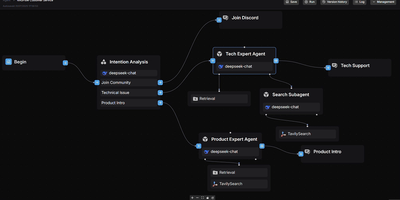
RAGFlow has established itself as one of the most widely adopted open-source RAG engines available, powering production AI systems that demand traceable, hallucination-free answers from complex enterprise data. The platform processes PDF, DOCX, Excel, and PPT files through vision-based deep document understanding with layout analysis and OCR, extracting structured knowledge from tables, charts, and images that simpler parsers miss entirely. RAGFlow's hybrid retrieval pipeline combines vector search with BM25 keyword matching and multi-stage reranking across configurable document stores including Elasticsearch, InfiniFlow's Infinity engine, OpenSearch, and OceanBase. Developers connect any combination of LLM providers — OpenAI, DeepSeek, Anthropic Claude, Google Gemini, and locally-hosted models via Ollama — through a unified configuration layer. The visual agent workflow system enables multi-step reasoning chains with persistent memory, tool calling, and pre-built templates for common enterprise scenarios. RAGFlow synchronizes data from Confluence, S3, Notion, and Google Drive, and delivers answers through chat integrations with Feishu, Discord, Telegram, and Line. The Python SDK and RESTful API on port 9380 provide programmatic access to knowledge base management, document parsing, and conversational retrieval. The full stack deploys via Docker Compose with MySQL for metadata, Redis for task orchestration, and MinIO for object storage. Running on a dedicated VPS on RepoCloud with guaranteed CPU, RAM, and SSD, full root SSH access, and a browser serial console. Apache 2.0 licensed.
FalkorDB
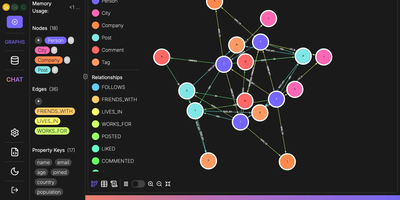
FalkorDB is the first queryable property graph database to leverage sparse adjacency matrices and linear algebra for graph traversal, replacing traditional pointer-chasing with GraphBLAS-accelerated computation. Originally the RedisGraph engine, it was relaunched as FalkorDB in 2023 and rewritten from C to Rust in 2026 for improved memory safety and performance. The database supports the OpenCypher query language with proprietary extensions, translating queries into linear algebra expressions that exploit AVX hardware acceleration. Indexing options include full-text search, vector similarity for embedding-based retrieval, and range indexing, while connectivity supports both the RESP protocol for Redis clients and the Bolt protocol for Neo4j-compatible tooling. The GraphRAG SDK enables ingestion of documents in text, PDF, and Markdown formats into knowledge graphs, with schema-guided entity extraction, hybrid retrieval combining vector and graph traversal, relationship expansion, and cited answers for LLM applications. Official client libraries cover Python, Node.js, Java, Rust, Go, PHP, and C#. Multi-tenant support handles over 10,000 concurrent graphs with zero overhead and full isolation. Docker deployment runs the falkordb/falkordb image on ports 6379 for the database server and 3000 for the built-in browser UI, with persistent volume storage and optional authentication. A production falkordb-server image excludes the browser for lighter deployments. On RepoCloud, deploy FalkorDB on a dedicated VPS with root SSH access, persistent storage for your graph data, and complete control over authentication, thread count, and memory configuration, all under the SSPLv1 license.