Judge0
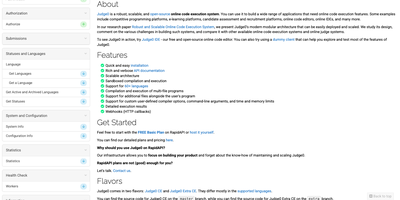
Judge0 is a code execution service that takes source code over a simple HTTP API, compiles and runs it inside a locked-down sandbox, and hands back exactly what the program printed, how long it took, and how much memory it used. Send a snippet in any of more than 90 languages, from Python, JavaScript, Rust, and Go to C, Java, and Haskell, and pick the compiler or interpreter variant you need. Each run accepts standard input, command-line arguments, and custom compiler flags, then reports standard output, errors, and a precise verdict covering accepted, wrong answer, time limit, compilation error, or runtime failure. Per-submission controls cap CPU time, memory, stack size, and output file size, so a fork bomb or an infinite loop dies inside its fence instead of disturbing the host. Submissions run one at a time or in batches, and a synchronous mode answers in the same request for snippets that finish fast. Webhooks call your application the moment a long job completes, which keeps polling loops out of worker queues and classrooms alike. Coding platforms grade student work with it, hiring tools run candidate solutions against hidden tests, and AI agents execute the code they generate before trusting it. Official Python and JavaScript SDKs wrap the raw requests, so most integrations shrink to choosing a language and reading the result fields. Running on a dedicated VPS on RepoCloud with guaranteed CPU, RAM, and SSD, full root SSH access, and a browser serial console. GPL-3.0 licensed.
Teable
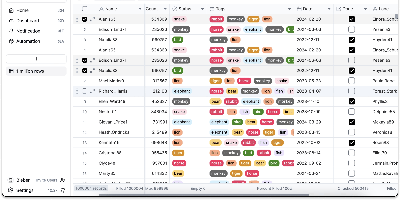
An Airtable-style spreadsheet interface directly on PostgreSQL: Teable is an open-source no-code database where every table is a real Postgres table. Unlike tools that store records in a metadata abstraction layer, every Teable table is a real Postgres table with standard column types, so filtering, sorting, and grouping run at database speed, million-row tables answer complex filters in roughly 200 milliseconds without index tuning, and any PostgreSQL-compatible tool - psql, BI dashboards, ETL pipelines - can query the same data directly. The interface offers Grid, Kanban, Gallery, Calendar, and Form views as non-destructive overlays with their own filters and hidden fields, plus 20+ field types, formulas, comments, attachments, batch editing, undo/redo, and edit history. Collaboration is real-time with live cursors and instant sync across views, backed by Redis, and a REST API is auto-generated per table, largely compatible with Airtable API clients - alongside native SQL access for BI tools, analytics pipelines, and your own applications to JOIN and query directly, with no exports, API rate limits, or sync jobs. Global search spans all records, chart plugins handle quick visualization, and CSV and Excel import/export cover migrations. Where Airtable caps paid plans at 100K-500K rows and charges roughly $20 per user per month, a self-hosted Teable instance has neither limit: the Postgres database itself is the export if you ever leave. Built in TypeScript with NestJS, deployed via Docker with PostgreSQL and Redis, and licensed AGPL-3.0.
SuperPlane
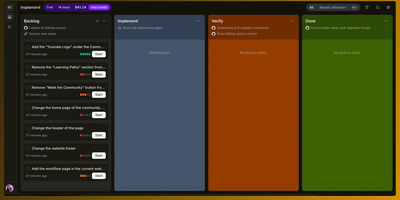
SuperPlane is an open-source engineering automation platform that turns routine backlog tickets into verified, review-ready pull requests while orchestrating complex multi-system workflows across your developer tools. Engineers use the visual infinite canvas to assemble event-driven pipelines with trigger nodes, conditional routing, loops, and human-in-the-loop approval gates. You can delegate pull request code reviews, automated QA testing, documentation generation, and release management to coding agents operating within strictly defined policy boundaries. Custom operational consoles let teams build live monitoring dashboards displaying key delivery metrics, active incident states, and execution histories from connected tools. Integrations connect natively with GitHub, GitLab, Datadog, PagerDuty, Slack, AWS, and leading AI models through webhook events and bi-directional actions. Every automation run maintains durable state persistence across process restarts, ensuring failed steps resume with full input payloads and debugging context intact. Developers can define reusable work orders, configure canvas memory for long-term state retention, and execute fleet commands over SSH or containerized runners. Running on a dedicated VPS on RepoCloud with guaranteed CPU, RAM, and SSD, full root SSH access, and a browser serial console. Apache 2.0 licensed.
Bolt.diy
Prompt, run, edit, and deploy full-stack Node.js applications from a browser tab: Bolt.diy is the official open-source version of Bolt.new's AI coding agent. Its foundation is StackBlitz's WebContainer technology - a sandboxed in-browser Node.js environment where the AI controls the whole stack: filesystem, npm, dev servers, terminal, and browser console. That means the agent does not just generate code; it installs dependencies, runs Vite or Next.js, reads errors, and fixes them. The defining difference from Bolt.new is model choice per prompt: 19+ providers including OpenAI, Anthropic, Gemini, DeepSeek, Groq, Mistral, Amazon Bedrock, and local models via Ollama or LMStudio, extensible through the Vercel AI SDK. Development ergonomics include live preview, a diff view of AI changes, codebase search, file locking to prevent generation conflicts, 15+ starter templates (React, Vue, Next.js, Astro, Svelte, Expo), and MCP support for external tools. Projects integrate with Git and Supabase, and deploy in one click to Vercel, Netlify, or GitHub Pages.
Agent-Me
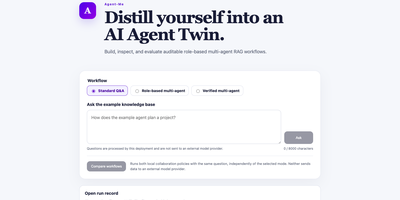
Build an AI twin that has to show its homework. Agent-Me answers questions from a folder of Markdown notes you control, and every reply arrives with the exact source excerpts behind it. Pick Standard Q&A for a direct grounded answer, Role-based multi-agent to watch a planner, researcher, critic, and writer hand work to each other, or Verified multi-agent to add a final check on citation paths and answer metadata. When the notes do not contain an answer, the critic blocks the draft and the app says so instead of inventing one. Press Compare workflows to run the baseline and verified pipelines on the same question and read the results side by side. Download a sanitized run record for any collaboration, then open it later in the browser to review the trace without re-running anything. The interface speaks nine languages, and the default mode never calls an outside model, so private notes stay on your server. Swap in your own documents and test supported, unsupported, and adversarial questions to see exactly where an assistant stays grounded. Running on a dedicated VPS on RepoCloud with guaranteed CPU, RAM, and SSD, full root SSH access, and a browser serial console. MIT licensed.
Cezar
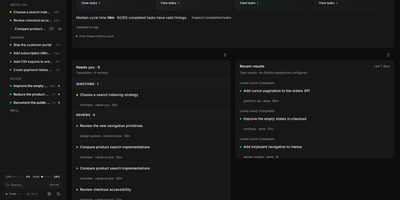
Close the laptop; the agents keep shipping. Cezar is an open-source control center that runs Claude Code, Codex, OpenCode, Copilot, and eight other coding agents in parallel on your own server, around the clock. Every task gets an isolated git worktree, so a dozen agents edit the same repository at once without colliding, and overflow waits in a queue. You watch each run live: the agent's text, its tool calls, token counts, and reported cost stream into one cockpit covering all your projects. The workspace dashboard separates what needs your answer, what is running, and what finished, and the usage view totals spend and tokens per project so a runaway task shows up in dollars, not surprises. Repeatable playbooks are plain Markdown skill files, chained into short YAML workflows that can mix a different agent per step, add checks and gates, and open pull requests; nothing merges on its own. Hand it a GitHub issue in one click, connect Jira or Linear to launch from your tracker, and schedule recurring maintenance with automations. Flip Autonomous and a run stops asking questions and just finishes; run the same task two or three times and keep the best diff. State lives in plain files, no database, and the responsive interface works from your phone. Running on a dedicated VPS on RepoCloud with guaranteed CPU, RAM, and SSD, full root SSH access, and a browser serial console. MIT licensed.
BitRouter
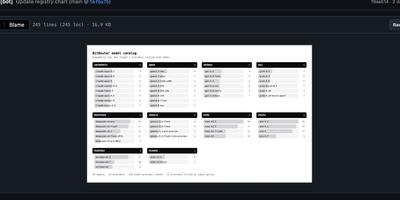
BitRouter is a context-aware LLM router that learns which model delivers the cheapest successful outcome per workflow step, cutting agent costs by up to 80% while maintaining 96% quality versus all-frontier baselines. Point any agent runtime at http://localhost:4356 with a one-line OPENAI_BASE_URL change and BitRouter routes to OpenAI, Anthropic, Google, Groq, DeepSeek, Mistral, Moonshot, MiniMax, Nvidia, and any OpenAI-compatible endpoint simultaneously, normalizing authentication, streaming, and cross-protocol translation between wire formats. The act-observe-evaluate-learn loop traces every hop with cost, tokens, and latency attribution, scores each decision against a versioned policy-lock.yaml, then tightens routes automatically with no LLM judge in the path. Native MCP gateway auto-discovers tools from connected servers and makes them routable and governed alongside model calls. Agent Client Protocol integration enables the TUI to manage Claude Code, Codex, OpenCode, OpenClaw, Gemini, and Copilot sessions in real time with inline tool-call approval and live streaming. Built-in guardrails inspect, redact, or block risky content before requests leave your network. Virtual keys scope API access per agent or user without exposing upstream credentials. Per-agent spend caps and loop guards contain runaway cost automatically. Multi-account failover reroutes mid-run so rate limits never re-pay completed work. Ships as a single Rust binary via npm or Cargo. Running on a dedicated VPS on RepoCloud with guaranteed CPU, RAM, and SSD, full root SSH access, and a browser serial console. Apache 2.0 licensed.
Hoppscotch
Backed by nearly 80,000 GitHub stars and recognized as one of the most popular developer tools in the open-source ecosystem, Hoppscotch delivers a complete API development platform that runs instantly in any browser with zero installation. The platform supports six protocols out of the box including REST with full HTTP method coverage, GraphQL with schema introspection and multi-column documentation, WebSocket for full-duplex communication, Socket.IO, MQTT for IoT messaging, and Server-Sent Events for real-time streaming. Request collections organize your API calls into logical groups with support for sub-folders, environment variables with scope inheritance, pre-request scripts and post-request test scripts written in JavaScript, and automatic code snippet generation in over twenty languages and frameworks. Teams can collaborate in real-time with shared workspaces, role-based access controls, and cloud synchronization across devices. Migration from Postman, Insomnia, or OpenAPI specifications happens with a single click import. The self-hosted edition deploys via Docker Compose with PostgreSQL for data persistence, supporting SSO authentication through SAML and OAuth providers, SMTP configuration with OAuth2, and admin dashboard for user management. The platform also ships as a native desktop application for macOS, Windows, and Linux with offline support, plus a CLI tool for running collections in CI/CD pipelines. A built-in proxy mode bypasses CORS restrictions during development, and an interceptor enables request debugging and response modification. Running on a dedicated VPS on RepoCloud with guaranteed CPU, RAM, and SSD, full root SSH access, and a browser serial console. MIT licensed.
GeoLook
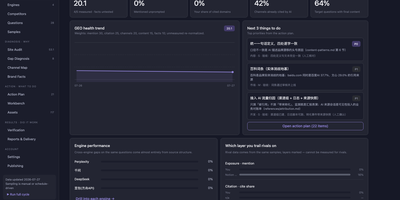
GeoLook shows you what AI search engines actually say about your brand, then turns that uncomfortable answer into a fix list you can work through and verify. You sample real answers across a wide matrix of AI engines and watch mention rate, ranking, and citation share appear per engine, with raw answer replay when a number looks suspicious. Competitor tables reveal which rival each engine prefers and which citation sources they rely on that you do not. A structured question bank sorts buyer, education, and probing questions, flagging the ones where you are absent, outranked, or described negatively. The site audit checks whether crawlers can reach, understand, and quote your pages, in the order those failures actually block visibility. Findings become tickets with an owner, effort estimate, risk grade, and acceptance check, and later sampling rounds confirm whether a fix worked or reopen the ticket when results slip. A content workbench ranks the topics most worth writing, checks drafts for citability, and prepares assets such as llms.txt and structured data snippets for publishing. Running on a dedicated VPS on RepoCloud with guaranteed CPU, RAM, and SSD, full root SSH access, and a browser serial console. MIT licensed.
Ferro Labs AI Gateway
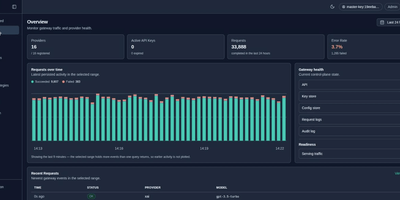
Thirty model providers, one OpenAI-compatible endpoint: Ferro Labs AI Gateway routes every request from your applications to the provider that should answer. Eight routing strategies cover fallback chains, weighted load balancing, lowest latency, lowest cost, content-based rules, A/B tests, and conditional targets, each with retries and circuit breakers. Guardrail plugins filter blocked words, redact personal data, scan for leaked secrets, block prompt injection, validate response schemas, and enforce rate limits and per-key spend budgets. Identical prompts can come back from a response cache, and tool servers connect through MCP so the gateway can run the tool-call loop itself. The console opens with a getting-started checklist, then charts traffic, token throughput, latency percentiles, and cost by model. Providers, routing targets, and plugins each get their own page, a playground sends test chats through the real routing path, and request logs plus an audit trail record who changed what. Scoped admin and read-only keys give every operator separate access, and configuration history allows a rollback. OpenTelemetry traces and Prometheus metrics feed existing dashboards. Running on a dedicated VPS on RepoCloud with guaranteed CPU, RAM, and SSD, full root SSH access, and a browser serial console. Apache-2.0 licensed.
drawDB
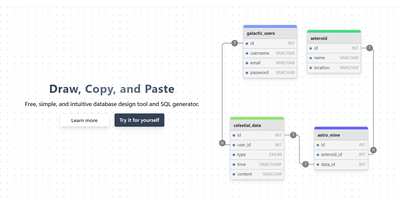
Schema design with no account and a few clicks: drawDB is the browser-based entity-relationship diagram editor and SQL generator - an AGPL-3.0 React project with over 37,000 GitHub stars. Draw tables with columns, data types, defaults, and constraints; connect fields to create foreign-key relationships; group tables into labeled subject areas; and annotate with notes. When the design is ready, one export produces CREATE TABLE DDL - with constraints, indexes, and foreign keys - targeted at MySQL, PostgreSQL, SQLite, MariaDB, SQL Server, or Oracle. Diagrams can be database-specific, unlocking every native type plus dialect features like PostgreSQL enums and composite custom types, or generic for portability across all supported flavors. The reverse direction works too: paste existing DDL into the import dialog and drawDB renders your live schema as a navigable diagram - the fastest way to document an inherited database. Versioning and migration-script generation track schema evolution, full editor ergonomics (undo/redo, copy/paste, duplicate, themes) keep iteration fast, and diagrams export as PNG, SVG, or shareable JSON. Everything runs client-side against browser storage - no backend database connection needed - so the self-hosted Docker deployment is a featherweight static app that keeps proprietary schema designs entirely on your infrastructure.
Grist
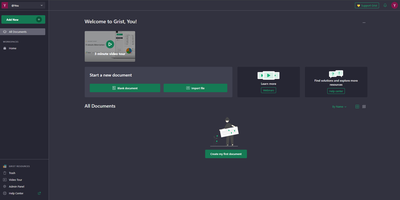
With over 11,200 GitHub stars and adoption by France's sovereign digital workspace LaSuite serving 20,000+ government users, Grist is the relational spreadsheet that ends the false choice between fragile Excel files and expensive custom database development — storing all data in portable SQLite files while providing true relational structure where VLOOKUPs become actual linked records that update instantly across entire documents. Python-powered formulas replace complex Excel syntax with clear, readable logic using the full Python standard library, while familiar Excel functions remain available for users who prefer them. Granular access rules control permissions at row, column, table, and cell levels — not just entire sheets — enabling multi-department documents where each team sees only their authorized data. The flexible layout system combines spreadsheets, card views, charts, calendars, and custom widgets on configurable dashboard pages that transform raw data into operational interfaces. Real-time collaboration lets multiple users edit simultaneously with automatic snapshot history capturing every change for full audit trails and point-in-time recovery. AI formula assistance connects to OpenAI, Llama, or any OpenAI-compatible endpoint via OpenRouter to generate formulas from natural language descriptions. The REST API and webhooks enable integration with n8n, Zapier, and custom automation, while incremental imports keep external data sources synchronized. Deployable via Docker with OIDC, SAML, and SCIM authentication support. Running on a dedicated VPS on RepoCloud with guaranteed CPU, RAM, and SSD, full root SSH access, and a browser serial console. Apache 2.0 licensed.
Kestra
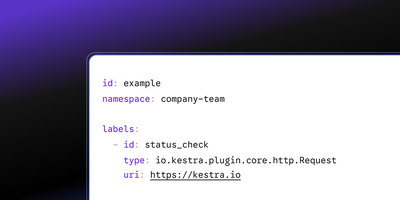
With over 27,000 GitHub stars and an ecosystem of 1,900+ plugins covering every major cloud provider, database, and SaaS platform, Kestra is the orchestration engine that brings Infrastructure as Code principles to workflow automation — defining complex multi-step pipelines in readable YAML that execute across any language, runtime, or infrastructure boundary. The built-in VS Code-style editor provides syntax highlighting, auto-completion, real-time validation, and an AI Copilot that generates workflow YAML from natural language descriptions. Tasks execute in Python, Node.js, Go, R, Shell, SQL, or any Docker container, with event-driven triggers listening for file arrivals on SFTP and cloud storage, messages from Kafka, Redis, Pulsar, AMQP, MQTT, NATS, AWS SQS, Google Pub/Sub, and Azure Event Hubs in real time. The topology view visualizes workflow DAGs with execution state, duration, and output artifacts for each task node. Namespaces organize workflows into isolated environments with configurable secrets, while subflows enable modular composition with inputs, outputs, and conditional branching. Retry policies, timeouts, error handlers, and automatic backfills for missed schedules ensure reliability across production workloads. Git integration pushes workflows directly to branches from the UI with CI/CD pipeline support for automated deployment. The REST API enables programmatic workflow management, execution triggering, and resource provisioning. Running on a dedicated VPS on RepoCloud with guaranteed CPU, RAM, and SSD, full root SSH access, and a browser serial console. Apache 2.0 licensed.
Wraft
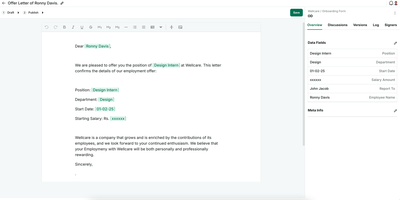
Wraft takes the documents your business runs on, from offer letters and contracts to reports, and gives them a proper lifecycle instead of a life scattered across word processors and email threads. Designers capture the house style once as themes and layouts, template authors build documents from reusable blocks and variants with dynamic fields, and everyone else simply fills in the values and generates a finished, on-brand PDF. Flows define how a document travels from drafting through review and approval to signing and distribution, with an activity log that shows who touched it and when. Pipelines go further, turning one set of data inputs into many generated documents automatically, which is how a hundred personalized letters stop being a hundred manual edits. Workspaces keep teams, roles, and fine-grained permissions separate per organization, imported templates bring existing documents into the system, and because everything is stored as Markdown and JSON your content stays readable and portable long after any single tool. Running on a dedicated VPS on RepoCloud with guaranteed CPU, RAM, and SSD, full root SSH access, and a browser serial console. AGPL-3.0 licensed.
Activepieces
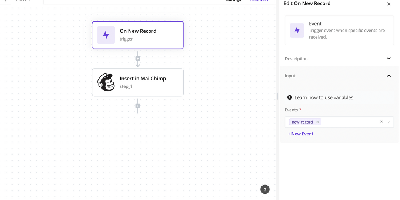
Zapier's job, on your own server: Activepieces is an open-source workflow automation platform built to be exactly that replacement. Flows are built in a visual no-code editor with triggers, actions, loops, conditional branches, auto-retries, raw HTTP steps, and code steps that run JavaScript or TypeScript with full npm package support. Integrations are "pieces" - type-safe TypeScript npm packages with hot reloading for local development - and the catalog spans 600+ services, with the large majority contributed by the community. The platform is AI-first in two directions: native AI pieces call OpenAI, Anthropic, Google, and Azure models inside flows, and every piece automatically doubles as an MCP server, so assistants like Claude Desktop and Cursor can invoke your integrations and workflows through natural language. A built-in MCP server also exposes 30 tools for building flows, managing tables, and running tests agentically. Flows are fully versioned with draft and locked states. The core is MIT-licensed and runs on TypeScript with PostgreSQL and Redis.
MimirQ
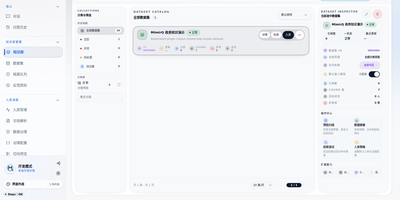
When a knowledge base gives a wrong answer, MimirQ shows which stage let it down. Documents move through a pipeline that teams can open at every step: parsing, cleaning, chunking, indexing, retrieval, reranking, and cited answers. A dataset catalog tracks documents, chunks, and ingestion status, and an execution monitor charts throughput, retries, parser queues, and run logs. The governance workbench previews each file, scores quality, and supports cleaning and labeling before chunks are cut by headings, records, or parent-child structure. Retrieval blends keyword and vector search with reranking, and every reply lists its source evidence with feedback scoring. A graph view maps entities, events, and relationships on one canvas for exploration. Golden-set evaluation stores standard questions and answers, runs them against the current pipeline, and reports recall and ranking metrics, so a release can be blocked when quality slips. Settings pages manage model providers, parsers, and retrieval options, and a Dify-compatible external knowledge API lets existing workflows call it. Role-based access and document permissions keep restricted material hidden from the wrong users. Running on a dedicated VPS on RepoCloud with guaranteed CPU, RAM, and SSD, full root SSH access, and a browser serial console. Apache-2.0 licensed.
ZenML
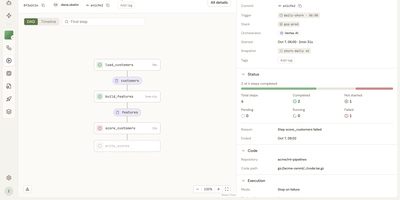
ML and AI engineers wrap existing code in a step, and ZenML turns it into a tracked pipeline that runs unchanged on a laptop, Kubernetes, Vertex AI, or SageMaker. Data scientists keep their scikit-learn or PyTorch training, and agent builders keep their LangGraph loops. ZenML containerizes the code and records metrics, logs, and metadata for every run. Platform engineers define stacks: an orchestrator and an artifact store, plus optional extras such as a container registry, deployer, or experiment tracker. Moving from laptop to production then means switching stacks, not rewriting code. Anyone can open the dashboard and see each run as a DAG or a Gantt-style timeline, with step logs, runtime metrics, and artifact lineage. DataFrames open as interactive tables, images render in the browser, and Evidently, Great Expectations, and WhyLogs output gets its own views. MLflow, Weights & Biases, and Langfuse plug in instead of being replaced. Example projects include a deep research agent, RAG with evaluation loops, LLM fine-tuning, and a document-analysis service with a web UI. The MCP server lets Claude Desktop, Cursor, or any MCP client answer which runs failed this week and trigger deployments, while a VS Code and Cursor extension manages pipelines from the editor. Self-host the server as one container image serving the API and dashboard on port 8080. Running on a dedicated VPS on RepoCloud with guaranteed CPU, RAM, and SSD, full root SSH access, and a browser serial console. Apache-2.0 licensed.

Ticket Monitoring
Name the route and the fare you will pay, and Ticket Monitoring keeps watch over five booking channels, alerting you the moment a real fare drops to your price. It collects actual flight details, not headline prices: flight numbers, times, transfers, cabins, aircraft, and baggage allowances from Qunar, Fliggy, Ctrip, Tongcheng, and Tuniu, with five optional app channels feeding the same tables. Every watched route carries its own rules: separate target lines for nonstop and connecting flights, airline whitelists, baggage and departure-time gates, a maximum trip duration, and pause switches that shelve a route without deleting it. Each scan writes every flight into a local price history, so the console draws candlestick trends, 14-day departure price bands, and low-fare calendars from your own collected data. When a fare crosses your line, a rich DingTalk post leads with the deal, its 7-day trend, and a buy-or-wait suggestion, and escalation layers add an @mention, an ntfy alert that rings through silent mode, or a voice call. ServerChan WeChat, Bark, and email reports with embedded charts run alongside, governed by quiet hours and a full send history. Routes, thresholds, scan intervals, channels, and notifications are all configured in the browser console, changes apply live without a restart, and all prices and credentials stay in local files on your server. Running on a dedicated VPS on RepoCloud with guaranteed CPU, RAM, and SSD, full root SSH access, and a browser serial console. Apache-2.0 licensed.