Categories
Developer Tools DevOps AI Automation Data Pipeline ETL Workflow Orchestration Event-DrivenStars
Forks
Watchers
Developer links
Kestra
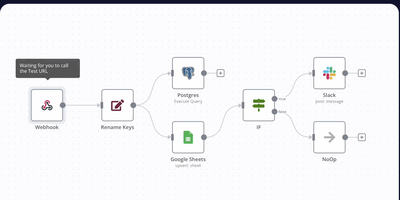
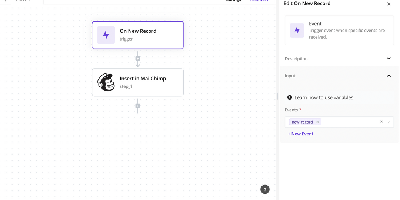
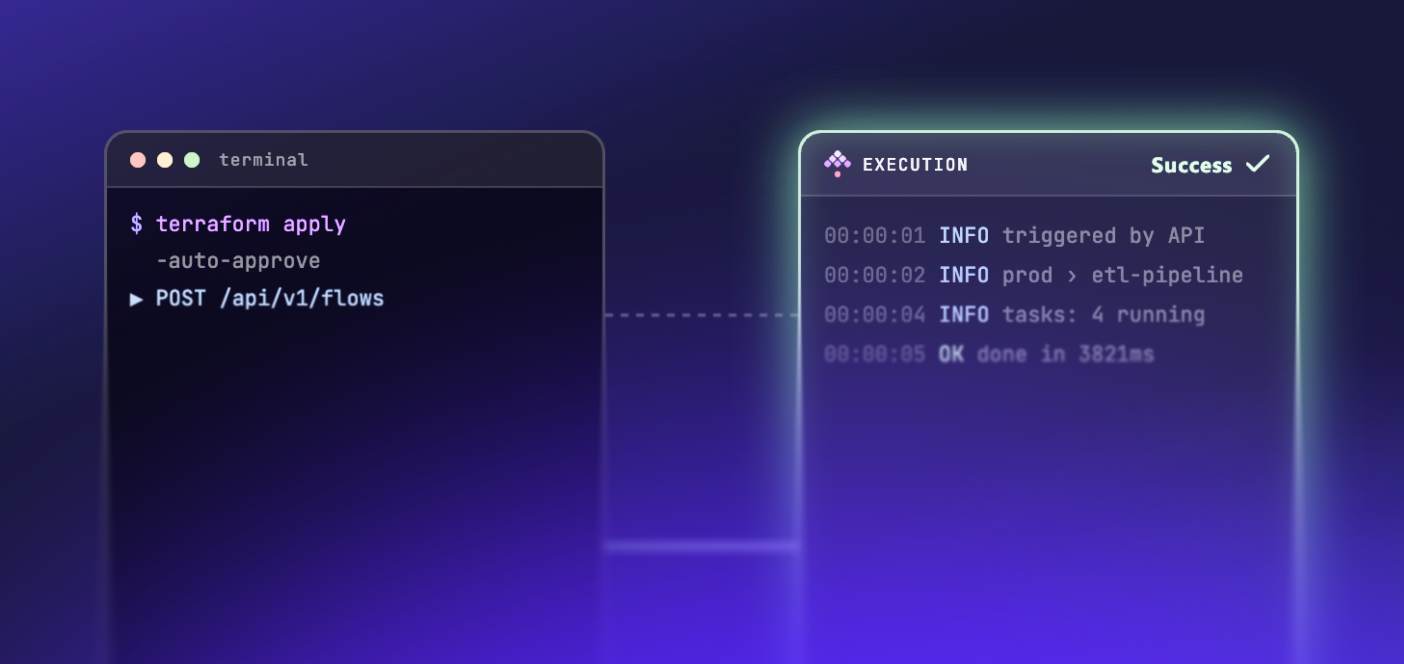
With over 27,000 GitHub stars and an ecosystem of 1,900+ plugins covering every major cloud provider, database, and SaaS platform, Kestra is the orchestration engine that brings Infrastructure as Code principles to workflow automation — defining complex multi-step pipelines in readable YAML that execute across any language, runtime, or infrastructure boundary. The built-in VS Code-style editor provides syntax highlighting, auto-completion, real-time validation, and an AI Copilot that generates workflow YAML from natural language descriptions. Tasks execute in Python, Node.js, Go, R, Shell, SQL, or any Docker container, with event-driven triggers listening for file arrivals on SFTP and cloud storage, messages from Kafka, Redis, Pulsar, AMQP, MQTT, NATS, AWS SQS, Google Pub/Sub, and Azure Event Hubs in real time. The topology view visualizes workflow DAGs with execution state, duration, and output artifacts for each task node. Namespaces organize workflows into isolated environments with configurable secrets, while subflows enable modular composition with inputs, outputs, and conditional branching. Retry policies, timeouts, error handlers, and automatic backfills for missed schedules ensure reliability across production workloads. Git integration pushes workflows directly to branches from the UI with CI/CD pipeline support for automated deployment. The REST API enables programmatic workflow management, execution triggering, and resource provisioning. Running on a dedicated VPS on RepoCloud with guaranteed CPU, RAM, and SSD, full root SSH access, and a browser serial console. Apache 2.0 licensed.
Benefits
- Declarative YAML Workflow Definition
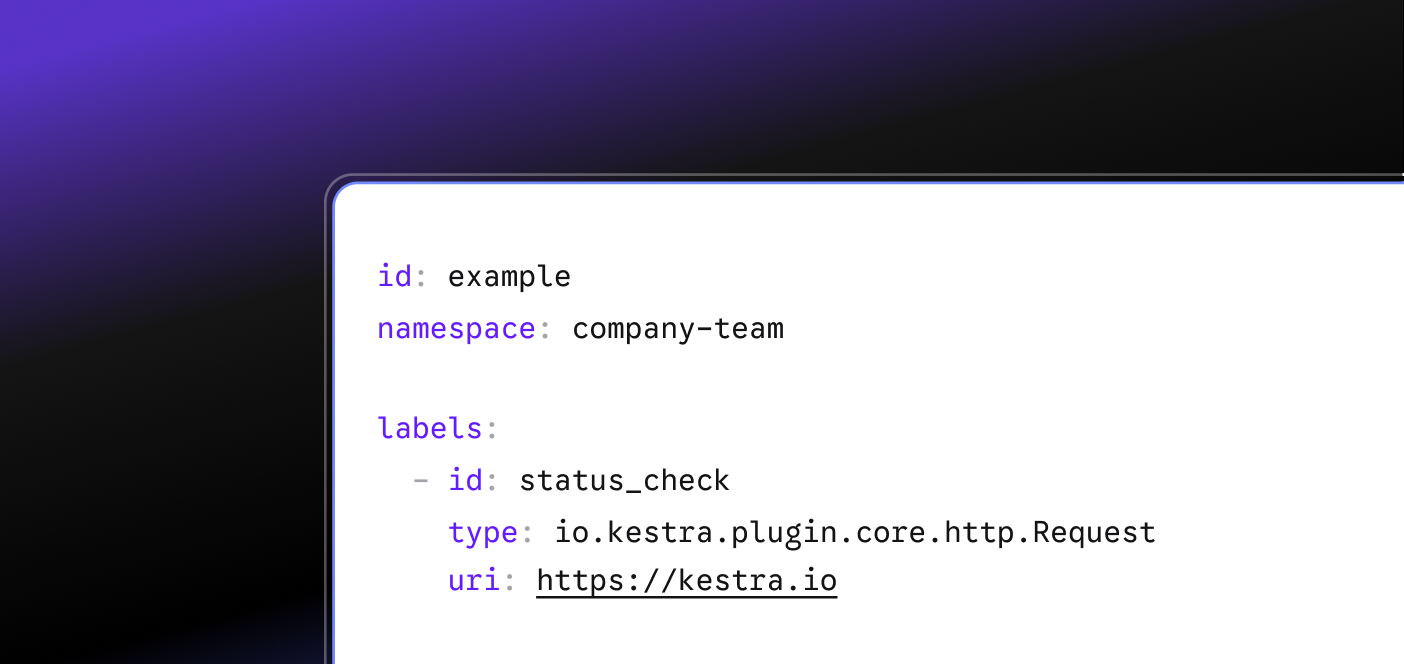
- Define complex multi-step pipelines in readable YAML with auto-completion and real-time validation, making workflows version-controllable, reviewable, and deployable through standard CI/CD processes.
- Language-Agnostic Task Execution
- Execute tasks in Python, Node.js, Go, R, Shell, SQL, or any Docker container without runtime restrictions, using the best tool for each job within a single orchestrated pipeline.
- Real-Time Event-Driven Triggers
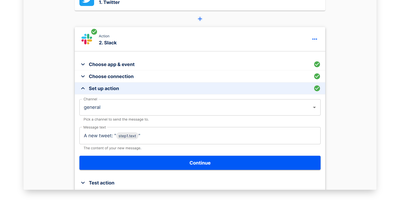
- React to file arrivals, message bus events from Kafka, Redis, Pulsar, MQTT, SQS, Pub/Sub, and webhook calls in real time alongside traditional cron-based scheduling.
- Visual Topology and Monitoring
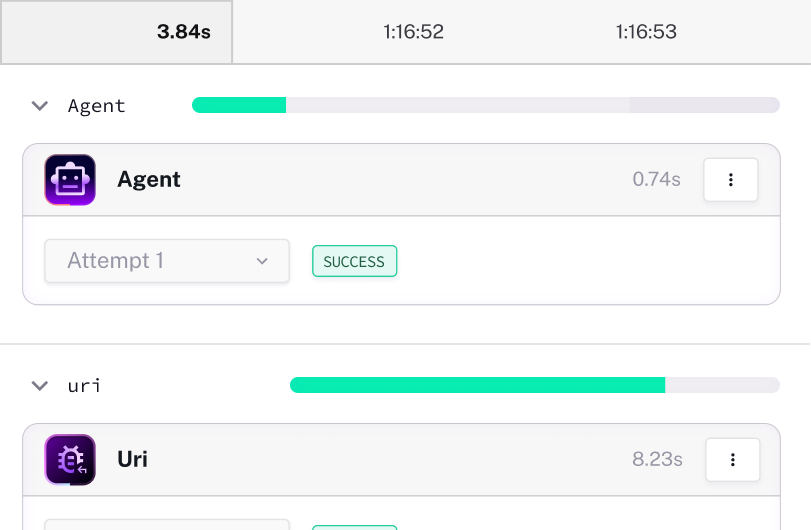
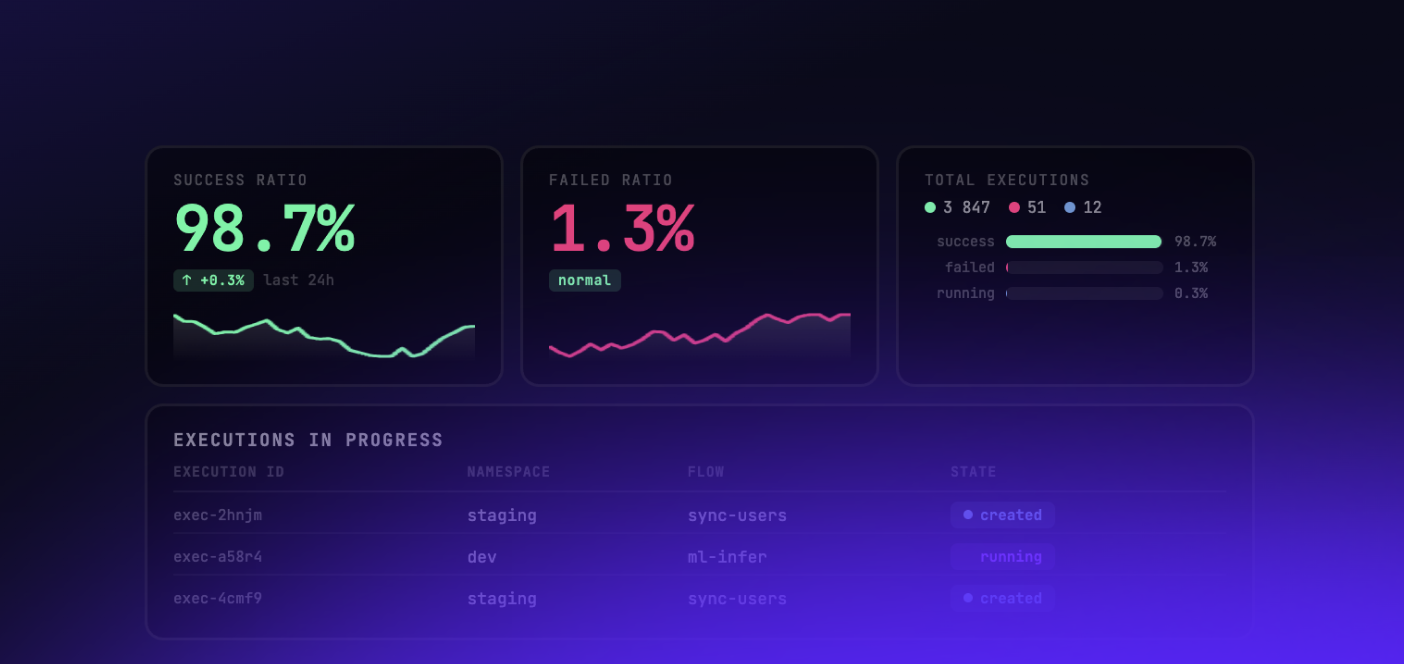
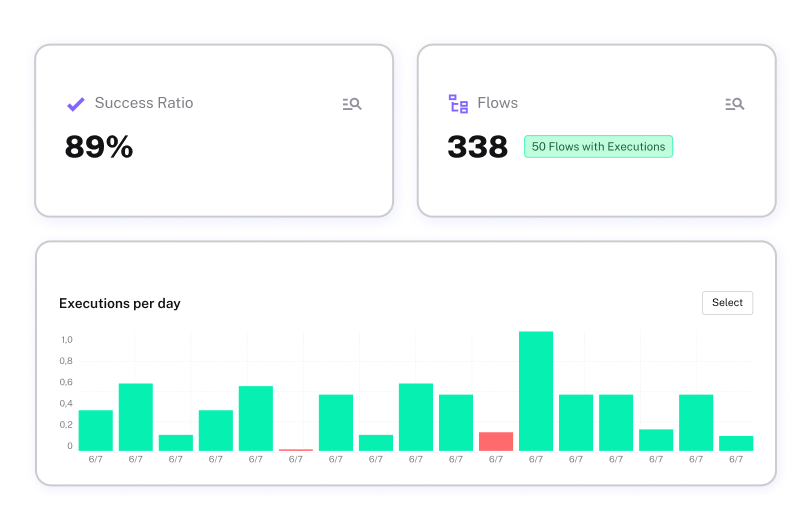
- The workflow DAG visualization shows execution state, duration, logs, and output artifacts for every task node, providing immediate visibility into pipeline health and performance.
Features
- 1,900+ Integration Plugins
- Pre-built connectors for AWS, GCP, Azure, databases, SaaS platforms, messaging systems, and file storage eliminate custom integration code for common orchestration patterns.
- Built-In Code Editor
- VS Code-style editor with syntax highlighting, auto-completion, real-time YAML validation, and an AI Copilot that generates workflow definitions from natural language prompts.
- Namespace Organization
- Isolated environments with configurable secrets, variables, and access control organize workflows by team, project, or environment for multi-tenant deployments.
- Subflows and Composition
- Modular workflow composition through subflows with typed inputs, outputs, and conditional branching enables reusable pipeline components across projects.
- Automatic Backfill Recovery
- Missed scheduled executions are automatically detected and backfilled after outages, ensuring data pipeline completeness without manual intervention or gap analysis.